
12 Results for "

ossification

" in MedChemExpress (MCE) Product Catalog:
Products (12)

12 Results for "ossification" in MCE Product Catalog:

3
3 Cited Publications
Cat. No.: HY-108527
CAS No.: 107430-66-0
Purity:  98.01%
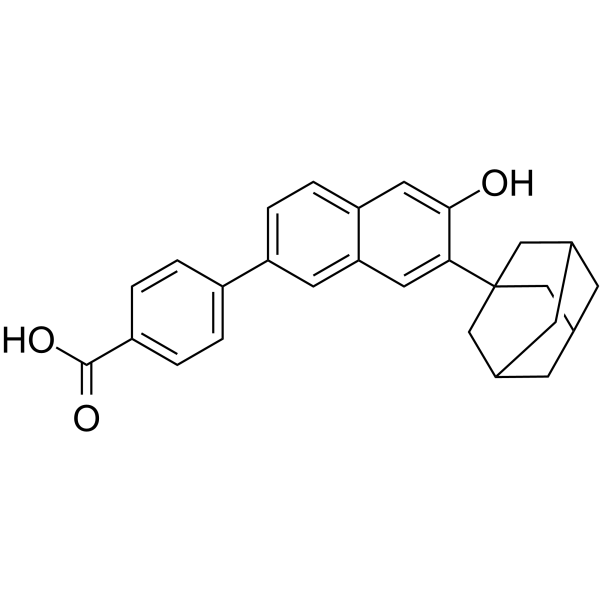
CD1530 is an orally active, selective RARγ agonist and antibacterial agent. CD1530 reduces Smad1/5/8 phosphorylation and overall Smad levels. CD1530 reduces β-catenin, MMP9 protein, and ROS levels. CD1530 exhibits activities such as inhibiting heterotopic ossification, promoting Achilles tendon healing, and inhibiting muscle fatty infiltration. CD1530 can be used in the research of orthopedic diseases (such as heterotopic ossification, Achilles tendon injury), muscle diseases (such as muscle fatty infiltration-related diseases) .
loading...
    loading...
2
2 Cited Publications
Cat. No.: HY-15897
CAS No.: 1432597-26-6
Purity:  99.70%
Target:  

TGF-β Receptor

Research Areas:  

Cancer

LDN-212854 is a bone morphogenetic protein (BMP) inhibitor that potently inhibits ALK2 (IC50: 1.3 nM). LDN-212854 also inhibits ALK1 (IC50: 2.40 nM). LDN-212854 can be used in the research of fibrodysplasia ossificans progressive and cancers, such as hepatocellular carcinoma (HCC) .
loading...
    loading...
Cat. No.: HY-107413
CAS No.: 146670-40-8
Purity:  99.79%
Synonyms: BMS-649
Research Areas:  

Cancer

SR11237 (BMS-649) GMP is SR11237 (HY-107413) produced by using GMP guidelines. GMP small molecules works appropriately as an auxiliary reagent for cell therapy manufacture. SR11237 is a RXR activator and lipid metabolism regulator that promotes the differentiation of induced neural stem cells into dopaminergic (TH-positive) neurons. SR11237 induces transcriptional regulation of lipogenic genes and cholesterol transporters, increases glycosaminoglycan release, and elevates total cellular triglyceride levels. SR11237 promotes heterodimerization of RXR with Nurr1, thereby enhancing tyrosine hydroxylase expression and facilitating dopamine release. SR11237 produces a synergistic effect when used in combination with bFGF/EGF. SR11237 is mainly used in studies related to osteoarthritis and Parkinson's disease .
loading...
    loading...
Cat. No.: HY-N0754
CAS No.: 877822-40-7
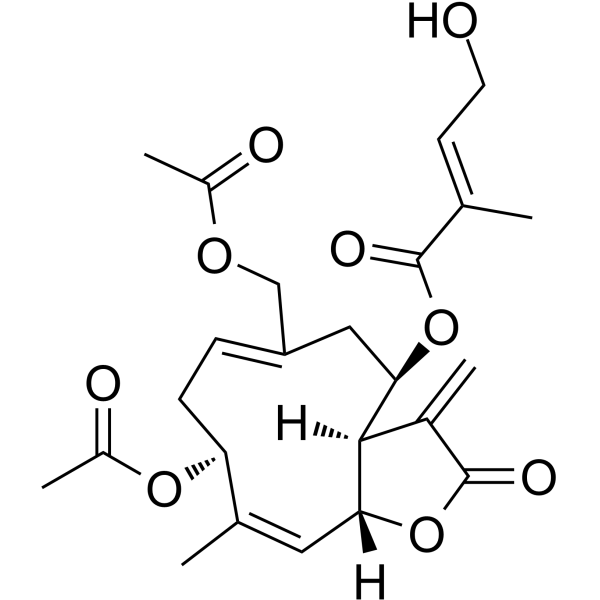
Eupalinolide A is a Yes-associated protein (YAP) degrader and HSP70 inducer. Eupalinolide A inhibits osteogenic differentiation of tendon-derived stem cells (TDSCs). Eupalinolide A induces autophagy in hepatocellular carcinoma cells via activating the ROS/ERK signaling pathway. Eupalinolide A protects PAM212 cells from UVB-, Menadione (HY-B0332)-, or heat shock-induced apoptosis. Eupalinolide A alleviates trauma-induced heterotopic ossification (HO) of Achilles tendon and inhibits growth of MHCC97-L and HCCLM3 hepatocellular carcinoma xenograft tumors in mice. Eupalinolide A can be used for the study of traumatic heterotopic ossification of tendons and hepatocellular carcinoma .
loading...
    loading...
Cat. No.: HY-P3637
CAS No.: 2640019-27-6
Target:  

Peptides

Research Areas:  

Inflammation/Immunology

AVSEHQLLHDKGKSIQDLRRRFFLHHLI-{Aib}-EIHTAYRFGG promotes bone-ossification. AVSEHQLLHDKGKSIQDLRRRFFLHHLI-{Aib}-EIHTAYRFGG can be used in the research of diseases or disorders related to osteogenic defects or bone mineral density (BMD) decreasing, such as osteoporosis .
loading...
    loading...
Cat. No.: HY-124044
CAS No.: 1177148-36-5
Target:  

Phosphatase

Research Areas:  

Cardiovascular Disease

ML 086 is a highly selective PHOSPHO1 phosphatase inhibitor (IC50=0.14 μM). ML 086 is promising for research of hereditary vascular calcification disorders (e.g., generalized arterial calcification of infancy) and spinal ligament ossification .
loading...
    loading...
Cat. No.: HY-32343S
CAS No.: 1440957-55-0
Synonyms: (24R)-24,25-Dihydroxyvitamin D3-d6
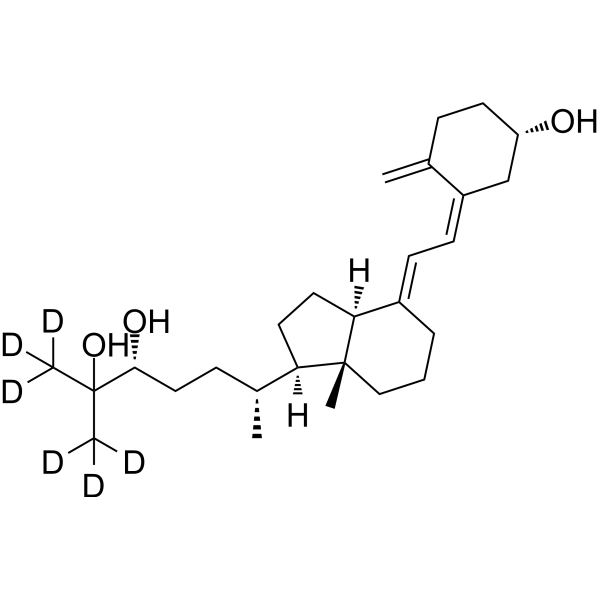
Secalciferol-d6 is the deuterium labeled Secalciferol. Secalciferol is a metabolite of Vitamin D, a possibly anti-inflammatory steroid which is involved in bone ossification .
loading...
    loading...
Cat. No.: HY-174704
Target:  

mRNA

Research Areas:  

Cancer

Human FGF18 mRNA encodes the human fibroblast growth factor 18 (FGF18) protein, a member of the fibroblast growth factor (FGF) family. FGF18 probably plays an important role in the regulation of cell proliferation, cell differentiation and cell migration. It is also required for normal ossification and bone development.
loading...
    loading...
Cat. No.: HY-108527R
CAS No.: 107430-66-0
CD1530 (Standard) is the analytical standard of CD1530 (HY-108527). This product is intended for research and analytical applications. CD1530 is an orally active, selective RARγ agonist and antibacterial agent. CD1530 reduces Smad1/5/8 phosphorylation and overall Smad levels. CD1530 reduces β-catenin, MMP9 protein, and ROS levels. CD1530 exhibits activities such as inhibiting heterotopic ossification, promoting Achilles tendon healing, and inhibiting muscle fatty infiltration. CD1530 can be used in the research of orthopedic diseases (such as heterotopic ossification, Achilles tendon injury), muscle diseases (such as muscle fatty infiltration-related diseases) .
loading...
    loading...
Cat. No.: HY-107413R
CAS No.: 146670-40-8
Synonyms: BMS-649 (Standard)
SR11237 (Standard) is the analytical standard of SR11237 (HY-107413). This product is intended for research and analytical applications. SR11237 is a RXR activator and lipid metabolism regulator that promotes the differentiation of induced neural stem cells into dopaminergic (TH-positive) neurons. SR11237 induces transcriptional regulation of lipogenic genes and cholesterol transporters, increases glycosaminoglycan release, and elevates total cellular triglyceride levels. SR11237 promotes heterodimerization of RXR with Nurr1, thereby enhancing tyrosine hydroxylase expression and facilitating dopamine release. SR11237 produces a synergistic effect when used in combination with bFGF/EGF. SR11237 is mainly used in studies related to osteoarthritis and Parkinson's disease .
loading...
    loading...
Cat. No.: HY-W142457
CAS No.: 18479-58-8
Dihydromyrcenol is an orally active flavor ingredient and Antifungal agent. Dihydromyrcenol acts as a toxicant. Dihydromyrcenol induces phototoxicity-related growth inhibition in Bakers' Yeast. In pregnant rats, Dihydromyrcenol causes threshold maternal toxicity by reducing feed consumption and body weight gain, and also induces threshold developmental toxicity by decreasing fetal body weight, inhibiting ossification of metatarsal bones in the hind paws, increasing the number of extra thoracic vertebrae ribs, and altering vertebral counts .
loading...
    loading...
Cat. No.: HY-L131
916 compounds

Ossification is a tightly regulated process, performed by specialized cells called osteoblasts. Dysregulation of this process may cause inadequate or excessive mineralization of bones or ectopic calcification, all of which have grave consequences for human health.

Osteoblasts play important roles in the process of osteogenesis and prevention of osteonecrosis. Osteoblast formation and bone formation are regulated by hormones, growth factors, cytokines, etc.

MCE offers a unique collection of 916 bone formation compounds with identified and potential inducing osteogenesis activity. MCE bone formation compound library is a useful tool for the study of bone disease drugs and pharmacology.

  • 1

