







1. Search Result
Search Result
Results for "

osteocalcin

" in MedChemExpress (MCE) Product Catalog:

22

Inhibitors & Agonists

1

Biochemical Assay Reagents

14

Peptides

4

Natural
Products

2

Recombinant Proteins

1

Isotope-Labeled Compounds

2

Antibodies

Cat. No. Product Name Target Research Areas Chemical Structure
  • HY-B2172

    Endogenous Metabolite Cardiovascular Disease Cancer
    Vitamin K, the blood-clotting vitamin, is important for the function of numerous proteins within the body, such as the coagulation factors, osteocalcin and matrix-Gla protein.
    Vitamin K
  • HY-P4588

    GLUT Metabolic Disease
    (Glu17,21,24)-Osteocalcin (1-49) (human) is a bone-specific protein involved in bone formation and glucose metabolism .
    (Glu17,21,24)-Osteocalcin (1-49) (human)
  • HY-107245
    Segetalin B
    2 Publications Verification

    Estrogen Receptor/ERR Sirtuin RUNX Metabolic Disease
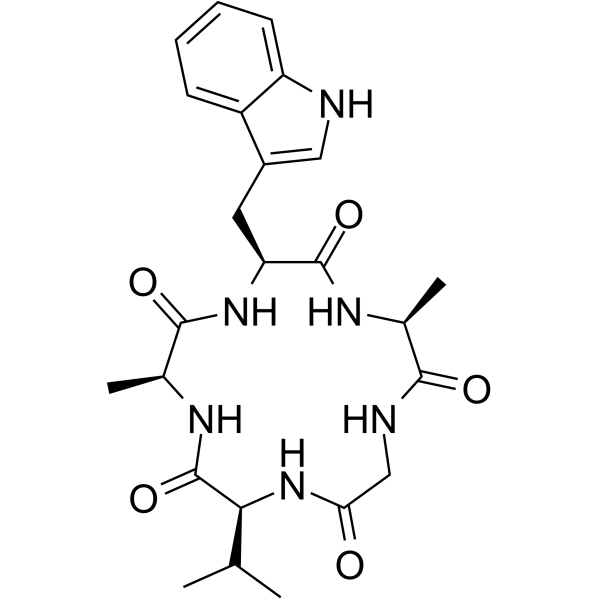
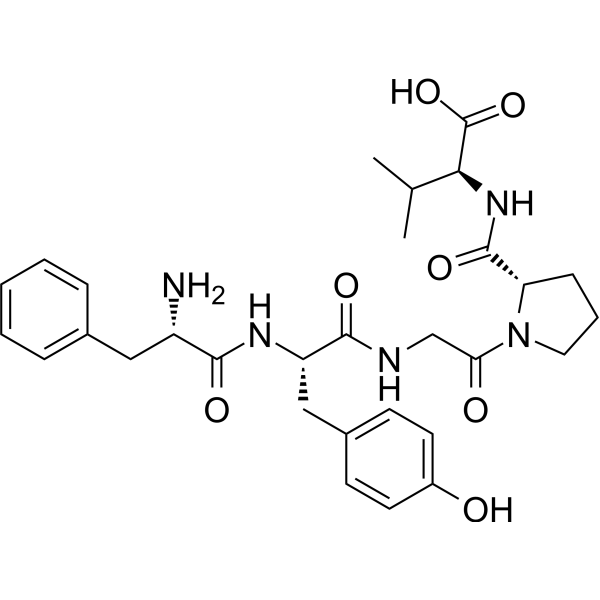
    Segetalin B, an orally active cyclopentapeptide found in Vaccaria segetalis, possesses estrogen-like activity. Segetalin B promotes mineralization of ovariectomized rat-derived bone marrow mesenchymal stem cells (BMSCs) in vitro and increases the level of osteocalcin, BMP-2, ALP, and SIRT1 activity. Segetalin B is promising for research of post-menopausal osteoporosis (PMOP) .
    Segetalin B
  • HY-N4119

    Phosphatase Cholinesterase (ChE) p38 MAPK Apoptosis Autophagy Neurological Disease Metabolic Disease
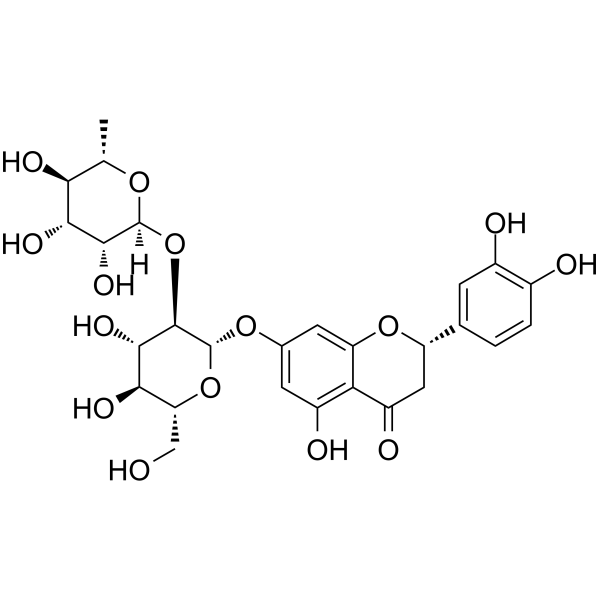
    Neoeriocitrin is a Naringin (HY-N0153) analogue found in Drynaria Rhizome. Neoeriocitrin induces cells proliferation, differentiation, up-regulates type I collagen, osteocalcin, and key osteogenic markers, and increases ALP activity. Neoeriocitrin increases expression of Runx2, COL I, OCN and Beclin1. Neoeriocitrin inhibits phosphorylation of P38 mitogen-activated protein kinase, reduces acetylcholinesterase (AChE) activity, and increases choline acetyltransferase (ChAT) activity. Neoeriocitrin reduces apoptosis and induces autophagy. Neoeriocitrin can be used for the researches of osteoporosis and Alzheimer's disease .
    Neoeriocitrin
  • HY-108531

    RAR/RXR Metabolic Disease
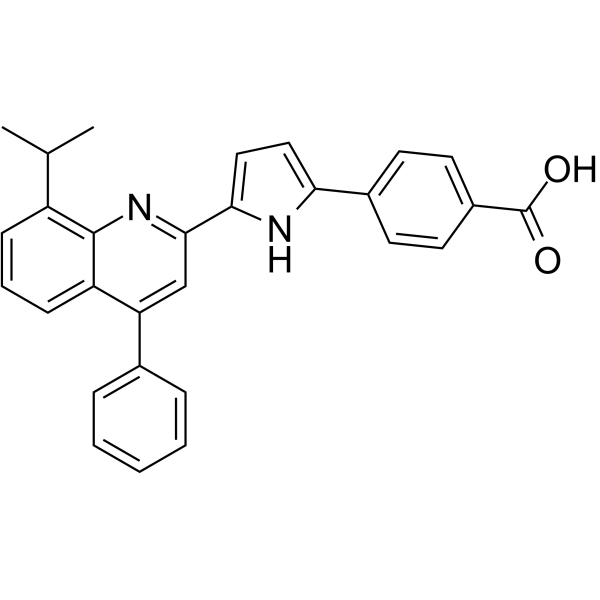
    ER 50891 is a RARα antagonist. ER 50891 can significantly antagonize the inhibitory effect of all-trans retinoic acid (ATRA) on the total cell metabolic activity and proliferation of MC3T3-E1 preosteoblasts. ER 50891 rescues ATRA-inhibited osteocalcin (OCN) expression and extracellular matrix mineralization, and suppresses alkaline phosphatase (ALP) activity synergistically. ER 50891 can be used for the study of osteoporosis related to ATRA-induced inhibition of osteoblastogenesis .
    ER 50891
  • HY-P2588

    osteocalcin (1-49) (human)

    Endogenous Metabolite Metabolic Disease Cancer
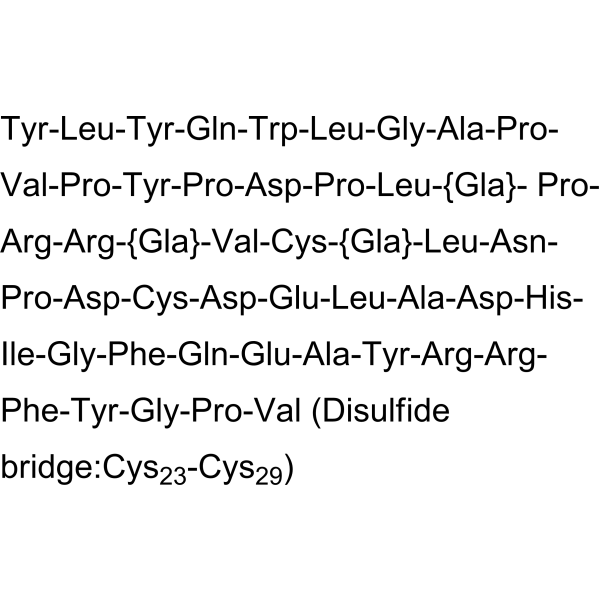
    Osteocalcin (Osteocalcin (1-49)) (human) is a vitamin K-dependent bone specific protein. Osteocalcin (human) is chemotactic for several of the cell types frequently found at bone remodeling surfaces .
    Osteocalcin (human)
  • HY-P10413

    Androgen Receptor Metabolic Disease Endocrinology
    SHBG 141-161 is a GPRC6A receptor agonist. SHBG 141-161 mimics the action of GPRC6A endogenous agonist uncarboxylated osteocalcin by binding to GPRC6A and promoting downstream signaling to increase testosterone and insulin secretion. SHBG 141-161 also reduces the affinity of GPRC6A to GDP protein by binding to the outer cell domain of GPRC6A thus affecting the dynamics of signal transduction. SHBG 141-161 can be used to study GPRC6A in energy metabolism and endocrine regulation .
    SHBG(141–161)
  • HY-13636A

    ICI 182780 (S enantiomer); ZD 9238 (S enantiomer); ZM 182780 (S enantiomer)

    Drug Isomer Estrogen Receptor/ERR p38 MAPK Apoptosis Cancer
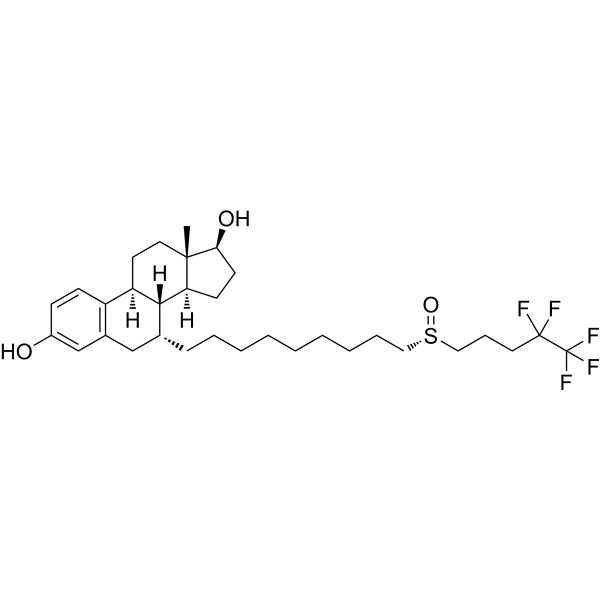
    Fulvestrant (ICI 182780; ZD 9238) S enantiomer is the S-enantiomer of Fulvestrant (HY-13636), a potent estrogen receptor inhibitor. Fulvestrant binds to and blocks the estrogen receptor, promotes its degradation, and thereby inhibits receptor dimerization, nucleocytoplasmic shuttling and transcriptional activity. Fulvestrant effectively blocks estrogen signaling, MAPK pathway activation and ER-regulated protein expression. Fulvestrant induces apoptosis, inhibits the proliferation of breast cancer and prolactinoma cells, and reduces the mineralization level, alkaline phosphatase activity and osteocalcin expression of preosteoblasts. Prenatal exposure to Fulvestrant impairs ovarian follicular development and causes ovarian structural damage. Fulvestrant has been widely used in studies related to breast cancer, prolactinoma and other conditions .
    Fulvestrant (S enantiomer)
  • HY-P3738

    Biochemical Assay Reagents Others
    Osteocalcin (7-19) (human) is a peptide fragment of Osteocalcin, can be used as a peptide tag.
    Osteocalcin (7-19) (human)
  • HY-P10462

    Synthetic anti-inflammatory peptide 15

    HDAC NF-κB Inflammation/Immunology
    SAP15 (Synthetic anti-inflammatory peptide 15) is a synthetic anti-inflammatory peptide consisting of 15 amino acids designed from human beta-defensin 3. SAP15 has the ability to penetrate cells and is able to induce downregulation of intracellular inflammation. SAP15 inhibits inflammation by inhibiting the phosphorylation of HDAC5 and thereby reducing the phosphorylation of NF-κB p65. SAP15 inhibits HDAC5 and NF-κB p65 phosphorylation in LPS (HY-D1056)-induced macrophages. SAP15 increases the expression of aggrecan and type II collagen and decreases the expression of osteocalcin in LPS-induced chondrocytes. SAP15 can be used in the study of inflammation regulation and anti-inflammatory therapy of biomaterials .
    SAP15
  • HY-P4835

    Phosphatase Others
    pTH (2-34) (human) (80 μg/kg) slightly increases serum osteocalcin levels and alkaline phosphatase activity of bone extract (markers of bone formation) in mice. pTH (2-34) is not as effective as pTH (1-34) .
    pTH (2-34) (human)
  • HY-P2588A

    osteocalcin (1-49) (human) TFA

    Endogenous Metabolite Metabolic Disease Cancer
    Osteocalcin (Osteocalcin (1-49)) (human) TFA is a vitamin K-dependent bone specific protein. Osteocalcin (human) TFA is chemotactic for several of the cell types frequently found at bone remodeling surfaces .
    Osteocalcin (human) TFA
  • HY-P10126

    Endogenous Metabolite Others
    Osteocalcin, bovine is a vitamin K-dependent bone specific protein. Osteocalcin, bovine is also known as bone gamma-carboxyglutamic acid-containing protein (BGLAP). Osteocalcin, bovine is a small (49-amino-acid) noncollagenous protein hormone .
    Osteocalcin, bovine
  • HY-108531A

    RAR/RXR Cancer
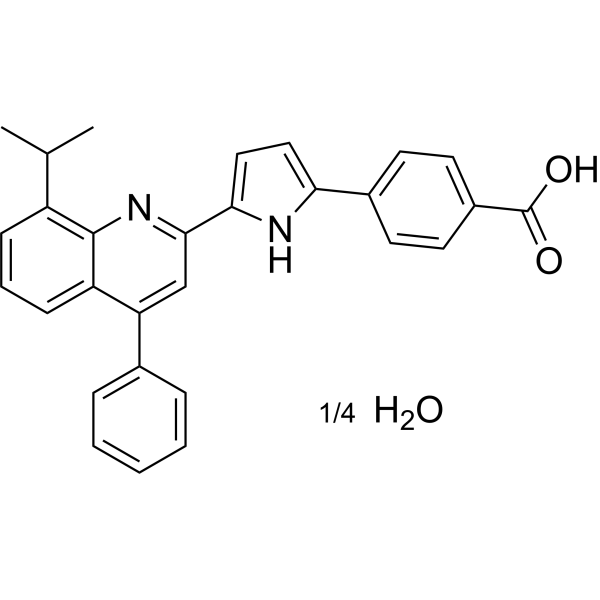
    ER 50891 quarterhydrate is a RARα antagonist. ER 50891 can significantly antagonize the inhibitory effect of all-trans retinoic acid (ATRA) on the total cell metabolic activity and proliferation of MC3T3-E1 preosteoblasts. ER 50891 rescues ATRA-inhibited osteocalcin (OCN) expression and extracellular matrix mineralization, and suppresses alkaline phosphatase (ALP) activity synergistically. ER 50891 can be used for the study of osteoporosis related to ATRA-induced inhibition of osteoblastogenesis .
    ER 50891 quarterhydrate
  • HY-P3740

    Biochemical Assay Reagents Others
    Osteocalcin 30-43 Fragment is an osteocalcin fragment.Osteocalcin 30-43 Fragment is a serum marker of bone turnover .
    Osteocalcin 30-43 Fragment
  • HY-114154

    Glucocorticoid Receptor Inflammation/Immunology
    AL-438 is a potent, selective and orally active glucocorticoid receptor modulator with Kis of 2.5, 1786, 53, 1440, >1000 nM for glucocorticoid receptor, progesterone receptor, mineralocorticoid receptor, androgen receptor, estrogen receptor, respectively. AL-438 shows antiinflammatory activity .
    AL-438
  • HY-P3737

    Biochemical Assay Reagents Others
    Osteocalcin (37-49), human is a peptide fragment of Osteocalcin. Osteocalcin (37-49), human has been used to detecte the intact human osteocalcin in HPLC purified plasma and peritoneal dialysate from patients with terminal renal insufficiency and in extracted human bone .
    Osteocalcin (37-49), human
  • HY-P10462A

    Synthetic anti-inflammatory peptide 15 acetate

    HDAC NF-κB Inflammation/Immunology
    SAP15 (Synthetic anti-inflammatory peptide 15) acetate is a synthetic anti-inflammatory peptide consisting of 15 amino acids designed from human beta-defensin 3. SAP15 acetate has the ability to penetrate cells and is able to induce downregulation of intracellular inflammation. SAP15 acetate inhibits inflammation by inhibiting the phosphorylation of HDAC5 and thereby reducing the phosphorylation of NF-κB p65. SAP15 acetate inhibits HDAC5 and NF-κB p65 phosphorylation in LPS (HY-D1056)-induced macrophages. SAP15 acetate increases the expression of aggrecan and type II collagen and decreases the expression of osteocalcin in LPS-induced chondrocytes. SAP15 acetate can be used in the study of inflammation regulation and anti-inflammatory therapy of biomaterials .
    SAP15 acetate
  • HY-NP195

    Biochemical Assay Reagents Metabolic Disease
    Osteocalcin protein (Cow) is the most abundant non-collagenous protein in bone and plays an important role in bone metabolism .
    Osteocalcin protein (Cow)
  • HY-N4119R

    Reference Standards Phosphatase Cholinesterase (ChE) p38 MAPK Apoptosis Autophagy Neurological Disease Metabolic Disease
    Neoeriocitrin (Standard) is the analytical standard of Neoeriocitrin (HY-N4119). This product is intended for research and analytical applications. Neoeriocitrin is a Naringin (HY-N0153) analogue found in Drynaria Rhizome. Neoeriocitrin induces cells proliferation, differentiation, up-regulates type I collagen, osteocalcin, and key osteogenic markers, and increases ALP activity. Neoeriocitrin increases expression of Runx2, COL I, OCN and Beclin1. Neoeriocitrin inhibits phosphorylation of P38 mitogen-activated protein kinase, reduces acetylcholinesterase (AChE) activity, and increases choline acetyltransferase (ChAT) activity. Neoeriocitrin reduces apoptosis and induces autophagy. Neoeriocitrin can be used for the researches of osteoporosis and Alzheimer's disease .
    Neoeriocitrin (Standard)
  • HY-W404758

    Phosphatase Collagen Osteopontin Metabolic Disease
    Calcium glucoheptonate is a highly water-soluble calcium supplement. Calcium glucoheptonate can increase the proliferation rate and Calcium intake of MG-63 cells and increase the activity of alkaline phosphatase (ALP). Calcium glucoheptonate can upregulate the expression of osteogenic-related genes and proteins,such as collagen-1, osteocalcin and osteocalcin. Calcium glucoheptonate can be used for the researches of osteoporosis and hypocalcemia .
    Calcium glucoheptonate
  • HY-W1122690

    Isotope-Labeled Compounds Endogenous Metabolite Cardiovascular Disease Cancer
    Vitamin K-d7 is the deuterium labeled Vitamin K (HY-B2172). Vitamin K, the blood-clotting vitamin, is important for the function of numerous proteins within the body, such as the coagulation factors, osteocalcin and matrix-Gla protein.
    Vitamin K-d7

Inquiry Online

Your information is safe with us. * Required Fields.

Salutation


Country or Region *

Applicant Name *


Organization Name *

Department *


Email Address *


Product Name *

Cat. No.


Requested quantity *

Phone Number *


Remarks

Inquiry Online

Inquiry Information

Product Name:
Cat. No.:
Quantity:
MCE Japan Authorized Agent:

