7 Results for "

paracrine factor

" in MedChemExpress (MCE) Product Catalog:
Products (7)

7 Results for "paracrine factor" in MCE Product Catalog:

2
2 Cited Publications
Cat. No.: HY-B0557
CAS No.: 603-50-9
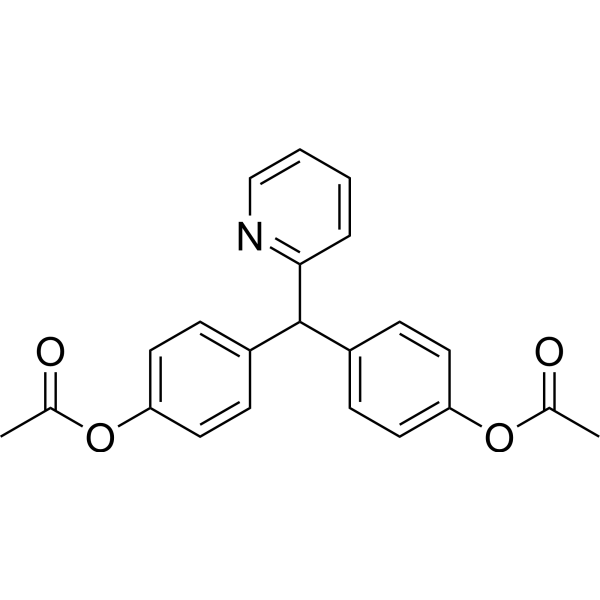
Bisacodyl is a stimulant laxative agent that works directly on the colon to produce a bowel movement. Bisacodyl increases the secretion of PGE2 by direct activation of colon macrophages. PGE2 acts as a paracrine factor and decreases the expression of AQP3 in the colon, which inhibits water transfer from the luminal to the vascular side and leads to a laxative effect .
loading...
    loading...
Cat. No.: HY-P3571
CAS No.: 2243207-08-9
Target:  

Endothelin Receptor

Research Areas:  

Cancer

[Ala2] Endothelin-3, human is a linear analog of endothelin-3 (ET-3) where substitution of Ala for Cys residues. TE-3 is a vasoactive peptide, produced by human rhabdomyosarcoma cell lines, whereas it is not expressed by human sarcoma cell lines of non-muscle origin. ET-3 acts as a paracrine factor, since it promotes migration of endothelial cells .
loading...
    loading...
Cat. No.: HY-170448
Research Areas:  

Metabolic Disease

PROTAC AR Degrader-9 (Compound c6) is a PROTAC degrader for androgen receptor, that degrades AR in human hair follicle papilla cells (HDPCs) with a DC50 of 262.38 nM. PROTAC AR Degrader-9 promotes the expressions of paracrine factors, such as TGF-β1 and β-catenin, exhibits hair regenerating efficacy in mouse models .
loading...
    loading...
Cat. No.: HY-B0557R
CAS No.: 603-50-9
Bisacodyl (Standard) is the analytical standard of Bisacodyl. This product is intended for research and analytical applications. Bisacodyl is a stimulant laxative agent that works directly on the colon to produce a bowel movement. Bisacodyl increases the secretion of PGE2 by direct activation of colon macrophages. PGE2 acts as a paracrine factor and decreases the expression of AQP3 in the colon, which inhibits water transfer from the luminal to the vascular side and leads to a laxative effect .
loading...
    loading...
Cat. No.: HY-142949
CAS No.: 2657720-07-3
Target:  

TGF-β Receptor

Research Areas:  

Inflammation/Immunology Cancer

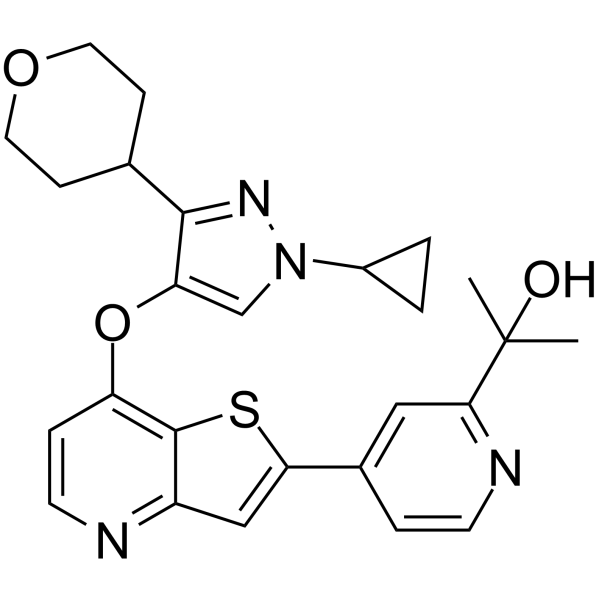
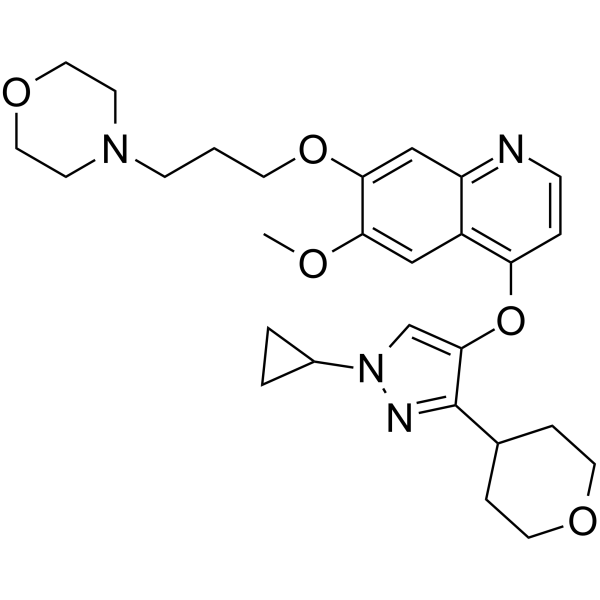
ALK5-IN-7 is a potent inhibitor of ALK5. Transforming growth factor beta (TGF-β) is a multifunctional cytokine that is involved in regulating cell proliferation, differentiation and apoptosis through complex receptor signaling pathways on the cell surface in an autocrine, paracrine and endocrine manner. ALK5-IN-7 has the potential for the research of TGF-β-related diseases and conditions, including but not limited to tumors, fibrotic diseases, inflammatory diseases, autoimmune diseases, etc (extracted from patent WO2021129621A1, compound 4) .
loading...
    loading...
Cat. No.: HY-142950
CAS No.: 2657720-04-0
Target:  

TGF-β Receptor

Research Areas:  

Inflammation/Immunology Cancer

ALK5-IN-6 is a potent inhibitor of ALK5. Transforming growth factor beta (TGF-β) is a multifunctional cytokine that is involved in regulating cell proliferation, differentiation and apoptosis through complex receptor signaling pathways on the cell surface in an autocrine, paracrine and endocrine manner. ALK5-IN-6 has the potential for the research of TGF-β-related diseases and conditions, including but not limited to tumors, fibrotic diseases, inflammatory diseases, autoimmune diseases, etc (extracted from patent WO2021129621A1, compound 1) .
loading...
    loading...
Cat. No.: HY-117854
CAS No.: 141311-11-7
Target:  

Leukotriene Receptor

Research Areas:  

Inflammation/Immunology

SB 201146 is an LTB4 receptor antagonist with a potency range of 10 pM to 1 μM that plays a critical role in asthma-associated airway inflammation. Studies have focused on its effects on eosinophil survival, a hallmark of asthma pathology. Studies have shown that eosinophil-derived cysteinyl leukotrienes, including LTC4 and LTD4, as well as factors such as GM-CSF and fibronectin promote eosinophil survival. SB 201146 effectively reversed mast cell- and lymphocyte-induced eosinophil survival, highlighting its potential therapeutic role in disrupting the autocrine cysteinyl leukotriene pathway that maintains eosinophil viability. This antagonist also highlights the importance of LTB4 as a paracrine mediator that influences eosinophil survival in inflammatory settings such as asthma .
loading...
    loading...