

1. Search Result
Search Result
Results for "

possible

" in MedChemExpress (MCE) Product Catalog:

89

Inhibitors & Agonists

6

Screening Libraries

5

Fluorescent Dyes

1

Biochemical Assay Reagents

5

Peptides

1

Inhibitory Antibodies

7

Natural
Products

8

Isotope-Labeled Compounds

Cat. No. Product Name Target Research Areas Chemical Structure
  • HY-Y0740

    Environmental Pollutants Endogenous Metabolite Metabolic Disease
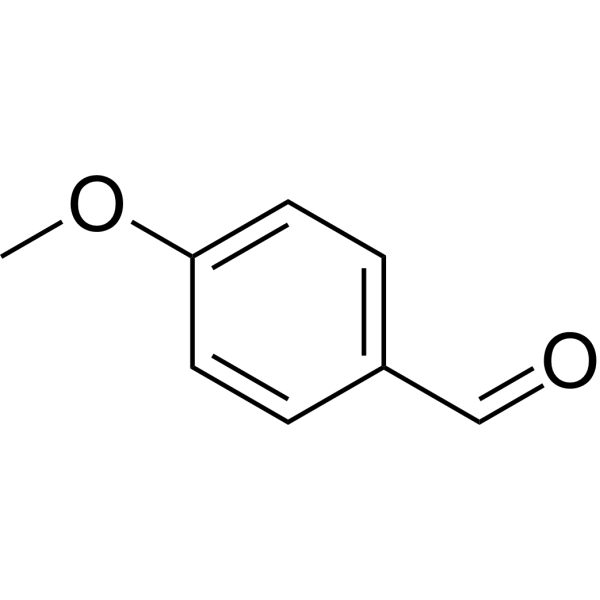
    4-Methoxybenzaldehyde (p-anisaldehyde) is a fragrant phenolic compound. 4-Methoxybenzaldehyde has been found in many plant species including horseradish, anise, star anise. 4-Methoxybenzaldehyde is a possible neurotoxicant and it has shown effects that include mortality, attractancy, and interference with host seeking .
    4-Methoxybenzaldehyde
  • HY-107967

    Fluorescent Dye Cancer
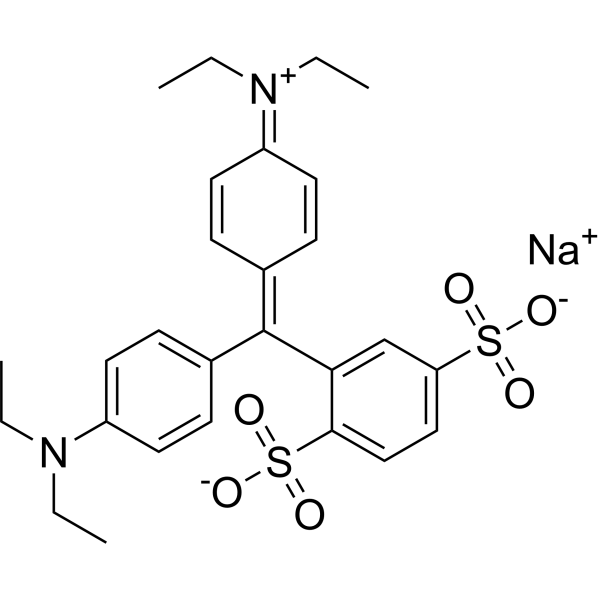
    Isosulfan blue is a blue dye for the identification of lymph vessels during lymphangiography. Isosulfan blueis is used during sentinel lymph node biopsies in breast cancer. Isosulfan blue is possible to have an allergic reaction during breast cancer operations .
    Isosulfan blue
  • HY-E70336

    Endogenous Metabolite Others
    Peroxidase, Lignin is a biocatalyst and a key enzyme in new biocatalyst technology. Enzyme engineering focuses on enhancing enzyme reaction kinetics, substrate selectivity, and activity under harsh conditions such as low or high pH. By introducing stimulus responsiveness to these enzyme modifications, dynamic control of activity is also possible .
    Peroxidase, Lignin
  • HY-D1429

    Fluorescent Dye Others
    ER-Tracker dye is a derivative of BODIPY series dyes coupled with Glibenclamide (HY-15206), highly selective binding to the endoplasmic reticulum, non-toxic to cells at low concentrations, this type of dye is an environmentally sensitive probe, and formaldehyde treatment can still retain part of the fluorescence, with high fluorescence life, good extinction coefficient and other characteristics. Glibenclamide is an atp-dependent K + channel blocker (Kir6, KATP) and CFTR Cl-channel blocker that binds in the endoplasmic reticulum. ER-Tracker is not suitable for staining fixed cells. Staining followed by fixation is possible, but cells fixed with aldehydes will only retain partial fluorescence (Ex/Em = 374/ 430-640 nm) .
    ER-Tracker Blue-White DPX
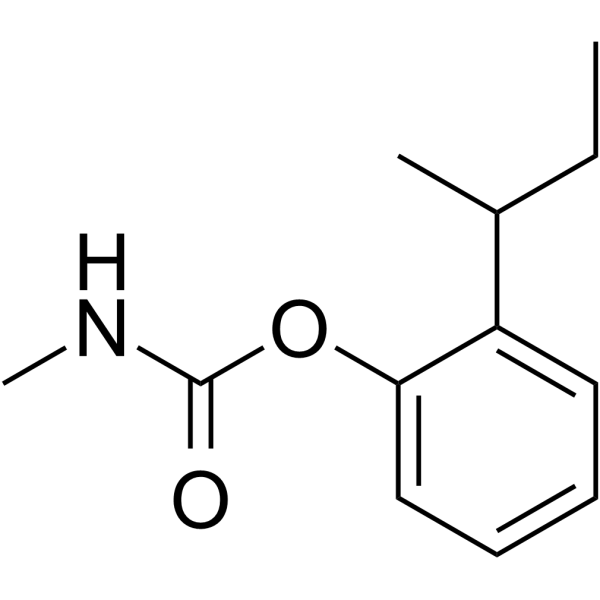
  • HY-B0835

    Environmental Pollutants Reactive Oxygen Species (ROS) Cholinesterase (ChE) Caspase Apoptosis Cardiovascular Disease Neurological Disease Inflammation/Immunology
    Fenobucarb is a carbamate insecticide. Fenobucarb induces zebrafish developmental neurotoxicity through pathways involved in inflammation, oxidative stress, degeneration and apoptosis. Fenobucarb is a possible risk factor to cardiovascular and cerebrovascular systems in animals .
    Fenobucarb
  • HY-P9969

    EMD 72000

    EGFR Cancer
    Matuzumab (EMD 72000) is a humanized anti-EGFR monoclonal antibody that blocks EGFR activation and downstream signaling, inhibits tumor growth. Deglycosylation and the possible elimination of ADCC activity can reduce the in vivo anti-tumor activity of Mattuzumab .
    Matuzumab
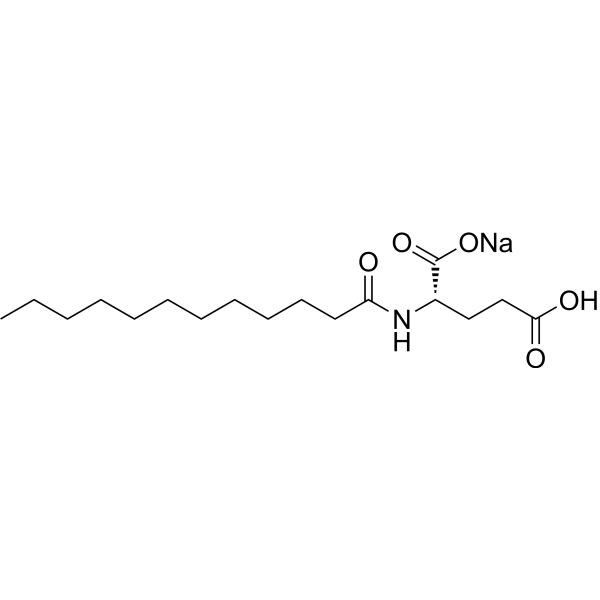
  • HY-130313

    Amino Acid Derivatives Inflammation/Immunology
    Sodium lauroyl glutamate is an anionic amino acid surfactant. Sodium lauroyl glutamate has the irritant contact dermatitis potential, and possible anti-irritating potential in a surfactant mixture on human skin .
    Sodium lauroyl glutamate
  • HY-DY1074

    Fluorescent Dye Others
    ER-Tracker dye is a derivative of BODIPY series dyes coupled with Glibenclamide (HY-15206) , highly selective binding to the endoplasmic reticulum, non-toxic to cells at low concentrations, this type of dye is an environmentally sensitive probe, and formaldehyde treatment can still retain part of the fluorescence, with high fluorescence life, good extinction coefficient and other characteristics. Glibenclamide is an atp-dependent K + channel blocker (Kir6, KATP) and CFTR Cl-channel blocker that binds in the endoplasmic reticulum. ER-Tracker is not suitable for staining fixed cells. Staining followed by fixation is possible, but cells fixed with aldehydes will only retain partial fluorescence .
    Solvent and concentration: DMSO: 1 mM
    ER-Tracker Blue-White DPX (solution)
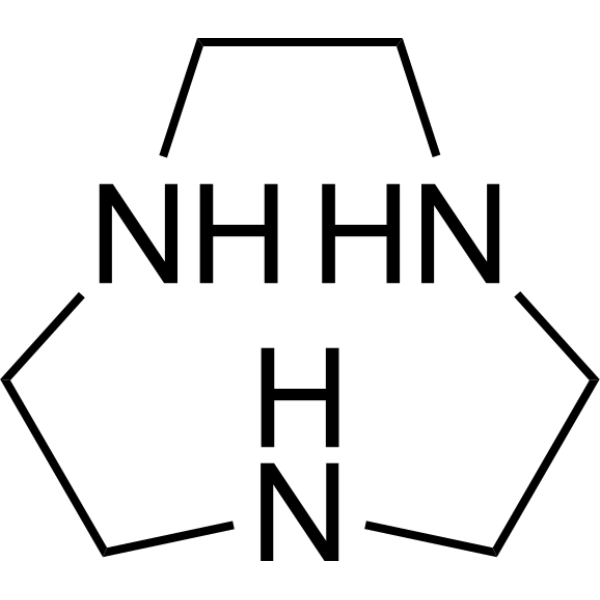
  • HY-W006212

    1,4,7-Triazacyclononane

    Biochemical Assay Reagents Others
    1,4,7-Triazonane (1,4,7-Triazacyclononane), an intermediate in the synthesis of 1,4,7-trifunctionalized derivatives, is a possible reagent for compleximetric titrations with high cation-binding selectivity .
    1,4,7-Triazonane
  • HY-W012738
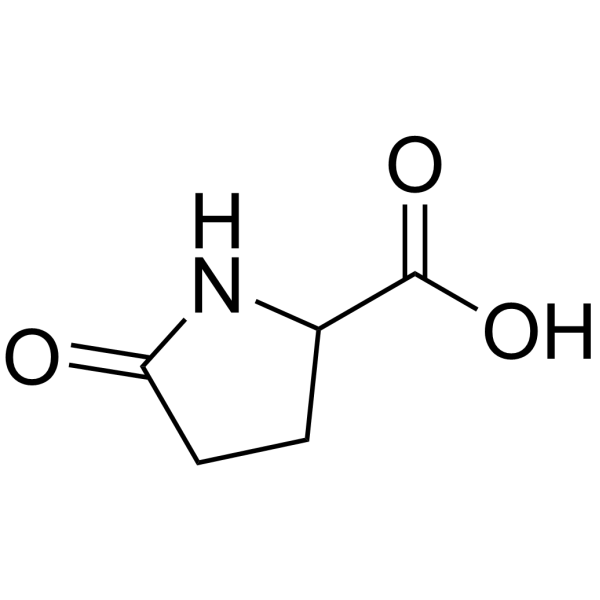
    DL-Pyroglutamic acid
    1 Publications Verification

    Influenza Virus GABA Receptor Infection
    DL-Pyroglutamic acid (CAE) as an inactivator of hepatitis B surface, inactivates vaccinia virus, herpes simplex virus, and influenza virus except poliovirus. DL-Pyroglutamic acid is also a possible inhibitor of GABA transaminase, increases GABA amount with antiepileptic action .
    DL-Pyroglutamic acid
  • HY-155487

    ROR Neurological Disease Inflammation/Immunology
    JTE-151 is a RORγ inhibitor, which can suppress overactive immune response through inhibition of RORγ related to the activation of Th17 cells, making JTE-151 possible to be used in autoimmune disease research .
    JTE-151
  • HY-E70333

    AR2000

    Endogenous Metabolite Others
    Microgranulated pectolytic enzyme is a biocatalyst and a key enzyme in new biocatalyst technology. Enzyme engineering focuses on enhancing enzyme reaction kinetics, substrate selectivity, and activity under harsh conditions such as low or high pH. By introducing stimulus responsiveness to these enzyme modifications, dynamic control of activity is also possible .
    Microgranulated pectolytic enzyme
  • HY-E70332

    Endogenous Metabolite Others
    Lipase, Aspergillus niger is a biocatalyst and a key enzyme in new biocatalyst technology. Enzyme engineering focuses on enhancing enzyme reaction kinetics, substrate selectivity, and activity under harsh conditions such as low or high pH. By introducing stimulus responsiveness to these enzyme modifications, dynamic control of activity is also possible .
    Lipase, Aspergillus niger
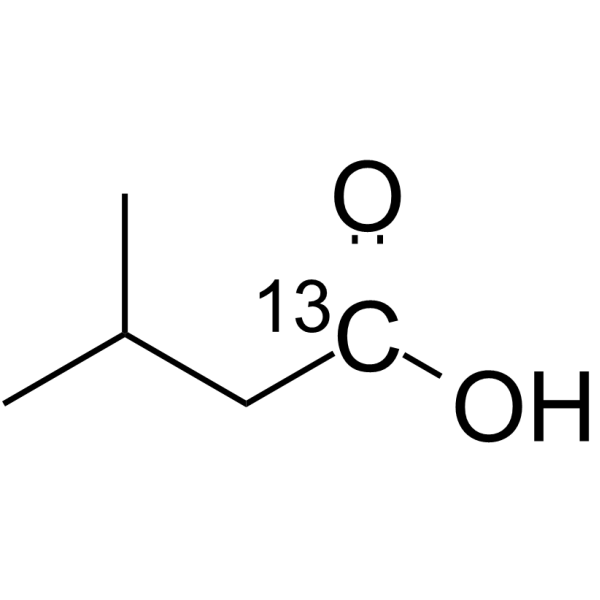
  • HY-W012980S1

    Isotope-Labeled Compounds Endogenous Metabolite Metabolic Disease
    Isovaleric acid- 13C is the 13C labeled Isovaleric acid. Isovaleric acid is a natural fatty acid and known to effect on neonatal death and possible Jamaican vomiting sickness in human.
    Isovaleric acid-13C
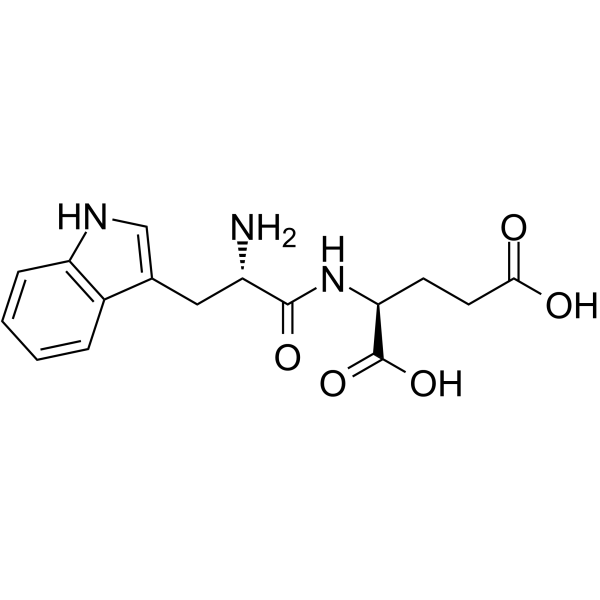
  • HY-128487

    G3335

    PPAR Metabolic Disease
    H-​Trp-​Glu-​OH is a selective, reversible and cell-permeable PPARγ with a Kd of ~8 µM. H-​Trp-​Glu-​OH might be developed as a possible lead compound in diabetes research .
    H-​Trp-​Glu-​OH
  • HY-E70335

    Endogenous Metabolite Others
    Colipase, Porcine is a biocatalyst and a key enzyme in new biocatalyst technology. Enzyme engineering focuses on enhancing enzyme reaction kinetics, substrate selectivity, and activity under harsh conditions such as low or high pH. By introducing stimulus responsiveness to these enzyme modifications, dynamic control of activity is also possible .
    Colipase, Porcine
  • HY-E70353

    Endogenous Metabolite Others
    Trypsin-Chymotrypsin 6:1 is a biocatalyst and a key enzyme in new biocatalyst technology. Enzyme engineering focuses on enhancing enzyme reaction kinetics, substrate selectivity, and activity under harsh conditions such as low or high pH. By introducing stimulus responsiveness to these enzyme modifications, dynamic control of activity is also possible .
    Trypsin-Chymotrypsin 6:1
  • HY-E70312

    Endogenous Metabolite Others
    High-efficiency lipase,Candida antarctica (Immobilized on hydrophilic carrier) is a biocatalyst and a key enzyme in new biocatalyst technology. Enzyme engineering focuses on enhancing enzyme reaction kinetics, substrate selectivity, and activity under harsh conditions such as low or high pH. By introducing stimulus responsiveness to these enzyme modifications, dynamic control of activity is also possible .
    High-efficiency lipase,Candida antarctica (Immobilized on hydrophilic carrier)
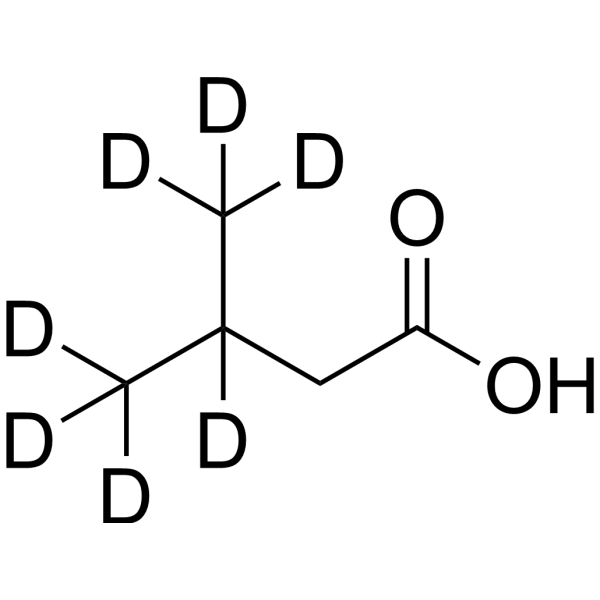
  • HY-W012980S3

    Endogenous Metabolite Metabolic Disease
    Isovaleric acid-d7 is the deuterium labeled Isovaleric acid . Isovaleric acid is a natural fatty acid and known to effect on neonatal death and possible Jamaican vomiting sickness in human .
    Isovaleric acid-d7
  • HY-P1015

    Vasoactive Intestinal Peptide, guinea pig

    PACAP Receptor Neurological Disease Metabolic Disease
    VIP Guinea pig (Vasoactive intestinal peptide), a trophic and mitogenic factor, stimulates growth in whole cultured embryos. VIP Guinea pig functions as a simple gastrointestinal hormone and suggest a possible neurotransmitter function .
    VIP(Guinea pig)
  • HY-161246

    5-HT Receptor Neurological Disease
    uPSEM792 is a pharmacologically selective effector molecules (PSEM) agonist for PSAM 4-GlyR, with an affinity of Ki of 0.7 nM. uPSEM792 is a substrate for efflux transporters in brains of wild type and dual P-gp and BCRP knockout mice. uPSEM7952 is a possible lead for developing the PET radioligand for PSAM 4-GlyR .
    uPSEM792
  • HY-101480

    5-HT Receptor Neurological Disease
    Xylamidine is a peripheral 5-HT receptor antagonist used to investigate possible peripheral appetite suppressant effects of 5-hydroxytryptophan (5-HTP) and fenfluramine. In a 1-hour food intake test, xylamidine attenuated the decrease in food intake induced by 5-HT and 5-HTP, but had no effect on fenfluramine, suggesting that the appetite suppressant effect of 5-HTP is mediated in part through peripheral 5-HT receptors. Microstructural analysis revealed that 5-HTP and fenfluramine induced a decrease in food intake rate and a reduction in feeding batch size. Xylamidine reversed the effects of 5-HTP on food intake rate and induced a slight increase in feeding batch size itself, thus, the peripheral effect of 5-HTP appears to be to slow food intake rate. No effect of xylamidine on fenfluramine-induced changes in feeding was observed. The results suggest that the appetite suppressant effects of 5-HTP and fenfluramine are differentiated based on the peripheral effects of 5-HTP. The peripheral effects of 5-HTP are distinct from the previously reported 5-HT-induced decreases in feeding batch size and duration. Possible mechanisms underlying the differences in peripheral effects of 5-HT and 5-HTP are discussed.
    Xylamidine
  • HY-W012980S2

    Endogenous Metabolite Metabolic Disease
    Isovaleric acid-d2 is the deuterium labeled Isovaleric acid . Isovaleric acid is a natural fatty acid and known to effect on neonatal death and possible Jamaican vomiting sickness in human .
    Isovaleric acid-d2
  • HY-N7206

    Others Metabolic Disease
    5-O-Methylvisamminol, a (furo) chromone identified in the extract of T. glauca, has a limited occurrence in the plant kingdom. 5-O-Methylvisamminol is useful in (chemical) phylogeny and is a possible excellent chemotaxonomic marker (family and/or subfamily level) for Apiaceae .
    5-O-Methylvisamminol
  • HY-E70337

    Endogenous Metabolite Others
    Heparanase 1, Human is a biocatalyst and a key enzyme in new biocatalyst technology. Enzyme engineering focuses on enhancing enzyme reaction kinetics, substrate selectivity, and activity under harsh conditions such as low or high pH. By introducing stimulus responsiveness to these enzyme modifications, dynamic control of activity is also possible .
    Heparanase 1, Human
  • HY-146819

    Carbonic Anhydrase Cancer
    Compound 9 is the most effective against tumor specific Ca ix/ca XII (ki=29.1 and 8.8 nm), so it is possible to evaluate its cytotoxicity and selectivity to HepG-2, HCT-116 and MCF-7 cancer cell lines in vitro, and its IC50 values to tumor cells are 1.78, 1.94 and 3.07, respectively μ M. It showed that it had obvious cytotoxicity.
    CAIX/CAXII-IN-1
  • HY-19660

    H-314-27

    Thrombin Cardiovascular Disease
    Inogatran (H-314-27) is a synthetic thrombin inhibitor, developed for the possible treatment and prophylaxis of arterial and venous thrombotic diseases.
    Inogatran
  • HY-W012980S

    Endogenous Metabolite Metabolic Disease
    Isovaleric acid-d9 is the deuterium labeled Isovaleric acid. Isovaleric acid is a natural fatty acid and known to effect on neonatal death and possible Jamaican vomiting sickness in human.
    Isovaleric acid-d9
  • HY-130313R

    Reference Standards Amino Acid Derivatives Inflammation/Immunology
    Sodium lauroyl glutamate (Standard) is the analytical standard of Sodium lauroyl glutamate. This product is intended for research and analytical applications. Sodium lauroyl glutamate is an anionic amino acid surfactant. Sodium lauroyl glutamate has the irritant contact dermatitis potential, and possible anti-irritating potential in a surfactant mixture on human skin .
    Sodium lauroyl glutamate (Standard)
  • HY-W012735

    (+)-β-Homoproline; (+)-Hexahydronicotinic acid; (+)-3-Carboxypiperidine

    GABA Receptor Neurological Disease
    (+)-Nipecotic acid ((+)-β-Homoproline) is a GABA transport inhibitor with potential antidepressant and anxiolytic activities. (+)-Nipecotic acid can increase the concentration of GABA in the synaptic cleft, thereby enhancing inhibitory neurotransmission. The research on (+)-Nipecotic acid provides a possible direction for the development of new inhibitory compounds for psychiatric diseases .
    (+)-Nipecotic acid
  • HY-E70331

    Endogenous Metabolite Others
    Acid Stable Protease is a biocatalyst and a key enzyme in new biocatalyst technology. Enzyme engineering focuses on enhancing enzyme reaction kinetics, substrate selectivity, and activity under harsh conditions such as low or high pH. By introducing stimulus responsiveness to these enzyme modifications, dynamic control of activity is also possible .
    Acid Stable Protease
  • HY-E70354

    Endogenous Metabolite Others
    Protease for flavors is a biocatalyst and a key enzyme in new biocatalyst technology. Enzyme engineering focuses on enhancing enzyme reaction kinetics, substrate selectivity, and activity under harsh conditions such as low or high pH. By introducing stimulus responsiveness to these enzyme modifications, dynamic control of activity is also possible .
    Protease for flavors
  • HY-E70347

    Endogenous Metabolite Others
    Tn5 Transposase is a biocatalyst and a key enzyme in new biocatalyst technology. Enzyme engineering focuses on enhancing enzyme reaction kinetics, substrate selectivity, and activity under harsh conditions such as low or high pH. By introducing stimulus responsiveness to these enzyme modifications, dynamic control of activity is also possible .
    Tn5 Transposase
  • HY-D0234

    ortho-Cresolphthalein

    Endogenous Metabolite Others
    o-Cresolphthalein (ortho-Cresolphthalein) is a biocatalyst and a key enzyme in new biocatalyst technology. Enzyme engineering focuses on enhancing enzyme reaction kinetics, substrate selectivity, and activity under harsh conditions such as low or high pH. By introducing stimulus responsiveness to these enzyme modifications, dynamic control of activity is also possible .
    o-Cresolphthalein
  • HY-E70352

    Endogenous Metabolite Others
    Trypsin-Chymotrypsin 1:250 is a biocatalyst and a key enzyme in new biocatalyst technology. Enzyme engineering focuses on enhancing enzyme reaction kinetics, substrate selectivity, and activity under harsh conditions such as low or high pH. By introducing stimulus responsiveness to these enzyme modifications, dynamic control of activity is also possible .
    Trypsin-Chymotrypsin 1:250
  • HY-Y0740R

    Reference Standards Endogenous Metabolite Metabolic Disease
    4-Methoxybenzaldehyde (Standard) is the analytical standard of 4-Methoxybenzaldehyde. This product is intended for research and analytical applications. 4-Methoxybenzaldehyde (p-anisaldehyde) is a fragrant phenolic compound. 4-Methoxybenzaldehyde has been found in many plant species including horseradish, anise, star anise. 4-Methoxybenzaldehyde is a possible neurotoxicant and it has shown effects that include mortality, attractancy, and interference with host seeking .
    4-Methoxybenzaldehyde (Standard)
  • HY-N15713

    (+)-Lucidone C

    Drug Derivative Others
    Lucidone C ((+)-Lucidone C) is a terpenoid that can be isolated from Ganoderma lucidum. Ganoderic acid L (HY-N13411) can be a possible precursor of Lucidone C .
    Lucidone C
  • HY-116844

    Glidiazine

    Drug Derivative Insulin Receptor Metabolic Disease
    Glymidine (Glidiazine) is a hypoglycaemic agent. Glymidine is a lipid soluble sulphapyrimidine derivative. Glymidine appears to stimulate insulin release from pancreas. Glymidine is a possible alternative to the sulphonylureas and biguanides for the research of diabetes mellitus .
    Glymidine
  • HY-P1015A

    Vasoactive Intestinal Peptide, guinea pig TFA

    PACAP Receptor Neurological Disease Metabolic Disease
    VIP Guinea pig TFA (Vasoactive intestinal peptide), a trophic and mitogenic factor, stimulates growth in whole cultured embryos. VIP Guinea pig functions as a simple gastrointestinal hormone and suggest a possible neurotransmitter function .
    VIP(Guinea pig) TFA
  • HY-N10064

    Others Metabolic Disease
    Ficusonolide has significant antidiabetic activity with a possible mechanism of interaction with dipeptidyl peptidase-IV (DPP-IV), protein tyrosine phosphatase 1B (PTP-1B), α-glucosidase, and α-amylase.
    Ficusonolide
  • HY-137908

    Prostaglandin Receptor Others
    11β-Misoprostol is one of several impurities which are possible in the production of Misoprostol. Misoprostol is a 15-deoxy-l6-hydroxy-l6-methyl analog of prostaglandin El (PGE1) .
    11β-Misoprostol
  • HY-117091

    Opioid Receptor Neurological Disease Inflammation/Immunology
    DDD-028 is a potent non-opioid, non-cannabinoid analgesic which attenuates neuropathic and inflammatory pain without the possible side effects or abuse potential associated with opioid or cannabinoid activities. DDD-028 can be utilized in analgesic research .
    DDD-028
  • HY-B0835S

    Isotope-Labeled Compounds Apoptosis Reactive Oxygen Species (ROS) Caspase Cholinesterase (ChE) Cardiovascular Disease Neurological Disease Inflammation/Immunology
    Fenobucarb-d3 is the deuterium labeled Fenobucarb. Fenobucarb is a carbamate insecticide. Fenobucarb induces zebrafish developmental neurotoxicity through pathways involved in inflammation, oxidative stress, degeneration and apoptosis. Fenobucarb is a possible risk factor to cardiovascular and cerebrovascular systems in animals .
    Fenobucarb-d3
  • HY-E70338

    Endogenous Metabolite Others
    Ketoamine oxidase is a biocatalyst and a key enzyme in new biocatalyst technology. Enzyme engineering focuses on enhancing enzyme reaction kinetics, substrate selectivity, and activity under harsh conditions such as low or high pH. By introducing stimulus responsiveness to these enzyme modifications, dynamic control of activity is also possible .
    Ketoamine oxidase
  • HY-172348

    Bacterial Infection
    BRD-9327 is an inhibitor of EfpA. BRD-9327 binds in the outer vestibule without complete blockade of the substrate path to the outside, suggesting its possible inhibition of the movement necessary for alternate access of the transporter. BRD-9327 can be used for anti-tuberculosis study .
    BRD-9327
  • HY-E70345

    Endogenous Metabolite Others
    Homocysteine methyltransferase is a biocatalyst and a key enzyme in new biocatalyst technology. Enzyme engineering focuses on enhancing enzyme reaction kinetics, substrate selectivity, and activity under harsh conditions such as low or high pH. By introducing stimulus responsiveness to these enzyme modifications, dynamic control of activity is also possible .
    Homocysteine methyltransferase
  • HY-E70325

    Endogenous Metabolite Others
    Maltogenic amylase is a biocatalyst and a key enzyme in new biocatalyst technology. Enzyme engineering focuses on enhancing enzyme reaction kinetics, substrate selectivity, and activity under harsh conditions such as low or high pH. By introducing stimulus responsiveness to these enzyme modifications, dynamic control of activity is also possible .
    Maltogenic amylase
  • HY-E70324

    Endogenous Metabolite Others
    Amoxicillin acylase (Immobilized) is a biocatalyst and a key enzyme in new biocatalyst technology. Enzyme engineering focuses on enhancing enzyme reaction kinetics, substrate selectivity, and activity under harsh conditions such as low or high pH. By introducing stimulus responsiveness to these enzyme modifications, dynamic control of activity is also possible .
    Amoxicillin acylase (Immobilized)
  • HY-E70322

    Endogenous Metabolite Others
    Cefaclor acylase (Immobilized) is a biocatalyst and a key enzyme in new biocatalyst technology. Enzyme engineering focuses on enhancing enzyme reaction kinetics, substrate selectivity, and activity under harsh conditions such as low or high pH. By introducing stimulus responsiveness to these enzyme modifications, dynamic control of activity is also possible .
    Cefaclor acylase (Immobilized)
  • HY-E70323

    Endogenous Metabolite Others
    Cephalexin acylase (Immobilized) is a biocatalyst and a key enzyme in new biocatalyst technology. Enzyme engineering focuses on enhancing enzyme reaction kinetics, substrate selectivity, and activity under harsh conditions such as low or high pH. By introducing stimulus responsiveness to these enzyme modifications, dynamic control of activity is also possible .
    Cephalexin acylase (Immobilized)

Inquiry Online

Your information is safe with us. * Required Fields.

Salutation


Country or Region *

Applicant Name *


Organization Name *

Department *


Email Address *


Product Name *

Cat. No.


Requested quantity *

Phone Number *


Remarks

Inquiry Online

Inquiry Information

Product Name:
Cat. No.:
Quantity:
MCE Japan Authorized Agent:

