27 Results for "

precision

" in MedChemExpress (MCE) Product Catalog:
Products (27)

27 Results for "precision" in MCE Product Catalog:

3
3 Cited Publications
Cat. No.: HY-150279
CAS No.: 2565638-16-4
Purity:  99.65%
Target:  

DNA/RNA Synthesis

Research Areas:  

Others

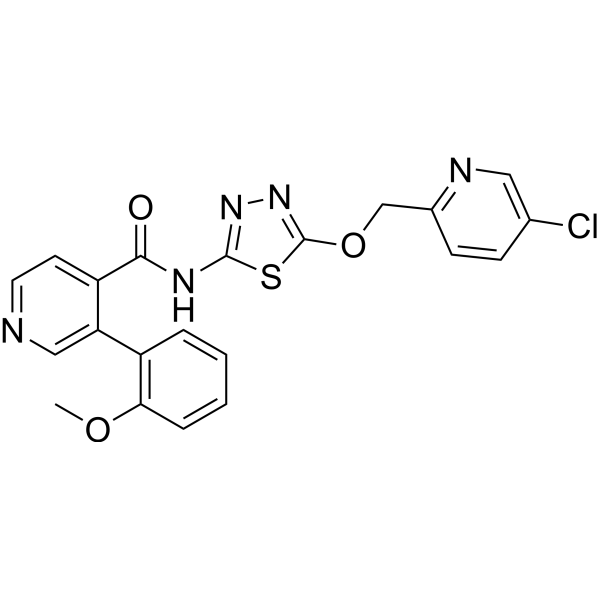
PolQi2 is a PolΘ inhibitor that targets and inhibits alt-EJ (alternative end-joining) repair by inhibiting the helicase domain at the N-terminus of PolΘ. PolQi2 enhances the precision and integration efficiency of gene editing at different loci and in various cell lines. Furthermore, the combined use of PolQi2 with DNA-PK inhibitors reduces the off-target effects of Cas9. PolQi2 can be used in gene editing research .
loading...
    loading...
Cat. No.: HY-159078
CAS No.: 2607139-80-8
Purity:  98.42%
Target:  

DNA/RNA Synthesis

Research Areas:  

Cancer

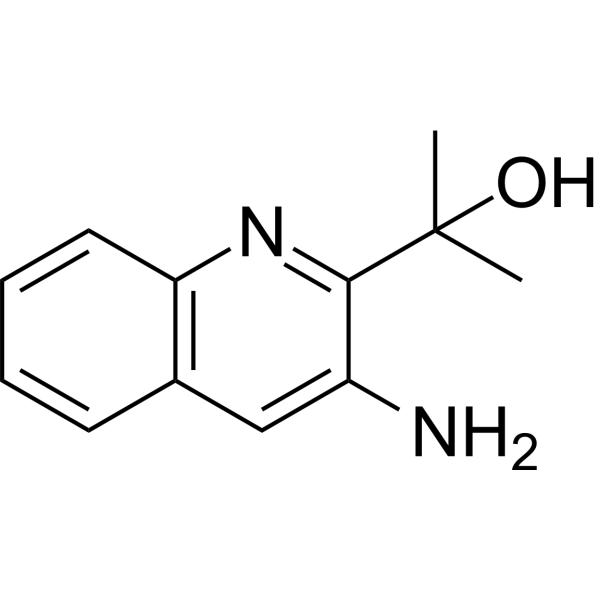
PolQi1 is a selective inhibitor targeting the Polθ domain of DNA polymerase. PolQi1 inhibits the Polθ-mediated microhomology end joining (TMEJ/alt-EJ) pathway, reducing insertion/deletion (Indels) and imprecise editing events during DNA repair. PolQi1 can enhance the efficiency and accuracy of homology-directed repair (HDR) or Prime editing, and reduce off-target effects; and in combination with DNA-PK inhibitor AZD-7648 (HY-111783), exert efficient genome editing capabilities with dual pathway regulation. PolQi1 can be mainly used in gene editing research (such as CRISPR-Cas9 or Prime editing system optimization) to improve the precision editing efficiency of difficult-to-edit cells (such as primary hepatocytes and mouse embryos) .
loading...
    loading...
Cat. No.: HY-109540
CAS No.: 355-42-0
Purity:  98.2%
Synonyms: AF-0150
Perfluorohexane (AF-0150) is a perfluorocarbon. Perfluorohexane is also an enhancer of high-intensity focused ultrasound (HIFU) therapy. Perfluorohexane increases HO-1 and IL-10. Perfluorohexane exerts an antioxidant effect. Perfluorohexane alleviates lung injury induced by LPS (HY-D1056A1). Perfluorohexane improves the efficiency and precision of HIFU and reduces damage to surrounding normal tissues. Perfluorohexane can be used in the study of acute lung injury .
loading...
    loading...
Cat. No.: HY-147240
CAS No.: 1824609-67-7
Purity:  99.92%
Synonyms: ADX-629
Target:  

Interleukin Related

Research Areas:  

Inflammation/Immunology

Acloproxalap (ADX-629) is an orally active reactive aldehyde species (RASP) inhibitor. Acloproxalap binds covalently to free aldehydes, sequesters reactive aldehyde species, malondialdehyde, acetaldehyde and preformed malondialdehyde-acetaldehyde adducts, and reduces elevated RASP levels. Acloproxalap decreases the formation of aldehyde adducts, reduces liver and serum triglyceride levels, hepatic fat accumulation, circulating anti-malondialdehyde-acetaldehyde adduct antibody levels, and inhibits the release of IL-6 and MCP-1. Acloproxalap improves cell viability of liver slices exposed to ethanol. Acloproxalap blocks ethanol-induced damage in animal models of alcoholic liver disease. Acloproxalap is applicable to research related to alcoholic liver disease, alcoholic fatty liver disease, non-alcoholic steatohepatitis, chronic cough, rheumatoid arthritis, ulcerative colitis and mild atopic asthma .
loading...
    loading...
Cat. No.: HY-W440886
Target:  

Liposome

Research Areas:  

Others

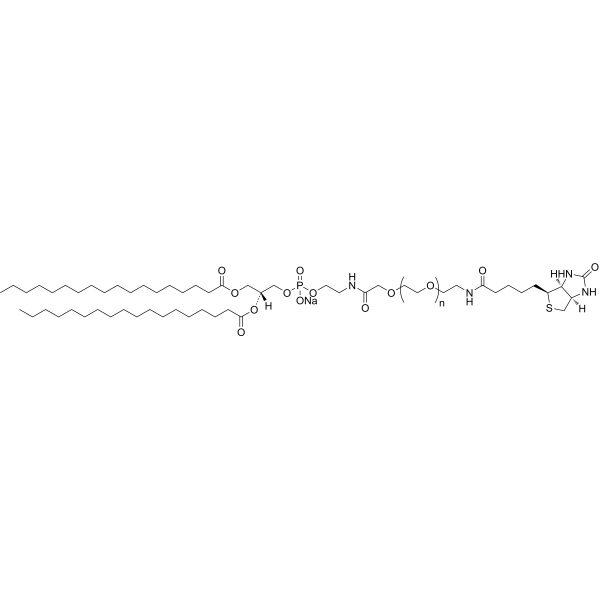
DSPE-PEG3400-Biotin is a phospholipid PEG for biotinylation. The amphiphilic property of the DSPE-PEG is useful for precision drug delivery and cancer therapy.
loading...
    loading...
Cat. No.: HY-D2317
HaloFlipper 30 is a fluorescent probe that covalently reacts with HaloTag fusion proteins to form an ester bond, which allows the probe to be stably attached to membrane structures. HaloFlipper 30 has high specificity, precision and good cell permeability .
loading...
    loading...
Cat. No.: HY-136113
CAS No.: 2031255-23-7
Target:  

Drug Intermediate

Research Areas:  

Cancer

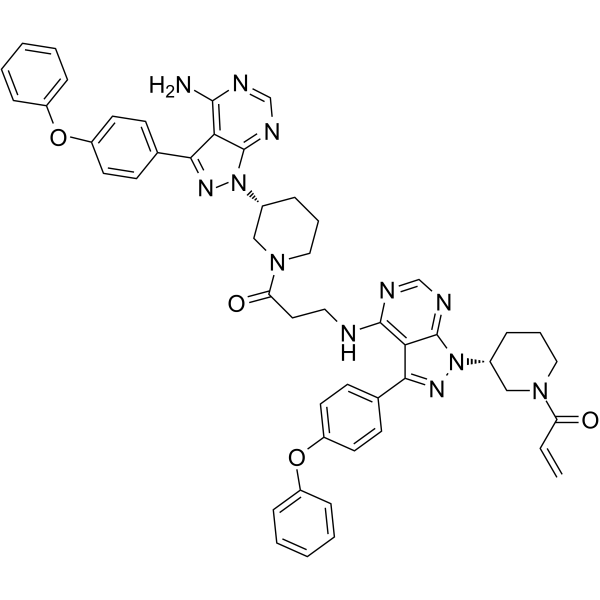
Ibrutinib dimer is an impurity of Ibrutinib (HY-10997). Ibrutinib is a tyrosine kinase inhibitor. Ibrutinib can be used for research on B-cell malignancies .
loading...
    loading...
Cat. No.: HY-E70634
Target:  

Bcr-Abl

Research Areas:  

Cancer

The emergence of mutations in the BCR::ABL1 kinase domain (KD) impairs Imatinib Mesylate (HY-50946) binding capacity, thus contributing to Imatinib Mesylate resistance. Identification of these mutations is important for treatment decisions and precision medicine in chronic myeloid leukaemia (CML). ABL1 E255K Recombinant Human Active Protein Kinase is a recombinant ABL1 E255K protein that can be used to study ABL1 E255K-related functions .
loading...
    loading...
Cat. No.: HY-172923
Target:  

FGFR

Research Areas:  

Cancer

Glu-IN-1 (compound AF1) is a covalent and selective FGFR2 inhibitor with an IC50 of 1.6 μM. Glu-IN-1 covalently modifies Glu489 in FGFR2 .
loading...
    loading...
Cat. No.: HY-117867A
CAS No.: 162705-22-8
Synonyms: AC-7739
Target:  

Endogenous Metabolite

Research Areas:  

Inflammation/Immunology

AVE-8063 (AC-7739) hydrochloride is a therapeutic agent associated with the modulation of inflammatory responses in inflammatory bowel disease (IBD), displaying mechanisms that may be relevant for precision targeting in current therapies.
loading...
    loading...
Cat. No.: HY-155485
Research Areas:  

Cancer

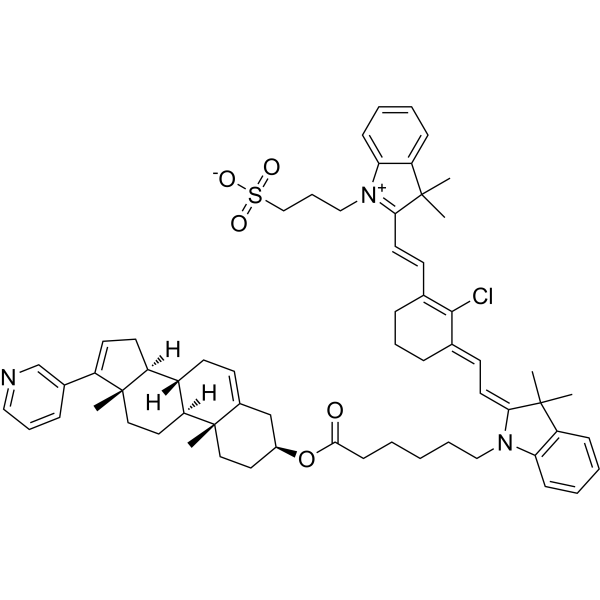
Abi-DZ-1 is a potential multifunctional theranostic agent via the HIF1α/OATPs pathway. Abi-DZ-1 can be used in the research of tumor-targeted imaging and precision therapy .
loading...
    loading...
Cat. No.: HY-E70635
Target:  

Bcr-Abl

Research Areas:  

Cancer

The emergence of mutations in the BCR::ABL1 kinase domain (KD) impairs Imatinib Mesylate (HY-50946) binding capacity, thus contributing to Imatinib Mesylate resistance. Identification of these mutations is important for treatment decisions and precision medicine in chronic myeloid leukaemia (CML). ABL1 F317I Recombinant Human Active Protein Kinase is a recombinant ABL1 F317I protein that can be used to study ABL1 F317I-related functions .
loading...
    loading...
Cat. No.: HY-E70636
Target:  

Bcr-Abl

Research Areas:  

Cancer

The emergence of mutations in the BCR::ABL1 kinase domain (KD) impairs Imatinib Mesylate (HY-50946) binding capacity, thus contributing to Imatinib Mesylate resistance. Identification of these mutations is important for treatment decisions and precision medicine in chronic myeloid leukaemia (CML). ABL1 G250E Recombinant Human Active Protein Kinase is a recombinant ABL1 G250E protein that can be used to study ABL1 G250E-related functions .
loading...
    loading...
Cat. No.: HY-E70637
Target:  

Bcr-Abl

Research Areas:  

Cancer

The emergence of mutations in the BCR::ABL1 kinase domain (KD) impairs Imatinib Mesylate (HY-50946) binding capacity, thus contributing to Imatinib Mesylate resistance. Identification of these mutations is important for treatment decisions and precision medicine in chronic myeloid leukaemia (CML). ABL1 H396P Recombinant Human Active Protein Kinase is a recombinant ABL1 H396P protein that can be used to study ABL1 H396P-related functions .
loading...
    loading...
Cat. No.: HY-E70638
Target:  

Bcr-Abl

Research Areas:  

Cancer

The emergence of mutations in the BCR::ABL1 kinase domain (KD) impairs Imatinib Mesylate (HY-50946) binding capacity, thus contributing to Imatinib Mesylate resistance. Identification of these mutations is important for treatment decisions and precision medicine in chronic myeloid leukaemia (CML). ABL1 M351T Recombinant Human Active Protein Kinase is a recombinant ABL1 M351T protein that can be used to study ABL1 M351T-related functions .
loading...
    loading...
Cat. No.: HY-E70639
Target:  

Bcr-Abl

Research Areas:  

Cancer

The emergence of mutations in the BCR::ABL1 kinase domain (KD) impairs Imatinib Mesylate (HY-50946) binding capacity, thus contributing to Imatinib Mesylate resistance. Identification of these mutations is important for treatment decisions and precision medicine in chronic myeloid leukaemia (CML). ABL1 Q252H Recombinant Human Active Protein Kinase is a recombinant ABL1 Q252H protein that can be used to study ABL1 Q252H-related functions .
loading...
    loading...
Cat. No.: HY-E70640
Target:  

Bcr-Abl

Research Areas:  

Cancer

The emergence of mutations in the BCR::ABL1 kinase domain (KD) impairs Imatinib Mesylate (HY-50946) binding capacity, thus contributing to Imatinib Mesylate resistance. Identification of these mutations is important for treatment decisions and precision medicine in chronic myeloid leukaemia (CML). ABL1 T315I Recombinant Human Active Protein Kinase is a recombinant ABL1 T315I protein that can be used to study ABL1 T315I-related functions .
loading...
    loading...
Cat. No.: HY-E70641
Target:  

Bcr-Abl

Research Areas:  

Cancer

The emergence of mutations in the BCR::ABL1 kinase domain (KD) impairs Imatinib Mesylate (HY-50946) binding capacity, thus contributing to Imatinib Mesylate resistance. Identification of these mutations is important for treatment decisions and precision medicine in chronic myeloid leukaemia (CML). ABL1 Y253F Recombinant Human Active Protein Kinase is a recombinant ABL1 Y253F protein that can be used to study ABL1 Y253F-related functions .
loading...
    loading...
Cat. No.: HY-P5415
CAS No.: 127134-13-8
Target:  

HIV

Research Areas:  

Others

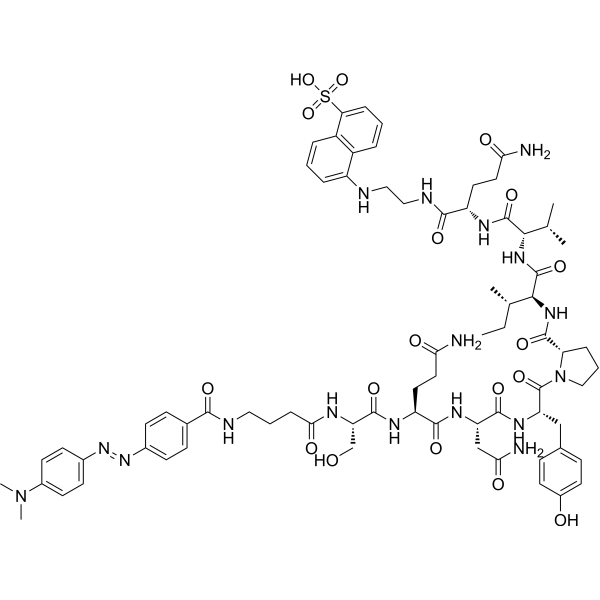
DABCYL-GABA-Ser-Gln-Asn-Tyr-Pro-Ile-Val-Gln-EDANS is a biological active peptide. (DABCYL-GABA-Ser-Gln-Asn-Tyr-Pro-Ile-Val-Gln-EDANS is also called HIV protease substrate I in some literature. It is widely used for the continuous assay for HIV protease activity. The 11-Kd protease (PR) encoded by the human immunodeficiency virus 1 (HIV-1) is essential for the correct processing of viral polyproteins and the maturation of infectious virus, and is therefore a target for the design of selective acquired immunodeficiency syndrome (AIDS) therapeutics. The FRET-based fluorogenic substrate is derived from a natural processing site for HIV-1 PR. Incubation of recombinant HIV-1 PR with the fluorogenic substrate resulted in specific cleavage at the Tyr-Pro bond and a time-dependent increase in fluorescence intensity that is linearly related to the extent of substrate hydrolysis. The fluorescence quantum yields of the HIV-1 PR substrate in the FRET assay increased by 40.0- and 34.4-fold, respectively, per mole of substrate cleaved. Because of its simplicity and precision in the determination of reaction rates required for kinetic analysis, this substrate offers many advantages over the commonly used HPLC or electrophoresis-based assays for peptide substrate hydrolysis by retroviral PRs. Abs/Em = 340nm/490nm.)
loading...
    loading...
Cat. No.: HY-L264
1,544 compounds

DNA damage response (DDR) is a fundamental mechanism for maintaining genomic stability. When DNA damage occurs, such as single- or double-strand breaks or replication fork stalling, cells rely on key proteins including ATM, ATR, PARP, and DNA-PK to sense the damage and transmit signals, thereby regulating DNA repair, cell-cycle arrest, and cell death. Inhibition of specific DNA repair or checkpoint pathways can prevent tumor cells from effectively repairing accumulated DNA damage, ultimately leading to tumor cell death.

MCE DNA Damage Repair Inhibitor Library contains 1,544 compounds, focusing on key nodes involved in DNA damage response and DNA repair. The library covers multiple DNA repair and cell-cycle checkpoint pathways, providing a systematic compound screening tool for research on precision oncology, synthetic lethality, drug resistance mechanisms, and chemo- or radiosensitization.

