1. Search Result
Search Result
Results for "

pyrimidine nucleotides

" in MedChemExpress (MCE) Product Catalog:

30

Inhibitors & Agonists

1

Screening Libraries

1

MCE Kits

14

Natural
Products

9

Isotope-Labeled Compounds

3

Oligonucleotides

Cat. No. Product Name Target Research Areas Chemical Structure
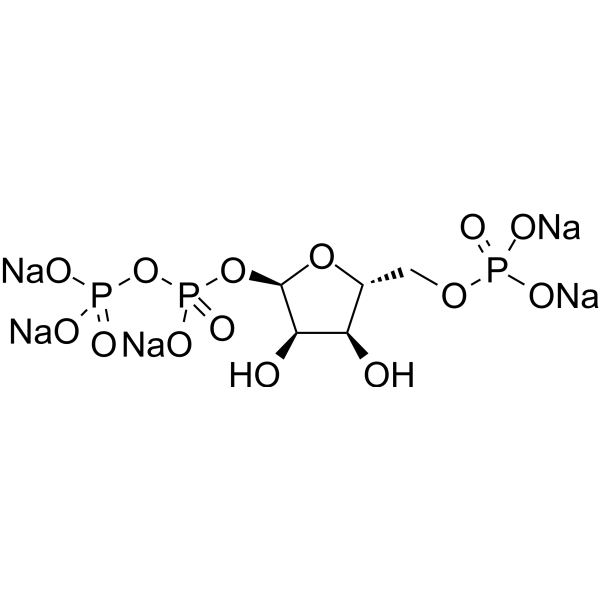
  • HY-W013046

    PRPP pentasodium

    Endogenous Metabolite Others
    Phosphoribosyl pyrophosphate (PRPP) pentasodium is an important metabolite required in the biosynthesis of purine and pyrimidine nucleotides, the amino acids histidine and tryptophan, and the cofactors NAD and NADP .
    Phosphoribosyl pyrophosphate pentasodium
  • HY-N0157
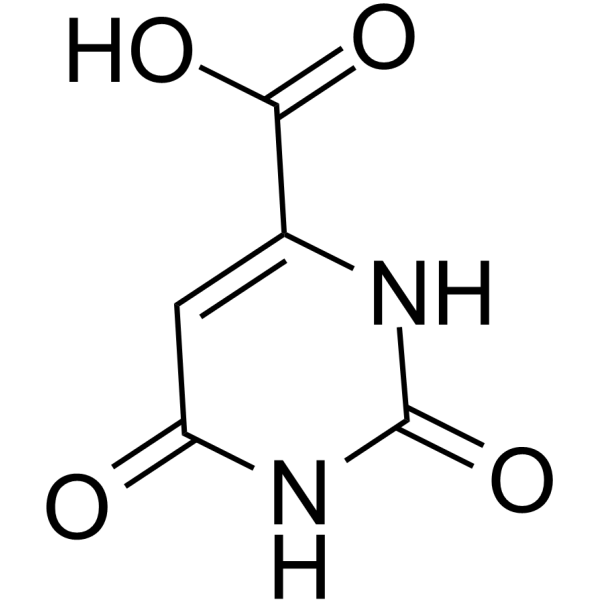
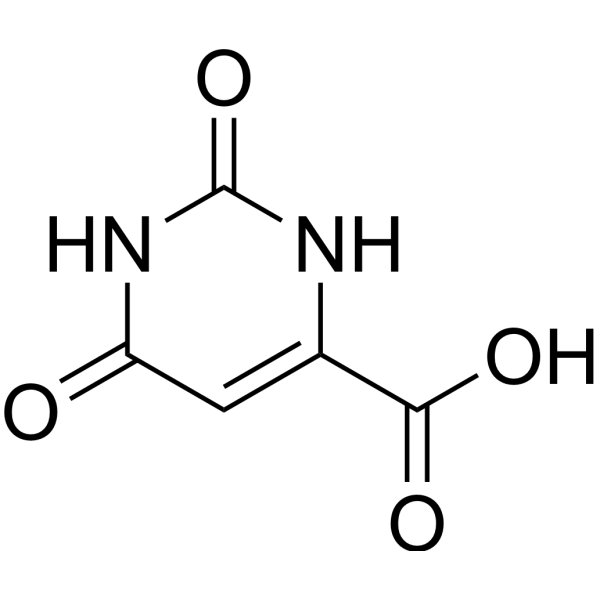
    Orotic acid
    3 Publications Verification

    6-Carboxyuracil; Vitamin B13

    Nucleoside Antimetabolite/Analog Endogenous Metabolite Metabolic Disease
    Orotic acid (6-Carboxyuracil), a precursor in biosynthesis of pyrimidine nucleotides and RNA, is released from the mitochondrial dihydroorotate dehydrogenase (DHODH) for conversion to UMP by the cytoplasmic UMP synthase enzyme. Orotic acid is a marker for measurement in routine newborn screening for urea cycle disorders. Orotic acid can induce hepatic steatosis and hepatomegaly in rats .
    Orotic acid
  • HY-125818
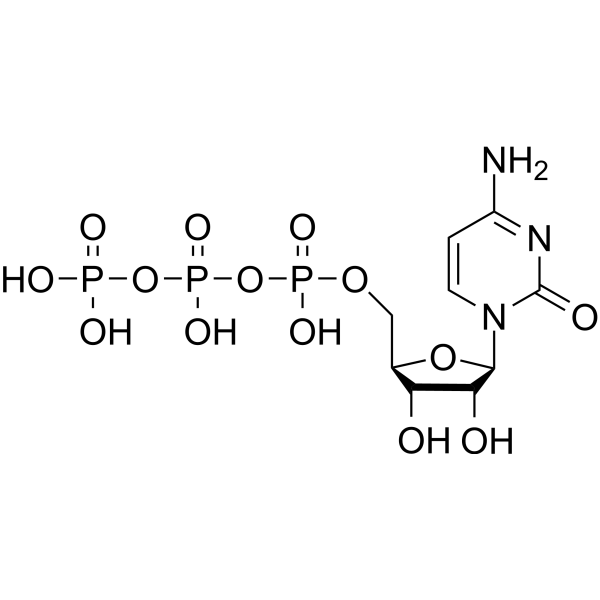
    Cytidine-5'-triphosphate
    3 Publications Verification

    Cytidine triphosphate; 5'-CTP

    DNA/RNA Synthesis Nucleoside Antimetabolite/Analog Endogenous Metabolite Metabolic Disease
    Cytidine 5′-triphosphate (Cytidine triphosphate; 5'-CTP) is a nucleoside triphosphate and serves as a building block for nucleotides and nucleic acids, lipid biosynthesis. Cytidine triphosphate synthase can catalyze the formation of cytidine 5′-triphosphate from uridine 5′-triphosphate (UTP). Cytidine 5′-triphosphate is an essential biomolecule in the de novo pyrimidine biosynthetic pathway in T. gondii .
    Cytidine-5'-triphosphate
  • HY-D0186
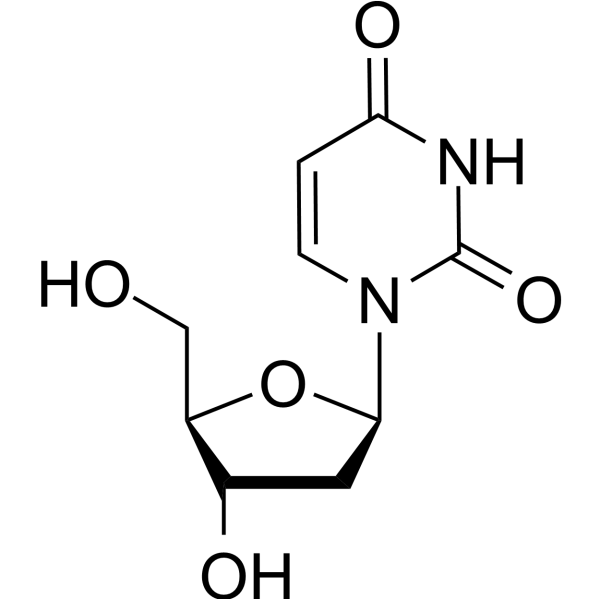
    2'-Deoxyuridine
    3 Publications Verification

    Endogenous Metabolite Thymidylate Synthase Infection
    2’-deoxyuridine is a brain-penetrant pyrimidines nucleotide that is associated with nervous system diseases. 2'-Deoxyuridine could increase chromosome breakage and results in a decreased thymidylate synthetase activity. 2'-Deoxyuridine is a precursor in the synthesis of Edoxudine (HY-B1011) and also an analogue of 5-ethynyl-2'-deoxyuridine, EdU (HY-118411). 2’-deoxyuridine reduces microglial activation and improve oxidative stress damage by modulating glycolytic metabolism on the Aβ25-35-induced brain injury, which is promising for research of Alzheimer’s disease (AD) .
    2'-Deoxyuridine
  • HY-113226
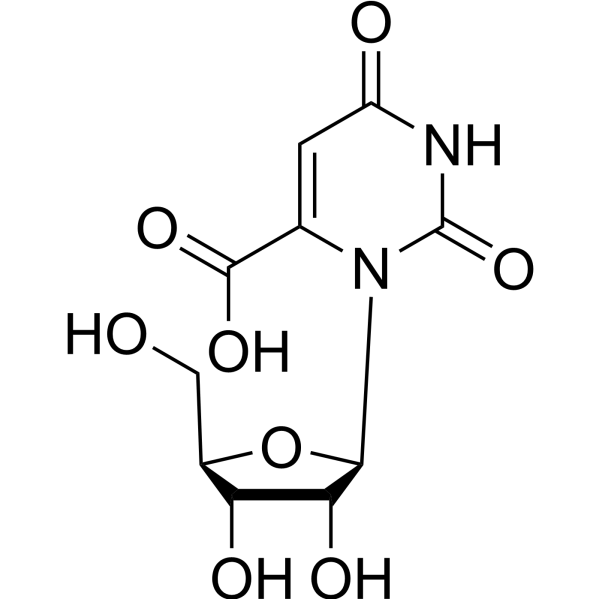
    Orotidine
    1 Publications Verification

    Endogenous Metabolite Others
    Orotidine, a nucleotide, is an intermediate in pyrimidine nucleotide biosynthesis in RNA and DNA. Orotidine is mainly found in bacteria, fungi and plants .
    Orotidine
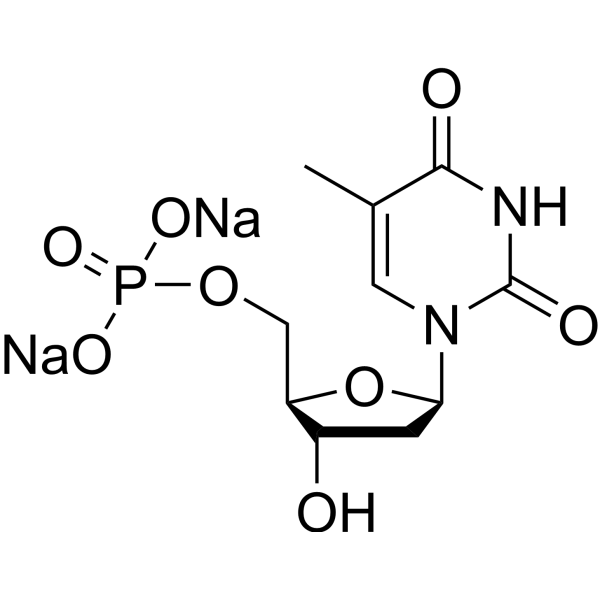
  • HY-128738
    Thymidine-5'-monophosphate disodium salt
    1 Publications Verification

    TMP disodium salt

    Endogenous Metabolite DNA/RNA Synthesis Metabolic Disease
    Thymidine-5'-monophosphate (TMP) disodium salt is a key nucleotide in pyrimidine metabolism, and its kinase activity can be competitively inhibited by 5'-fluorothymidine. The level of Thymidine-5'-monophosphate disodium salt is closely associated with acute kidney injury .
    Thymidine-5'-monophosphate disodium salt
  • HY-N8060A
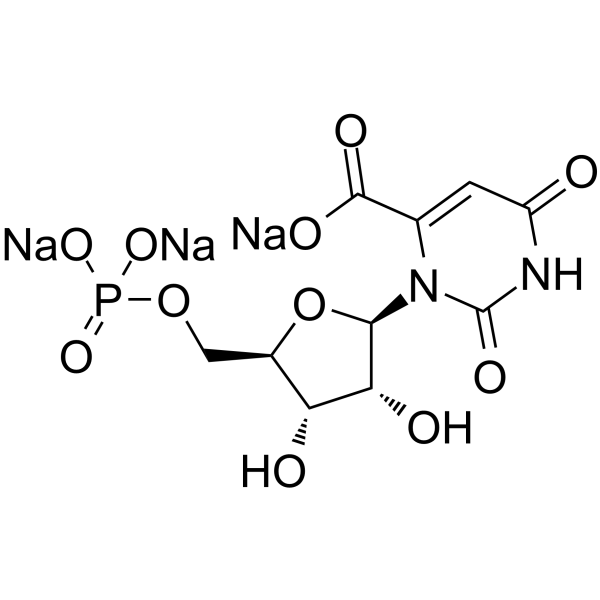
    Orotidine 5′-monophosphate trisodium
    1 Publications Verification

    Orotidine monophosphate trisodium; Orotidylic acid trisodium

    Endogenous Metabolite DNA/RNA Synthesis Metabolic Disease
    Orotidine 5'-monophosphate trisodium is a pyrimidine nucleotide. Orotidine 5'-monophosphate trisodium is synthesized via the de novo synthesis pathway for DNA synthesis in a large number of microorganisms including M. tuberculosis, S. cerevisiae, S. typhimurium and P. falciparum to name a few. The synthesis of orotidine 5'-monophosphate trisodium uses phosphoribosyl pyrophosphate (PRPP) and orotic acid (OA) as the substrates catalyzed by orotate phosphoribosyltransferase (OPRT) .
    Orotidine 5′-monophosphate trisodium
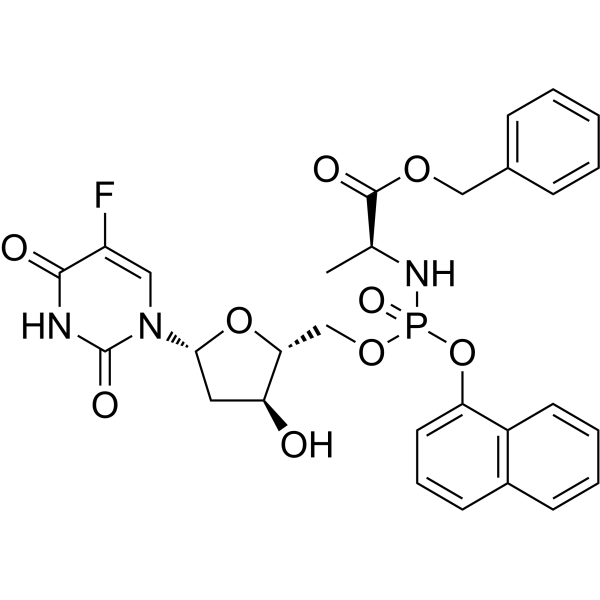
  • HY-109115
    Fosifloxuridine nafalbenamide
    2 Publications Verification

    NUC-3373

    Thymidylate Synthase Cancer
    Fosifloxuridine nafalbenamide (NUC-3373), a pyrimidine nucleotide analogue, is a Thymidylate synthase inhibitor. Fosifloxuridine nafalbenamide has anticancer activity. Fosifloxuridine nafalbenamide has the potential to evoke a host immune response and enhance immunoresearch .
    Fosifloxuridine nafalbenamide
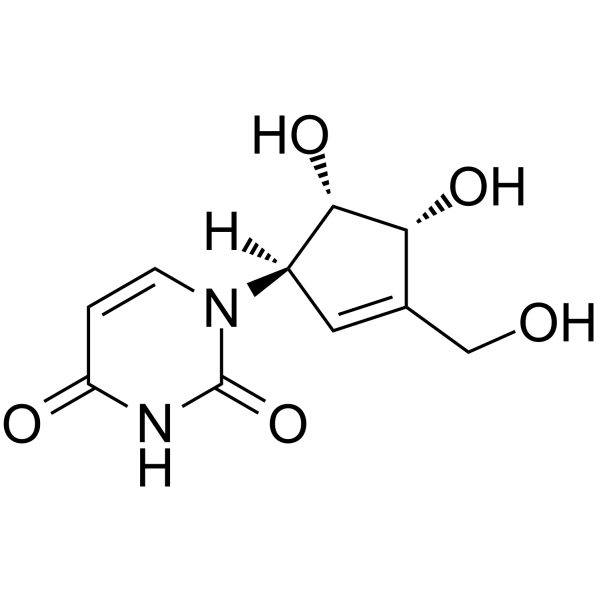
  • HY-145668

    UGT Cancer
    Cyclopentenyl uracil, a non-cytotoxic inhibitor of uridine kinase, effectively blocks the salvage of circulating uridine by host and tumor tissues in the intact mouse .
    Cyclopentenyl uracil
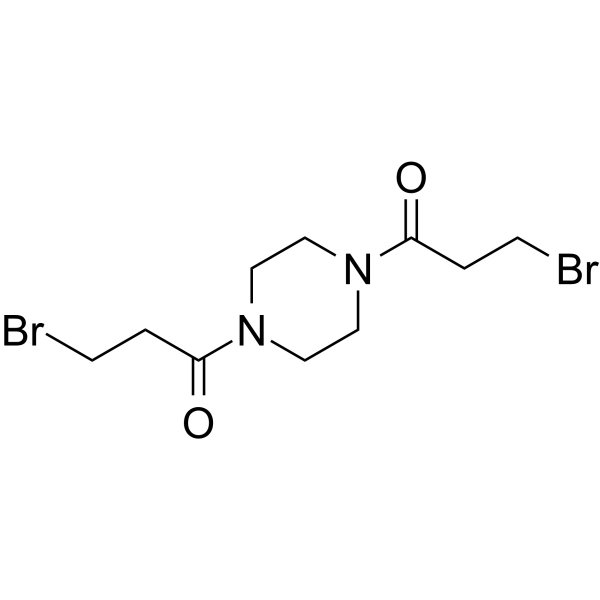
  • HY-16398

    DNA Alkylator/Crosslinker DNA/RNA Synthesis Cancer
    Pipobroman is a bromide derivative of piperazine and acts as an alkylating agent. Pipobroman plays its role by inhibiting DNA and RNA polymerase or by reducing pyrimidine nucleotide incorporation into DNA. Pipobroman can be used for the cancer research, including polycythemia vera, myeloproliferative neoplasm, and AML et.al .
    Pipobroman
  • HY-N0157R

    6-Carboxyuracil (Standard); Vitamin B13 (Standard)

    Reference Standards Nucleoside Antimetabolite/Analog Endogenous Metabolite Metabolic Disease
    Orotic acid (Standard) is the analytical standard of Orotic acid. This product is intended for research and analytical applications. Orotic acid (6-Carboxyuracil), a precursor in biosynthesis of pyrimidine nucleotides and RNA, is released from the mitochondrial dihydroorotate dehydrogenase (DHODH) for conversion to UMP by the cytoplasmic UMP synthase enzyme. Orotic acid is a marker for measurement in routine newborn screening for urea cycle disorders. Orotic acid can induce hepatic steatosis and hepatomegaly in rats .
    Orotic acid (Standard)
  • HY-128425A
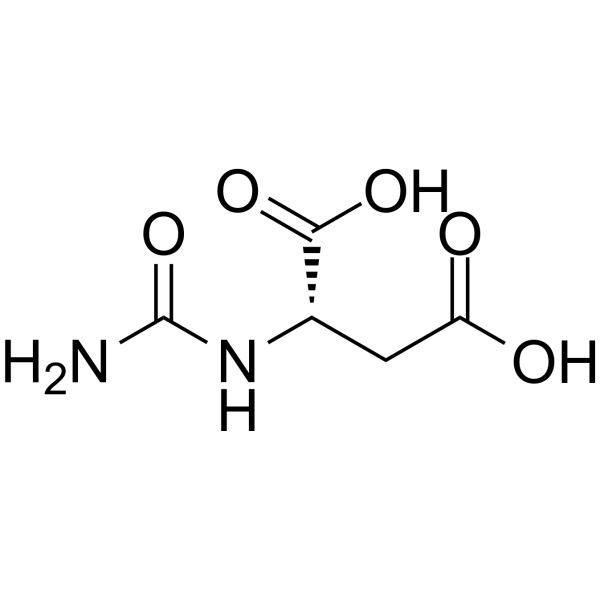
    N-Carbamoyl-L-aspartic acid
    1 Publications Verification

    L-Ureidosuccinic acid

    Fungal Infection
    N-Carbamoyl-L-aspartic acid (L-Ureidosuccinic acid) is an important pyrimidine metabolic precursor and intermediate metabolite. N-Carbamoyl-L-aspartic acid reverses the growth inhibition of Ura + strains induced by 2-thiouracil (with growth rate increasing linearly with its concentration), but fails to support the growth of uracil-requiring Ura - strains. N-Carbamoyl-L-aspartic acid inhibits the cell growth of *Saccharomyces cerevisiae* by suppressing the purine biosynthetic pathway at a pre-step of 5-aminoimidazole nucleotide synthesis. The growth inhibitory effect of N-Carbamoyl-L-aspartic acid on yeast can be alleviated by purines, and the sensitivity of strains is closely related to the activity level of dihydroorotase .
    N-Carbamoyl-L-aspartic acid
  • HY-N0157A
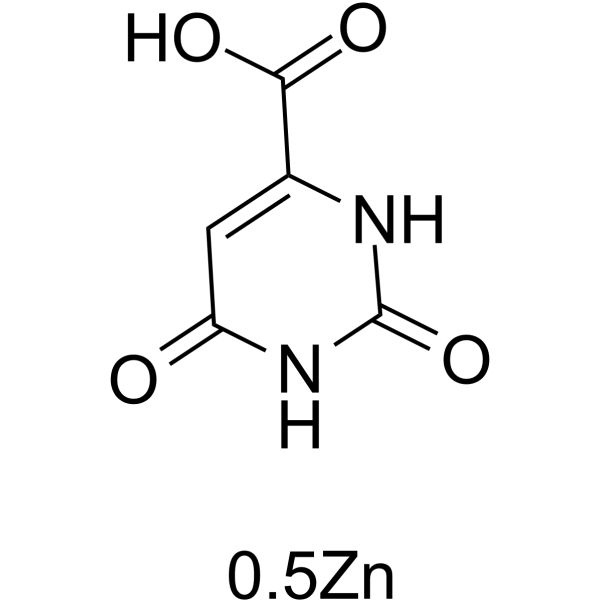
    Orotic acid zinc
    3 Publications Verification

    6-Carboxyuracil zinc; Vitamin B13 zinc

    Nucleoside Antimetabolite/Analog Endogenous Metabolite Metabolic Disease
    Orotic acid (zinc), a precursor in biosynthesis of pyrimidine nucleotides and RNA, is released from the mitochondrial dihydroorotate dehydrogenase (DHODH) for conversion to UMP by the cytoplasmic UMP synthase enzyme. Orotic acid (zinc) is a marker for measurement in routine newborn screening for urea cycle disorders. Orotic acid (zinc) can induce hepatic steatosis and hepatomegaly in rats .
    Orotic acid zinc
  • HY-123032

    BV-araU

    DNA/RNA Synthesis Infection
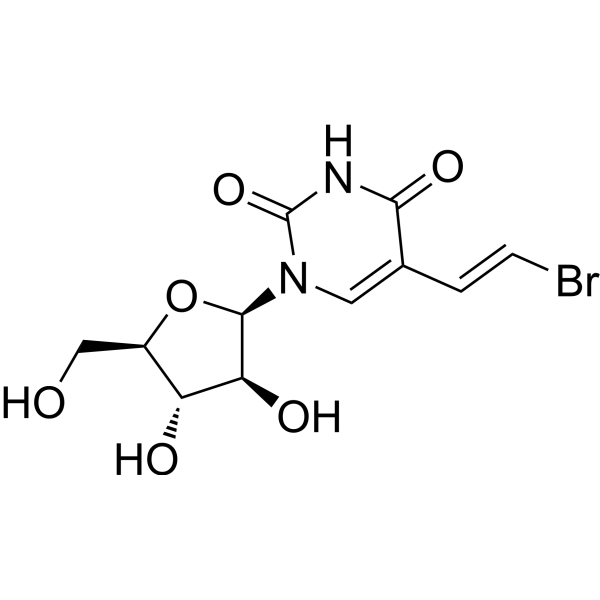
    Sorivudine (BV-araU) is an orally active synthetic pyrimidine nucleoside antimetabolite agent. Sorivudine derives its antiviral activity from selective conversion by a specific thymidine kinase present in certain DNA viruses to nucleotides, which can in turn interfere with viral DNA synthesis .
    Sorivudine
  • HY-125818S3

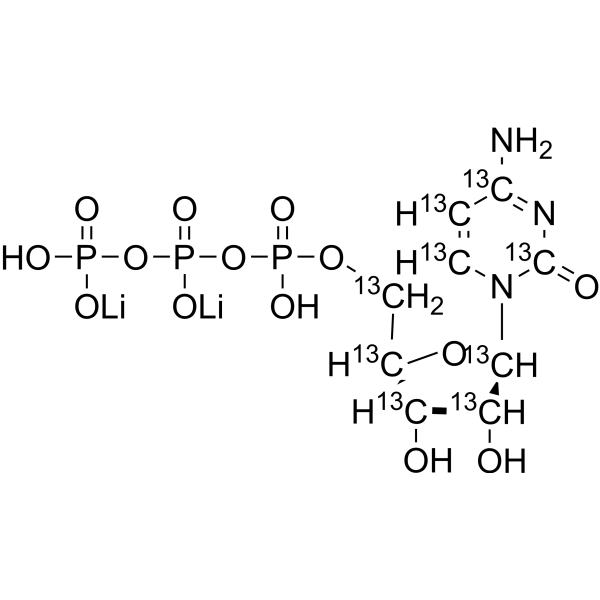
    Cytidine triphosphate-13C9 dilithium; 5'-CTP-13C9 dilithium

    Isotope-Labeled Compounds DNA/RNA Synthesis Nucleoside Antimetabolite/Analog Endogenous Metabolite Metabolic Disease
    Cytidine-5'-triphosphate- 13C9 (Cytidine triphosphate- 13C9 dilithium; 5'-CTP- 13C9) dilithium is 13C-labeled Cytidine-5'-triphosphate (HY-125818). Cytidine 5′-triphosphate (Cytidine triphosphate; 5'-CTP) is a nucleoside triphosphate and serves as a building block for nucleotides and nucleic acids, lipid biosynthesis. Cytidine triphosphate synthase can catalyze the formation of cytidine 5′-triphosphate from uridine 5′-triphosphate (UTP). Cytidine 5′-triphosphate is an essential biomolecule in the de novo pyrimidine biosynthetic pathway in T. gondii.
    Cytidine-5'-triphosphate-13C9 dilithium
  • HY-N0157S1

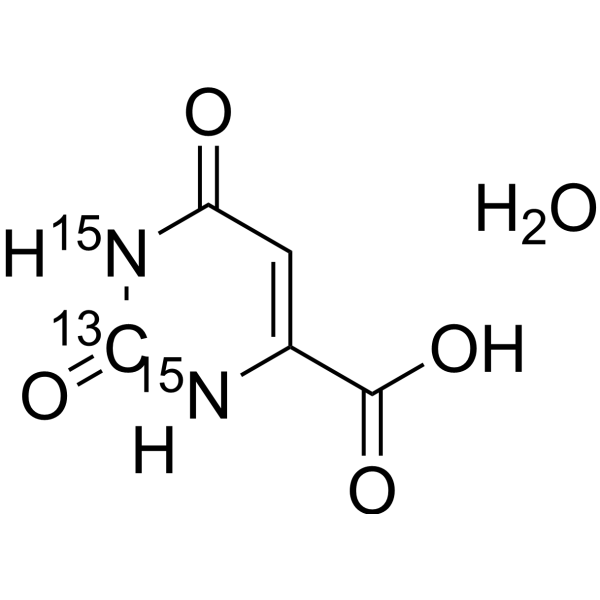
    6-Carboxyuracil-13C,15N2 monohydrate; Vitamin B13-13C,15N2 monohydrate

    Nucleoside Antimetabolite/Analog Endogenous Metabolite Metabolic Disease
    Orotic acid- 13C, 15N2 (monohydrate) is the 13C and 15N labeled Orotic acid . Orotic acid (6-Carboxyuracil), a precursor in biosynthesis of pyrimidine nucleotides and RNA, is released from the mitochondrial dihydroorotate dehydrogenase (DHODH) for conversion to UMP by the cytoplasmic UMP synthase enzyme. Orotic acid is a marker for measurement in routine newborn screening for urea cycle disorders. Orotic acid can induce hepatic steatosis and hepatomegaly in rats .
    Orotic acid-13C,15N2 monohydrate
  • HY-D0186R

    Reference Standards Endogenous Metabolite Thymidylate Synthase Infection
    2'-Deoxyuridine (Standard) is the analytical standard of 2'-Deoxyuridine. This product is intended for research and analytical applications. 2’-deoxyuridine is a brain-penetrant pyrimidines nucleotide that is associated with nervous system diseases. 2'-Deoxyuridine could increase chromosome breakage and results in a decreased thymidylate synthetase activity. 2'-Deoxyuridine is a precursor in the synthesis of Edoxudine (HY-B1011) and also an analogue of 5-ethynyl-2'-deoxyuridine, EdU (HY-118411). 2’-deoxyuridine reduces microglial activation and improve oxidative stress damage by modulating glycolytic metabolism on the Aβ25-35-induced brain injury, which is promising for research of Alzheimer’s disease (AD) . In Vitro:The interaction between the 2-deoxyuridine and the column increases the duration of retention of 2-deoxyuridine .
    Gradient elution with sodium acetate buffer-ACN eluent on two ZIC-HILIC homemade columns separates 2-deoxyuridine in under 9 min .
    In Vivo:2'-Deoxyuridine (34.42 ng/mL, gavage, 15 min) passes the blood-brain barrier (BBB) to enter the hippocampus of mice brain .
    2'-Deoxyuridine (20 mg/kg, gavage, daily for 4 weeks) improves cognition and memory loss and attenuates the damage to the hippocampus in Aβ25-35-induced mice model .
    2'-Deoxyuridine (Standard)
  • HY-134529

    Ribose 1-phosphate

    Endogenous Metabolite Others
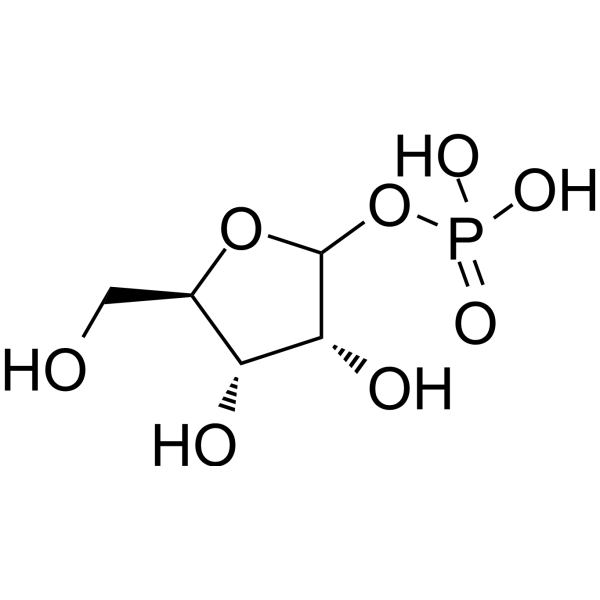
    D-Ribofuranose 1-dihydrogenphosphate (Ribose 1-phosphate) dicyclohexanamine is a pentose phosphate and serves as a key intermediate metabolite in the salvage synthesis pathway of purine and pyrimidine nucleotides. In nucleotide salvage synthesis, D-Ribofuranose 1-dihydrogenphosphate dicyclohexanamine directly "transfers" the ribosyl group from purine nucleosides to pyrimidine bases, acting as a hub molecule linking nucleoside/base metabolism with pentose phosphate metabolism .
    D-Ribofuranose1-dihydrogenphosphate
  • HY-W778990

    Isotope-Labeled Compounds Thymidylate Synthase Endogenous Metabolite Infection
    2-Deoxyuridine-1,2,3,4,5- 13C5 is the 13C-labeled 2'-Deoxyuridine (HY-D0186). 2’-deoxyuridine is a brain-penetrant pyrimidines nucleotide that is associated with nervous system diseases. 2'-Deoxyuridine could increase chromosome breakage and results in a decreased thymidylate synthetase activity. 2'-Deoxyuridine is a precursor in the synthesis of Edoxudine (HY-B1011) and also an analogue of 5-ethynyl-2'-deoxyuridine, EdU (HY-118411). 2’-deoxyuridine reduces microglial activation and improve oxidative stress damage by modulating glycolytic metabolism on the Aβ25-35-induced brain injury, which is promising for research of Alzheimer’s disease (AD) .
    2-Deoxyuridine-1,2,3,4,5-13C5
  • HY-105916

    mGluR Cancer
    NSC 303861 is an L-glutamine receptor antagonist. NSC 303861 selectively inhibits glutamine dependent enzymes in purine nucleotide synthesis without affecting pyrimidine synthase. NSC 303861 has significant cytotoxicity against liver cancer 3924A cells (LC50 = 6 µM). NSC 303861 can be used for cancer research .
    NSC 303861
  • HY-125818C

    Cytidine triphosphate disodium hydrate; 5'-CTP disodium hydrate

    DNA/RNA Synthesis Nucleoside Antimetabolite/Analog Endogenous Metabolite Metabolic Disease
    Cytidine 5′-triphosphate is a nucleoside triphosphate and serves as a building block for nucleotides and nucleic acids, lipid biosynthesis. Cytidine triphosphate synthase can catalyze the formation of cytidine 5′-triphosphate from uridine 5′-triphosphate (UTP). Cytidine 5′-triphosphate is an essential biomolecule in the de novo pyrimidine biosynthetic pathway in T. gondii .
    Cytidine-5'-triphosphate disodium hydrate
  • HY-16398R

    DNA Alkylator/Crosslinker DNA/RNA Synthesis Reference Standards Cancer
    Pipobroman (Standard) is the analytical standard of Pipobroman. This product is intended for research and analytical applications. Pipobroman is a bromide derivative of piperazine and acts as an alkylating agent. Pipobroman plays its role by inhibiting DNA and RNA polymerase or by reducing pyrimidine nucleotide incorporation into DNA. Pipobroman can be used for the cancer research, including polycythemia vera, myeloproliferative neoplasm, and AML et.al .
    Pipobroman (Standard)
  • HY-128738R

    TMP disodium salt (Standard)

    Reference Standards Endogenous Metabolite DNA/RNA Synthesis Metabolic Disease
    Thymidine-5'-monophosphate (TMP) disodium salt (Standard) is the analytical standard of Thymidine-5'-monophosphate disodium salt (HY-128738). This product is intended for research and analytical applications. Thymidine-5'-monophosphate (TMP) disodium salt is a key nucleotide in pyrimidine metabolism, and its kinase activity can be competitively inhibited by 5'-fluorothymidine. The level of Thymidine-5'-monophosphate disodium salt is closely associated with acute kidney injury.
    Thymidine-5'-monophosphate disodium salt (Standard)
  • HY-125818S1

    Nucleoside Antimetabolite/Analog DNA/RNA Synthesis Endogenous Metabolite Metabolic Disease
    Cytidine-5′-triphosphate-d14 disodium is the deuterium labeled Cytidine-5'-triphosphate . Cytidine 5′-triphosphate (Cytidine triphosphate;5'-CTP) is a nucleoside triphosphate and serves as a building block for nucleotides and nucleic acids, lipid biosynthesis. Cytidine triphosphate synthase can catalyze the formation of cytidine 5′-triphosphate from uridine 5′-triphosphate (UTP). Cytidine 5′-triphosphate is an essential biomolecule in the de novo pyrimidine biosynthetic pathway in T. gondii .
    Cytidine-5′-triphosphate-d14 disodium
  • HY-W754064

    Cytidine triphosphate-13C5; 5'-CTP-13C5; Cytidine-5'-triphosphate-1',2',3',4',5'-13C5 Triethylamine Salt

    Isotope-Labeled Compounds Nucleoside Antimetabolite/Analog DNA/RNA Synthesis Endogenous Metabolite Metabolic Disease
    Cytidine-5'-triphosphate- 13C5 (Cytidine triphosphate- 13C5) is the 13C-labeled Cytidine-5'-triphosphate (HY-125818). Cytidine 5′-triphosphate (Cytidine triphosphate; 5'-CTP) is a nucleoside triphosphate and serves as a building block for nucleotides and nucleic acids, lipid biosynthesis. Cytidine triphosphate synthase can catalyze the formation of cytidine 5′-triphosphate from uridine 5′-triphosphate (UTP). Cytidine 5′-triphosphate is an essential biomolecule?in the de novo?pyrimidine biosynthetic pathway in?T. gondii .
    Cytidine-5'-triphosphate-13C5
  • HY-125818S4

    Cytidine triphosphate-d14 dilithium; 5'-CTP-d14 dilithium

    Isotope-Labeled Compounds DNA/RNA Synthesis Nucleoside Antimetabolite/Analog Endogenous Metabolite Metabolic Disease
    Cytidine-5'-triphosphate-d14 (Cytidine triphosphate-d14 dilithium; 5'-CTP-d14) dilithium is deuterium labeled Cytidine-5'-triphosphate (HY-125818). Cytidine 5′-triphosphate (Cytidine triphosphate; 5'-CTP) is a nucleoside triphosphate and serves as a building block for nucleotides and nucleic acids, lipid biosynthesis. Cytidine triphosphate synthase can catalyze the formation of cytidine 5′-triphosphate from uridine 5′-triphosphate (UTP). Cytidine 5′-triphosphate is an essential biomolecule in the de novo pyrimidine biosynthetic pathway in T. gondii.
    Cytidine-5'-triphosphate-d14 dilithium
  • HY-125818S6

    Cytidine triphosphate-15N3 dilithium; 5'-CTP-15N3 dilithium

    Isotope-Labeled Compounds DNA/RNA Synthesis Nucleoside Antimetabolite/Analog Endogenous Metabolite Metabolic Disease
    Cytidine-5'-triphosphate- 15N3 (Cytidine triphosphate- 15N3 dilithium; 5'-CTP- 15N3) dilithium is 15N labeled Cytidine-5'-triphosphate (HY-125818). Cytidine 5′-triphosphate (Cytidine triphosphate; 5'-CTP) is a nucleoside triphosphate and serves as a building block for nucleotides and nucleic acids, lipid biosynthesis. Cytidine triphosphate synthase can catalyze the formation of cytidine 5′-triphosphate from uridine 5′-triphosphate (UTP). Cytidine 5′-triphosphate is an essential biomolecule in the de novo pyrimidine biosynthetic pathway in T. gondii.
    Cytidine-5'-triphosphate-15N3 dilithium
  • HY-125818S2

    Cytidine triphosphate-13C,d1 dilithium; 5'-CTP-13C,d1 dilithium

    Isotope-Labeled Compounds DNA/RNA Synthesis Nucleoside Antimetabolite/Analog Endogenous Metabolite Metabolic Disease
    Cytidine-5'-triphosphate- 13C,d1 (Cytidine triphosphate- 13C,d1 dilithium; 5'-CTP- 13C,d1) dilithium is deuterium and 13C-labeled Cytidine-5'-triphosphate (HY-125818). Cytidine 5′-triphosphate (Cytidine triphosphate; 5'-CTP) is a nucleoside triphosphate and serves as a building block for nucleotides and nucleic acids, lipid biosynthesis. Cytidine triphosphate synthase can catalyze the formation of cytidine 5′-triphosphate from uridine 5′-triphosphate (UTP). Cytidine 5′-triphosphate is an essential biomolecule in the de novo pyrimidine biosynthetic pathway in T. gondii.
    Cytidine-5'-triphosphate-13C,d1 dilithium
  • HY-125818S5

    Cytidine triphosphate-15N3,d14 dilithium; 5'-CTP-15N3,d14 dilithium

    Isotope-Labeled Compounds DNA/RNA Synthesis Nucleoside Antimetabolite/Analog Endogenous Metabolite Metabolic Disease
    Cytidine-5'-triphosphate- 15N3,d14 (Cytidine triphosphate- 15N3,d14 dilithium; 5'-CTP- 15N3,d14) dilithium is deuterium and 15N labeled Cytidine-5'-triphosphate (HY-125818). Cytidine 5′-triphosphate (Cytidine triphosphate; 5'-CTP) is a nucleoside triphosphate and serves as a building block for nucleotides and nucleic acids, lipid biosynthesis. Cytidine triphosphate synthase can catalyze the formation of cytidine 5′-triphosphate from uridine 5′-triphosphate (UTP). Cytidine 5′-triphosphate is an essential biomolecule in the de novo pyrimidine biosynthetic pathway in T. gondii.
    Cytidine-5'-triphosphate-15N3,d14 dilithium
  • HY-N0157AR

    6-Carboxyuracil zinc (Standard); Vitamin B13 zinc (Standard)

    Nucleoside Antimetabolite/Analog Endogenous Metabolite Reference Standards Metabolic Disease
    Orotic acid (zinc) (Standard) is the analytical standard of Orotic acid (zinc). This product is intended for research and analytical applications. Orotic acid (zinc), a precursor in biosynthesis of pyrimidine nucleotides and RNA, is released from the mitochondrial dihydroorotate dehydrogenase (DHODH) for conversion to UMP by the cytoplasmic UMP synthase enzyme. Orotic acid (zinc) is a marker for measurement in routine newborn screening for urea cycle disorders. Orotic acid (zinc) can induce hepatic steatosis and hepatomegaly in rats .
    Orotic acid zinc (Standard)

Inquiry Online

Your information is safe with us. * Required Fields.

Salutation


Country or Region *

Applicant Name *


Organization Name *

Department *


Email Address *


Product Name *

Cat. No.


Requested quantity *

Phone Number *


Remarks

Inquiry Online

Inquiry Information

Product Name:
Cat. No.:
Quantity:
MCE Japan Authorized Agent:

