

1. Search Result
Search Result
Results for "

rat adrenal

" in MedChemExpress (MCE) Product Catalog:

26

Inhibitors & Agonists

8

Peptides

2

Natural
Products

2

Isotope-Labeled Compounds

Cat. No. Product Name Target Research Areas Chemical Structure
  • HY-117743
    Eprosartan
    4 Publications Verification

    SKF-108566J free base

    Angiotensin Receptor Cardiovascular Disease
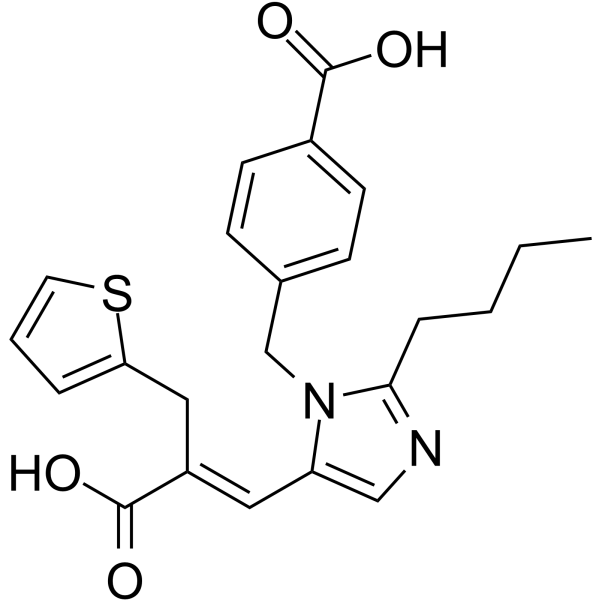
    Eprosartan (SKF-108566J free base) is a selective, competitive, nonpeptid and orally active angiotensin II receptor antagonist, used as an antihypertensive. Eprosartan binds angiotensin II receptor with IC50s of 9.2 nM and 3.9 nM in rat and human adrenal cortical membranes, respectively .
    Eprosartan
  • HY-15834A
    Eprosartan mesylate
    4 Publications Verification

    SKF-108566J

    Angiotensin Receptor Cardiovascular Disease Endocrinology
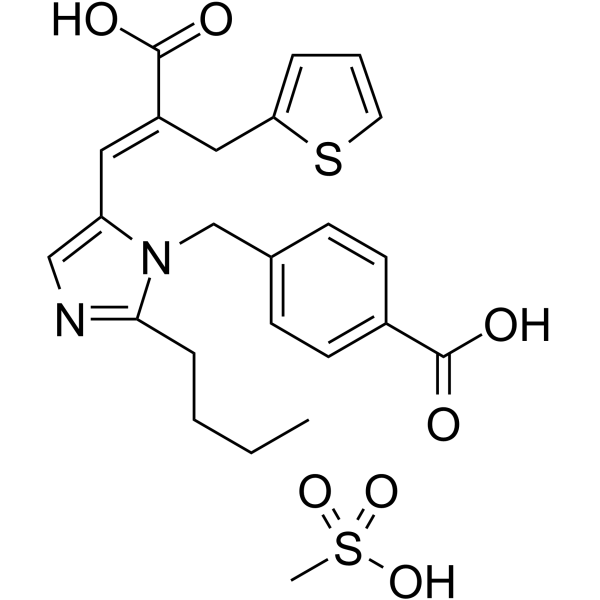
    Eprosartan mesylate (SKF-108566J) is a selective, competitive, nonpeptid and orally active angiotensin II receptor antagonist, used as an antihypertensive. Eprosartan mesylate binds angiotensin II receptor with IC50s of 9.2 nM and 3.9 nM in rat and human adrenal cortical membranes, respectively .
    Eprosartan mesylate
  • HY-107648
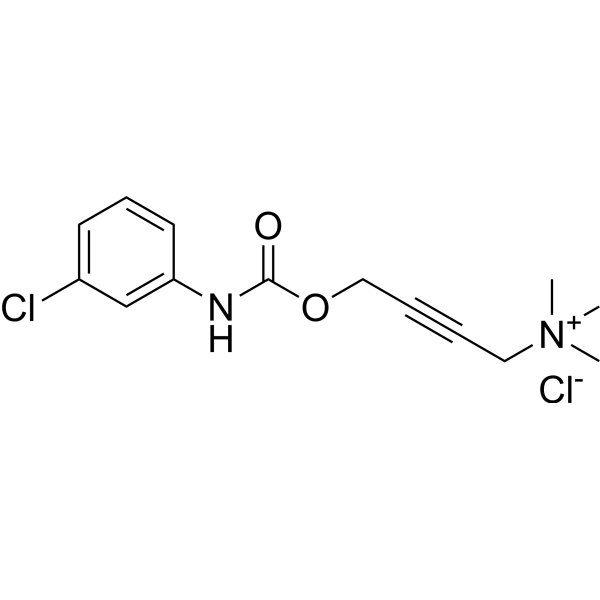
    McN-A-343
    2 Publications Verification

    mAChR Neurological Disease Inflammation/Immunology
    McN-A-343 is a selective M1 muscarinic agonist that stimulates muscarinic transmission in sympathetic ganglia. McN-A-343 produces a significant inhibitory effect on Muscarine (HY-121404)-evoked catecholamine secretion from the isolated perfused rat adrenal gland. McN-A-343 is involved in the regulation of neuronal firing and activates enteroendocrine L cells to release glucagon-like peptide 1 (GLP-1) and modulates the secretion of α-melanocyte stimulating hormone (α-MSH) from the pituitary gland in the central nervous system. McN-A-343 reduces colonic inflammation and oxidative stress in Acetic acid (HY-Y0319)-induced ulcerative colitis (UC) mice. McN-A-343 can be used for the study of ulcerative colitis .
    McN-A-343
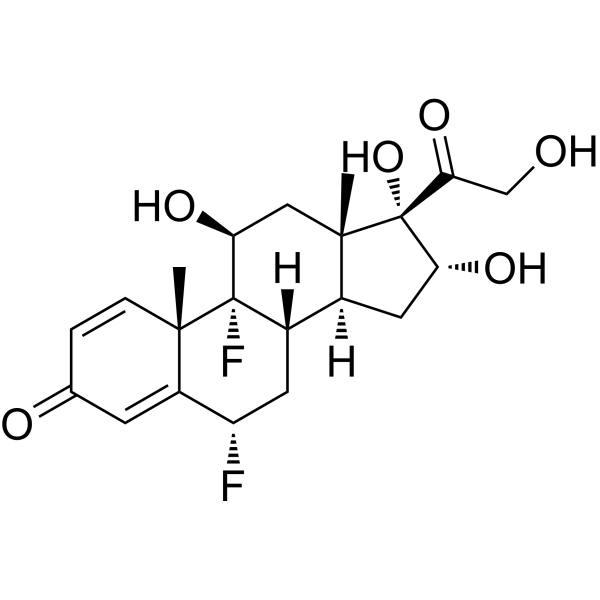
  • HY-136642

    Glucocorticoid Receptor Inflammation/Immunology
    Fluocinolone is a potent steroid with highly selective glucocorticoid receptor agonist activity. Fluocinolone stabilizes the blood-retinal barrier by enhancing endothelial tight junctions, inhibiting the VEGF pathway and inflammatory factors. Fluocinolone has high lipophilicity, enabling long-term sustained release in the vitreous. Fluocinolone is used in research related to dermatological diseases, diabetic macular edema, uveitis and oral lichen planus .
    Fluocinolone
  • HY-P3979

    HNP 4

    Bacterial Melanocortin Receptor Infection
    Defensin HNP 4 (HNP 4) is a host-defense peptide that has antimicrobial activity against Gram-negative bacteria. Defensin HNP 4 inhibits ACTH stimulated synthesis of Corticosterone (HY-B1618) in rat adrenal cell suspensions .
    Defensin HNP 4
  • HY-P3117

    Pituitary adenylate cyclase-activating peptide (6-27)

    Adenylate Cyclase Neurological Disease
    PACAP (6-27) (human, ovine, rat) is a PACAP receptor antagonist that blocks the canine adrenal catecholamine response to exogenous vasoactive intestinal peptide (VIP). PACAP (6-27) (human, ovine, rat) has the potential to study cardiovascular and neurological diseases .
    PACAP (6-27) (human, ovine, rat)
  • HY-129344

    Acyltransferase Metabolic Disease
    CL 277082 is a potent and selective acyl CoA:cholesterol acyltransferase (ACAT) inhibitor in microsomes. CL 277082 inhibits ACAT with IC50 values of 0.14 μM for intestinal mucosal microsomes, 0.74 μM for liver, and 1.18 μM for rat adrenal. CL 277082 is a ACAT-catalyzed cholesterol esterification and cholesterol absorption inhibitor .
    CL 277082
  • HY-P11389

    Angiotensin Receptor Neurological Disease
    (Sar1,Gly8)-Angiotensin II is an AT1 angiotensin II receptor subtype selective antagonist (Ki: 52 nM for AT2 receptor in rat adrenal). (Sar1,Gly8)-Angiotensin II potently antagonizes dipsogenic responses to intracerebroventricularly administered Ang II .
    (Sar1,Gly8)-Angiotensin II
  • HY-P10289A

    NPW30, rat acetate

    Neuropeptide B/W Receptor Neurological Disease
    Neuropeptide W-30 (rat) is an important stress mediator in the central nervous system that modulates the hypothalamus-pituitary-adrenal (HPA) axis and sympathetic outflow. Neuropeptide W-30 (rat) is an endogenous ligand for the two structurally related orphan G-protein-coupled receptors (GPCRs) GPR7 and GPR8. NPW-30 activates and binds to both GPR7 and GPR8 at similar effective doses .
    Neuropeptide W-30 (rat) acetate
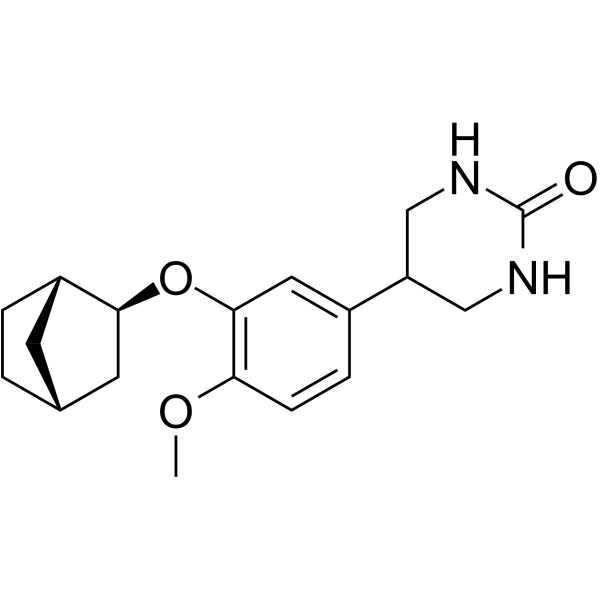
  • HY-108623

    CP-80,633

    Phosphodiesterase (PDE) Inflammation/Immunology
    Atizoram (CP-80,633) is an orally active phosphodiesterase type 4 (PDE4) inhibitor. Atizoram blocks cAMP degradation, thereby increasing intracellular and plasma cAMP levels. Atizoram inhibits TNFα release. Atizoram can be used in research related to acute respiratory distress syndrome .
    Atizoram
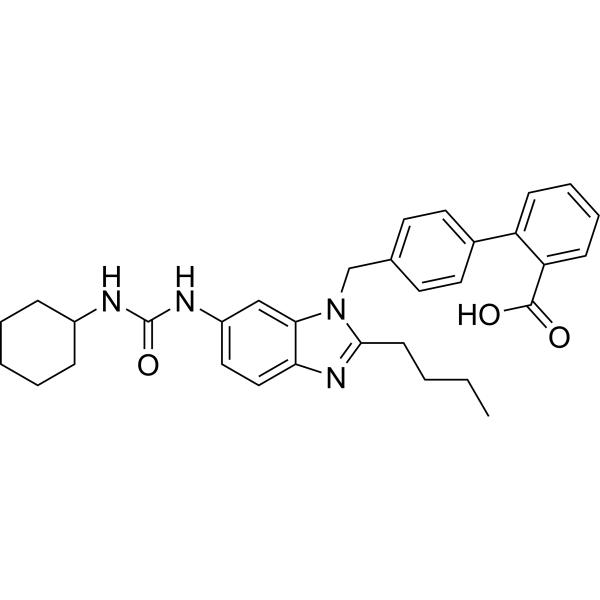
  • HY-120776

    Angiotensin Receptor Cardiovascular Disease
    SC-51316 is an oral active angiotensin II receptor antagonist with the IC50 values of 3.6 and 5.1 nM in rat adrenal cortical and rat uterine membrane, respectively. SC-51316 shows antihypertensive activity in vivo and in vitro .
    SC-51316
  • HY-N14205

    Angiotensin Receptor Others
    Cytosporin A is a hexahydrobenzopyran derivative and an angiotensin II receptor antagonist. Cytosporin A has IC50 values of 25-30 μM and 1.5-3 μM for AT1 and AT2, respectively .
    Cytosporin A
  • HY-120134

    Angiotensin Receptor Cardiovascular Disease
    BMS 183920 is a diacidic and potent angiotensin II receptor antagonist, with a Ki value of 2.9 nM in the rat adrenal cortex binding assay and a KB value of 0.061 nM in the rabbit aorta functional assay. BMS 183920 can be used for research of antihypertensive .
    BMS 183920
  • HY-P10046

    Vasopressin Receptor Metabolic Disease
    [Deamino-Pen1,Val4,D-Arg8]-vasopressin (AVP-A) is an arginine-vasopressin (AVP) antagonist. AVP-A can significantly lower plasma aldosterone concentration in rats. AVP-A can be used for the research of the growth and steroidogenic capacity of rat adrenal zona glomerulosa .
    [Deamino-Pen1,Val4,D-Arg8]-vasopressin
  • HY-114284

    Angiotensin Receptor Cardiovascular Disease
    L-163958 is an efficient, orally active, balanced angiotensin II receptor (AII receptor) antagonist. L-163958 has balanced high affinity for AT1 and AT2, with its IC50 values being 0.16, 0.12, 0.50, and 0.64 nM in rabbit aorta (AT1), rat midbrain (AT2), human adrenal gland (AT1), and human adrenal gland (AT2), respectively. L-163958 has a strong inhibitory effect on the pressor activity in rats. L-163958 can be used for the study of hypertension and related cardiovascular diseases .
    L-163958
  • HY-P10289

    NPW30, rat

    Neuropeptide B/W Receptor Neurological Disease
    Neuropeptide W-30 (rat) is an important stress mediator in the central nervous system that modulates the hypothalamus-pituitary-adrenal (HPA) axis and sympathetic outflow. Neuropeptide W-30 (rat) is an endogenous ligand for the two structurally related orphan G-protein-coupled receptors (GPCRs) GPR7 and GPR8. NPW-30 activates and binds to both GPR7 and GPR8 at similar effective doses .
    Neuropeptide W-30 (rat)
  • HY-117743S

    Isotope-Labeled Compounds Angiotensin Receptor Cardiovascular Disease
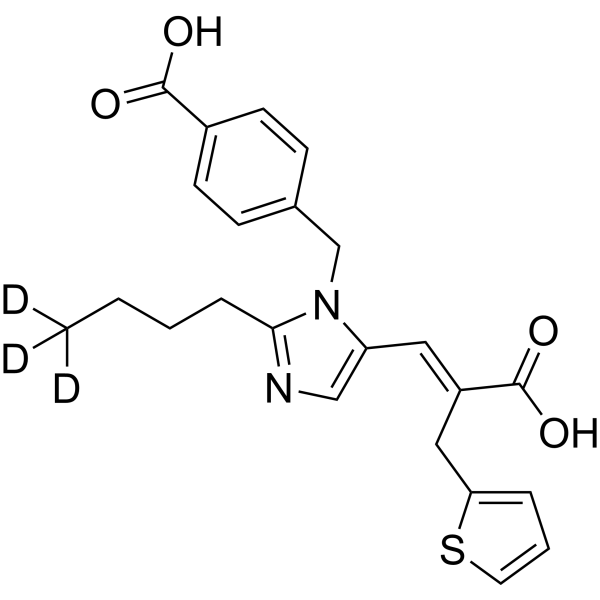
    Eprosartan-d3 is the deuterium labeled Eprosartan. Eprosartan (SKF-108566J free base) is a selective, competitive, nonpeptid and orally active angiotensin II receptor antagonist, used as an antihypertensive. Eprosartan binds angiotensin II receptor with IC50s of 9.2 nM and 3.9 nM in rat and human adrenal cortical membranes, respectively .
    Eprosartan-d3
  • HY-15834AR

    SKF-108566J (Standard)

    Reference Standards Angiotensin Receptor Cardiovascular Disease Endocrinology
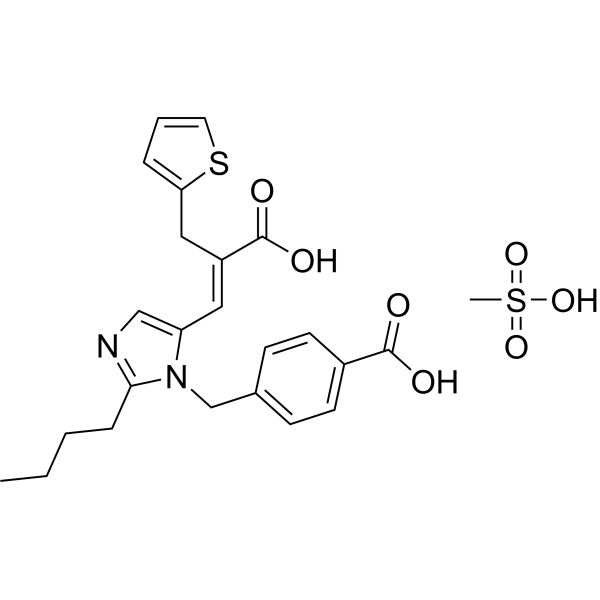
    Eprosartan (mesylate) (Standard) is the analytical standard of Eprosartan (mesylate). This product is intended for research and analytical applications. Eprosartan mesylate (SKF-108566J) is a selective, competitive, nonpeptid and orally active angiotensin II receptor antagonist, used as an antihypertensive. Eprosartan mesylate binds angiotensin II receptor with IC50s of 9.2 nM and 3.9 nM in rat and human adrenal cortical membranes, respectively .
    Eprosartan mesylate (Standard)
  • HY-117743S1

    SKF-108566J free base-d6

    Angiotensin Receptor Isotope-Labeled Compounds Cardiovascular Disease
    Eprosartan-d6 is deuterated labeled Eprosartan (HY-117743). Eprosartan (SKF-108566J free base) is a selective, competitive, nonpeptid and orally active angiotensin II receptor antagonist, used as an antihypertensive. Eprosartan binds angiotensin II receptor with IC50s of 9.2 nM and 3.9 nM in rat and human adrenal cortical membranes, respectively .
    Eprosartan-d6
  • HY-117743R

    SKF-108566J free base (Standard)

    Reference Standards Angiotensin Receptor Cardiovascular Disease
    Eprosartan (Standard) is the analytical standard of Eprosartan. This product is intended for research and analytical applications. Eprosartan (SKF-108566J free base) is a selective, competitive, nonpeptid and orally active angiotensin II receptor antagonist, used as an antihypertensive. Eprosartan binds angiotensin II receptor with IC50s of 9.2 nM and 3.9 nM in rat and human adrenal cortical membranes, respectively .
    Eprosartan (Standard)
  • HY-P1210

    Melanocortin Receptor Endocrinology
    Lys-γ3-MSH(human) is a melanocortin peptide derived from the C-terminal of the fragment of pro-opiomelanocortin (POMC). Lys-γ3-MSH(human) potentiates the steroidogenic response of the rat adrenal to adrenocorticotrophin (ACTH). Lys-γ3-MSH(human) is a potent stimulator of lipolysis with an apparent EC50 of 3.56 nM. Lys-γ3-MSH(human) can activate hormone sensitive lipase (HSL) and Perilipin A resulting in lipolysis .
    Lys-γ3-MSH(human)
  • HY-P1210A

    Melanocortin Receptor Endocrinology
    Lys-γ3-MSH(human) TFA is a melanocortin peptide derived from the C-terminal of the fragment of pro-opiomelanocortin (POMC). Lys-γ3-MSH(human) TFA potentiates the steroidogenic response of the rat adrenal to adrenocorticotrophin (ACTH). Lys-γ3-MSH(human) TFA is a potent stimulator of lipolysis with an apparent EC50 of 3.56 nM. Lys-γ3-MSH(human) TFA can activate hormone sensitive lipase (HSL) and Perilipin A resulting in lipolysis .
    Lys-γ3-MSH(human) TFA
  • HY-116666

    Drug Derivative Metabolic Disease
    Etomidate acid is an Etomidate analog. Etomidate acid inhibits the binding of metyrapone (Metyrapol) and 4-iodometomidate to rat adrenal membrane sites .
    Etomidate acid
  • HY-123273

    11β-HSD Metabolic Disease
    Metyrapol is a steroid 11β-hydroxylase inhibitor. Metyrapol blocks the conversion of deoxycorticosterone to corticosterone in rat adrenal homogenates. Metyrapol can be used in the study of metabolic diseases .
    (Rac)-Metyrapol
  • HY-182578

    Tryptophan Hydroxylase Cardiovascular Disease
    Mimosinamine is a hydroxylase inhibitor with Fe 2+ chelating activity. Mimosinamine inhibits bovine adrenal tyrosine hydroxylase, rat liver phenylalanine hydroxylase, and rat brainstem tryptophan hydroxylase. Mimosinamine can be used in the research of hypertension .
    Mimosinamine
  • HY-180401

    Angiotensin Receptor Cardiovascular Disease
    DMP 811 is a potent, orally active and selective angiotensin II subtype receptor AT1 antagonist. DMP 811 exhibits selectivity for AT1 (IC50 = 6 nM) over AT2 (IC50 >10 μM). DMP 811 exhibits potent antihypertensive activity in rats and dogs. DMP 811 can be used for the research of hypertension .
    DMP 811

Inquiry Online

Your information is safe with us. * Required Fields.

Salutation


Country or Region *

Applicant Name *


Organization Name *

Department *


Email Address *


Product Name *

Cat. No.


Requested quantity *

Phone Number *


Remarks

Inquiry Online

Inquiry Information

Product Name:
Cat. No.:
Quantity:
MCE Japan Authorized Agent: