1. Search Result
Search Result
Results for "

relapsed/refractory acute myeloid leukemia

" in MedChemExpress (MCE) Product Catalog:

12

Inhibitors & Agonists

4

Inhibitory Antibodies

1

Isotope-Labeled Compounds

Targets Recommended:
Cat. No. Product Name Target Research Areas Chemical Structure
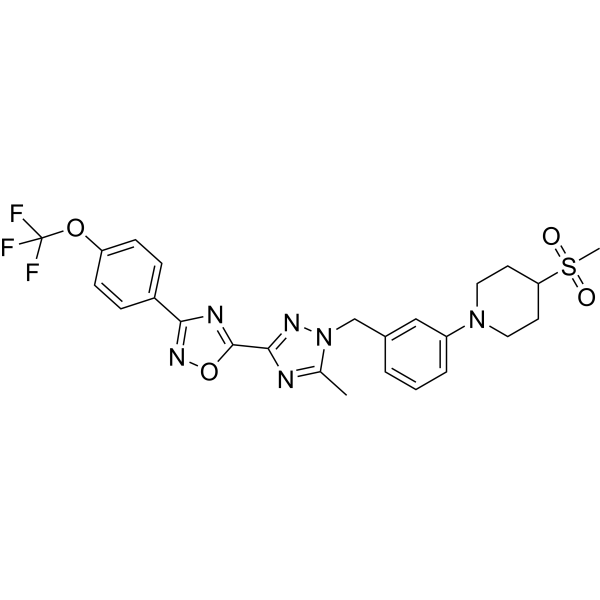
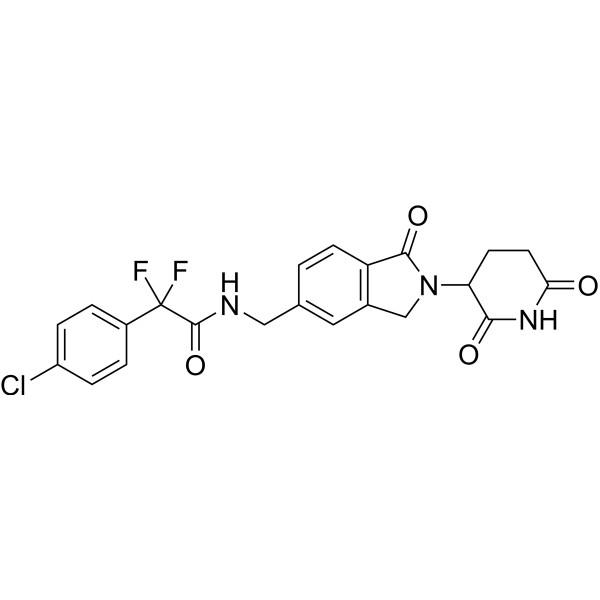
  • HY-112037
    IACS-010759
    Maximum Cited Publications
    26 Publications Verification

    IACS-10759

    Oxidative Phosphorylation Mitochondrial Metabolism Apoptosis Cancer
    IACS-010759 is an orally active, potent mitochondrial complex I of oxidative phosphorylation (OXPHOS) inhibitor. IACS-010759 inhibits proliferation and induces apoptosis in models of brain cancer and acute myeloid leukemia (AML) reliant on OXPHOS. IACS-010759 has the potential for relapsed/refractory AML and solid tumors research .
    IACS-010759
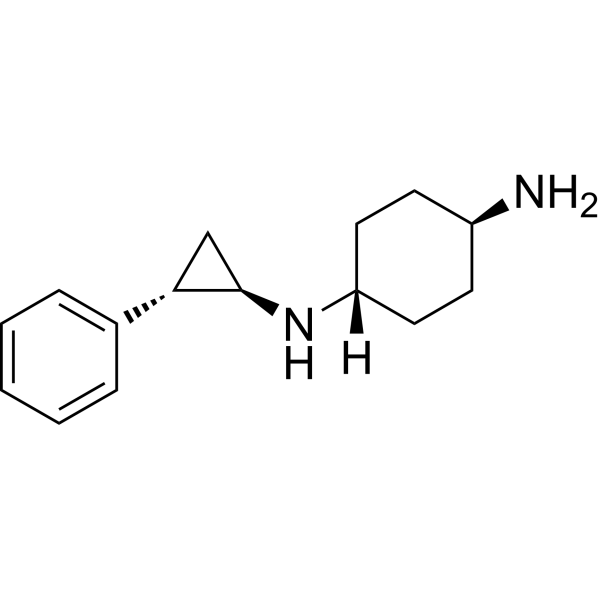
  • HY-109117
    Iadademstat
    5+ Cited Publications

    ORY-1001

    Histone Demethylase Apoptosis Cancer
    Iadademstat (ORY-1001) is a highly potent, orally active and selective LSD1 (KDM1A) inhibitor with antileukemic activity. Iadademstat can be used for relapsed or refractory acute myeloid leukemia research .
    Iadademstat
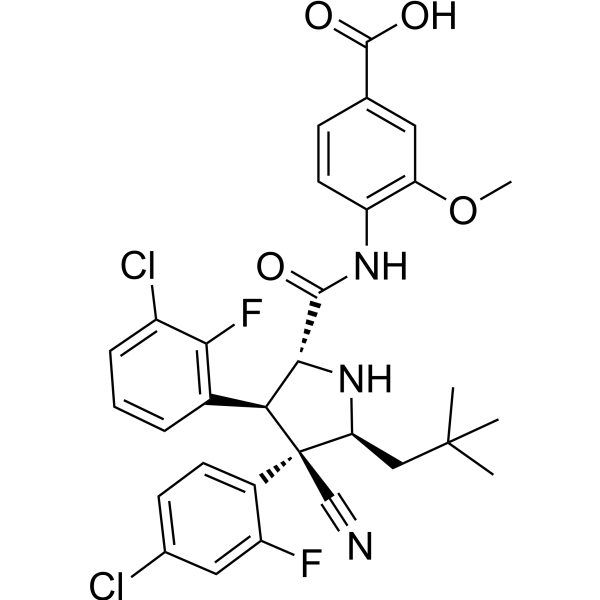
  • HY-156794

    DSP-5336

    Epigenetic Reader Domain FLT3 Cancer
    Enzomenib (DSP-5336) is an orally active Menin inhibitor (IC50=1.4 nM, Kd=6.0 nM). Enzomenib disrupts the interaction between Menin and KMT2A/MLL fusion proteins, specifically inhibits the expression of leukemia driver genes such as HOX/MEIS1, and upregulates ITGAM. Enzomenib effectively induces cell differentiation, inhibits tumor cell proliferation, and suppresses primitive cell colony formation. Enzomenib reduces disease burden and prolongs survival, but causes adverse reactions including differentiation syndrome and QTc interval prolongation. Enzomenib is used for research on relapsed/refractory acute myeloid leukemia, acute lymphoblastic leukemia, and other hematologic malignancies with mixed lineage leukemia (MLL) rearrangements or NPM1 mutations .
    Enzomenib
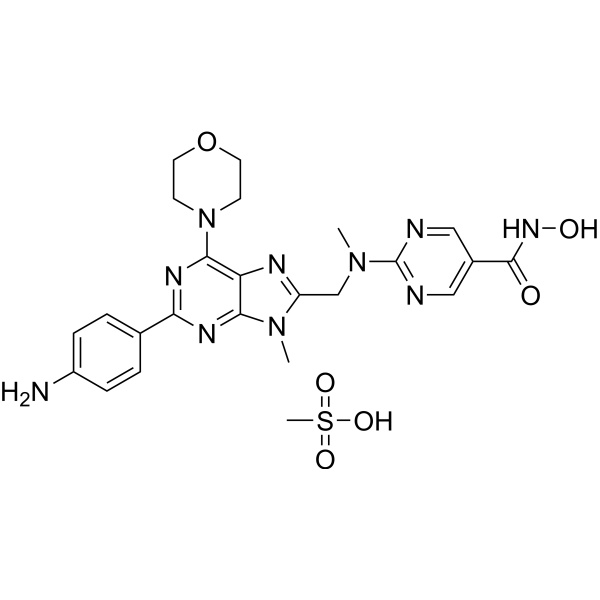
  • HY-172581

    FLT3 Apoptosis Ras p38 MAPK PI3K Akt JAK STAT Cancer
    Clifutinib is an orally active and selective internal tandem duplication mutation of FMS-like tyrosine kinase 3 (FLT3-ITD) inhibitor with an IC50 value of 15.1 nM. Clifutinib exerts strong antiproliferative effects on FLT3-ITD acute myeloid leukemia (AML) cell lines (MV-4-11: IC50 = 1.5 nM; MOLM-13: IC50 = 1.4 nM). Clifutinib inhibits the activity of FLT3-ITD kinase and blocks the downstream RAS/MAPK, PI3K/AKT, and JAK/STAT5 signaling pathways of FLT3. Clifutinib induces apoptosis of acute myeloid leukemia (AML) cells with FLT3-ITD mutations. Clifutinib demonstrates significant antitumor efficacy in mice bearing MV-4-11 or MOLM-13 xenografts. Clifutinib is promising for research of relapsed/refractory FLT3-ITD-positive acute myeloid leukemia .
    Clifutinib
  • HY-P99910

    AMG-330

    CD3 Transmembrane Glycoprotein Inflammation/Immunology Cancer
    Eluvixtamab (AMG-330) is a bispecific T-cell engager. Eluvixtamab binds to CD33 and CD3 on T cells, thereby promoting T cell-mediated cytotoxicity against CD33+ cells. Eluvixtamab can be used in the research of tumors such as relapsed/refractory acute myeloid leukemia .
    Eluvixtamab
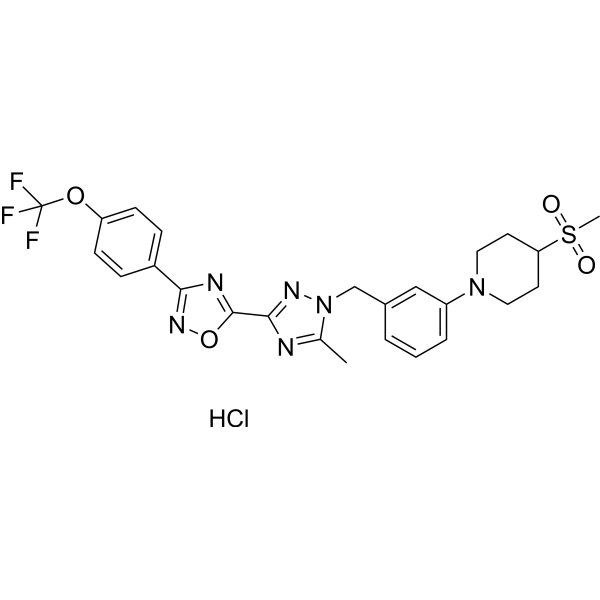
  • HY-112037A
    IACS-010759 hydrochloride
    Maximum Cited Publications
    26 Publications Verification

    IACS-10759 hydrochloride

    Oxidative Phosphorylation Mitochondrial Metabolism Apoptosis Cancer
    IACS-010759 hydrochlorideis an orally active, potent mitochondrial complex I of oxidative phosphorylation (OXPHOS) inhibitor. IACS-010759 hydrochlorideinhibits proliferation and induces apoptosis in models of brain cancer and acute myeloid leukemia (AML) reliant on OXPHOS. IACS-010759 hydrochloride has the potential for relapsed/refractory AML and solid tumors research .
    IACS-010759 hydrochloride
  • HY-P99916

    AMG-427

    FLT3 CD3 TNF Receptor Inflammation/Immunology Cancer
    Emirodatamab (AMG-427) is a bispecific T-cell engager (BiTE). Emirodatamab simultaneously binds FLT3 on the surface of acute myeloid leukemia (AML) cells and CD3 on the surface of T cells, thereby precisely recruiting immune effector cells to tumor sites. Emirodatamab potently induces T cell activation, secretion of proinflammatory cytokines (such as IFNγ, TNFα), and specific cytotoxicity, effectively lysing FLT3-positive tumor cells and inhibiting their growth. Emirodatamab not only significantly prolongs survival in mouse xenograft models and eliminates diseased cells in primates, but also exhibits a synergistic enhancement effect when combined with PD-1 blockade therapy. Emirodatamab is used in studies of acute myeloid leukemia, especially relapsed or refractory cases .
    Emirodatamab
  • HY-124766

    Aldehyde Dehydrogenase (ALDH) Cancer
    ABD-3001 is an inhibitor of ALDH1. ABD-3001 can be studied in research on refractory/relapsed acute myeloid leukemia and high-risk myelodysplastic syndrome .
    ABD-3001
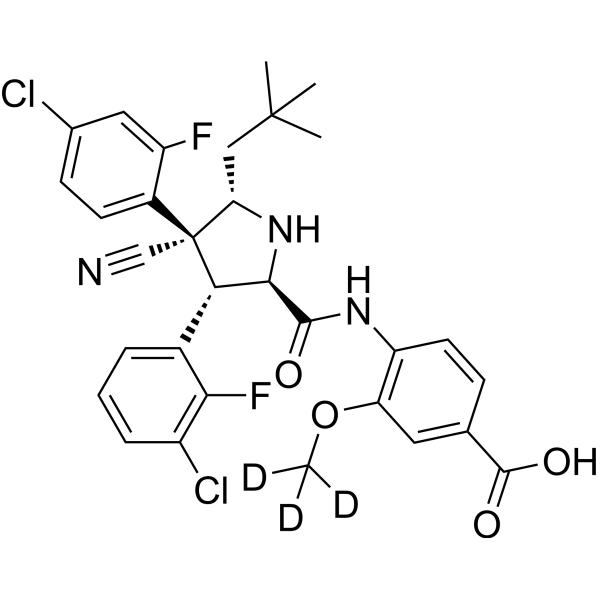
  • HY-153939S

    RG7388-d3-1

    Isotope-Labeled Compounds Cancer
    Idasanutlin-d3-1 (RG7388-d3-1) is the deuterium labeled Idasanutlin. Idasanutlin is a potent antagonist of MDM2/p53. Idasanutlin inhibits relapsed or refractory acute myeloid leukemia .
    Idasanutlin-d3-1
  • HY-P990905

    SAR-443579

    Interleukin Related Cancer
    Bexatamig (SAR-443579) is a trifunctional natural killer cell engager targeting IL-3R α/CD123, NKp46/NCR1/CD335 and Fc gamma RIIIA/CD16a. Bexatamig forms a cytolytic synapse between natural killer cells and CD123-positive tumor cells. By activating natural killer cells to induce tumor cell death, Bexatamig effectively reduces the burden of CD123-positive acute myeloid leukemia (AML) blasts. Bexatamig has been granted FDA Fast Track designation, and is primarily investigated for relapsed or refractory acute myeloid leukemia, B-cell acute lymphoblastic leukemia, and high-risk myelodysplastic syndromes .
    Bexatamig
  • HY-P992389

    LILRB Cancer
    IO-202 is a high-affinity LILRB4/ILT3 binder and myeloid checkpoint inhibitor. IO-202 blocks APOE binding and LILRB4 activation to reverse T-cell suppression and enhance T-cell cytotoxicity, while eliminating LILRB4-high-expressing leukemic blasts via ADCC and ADCP mechanisms. IO-202 promotes dendritic cell maturation and antigen presentation, reshapes the phenotype of tumor-associated macrophages, and reduces myeloid-derived suppressor cells. IO-202 is widely applicable to research on relapsed/refractory acute myeloid leukemia (AML), chronic myelomonocytic leukemia (CMML), and solid tumors .
    IO-202
  • HY-156794A

    DSP-5336 enantiomer

    Drug Isomer FLT3 Epigenetic Reader Domain Cardiovascular Disease Cancer
    Enzomenib enantiomer (DSP-5336 enantiomer) is an enantiomer of Enzomenib (HY-156794). Enzomenib (DSP-5336) is an orally active Menin inhibitor (IC50=1.4 nM, Kd=6.0 nM). Enzomenib disrupts the interaction between Menin and KMT2A/MLL fusion proteins, specifically inhibits the expression of leukemia driver genes such as HOX/MEIS1, and upregulates ITGAM. Enzomenib effectively induces cell differentiation, inhibits tumor cell proliferation, and suppresses primitive cell colony formation. Enzomenib reduces disease burden and prolongs survival, but causes adverse reactions including differentiation syndrome and QTc interval prolongation. Enzomenib is used for research on relapsed/refractory acute myeloid leukemia, acute lymphoblastic leukemia, and other hematologic malignancies with mixed lineage leukemia (MLL) rearrangements or NPM1 mutations .
    Enzomenib enantiomer

Inquiry Online

Your information is safe with us. * Required Fields.

Salutation


Country or Region *

Applicant Name *


Organization Name *

Department *


Email Address *


Product Name *

Cat. No.


Requested quantity *

Phone Number *


Remarks

Inquiry Online

Inquiry Information

Product Name:
Cat. No.:
Quantity:
MCE Japan Authorized Agent:

