1. Search Result
Search Result
Results for "

rice fields

" in MedChemExpress (MCE) Product Catalog:

19

Inhibitors & Agonists

2

Natural
Products

1

Isotope-Labeled Compounds

Cat. No. Product Name Target Research Areas Chemical Structure
  • HY-B0869A

    Environmental Pollutants SOD Acetolactate Synthase (ALS) Herbicide Metabolic Disease
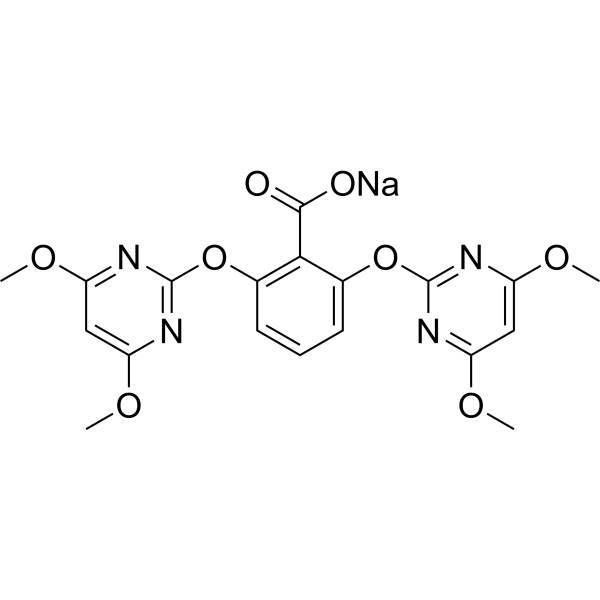
    Bispyribac sodium is a selective, orally active, systemic and post-emergence herbicide. Bispyribac sodium reduces SOD levels and inhibits ALS activity. Bispyribac sodium blocks the biosynthesis of branched-chain amino acids, resulting in growth retardation, chlorosis and necrosis of weeds. Bispyribac sodium exerts herbicidal activity against grass, sedge and broadleaf weeds in rice fields. Bispyribac sodium is hepatotoxic and genotoxic .
    Bispyribac sodium
  • HY-B1885
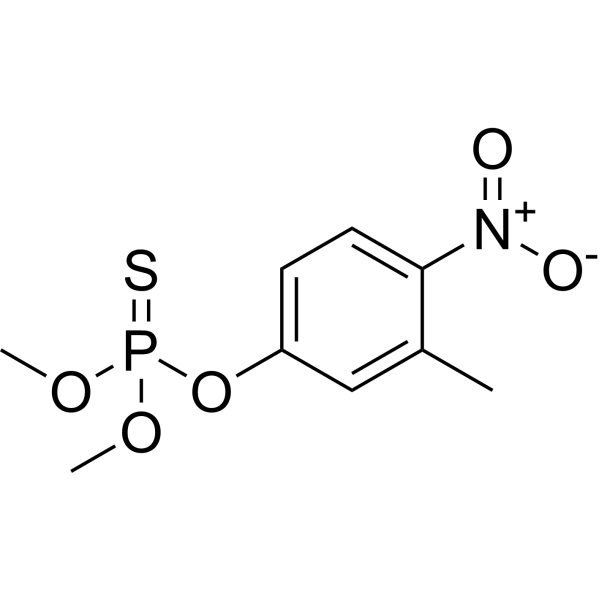
    Fenitrothion
    2 Publications Verification

    Environmental Pollutants Apoptosis Insecticide Cholinesterase (ChE) AMPK PI3K Parasite Akt SOD Infection
    Fenitrothion is a broad-spectrum and orally active insecticide/acaricide. Fenitrothion inhibits cholinesterase, AMPKα and IRS1/PI3K/AKT. Fenitrothion causes Apoptosis, reduces SOD activity. Fenitrothion shows insecticidal effect against Rhyzopertha dominica and Tribolium castaneum adults. Fenitrothion is widely used in cotton crops, vegetable crops, fruit crops and field crops, especially rice. Fenitrothion can be used for brain and spleen toxicology studies .
    Fenitrothion
  • HY-119989

    Herbicide Infection
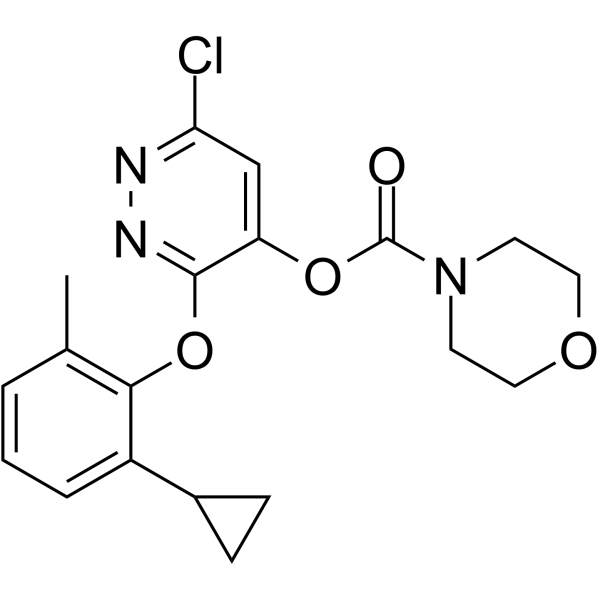
    Cyclopyrimorate, a highly effective bleaching herbicide for weed control in rice fields, targets homogentisate solanesyltransferase (HST). HST is a downstream enzyme of 4-hydroxyphenylpyruvate dioxygenase in the plastoquinone (PQ) biosynthesis pathway .
    Cyclopyrimorate
  • HY-B2015

    Environmental Pollutants Insecticide Parasite Cholinesterase (ChE) Infection
    Carbosulfan is an orally active AChE inhibitor that hydrolyzes to Carbofuran in organisms to exert insecticidal effects. Carbosulfan exhibits broad-spectrum insecticidal activity, and it also induces severe oxidative stress by enhancing lipid peroxidation and impairing the antioxidant defense system. Carbosulfan causes reproductive toxicity in male rats and developmental disorders in their offspring. Carbosulfan shows persistence in paddy field environments and potential hazards to non-target organisms, and it is commonly used in studies related to reproductive toxicity and environmental risk assessment .
    Carbosulfan
  • HY-174423

    NC-656

    Herbicide Others
    Iptriazopyrid (NC-656) is an azole carboxamide herbicide targeting 4-hydroxyphenylpyruvate dioxygenase (HPPD) with a Ki value of 24.3 nM for Arabidopsis HPPD and 33.3 nM for rice HPPD. Iptriazopyrid blocks plastoquinone and carotenoid synthesis, leading to weed chlorosis and death. Iptriazopyrid is promising for research of controlling weeds such as Echinochloa crus-galli in paddy fields .
    Iptriazopyrid
  • HY-175641

    HPPD Others
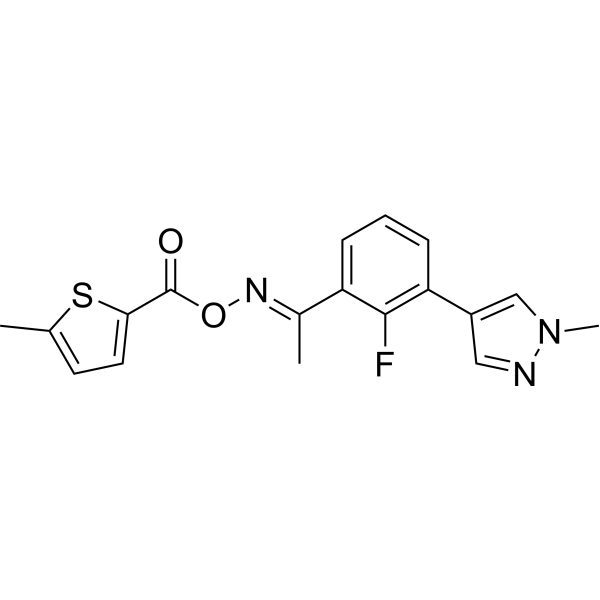
    HPPD-IN-6 (Compound IIy) is a HPPD inhibitor with high rice selectivity. HPPD-IN-6 has potent herbicidal activities against Echinochloa crus-galli and Leymus chinensis, including the herbicide-resistant biotypes with EC50s of 19.62-33.26 g of ai/ha. HPPD-IN-6 effectively controls the weeds in rice fields at 90-150 g of ai/ha. HPPD-IN-6 can be used for the development of herbicide .
    HPPD-IN-6
  • HY-116702

    GABA Receptor Others
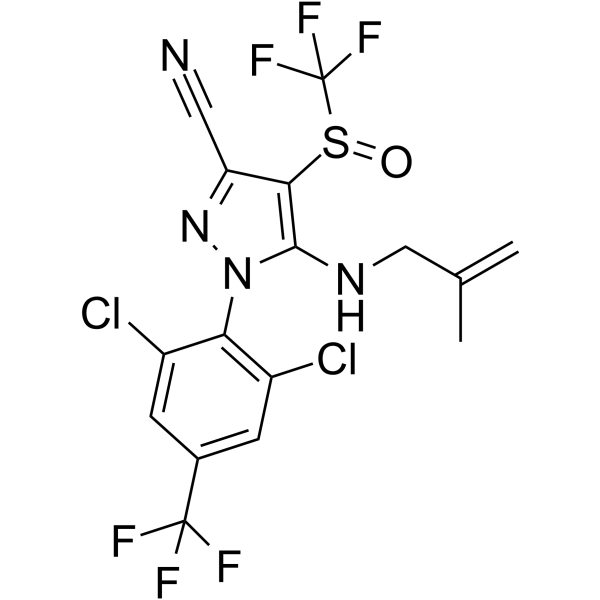
    Flufiprole is a nonsystemic phenylpyrazole insecticide targeting the GABA receptor used in the rice field. Flufiprole is excellent in controlling a wide range of pests .
    Flufiprole
  • HY-W715372

    Fungal Infection
    Pyraoxystrobin is a QoI fungicide, with an EC50 of 0.0094 μg/mL for M. oryzae isolates. Pyraoxystrobin can be used for the research of M. oryzae in rice fields .
    Pyraoxystrobin
  • HY-W715372R

    Reference Standards Fungal Infection
    Pyraoxystrobin (Standard) is the analytical standard of Pyraoxystrobin. This product is intended for research and analytical applications. Pyraoxystrobin is a QoI fungicide, with an EC50 of 0.0094 μg/mL for M. oryzae isolates. Pyraoxystrobin can be used for the research of M. oryzae in rice fields .
    Pyraoxystrobin (Standard)
  • HY-157160

    Herbicide Others
    PPO-IN-5 (compound 9) is a herbicide based on PPO inhibitors. PPO, protoporphyrinogen oxidase, participates in the biosynthetic pathway of heme and chlorophyll synthesis. PPO-IN-5 is tolerant in cereal crops such as wheat, corn, and rice, and is a potential herbicide in wheat fields .
    PPO-IN-5
  • HY-173283

    Fungal Infection
    Antifungal agent 129 (Compound 4g) is an inhibitor targeting Rhizoctonia solani, with an EC50 value of 4.27 mg/L. It has a good control effect against rice sheath blight in in vitro and in vivo experiments. Preliminary exploration through scanning electron microscopy, molecular docking, enzyme activity determination, and cytotoxicity experiments has revealed that Antifungal agent 129 may exert its inhibitory activity by affecting the cell structure or physiological processes of Rhizoctonia solani. Antifungal agent 129 can be used in the research of plant diseases in the agricultural field, such as rice sheath blight, which are caused by Rhizoctonia solani .
    Antifungal agent 129
  • HY-B0869AR

    Reference Standards Acetolactate Synthase (ALS) SOD Metabolic Disease
    Bispyribac (sodium) (Standard) is the analytical standard of Bispyribac sodium (HY-B0869A). This product is intended for research and analytical applications. Bispyribac sodium is a selective, orally active, systemic and post-emergence herbicide. Bispyribac sodium reduces SOD levels and inhibits ALS activity. Bispyribac sodium blocks the biosynthesis of branched-chain amino acids, resulting in growth retardation, chlorosis and necrosis of weeds. Bispyribac sodium exerts herbicidal activity against grass, sedge and broadleaf weeds in rice fields. Bispyribac sodium is hepatotoxic and genotoxic .
    Bispyribac sodium (Standard)
  • HY-B1885S

    Isotope-Labeled Compounds Insecticide Cholinesterase (ChE) AMPK PI3K Akt Apoptosis SOD Infection
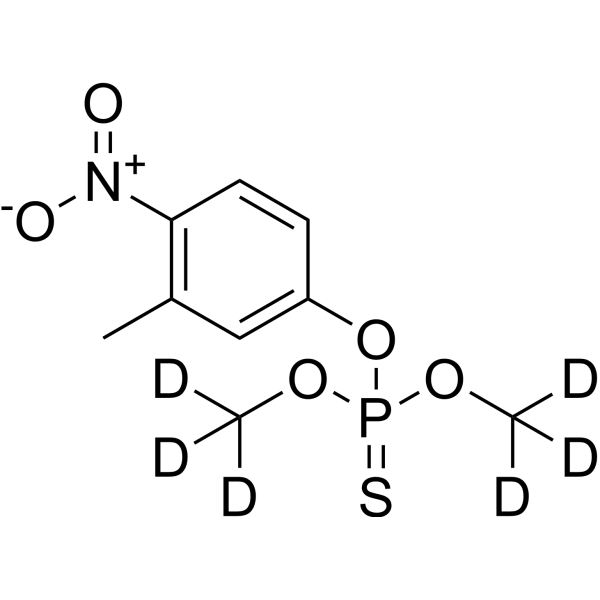
    Fenitrothion-d6 is the deuterium labeled Fenitrothion (HY-B1885). Fenitrothion is a broad-spectrum and orally active insecticide/acaricide. Fenitrothion inhibits cholinesterase, AMPKα and IRS1/PI3K/AKT. Fenitrothion causes Apoptosis, reduces SOD activity. Fenitrothion shows insecticidal effect against Rhyzopertha dominica and Tribolium castaneum adults. Fenitrothion is widely used in cotton crops, vegetable crops, fruit crops and field crops, especially rice. Fenitrothion can be used for brain and spleen toxicology studies .
    Fenitrothion-d6
  • HY-B1885R

    Reference Standards Insecticide Parasite Cholinesterase (ChE) AMPK PI3K Akt Apoptosis SOD Infection
    Fenitrothion (Standard) is the analytical standard of Fenitrothion (HY-B1885). This product is intended for research and analytical applications. Fenitrothion is a broad-spectrum and orally active insecticide/acaricide. Fenitrothion inhibits cholinesterase, AMPKα and IRS1/PI3K/AKT. Fenitrothion causes Apoptosis, reduces SOD activity. Fenitrothion shows insecticidal effect against Rhyzopertha dominica and Tribolium castaneum adults. Fenitrothion is widely used in cotton crops, vegetable crops, fruit crops and field crops, especially rice. Fenitrothion can be used for brain and spleen toxicology studies .
    Fenitrothion (Standard)
  • HY-B2052A

    Monosultap

    Insecticide Angiotensin-converting Enzyme (ACE) Apoptosis Infection
    Thiosultap monosodium (Monosultap) is a broad-spectrum insecticide and a competitive inhibitor of acetylcholine. Thiosultap monosodium exerts contact and stomach poisoning effects through systemic conduction in field pests. Thiosultap monosodium has teratogenic effects, induces notochord malformations in zebrafish embryos, and causes apoptosis and abnormally elevated cell proliferation in partial notochord tissues of zebrafish. Thiosultap monosodium is applicable to the research of controlling rice stem borers .
    Thiosultap monosodium
  • HY-W728891

    Herbicide Others
    Pentoxazone is a protoporphyrinogen IX oxidase (PPO)-inhibiting herbicide. Pentoxazone inhibits chlorophyll and heme synthesis, drives protoporphyrinogen IX accumulation and oxidation, and generates singlet oxygen to oxidize cell membranes and induce cell damage.Pentoxazone suppresses fresh weight growth of multiple weed species and shows low activity against weedy rice. Pentoxazone can be used for the research of direct-seeding rice field weed management .
    Pentoxazone
  • HY-115684R

    Undecan-2-ol (Standard)

    Endogenous Metabolite Reference Standards Others
    Pyraoxystrobin (Standard) is the analytical standard of Pyraoxystrobin. This product is intended for research and analytical applications. Pyraoxystrobin is a QoI fungicide, with an EC50 of 0.0094 μg/mL for M. oryzae isolates. Pyraoxystrobin can be used for the research of M. oryzae in rice fields .
    2-Undecanol (Standard)
  • HY-W721333

    Herbicide Acetolactate Synthase (ALS) Others
    Pyrimisulfan is a potent acetolactate synthase (ALS) inhibitor and a broad‑spectrum herbicide. Pyrimisulfan selectively inhibits plant acetolactate synthase. Pyrimisulfan controls a wide spectrum of paddy weeds including annual grasses, sedges, broadleaf weeds, and sulfonylurea‑resistant biotypes pre‑ and postemergence, with long residual activity and excellent rice safety. Pyrimisulfan can be used for research on paddy herbicides .
    Pyrimisulfan
  • HY-N17760

    Fungal Others
    (25RS)-Schidigera-saponin E1 is a steroidal saponin with anti-yeast activity, which can be isolated from the stems of Yucca schidigera (Mojave yucca). (25RS)-Schidigera-saponin E1 exerts weak anti-yeast activity by affecting the integrity of microbial cell membranes, with a MIC≥100 μg/mL against some food spoilage yeasts. (25RS)-Schidigera-saponin E1 can be used in the field of food preservation to extend the shelf life of foods containing cooked rice, beans, fermented condiments, etc.
    (25RS)-Schidigera-saponin E1

Inquiry Online

Your information is safe with us. * Required Fields.

Salutation


Country or Region *

Applicant Name *


Organization Name *

Department *


Email Address *


Product Name *

Cat. No.


Requested quantity *

Phone Number *


Remarks

Inquiry Online

Inquiry Information

Product Name:
Cat. No.:
Quantity:
MCE Japan Authorized Agent:

