6 Results for "

ring hydroxylation

" in MedChemExpress (MCE) Product Catalog:
Products (6)

6 Results for "ring hydroxylation" in MCE Product Catalog:

Cat. No.: HY-129756
CAS No.: 637-53-6
Purity:  98.35%
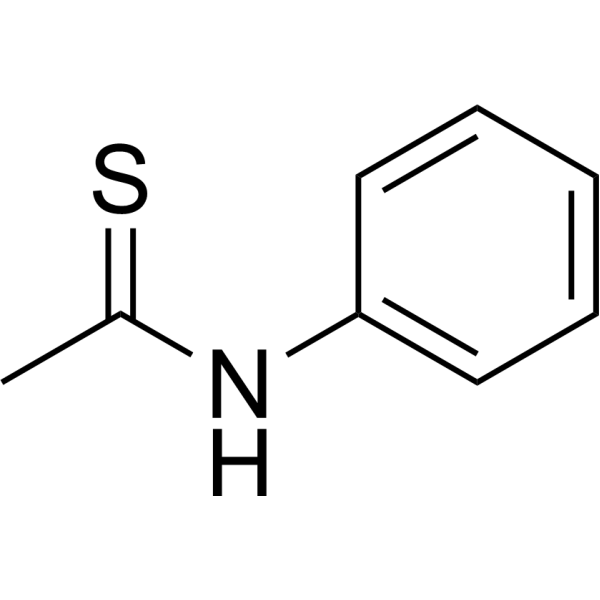
Synonyms: N-Phenylthioacetamide
Research Areas:  

Metabolic Disease

Thioacetanilide (N-Phenylthioacetamide) is a sulfur-containing thioamide derivative of acetanilide. Thioacetanilide displays a solvent‑dependent Z/E isomeric distribution, preferring the E conformation in polar hydrogen‑bonding solvents and the Z conformation in halogenated solvents. Thioacetanilide serves as a substrate for metabolic desulfurization and aromatic hydroxylation. Thioacetanilide is mainly metabolized via desulfurization and 4hydroxylation of the aromatic ring in Rattus norvegicus, and the released sulfur integrates into the total body sulfur pool. Thioacetanilide is well absorbed in rats, and more than 90% of the dose is excreted in urine as conjugated metabolites after oral administration .
loading...
    loading...
Cat. No.: HY-177148
CAS No.: 134867-97-3
Research Areas:  

Cardiovascular Disease

G256 is a cytochrome P450 substrate with antiarrhythmic properties. In recombinant monooxygenase systems, G256 undergoes N-hydroxylation of the terminal aminoguanidine nitrogen, as well as ring hydroxylation catalyzed by cytochrome P4502C3. G256 generates N-hydroxyaminoguanidine metabolites via N-hydroxylation in liver microsomal fractions. G256 produces phenol metabolites through ring hydroxylation in both liver microsomal fractions and recombinant cytochrome P450 systems. G256 can be used for research on arrhythmias .
loading...
    loading...
Cat. No.: HY-177148A
CAS No.: 134867-96-2
Research Areas:  

Cardiovascular Disease

G256 dihydrochloride is a cytochrome P450 substrate with antiarrhythmic properties. In recombinant monooxygenase systems, G256 dihydrochloride undergoes N-hydroxylation of the terminal aminoguanidine nitrogen, as well as ring hydroxylation catalyzed by cytochrome P4502C3. G256 dihydrochloride generates N-hydroxyaminoguanidine metabolites via N-hydroxylation in liver microsomal fractions. G256 dihydrochloride produces phenol metabolites through ring hydroxylation in both liver microsomal fractions and recombinant cytochrome P450 systems. G256 dihydrochloride can be used for research on arrhythmias .
loading...
    loading...
Cat. No.: HY-177148B
CAS No.: 136623-15-9
Research Areas:  

Cardiovascular Disease

(E/Z)-G256 (dihydrochloride) is an isomer of G256 dihydrochloride (HY-177148A). G256 dihydrochloride is a cytochrome P450 substrate with antiarrhythmic properties. In recombinant monooxygenase systems, G256 dihydrochloride undergoes N-hydroxylation of the terminal aminoguanidine nitrogen, as well as ring hydroxylation catalyzed by cytochrome P4502C3. G256 dihydrochloride generates N-hydroxyaminoguanidine metabolites via N-hydroxylation in liver microsomal fractions. G256 dihydrochloride produces phenol metabolites through ring hydroxylation in both liver microsomal fractions and recombinant cytochrome P450 systems. G256 dihydrochloride can be used for research on arrhythmias .
loading...
    loading...
Cat. No.: HY-N7482
CAS No.: 518-20-7
Target:  

Drug Derivative

Research Areas:  

Others

Pyranocoumarin (Compound 13) is a heterocyclic scaffold (coumarin + pyran ring fusion). Pyranocoumarin inhibits the S-warfarin hydroxylation catalyzed by CYP2C9 .
loading...
    loading...
Cat. No.: HY-105698
CAS No.: 1223-36-5
Synonyms: ANP 246; Amichlophene; Chlofexamide
Target:  

Others

Clofexamide (ANP 246) is an orally active antidepressant agent, exhibiting analgesic and anti-inflammatory activity. Clofexamide can be used for the research of depression, inflammatory disorders, peptic ulcer .
loading...
    loading...

