1. Search Result
Search Result
Results for "

trabecular outflow

" in MedChemExpress (MCE) Product Catalog:
Cat. No. Product Name Target Research Areas Chemical Structure
  • HY-B0191

    AGN 192024

    Prostaglandin Receptor MMP Cardiovascular Disease Endocrinology
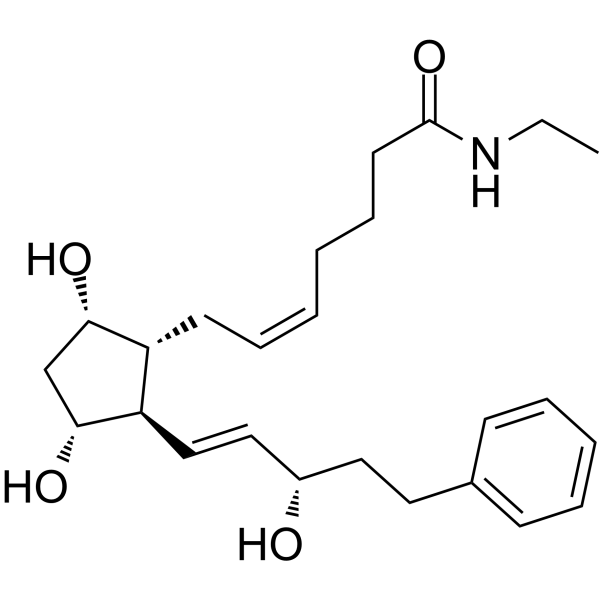
    Bimatoprost is a prostaglandin analog that reduces intraocular pressure by regulating scleral and trabecular outflow. Bimatoprost is used in the study of open-angle glaucoma, ocular hypertension, and other forms of glaucoma. Topical application of bimatoprost induces fat atrophy and causes a deepening of the eyelid sulcus .
    Bimatoprost
  • HY-12798
    Netarsudil
    1 Publications Verification

    AR-13324

    Monoamine Transporter ROCK Cardiovascular Disease Neurological Disease
    Netarsudil (AR-13324) is a competitive inhibitor of Rho-associated protein kinases (ROCK I and ROCK II) and a reversible inhibitor of the norepinephrine transporter (NET). Netarsudil reduces intraocular pressure by inhibiting ROCK, causing relaxation of trabecular meshwork cells and dilation of episcleral veins, thereby increasing the ease of aqueous humor outflow, while inhibiting NET to reduce aqueous humor production. Netarsudil is mainly used in the study of ocular hypertension and primary open-angle glaucoma .
    Netarsudil
  • HY-12798B
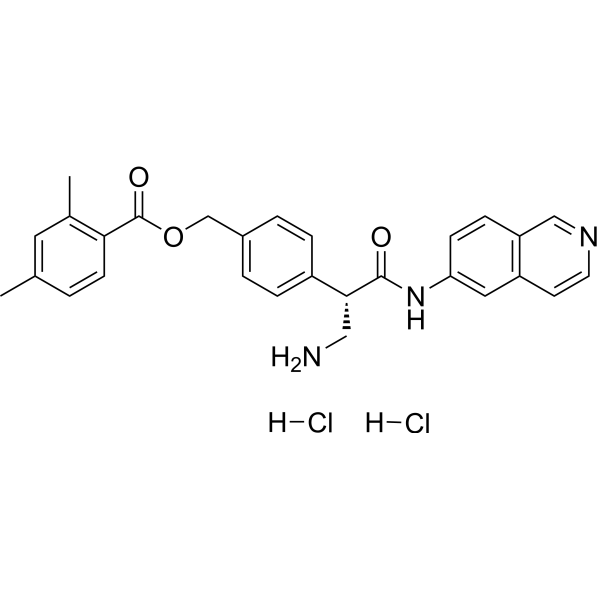
    Netarsudil hydrochloride
    1 Publications Verification

    AR-13324 hydrochloride

    ROCK Cardiovascular Disease Neurological Disease
    Netarsudil (AR-13324) hydrochloride is a competitive inhibitor of Rho-associated protein kinases (ROCK I and ROCK II) and a reversible inhibitor of the norepinephrine transporter (NET). Netarsudil hydrochloride reduces intraocular pressure by inhibiting ROCK, causing relaxation of trabecular meshwork cells and dilation of episcleral veins, thereby increasing the ease of aqueous humor outflow, while inhibiting NET to reduce aqueous humor production. Netarsudil hydrochloride is mainly used in the study of ocular hypertension and primary open-angle glaucoma .
    Netarsudil hydrochloride
  • HY-19518

    NCX116; LBN

    Prostaglandin Receptor Neurological Disease
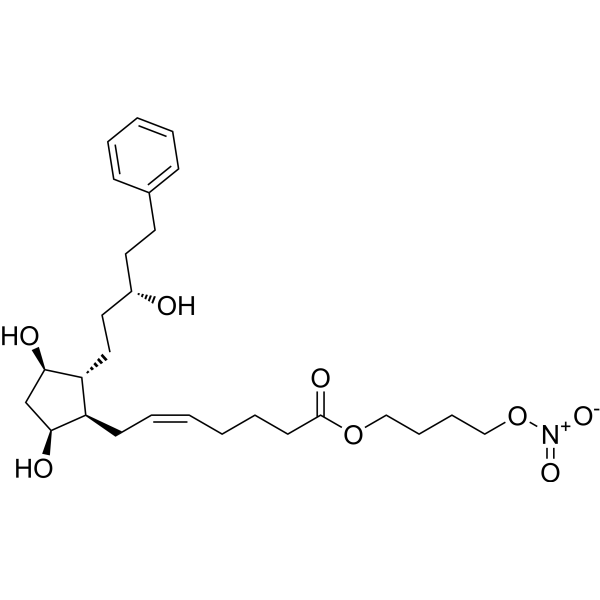
    Latanoprostene bunod (NCX116; LBN) is a nitric oxide-releasing prostaglandin F2α analog. Latanoprostene bunod is a prodrug that, upon instillation into the eye, is hydrolyzed by corneal esterases into two active metabolites: Latanoprost (HY-B0577) and NO. Latanoprost activates the prostaglandin FP receptor to increase the outflow of aqueous humor through the uveoscleral pathway. NO increases aqueous humor drainage through the trabecular meshwork pathway, achieving synergistic enhancement targeting the dual pathways of aqueous humor outflow. Latanoprostene bunod can be used in research related to open-angle glaucoma and ocular hypertension .
    Latanoprostene bunod
  • HY-12798A
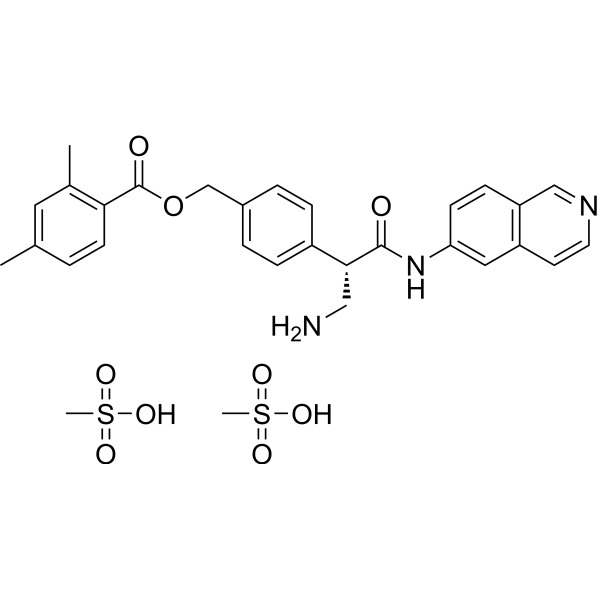
    Netarsudil dimesylate
    1 Publications Verification

    AR-13324 dimesylate

    ROCK Cardiovascular Disease Neurological Disease
    Netarsudil (AR-13324) dimesylate is a competitive inhibitor of Rho-associated protein kinases (ROCK I and ROCK II) and a reversible inhibitor of the norepinephrine transporter (NET). Netarsudil dimesylate reduces intraocular pressure by inhibiting ROCK, causing relaxation of trabecular meshwork cells and dilation of episcleral veins, thereby increasing the ease of aqueous humor outflow, while inhibiting NET to reduce aqueous humor production. Netarsudil dimesylate is mainly used in the study of ocular hypertension and primary open-angle glaucoma .
    Netarsudil dimesylate
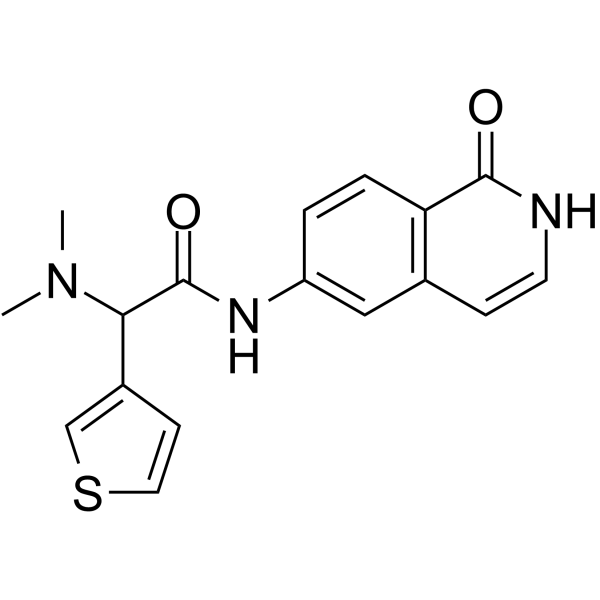
  • HY-16758

    AR-12286

    ROCK Neurological Disease
    Verosudil (AR-12286) is a ROCK inhibitor. Verosudil has equal inhibitory activity against ROCK1 and ROCK2 (Ki: 2 nM). Verosudil is less selective for PKA, PKCT, MRCKA, and CAM2A (Ki: 69 nM, 9322 nM, 28 nM, 5855 nM, respectively). Verosudil increases trabecular outflow capacity to reduce intraocular pressure. Verosudil is useful in the study of glaucoma and ocular hypertension .
    Verosudil
  • HY-128538

    ONO-9054

    Prostaglandin Receptor Neurological Disease
    Sepetaprost (ONO-9054) is a dual agonist of the prostaglandin E3 receptor and prostaglandin F receptor. Sepetaprost reduces intraocular pressure in animal models. Sepetaprost is applicable for research on ocular hypertension and open-angle glaucoma .
    Sepetaprost
  • HY-19518R

    NCX116 (Standard); LBN (Standard)

    Reference Standards Prostaglandin Receptor Neurological Disease
    Latanoprostene bunod (NCX116; LBN) (Standard) is the analytical standard of Latanoprostene bunod. This product is intended for research and analytical applications. Latanoprostene bunod is a nitric oxide-releasing prostaglandin F2α analog. Latanoprostene bunod is a prodrug that, upon instillation into the eye, is hydrolyzed by corneal esterases into two active metabolites: Latanoprost (HY-B0577) and NO. Latanoprost activates the prostaglandin FP receptor to increase the outflow of aqueous humor through the uveoscleral pathway. NO increases aqueous humor drainage through the trabecular meshwork pathway, achieving synergistic enhancement targeting the dual pathways of aqueous humor outflow. Latanoprostene bunod can be used in research related to open-angle glaucoma and ocular hypertension.
    Latanoprostene bunod (Standard)
  • HY-172634

    8-Iso-17-phenyl PGF2β

    Biochemical Assay Reagents Drug Isomer Others
    8-Iso-17-phenyl trinor prostaglandin F2β is an isomer of Bimatoprost (HY-B0191). Bimatoprost is a prostaglandin analog. Bimatoprost lowers intraocular pressure by regulating scleral and trabecular outflow.
    8-Iso-17-phenyl trinor prostaglandin F2β
  • HY-B0191R

    AGN 192024 (Standard)

    Reference Standards Prostaglandin Receptor MMP Cardiovascular Disease Endocrinology
    Bimatoprost (Standard) is the analytical standard of Bimatoprost. This product is intended for research and analytical applications. Bimatoprost is a prostaglandin analog that reduces intraocular pressure by regulating scleral and trabecular outflow. Bimatoprost is used in the study of open-angle glaucoma, ocular hypertension, and other forms of glaucoma. Topical application of bimatoprost induces fat atrophy and causes a deepening of the eyelid sulcus [4] .
    Bimatoprost (Standard)
  • HY-16758A

    AR-12286 hydrochloride

    ROCK Neurological Disease
    Verosudil (AR-12286) hydrochloride is the hydrochloride form of Verosudil (HY-16758). Verosudil hydrochloride is a ROCK inhibitor. Verosudil hydrochloride has equal inhibitory activity against ROCK1 and ROCK2 (Ki: 2 nM). Verosudil hydrochloride is less selective for PKA, PKCT, MRCKA, and CAM2A (Ki: 69 nM, 9322 nM, 28 nM, 5855 nM, respectively). Verosudil hydrochloride increases trabecular outflow capacity to reduce intraocular pressure. Verosudil hydrochloride is useful in the study of glaucoma and ocular hypertension .
    Verosudil hydrochloride
  • HY-175085

    Drug Derivative Endocrinology
    17-Phenyl trinor 8-iso prostaglandin E2 is a prostaglandin analog that reduces intraocular pressure (IOP) in both normal and glaucomatous monkey eyes. 17-Phenyl trinor 8-iso prostaglandin E2 lowers IOP primarily by increasing trabecular outflow facility .
    17-Phenyl trinor 8-iso prostaglandin E2

Inquiry Online

Your information is safe with us. * Required Fields.

Salutation


Country or Region *

Applicant Name *


Organization Name *

Department *


Email Address *


Product Name *

Cat. No.


Requested quantity *

Phone Number *


Remarks

Inquiry Online

Inquiry Information

Product Name:
Cat. No.:
Quantity:
MCE Japan Authorized Agent:

