
1. Search Result
Search Result
Results for "

transition metal

" in MedChemExpress (MCE) Product Catalog:

49

Inhibitors & Agonists

3

Fluorescent Dyes

21

Biochemical Assay Reagents

1

Peptides

3

Natural
Products

6

Isotope-Labeled Compounds

2

Click Chemistry

1

Oligonucleotides

Targets Recommended:
Cat. No. Product Name Target Research Areas Chemical Structure
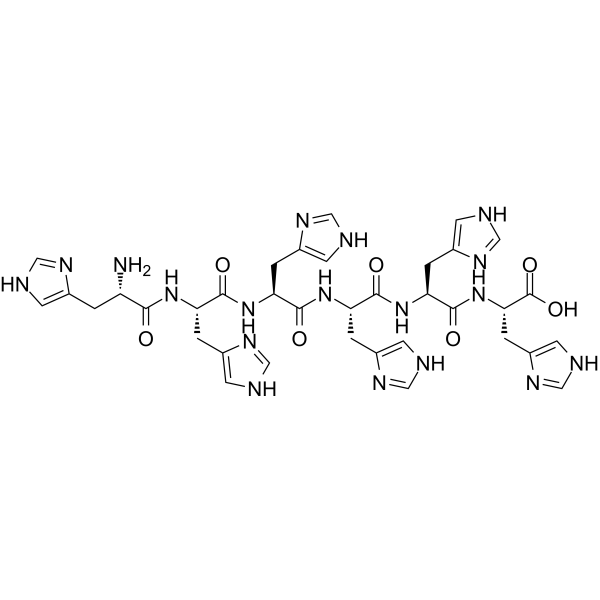
  • HY-P0294

    6X His Tag

    Biochemical Assay Reagents Others
    Hexa-His (6X His Tag) is a commonly used affinity tag made up of six histidine residues. HEXA-HIS can bind to affinity chromatography media containing transition metal ions like nickel (Ni 2+) or cobalt (Co 2+), making it useful for protein purification .
    Hexa-His
  • HY-150097

    Biochemical Assay Reagents Metabolic Disease Inflammation/Immunology Cancer
    Recombinant Human Serum Albumin (rHSA) is a non-glycosylated monomeric plasma protein that acts as a core factor for maintaining plasma colloid osmotic pressure. Recombinant Human Serum Albumin (rHSA) possesses multiple physiological functions including carrier, metabolic regulation, detoxification, antioxidation and enzyme mimicking. Recombinant Human Serum Albumin (rHSA) not only scavenges reactive oxygen and nitrogen species via specific residues and binds a variety of endogenous and exogenous compounds to maintain redox homeostasis, but also serves as a biomarker for multiple diseases such as cancer and inflammation. Recombinant Human Serum Albumin (rHSA) broadly supports the development of implantable materials, surgical adhesives and ligand capture, and can be used for research on critical illnesses including hypovolemia, liver failure, severe sepsis and various types of trauma resuscitation .
    Recombinant Human Serum Albumin(rHSA)
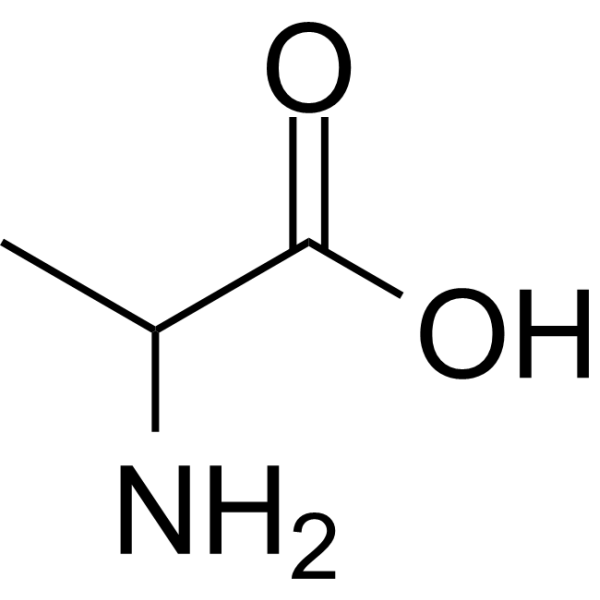
  • HY-N2362

    DL-2-Aminopropionic acid

    Endogenous Metabolite Metabolic Disease
    DL-alanine, an orally active amino acid, is the racemic compound of L- and D-alanine. DL-alanine is employed both as a reducing and a capping agent, used with silver nitrate aqueous solutions for the production of nanoparticles. DL-alanine can be used for the research of transition metals chelation, such as Cu(II), Zn(II), Cd(11). DL-alanine, a sweetener, is classed together with glycine and sodium saccharin. DL-alanine plays a key role in the glucose-alanine cycle between tissues and liver .
    DL-Alanine
  • HY-118159

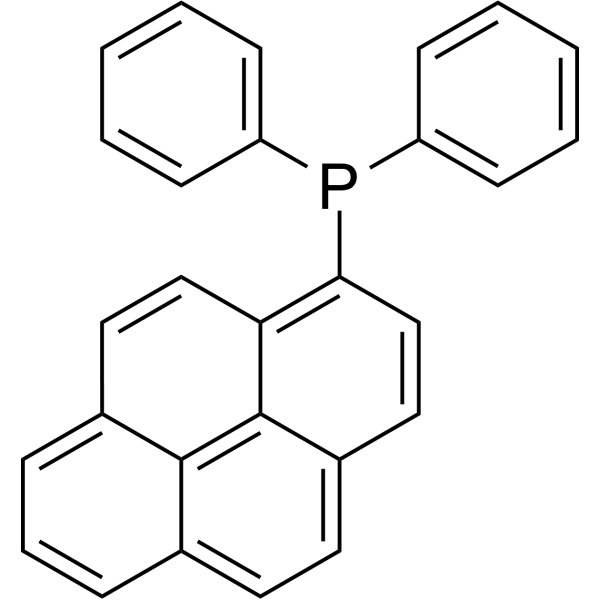
    DPPP

    Fluorescent Dye Others
    Diphenyl-1-pyrenylphosphine (DPPP) is a functional organic molecule with both fluorescent properties and metal coordination ability, which is commonly used in materials and coordination chemistry research. Upon exposure to ultraviolet light, Diphenyl-1-pyrenylphosphine undergoes photoinduced phosphorus atom oxidation to form O-DPPP, triggering a transition from aggregation-induced emission (AIE) to aggregation-caused quenching (ACQ). Diphenyl-1-pyrenylphosphine reacts stoichiometrically with lipid hydroperoxides to produce fluorescent diphenyl-1-pyrenylphosphine oxide. Diphenyl-1-pyrenylphosphine can insert into cell membranes to monitor lipid peroxidation processes in living cells .
    Diphenyl-1-pyrenylphosphine
  • HY-W011060

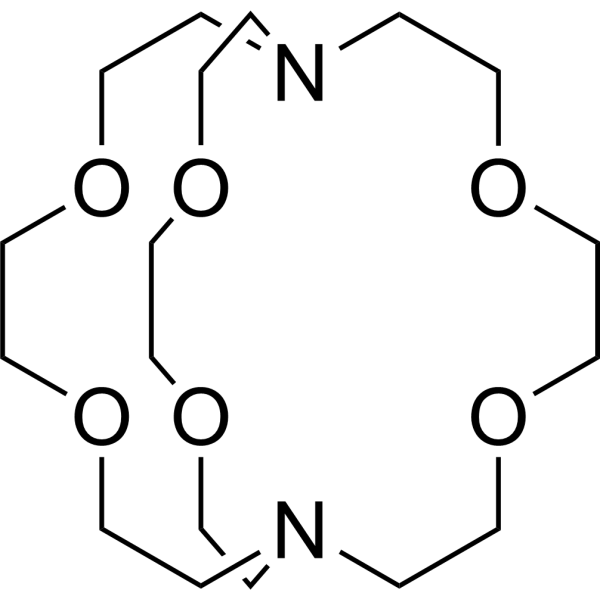
    4,7,13,16,21,24-Hexaoxa-1,10-diazabicyclo[8.8.8]hexacosane

    Biochemical Assay Reagents Others
    Cryptand 2.2.2 (4,7,13,16,21,24-Hexaoxa-1,10-diazabicyclo[8.8.8]hexacosane) is a metal ion chelator. Cryptand 2.2.2 forms stable mononuclear, protonated and dinuclear complexes with copper (II) ions; forms protonated complexes with hydrogen ions; and also forms stable complexes with Zn 2+, Co 2+, Ni 2+, Cd 2+, Hg 2+ and Pb 2+ ions. Cryptand 2.2.2 can be used for the preparation of nanoparticles, transition metal compounds, etc.
    Cryptand 2.2.2
  • HY-D0006

    Fluorescent Dye Others
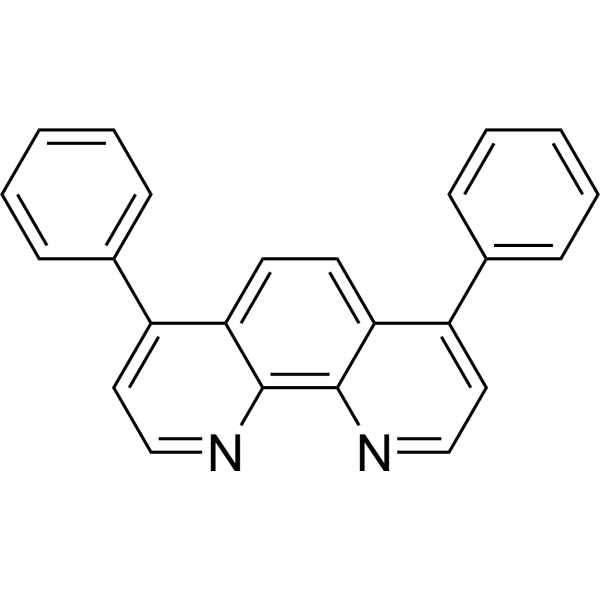
    Bathophenanthroline is a nitrogen-containing organic ligand that can form stable complexes with transition metal ions such as Ru 2+. In proteomics, Bathophenanthroline is often used for in-gel protein staining. The negatively charged sulfonic acid groups of Bathophenanthroline interact electrostatically with the positively charged amino acid residues of proteins, thereby achieving specific binding to proteins and enhancing the fluorescent signal of detection. Bathophenanthroline can be used for protein separation and detection in SDS-PAGE gels in the field of proteomics, as well as other fluorescence studies[1]. Ex/Em=532 nm/610 nm[1].
    Bathophenanthroline
  • HY-W115721

    Sodium rhodizonate dibasic

    Reactive Oxygen Species (ROS) DNA/RNA Synthesis Others
    Rhodizonic acid disodium (Sodium rhodizonate dibasic) is a transition metal-dependent pro-oxidant and lead detection agent that induces reactive oxygen species generation, DNA damage, and inhibits Aconitase activity. Rhodizonic acid disodium generates superoxide anion radicals in an iron (II)-dependent manner, leading to aconitase inactivation. Rhodizonic acid disodium also triggers hydroxyl radical-mediated DNA strand breaks and 8-OHdG formation via copper ion reduction. Rhodizonic acid disodium reacts with lead to form a scarlet precipitate, with the color intensity proportional to lead content, enabling qualitative or quantitative analysis of lead. Rhodizonic acid disodium can also be used for real-time visualization of the dynamic process of lead sequestration in the plant rhizosphere and evaluation of the effects of environmental factors such as soil type on the stability of lead-sequestering structures .
    Rhodizonic acid disodium
  • HY-W012683

    Biochemical Assay Reagents Cancer
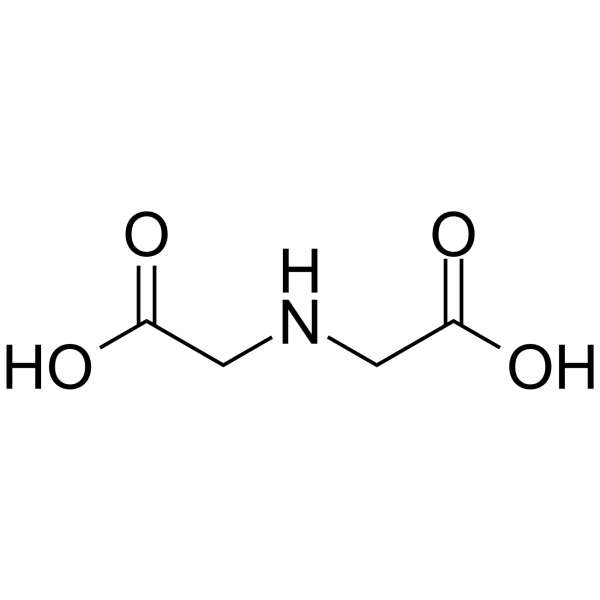
    Iminodiacetic acid is a metal ion chelator targeting Cr 6+, Cd 2+, Ni 2+, and Pb 2+. Iminodiacetic acid selectively and irreversibly binds metal ions through the coordination of carboxyl and imino groups, reduces the toxicity of metal ions and promotes their adsorption and separation. Iminodiacetic acid has the functions of heavy metal ion removal and coordination complex stabilization. Iminodiacetic acid is often used in environmental pollution control (such as heavy metal adsorption in water) and coordination chemistry (such as metal ion detection and separation) research .
    Iminodiacetic acid
  • HY-W007729

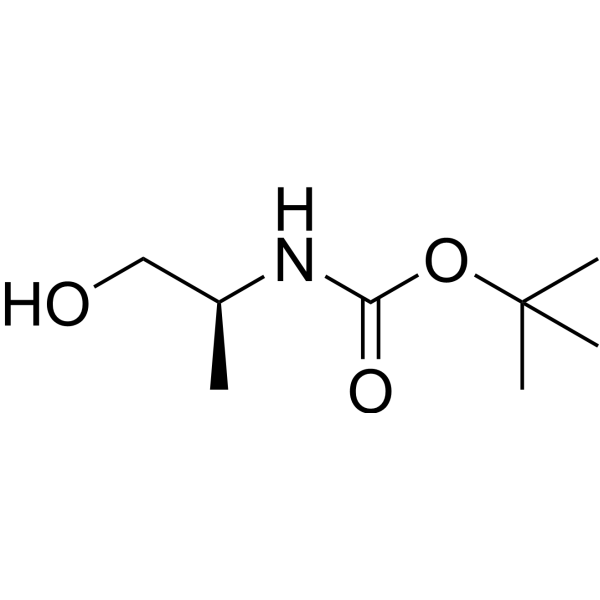
    Biochemical Assay Reagents Others
    Boc-L-Alaninol is a Boc-protected chiral amino alcohol. Boc-L-Alaninol can be used in the synthesis of optically active bipyridine-containing polymers .
    Boc-L-Alaninol
  • HY-W1048849B

    4-Arm PEG-thiol (MW 10000)

    Biochemical Assay Reagents Others
    4-Arm PEG-SH (MW 10000) (4-Arm PEG-thiol (MW 10000)) is a multi-arm PEG derivative with thiol groups at each end of the four arms. The reactive free thiol, SH or sulfhydryl groups react selectively with maleimide and transition metal surfaces including gold and silver .
    4-Arm PEG-SH (MW 10000)
  • HY-W1048849A

    4-Arm PEG5000-thiol

    Biochemical Assay Reagents Others
    4-Arm PEG5000-SH (4-Arm PEG5000-thiol) is a multi-arm PEG derivative with thiol groups at each end of the four arms. The reactive free thiol, SH or sulfhydryl groups react selectively with maleimide and transition metal surfaces including gold and silver .
    4-Arm PEG5000-SH
  • HY-W020887

    Chlorobis(cyclooctene)iridium(I)dimer

    Biochemical Assay Reagents Endogenous Metabolite
    [IrCl(COE)2]2 (Chlorobis(cyclooctene)iridium(I)dimer) is a transition metal catalyst with remarkable catalytic activity. It is widely used in catalyzing a variety of organic reactions, especially in the synthesis of unsaturated compounds. In addition, [IrCl(COE)2]2 has shown potential anti-tumor properties in biochemical research.
    [IrCl(COE)2]2
  • HY-W1048849C

    4-Arm PEG20000-thiol

    Biochemical Assay Reagents Others
    4-Arm PEG20000-SH (4-Arm PEG20000-thiol) is a multi-arm PEG derivative with thiol groups at each end of the four arms. The reactive free thiol, SH or sulfhydryl groups react selectively with maleimide and transition metal surfaces including gold and silver .
    4-Arm PEG20000-SH
  • HY-32746

    Biochemical Assay Reagents Others
    5-Bromo-2-fluoropyridine is a biochemical reagent that can be used as a biological material or organic compound for life science related research. 5-Bromo-2-fluoropyridine easily reacts with amines to synthesize halogenated pyridine and pyrimidine. 5-Bromo-2-fluoropyridine can be used as a model substrate to explore their efficiency and selectivity through successive SNAr substitution reactions and transition-metal-catalyzed cross-coupling reaction without an intervening purification step .
    5-Bromo-2-fluoropyridine
  • HY-W017708

    Drug Intermediate Others
    Triphenylene is a highly symmetrical polycyclic aromatic hydrocarbon. Triphenylene shows no carcinogenic activity in mouse skin application experiments. Triphenylene can be used as a drug intermediate for the synthesis of triphenyl polycyclic aromatic hydrocarbons (PAHs) .
    Triphenylene
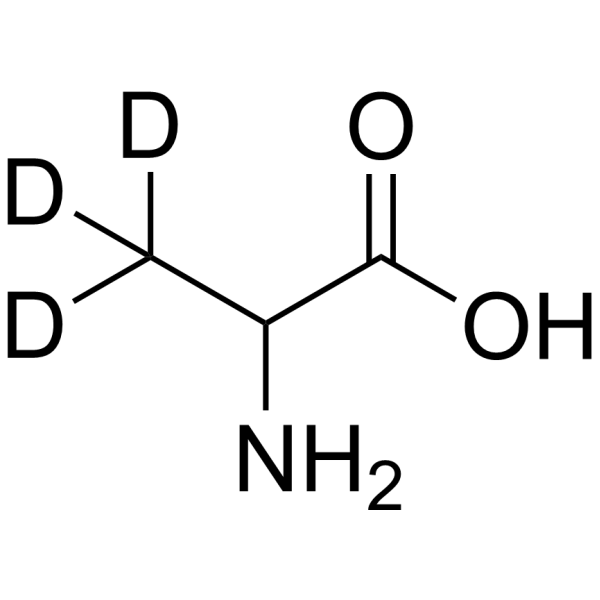
  • HY-N2362S2

    DL-2-Aminopropionic acid-d3

    Endogenous Metabolite Metabolic Disease
    DL-Alanine-d3 is the deuterium labeled DL-Alanine. DL-alanine, an amino acid, is the racemic compound of L- and D-alanine. DL-alanine is employed both as a reducing and a capping agent, used with silver nitrate aqueous solutions for the production of nanoparticles. DL-alanine can be used for the research of transition metals chelation, such as Cu(II), Zn(II), Cd(11). DL-alanine, a sweetener, is classed together with glycine, and sodium saccharin. DL-alanine plays a key role in the glucose-alanine cycle between tissues and liver .
    DL-Alanine-d3
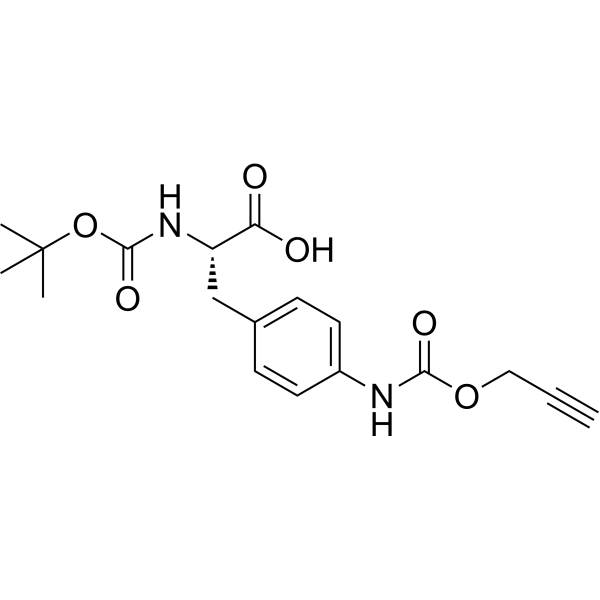
  • HY-151824

    ADC Linker Others
    Boc-L-Phe(4-NH-Poc)-OH is a click chemistry reagent containing an azide group. Used as an orthogonally protected building block in peptide synthesis. Propargyloxycarbonyl, commonly abbreviated as Poc or Pryoc, can either be used as alkyne component for standard Click conjugation or in combination with tetrazine linkers in copper-free Diels-Alder type Click reactions. It also has applications as unusual protecting group for amines, hydroxy functions and as esters. All 3 are stable to neat TFA, but can be cleaved at ambient temperature with Co2(CO)8 in TFA:DCM. Deprotection with other transition metals like palladium have also been reported . Boc-L-Phe(4-NH-Poc)-OH is a click chemistry reagent, it contains an Alkyne group and can undergo copper-catalyzed azide-alkyne cycloaddition (CuAAc) with molecules containing Azide groups.
    Boc-L-Phe(4-NH-Poc)-OH
  • HY-W009906

    Aminopeptidase Inflammation/Immunology
    2-(2’-Pyridyl)benzimidazole is a potentially tridentate ligand that can form stable complexes with various transition metal ions. 2-(2’-Pyridyl)benzimidazole can be used as an anti-inflammatory agent and an inhibitor of Escherichia coli methionine aminopeptidase .
    2-(2′-Pyridyl)benzimidazole
  • HY-W012683R

    Biochemical Assay Reagents Reference Standards Cancer
    Iminodiacetic acid is a metal ion chelator targeting Cr6+, Cd2+, Ni2+, and Pb2+. Iminodiacetic acid selectively and irreversibly binds metal ions through the coordination of carboxyl and imino groups, reduces the toxicity of metal ions and promotes their adsorption and separation. Iminodiacetic acid has the functions of heavy metal ion removal and coordination complex stabilization. Iminodiacetic acid is often used in environmental pollution control (such as heavy metal adsorption in water) and coordination chemistry (such as metal ion detection and separation) research .
    Iminodiacetic acid (Standard)
  • HY-33505

    Biochemical Assay Reagents Others
    4-Chloro-6-fluoroquinazoline is a transition metal catalyst .
    4-Chloro-6-fluoroquinazoline
  • HY-W590555

    Liposome Cancer
    Thiol-PEG2000-DMG is a phospholipid polyPEG which can be used to prepare liposomes or nanoparticles. The terminal thiol group reacts with maleimide, OPSS, vinylsulfone and transition metal surfaces including gold, silver, etc.
    Thiol-PEG2000-DMG
  • HY-W1048849D

    4-Arm PEG40000-thiol

    Biochemical Assay Reagents Others
    4-Arm PEG40000-SH (4-Arm PEG40000-thiol) is a multi-arm PEG derivative with thiol groups at each end of the four arms. The reactive free thiol, SH or sulfhydryl groups react selectively with maleimide and transition metal surfaces including gold and silver .
    4-Arm PEG40000-SH
  • HY-W854275

    Biochemical Assay Reagents Endogenous Metabolite
    (H2IPr)(Cl)2Ru=CH(o-iPrOC6H4) is a highly efficient catalyst that can effectively promote the metathesis reaction of olefins. The compound exhibits excellent selectivity in the field of transition metal catalysts, is suitable for the synthesis of biologically active compounds, and shows potential application value in compound development.
    (H2IPr)(Cl)2Ru=CH(o-iPrOC6H4)
  • HY-W591060

    Biochemical Assay Reagents Endogenous Metabolite
    Bis(bipyridine)-(5-aminophenanthroline) is an organic catalyst with photocatalytic activity. The use of Bis(bipyridine)-(5-aminophenanthroline) in hematology involves its use as a stain for tissue diagnosis. Bis(bipyridine)-(5-aminophenanthroline) can be used as a transition metal catalyst in catalytic reactions. Bis(bipyridine)-(5-aminophenanthroline) has also been used in the study of ruthenium catalysts.
    Bisbipyridine-(5-aminophenanthroline)
  • HY-W1048545H

    Amine-PEG1000-Thiol hydrochloride

    Biochemical Assay Reagents Others
    H2N-PEG1000-SH (Amine-PEG1000-Thiol) hydrochloride is a linear heterobifunctional PEGylated product containing thiol and amine. H2N-PEG1000-SH hydrochloride is an important cross-linking or bioconjugation reagent with PEG chains. Thiol or SH, sulfhydryl or thiol selectively reacts with maleimide, OPSS, vinyl sulfone and transition metal surfaces (including gold, silver, etc.) .
    H2N-PEG1000-SH hydrochloride
  • HY-151837

    ADC Linker Others
    H-L-Phe(4-NH-Poc)-OH (hydrochloride) is a click chemistry reagent containing an azide group. Used as a modified Phe or Tyr analogue in protein and peptide biosynthesis. Propargyloxycarbonyl, commonly abbreviated as Poc or Pryoc, can either be used as alkyne component for standard Click conjugation or in combination with tetrazine linkers in copper-free Diels-Alder type Click reactions. It also has applications as unusual protecting group for amines, hydroxy functions and as esters. All 3 are stable to neat TFA, but can be cleaved at ambient temperature with Co2(CO)8 in TFA:DCM. Deprotection with other transition metals like palladium have also been reported . H-L-Phe(4-NH-Poc)-OH (hydrochloride) is a click chemistry reagent, it contains an Alkyne group and can undergo copper-catalyzed azide-alkyne cycloaddition (CuAAc) with molecules containing Azide groups.
    H-L-Phe(4-NH-Poc)-OH hydrochloride
  • HY-76375

    Biochemical Assay Reagents Others
    2,3-Dimethylbenzoic acid is a transition metal catalyst .
    2,3-Dimethylbenzoic acid
  • HY-W127822

    (1Z,4Z,10Z,15Z)-5,10,15-Triphenyl-22,24-dihydro-21H-corri

    Biochemical Assay Reagents Others
    5,10,15-tris(phenyl)corrole is a corrole derivative used as a trianionic ligand for transition metals.
    5,10,15-Triphenylcorrole
  • HY-W127824

    (5Z,9Z,14Z)-5,10,15-Tris(4-nitrophenyl)-22,24-dihydro-21H-corri

    Biochemical Assay Reagents Others
    5,10,15-tris(4-nitrophenyl)corrole is a corrole derivative used as a trianionic ligand for transition metals.
    5,10,15-Tris(4-nitrophenyl)corrole
  • HY-112678

    HIF/HIF Prolyl-Hydroxylase Cardiovascular Disease
    TM6008 is a potent and orally active prolyl hydroxylase (PHD) inhibitor. TM6008 chelats transition metal (copper) and inhibits the autoxidation of ascorbic acid with an IC50 value is 0.57 μM. TM6008  exerts organ protection against ischemia in vivo and can be used for cerebrovascular disease research .
    TM6008
  • HY-W011060R

    4,7,13,16,21,24-Hexaoxa-1,10-diazabicyclo[8.8.8]hexacosane (Standard)

    Biochemical Assay Reagents Reference Standards Others
    Cryptand 2.2.2 (Standard) is the analytical standard of Cryptand 2.2.2 (HY-W011060). This product is intended for research and analytical applications. Cryptand 2.2.2 is a metal ion chelating agent that can selectively form complexes with metal ions. At room temperature, Cryptand 2.2.2 can serve as a host molecule, using the chelation effect to selectively bind desired ions (such as Zn 2+, Co 2+, Ni 2+, Cu 2+). Cryptand 2.2.2 can be used in the preparation of nanoparticles, transition metal compounds, and so on .
    Cryptand 2.2.2 (Standard)
  • HY-W008658

    Biochemical Assay Reagents Endogenous Metabolite
    [1,4-Bis(diphenylphosphino)butane](norbornadiene)rhodium tetrafluoroborate is a highly efficient and selective transition metal catalyst that can catalyze a variety of reactions, including cross-coupling reactions and hydrogenation reactions. This compound is widely used in organic synthesis and helps to promote the development of new compounds and materials. Through its catalytic activity, [1,4-Bis(diphenylphosphino)butane](norbornadiene)rhodium tetrafluoroborate offers the potential to optimize reaction conditions and improve yields.
    [1,4-Bis(diphenylphosphino)butane](norbornadiene)rhodium tetrafluoroborate
  • HY-W1048545D

    Amine-PEG10000-Thiol hydrochloride

    Biochemical Assay Reagents Others
    H2N-PEG10000-SH (Amine-PEG10000-Thiol) hydrochloride is a linear heterobifunctional PEGylated product containing thiol and amine. H2N-PEG10000-SH hydrochloride is an important cross-linking or bioconjugation reagent with PEG chains. Thiol or SH, sulfhydryl or thiol selectively reacts with maleimide, OPSS, vinyl sulfone and transition metal surfaces (including gold, silver, etc.) .
    H2N-PEG10000-SH hydrochloride
  • HY-W1048545A

    Amine-PEG2000-Thiol hydrochloride

    Biochemical Assay Reagents Others
    H2N-PEG2000-SH (Amine-PEG2000-Thiol) hydrochloride is a linear heterobifunctional PEGylated product containing thiol and amine. H2N-PEG2000-SH hydrochloride is an important cross-linking or bioconjugation reagent with PEG chains. Thiol or SH, sulfhydryl or thiol selectively reacts with maleimide, OPSS, vinyl sulfone and transition metal surfaces (including gold, silver, etc.) .
    H2N-PEG2000-SH hydrochloride
  • HY-W075744

    Biochemical Assay Reagents Endogenous Metabolite
    SK-J002-1n is a highly efficient catalyst with excellent cross-coupling reaction activity. SK-J002-1n is widely used in organic synthesis to construct complex molecular structures. The chiral properties of SK-J002-1n make it play an important role in the pharmaceutical industry and provide support for the synthesis of chiral compounds. SK-J002-1n can significantly improve the conversion efficiency and is an important component of transition metal catalysts.
    SK-J002-1n
  • HY-N2362S5

    DL-2-Aminopropionic acid-15N

    Endogenous Metabolite Metabolic Disease
    DL-Alanine- 15N is the 15N labeled DL-Alanine . DL-alanine, an amino acid, is the racemic compound of L- and D-alanine. DL-alanine is employed both as a reducing and a capping agent, used with silver nitrate aqueous solutions for the production of nanoparticles. DL-alanine can be used for the research of transition metals chelation, such as Cu(II), Zn(II), Cd(11). DL-alanine, a sweetener, is classed together with glycine, and sodium saccharin. DL-alanine plays a key role in the glucose-alanine cycle between tissues and liver .
    DL-Alanine-15N
  • HY-N2362S

    DL-2-Aminopropionic acid-13C-1

    Endogenous Metabolite Metabolic Disease
    DL-Alanine- 13C-1 is the 13C-labeled DL-Alanine. DL-alanine, an amino acid, is the racemic compound of L- and D-alanine. DL-alanine is employed both as a reducing and a capping agent, used with silver nitrate aqueous solutions for the production of nanoparticles. DL-alanine can be used for the research of transition metals chelation, such as Cu(II), Zn(II), Cd(11). DL-alanine, a sweetener, is classed together with glycine, and sodium saccharin. DL-alanine plays a key role in the glucose-alanine cycle between tissues and liver .
    DL-Alanine-13C-1
  • HY-N2362S1

    DL-2-Aminopropionic acid-13C-3

    Isotope-Labeled Compounds Endogenous Metabolite Metabolic Disease
    DL-Alanine- 13C-3 is the 13C-labeled DL-Alanine. DL-alanine, an amino acid, is the racemic compound of L- and D-alanine. DL-alanine is employed both as a reducing and a capping agent, used with silver nitrate aqueous solutions for the production of nanoparticles. DL-alanine can be used for the research of transition metals chelation, such as Cu(II), Zn(II), Cd(11). DL-alanine, a sweetener, is classed together with glycine, and sodium saccharin. DL-alanine plays a key role in the glucose-alanine cycle between tissues and liver .
    DL-Alanine-13C-3
  • HY-N2362S8

    DL-2-Aminopropionic acid-d7

    Isotope-Labeled Compounds Metabolic Disease
    DL-Alanine-d7 (DL-2-Aminopropionic acid-d7) is deuterium labeled DL-Alanine. DL-alanine, an orally active amino acid, is the racemic compound of L- and D-alanine. DL-alanine is employed both as a reducing and a capping agent, used with silver nitrate aqueous solutions for the production of nanoparticles. DL-alanine can be used for the research of transition metals chelation, such as Cu(II), Zn(II), Cd(11). DL-alanine, a sweetener, is classed together with glycine and sodium saccharin. DL-alanine plays a key role in the glucose-alanine cycle between tissues and liver .
    DL-Alanine-d7
  • HY-N2362S9

    DL-2-Aminopropionic acid-13C2,15N2

    Isotope-Labeled Compounds Endogenous Metabolite Metabolic Disease
    DL-Alanine- 13C2, 15N (DL-2-Aminopropionic acid- 13C2, 15N) is 13C and 15N labeled DL-Alanine. DL-alanine, an orally active amino acid, is the racemic compound of L- and D-alanine. DL-alanine is employed both as a reducing and a capping agent, used with silver nitrate aqueous solutions for the production of nanoparticles. DL-alanine can be used for the research of transition metals chelation, such as Cu(II), Zn(II), Cd(11). DL-alanine, a sweetener, is classed together with glycine and sodium saccharin. DL-alanine plays a key role in the glucose-alanine cycle between tissues and liver .
    DL-Alanine-13C2,15N
  • HY-W019888

    Ferrofloc

    Environmental Pollutants Others
    Iron (II) chloride (Ferrofloc) is an active radical polymerization initiator, which is a transition metal chloride composed of Fe 2+ and Cl ions. The ion association constant logKFeCl2 of Iron (II) chloride is −0.89. In acidic aqueous solutions, Iron (II) chloride forms solvated Fe 2++2Cl ions as well as FeCl ++Cl ion pairs. Without the addition of aluminum compounds, Iron (II) chloride drives the living radical polymerization of methyl methacrylate by generating transient radical growing species through homolytic reversible cleavage of the carbon-halogen end groups of organic halide initiators .
    Iron(II) chloride
  • HY-116121

    Biochemical Assay Reagents Others
    S-Nitrosohomocysteine is a compound generated by the reaction of homocysteine and nitrous acid. It has the activity of quantitative formation under different pH conditions and its stability is affected by transition metal ions. Its formation involves more powerful nitrosating agents.
    S-Nitrosohomocysteine
  • HY-D3212

    Fluorescent Dye Metabolic Disease
    Crisp-17 is a monovalent copper ion probe. Crisp-17 can be used to characterize cellular phenotypes associated with copper metabolism defects. Crisp-17 is applicable to research related to Menkes disease .
    Crisp-17
  • HY-165381

    MDM-2/p53 Reactive Oxygen Species (ROS) Cancer
    ZMC2 is a thiosemicarbazone-class metal ion chelator and zinc ionophore with a human mutant p53 R175H binding Ka of 27.4 nM.ZMC2 binds Fe, Cu, Mn, Zn, and other transition metals.ZMC2 facilitates zinc transport across membranes.ZMC2 restores zinc binding to zinc-deficient p53 mutants, restoring wild-type structure and function, including site-specific DNA binding.ZMC2 generates reactive oxygen species (ROS).ZMC2 can be used for the research of cancer .
    ZMC2
  • HY-W1048545I

    Amine-PEG3400-Thiol hydrochloride

    Biochemical Assay Reagents Others
    H2N-PEG3400-SH (Amine-PEG3400-Thiol) hydrochloride is a linear heterobifunctional PEGylated product containing thiol and amine. H2N-PEG3400-SH hydrochloride is an important cross-linking or bioconjugation reagent with PEG chains. Thiol or SH, sulfhydryl or thiol selectively reacts with maleimide, OPSS, vinyl sulfone and transition metal surfaces (including gold, silver, etc.) .
    H2N-PEG3400-SH hydrochloride
  • HY-W1048545E

    Amine-PEG20000-Thiol hydrochloride

    Biochemical Assay Reagents Others
    H2N-PEG20000-SH (Amine-PEG20000-Thiol) hydrochloride is a linear heterobifunctional PEGylated product containing thiol and amine. H2N-PEG20000-SH hydrochloride is an important cross-linking or bioconjugation reagent with PEG chains. Thiol or SH, sulfhydryl or thiol selectively reacts with maleimide, OPSS, vinyl sulfone and transition metal surfaces (including gold, silver, etc.) .
    H2N-PEG20000-SH hydrochloride
  • HY-W1048545J

    Amine-PEG40000-Thiol hydrochloride

    Biochemical Assay Reagents Others
    H2N-PEG40000-SH (Amine-PEG40000-Thiol) hydrochloride is a linear heterobifunctional PEGylated product containing thiol and amine. H2N-PEG40000-SH hydrochloride is an important cross-linking or bioconjugation reagent with PEG chains. Thiol or SH, sulfhydryl or thiol selectively reacts with maleimide, OPSS, vinyl sulfone and transition metal surfaces (including gold, silver, etc.) .
    H2N-PEG40000-SH hydrochloride
  • HY-W1048545C

    Amine-PEG5000-Thiol hydrochloride

    Biochemical Assay Reagents Others
    H2N-PEG5000-SH (Amine-PEG5000-Thiol) hydrochloride is a linear heterobifunctional PEGylated product containing thiol and amine. H2N-PEG5000-SH hydrochloride is an important cross-linking or bioconjugation reagent with PEG chains. Thiol or SH, sulfhydryl or thiol selectively reacts with maleimide, OPSS, vinyl sulfone and transition metal surfaces (including gold, silver, etc.) .
    H2N-PEG5000-SH hydrochloride
  • HY-W441531

    Biochemical Assay Reagents
    2,3,7,8,12,13,17,18-Octaethyl-21H,23H-porphine manganese(III) chloride is a transition metal compound with excellent catalytic activity. 2,3,7,8,12,13,17,18-Octaethyl-21H,23H-porphine manganese(III) chloride is widely used in photocatalytic reactions to improve reaction efficiency. 2,3,7,8,12,13,17,18-Octaethyl-21H,23H-porphine manganese(III) chloride is also used in the preparation of optical materials, giving the materials excellent light absorption properties. The biological activity of 2,3,7,8,12,13,17,18-Octaethyl-21H,23H-porphine manganese(III) chloride has gradually attracted attention in the research of the medical field.
    2,3,7,8,12,13,17,18-Octaethyl-21H,23H-porphine manganese(III) chloride

Inquiry Online

Your information is safe with us. * Required Fields.

Salutation


Country or Region *

Applicant Name *


Organization Name *

Department *


Email Address *


Product Name *

Cat. No.


Requested quantity *

Phone Number *


Remarks

Inquiry Online

Inquiry Information

Product Name:
Cat. No.:
Quantity:
MCE Japan Authorized Agent: