8 Results for "

vascular hyperpermeability

" in MedChemExpress (MCE) Product Catalog:
Products (8)

8 Results for "vascular hyperpermeability" in MCE Product Catalog:

2
2 Cited Publications
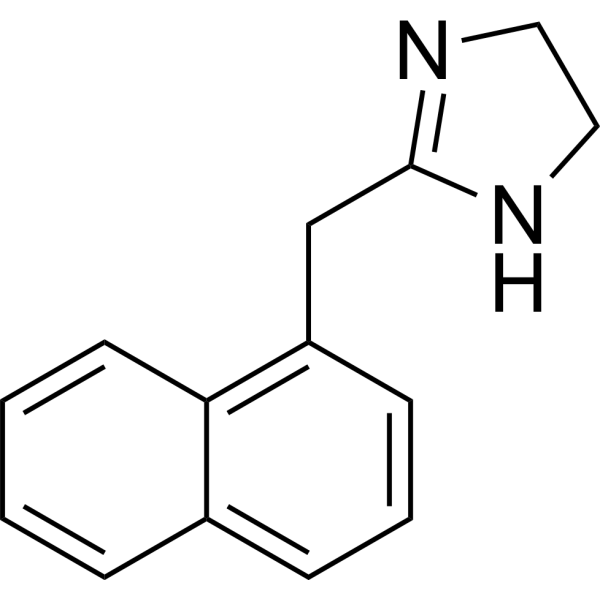
Cat. No.: HY-111326
CAS No.: 835-31-4
Purity:  99.74%
Synonyms: Naphthazoline
Naphazoline (Naphthazoline) is a potent α-adrenergic receptor agonist. Naphazoline reduces vascular hyperpermeability and promotes vasoconstriction. Naphazoline reduces the levels of inflammatory factors (TNF-α, IL-1β and IL-6), cytokines (IFN-γ and IL-4), IgE, GMCSF, and NGF. Naphazoline can be used for non-bacterial conjunctivitis research .
loading...
    loading...
2
2 Cited Publications
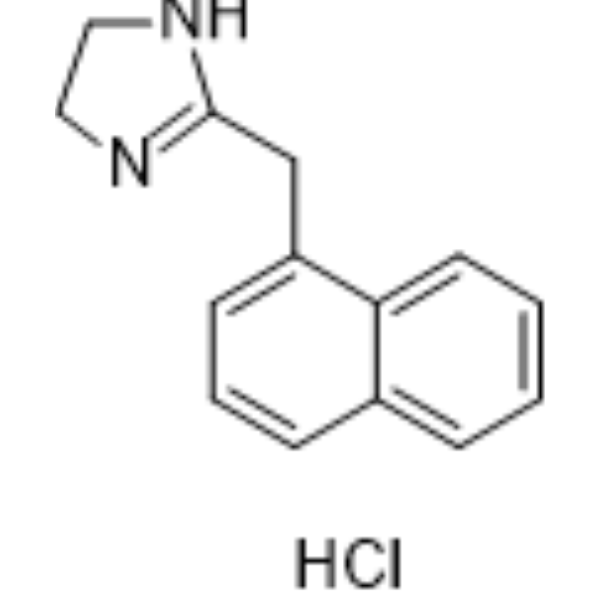
Cat. No.: HY-B0446
CAS No.: 550-99-2
Synonyms: Naphthazoline hydrochloride
Naphazoline (Naphthazoline) hydrochloride is a potent α-adrenergic receptor agonist. Naphazoline hydrochloride reduces vascular hyperpermeability and promotes vasoconstriction. Naphazoline hydrochloride reduces the levels of inflammatory factors (TNF-α, IL-1β and IL-6), cytokines (IFN-γ and IL-4), IgE, GMCSF, and NGF. Naphazoline hydrochloride can be used for non-bacterial conjunctivitis research .
loading...
    loading...
2
2 Cited Publications
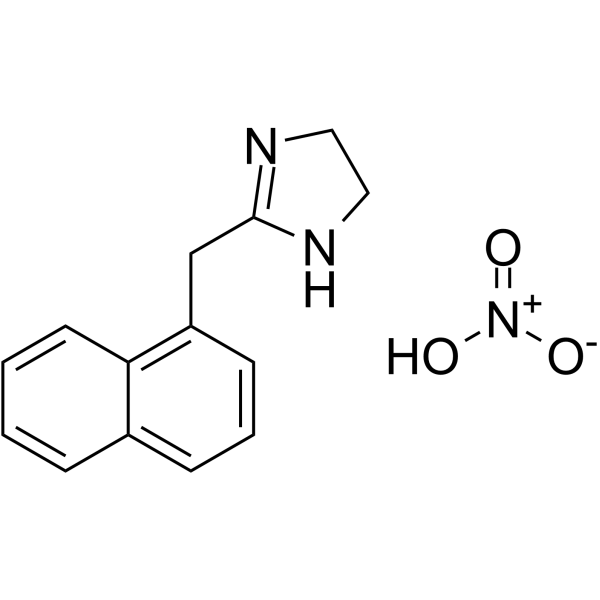
Cat. No.: HY-111326A
CAS No.: 5144-52-5
Purity:  ≥98.0%
Synonyms: Naphthazoline nitrate
Naphazoline (Naphthazoline) nitrate is an α-adrenergic receptor agonist. Naphazoline nitrate reduces vascular hyperpermeability and promotes vasoconstriction. Naphazoline nitrate reduces the levels of inflammatory factors (TNF-α, IL-1β and IL-6), cytokines (IFN-γ and IL-4), IgE, GMCSF, and NGF. Naphazoline nitrate can be used for non-bacterial conjunctivitis research .
loading...
    loading...
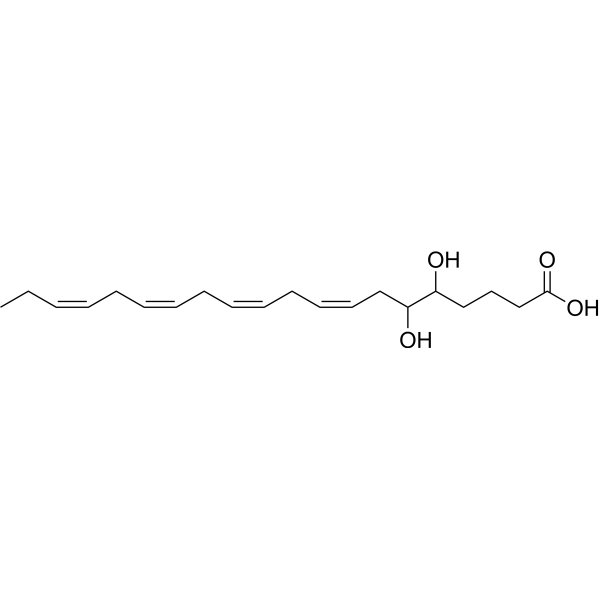
Cat. No.: HY-130138C
CAS No.: 845673-97-4
Purity:  96.74%
Target:  

Calcium Channel

Research Areas:  

Inflammation/Immunology

5,6-DiHETE is an anti-inflammatory lipid mediator derived from eicosapentaenoic acid (EPA). 5,6-DiHETE has the ability to suppress vascular hyperpermeability during inflammation and is used in the research of inflammatory diseases .
loading...
    loading...
Cat. No.: HY-B0446R
CAS No.: 550-99-2
Synonyms: Naphthazoline hydrochloride (Standard)
Naphazoline (hydrochloride) (Standard) is the analytical standard of Naphazoline (hydrochloride). This product is intended for research and analytical applications. Naphazoline (Naphthazoline) hydrochloride is a potent α-adrenergic receptor agonist. Naphazoline hydrochloride reduces vascular hyperpermeability and promotes vasoconstriction. Naphazoline hydrochloride reduces the levels of inflammatory factors (TNF-α, IL-1β and IL-6), cytokines (IFN-γ and IL-4), IgE, GMCSF, and NGF。Naphazoline hydrochloride can be used for non-bacterial conjunctivitis research .
loading...
    loading...
Cat. No.: HY-111326AR
CAS No.: 5144-52-5
Synonyms: Naphthazoline nitrate (Standard)
Naphazoline (nitrate) (Standard) is the analytical standard of Naphazoline (nitrate). This product is intended for research and analytical applications. Naphazoline (Naphthazoline) nitrate is an α-adrenergic receptor agonist. Naphazoline nitrate reduces vascular hyperpermeability and promotes vasoconstriction. Naphazoline nitrate reduces the levels of inflammatory factors (TNF-α, IL-1β and IL-6), cytokines (IFN-γ and IL-4), IgE, GMCSF, and NGF. Naphazoline nitrate can be used for non-bacterial conjunctivitis research .
loading...
    loading...
Cat. No.: HY-111326R
CAS No.: 835-31-4
Synonyms: Naphthazoline (Standard)
Naphazoline (Standard) is the analytical standard of Naphazoline (HY-111326). This product is intended for research and analytical applications. Naphazoline (Naphthazoline) is a potent α-adrenergic receptor agonist. Naphazoline reduces vascular hyperpermeability and promotes vasoconstriction. Naphazoline reduces the levels of inflammatory factors (TNF-α, IL-1β and IL-6), cytoKines (IFN-γ and IL-4), IgE, GMCSF, and NGF. Naphazoline can be used for non-bacterial conjunctivitis research .
loading...
    loading...
Cat. No.: HY-P12080
CAS No.: 176365-43-8
pUR4 is a recombinant peptide that acts as a fibronectin (FN) inhibitor. pUR4 binds to the N-terminal type I modules of fibronectin, inhibiting the polymerization of soluble fibronectin and its deposition into the extracellular matrix (ECM). pUR4 reduces β1 integrin activation by depleting ECM fibronectin and disrupting FN-β1 integrin coupling. pUR4 attenuates TNF-α-induced endothelial hyperpermeability, maintains endothelial monolayer integrity, and reduces TNF-α-induced cell morphological changes. pUR4 decreases neutrophil adhesion to cardiac endothelial cells, T cell interstitial migration, immune cell infiltration, collagen deposition, and fibroblast activation. pUR4 can be used in research on pathological vascular leakage, heart failure, inflammation, chronic kidney disease, liver fibrosis, and intestinal fibrosis .
loading...
    loading...

