

1. Search Result
Search Result
Results for "

viral proteins

" in MedChemExpress (MCE) Product Catalog:

197

Inhibitors & Agonists

6

Screening Libraries

1

Fluorescent Dyes

1

Biochemical Assay Reagents

6

Peptides

7

Inhibitory Antibodies

23

Natural
Products

1

Recombinant Proteins

3

Isotope-Labeled Compounds

12

Oligonucleotides

Cat. No. Product Name Target Research Areas Chemical Structure
  • HY-108717
    Proteinase K
    Maximum Cited Publications
    23 Publications Verification

    Protease K

    Ser/Thr Protease Others
    Proteinase K (Protease K) is a nonspecific serine protease that is useful for general digestion of proteins. Proteinase K is active in the presence of SDS or urea and over a wide range of pH (4-12), salt concentrations, and temperatures. Proteinase K can be use for promoting methods of viral nucleic acid extraction, and detection .
    Proteinase K
  • HY-B1268
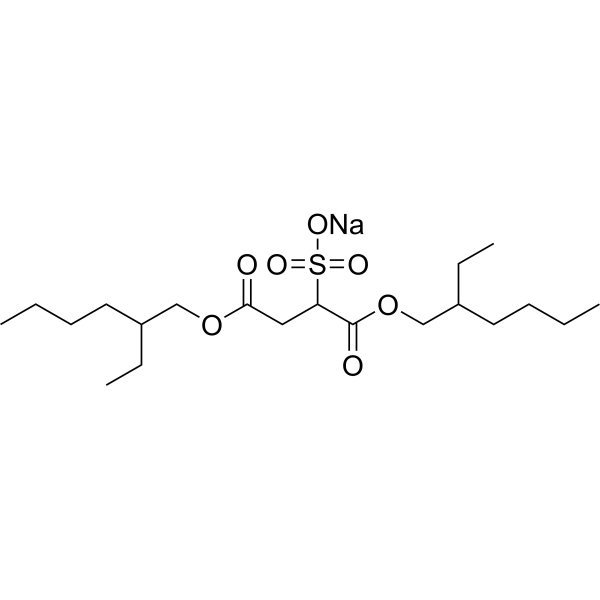
    Docusate Sodium
    2 Publications Verification

    Dioctyl sulfosuccinate sodium salt

    Environmental Pollutants HSV Others
    Docusate Sodium (Dioctyl sulfosuccinate sodium salt) is one of the main components in stool softeners. Docusate Sodium is a sulfated surfactant and may inactivate viral pathogens by disrupting viral envelopes and/or denaturing/disassociating proteins. Docusate Sodium is effective in vitro against wild type and drug-resistant strains of HSV type 1 and 2. Docusate Sodium is an obesogen. Docusate Sodium with developmental exposure leads to increased adult adiposity, inflammation, metabolic disorder and dyslipidemia in offspring fed a standard diet in mice .
    Docusate Sodium
  • HY-138941
    Octaethylene glycol monododecyl ether
    1 Publications Verification

    C12E8

    Influenza Virus Infection
    Octaethylene glycol monododecyl ether (C12E8) is an non-ionic detergent that can be used for membrane protein extraction. Octaethylene glycol monododecyl ether can solubilize the viral membrane of intact influenza virus .
    Octaethylene glycol monododecyl ether
  • HY-153810

    JNJ-1802

    Virus Protease Flavivirus Dengue Virus Infection
    Mosnodenvir (JNJ-1802) is an orally active pan serotype dengue virus (DENV) inhibitor, with EC50 values ranging from 0.057 to 11 nM for four dengue virus (DENV) serotypes. Mosnodenvir blocks viral replication by inhibiting the formation of complexes between two viral proteins, nonstructural protein 3 (NS3) and NS4B, thereby preventing the formation of new viral RNA. Mosnodenvir exhibits picomolar to nanomolar antiviral activity in vitro and has antiviral efficacy in mice and non-human primates .
    Mosnodenvir
  • HY-147217

    ISIS 505358

    HBV Infection
    Bepirovirsen is an antisense oligonucleotide targeting all HBV messenger RNAs. Bepirovirsen leads to reductions in HBV-derived RNAs, HBV DNA and viral proteins. Bepirovirsen can be used for the research of chronic HBV infection. Bepirovirsen binding site sequence (GCACTTCGCTTCACCTCTGC) .
    Bepirovirsen
  • HY-B0751
    Fumagillin
    1 Publications Verification

    Amebacilin; NSC9168

    Parasite HIV Antibiotic Infection
    Fumagillin(NSC9168) is an antimicrobial compound first isolated in 1949 from the fungus Aspergillus fumigatu. Fumagillin can inhibits HIV‐1 infection through the inhibition of HIV-1 viral protein R (Vpr) activity.
    Fumagillin
  • HY-147217A

    ISIS 505358 sodium

    HBV Infection
    Bepirovirsen (ISIS 505358) sodium is an antisense oligonucleotide targeting all HBV messenger RNAs. Bepirovirsen sodium leads to reductions in HBV-derived RNAs, HBV DNA and viral proteins. Bepirovirsen sodium can be used for the research of chronic HBV infection. Bepirovirsen sodium binding site sequence (GCACTTCGCTTCACCTCTGC) .
    Bepirovirsen sodium
  • HY-120072
    PF-3450074
    5 Publications Verification

    PF-74

    HIV Infection
    PF-3450074 (PF-74) is a specifical inhibitor of HIV-1 capsid protein (CA) and displays a broad-spectrum inhibition of HIV isolates with submicromolar potency (EC50=8-640 nM). PF-3450074 (PF-74) acts at an early stage of HIV-1 infection, inhibits viral replication by directly competing with the binding of CPSF6 and NUP153, and blocks the uncoating, assembly, and the reverse transcription steps of the viral life cycle . CPSF6: nuclear host factors cleavage and polyadenylation specific factor 6; NUP153: nucleoporin 153.
    PF-3450074
  • HY-N0093
    Ancitabine hydrochloride
    1 Publications Verification

    Cyclocytidine hydrochloride; Cyclo-CMP hydrochloride; Cyclo-C

    Autophagy CMV DNA/RNA Synthesis Infection Cancer
    Ancitabine hydrochloride is a cytarabine derivative that inhibits viral replication. Ancitabine hydrochloride blocks vaccinia virus DNA replication, the progression of viral protein synthesis from early to late stages, and one-step growth of vaccinia virus. Ancitabine hydrochloride is applicable to research related to vaccinia virus infection, leukemia, human cytomegalovirus infection and colorectal cancer .
    Ancitabine hydrochloride
  • HY-N2036
    Mosloflavone
    1 Publications Verification

    TNF Receptor Enterovirus Bacterial Infection
    Mosloflavone is a flavonoid isolated from Scutellaria baicalensis Georgi with ?anti-EV71 activity. Mosloflavone? inhibits VP2 virus replication and protein expression during the initial stage of virus infection and inhibits viral VP2 capsid protein synthesis. Mosloflavone is a promising biocide and inhibits P. aeruginosa virulence and biofilm formation.
    Mosloflavone
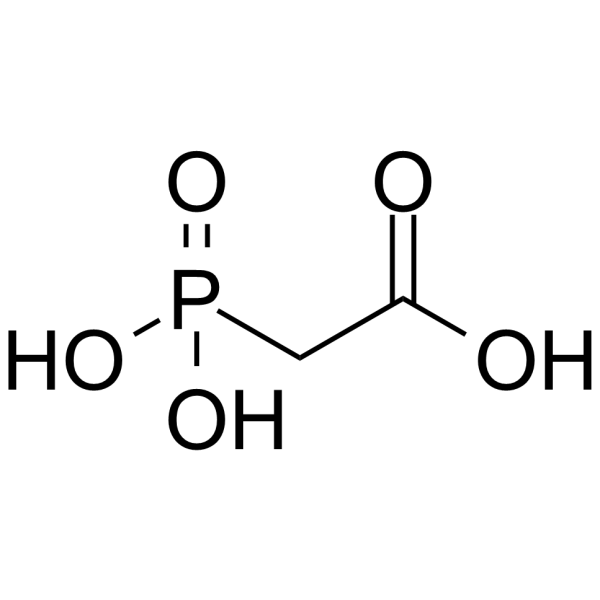
  • HY-128744
    Phosphonoacetic acid
    2 Publications Verification

    Endogenous Metabolite Orthopoxvirus HSV DNA/RNA Synthesis Infection
    Phosphonoacetic acid is an endogenous metabolite and antiviral agent. Phosphonoacetic acid is active against orthopoxviruses and herpes viruses. Phosphonoacetic acid can inhibit HSV DNA synthesis and virus-specific DNA polymerase activity, and affect the synthesis of late viral proteins .
    Phosphonoacetic acid
  • HY-148348

    HBV Infection
    AB-836 is an orally active HBV capsid inhibitor. AB-836 inhibits viral replication by interacting with HBV core protein. AB-836 can be used in research related to chronic hepatitis B .
    AB-836
  • HY-N0842
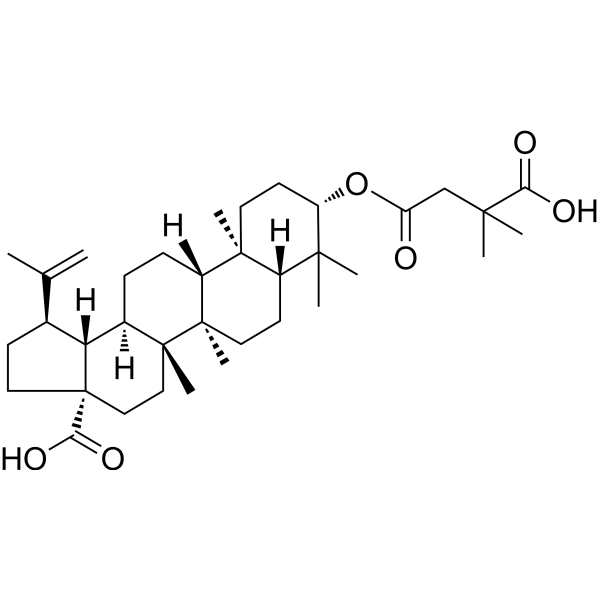
    Bevirimat
    2 Publications Verification

    PA-457; MPC-4326; YK FH312

    Virus Protease Infection
    Bevirimat (PA-457, MPC-4326, YK FH312) is an inhibitor of HIV-1 viral particle maturation.Bevirimat specifically inhibits the final rate-limiting step in Gag processing, preventing the release of the mature capsid protein (CA) from its precursor (CA-SP1), resulting in the production of immature non-infectious viral particles. Bevirimat can be used in HIV-1 infection studies .
    Bevirimat
  • HY-101997

    Orthopoxvirus Apoptosis Caspase Bcl-2 Family Akt Infection Cancer
    BEPP hydrochloride is a double-stranded RNA-dependent protein kinase (PKR) modulator. BEPP hydrochloride enhances the phosphorylation levels of PKR and eIF2α, activates caspase-3, upregulates the pro-apoptotic protein BAX, and downregulates the anti-apoptotic protein Bcl-2. BEPP hydrochloride inhibits vaccinia virus replication and exhibits selective cytotoxicity in cells expressing PKR. BEPP hydrochloride can be used in research related to cancer and viral infections .
    BEPP hydrochloride
  • HY-16957

    HCV HIV Infection
    LJ001 is a broad-spectrum and orally active antiviral agent. LJ001 exerts antiviral activities by binding to viral membranes. LJ001 inhibits TGEV and PDCoV infection. LJ001 decreases TGEV N and PDCoV N-protein expression .
    LJ001
  • HY-147255

    ZM-H1505R

    HBV Infection
    Canocapavir (ZM-H1505R) is an orally active HBV core protein-targeting antiviral agent. Canocapavir binds to the hydrophobic pocket at the dimer-dimer interface of HBV core protein (HBc), stimulating intracellular accumulation of nonfunctional HBV capsids, disrupting viral replication. Canocapavir interferes with the interaction between HBc and HBV large surface protein, resulting in diminished
    production of empty virionsis. Canocapavir can be used for the research of hepatitis B virus (HBV) infection .
    Canocapavir
  • HY-148836

    c-Myc Infection Cardiovascular Disease Cancer
    c-Myc inhibitor 6 (compound A102) is a c-Myc inhibitor. c-Myc inhibitor 6 decreases cancer cell viability and degrades c-Myc protein. c-Myc inhibitor 6 can be used for the research of c-Myc imbalance, such as cancer, cardiovascular diseases, and viral infection .
    c-Myc inhibitor 6
  • HY-112958
    Fomivirsen
    2 Publications Verification

    ISIS-2922

    CMV Infection
    Fomivirsen (ISIS-2922) is an antisense phosphorothioate oligonucleotide. Fomivirsen is an antiviral reagent used in research on cytomegalovirus (CMV) retinitis. Fomivirsen binds to and degrades the mRNA of CMV immediate-early 2 protein, thereby inhibiting viral proliferation. Fomivirsen can be used in research related to cytomegalovirus retinitis and cytomegalovirus diseases .
    Fomivirsen
  • HY-172760

    SARS-CoV Infection
    CIM-834 is an orally effective inhibitor of SARS-CoV-2 membrane protein. CIM-834 can prevent the assembly of infectious virus particles without inhibiting the synthesis of viral RNA. CIM-834 can reduce the viral titer in the lungs of SCID mice infected nasally with SARS-CoV-2, block the spread of SARS-CoV-2 among Syrian hamsters, and inhibit the replication of SARS-CoV-2 (including variants) and SARS-CoV. CIM-834 can be used in related research on COVID-19 .
    CIM-834
  • HY-106312A

    LY122772

    Enterovirus Infection
    Enviroxime (LY122772) is an antiviral compound that inhibits the replication of rhinoviruses and enteroviruses. Enviroxime blocks the replication of plus-strand viral RNA by targeting the viral 3A coding region. Enviroxime can be a useful tool for investigating the natural function of the 3A protein .
    Enviroxime
  • HY-136782

    Flavivirus Dengue Virus Infection
    ST-148 maleate is a potent and orally active DENV inhibitor. ST-148 maleate shows antiviral efficacy and low cell toxicity. ST-148 alters the interaction between lipid droplets and the C protein, thereby inhibiting viral replication. .
    ST-148 maleate
  • HY-124512

    Pentaacetylquercetin

    RSV Infection Inflammation/Immunology
    Quercetin pentaacetate could interact with F-protein with lower binding energy and better stability to block viral adhesion. Quercetin pentaacetate interacts with RSV and inhibit the viral adhesion on cell surface .
    Quercetin pentaacetate
  • HY-N3187

    Flavivirus Dengue Virus Fungal Bacterial Histamine Receptor Infection Neurological Disease Inflammation/Immunology Cancer
    Nimbin is an orally active intermediate limonoid found in Azadirachta. Nimbin prevents tau aggregation and increases cell viability. Nimbin is effective inhibits the envelope protein of dengue virus. Nimbin has anti-inflammatory, antipyretic, antifungal, antihistamine, antiseptic, antioxidant, anti-cancer and anti-viral properties. Nimbin is promising for research of neurodegenerative diseases and viral infections .
    Nimbin
  • HY-P99346

    CT-P59

    SARS-CoV Angiotensin-converting Enzyme (ACE) Infection
    Regdanvimab (CT-P59) is a human monoclonal antibody that targets the receptor-binding domain of SARS-CoV-2 spike protein, blocking interaction with ACE2 for viral entry. Regdanvimab can be used for the research of COVID-19 .
    Regdanvimab
  • HY-B1268R

    Dioctyl sulfosuccinate sodium salt (Standard)

    Reference Standards HSV Others
    Docusate (Sodium) (Standard) is the analytical standard of Docusate (Sodium). This product is intended for research and analytical applications. Docusate Sodium (Dioctyl sulfosuccinate sodium salt) is one of the main components in stool softeners. Docusate Sodium is a sulfated surfactant and may inactivate viral pathogens by disrupting viral envelopes and/or denaturing/disassociating proteins. Docusate Sodium is effective in vitro against wild type and drug-resistant strains of HSV type 1 and 2. Docusate Sodium is an obesogen. Docusate Sodium with developmental exposure leads to increased adult adiposity, inflammation, metabolic disorder and dyslipidemia in offspring fed a standard diet in mice .
    Docusate Sodium (Standard)
  • HY-109045A

    BTA074 hydrochloride; AP 611074 hydrochloride

    E1/E2/E3 Enzyme HPV Infection
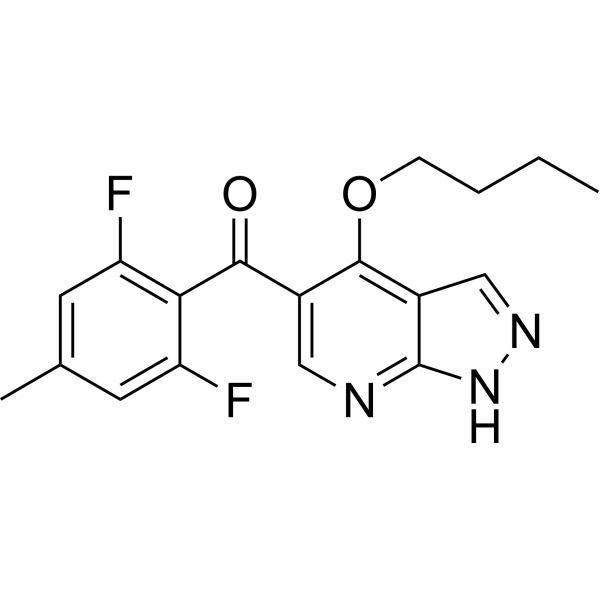
    Teslexivir (BTA074) hydrochloride is a potent antiviral agent. Teslexivir hydrochloride is a potent and selective inhibitor of the interaction between two essential viral proteins, E1 and E2, an association that is a necessary step in the DNA replication and thus viral production for Human Papilloma Virus (HPV) 6 and 11. Teslexivir hydrochloride can be used for condyloma research .
    Teslexivir hydrochloride
  • HY-148170

    EBV DNA/RNA Synthesis Nucleoside Antimetabolite/Analog Infection
    L-I-OddU, a L-5'-halo- dioxolane nucleoside analogue, is a potent and selective anti-Epstein-Barr virus (EBV) agent with an EC50 value of 0.03μM. L-I-OddU has low cytotoxicity with a CC50 value of 1000 nM. L-I-OddU has antiviral activity by suppressing replicative EBV DNA and viral protein synthesis .
    L-I-OddU
  • HY-111233

    WIN-51711

    Enterovirus Infection
    Disoxaril (WIN-51711) is an antivirus agent with activity against poliovirus types 1 and 2. Disoxaril inserts into the hydrophobic interior of virus capsid protein VP1 to stabilize virion conformation, inhibits poliovirus uncoating, and prevents viral RNA release and synthesis. Disoxaril can be used for the research of poliovirus infection .
    Disoxaril
  • HY-121663

    Dengue Virus Infection
    ST-148 is a novel small molecule compound that has potent inhibitory effects against all four dengue virus serotypes. In the nonlethal AG129 mouse dengue virus infection model, ST-148 significantly reduced viremia and viral load in vital organs and tended to reduce plasma cytokine levels. Compound resistance was associated with the dengue virus capsid (C) gene, and the direct interaction of ST-148 with the C protein was presumed to be achieved through the protein's built-in fluorescence change in the presence of the compound. Therefore, ST-148 appears to interact with the dengue virus C protein and inhibit one or more unique steps of the viral replication cycle.
    ST-148
  • HY-W555382

    2-Nonylquinolin-4(1H)-one

    HCV Infection
    Pseudane IX, a compound isolated from the leaves of Ruta angustifolia, has strong anti-HCV activity with an IC50 value of 1.4 μg/mL. Pseudane IX reduces HCV RNA replication and viral protein synthesis levels .
    Pseudane IX
  • HY-163529

    HSV Cytochrome P450 Infection
    HN0037 is a selective, orally active Helicase-primase inhibitor. HN0037 is mainly metabolized by CYP3A4. HN0037 inhibits HSV replication by targeting the viral helicase-primase complex, which consists of three proteins encoded by UL5 (helicase), UL52 (primase), and UL8 (scaffold protein that promotes primer synthesis) .
    HN0037
  • HY-175343

    Ligands for E3 Ligase Infection
    OICR-41103 is an effective, selective, cell-active DCAF1 small molecule chemical probe that targets the DCAF1 WDR domain and replaces the viral Vpr protein. The binding Ki value of OICR-41103 and DCAF1 is less than 2 nM .
    OICR-41103
  • HY-113761

    Filovirus Infection
    ASN03576800 could be a potent inhibitor for Ebola virus matrix protein VP40 in process of viral assembly and budding process. ASN03576800 occupies the RNA binding region of VP40 .
    ASN03576800
  • HY-148328

    Casein Kinase Infection Inflammation/Immunology Cancer
    CK2-IN-4 (compound 5) is a protein kinase (CK2) inhibitor (IC50=8.6 µM). CK2-IN-4 has good potential for research in the areas of cancer, viral infections and glomerulonephritis .
    CK2-IN-4
  • HY-19874

    RSV Infection
    RFI-641 is a selective inhibitor of the respiratory syncytial virus (RSV), with an IC50 of 50 nM. RFI-641 inhibit binding and fusion of enveloped virus via interaction with the viral fusion protein .
    RFI-641
  • HY-105721

    SARS-CoV Infection
    Aranotin strongly binds to Nsp15 viral protein. Aranotin can be used as promising SARS-CoV-2 replication strong inhibitor. Aranotin has the potential for COVID-19 research .
    Aranotin
  • HY-109045

    BTA074; AP 611074

    E1/E2/E3 Enzyme HPV Infection
    Teslexivir (BTA074) is a potent antiviral agent. Teslexivir is a potent and selective inhibitor of the interaction between two essential viral proteins, E1 and E2, an association that is a necessary step in the DNA replication and thus viral production for Human Papilloma Virus (HPV) 6 and 11. Teslexivir can be used for condyloma research .
    Teslexivir
  • HY-157236

    Biochemical Assay Reagents Others
    AEX Anion-exchange resin 1 is a strong anion exchange chromatography resin, based on monodisperse polystyrene/divinylbenzene (PS-DVB), with a particle size of 50 μm and an ionic ligand of –CH2N + (CH3)3. AEX Anion-exchange resin 1 can be used for the separation and purification of biological macromolecules such as proteins, antibodies, and viral vaccines.
    AEX Anion-exchange resin 1
  • HY-174998

    HIV HIV Protease Infection
    HIV-1 protease-IN-15 (Compound 27) is an orally active and selective inhibitor targeting HIV-1 protease with a pIC50 value of 9.347. HIV-1 protease-IN-15 inhibits HIV protein maturation, blocks viral replication. HIV-1 protease-IN-15 is promising for research of HIV-1 infection .
    HIV-1 protease-IN-15
  • HY-145850

    Enterovirus Infection
    EV-A71-IN-1 is a human enterovirus A71 (EV-A71) capsid protein inhibitor with an EC50 of 0.27 μM against EV-A71. EV-A71-IN-1 is a capsid binder that blocks the interaction between the viral VP1 and the host receptor hSCARB2. EV-A71-IN-1 inhibits a series of different human enteroviruses without significant cytotoxicity (CC50>56.2 μM) .
    EV-A71-IN-1
  • HY-171788

    N-myristoyltransferase Cancer
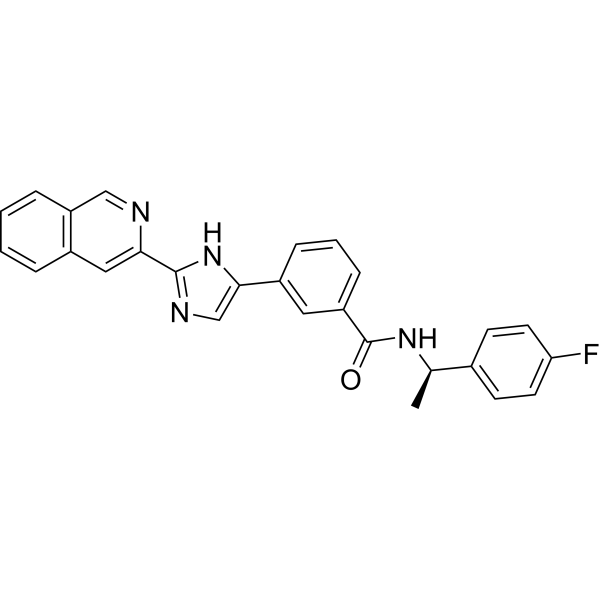
    NMT-IN-8 (Compound Ex.129) is an orally active and highly selective inhibitor of N-myristoyl transferase (NMT) with an IC50 value of <10 nM. NMT-IN-8 binds to the peptide binding pocket of NMT, blocking its catalyzed protein N-myristoylation to interfere with key pathways such as protein trafficking, signal transduction, and viral replication. NMT-IN-8 is promising for research of oncology (e.g., MYC-addicted cancers, B-cell lymphoma) and infectious diseases (e.g., malaria, HIV, rhinovirus infection) .
    NMT-IN-8
  • HY-174814

    Enterovirus Infection
    Jun15716 is an Enterovirus (EVs) 2C protein (EVs 2C) inhibitor with Kis of 15.9, 44.2 and 17.8 μM for EV-D68, EV-A71 and CVB3, respectively. Jun15716 has a potent antiviral activity against EV-D68 US/MO/14-18947 and CVB3 Nancy cells (EC50s of 1.0 and 0.7 μM, respectively). Jun15716 can be used for viral infections research, such as meningitis, hand, foot and mouth disease (HFMD) and viral myocarditis .
    Jun15716
  • HY-174815

    Enterovirus Infection
    Jun15799 is an Enterovirus (EVs) 2C protein (EVs 2C) inhibitor with Kis of 0.8, 21.1 and 3.0 μM for EV-D68, EV-A71 and CVB3, respectively. Jun15799 has a significant antiviral activity against EV-D68 US/MO/14-18947, EV-A71 Tainan/4643/1998 and CVB3 Nancy cells (EC50s of 0.3, 11.4 and 0.3 μM, respectively). Jun15799 can be used for viral infections research, such as meningitis, hand, foot and mouth disease (HFMD) and viral myocarditis .
    Jun15799
  • HY-162512

    CCR HIV Infection
    CB-0821 is a high affinity CCR5 inhibitor with a Ki of 0.04 nM. CB-0821 binds efficiently to the hydrophobic pocket of the CCR5 protein, to inhibit the interactions between viral protein and CCR5, thereby inhibiting viral entry. CB-0821 has the potential for anti-HIV research .
    CB-0821
  • HY-172553

    Virus Protease SARS-CoV Infection
    AS-0017445 is an inhibitor targeting the main protease of both the current coronavirus and the virus that caused the Middle East Respiratory Syndrome (MERS) outbreak. AS-0017445 inhibits the viral protein processing in host cells and thus prevents viral replication .
    AS-0017445
  • HY-163029

    Cathepsin SARS-CoV Infection
    CTSLCTSB-IN-1 (compound 212-148) is a bispecific inhibitor of host viral spike cleaver proteins CTSL/CTSB and TMPRSS2 with IC50s of 2.13/64.07 nM and 1.38 μM, respectively. CTSLCTSB-IN-1 blocks two relevant SARS-CoV-2 viral entry pathways by inhibiting the viral spike cleavage and can be applied to anti-SARS-CoV-2 research .
    CTSL/B-IN-1
  • HY-147314

    HIV Src Infection
    HIV-IN-6 is a HIV-Ⅰ viral replication inhibitor by targeting Src family kinases (SFK) that interact with Nef protein of the virus, such as Hck .
    HIV-IN-6
  • HY-177791

    PROTACs Influenza Virus Infection
    vRNPs degrader-1 is a potent PROTAC viral ribonucleoproteins (vRNPs) degrader. vRNPs degrader-1 shows broad-spectrum anti-influenza A viruses (IAV) activity by targeting the conserved 5′ end of viral RNA, thereby inducing proteasomal degradation of viral proteins. vRNPs degrader-1 inhibits H1N1, H9N2, and H3N2 infection in mice. vRNPs degrader-1 can be used for influenza research .
    vRNPs degrader-1
  • HY-176433

    Flavivirus Infection
    NSC-323241 is a potent STT3A-mediated mega protein complex assembly inhibitor. NSC-323241 disrupts he endoplasmic reticulum (ER) mega complex nucleated by STT3A during dengue virus (DENV) and Zika virus (ZIKV) infection. NSC-323241 targets the binding of STT3A subcomplex with viral nonstructural proteins (e.g., NS2B, NS3) and host translocon proteins, disrupting the formation of viral replication microenvironment. NSC-323241 is promising for research of flavivirus infection, such as dengue fever and Zika virus .
    NSC-323241
  • HY-102077

    HIV Infection
    SAMT-247 is a microbicide that selectively inactivate the viral nucleocapsid protein NCp7, causing zinc ejection and preventing RNA encapsidation. SAMT-247 shows good antiviral activity .
    SAMT-247

Inquiry Online

Your information is safe with us. * Required Fields.

Salutation


Country or Region *

Applicant Name *


Organization Name *

Department *


Email Address *


Product Name *

Cat. No.


Requested quantity *

Phone Number *


Remarks

Inquiry Online

Inquiry Information

Product Name:
Cat. No.:
Quantity:
MCE Japan Authorized Agent:

