From 11:00 pm to 12:00 pm EST ( 8:00 pm to 9:00 pm PST ) on January 6th, the website will be under maintenance. We are sorry for the inconvenience. Please arrange your schedule properly.
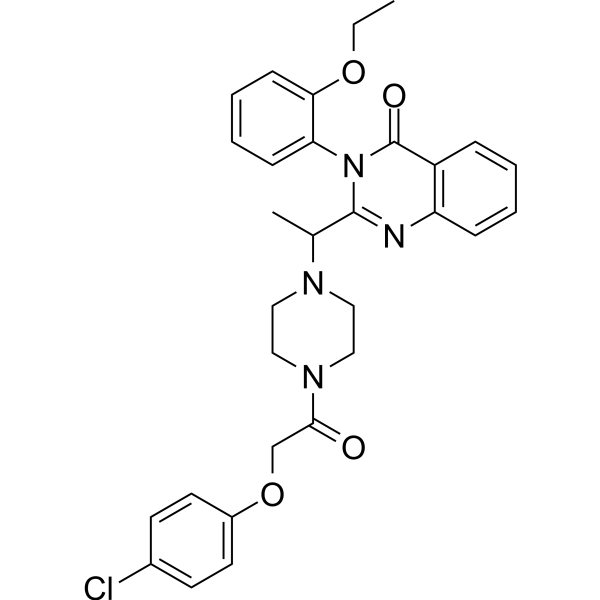
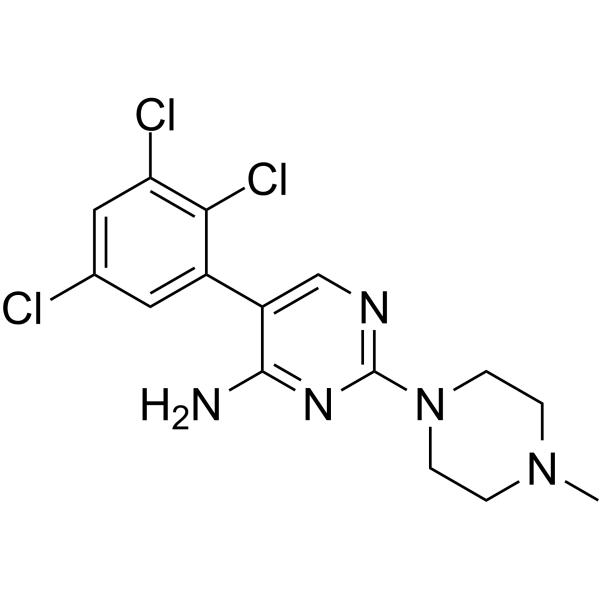
VBIT-4 is an inhibitor of voltage-dependent anion channel 1 (VDAC1) oligomerization with a binding affinity (Kd) of 17 μM. VBIT-4, as an apoptosis inhibitor, can be used for therapeutic purposes in apoptosis-associated disorders, such as neurodegenerative and cardiovascular diseases .
Ebselen (SPI-1005), a glutathione peroxidase mimetic, is a potent voltage-dependent calcium channel (VDCC) blocker . Ebselen potently inhibits M pro (IC50=0.67 μM) and COVID-19 virus (EC50=4.67 μM) .Ebselen is an inhibitor of HIV-1 capsid CTD dimerization. Ebselen, an organoselenium compound, can permeate the blood-brain barrier and has anti-inflammatory, antioxidant and anticancer activity .
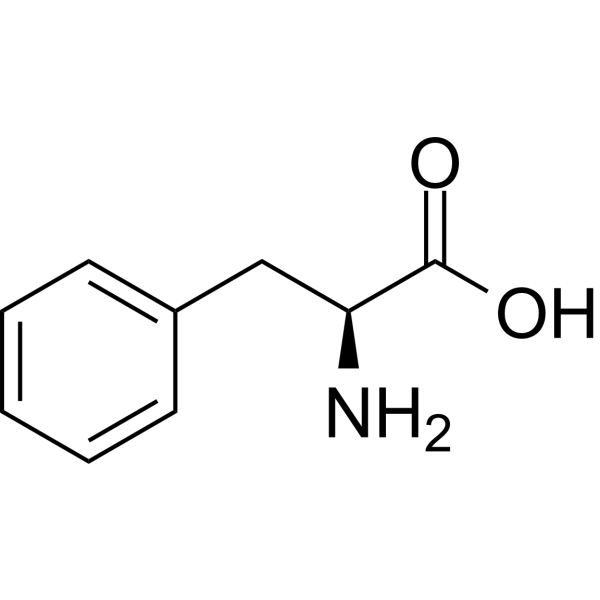
L-Phenylalanine ((S)-2-Amino-3-phenylpropionic acid) is an essential amino acid isolated from Escherichia coli. L-Phenylalanine is a α2δ subunit of voltage-dependent Ca + channels antagonist with a Ki of 980 nM. L-phenylalanine is a competitive antagonist for the glycine- and glutamate-binding sites of N-methyl-D-aspartate receptors (NMDARs) (KB of 573 μM ) and non-NMDARs, respectively. L-Phenylalanine is widely used in the production of food flavors and pharmaceuticals .
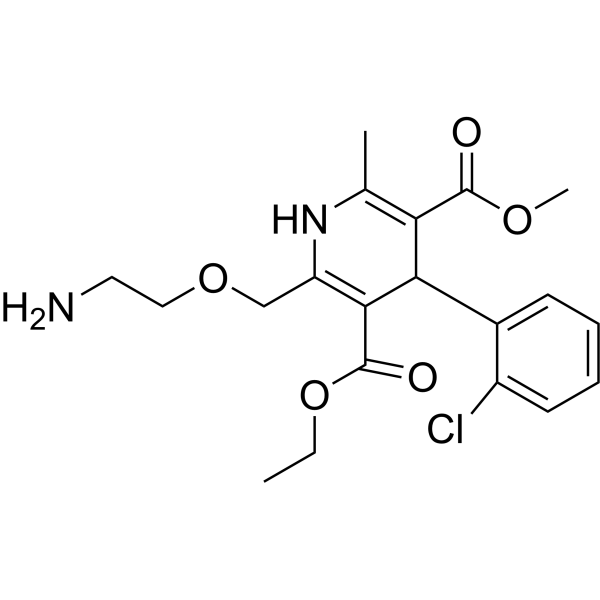
Amlodipine, an antianginal agent and an orally active dihydropyridine calcium channel blocker, works by blocking the voltage-dependent L-type calcium channels, thereby inhibiting the initial influx of calcium. Amlodipine can be used for the research of high blood pressure and cancer .
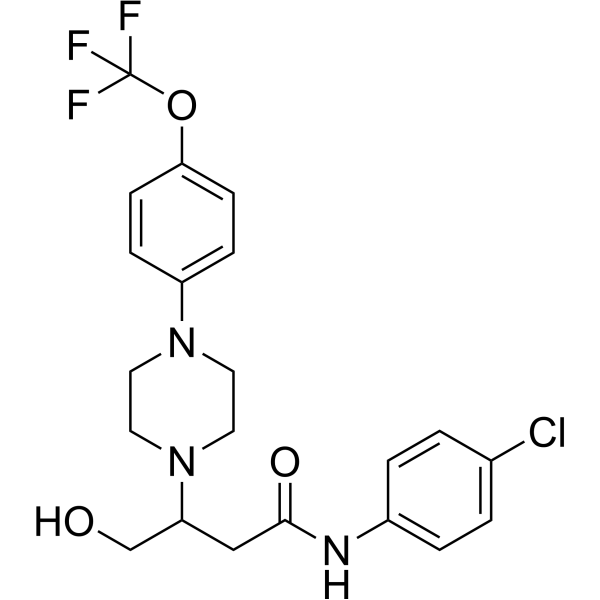
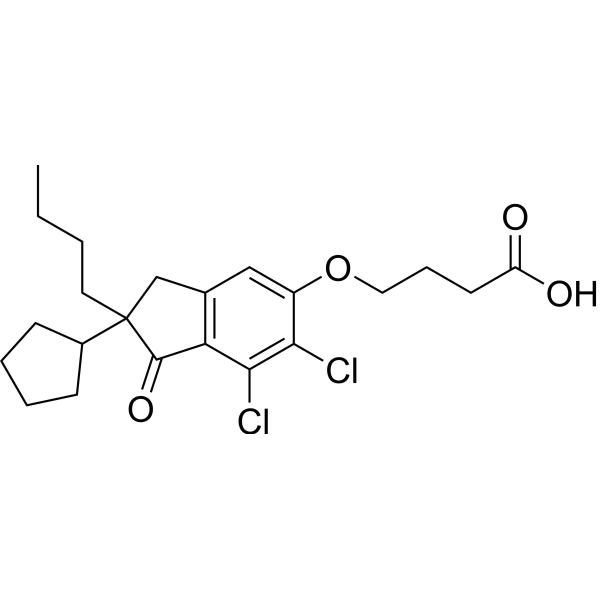
DCPIB is a selective, reversible and potent inhibitor of volume-regulated anion channels (VRAC). DCPIB voltage-dependently activates potassium channels TREK1 and TRAAK, and inhibits TRESK, TASK1 and TASK3 (IC50s: 0.14, 0.95, 50.72 μM, respectively). DCPIB is also a selective blocker of swelling-induced chloride current (ICl,swell), with an IC50 of 4.1 μM. DCPIB is a useful tool for investigating structure-function studies of K2P channels .
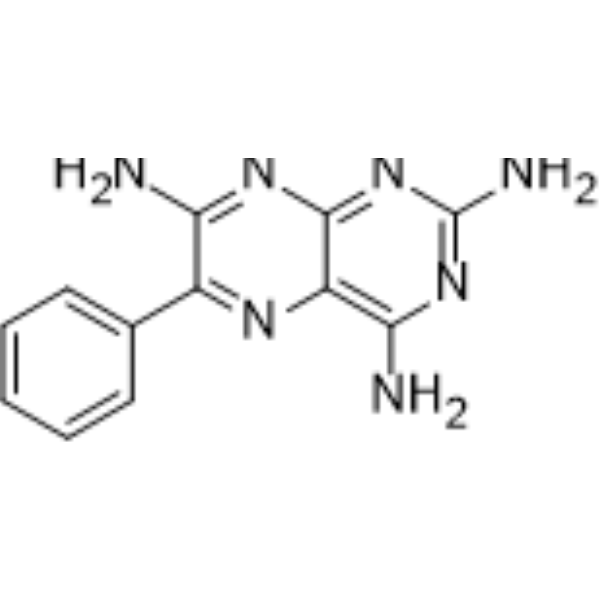
Triamterene blocks epithelial Na + channel (ENaC) in a voltage-dependent manner, which used as a mild diuretic. Triamterene is an inhibitor of the TGR5 receptor .
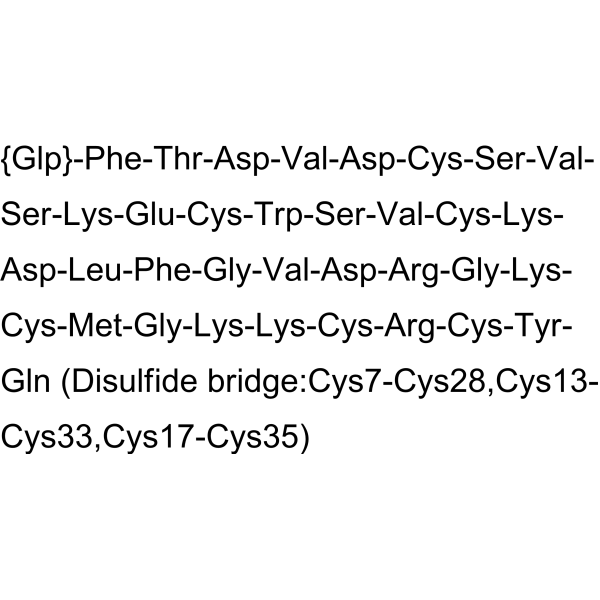
Iberiotoxin is a toxin isolated from Buthus tamulus scorpion venom. Iberiotoxin is a selective high conductance high conductance Ca 2+-activated K + channel inhibitor with a Kd of ~1 nM. Iberiotoxin does not block other types of voltage-dependent ion channels .
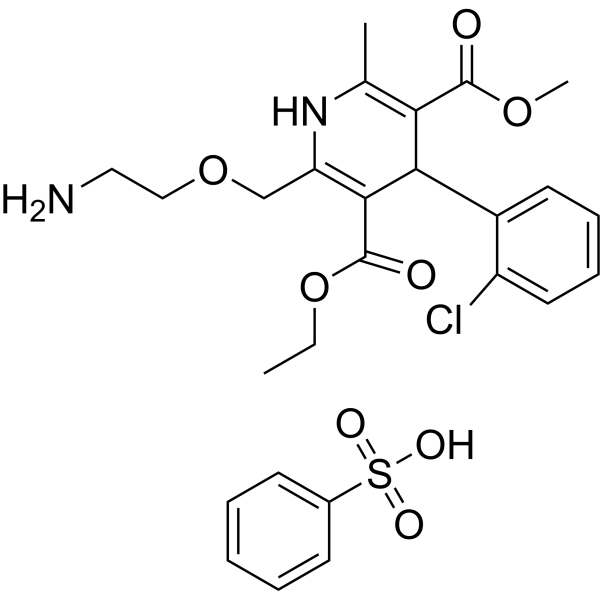
Amlodipine besylate (Amlodipine benzenesulfonate), an antianginal agent and an orally active dihydropyridine calcium channel blocker, works by blocking the voltage-dependent L-type calcium channels, thereby inhibiting the initial influx of calcium. Amlodipine besylate can be used for the research of high blood pressure and cancer .
Fosphenytoin sodium is a phenytoin proagent with similar anticonvulsant properties. Its main mechanism is to block frequency-dependent, use-dependent and voltage-dependent neuronal sodium channels, and therefore limit repetitive firing of action potentials.
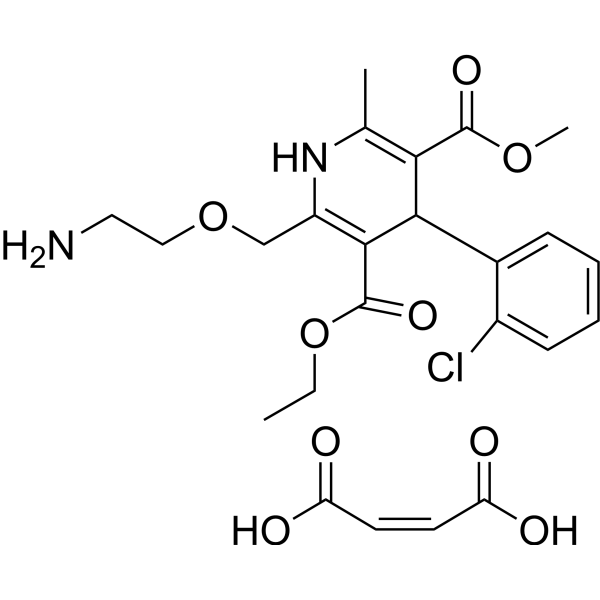
Amlodipine maleate is a dihydropyridine calcium channel blocker, acts as an orally active antianginal agent. Amlodipine maleate blocks the voltage-dependent L-type calcium channels, thereby inhibiting the initial influx of calcium. Amlodipine maleate can be used for the research of high blood pressure and cancer .
Drotaverine hydrochloride is a type 4 cyclic nucleotide phosphodiesterase (PDE4) inhibitor and an L-type voltage-dependent calcium channel (L-VDCC) blocker, blocks the degradation of 3',5'-cyclic adenosine monophosphate. Drotaverine (hydrochloride) exhibits in vivo antispasmodic efficacy without anticholinergic effects.
(+)-Kavain, a main kavalactone that can be extracted from Piper methysticum, has anticonvulsive properties, attenuating vascular smooth muscle contraction through interactions with voltage-dependent Na + and Ca 2+ channels . (+)-Kavain is shown to bind at the α4β2δ GABAA receptor and potentiate GABA efficacy . (+)-Kavain is used as a treatment for inflammatory diseases, its anti-inflammatory action has been widely studied .
A-887826 is a potent, selective, oral bioavailable and voltage-dependentNa(v)1.8 sodium channel blocker with an IC50 of 11 nM . A-887826 attenuates neuropathic tactile allodynia in vivo .
Evocarpine, a quinolone alkaloid that could be isolated from Evodiae fructus, inhibitss Ca 2+ influx through voltage-dependent calcium channels. Antimycobacterial activity .
Iberiotoxin (TFA) is a selective high conductance high conductance Ca 2+-activated K + channel inhibitor with a Kd of ~1 nM. Iberiotoxin (TFA) does not block other types of voltage-dependent ion channels .
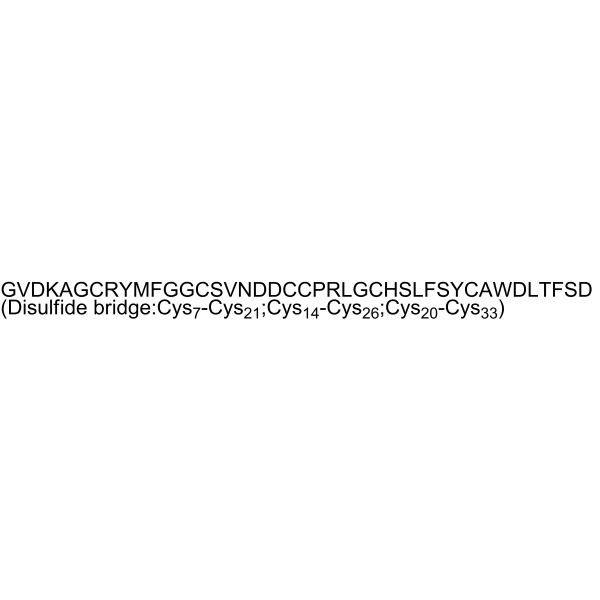
SNX-482, a peptide, is a potent, high affinity, selective and voltage-dependent R-type CaV2.3 channel blocker with an IC50 of 30 nM. SNX-482 has antinociceptive effect .
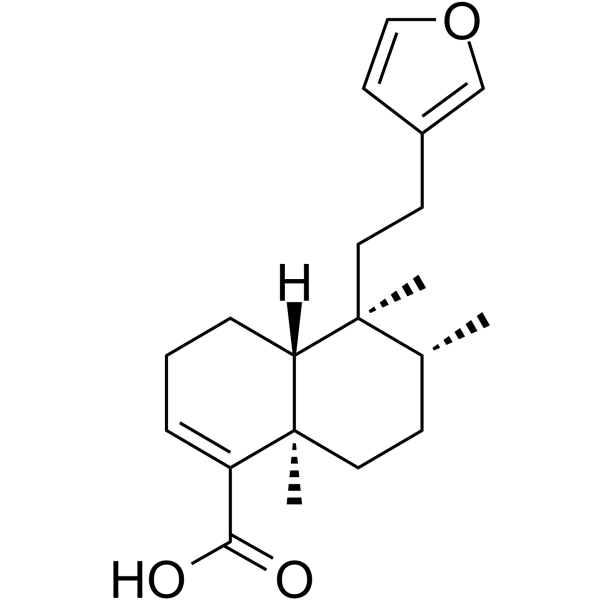
Hardwickiic acid ((-)-Hardwickiic acid) is a diterpenoid compound. Hardwickiic acid can block tetrodotoxin-sensitive voltage-dependentsodium channels and possesses multiple activities such as insecticidal, antinociceptive, and neurotransmitter release-regulating effects. Hardwickiic acid can be used in the study of neurological diseases .
PF-05186462 is a potent and selective inhibitor of human Nav1.7 voltage-dependent sodium channel, with an IC50 of 21 nM. PF-05186462 shows significant selectivity for Nav1.7 versus other sodium channels (Nav 1.1, 1.2, 1.3, 1.4, 1.5, 1.6, and 1.8). PF-05186462 can be used for the research of acute or chronic pain .
Pranidipine (OPC-13340) is an orally active L-type voltage-dependent calcium channel (L-VDCC) blocker with a Ki value of 0.16 nM. Pranidipine inhibits calcium-induced contraction, suppresses slow-response action potentials, shortens action potential duration, reduces systolic and diastolic blood pressure, and exerts vasodilatory effects. Pranidipine enhances its vasodilatory effect by blocking NO decomposition. Pranidipine can be used in research related to essential hypertension, angina pectoris, myocardial infarction, and dilated cardiomyopathy .
Encainide (MJ9067) is an antiarrhythmic agent with class IC activity. Encainide blocks voltage-dependent potassium channels. Encainide has the potential for life-threatening ventricular arrhythmias, symptomatic ventricular arrhythmias and supraventricular arrhythmias research .
GaTx2 is a seletive and a high affinity inhibitor of ClC-2 channels with a voltage-dependent apparent KD of ∼20 pM. GaTx2 is a peptide toxin inhibitor from Leiurus quinquestriatus hebraeus venom. GaTx2 is useful in determining the role and the membrane localization of ClC-2 in specific cell types .
AKOS-22 is a potent mitochondrial protein VDAC1 (voltage-dependent anion channel 1) inhibitor (Kd=15.4 μM). AKOS-22 interacts with VDAC1 and inhibiting both VDAC1 oligomerization and apoptosis. AKOS-22 protects against mitochondrial dysfunction .
QO 58 is a potent modulator of K(v)7 channels. QO-58 increases the current amplitudes, shifts the voltage-dependent activation curve in a more negative direction and slows the deactivation of K(v)7.2/K(v)7.3 currents. QO-58 has the potential for the research of diseases associated with neuronal hyperexcitability .
Ethacrynic acid (Standard) is the analytical standard of Ethacrynic acid. This product is intended for research and analytical applications. Ethacrynic acid (Etacrynic acid) is a diuretic. Ethacrynic acid is an inhibitor of glutathione S-transferases (GSTs). Ethacrynic acid is a potent inhibitor of NF-kB-signaling pathway, and also modulates leukotriene formation. Ethacrynic acid also inhibits L-type voltage-dependent and store-operated calcium channel, leading to relaxation of airway smooth muscle (ASM) cells. Ethacrynic acid has anti-inflammatory properties that reduces the retinoid-induced ear edema in mice .
Triamterene (Standard) is the analytical standard of Triamterene. This product is intended for research and analytical applications. Triamterene blocks epithelial Na+ channel (ENaC) in a voltage-dependent manner, which used as a mild diuretic. Triamterene as an inhibitor of the TGR5 receptor.
Sipatrigine (619C89), a neuroprotective agent, is a glutamate release inhibitor, voltage-dependentsodium channel and calcium channel inhibitor, penetrating the central nervous system. Has the potential in the study for focal cerebral ischemia and stroke .
Triamterene-d5 is deuterium labeled Triamterene (HY-B0575). Triamterene blocks epithelial Na + channel (ENaC) in a voltage-dependent manner, which used as a mild diuretic. Triamterene is an inhibitor of the TGR5 receptor.
Heteropodatoxin-2 (TFA), a peptides of 30-amino acid, is a heteropodatoxin. Heteropodatoxin-2 blocks Kv4.2 current expressed in Xenopus laevis oocytes in a voltage-dependent manner, with less block at more positive potentials .
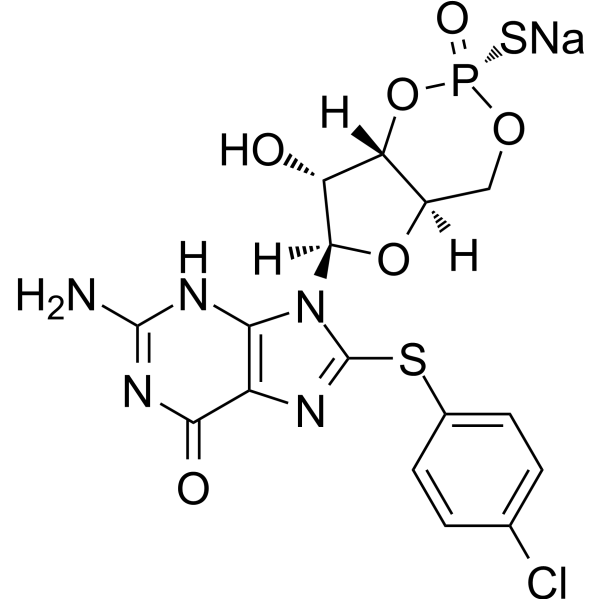
Rp-8-pCPT-cGMPS sodium is the sodium salt form of Rp-8-pCPT-cGMPS. Rp-8-pCPT-cGMPS is an inhibitor for cGMP-dependent protein kinase (cGK). Rp-8-pCPT-cGMPS sodium is an agonist for cyclic nucleotide-gated (CNG) channels in a voltage-dependent manner .
Pregabalin diacid is an impurity of Pregabalin, a lipophilic GABA (γ-aminobutyric acid) analog with anxiolytic and anticonvulsant activity. Pregabalin may act on the α(2)β subunit of voltage-dependent calcium channels, which are widely distributed in the peripheral and central nervous systems. Pregabalin can effectively induce hypoalgesia and improve behavioral disorders .
BTT-266 is an antagonist forcalcium channel, through suppression of the CaVα1-AID-CaVβ3 interaction, with a Ki of 1.4 μM. BTT-266 modulates the activation of voltage-dependent CaV2.2. BTT-266 exhibits analgesic efficacy against neuropathic pain in rats model .
ShK toxin blocks voltage-dependentpotassium channel (Kv1.3 channel). ShK toxin can be isolated from the whole body extract of the Caribbean sea anemone (Stichodactylu helianthus). ShK toxin competes with dendrotoxin I and α-dendrotoxin for binding to synaptosomal membranes of rat brain, facilitates acetylcholine release. ShK toxin suppresses K+ currents in cultured rat dorsal root ganglion neurons. ShK toxin also inhibits T lymphocyte proliferation .
Felodipine 3,5-Dimethyl Ester is a aryldihydropyridine derivatives for use as mineralocorticoid receptor modulator and voltage-dependent L-type calcium channel CaV1.2 inhibitor .
Methyclothiazide is an orally active antihypertensive agent and a diuretic agent. Methyclothiazide leads to a reduction of the vascular response to the action of endogenous vasoconstricting stimuli, such as Norepinephrine (HY-13715). Methyclothiazide is against voltage-dependent Ca-channel (VDCC) activity in vitro .
BBT is an enhancer of impaired glucose-stimulated insulin secretion (GSIS). BBT exhibits anti-hyperglycemia activity, and protects β-cells from cytokine- or streptozotocin (STZ (HY-13753))-induced cell death in type 2 diabetes models. BBT acts function via cAMP/PKA and long-lasting (L-type) voltage-dependent Ca2+ channel/CaMK2 pathway .
Blixeprodil (GM-1020) is an orally active, blood-brain barrier-penetrant NMDA receptor inhibitor with a Ki of 3.25 µM in rat cortical tissues. Blixeprodil binds to the MK-801 ion channel site and blocks NMDA receptor-mediated currents in hyperpolarized states in a voltage-dependent manner. Blixeprodil modulates the power of cortical EEG frequency bands, alters spontaneous motor activity, and induces ataxia at high doses. Blixeprodil can be used in the research of depression .
τ-Fluvalinate is an insecticide and in-hive miticide, with its mechanism involving interfering with nervous systems. τ-Fluvalinate binds to the open state of Varroa destructor (VdNaV1) and Apis mellifera (AmNaV1) voltage-dependent sodium channels, with EC50 values of 160 nM and 60 nM respectively. τ-Fluvalinate has higher affinity for AmNaV1, which causes sublethal toxicity to honeybees. τ-Fluvalinate can be applied for research on Varroa destructor infestation in honeybee colonies .
TAT-CBD3A6K, is a modified TAT-CBD3 peptide. TAT-CBD3A6K reduces T- and R-type voltage-dependent calcium currents in dorsal root ganglion (DRG) neurons. TAT-CBD3A6K shows anti-nociceptive effects in a model of AIDS-induced peripheral neuropathy by preventing CRMP-2-mediated enhancement of T- and R-type calcium channel function .
L-3373 is a voltage-dependent potassium channel inhibitor with activity that reduces the effective refractory period and the dispersion of monophasic action potential duration, while significantly reducing susceptibility to ventricular fibrillation in a cat model of left ventricular hypertrophy.
Amlodipine mesylate, an antianginal agent and an orally active dihydropyridine calcium channel blocker, works by blocking the voltage-dependent L-type calcium channels, thereby inhibiting the initial influx of calcium. Amlodipine mesylate can be used for the research of high blood pressure and cancer .
Fukinolic acid is a benzyltartaric acid ester, is a vasodilator with antiviral activity against enterovirus A71 (EV-A71) replication. Fukinolic acid is a receptor-operated Ca 2+ channels (ROC) inhibitor, suppressing extracellular Ca 2+ influx through ROC activated by Norepinephrine (HY-13715) without affecting voltage-dependent Ca 2+ channels .
Amlodipine-d4 is a deuterium labeled Amlodipine (HY-B0317). Amlodipine, an antianginal agent and an orally active dihydropyridine calcium channel blocker, works by blocking the voltage-dependent L-type calcium channels, thereby inhibiting the initial influx of calcium. Amlodipine can be used for the research of high blood pressure and cancer .
Amlodipine-d9 maleate is deuterated labeled Amlodipine maleate (HY-B0317A). Amlodipine maleate is a dihydropyridine calcium channel blocker, acts as an orally active antianginal agent. Amlodipine maleate blocks the voltage-dependent L-type calcium channels, thereby inhibiting the initial influx of calcium. Amlodipine maleate can be used for the research of high blood pressure and cancer .
Amlodipine-1,1,2,2-d4 (maleate) is the deuterium labeled Amlodipine. Amlodipine, an antianginal agent and an orally active dihydropyridine calcium channel blocker, works by blocking the voltage-dependent L-type calcium channels, thereby inhibiting the initial influx of calcium. Amlodipine can be used for the research of high blood pressure and cancer .
Prenylamine lactate is a calcium-modulating protein (CaM) antagonist that inhibits CaM-dependent enzymes and can slowly relax smooth muscle preparations. The effect of Prenylamine lactate on smooth muscle is not inhibited by the calcium agonist Bay K 8644 (HY-10588). Reports suggest that under low heart rate conditions, Prenylamine seems to enhance voltage-dependent transmembrane calcium currents .
GW7845 is an orally active non-thiazolidinedione, tyrosine-derived PPARγ agonist. GW7845 is effective at inhibiting voltage-dependent calcium channels (VDCC) and relaxing pressurized arteries with IC50 of 3 μM by using Ba 2+ as the charge carrier through VDCC. GW7845-induced apoptosis is mitochondria- and apoptosome-dependent. GW7845 induces rapid mitochondrial membrane depolarization and release of cytochrome c in primary pro-B cells and BU-11 cells .
DL-Phenylalanine-d5 (hydrochloride) is the deuterium labeled DL-Phenylalanine hydrochloride. L-Phenylalanine hydrochloride is an essential amino acid isolated from Escherichia coli. L-Phenylalanine hydrochloride is a α2δ subunit of voltage-dependent Ca+ channels antagonist with a Ki of 980 nM. L-phenylalanine hydrochloride is a competitive antagonist for the glycine- and glutamate-binding sites of N-methyl-D-aspartate receptors (NMDARs) (KB of 573 μM ) and non-NMDARs, respectively. L-Phenylalanine hydrochloride is widely used in the production of food flavors and pharmaceuticals .
β-Bag cell peptide is a neuroactive peptide. β-Bag cell peptide elevates cyclic AMP levels in the bag cell neurons. β-Bag cell peptide decreases the amplitudes of the voltage-dependent potassium currents .
(-)-Gallopamil (hydrochloride) exerts a selective modulation of the fast voltage-dependent inactivation. (-)-Gallopamil (hydrochloride) inhibits efficiently Cav1.2 constructs formed by β-subunits (promoting fast voltage-dependent inactivation). (-)-Gallopamil (hydrochloride) also accelerates the voltage-dependent phase of ICa decay (as well as the voltage-dependent decay of Ba 2+ currents). (-)-Gallopamil (hydrochloride) is promising for research of antiarrhythmics .
(-)-Gallopamil exerts a selective modulation of the fast voltage-dependent inactivation. (-)-Gallopamil inhibits efficiently Cav1.2 constructs formed by β-subunits (promoting fast voltage-dependent inactivation). (-)-Gallopamil also accelerates the voltage-dependent phase of ICa decay (as well as the voltage-dependent decay of Ba 2+ currents). (-)-Gallopamil is promising for research of antiarrhythmics .
GTx1-15 is an inhibitor cystine knot (ICK) peptide that inhibits the voltage-dependentcalcium channel Cav3.1 and the voltage-dependent sodium channels Nav1.3 and Nav1.7 .
Besipirdine is a non-receptor-dependent cholinomimetic agent with noradrenergic activity. Besipirdine inhibits voltage-dependent sodium and potassium channels.
Irampanel (BIIR 561) is an AMPA receptor and voltage-dependent sodium channel blocker. Irampanel inhibits kainate-induced currents in rat cortical neurons .
N-Desethyl Oxybutynin-d5 (hydrochloride) is deuterium labeled N-Desethyl Oxybutynin hydrochloride. N-Desethyl Oxybutynin is the the active metabolite Oxybutynin. Oxybutynin is an anticholinergic agent that inhibits voltage-dependent K+ channels .
Encainide (MJ9067) hydrochloride is an antiarrhythmic agent with class IC activity. Encainide hydrochloride blocks voltage-dependent potassium channels. Encainide hydrochloride has the potential for life-threatening ventricular arrhythmias, symptomatic ventricular arrhythmias and supraventricular arrhythmias research .
Noxiustoxin is a toxin from the venom of the Mexican scorpion Centruroides noxius which block voltage-dependentpotassium channel (Kv1.3, IC50 = 360 nM), and calcium-activated potassium channel. Noxiustoxin plays an important role in neuroinflammatory disease .
Heteropodatoxin-2, a peptides of 30-amino acid, is a heteropodatoxin. Heteropodatoxin-2 blocks Kv4.2 current expressed in Xenopus laevis oocytes in a voltage-dependent manner, with less block at more positive potentials .
NMDA receptor antagonist 4 (IIc) is a uncompetitive, voltage-dependent, orally active NMDAR blocker, with an IC50 of 1.93 μM. NMDA receptor antagonist 4 shows a positive predicted blood-brain-barrier (BBB) permeability, and can be studied in Alzheimer's disease .
VBIT-3 is an inhibitor of voltage-dependent anion channel 1 (VDAC1) oligomerization with a binding affinity (Kd) of 31.3 μM. VBIT-3, as an apoptosis inhibitor, can be used for therapeutic purposes in apoptosis-associated disorders, such as neurodegenerative and cardiovascular diseases .
Fosphenytoin-d10 (disodium) is deuterium labeled Fosphenytoin (disodium). Fosphenytoin sodium is a phenytoin proagent with similar anticonvulsant properties. Its main mechanism is to block frequency-dependent, use-dependent and voltage-dependent neuronal sodium channels, and therefore limit repetitive firing of action potentials.
(R)-IDHP is an isomer of IDHP, a salvia metabolite that exerts vasorelaxant effects by inhibiting Ca 2+ release and Ca 2+ inward flow in voltage-dependent and receptor-operated calcium channels in vascular smooth muscle cells. IDHP is used in studies of cardiovascular disease .
N-Salicyloyltryptamine acts on voltage-dependent Na +, Ca 2+, and K + ion channels inhibitor. N-Salicyloyltryptamine inhibits K + currents with an IC50 value of 34.6 μM (Ito). N-Salicyloyltryptamine also exhibits anticonvulsant, anti-inflammatory, analgesic, and vasorelaxation effect - .
Fosphenytoin (disodium) (Standard) is the analytical standard of Fosphenytoin (disodium). This product is intended for research and analytical applications. Fosphenytoin sodium is a phenytoin proagent with similar anticonvulsant properties. Its main mechanism is to block frequency-dependent, use-dependent and voltage-dependent neuronal sodium channels, and therefore limit repetitive firing of action potentials.
Bay Y5959 is a potent calcium channel agonist. Bay Y5959 binds to the DHP receptor in a voltage-dependent manner increases both the mean open time and the mean closed time of the Ca-channel. Bay Y5959 has the potential for the research of congestive heart failure, arrhythmic .
Amlodipine-d4 (maleate) is the deuterium labeled Amlodipine maleate. Amlodipine maleate is a dihydropyridine calcium channel blocker, acts as an orally active antianginal agent. Amlodipine maleate blocks the voltage-dependent L-type calcium channels, thereby inhibiting the initial influx of calcium. Amlodipine maleate can be used for the research of high blood pressure and cancer .
Amlodipine (Standard) is the analytical standard of Amlodipine. This product is intended for research and analytical applications. Amlodipine, an antianginal agent and an orally active dihydropyridine calcium channel blocker, works by blocking the voltage-dependent L-type calcium channels, thereby inhibiting the initial influx of calcium. Amlodipine can be used for the research of high blood pressure and cancer .
Drotaverine-d10 (hydrochloride) is the deuterium labeled Drotaverine hydrochloride. Drotaverine hydrochloride is a type 4 cyclic nucleotide phosphodiesterase (PDE4) inhibitor and an L-type voltage-dependent calcium channel (L-VDCC) blocker, blocks the degradation of 3',5'-cyclic adenosine monophosphate. Drotaverine hydrochloride exhibits in vivo antispasmodic efficacy without anticholinergic effects .
Methyclothiazide (Standard) is the analytical standard of Methyclothiazide. This product is intended for research and analytical applications. Methyclothiazide is an orally active antihypertensive agent and a diuretic agent. Methyclothiazide leads to a reduction of the vascular response to the action of endogenous vasoconstricting stimuli, such as Norepinephrine (HY-13715). Methyclothiazide is against voltage-dependent Ca-channel (VDCC) activity in vitro .
Amlodipine (maleate) (Standard) is the analytical standard of Amlodipine (maleate). This product is intended for research and analytical applications. Amlodipine maleate is a dihydropyridine calcium channel blocker, acts as an orally active antianginal agent. Amlodipine maleate blocks the voltage-dependent L-type calcium channels, thereby inhibiting the initial influx of calcium. Amlodipine maleate can be used for the research of high blood pressure and cancer .
Drotaverine (hydrochloride) (Standard) is the analytical standard of Drotaverine (hydrochloride). This product is intended for research and analytical applications. Drotaverine hydrochloride is a type 4 cyclic nucleotide phosphodiesterase (PDE4) inhibitor and an L-type voltage-dependent calcium channel (L-VDCC) blocker, blocks the degradation of 3',5'-cyclic adenosine monophosphate. Drotaverine (hydrochloride) exhibits in vivo antispasmodic efficacy without anticholinergic effects.
Amlodipine-d4 (besylate) is the deuterium labeled Amlodipine besylate. Amlodipine besylate (Amlodipine benzenesulfonate), an antianginal agent and an orally active dihydropyridine calcium channel blocker, works by blocking the voltage-dependent L-type calcium channels, thereby inhibiting the initial influx of calcium. Amlodipine besylate can be used for the research of high blood pressure and cancer .
Amlodipine (maleate) (Standard) is the analytical standard of Amlodipine (maleate). This product is intended for research and analytical applications. Amlodipine maleate is a dihydropyridine calcium channel blocker, acts as an orally active antianginal agent. Amlodipine maleate blocks the voltage-dependent L-type calcium channels, thereby inhibiting the initial influx of calcium. Amlodipine maleate can be used for the research of high blood pressure and cancer .
Amlodipine (besylate) (Standard) is the analytical standard of Amlodipine (besylate). This product is intended for research and analytical applications. Amlodipine besylate (Amlodipine benzenesulfonate), an antianginal agent and an orally active dihydropyridine calcium channel blocker, works by blocking the voltage-dependent L-type calcium channels, thereby inhibiting the initial influx of calcium. Amlodipine besylate can be used for the research of high blood pressure and cancer .
Nerispirdine is an ion channel inhibitor with IC50s of 3.6, 3.7 and 11.9 μM against K(v)1.1, K(v)1.2 and voltage-dependentNa(+) channel, respectively. Nerispirdine is a 4-aminopyridine (4-AP, HY-B0604) derivative and can be utilized in research on neurological disorders .
Ethacrynic acid (Etacrynic acid sodium) sodium is a diuretic. Ethacrynic acid sodium is an inhibitor of glutathione S-transferases (GSTs). Ethacrynic acid sodium is a potent inhibitor of NF-kB-signaling pathway, and also modulates leukotriene formation. Ethacrynic acid sodium also inhibits L-type voltage-dependent and store-operated calcium channel, leading to relaxation of airway smooth muscle (ASM) cells. Ethacrynic acid sodium has anti-inflammatory properties that reduces the retinoid-induced ear edema in mice .
Cimicifugic acid D (2-Caffeoylpiscidic acid) is a benzyltartaric acid ester that induces vasodilation of precontracted rat aortic strips and endothelium-independent relaxation mechanism. Cimicifugic acid D inhibits extracellular Ca 2+ influx through receptor-operated Ca 2+ channels (ROC) in Norepinephrine (HY-13715)-induced contraction of rat aortic strips, without affecting voltage-dependent Ca 2+ channels (VDC) or K +-induced contractions .
Prenylamine (lactate) (Standard) is the analytical standard of Prenylamine (lactate). This product is intended for research and analytical applications. Prenylamine lactate is a calcium-modulating protein (CaM) antagonist that inhibits CaM-dependent enzymes and can slowly relax smooth muscle preparations. The effect of Prenylamine lactate on smooth muscle is not inhibited by the calcium agonist Bay K 8644 (HY-10588). Reports suggest that under low heart rate conditions, Prenylamine seems to enhance voltage-dependent transmembrane calcium currents .
(Rac)-PD0299685 is a Ca(2+) channel α2δ ligand that was investigated for relieving interstitial cystitis pain in a randomized, double-blind, placebo-controlled phase IIa study. (Rac)-PD0299685 demonstrated a clinically significant reduction in daily worst pain severity scores at the 60 mg dose compared to placebo. (Rac)-PD0299685 is also a potent voltage-dependent calcium channel inhibitor for the study of retina-related diseases.
Ethacrynic acid D5 is a deuterium labeled Ethacrynic acid. Ethacrynic acid is a diuretic. Ethacrynic acid is an inhibitor of glutathione S-transferases (GSTs). Ethacrynic acid is a potent inhibitor of NF-kB-signaling pathway, and also modulates leukotriene formation. Ethacrynic acid also inhibits L-type voltage-dependent and store-operated calcium channel, leading to relaxation of airway smooth muscle (ASM) cells. Ethacrynic acid has anti-inflammatory properties that reduces the retinoid-induced ear edema in mice .
Prenylamine (lactate) (Standard) is the analytical standard of Prenylamine (lactate). This product is intended for research and analytical applications. Prenylamine lactate is a calcium-modulating protein (CaM) antagonist that inhibits CaM-dependent enzymes and can slowly relax smooth muscle preparations. The effect of Prenylamine lactate on smooth muscle is not inhibited by the calcium agonist Bay K 8644 (HY-10588). Reports suggest that under low heart rate conditions, Prenylamine seems to enhance voltage-dependent transmembrane calcium currents .
(+)-Kavain (Standard) is the analytical standard of (+)-Kavain. This product is intended for research and analytical applications. (+)-Kavain, a main kavalactone extracted from Piper methysticum, has anticonvulsive properties, attenuating vascular smooth muscle contraction through interactions with voltage-dependent Na+ and Ca2+ channels . (+)-Kavain is shown to bind at the α4β2δ GABAA receptor and potentiate GABA efficacy . (+)-Kavain is used as a treatment for inflammatory diseases, its anti-inflammatory action has been widely studied .
dl-Tetrandrine is an orally active and brain-penetrant calcium channel blocker that inhibits voltage-dependent calcium channels. dl-Tetrandrine selectively blocks Ca 2+ influx with an IC50 value of approximately 1-10 μM. dl-Tetrandrine exerts anti-inflammatory, immunosuppressive, and anti-arrhythmic activities by inhibiting intracellular calcium overload, and can reverse multidrug resistance in tumor cells. dl-Tetrandrine is promising for research of autoimmune diseases (such as rheumatoid arthritis), cardiovascular diseases, and tumor drug resistance reversal .
TAT-CBD3A6K acetate, is a modified TAT-CBD3 peptide. TAT-CBD3A6K acetate reduces T- and R-type voltage-dependent calcium currents in dorsal root ganglion (DRG) neurons. TAT-CBD3A6K acetate shows anti-nociceptive effects in a model of AIDS-induced peripheral neuropathy by preventing CRMP-2-mediated enhancement of T- and R-type calcium channel function .
Irampanel hydrochloride (BIIR 561-CL) is an AMPA receptor and voltage-dependent sodium channel blocker. Irampanel hydrochloride inhibits Kainic acid (HY-N2309)-induced currents in rat cortical neurons .
Amlodipine orotate, an antianginal agent and an orally active dihydropyridine calcium channel blocker, works by blocking the voltage-dependent L-type calcium channels, thereby inhibiting the initial influx of calcium. Amlodipine orotate can be used for the research of high blood pressure and cancer .
NE-10133 is a ISK and IKS potassium channel (Potassium Channel) inhibitor. NE-10133 inhibits voltage-dependent and slowly activated delayed rectifier potassium currents. NE-10133 exhibits class III antiarrhythmic activity. NE-10133 is applicable for research related to arrhythmias .
PF-05241328 (Standard) is the analytical standard of PF-05241328 (HY-103623). This product is intended for research and analytical applications. PF-05241328 is a potent and selective inhibitor of human Nav1.7 voltage-dependent sodium channels (Nav1.7), with an IC50 of 31 nM.
AZ-DF 265 is a hypoglycemic agent that stimulates insulin release. AZ-DF-265 inhibits ATP-sensitive potassium channels, activates voltage-dependentcalcium channels, allows calcium ion influx, and ultimately promotes insulin secretion. AZ-DF 265 can be used in diabetes-related research .
Cicletanine is a voltage-dependentCa 2+ channel inhibitor. Cicletanine inhibits α-adrenoceptor-mediated Ca 2+ release pathway, and shows vasodilatory effects on isolated vascular smooth muscle. Cicletanine directly stimulates lysosomal and cytoplasmic cholesteryl ester hydrolase activity. Cicletanine can be used for the research of hypertension .
Leptophos oxon, a metabolite of leptophos, is a GABAA receptor chloride channel inhibitor with an IC50 values of 89.6 μM. Leptophos oxon inhibits GABA-induced chloride influx, binds to GABAA receptor-associated TBPS sites, and inhibits TBPS binding to voltage-dependent chloride channels. Leptophos oxon is a insecticide. Leptophos oxon can be used for the research of neurological disease .
A-887826 (Standard) is the analytical standard of A-887826 (HY-100080). This product is intended for research and analytical applications. A-887826 is a potent, selective, oral bioavailable and voltage-dependent Na(v)1.8 sodium channel blocker with an IC50 of 11 nM . A-887826 attenuates neuropathic tactile allodynia in vivo .
SQ 32547 is a dihydropyridine calcium channel inhibitor with antihypertensive and anti-ischemic activities. SQ 32547 modulates sarcolemmal voltage-dependent calcium channels to inhibit calcium influx, and exerts direct anti-ischemic activity by suppressing myocardial contracture formation and reducing lactate dehydrogenase (LDH) release. SQ 32547 can be used in research related to hypertension, angina pectoris and neurogenic inflammation .
RSD-921 (PD-123497) is a potent Na + channel blocker with anti-arrhythmic activity. RSD-921 displays a low affinity for κ-opioid receptors and behaves as a weak κ-agonist in vitro. RSD 921 displays state-, time- and voltage-dependent block of the open state of cardiac, skeletal muscle and neuronal Na + channels expressed in Xenopus oocytes. RSD-921 can be used for cardiac arrhythmias research .
QO-83, Retigabine analogue, is a voltage-gated potassium channel KCNQ2 (Kv7.2) activator with an EC50 of 0.56 μM. QO-83 binds to a single hydrophobic pocket of KCNQ2-CaM complex in closed conformation. QO-83 induces a negative shift in the voltage-dependent activation curve of KCNQ2 channels, increasing the channel's voltage sensitivity. QO-83 can be used for the research of epilepsies .
AFD-21 maleate is a drug with antiarrhythmic activity. AFD-21 maleate inhibits sodium channels by binding to sodium channels in an inactive state, with both use-dependent and voltage-dependent effects. The unbinding rate of AFD-21 maleate is similar to that of Class I antiarrhythmic drugs with moderate kinetics. AFD-21 maleate can cause a slight prolongation of the action potential duration and significantly reduce the maximum rise rate of the action potential at certain concentrations. AFD-21 maleate also showed use-dependent blocking effects as stimulation frequency increased .
L-Phenylalanine-d7 is the deuterium labeled L-Phenylalanine. L-Phenylalanine ((S)-2-Amino-3-phenylpropionic acid) is an essential amino acid isolated from Escherichia coli. L-Phenylalanine is a α2δ subunit of voltage-dependent Ca+ channels antagonist with a Ki of 980 nM. L-phenylalanine is a competitive antagonist for the glycine- and glutamate-binding sites of N-methyl-D-aspartate receptors (NMDARs) (KB of 573 μM ) and non-NMDARs, respectively. L-Phenylalanine is widely used in the production of food flavors and pharmaceuticals .
L-Phenylalanine-d8 is the deuterium labeled L-Phenylalanine. L-Phenylalanine ((S)-2-Amino-3-phenylpropionic acid) is an essential amino acid isolated from Escherichia coli. L-Phenylalanine is a α2δ subunit of voltage-dependent Ca+ channels antagonist with a Ki of 980 nM. L-phenylalanine is a competitive antagonist for the glycine- and glutamate-binding sites of N-methyl-D-aspartate receptors (NMDARs) (KB of 573 μM ) and non-NMDARs, respectively. L-Phenylalanine is widely used in the production of food flavors and pharmaceuticals .
L-Phenylalanine-d is the deuterium labeled L-Phenylalanine. L-Phenylalanine ((S)-2-Amino-3-phenylpropionic acid) is an essential amino acid isolated from Escherichia coli. L-Phenylalanine is a α2δ subunit of voltage-dependent Ca+ channels antagonist with a Ki of 980 nM. L-phenylalanine is a competitive antagonist for the glycine- and glutamate-binding sites of N-methyl-D-aspartate receptors (NMDARs) (KB of 573 μM ) and non-NMDARs, respectively. L-Phenylalanine is widely used in the production of food flavors and pharmaceuticals .
L-Phenylalanine-d2 is the deuterium labeled L-Phenylalanine. L-Phenylalanine ((S)-2-Amino-3-phenylpropionic acid) is an essential amino acid isolated from Escherichia coli. L-Phenylalanine is a α2δ subunit of voltage-dependent Ca+ channels antagonist with a Ki of 980 nM. L-phenylalanine is a competitive antagonist for the glycine- and glutamate-binding sites of N-methyl-D-aspartate receptors (NMDARs) (KB of 573 μM ) and non-NMDARs, respectively. L-Phenylalanine is widely used in the production of food flavors and pharmaceuticals .
L-Phenylalanine-d5 is the deuterium labeled L-Phenylalanine. L-Phenylalanine ((S)-2-Amino-3-phenylpropionic acid) is an essential amino acid isolated from Escherichia coli. L-Phenylalanine is a α2δ subunit of voltage-dependent Ca+ channels antagonist with a Ki of 980 nM. L-phenylalanine is a competitive antagonist for the glycine- and glutamate-binding sites of N-methyl-D-aspartate receptors (NMDARs) (KB of 573 μM ) and non-NMDARs, respectively. L-Phenylalanine is widely used in the production of food flavors and pharmaceuticals .
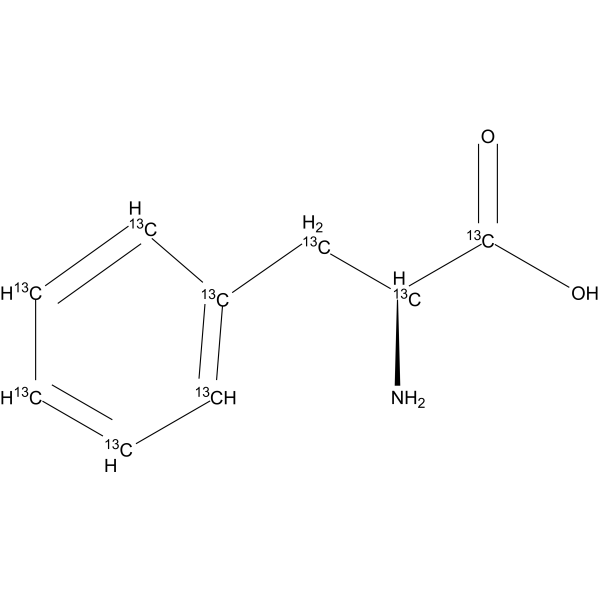
L-Phenylalanine-3- 13C is the 13C-labeled L-Phenylalanine. L-Phenylalanine ((S)-2-Amino-3-phenylpropionic acid) is an essential amino acid isolated from Escherichia coli. L-Phenylalanine is a α2δ subunit of voltage-dependent Ca+ channels antagonist with a Ki of 980 nM. L-phenylalanine is a competitive antagonist for the glycine- and glutamate-binding sites of N-methyl-D-aspartate receptors (NMDARs) (KB of 573 μM ) and non-NMDARs, respectively. L-Phenylalanine is widely used in the production of food flavors and pharmaceuticals .
RPR-260243, a potent activator of human ether-a-go-go-related gene (hERG), slows deactivation and attenuates inactivation of hERG1 channels. RPR260243-modified HERG currents are inhibited by Dofetilide (IC50=58 nM). RPR260243 displays no activator-like effects on other voltage-dependent ion channels, including the closely related ERG3 K+ channel . RPR-260243 is a click chemistry reagent, it contains an Alkyne group and can undergo copper-catalyzed azide-alkyne cycloaddition (CuAAc) with molecules containing Azide groups.
L-Phenylalanine-d is the deuterium labeled L-Phenylalanine (HY-N0215). L-Phenylalanine ((S)-2-Amino-3-phenylpropionic acid) is an essential amino acid isolated from Escherichia coli. L-Phenylalanine is a α2δ subunit of voltage-dependent Ca 2+ channels antagonist with a Ki of 980 nM. L-phenylalanine is a competitive antagonist for the glycine- and glutamate-binding sites of N-methyl-D-aspartate receptors (NMDARs) (KB of 573 μM ) and non-NMDARs, respectively. L-Phenylalanine is widely used in the production of food flavors and pharmaceuticals .
ShK toxin TFA (Stichodactyla helianthus neurotoxin TFA) is a neurotoxin. ShK toxin TFA blocks voltage-dependentpotassium channel (Kv1.3 channel). ShK toxin TFA can be isolated from the whole body extract of the Caribbean sea anemone (Stichodactylu helianthus). ShK toxin TFA competes with dendrotoxin I and α-dendrotoxin for binding to synaptosomal membranes of rat brain, facilitates acetylcholine release. ShK toxin TFA suppresses K + currents in cultured rat dorsal root ganglion neurons. ShK toxin TFA also inhibits T lymphocyte proliferation .
Flavoxate hydrochloride (Rec-7-0040; DW61) is an orally active L-type Ca 2+ channel inhibitor and antispasmodic. Flavoxate hydrochloride inhibits cyclic adenosine monophosphate production by blocking voltage-dependent inward Ba 2+ currents, regulating the brainstem micturition center, and stimulating G protein-coupled receptors. Consequently, Flavoxate hydrochloride induces relaxation of bladder smooth muscle and inhibits isovolumetric rhythmic contractions. Flavoxate hydrochloride effectively increases bladder capacity and alleviates symptoms of urgent urination frequency and pollakiuria caused by overactive bladder. Flavoxate hydrochloride can be used in research on overactive bladder and related voiding dysfunctions .
L-Phenylalanine (Standard) is the analytical standard of L-Phenylalanine. This product is intended for research and analytical applications. L-Phenylalanine ((S)-2-Amino-3-phenylpropionic acid) is an essential amino acid isolated from Escherichia coli. L-Phenylalanine is a α2δ subunit of voltage-dependent Ca+ channels antagonist with a Ki of 980 nM. L-phenylalanine is a competitive antagonist for the glycine- and glutamate-binding sites of N-methyl-D-aspartate receptors (NMDARs) (KB of 573 μM ) and non-NMDARs, respectively. L-Phenylalanine is widely used in the production of food flavors and pharmaceuticals .
DCPIB (Standard) is the analytical standard of DCPIB (HY-103371). This product is intended for research and analytical applications. DCPIB is a selective, reversible and potent inhibitor of volume-regulated anion channels (VRAC). DCPIB voltage-dependently activates potassium channels TREK1 and TRAAK, and inhibits TRESK, TASK1 and TASK3 (IC50s: 0.14, 0.95, 50.72 μM, respectively). DCPIB is also a selective blocker of swelling-induced chloride current (ICl,swell), with an IC50 of 4.1 μM. DCPIB is a useful tool for investigating structure-function studies of K2P channels .
L-Phenylalanine- 15N is the 15N-labeled L-Phenylalanine. L-Phenylalanine ((S)-2-Amino-3-phenylpropionic acid) is an essential amino acid isolated from Escherichia coli. L-Phenylalanine is a α2δ subunit of voltage-dependent Ca+ channels antagonist with a Ki of 980 nM. L-phenylalanine is a competitive antagonist for the glycine- and glutamate-binding sites of N-methyl-D-aspartate receptors (NMDARs) (KB of 573 μM ) and non-NMDARs, respectively. L-Phenylalanine is widely used in the production of food flavors and pharmaceuticals .
L-Phenylalanine- 13C is the 13C-labeled L-Phenylalanine. L-Phenylalanine ((S)-2-Amino-3-phenylpropionic acid) is an essential amino acid isolated from Escherichia coli. L-Phenylalanine is a α2δ subunit of voltage-dependent Ca+ channels antagonist with a Ki of 980 nM. L-phenylalanine is a competitive antagonist for the glycine- and glutamate-binding sites of N-methyl-D-aspartate receptors (NMDARs) (KB of 573 μM ) and non-NMDARs, respectively. L-Phenylalanine is widely used in the production of food flavors and pharmaceuticals .
L-Phenylalanine- 13C6 is the 13C-labeled L-Phenylalanine. L-Phenylalanine ((S)-2-Amino-3-phenylpropionic acid) is an essential amino acid isolated from Escherichia coli. L-Phenylalanine is a α2δ subunit of voltage-dependent Ca+ channels antagonist with a Ki of 980 nM. L-phenylalanine is a competitive antagonist for the glycine- and glutamate-binding sites of N-methyl-D-aspartate receptors (NMDARs) (KB of 573 μM ) and non-NMDARs, respectively. L-Phenylalanine is widely used in the production of food flavors and pharmaceuticals .
L-Phenylalanine- 13C9 is the 13C-labeled L-Phenylalanine. L-Phenylalanine ((S)-2-Amino-3-phenylpropionic acid) is an essential amino acid isolated from Escherichia coli. L-Phenylalanine is a α2δ subunit of voltage-dependent Ca+ channels antagonist with a Ki of 980 nM. L-phenylalanine is a competitive antagonist for the glycine- and glutamate-binding sites of N-methyl-D-aspartate receptors (NMDARs) (KB of 573 μM ) and non-NMDARs, respectively. L-Phenylalanine is widely used in the production of food flavors and pharmaceuticals .
L-Phenylalanine- 13C9, 15N is the 13C- and 15N-labeled L-Phenylalanine. L-Phenylalanine ((S)-2-Amino-3-phenylpropionic acid) is an essential amino acid isolated from Escherichia coli. L-Phenylalanine is a α2δ subunit of voltage-dependent Ca+ channels antagonist with a Ki of 980 nM. L-phenylalanine is a competitive antagonist for the glycine- and glutamate-binding sites of N-methyl-D-aspartate receptors (NMDARs) (KB of 573 μM ) and non-NMDARs, respectively. L-Phenylalanine is widely used in the production of food flavors and pharmaceuticals .
L-Phenylalanine- 15N,d8 is the deuterium and 15N-labeled L-Phenylalanine. L-Phenylalanine ((S)-2-Amino-3-phenylpropionic acid) is an essential amino acid isolated from Escherichia coli. L-Phenylalanine is a α2δ subunit of voltage-dependent Ca2+ channels antagonist with a Ki of 980 nM. L-phenylalanine is a competitive antagonist for the glycine- and glutamate-binding sites of N-methyl-D-aspartate receptors (NMDARs) (KB of 573 μM ) and non-NMDARs, respectively. L-Phenylalanine is widely used in the production of food flavors and pharmaceuticals .
Flavoxate (Rec-7-0040 free base; DW61 free base) is an orally active L-type Ca 2+ channel inhibitor and antispasmodic. Flavoxate inhibits cyclic adenosine monophosphate production by blocking voltage-dependent inward Ba 2+ currents, regulating the brainstem micturition center, and stimulating G protein-coupled receptors. Consequently, Flavoxate induces relaxation of bladder smooth muscle and inhibits isovolumetric rhythmic contractions. Flavoxate effectively increases bladder capacity and alleviates symptoms of urgent urination frequency and pollakiuria caused by overactive bladder. Flavoxate can be used in research on overactive bladder and related voiding dysfunctions .
L-Phenylalanine- 13C9, 15N,d8 is the deuterium, 13C-, and 15-labeled L-Phenylalanine. L-Phenylalanine ((S)-2-Amino-3-phenylpropionic acid) is an essential amino acid isolated from Escherichia coli. L-Phenylalanine is a α2δ subunit of voltage-dependent Ca+ channels antagonist with a Ki of 980 nM. L-phenylalanine is a competitive antagonist for the glycine- and glutamate-binding sites of N-methyl-D-aspartate receptors (NMDARs) (KB of 573 μM ) and non-NMDARs, respectively. L-Phenylalanine is widely used in the production of food flavors and pharmaceuticals .
Flavoxate-d5 is deuterium labeled Flavoxate. Flavoxate hydrochloride (Rec-7-0040; DW61) is an orally active L-type Ca 2+ channel inhibitor and antispasmodic. Flavoxate hydrochloride inhibits cyclic adenosine monophosphate production by blocking voltage-dependent inward Ba 2+ currents, regulating the brainstem micturition center, and stimulating G protein-coupled receptors. Consequently, Flavoxate hydrochloride induces relaxation of bladder smooth muscle and inhibits isovolumetric rhythmic contractions. Flavoxate hydrochloride effectively increases bladder capacity and alleviates symptoms of urgent urination frequency and pollakiuria caused by overactive bladder. Flavoxate hydrochloride can be used in research on overactive bladder and related voiding dysfunctions .
Flavoxate (hydrochloride) (Standard) is the analytical standard of Flavoxate (hydrochloride). This product is intended for research and analytical applications. Flavoxate hydrochloride (Rec-7-0040; DW61) is an orally active L-type Ca 2+ channel inhibitor and antispasmodic. Flavoxate hydrochloride inhibits cyclic adenosine monophosphate production by blocking voltage-dependent inward Ba 2+ currents, regulating the brainstem micturition center, and stimulating G protein-coupled receptors. Consequently, Flavoxate hydrochloride induces relaxation of bladder smooth muscle and inhibits isovolumetric rhythmic contractions. Flavoxate hydrochloride effectively increases bladder capacity and alleviates symptoms of urgent urination frequency and pollakiuria caused by overactive bladder. Flavoxate hydrochloride can be used in research on overactive bladder and related voiding dysfunctions .
Erastin is a ferroptosis inducer. Erastin exhibits the mechanism of ferroptosis induction related to ROS and iron-dependent signaling. Erastin inhibits voltage-dependent anion channels (VDAC2/VDAC3) and accelerates oxidation, leading to the accumulation of endogenous reactive oxygen species. Erastin also disrupts mitochondrial permeability transition pore (mPTP) with anti-tumor activity. Furthermore, Erastin can block the uptake of cystine mediated by SLC7A11 and also spares UMRC6-EV and -C91A cells from disulfidptosis under glucose starvation .
HCN-IN-1 is a TLR4 inhibitor and HCN channel modulator with activity against HCN2 and HCN4.HCN-IN-1 inhibits TLR4-mediated alkaline phosphatase (SEAP) signal activity.HCN-IN-1 reduces HCN2 current across tested voltages, shifts voltage-dependent activation to more hyperpolarized potentials, slows activation kinetics, and does not affect deactivation process.HCN-IN-1 blocks HCN4 current.HCN-IN-1 exhibits analgesic, anti-inflammatory, and anti-anginal effects.HCN-IN-1 can be used for the research of inflammatory pain, neuropathic pain, heart failure, inflammation .
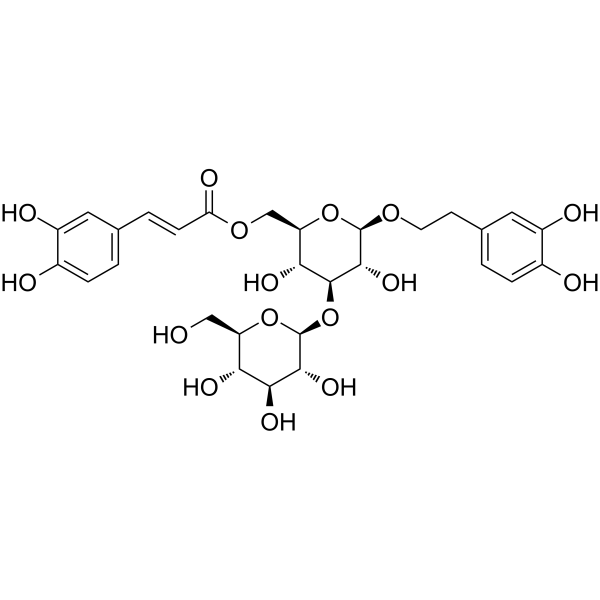
Plantainoside D, a phenylethanoid glycosides, is a IKK-β inhibitor with diverse biological activities. Plantainoside D shows inhibitory activity of angiotensin-converting enzyme (ACE) with an IC50 of 2.17 mM. Plantainoside D significantly reduces the release of glutamate from nerve terminals in the cerebral cortex of rats by inhibiting the voltage-dependent calcium channel (VDCCs) and protein kinase C (PKC) signaling cascade. Plantainoside D significantly alleviates cell apoptosis by inhibiting the generation of ROS and the activation of NF-κB. Plantainoside D significantly improves acute lung injury (ALI) induced by sepsis by regulating the Sirt3/NLRP3 signaling pathway. Plantainoside D can be used for the study of neuroprotection, antioxidant, anti-inflammation, antihypertension .
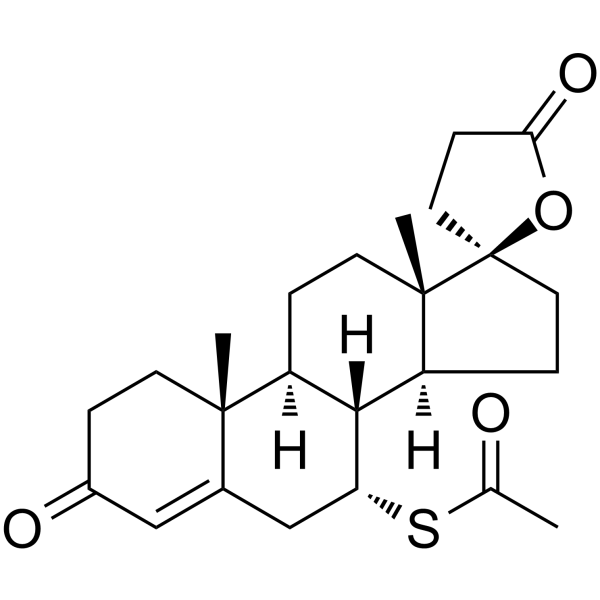
Spironolactone is an aldosterone antagonist that acts on the aldosterone mineralocorticoid receptor (IC50=24 nM) and androgen receptor (IC50=77 nM), promotes podocyte autophagy and regulates pain. Spironolactone improves hypertension-related vascular hypertrophy and remodeling by reducing angiotensin II (Ang II)-induced inflammation, reduces aldosterone-induced vascular and soft tissue calcification through PIT1-dependent signaling, and alleviates vascular dysfunction in type II diabetic mice by reducing oxidative stress and restoring NO/GC signaling; at low concentrations, it and its metabolites can interfere with aldosterone biosynthesis in the adrenal cortex and inhibit voltage-dependentCa 2+ channels to exert antihypertensive effects .
Flavoxate-d4 hydrochloride (Rec-7-0040-d4) is the deuterium labeled Flavoxate hydrochloride. Flavoxate hydrochloride (Rec-7-0040; DW61) is an orally active L-type Ca 2+ channel inhibitor and antispasmodic. Flavoxate hydrochloride inhibits cyclic adenosine monophosphate production by blocking voltage-dependent inward Ba 2+ currents, regulating the brainstem micturition center, and stimulating G protein-coupled receptors. Consequently, Flavoxate hydrochloride induces relaxation of bladder smooth muscle and inhibits isovolumetric rhythmic contractions. Flavoxate hydrochloride effectively increases bladder capacity and alleviates symptoms of urgent urination frequency and pollakiuria caused by overactive bladder. Flavoxate hydrochloride can be used in research on overactive bladder and related voiding dysfunctions .
HK2-IN-4 is a selective hexokinase 2 (HK2) inhibitor with an IC50 value of 0.79 μM and a Kd value of 0.41 μM. HK2-IN-4 blocks the interaction between HK2 and voltage-dependent anion channel 1 (VDAC1). HK2-IN-4 reduces lactate and ATP levels in cancer cells. HK2-IN-4 induces the production of apoptosis (apoptosis) markers in cancer cells, including increased p-AMPK/AMPK ratio and Bax levels, as well as decreased Bcl2 levels. HK2-IN-4 inhibits the proliferation of cancer cells with high HK2 expression. HK2-IN-4 can be used in research related to colorectal cancer and non-small cell lung cancer .
Spironolactone-d6-1 is the deuterium labeled Spironolactone (HY-B0561). Spironolactone is an aldosterone antagonist that acts on the aldosterone mineralocorticoid receptor (IC50=24 nM) and androgen receptor (IC50=77 nM), promotes podocyte autophagy and regulates pain. Spironolactone improves hypertension-related vascular hypertrophy and remodeling by reducing angiotensin II (Ang II)-induced inflammation, reduces aldosterone-induced vascular and soft tissue calcification through PIT1-dependent signaling, and alleviates vascular dysfunction in type II diabetic mice by reducing oxidative stress and restoring NO/GC signaling; at low concentrations, it and its metabolites can interfere with aldosterone biosynthesis in the adrenal cortex and inhibit voltage-dependent Ca 2+ channels to exert antihypertensive effects .
ω-Hexatoxin-Hv1a (ω-ACTX-Hv1; ω-Atracotoxin-HV1) TFA is an orally active insecticidal neurotoxin containing an inhibitor cystine knot motif and a selective calcium channel inhibitor. ω-Hexatoxin-Hv1a TFA blocks L-type voltage-dependent Ca 2+ channels and reduces intracellular calcium ion concentration, thereby decreasing apoptosis, necroptosis and oxidative stress, and promoting cell recovery and energy level elevation. ω-Hexatoxin-Hv1a TFA causes larval paralysis and death by impairing neurotransmission in the central nervous system of insects. It shows high injectable toxicity against insects of multiple orders, but exhibits weak oral toxicity. ω-Hexatoxin-Hv1a TFA is widely applicable to studies related to ischemia-reperfusion injury, atopic dermatitis, and ischemic injury of cardiomyocytes and neurons .
ω-Hexatoxin-Hv1a (ω-ACTX-Hv1; ω-Atracotoxin-HV1) is an orally active insecticidal neurotoxin containing an inhibitor cystine knot motif and a selective calcium channel inhibitor. ω-Hexatoxin-Hv1a blocks L-type voltage-dependent Ca 2+ channels and reduces intracellular calcium ion concentration, thereby decreasing apoptosis, necroptosis and oxidative stress, and promoting cell recovery and energy level elevation. ω-Hexatoxin-Hv1a causes larval paralysis and death by impairing neurotransmission in the central nervous system of insects. It shows high injectable toxicity against insects of multiple orders, but exhibits weak oral toxicity. ω-Hexatoxin-Hv1a is widely applicable to studies related to ischemia-reperfusion injury, atopic dermatitis, and ischemic injury of cardiomyocytes and neurons .
Fenoverine (Spasmopriv) is an orally active and powerful anti-spasmodic drug. Fenoverine reduces calcium ion influx by suppressing voltage dependentcalcium channels. Fenoverine has antiemetic, analgesic, and antidiarrheal effects. Fenoverine induces rhabdomyolysis. Fenoverine can be used to study smooth muscle overexcitation related conditions such as gastrointestinal spasms .
MDL12330A (RMI12330A) is an adenylyl cyclases inhibitor. MDL12330A can inhibit KV channels, increases insulin secretion and Ca 2+ levels. MDL12330A accentuates contractions in uterine rings and inhibits cardiac functions. MDL12330A can be used for the research of endocrinology, metabolic and cardiovascular disease .
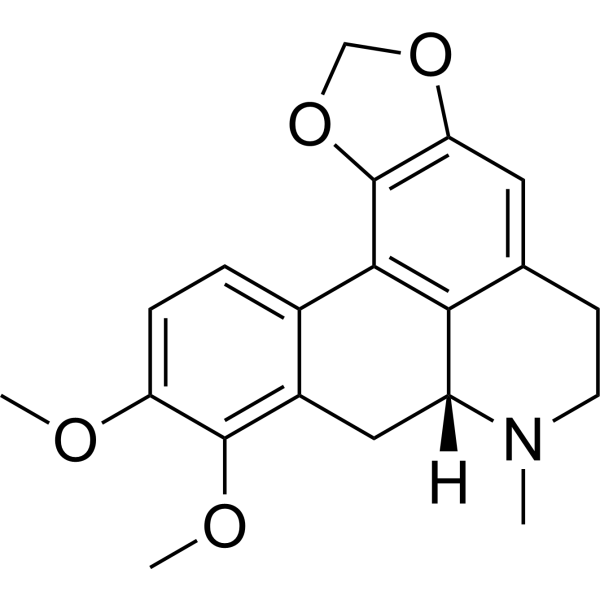
Crebanine is an isoquinoline-like alkaloid that can be derived from Stephania. Crebanine is an antagonist of the α7-nAChR with an IC50 of 19.1 μM. Crebanine suppresses the proliferation, migration, and invasion of cancer cells, triggers reactive oxygen species (ROS) burst, and promotes apoptosis. Crebanine inhibits the AKT/FoxO3a, NF-κB and MAPK signaling pathways. Crebanine attenuates NOX2 hyperactivation, exhibits antioxidant properties by reducing reactive oxygen species and peroxidation in microglia cells. Crebanine inhibits voltage-dependent Na + current in guinea-pig ventricular myocytes. Crebanine has high inhibitory activity against gram-positive animal pathogenic bacteria. Crebanine ameliorates ischemia-reperfusion brain damage in middle cerebral artery occlusion and reperfusion (MCAO/R) rats. Crebanine significantly improves Scopolamine (HY-N0296)-induced cognitive deficits in ICR mice. Crebanine can be used for the study of hepatocellular carcinoma (HCC), cerebral ischemia and Alzheimer's disease .
Fenoverine-d8 is the deuterium labeled Fenoverine. Fenoverine (Spasmopriv) is an orally active and powerful anti-spasmodic drug. Fenoverine reduces calcium ion influx by suppressing voltage dependentcalcium channels. Fenoverine has antiemetic, analgesic, and antidiarrheal effects. Fenoverine induces rhabdomyolysis. Fenoverine can be used to study smooth muscle overexcitation related conditions such as gastrointestinal spasms .
Fenoverine (Standard) is the analytical standard of Fenoverine. This product is intended for research and analytical applications. Fenoverine (Spasmopriv) is an orally active and powerful anti-spasmodic drug. Fenoverine reduces calcium ion influx by suppressing voltage dependentcalcium channels. Fenoverine has antiemetic, analgesic, and antidiarrheal effects. Fenoverine induces rhabdomyolysis. Fenoverine can be used to study smooth muscle overexcitation related conditions such as gastrointestinal spasms .
Sodium channels conduct sodium ions (Na+) through a cell's plasma membrane that are the source of excitatory currents for the nervous system and muscle. Na channels are classified according to the trigger that opens the channel for such ions, i.e. either a voltage-change (Voltage-gated, voltage-sensitive, or voltage-dependent sodium channel also called VGSCs or Nav channel) or a binding of a substance (a ligand) to the channel (ligand-gated sodium channels). Dysfunction in voltage-gated sodium channels correlates with neurological and cardiac diseases, including epilepsy, myopathies, pain and cardiac arrhythmias. Sodium channel blockers are used in the treatment of cardiac arrhythmia, pain and convulsion.
MCE offers a unique collection of 187 sodium channel blocker and antagonists, all of which have the identified inhibitory effect on sodium channels. MCE Sodium Channel Blocker Library can be used for neurological and cardiac diseases drug discovery and sodium channel research.
Iberiotoxin is a toxin isolated from Buthus tamulus scorpion venom. Iberiotoxin is a selective high conductance high conductance Ca 2+-activated K + channel inhibitor with a Kd of ~1 nM. Iberiotoxin does not block other types of voltage-dependent ion channels .
Iberiotoxin (TFA) is a selective high conductance high conductance Ca 2+-activated K + channel inhibitor with a Kd of ~1 nM. Iberiotoxin (TFA) does not block other types of voltage-dependent ion channels .
SNX-482, a peptide, is a potent, high affinity, selective and voltage-dependent R-type CaV2.3 channel blocker with an IC50 of 30 nM. SNX-482 has antinociceptive effect .
GaTx2 is a seletive and a high affinity inhibitor of ClC-2 channels with a voltage-dependent apparent KD of ∼20 pM. GaTx2 is a peptide toxin inhibitor from Leiurus quinquestriatus hebraeus venom. GaTx2 is useful in determining the role and the membrane localization of ClC-2 in specific cell types .
ω-Hexatoxin-Hv1a (ω-ACTX-Hv1; ω-Atracotoxin-HV1) is an orally active insecticidal neurotoxin containing an inhibitor cystine knot motif and a selective calcium channel inhibitor. ω-Hexatoxin-Hv1a blocks L-type voltage-dependent Ca 2+ channels and reduces intracellular calcium ion concentration, thereby decreasing apoptosis, necroptosis and oxidative stress, and promoting cell recovery and energy level elevation. ω-Hexatoxin-Hv1a causes larval paralysis and death by impairing neurotransmission in the central nervous system of insects. It shows high injectable toxicity against insects of multiple orders, but exhibits weak oral toxicity. ω-Hexatoxin-Hv1a is widely applicable to studies related to ischemia-reperfusion injury, atopic dermatitis, and ischemic injury of cardiomyocytes and neurons .
Heteropodatoxin-2 (TFA), a peptides of 30-amino acid, is a heteropodatoxin. Heteropodatoxin-2 blocks Kv4.2 current expressed in Xenopus laevis oocytes in a voltage-dependent manner, with less block at more positive potentials .
ShK toxin blocks voltage-dependentpotassium channel (Kv1.3 channel). ShK toxin can be isolated from the whole body extract of the Caribbean sea anemone (Stichodactylu helianthus). ShK toxin competes with dendrotoxin I and α-dendrotoxin for binding to synaptosomal membranes of rat brain, facilitates acetylcholine release. ShK toxin suppresses K+ currents in cultured rat dorsal root ganglion neurons. ShK toxin also inhibits T lymphocyte proliferation .
TAT-CBD3A6K, is a modified TAT-CBD3 peptide. TAT-CBD3A6K reduces T- and R-type voltage-dependent calcium currents in dorsal root ganglion (DRG) neurons. TAT-CBD3A6K shows anti-nociceptive effects in a model of AIDS-induced peripheral neuropathy by preventing CRMP-2-mediated enhancement of T- and R-type calcium channel function .
ShK toxin TFA (Stichodactyla helianthus neurotoxin TFA) is a neurotoxin. ShK toxin TFA blocks voltage-dependentpotassium channel (Kv1.3 channel). ShK toxin TFA can be isolated from the whole body extract of the Caribbean sea anemone (Stichodactylu helianthus). ShK toxin TFA competes with dendrotoxin I and α-dendrotoxin for binding to synaptosomal membranes of rat brain, facilitates acetylcholine release. ShK toxin TFA suppresses K + currents in cultured rat dorsal root ganglion neurons. ShK toxin TFA also inhibits T lymphocyte proliferation .
β-Bag cell peptide is a neuroactive peptide. β-Bag cell peptide elevates cyclic AMP levels in the bag cell neurons. β-Bag cell peptide decreases the amplitudes of the voltage-dependent potassium currents .
GTx1-15 is an inhibitor cystine knot (ICK) peptide that inhibits the voltage-dependentcalcium channel Cav3.1 and the voltage-dependent sodium channels Nav1.3 and Nav1.7 .
Noxiustoxin is a toxin from the venom of the Mexican scorpion Centruroides noxius which block voltage-dependentpotassium channel (Kv1.3, IC50 = 360 nM), and calcium-activated potassium channel. Noxiustoxin plays an important role in neuroinflammatory disease .
Heteropodatoxin-2, a peptides of 30-amino acid, is a heteropodatoxin. Heteropodatoxin-2 blocks Kv4.2 current expressed in Xenopus laevis oocytes in a voltage-dependent manner, with less block at more positive potentials .
Egg Laying Hormone, aplysia is a neuropeptide synthesized by the bag cell neurons, which contains 36 amino acids and can stimulate egglaying and ovulation in Aplysia via electrical discharge triggering of neurons. Egg-laying hormone of Aplysia induces a voltage-dependent slow inward current carried by Na' in an identified motoneuron .
TAT-CBD3A6K acetate, is a modified TAT-CBD3 peptide. TAT-CBD3A6K acetate reduces T- and R-type voltage-dependent calcium currents in dorsal root ganglion (DRG) neurons. TAT-CBD3A6K acetate shows anti-nociceptive effects in a model of AIDS-induced peripheral neuropathy by preventing CRMP-2-mediated enhancement of T- and R-type calcium channel function .
Achatin I is a neuroexcitatory tetrapeptide. Achatin I can be derived from Achatina fulica férussac. Achatin-I induces a voltage-dependent inward current. Achatin-I shows marked excitatory effects on the three Achatina giant neurones, PON, TAN and V-RCDN .
ω-Hexatoxin-Hv1a (ω-ACTX-Hv1; ω-Atracotoxin-HV1) TFA is an orally active insecticidal neurotoxin containing an inhibitor cystine knot motif and a selective calcium channel inhibitor. ω-Hexatoxin-Hv1a TFA blocks L-type voltage-dependent Ca 2+ channels and reduces intracellular calcium ion concentration, thereby decreasing apoptosis, necroptosis and oxidative stress, and promoting cell recovery and energy level elevation. ω-Hexatoxin-Hv1a TFA causes larval paralysis and death by impairing neurotransmission in the central nervous system of insects. It shows high injectable toxicity against insects of multiple orders, but exhibits weak oral toxicity. ω-Hexatoxin-Hv1a TFA is widely applicable to studies related to ischemia-reperfusion injury, atopic dermatitis, and ischemic injury of cardiomyocytes and neurons .
L-Phenylalanine ((S)-2-Amino-3-phenylpropionic acid) is an essential amino acid isolated from Escherichia coli. L-Phenylalanine is a α2δ subunit of voltage-dependent Ca + channels antagonist with a Ki of 980 nM. L-phenylalanine is a competitive antagonist for the glycine- and glutamate-binding sites of N-methyl-D-aspartate receptors (NMDARs) (KB of 573 μM ) and non-NMDARs, respectively. L-Phenylalanine is widely used in the production of food flavors and pharmaceuticals .
Iberiotoxin is a toxin isolated from Buthus tamulus scorpion venom. Iberiotoxin is a selective high conductance high conductance Ca 2+-activated K + channel inhibitor with a Kd of ~1 nM. Iberiotoxin does not block other types of voltage-dependent ion channels .
Plantainoside D, a phenylethanoid glycosides, is a IKK-β inhibitor with diverse biological activities. Plantainoside D shows inhibitory activity of angiotensin-converting enzyme (ACE) with an IC50 of 2.17 mM. Plantainoside D significantly reduces the release of glutamate from nerve terminals in the cerebral cortex of rats by inhibiting the voltage-dependent calcium channel (VDCCs) and protein kinase C (PKC) signaling cascade. Plantainoside D significantly alleviates cell apoptosis by inhibiting the generation of ROS and the activation of NF-κB. Plantainoside D significantly improves acute lung injury (ALI) induced by sepsis by regulating the Sirt3/NLRP3 signaling pathway. Plantainoside D can be used for the study of neuroprotection, antioxidant, anti-inflammation, antihypertension .
(+)-Kavain, a main kavalactone that can be extracted from Piper methysticum, has anticonvulsive properties, attenuating vascular smooth muscle contraction through interactions with voltage-dependent Na + and Ca 2+ channels . (+)-Kavain is shown to bind at the α4β2δ GABAA receptor and potentiate GABA efficacy . (+)-Kavain is used as a treatment for inflammatory diseases, its anti-inflammatory action has been widely studied .
Crebanine is an isoquinoline-like alkaloid that can be derived from Stephania. Crebanine is an antagonist of the α7-nAChR with an IC50 of 19.1 μM. Crebanine suppresses the proliferation, migration, and invasion of cancer cells, triggers reactive oxygen species (ROS) burst, and promotes apoptosis. Crebanine inhibits the AKT/FoxO3a, NF-κB and MAPK signaling pathways. Crebanine attenuates NOX2 hyperactivation, exhibits antioxidant properties by reducing reactive oxygen species and peroxidation in microglia cells. Crebanine inhibits voltage-dependent Na + current in guinea-pig ventricular myocytes. Crebanine has high inhibitory activity against gram-positive animal pathogenic bacteria. Crebanine ameliorates ischemia-reperfusion brain damage in middle cerebral artery occlusion and reperfusion (MCAO/R) rats. Crebanine significantly improves Scopolamine (HY-N0296)-induced cognitive deficits in ICR mice. Crebanine can be used for the study of hepatocellular carcinoma (HCC), cerebral ischemia and Alzheimer's disease .
Evocarpine, a quinolone alkaloid that could be isolated from Evodiae fructus, inhibitss Ca 2+ influx through voltage-dependent calcium channels. Antimycobacterial activity .
Hardwickiic acid ((-)-Hardwickiic acid) is a diterpenoid compound. Hardwickiic acid can block tetrodotoxin-sensitive voltage-dependentsodium channels and possesses multiple activities such as insecticidal, antinociceptive, and neurotransmitter release-regulating effects. Hardwickiic acid can be used in the study of neurological diseases .
L-Phenylalanine (Standard) is the analytical standard of L-Phenylalanine. This product is intended for research and analytical applications. L-Phenylalanine ((S)-2-Amino-3-phenylpropionic acid) is an essential amino acid isolated from Escherichia coli. L-Phenylalanine is a α2δ subunit of voltage-dependent Ca+ channels antagonist with a Ki of 980 nM. L-phenylalanine is a competitive antagonist for the glycine- and glutamate-binding sites of N-methyl-D-aspartate receptors (NMDARs) (KB of 573 μM ) and non-NMDARs, respectively. L-Phenylalanine is widely used in the production of food flavors and pharmaceuticals .
Fukinolic acid is a benzyltartaric acid ester, is a vasodilator with antiviral activity against enterovirus A71 (EV-A71) replication. Fukinolic acid is a receptor-operated Ca 2+ channels (ROC) inhibitor, suppressing extracellular Ca 2+ influx through ROC activated by Norepinephrine (HY-13715) without affecting voltage-dependent Ca 2+ channels .
(R)-IDHP is an isomer of IDHP, a salvia metabolite that exerts vasorelaxant effects by inhibiting Ca 2+ release and Ca 2+ inward flow in voltage-dependent and receptor-operated calcium channels in vascular smooth muscle cells. IDHP is used in studies of cardiovascular disease .
Cimicifugic acid D (2-Caffeoylpiscidic acid) is a benzyltartaric acid ester that induces vasodilation of precontracted rat aortic strips and endothelium-independent relaxation mechanism. Cimicifugic acid D inhibits extracellular Ca 2+ influx through receptor-operated Ca 2+ channels (ROC) in Norepinephrine (HY-13715)-induced contraction of rat aortic strips, without affecting voltage-dependent Ca 2+ channels (VDC) or K +-induced contractions .
Prenylamine (lactate) (Standard) is the analytical standard of Prenylamine (lactate). This product is intended for research and analytical applications. Prenylamine lactate is a calcium-modulating protein (CaM) antagonist that inhibits CaM-dependent enzymes and can slowly relax smooth muscle preparations. The effect of Prenylamine lactate on smooth muscle is not inhibited by the calcium agonist Bay K 8644 (HY-10588). Reports suggest that under low heart rate conditions, Prenylamine seems to enhance voltage-dependent transmembrane calcium currents .
(+)-Kavain (Standard) is the analytical standard of (+)-Kavain. This product is intended for research and analytical applications. (+)-Kavain, a main kavalactone extracted from Piper methysticum, has anticonvulsive properties, attenuating vascular smooth muscle contraction through interactions with voltage-dependent Na+ and Ca2+ channels . (+)-Kavain is shown to bind at the α4β2δ GABAA receptor and potentiate GABA efficacy . (+)-Kavain is used as a treatment for inflammatory diseases, its anti-inflammatory action has been widely studied .
dl-Tetrandrine is an orally active and brain-penetrant calcium channel blocker that inhibits voltage-dependent calcium channels. dl-Tetrandrine selectively blocks Ca 2+ influx with an IC50 value of approximately 1-10 μM. dl-Tetrandrine exerts anti-inflammatory, immunosuppressive, and anti-arrhythmic activities by inhibiting intracellular calcium overload, and can reverse multidrug resistance in tumor cells. dl-Tetrandrine is promising for research of autoimmune diseases (such as rheumatoid arthritis), cardiovascular diseases, and tumor drug resistance reversal .
The CACNA1C protein is the alpha-1C subunit of voltage-gated calcium channels that generate L-type calcium currents that are critical for calcium influx and sarcoplasmic release. Its role in excitation-contraction coupling is critical for cardiac development, rhythm regulation, and smooth muscle cell contraction. CACNA1C Protein, Pig (Cell-Free, His) is the recombinant pig-derived CACNA1C protein, expressed by E. coli Cell-free , with N-10*His labeled tag.
The CACNA2D1 protein, particularly its α-2/δ subunit, plays a key role in regulating calcium current density and activation/deactivation kinetics of voltage-dependent calcium channels. It contributes to excitation-contraction coupling, coordinating cellular processes. CACNA2D1 Protein, Human (His-SUMO) is the recombinant human-derived CACNA2D1 protein, expressed by E. coli , with N-6*His, N-SUMO labeled tag.
L-Phenylalanine-d5 is the deuterium labeled L-Phenylalanine. L-Phenylalanine ((S)-2-Amino-3-phenylpropionic acid) is an essential amino acid isolated from Escherichia coli. L-Phenylalanine is a α2δ subunit of voltage-dependent Ca+ channels antagonist with a Ki of 980 nM. L-phenylalanine is a competitive antagonist for the glycine- and glutamate-binding sites of N-methyl-D-aspartate receptors (NMDARs) (KB of 573 μM ) and non-NMDARs, respectively. L-Phenylalanine is widely used in the production of food flavors and pharmaceuticals .
L-Phenylalanine-d8 is the deuterium labeled L-Phenylalanine. L-Phenylalanine ((S)-2-Amino-3-phenylpropionic acid) is an essential amino acid isolated from Escherichia coli. L-Phenylalanine is a α2δ subunit of voltage-dependent Ca+ channels antagonist with a Ki of 980 nM. L-phenylalanine is a competitive antagonist for the glycine- and glutamate-binding sites of N-methyl-D-aspartate receptors (NMDARs) (KB of 573 μM ) and non-NMDARs, respectively. L-Phenylalanine is widely used in the production of food flavors and pharmaceuticals .
L-Phenylalanine- 13C6 is the 13C-labeled L-Phenylalanine. L-Phenylalanine ((S)-2-Amino-3-phenylpropionic acid) is an essential amino acid isolated from Escherichia coli. L-Phenylalanine is a α2δ subunit of voltage-dependent Ca+ channels antagonist with a Ki of 980 nM. L-phenylalanine is a competitive antagonist for the glycine- and glutamate-binding sites of N-methyl-D-aspartate receptors (NMDARs) (KB of 573 μM ) and non-NMDARs, respectively. L-Phenylalanine is widely used in the production of food flavors and pharmaceuticals .
L-Phenylalanine- 13C9 is the 13C-labeled L-Phenylalanine. L-Phenylalanine ((S)-2-Amino-3-phenylpropionic acid) is an essential amino acid isolated from Escherichia coli. L-Phenylalanine is a α2δ subunit of voltage-dependent Ca+ channels antagonist with a Ki of 980 nM. L-phenylalanine is a competitive antagonist for the glycine- and glutamate-binding sites of N-methyl-D-aspartate receptors (NMDARs) (KB of 573 μM ) and non-NMDARs, respectively. L-Phenylalanine is widely used in the production of food flavors and pharmaceuticals .
L-Phenylalanine- 15N is the 15N-labeled L-Phenylalanine. L-Phenylalanine ((S)-2-Amino-3-phenylpropionic acid) is an essential amino acid isolated from Escherichia coli. L-Phenylalanine is a α2δ subunit of voltage-dependent Ca+ channels antagonist with a Ki of 980 nM. L-phenylalanine is a competitive antagonist for the glycine- and glutamate-binding sites of N-methyl-D-aspartate receptors (NMDARs) (KB of 573 μM ) and non-NMDARs, respectively. L-Phenylalanine is widely used in the production of food flavors and pharmaceuticals .
L-Phenylalanine- 13C9, 15N is the 13C- and 15N-labeled L-Phenylalanine. L-Phenylalanine ((S)-2-Amino-3-phenylpropionic acid) is an essential amino acid isolated from Escherichia coli. L-Phenylalanine is a α2δ subunit of voltage-dependent Ca+ channels antagonist with a Ki of 980 nM. L-phenylalanine is a competitive antagonist for the glycine- and glutamate-binding sites of N-methyl-D-aspartate receptors (NMDARs) (KB of 573 μM ) and non-NMDARs, respectively. L-Phenylalanine is widely used in the production of food flavors and pharmaceuticals .
L-Phenylalanine-d2 is the deuterium labeled L-Phenylalanine. L-Phenylalanine ((S)-2-Amino-3-phenylpropionic acid) is an essential amino acid isolated from Escherichia coli. L-Phenylalanine is a α2δ subunit of voltage-dependent Ca+ channels antagonist with a Ki of 980 nM. L-phenylalanine is a competitive antagonist for the glycine- and glutamate-binding sites of N-methyl-D-aspartate receptors (NMDARs) (KB of 573 μM ) and non-NMDARs, respectively. L-Phenylalanine is widely used in the production of food flavors and pharmaceuticals .
L-Phenylalanine-3- 13C is the 13C-labeled L-Phenylalanine. L-Phenylalanine ((S)-2-Amino-3-phenylpropionic acid) is an essential amino acid isolated from Escherichia coli. L-Phenylalanine is a α2δ subunit of voltage-dependent Ca+ channels antagonist with a Ki of 980 nM. L-phenylalanine is a competitive antagonist for the glycine- and glutamate-binding sites of N-methyl-D-aspartate receptors (NMDARs) (KB of 573 μM ) and non-NMDARs, respectively. L-Phenylalanine is widely used in the production of food flavors and pharmaceuticals .
Triamterene-d5 is deuterium labeled Triamterene (HY-B0575). Triamterene blocks epithelial Na + channel (ENaC) in a voltage-dependent manner, which used as a mild diuretic. Triamterene is an inhibitor of the TGR5 receptor.
L-Phenylalanine- 13C is the 13C-labeled L-Phenylalanine. L-Phenylalanine ((S)-2-Amino-3-phenylpropionic acid) is an essential amino acid isolated from Escherichia coli. L-Phenylalanine is a α2δ subunit of voltage-dependent Ca+ channels antagonist with a Ki of 980 nM. L-phenylalanine is a competitive antagonist for the glycine- and glutamate-binding sites of N-methyl-D-aspartate receptors (NMDARs) (KB of 573 μM ) and non-NMDARs, respectively. L-Phenylalanine is widely used in the production of food flavors and pharmaceuticals .
L-Phenylalanine- 15N,d8 is the deuterium and 15N-labeled L-Phenylalanine. L-Phenylalanine ((S)-2-Amino-3-phenylpropionic acid) is an essential amino acid isolated from Escherichia coli. L-Phenylalanine is a α2δ subunit of voltage-dependent Ca2+ channels antagonist with a Ki of 980 nM. L-phenylalanine is a competitive antagonist for the glycine- and glutamate-binding sites of N-methyl-D-aspartate receptors (NMDARs) (KB of 573 μM ) and non-NMDARs, respectively. L-Phenylalanine is widely used in the production of food flavors and pharmaceuticals .
Amlodipine-d4 is a deuterium labeled Amlodipine (HY-B0317). Amlodipine, an antianginal agent and an orally active dihydropyridine calcium channel blocker, works by blocking the voltage-dependent L-type calcium channels, thereby inhibiting the initial influx of calcium. Amlodipine can be used for the research of high blood pressure and cancer .
Amlodipine-d9 maleate is deuterated labeled Amlodipine maleate (HY-B0317A). Amlodipine maleate is a dihydropyridine calcium channel blocker, acts as an orally active antianginal agent. Amlodipine maleate blocks the voltage-dependent L-type calcium channels, thereby inhibiting the initial influx of calcium. Amlodipine maleate can be used for the research of high blood pressure and cancer .
Amlodipine-1,1,2,2-d4 (maleate) is the deuterium labeled Amlodipine. Amlodipine, an antianginal agent and an orally active dihydropyridine calcium channel blocker, works by blocking the voltage-dependent L-type calcium channels, thereby inhibiting the initial influx of calcium. Amlodipine can be used for the research of high blood pressure and cancer .
DL-Phenylalanine-d5 (hydrochloride) is the deuterium labeled DL-Phenylalanine hydrochloride. L-Phenylalanine hydrochloride is an essential amino acid isolated from Escherichia coli. L-Phenylalanine hydrochloride is a α2δ subunit of voltage-dependent Ca+ channels antagonist with a Ki of 980 nM. L-phenylalanine hydrochloride is a competitive antagonist for the glycine- and glutamate-binding sites of N-methyl-D-aspartate receptors (NMDARs) (KB of 573 μM ) and non-NMDARs, respectively. L-Phenylalanine hydrochloride is widely used in the production of food flavors and pharmaceuticals .
L-Phenylalanine-d is the deuterium labeled L-Phenylalanine (HY-N0215). L-Phenylalanine ((S)-2-Amino-3-phenylpropionic acid) is an essential amino acid isolated from Escherichia coli. L-Phenylalanine is a α2δ subunit of voltage-dependent Ca 2+ channels antagonist with a Ki of 980 nM. L-phenylalanine is a competitive antagonist for the glycine- and glutamate-binding sites of N-methyl-D-aspartate receptors (NMDARs) (KB of 573 μM ) and non-NMDARs, respectively. L-Phenylalanine is widely used in the production of food flavors and pharmaceuticals .
Spironolactone-d6-1 is the deuterium labeled Spironolactone (HY-B0561). Spironolactone is an aldosterone antagonist that acts on the aldosterone mineralocorticoid receptor (IC50=24 nM) and androgen receptor (IC50=77 nM), promotes podocyte autophagy and regulates pain. Spironolactone improves hypertension-related vascular hypertrophy and remodeling by reducing angiotensin II (Ang II)-induced inflammation, reduces aldosterone-induced vascular and soft tissue calcification through PIT1-dependent signaling, and alleviates vascular dysfunction in type II diabetic mice by reducing oxidative stress and restoring NO/GC signaling; at low concentrations, it and its metabolites can interfere with aldosterone biosynthesis in the adrenal cortex and inhibit voltage-dependent Ca 2+ channels to exert antihypertensive effects .
N-Desethyl Oxybutynin-d5 (hydrochloride) is deuterium labeled N-Desethyl Oxybutynin hydrochloride. N-Desethyl Oxybutynin is the the active metabolite Oxybutynin. Oxybutynin is an anticholinergic agent that inhibits voltage-dependent K+ channels .
Fosphenytoin-d10 (disodium) is deuterium labeled Fosphenytoin (disodium). Fosphenytoin sodium is a phenytoin proagent with similar anticonvulsant properties. Its main mechanism is to block frequency-dependent, use-dependent and voltage-dependent neuronal sodium channels, and therefore limit repetitive firing of action potentials.
Amlodipine-d4 (maleate) is the deuterium labeled Amlodipine maleate. Amlodipine maleate is a dihydropyridine calcium channel blocker, acts as an orally active antianginal agent. Amlodipine maleate blocks the voltage-dependent L-type calcium channels, thereby inhibiting the initial influx of calcium. Amlodipine maleate can be used for the research of high blood pressure and cancer .
Drotaverine-d10 (hydrochloride) is the deuterium labeled Drotaverine hydrochloride. Drotaverine hydrochloride is a type 4 cyclic nucleotide phosphodiesterase (PDE4) inhibitor and an L-type voltage-dependent calcium channel (L-VDCC) blocker, blocks the degradation of 3',5'-cyclic adenosine monophosphate. Drotaverine hydrochloride exhibits in vivo antispasmodic efficacy without anticholinergic effects .
Amlodipine-d4 (besylate) is the deuterium labeled Amlodipine besylate. Amlodipine besylate (Amlodipine benzenesulfonate), an antianginal agent and an orally active dihydropyridine calcium channel blocker, works by blocking the voltage-dependent L-type calcium channels, thereby inhibiting the initial influx of calcium. Amlodipine besylate can be used for the research of high blood pressure and cancer .
L-Phenylalanine-d7 is the deuterium labeled L-Phenylalanine. L-Phenylalanine ((S)-2-Amino-3-phenylpropionic acid) is an essential amino acid isolated from Escherichia coli. L-Phenylalanine is a α2δ subunit of voltage-dependent Ca+ channels antagonist with a Ki of 980 nM. L-phenylalanine is a competitive antagonist for the glycine- and glutamate-binding sites of N-methyl-D-aspartate receptors (NMDARs) (KB of 573 μM ) and non-NMDARs, respectively. L-Phenylalanine is widely used in the production of food flavors and pharmaceuticals .
L-Phenylalanine-d is the deuterium labeled L-Phenylalanine. L-Phenylalanine ((S)-2-Amino-3-phenylpropionic acid) is an essential amino acid isolated from Escherichia coli. L-Phenylalanine is a α2δ subunit of voltage-dependent Ca+ channels antagonist with a Ki of 980 nM. L-phenylalanine is a competitive antagonist for the glycine- and glutamate-binding sites of N-methyl-D-aspartate receptors (NMDARs) (KB of 573 μM ) and non-NMDARs, respectively. L-Phenylalanine is widely used in the production of food flavors and pharmaceuticals .
L-Phenylalanine- 13C9, 15N,d8 is the deuterium, 13C-, and 15-labeled L-Phenylalanine. L-Phenylalanine ((S)-2-Amino-3-phenylpropionic acid) is an essential amino acid isolated from Escherichia coli. L-Phenylalanine is a α2δ subunit of voltage-dependent Ca+ channels antagonist with a Ki of 980 nM. L-phenylalanine is a competitive antagonist for the glycine- and glutamate-binding sites of N-methyl-D-aspartate receptors (NMDARs) (KB of 573 μM ) and non-NMDARs, respectively. L-Phenylalanine is widely used in the production of food flavors and pharmaceuticals .
Flavoxate-d5 is deuterium labeled Flavoxate. Flavoxate hydrochloride (Rec-7-0040; DW61) is an orally active L-type Ca 2+ channel inhibitor and antispasmodic. Flavoxate hydrochloride inhibits cyclic adenosine monophosphate production by blocking voltage-dependent inward Ba 2+ currents, regulating the brainstem micturition center, and stimulating G protein-coupled receptors. Consequently, Flavoxate hydrochloride induces relaxation of bladder smooth muscle and inhibits isovolumetric rhythmic contractions. Flavoxate hydrochloride effectively increases bladder capacity and alleviates symptoms of urgent urination frequency and pollakiuria caused by overactive bladder. Flavoxate hydrochloride can be used in research on overactive bladder and related voiding dysfunctions .
Flavoxate-d4 hydrochloride (Rec-7-0040-d4) is the deuterium labeled Flavoxate hydrochloride. Flavoxate hydrochloride (Rec-7-0040; DW61) is an orally active L-type Ca 2+ channel inhibitor and antispasmodic. Flavoxate hydrochloride inhibits cyclic adenosine monophosphate production by blocking voltage-dependent inward Ba 2+ currents, regulating the brainstem micturition center, and stimulating G protein-coupled receptors. Consequently, Flavoxate hydrochloride induces relaxation of bladder smooth muscle and inhibits isovolumetric rhythmic contractions. Flavoxate hydrochloride effectively increases bladder capacity and alleviates symptoms of urgent urination frequency and pollakiuria caused by overactive bladder. Flavoxate hydrochloride can be used in research on overactive bladder and related voiding dysfunctions .
Fenoverine-d8 is the deuterium labeled Fenoverine. Fenoverine (Spasmopriv) is an orally active and powerful anti-spasmodic drug. Fenoverine reduces calcium ion influx by suppressing voltage dependentcalcium channels. Fenoverine has antiemetic, analgesic, and antidiarrheal effects. Fenoverine induces rhabdomyolysis. Fenoverine can be used to study smooth muscle overexcitation related conditions such as gastrointestinal spasms .
VDAC1; VDAC; voltage-dependent anion-selective channel protein 1; VDAC-1; hVDAC1; Outer mitochondrial membrane protein porin 1; Plasmalemmal porin; Porin 31HL; Porin 31HM
WB, IHC-P, ICC/IF, IP, ELISA
Human, Mouse, Rat
VDAC1 Antibody (YA6199) is a Rabbit-derived and non-conjugated IgG monoclonal antibody, targeting to VDAC1.
Western blot analysis of extracts from THP-1(lane 2(20μg), Jurkat (lane 3(20μg) and NIH3T3(lane 4(20μg) using FOXO1A (HY-P80132) Rabbit mAb. Proteins were transferred
to a PVDF membrane and blocked with 5% non-fat milk in TBST for 2 hour at room temperature. The primary antibody (1/1000) and Loading control antibody (Beta Actin, HY-P80438, 1/10000) was
used in 5% non-fat milk in TBST at 4°C overnight. Goat Anti-Mouse/Rabbit IgG-HRP Secondary Antibody (1/10000) was used for 1 hour at room temperature.
Western blot analysis of extracts from THP-1(lane 2(20μg), Jurkat (lane 3(20μg) and NIH3T3(lane 4(20μg) using FOXO1A (HY-P80132) Rabbit mAb. Proteins were transferred
to a PVDF membrane and blocked with 5% non-fat milk in TBST for 2 hour at room temperature. The primary antibody (1/1000) and Loading control antibody (Beta Actin, HY-P80438, 1/10000) was
used in 5% non-fat milk in TBST at 4°C overnight. Goat Anti-Mouse/Rabbit IgG-HRP Secondary Antibody (1/10000) was used for 1 hour at room temperature.
Western blot analysis of extracts from THP-1(lane 2(20μg), Jurkat (lane 3(20μg) and NIH3T3(lane 4(20μg) using FOXO1A (HY-P80132) Rabbit mAb. Proteins were transferred
to a PVDF membrane and blocked with 5% non-fat milk in TBST for 2 hour at room temperature. The primary antibody (1/1000) and Loading control antibody (Beta Actin, HY-P80438, 1/10000) was
used in 5% non-fat milk in TBST at 4°C overnight. Goat Anti-Mouse/Rabbit IgG-HRP Secondary Antibody (1/10000) was used for 1 hour at room temperature.
Western blot analysis of extracts from THP-1(lane 2(20μg), Jurkat (lane 3(20μg) and NIH3T3(lane 4(20μg) using FOXO1A (HY-P80132) Rabbit mAb. Proteins were transferred
to a PVDF membrane and blocked with 5% non-fat milk in TBST for 2 hour at room temperature. The primary antibody (1/1000) and Loading control antibody (Beta Actin, HY-P80438, 1/10000) was
MedchemExpress Validation 03
Western blot analysis of extracts from THP-1(lane 2(20μg), Jurkat (lane 3(20μg) and NIH3T3(lane 4(20μg) using FOXO1A (HY-P80132) Rabbit mAb. Proteins were transferred
MedchemExpress Validation 04
Western blot analysis of extracts from THP-1(lane 2(20μg), Jurkat (lane 3(20μg) and NIH3T3(lane 4(20μg) using FOXO1A (HY-P80132) Rabbit mAb. Proteins were transferred
to a PVDF membrane and blocked with 5% non-fat milk in TBST for 2 hour at room temperature. The primary antibody (1/1000) and Loading control antibody (Beta Actin, HY-P80438, 1/10000) was
used in 5% non-fat milk in TBST at 4°C overnight. Goat Anti-Mouse/Rabbit IgG-HRP Secondary Antibody (1/10000) was used for 1 hour at room temperature.
MedchemExpress Validation
Western blot analysis of extracts from THP-1(lane 2(20μg), Jurkat (lane 3(20μg) and NIH3T3(lane 4(20μg) using FOXO1A (HY-P80132) Rabbit mAb. Proteins were transferred
to a PVDF membrane and blocked with 5% non-fat milk in TBST for 2 hour at room temperature. The primary antibody (1/1000) and Loading control antibody (Beta Actin, HY-P80438, 1/10000) was
used in 5% non-fat milk in TBST at 4°C overnight. Goat Anti-Mouse/Rabbit IgG-HRP Secondary Antibody (1/10000) was used for 1 hour at room temperature.
Western blot analysis of extracts from THP-1(lane 2(20μg), Jurkat (lane 3(20μg) and NIH3T3(lane 4(20μg) using FOXO1A (HY-P80132) Rabbit mAb. Proteins were transferred
to a PVDF membrane and blocked with 5% non-fat milk in TBST for 2 hour at room temperature. The primary antibody (1/1000) and Loading control antibody (Beta Actin, HY-P80438, 1/10000) was
used in 5% non-fat milk in TBST at 4°C overnight. Goat Anti-Mouse/Rabbit IgG-HRP Secondary Antibody (1/10000) was used for 1 hour at room temperature.
MedchemExpress Validation
Western blot analysis of extracts from THP-1(lane 2(20μg), Jurkat (lane 3(20μg) and NIH3T3(lane 4(20μg) using FOXO1A (HY-P80132) Rabbit mAb. Proteins were transferred
to a PVDF membrane and blocked with 5% non-fat milk in TBST for 2 hour at room temperature. The primary antibody (1/1000) and Loading control antibody (Beta Actin, HY-P80438, 1/10000) was
used in 5% non-fat milk in TBST at 4°C overnight. Goat Anti-Mouse/Rabbit IgG-HRP Secondary Antibody (1/10000) was used for 1 hour at room temperature.
MedchemExpress Validation
Western blot analysis of extracts from THP-1(lane 2(20μg), Jurkat (lane 3(20μg) and NIH3T3(lane 4(20μg) using FOXO1A (HY-P80132) Rabbit mAb. Proteins were transferred
to a PVDF membrane and blocked with 5% non-fat milk in TBST for 2 hour at room temperature. The primary antibody (1/1000) and Loading control antibody (Beta Actin, HY-P80438, 1/10000) was
used in 5% non-fat milk in TBST at 4°C overnight. Goat Anti-Mouse/Rabbit IgG-HRP Secondary Antibody (1/10000) was used for 1 hour at room temperature.
MedchemExpress Validation
Western blot analysis of extracts from THP-1(lane 2(20μg), Jurkat (lane 3(20μg) and NIH3T3(lane 4(20μg) using FOXO1A (HY-P80132) Rabbit mAb. Proteins were transferred
to a PVDF membrane and blocked with 5% non-fat milk in TBST for 2 hour at room temperature. The primary antibody (1/1000) and Loading control antibody (Beta Actin, HY-P80438, 1/10000) was
used in 5% non-fat milk in TBST at 4°C overnight. Goat Anti-Mouse/Rabbit IgG-HRP Secondary Antibody (1/10000) was used for 1 hour at room temperature.
MedchemExpress Validation
Western blot analysis of extracts from THP-1(lane 2(20μg), Jurkat (lane 3(20μg) and NIH3T3(lane 4(20μg) using FOXO1A (HY-P80132) Rabbit mAb. Proteins were transferred
to a PVDF membrane and blocked with 5% non-fat milk in TBST for 2 hour at room temperature. The primary antibody (1/1000) and Loading control antibody (Beta Actin, HY-P80438, 1/10000) was
used in 5% non-fat milk in TBST at 4°C overnight. Goat Anti-Mouse/Rabbit IgG-HRP Secondary Antibody (1/10000) was used for 1 hour at room temperature.
MedchemExpress Validation
Western blot analysis of extracts from THP-1(lane 2(20μg), Jurkat (lane 3(20μg) and NIH3T3(lane 4(20μg) using FOXO1A (HY-P80132) Rabbit mAb. Proteins were transferred
to a PVDF membrane and blocked with 5% non-fat milk in TBST for 2 hour at room temperature. The primary antibody (1/1000) and Loading control antibody (Beta Actin, HY-P80438, 1/10000) was
used in 5% non-fat milk in TBST at 4°C overnight. Goat Anti-Mouse/Rabbit IgG-HRP Secondary Antibody (1/10000) was used for 1 hour at room temperature.
MedchemExpress Validation
Western blot analysis of extracts from THP-1(lane 2(20μg), Jurkat (lane 3(20μg) and NIH3T3(lane 4(20μg) using FOXO1A (HY-P80132) Rabbit mAb. Proteins were transferred
to a PVDF membrane and blocked with 5% non-fat milk in TBST for 2 hour at room temperature. The primary antibody (1/1000) and Loading control antibody (Beta Actin, HY-P80438, 1/10000) was
used in 5% non-fat milk in TBST at 4°C overnight. Goat Anti-Mouse/Rabbit IgG-HRP Secondary Antibody (1/10000) was used for 1 hour at room temperature.
MedChemExpress values your privacy and your trust is important to us. We use cookies to enhance your website experience. Some cookies are necessary to run the website.
Privacy and Cookie Policy

