17 Results for "

young rats

" in MedChemExpress (MCE) Product Catalog:
Products (17)

17 Results for "young rats" in MCE Product Catalog:

60
60 Publications Verification
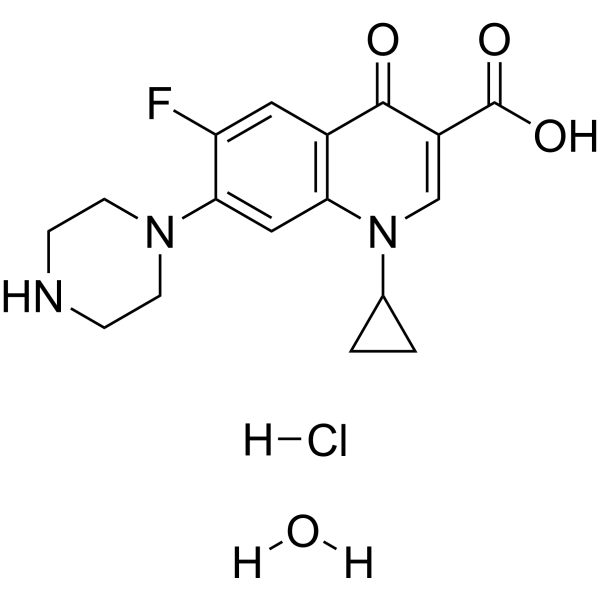
Cat. No.: HY-B0356B
CAS No.: 86393-32-0
Synonyms: Bay-09867 hydrochloride monohydrate
Ciprofloxacin (Bay-09867) hydrochloride monohydrate is an orally active, blood-brain barrier permeable fluoroquinolone antibacterial agent. Ciprofloxacin hydrochloride monohydrate exerts bactericidal effects primarily by inhibiting topoisomerase II and IV. Ciprofloxacin hydrochloride monohydrate inhibits the proliferation of human dental pulp stem cells and chondrocytes from young rats, and also activates the Akt signaling pathway and upregulates markers such as β-catenin and Nanog to maintain the morphological characteristics of stem cells. Ciprofloxacin hydrochloride monohydrate induces significant neurotoxicity and tissue damage, including reducing serotonin and glutathione levels in the brain, inducing oxidative stress and depression-like behaviors, and causing articular cartilage damage. Ciprofloxacin hydrochloride monohydrate can be applied to research related to infections of necrotic young permanent teeth and neurotoxicity .
loading...
    loading...
60
60 Publications Verification
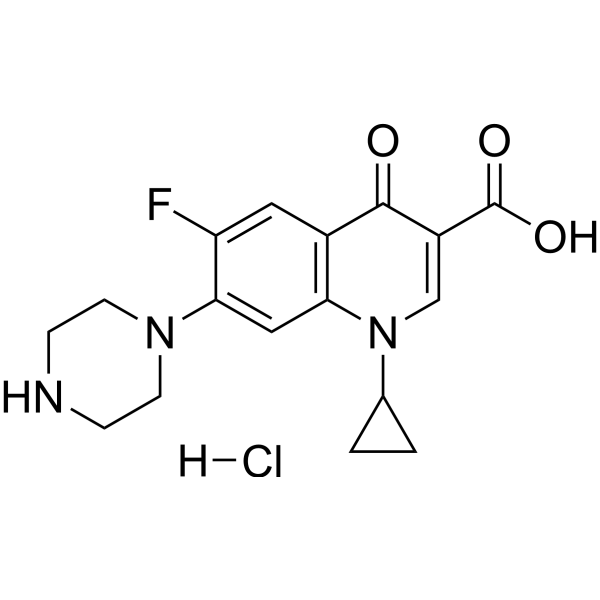
Cat. No.: HY-B0356A
CAS No.: 93107-08-5
Synonyms: Bay-09867 monohydrochloride
Ciprofloxacin (Bay-09867) monohydrochloride is an orally active, blood-brain barrier permeable fluoroquinolone antibacterial agent. Ciprofloxacin monohydrochloride exerts bactericidal effects primarily by inhibiting topoisomerase II and IV. Ciprofloxacin monohydrochloride inhibits the proliferation of human dental pulp stem cells and chondrocytes from young rats, and also activates the Akt signaling pathway and upregulates markers such as β-catenin and Nanog to maintain the morphological characteristics of stem cells. Ciprofloxacin monohydrochloride induces significant neurotoxicity and tissue damage, including reducing serotonin and glutathione levels in the brain, inducing oxidative stress and depression-like behaviors, and causing articular cartilage damage. Ciprofloxacin monohydrochloride can be applied to research related to infections of necrotic young permanent teeth and neurotoxicity .
loading...
    loading...
1
1 Cited Publications
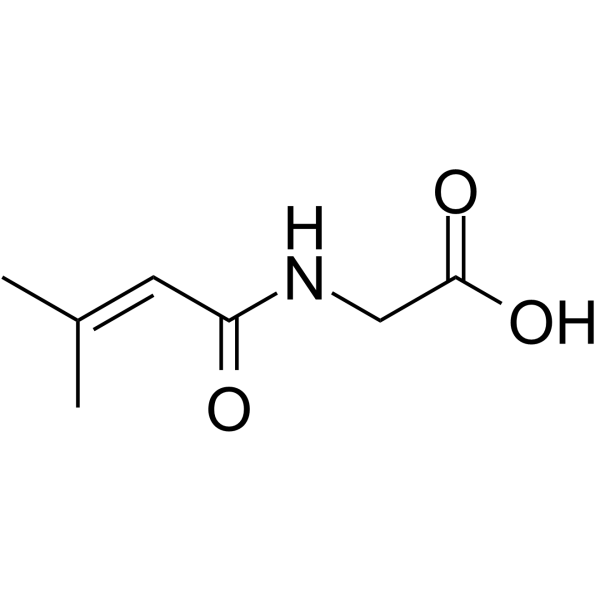
Cat. No.: HY-113232
CAS No.: 33008-07-0
Purity:  99.90%
3-Methylcrotonylglycine is an organic acid conjugate associated with leucine catabolism that inhibits respiratory chain complex II-III, mitochondrial creatine kinase, and synaptic membrane Na +, K +-ATPase. 3-Methylcrotonylglycine increases reactive oxygen species levels to mediate oxidative damage, while inhibiting mitochondrial electron transport, reducing tricarboxylic acid cycle flux, and interfering with intracellular energy transport and neuronal ion homeostasis. 3-Methylcrotonylglycine is a neurotoxic metabolite that accumulates in the metabolic pathway of 3-methylcrotonyl-CoA carboxylase deficiency. 3-Methylcrotonylglycine can be used in studies related to 3-methylcrotonyl-CoA carboxylase deficiency .
loading...
    loading...
1
1 Cited Publications
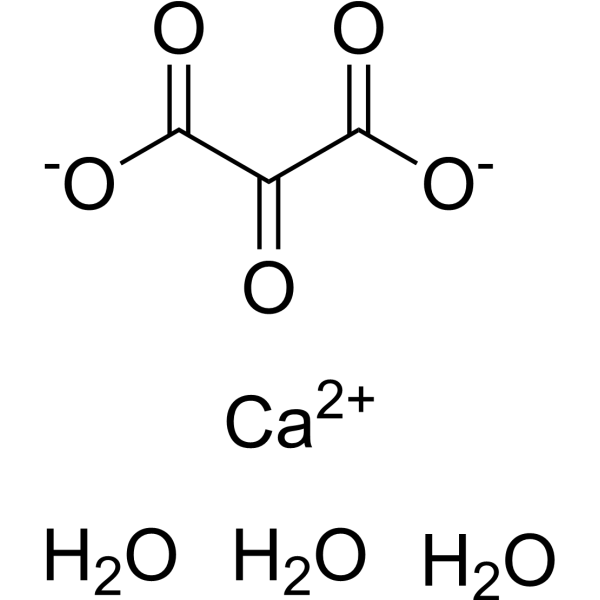
Cat. No.: HY-W540188A
Synonyms: Ketomalonic acid calcium trihydrate; Mesoxalic acid calcium trihydrate; Oxomalonic acid calcium trihydrate
Target:  

Insulin Receptor

Research Areas:  

Metabolic Disease

Calcium mesoxalate trihydrate (Ketomalonic acid calcium trihydrate) is an orally active antidiabetic agent. Calcium mesoxalate trihydrate increases pancreatic insulin content. Calcium mesoxalate trihydrate reduces dietary hyperglycemia. Calcium mesoxalate trihydrate inhibits Epinephrine-induced hyperglycemia in rabbits and exacerbates Alloxan (HY-116823)-induced hypoglycemic convulsions. Calcium mesoxalate trihydrate exerts no antidiabetic effect in pancreatectomized dogs and fails to reduce the susceptibility of rabbits to Alloxan-induced diabetes. Calcium mesoxalate trihydrate can be used in diabetes-related research .
loading...
    loading...
Cat. No.: HY-113126
CAS No.: 2068-83-9
Purity:  ≥93.0%
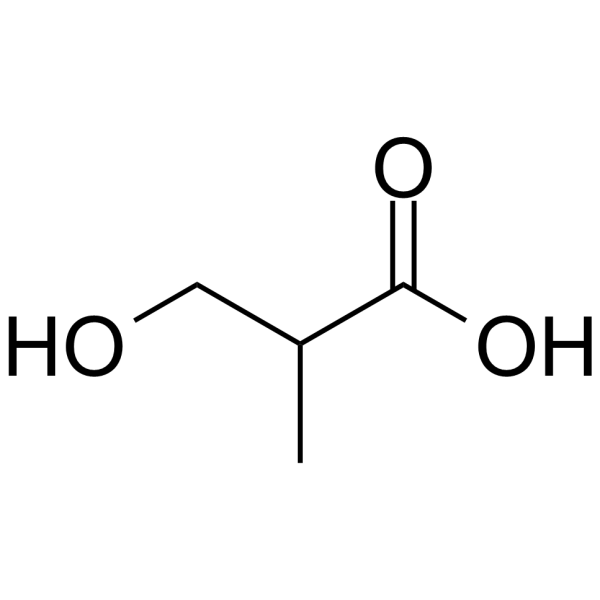
3-Hydroxyisobutyric acid is an intermediate in the metabolic pathways of L-valine and thymine, and can be found in urine. 3-Hydroxyisobutyric acid is a secreted mediator of endothelial cell fatty acid transport and insulin resistance. 3-Hydroxyisobutyric acid can also inhibit key enzymes of energy metabolism in the cerebral cortex of young rats. The levels of 3-Hydroxyisobutyric acid are closely related to various diseases such as 3-hydroxyisobutyric aciduria, diabetes, and ketoacidosis .
loading...
    loading...
Cat. No.: HY-Y1097
CAS No.: 4376-18-5
Synonyms: 2-(Methoxycarbonyl)benzoic acid
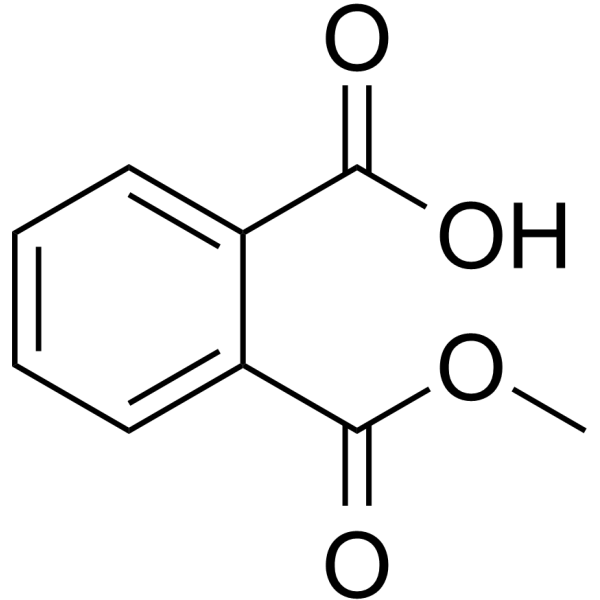
Monomethyl phthalate is an orally active metabolite of phthalic acid. Monomethyl phthalate, as a urine biomarker after exposure to phthalate, can be used as a detection indicator for thyroid cancer and benign nodules. Monomethyl phthalate reduces the survival rate of young frogs. Monomethyl phthalate induces oxidative damage to red blood cells in rats .
loading...
    loading...
Cat. No.: HY-B0356R
CAS No.: 85721-33-1
Synonyms: Bay-09867 (Standard)
Ciprofloxacin (Standard) is the analytical standard of Ciprofloxacin. This product is intended for research and analytical applications. Ciprofloxacin (Bay-09867) is an orally active, blood-brain barrier permeable fluoroquinolone antibacterial agent. Ciprofloxacin exerts bactericidal effects primarily by inhibiting topoisomerase II and IV. Ciprofloxacin inhibits the proliferation of human dental pulp stem cells and chondrocytes from young rats, and also activates the Akt signaling pathway and upregulates markers such as β-catenin and Nanog to maintain the morphological characteristics of stem cells. Ciprofloxacin induces significant neurotoxicity and tissue damage, including reducing serotonin and glutathione levels in the brain, inducing oxidative stress and depression-like behaviors, and causing articular cartilage damage. Ciprofloxacin can be applied to research related to infections of necrotic young permanent teeth and neurotoxicity .
loading...
    loading...
Cat. No.: HY-128740
CAS No.: 31635-99-1
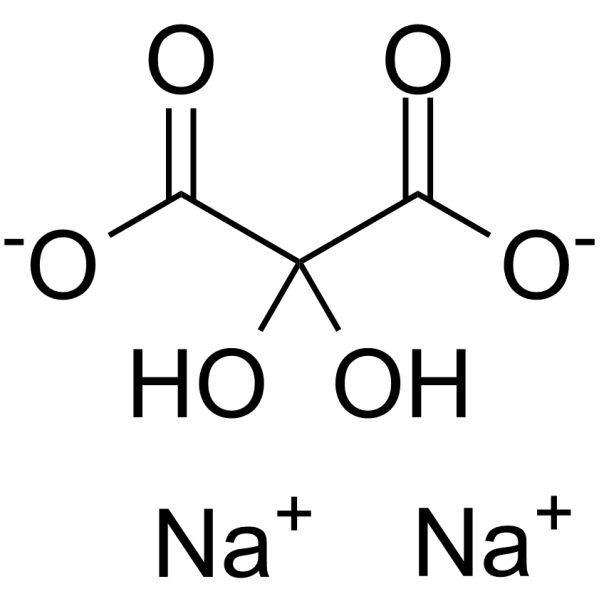
Mesoxalate sodium monohydrate is an orally active antidiabetic agent. Mesoxalate sodium monohydrate increases pancreatic insulin content. Mesoxalate sodium monohydrate reduces dietary hyperglycemia. Mesoxalate sodium monohydrate inhibits Epinephrine-induced hyperglycemia in rabbits and exacerbates Alloxan (HY-116823)-induced hypoglycemic convulsions. Mesoxalate sodium monohydrate exerts no antidiabetic effect in pancreatectomized dogs and fails to reduce the susceptibility of rabbits to Alloxan-induced diabetes. Mesoxalate sodium monohydrate can be used in diabetes-related research .
loading...
    loading...
Cat. No.: HY-114634
CAS No.: 473-90-5
Synonyms: Ketomalonic acid; Mesoxalic acid; Oxomalonic acid
Target:  

Insulin Receptor

Research Areas:  

Metabolic Disease

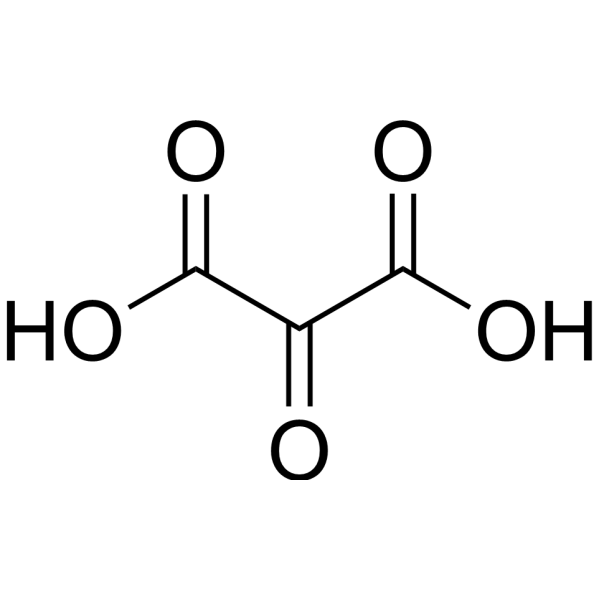
Mesoxalate (Ketomalonic acid) is an orally active antidiabetic agent. Mesoxalate increases pancreatic insulin content. Mesoxalate reduces dietary hyperglycemia. Mesoxalate inhibits Epinephrine-induced hyperglycemia in rabbits and exacerbates Alloxan (HY-116823)-induced hypoglycemic convulsions. Mesoxalate exerts no antidiabetic effect in pancreatectomized dogs and fails to reduce the susceptibility of rabbits to Alloxan-induced diabetes. Mesoxalate can be used in diabetes-related research .
loading...
    loading...
Cat. No.: HY-107652
CAS No.: 118290-26-9
Purity:  98.0%
Target:  

mAChR

Research Areas:  

Neurological Disease

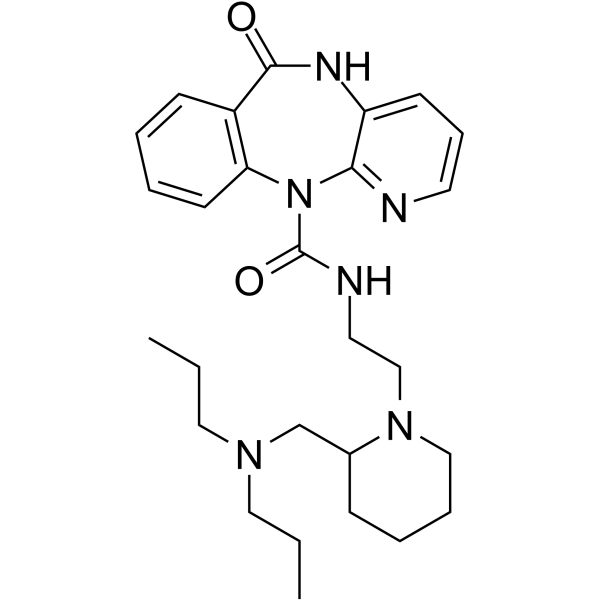
AF-DX 384 is a selective antagonist of M2 and M4 muscarinic acetylcholine receptors (Kis=6.03 and 10 nM, respectively) . AF-DX 384 reverses deficits in novel object recognition and passive avoidance in aged rats, as well as in young rats with impairments induced by scopolamine .
loading...
    loading...
Cat. No.: HY-W540188
CAS No.: 21085-60-9
Synonyms: Ketomalonic acid calcium; Mesoxalic acid calcium; Oxomalonic acid calcium
Target:  

Insulin Receptor

Research Areas:  

Metabolic Disease

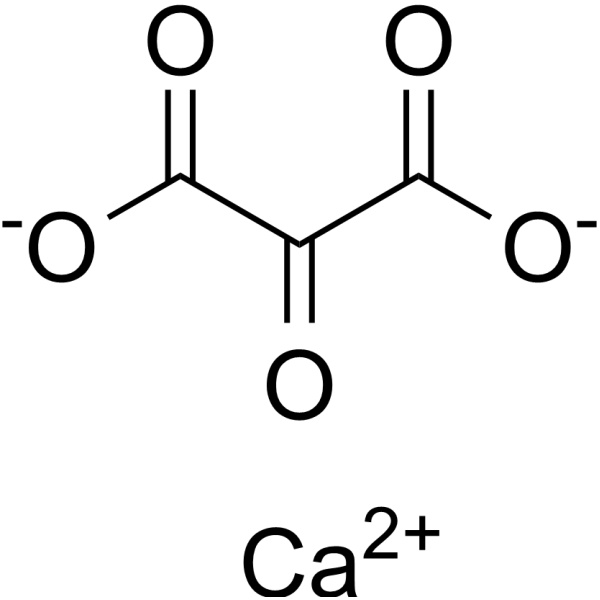
Calcium mesoxalate (Ketomalonic acid calcium) is an orally active antidiabetic agent. Calcium mesoxalate increases pancreatic insulin content. Calcium mesoxalate reduces dietary hyperglycemia. Calcium mesoxalate inhibits Epinephrine-induced hyperglycemia in rabbits and exacerbates Alloxan (HY-116823)-induced hypoglycemic convulsions. Calcium mesoxalate exerts no antidiabetic effect in pancreatectomized dogs and fails to reduce the susceptibility of rabbits to Alloxan-induced diabetes. Calcium mesoxalate can be used in diabetes-related research .
loading...
    loading...
Cat. No.: HY-124223
CAS No.: 118290-27-0
Target:  

mAChR

Research Areas:  

Neurological Disease

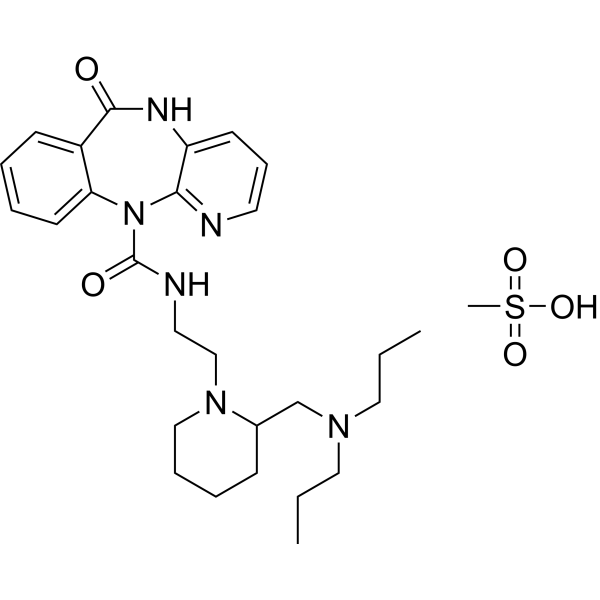
AF-DX 384 (methanesulfonate) is a selective antagonist of M2 and M4 muscarinic acetylcholine receptors (Kis=6.03 and 10 nM, respectively) . AF-DX 384 (methanesulfonate) reverses deficits in novel object recognition and passive avoidance in aged rats, as well as in young rats with impairments induced by scopolamine .
loading...
    loading...
Cat. No.: HY-Y1097R
CAS No.: 4376-18-5
Synonyms: 2-(Methoxycarbonyl)benzoic acid (Standard)
Monomethyl phthalate (Standard) is the analytical standard of Monomethyl phthalate. This product is intended for research and analytical applications. Monomethyl phthalate is an orally active metabolite of phthalic acid. Monomethyl phthalate, as a urine biomarker after exposure to phthalate, can be used as a detection indicator for thyroid cancer and benign nodules. Monomethyl phthalate reduces the survival rate of young frogs. Monomethyl phthalate induces oxidative damage to red blood cells in rats.
loading...
    loading...
Cat. No.: HY-113126A
CAS No.: 1219589-99-7
3-Hydroxyisobutyric acid sodium is an intermediate in the metabolic pathways of L-valine and thymine, and can be found in urine. 3-Hydroxyisobutyric acid sodium is a secreted mediator of endothelial cell fatty acid transport and insulin resistance. 3-Hydroxyisobutyric acid sodium can also inhibit key enzymes of energy metabolism in the cerebral cortex of young rats. The levels of 3-Hydroxyisobutyric acid sodium are closely related to various diseases such as 3-hydroxyisobutyric aciduria, diabetes, and ketoacidosis .
loading...
    loading...
Cat. No.: HY-B0356AR
CAS No.: 93107-08-5
Synonyms: Bay-09867 monohydrochloride (Standard)
Ciprofloxacin monohydrochloride (Standard) is the analytical standard of Ciprofloxacin (monohydrochloride). This product is intended for research and analytical applications. Ciprofloxacin (Bay-09867) monohydrochloride is an orally active, blood-brain barrier permeable fluoroquinolone antibacterial agent. Ciprofloxacin monohydrochloride exerts bactericidal effects primarily by inhibiting topoisomerase II and IV. Ciprofloxacin monohydrochloride inhibits the proliferation of human dental pulp stem cells and chondrocytes from young rats, and also activates the Akt signaling pathway and upregulates markers such as β-catenin and Nanog to maintain the morphological characteristics of stem cells. Ciprofloxacin monohydrochloride induces significant neurotoxicity and tissue damage, including reducing serotonin and glutathione levels in the brain, inducing oxidative stress and depression-like behaviors, and causing articular cartilage damage. Ciprofloxacin monohydrochloride can be applied to research related to infections of necrotic young permanent teeth and neurotoxicity .
loading...
    loading...
Cat. No.: HY-113232S
CAS No.: 1276197-31-9
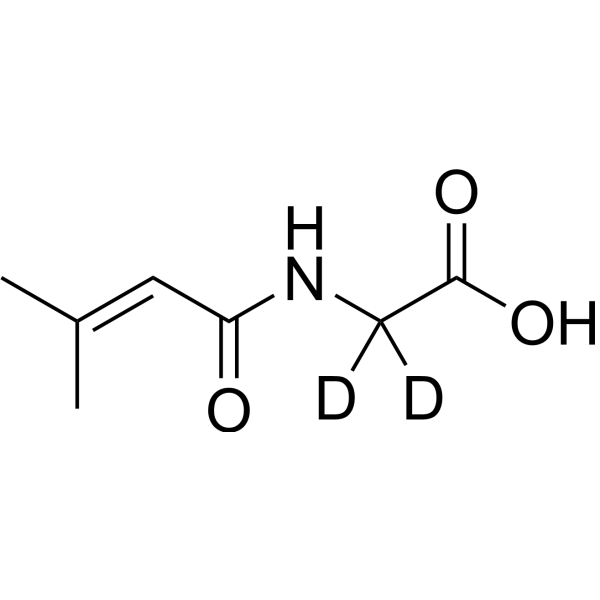
3-Methylcrotonylglycine-d2 is the deuterated-labeled 3-Methylcrotonylglycine (HY-113232). 3-Methylcrotonylglycine is an organic acid conjugate associated with leucine catabolism that inhibits respiratory chain complex II-III, mitochondrial creatine kinase, and synaptic membrane Na +, K +-ATPase. 3-Methylcrotonylglycine increases reactive oxygen species levels to mediate oxidative damage, while inhibiting mitochondrial electron transport, reducing tricarboxylic acid cycle flux, and interfering with intracellular energy transport and neuronal ion homeostasis. 3-Methylcrotonylglycine is a neurotoxic metabolite that accumulates in the metabolic pathway of 3-methylcrotonyl-CoA carboxylase deficiency. 3-Methylcrotonylglycine can be used in studies related to 3-methylcrotonyl-CoA carboxylase deficiency .
loading...
    loading...
Cat. No.: HY-B0356G
CAS No.: 85721-33-1
Synonyms: Bay-09867 (GMP)
Ciprofloxacin GMP is Ciprofloxacin (HY-B0356) produced by using GMP guidelines. GMP small molecules works appropriately as an auxiliary reagent for cell therapy manufacture. Ciprofloxacin (Bay-09867) is an orally active, blood-brain barrier permeable fluoroquinolone antibacterial agent. Ciprofloxacin exerts bactericidal effects primarily by inhibiting topoisomerase II and IV. Ciprofloxacin inhibits the proliferation of human dental pulp stem cells and chondrocytes from young rats, and also activates the Akt signaling pathway and upregulates markers such as β-catenin and Nanog to maintain the morphological characteristics of stem cells. Ciprofloxacin induces significant neurotoxicity and tissue damage, including reducing serotonin and glutathione levels in the brain, inducing oxidative stress and depression-like behaviors, and causing articular cartilage damage. Ciprofloxacin can be applied to research related to infections of necrotic young permanent teeth and neurotoxicity .
loading...
    loading...
  • 1

