



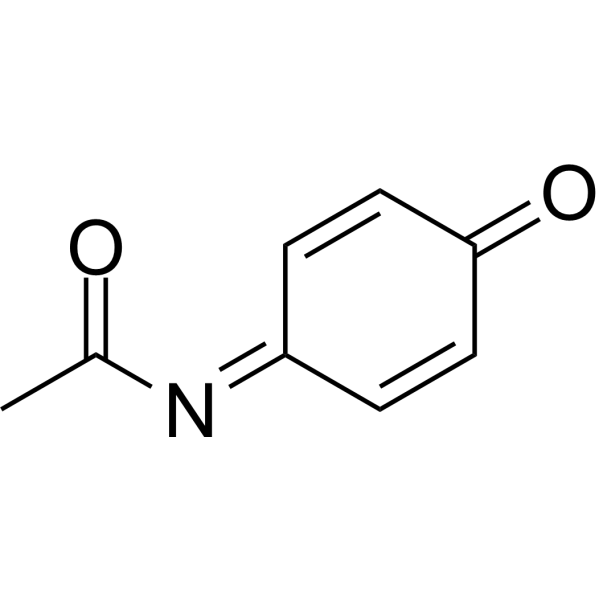
NAPQI
Based on 1 publication(s) in Google Scholar
NAPQI is the toxic metabolite of Acetaminophen (HY-66005). NAPQI is also an inhibitor of enzymes in the vitamin K cycle. NAPQI is rapidly detoxified by glutathione (GSH), but in situations of GSH deficiency, excess NAPQI reacts with cysteine residues in proteins, causing cell death and toxicity in the liver.
For research use only. We do not sell to patients.
- Purity : 98.0%
- CAS No.: 50700-49-7
- Formula: C8H7NO2
- Molecular Weight:149.15
-
Storage:
-80°C, protect from light, stored under nitrogen

To place orders, for customer services and technical support, please contact: MedChemExpress USA
Tel: 609-228-6898 E-mail: [email protected] [email protected]


-
 Biological Activity
-
Chemical Information
-
Solvent & Solubility
- Protocols
- Purity & Documentation
- References
-
 Help & FAQs


-

HY-W017464R
NAPQI (Standard)Acetaminophen Metabolite -
HY-N1506
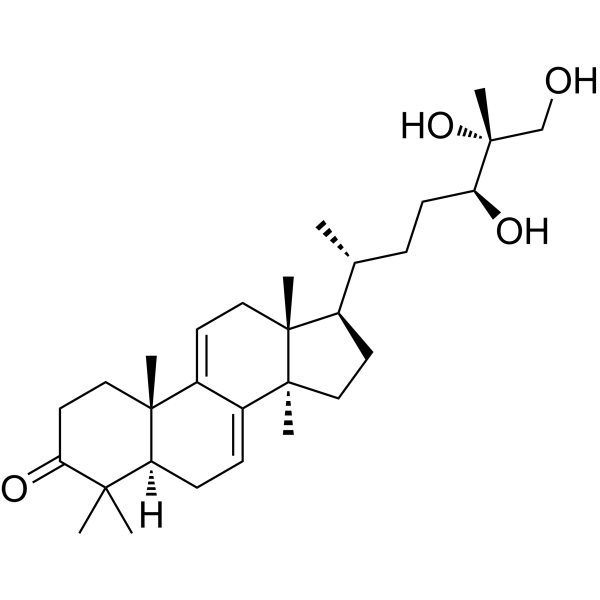
GanodermanontriolAnti-Inflammatory Agent -
HY-126848
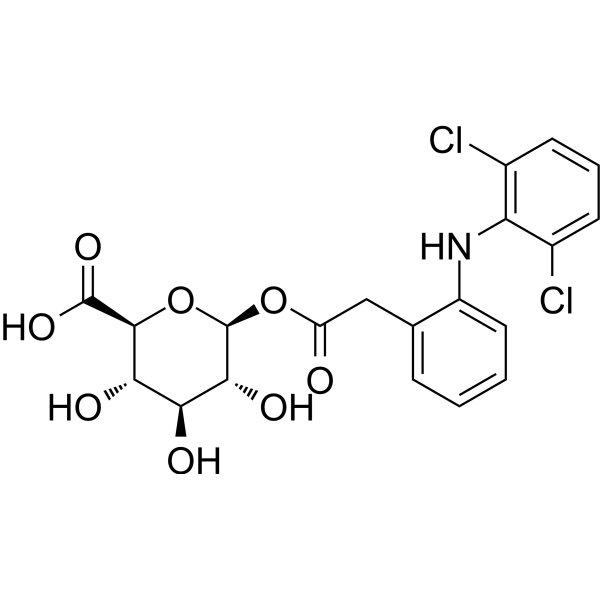
Diclofenac acyl glucuronideBiliary Metabolite -
HY-113239
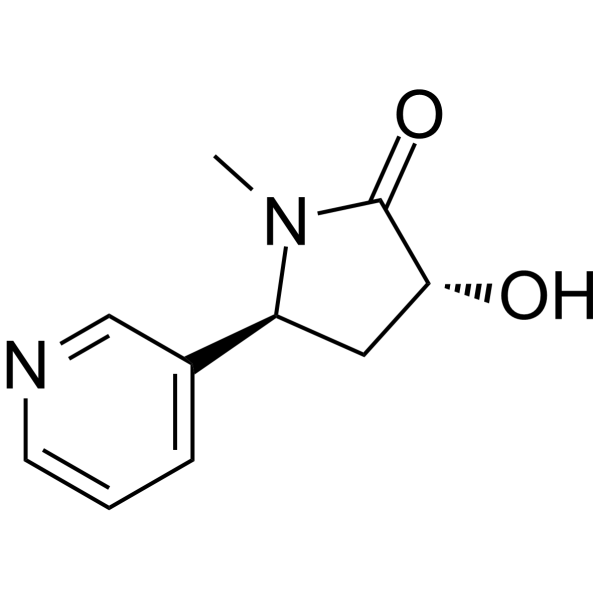
HydroxycotinineNicotine Metabolite -
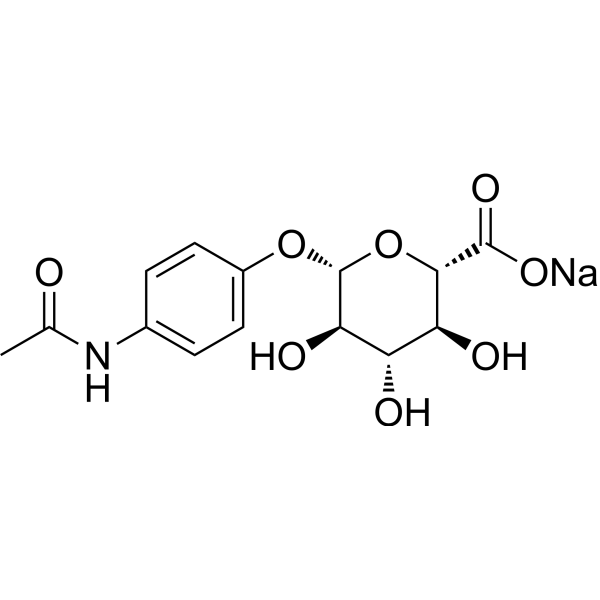
HY-W016034
Acetaminophen glucuronide sodium saltAnalgesic and Antipyretic Agent -
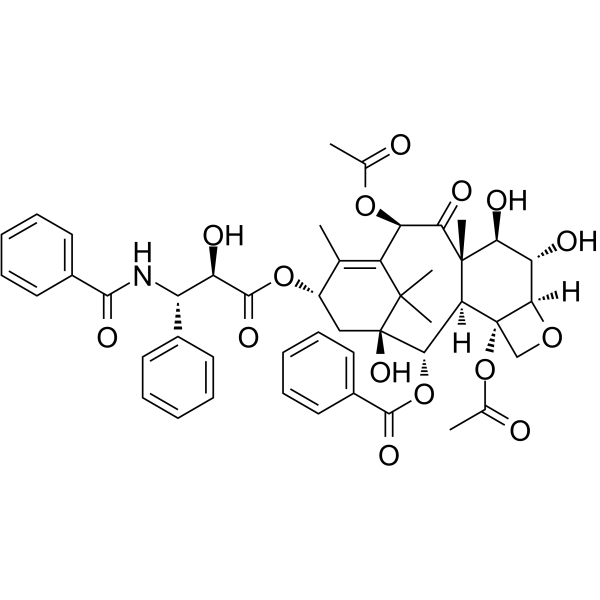
HY-125348
6α-Hydroxy paclitaxelPaclitaxel Metabolite -
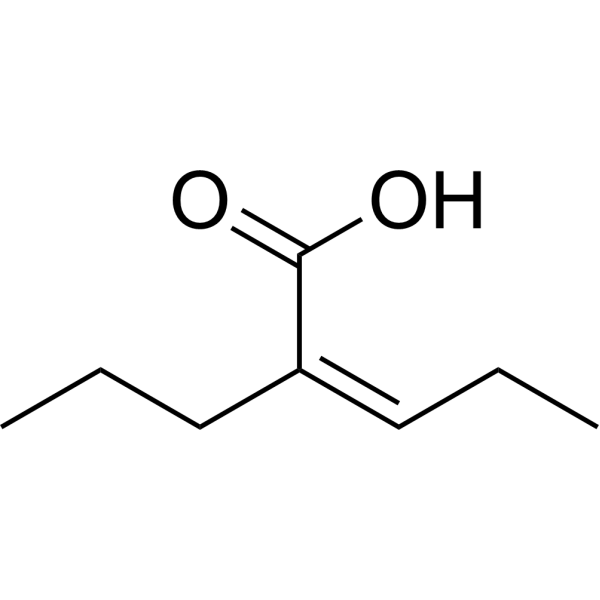
HY-114992
2-Propyl-2-pentenoic acidValproic Acid Metabolite -
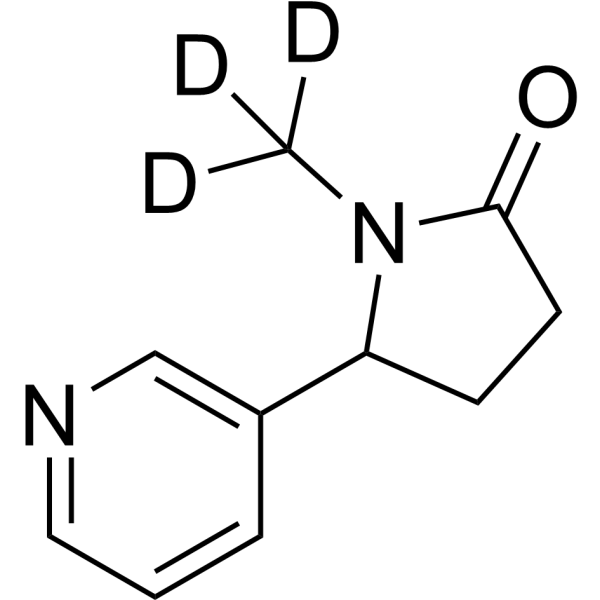
HY-B1178S
(Rac)-Cotinine-d3Stable Isotope -
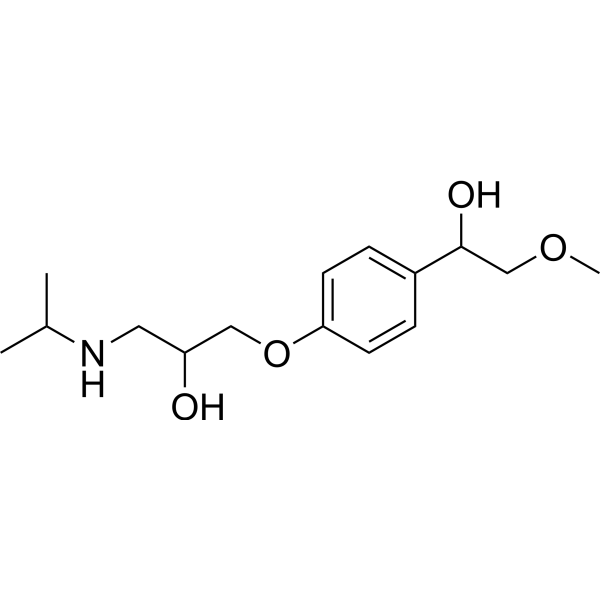
HY-134670
a-HydroxymetoprololMetabolite -

HY-131630
O-DesmethylmetoprololDrug Metabolite -
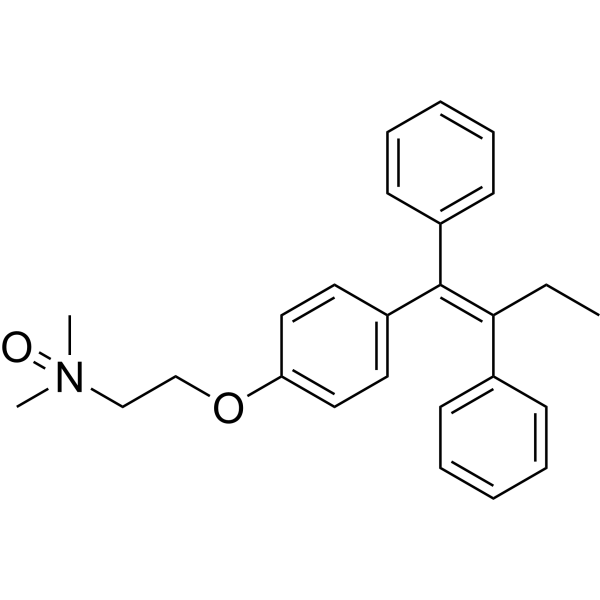
HY-133010
Tamoxifen N-oxideTamoxifen Metabolite -

HY-122508
HydroxyebastineEbastine Metabolite
Publications Citing Use of MedChemExpress (MCE) NAPQI
MoreAll Endogenous Metabolite Isoforms
More

Biological Activity
Description
IC50 & Target
|
Human Endogenous Metabolite |
In Vitro
NAPQI (25-400 μM, 30 min) inhibits the synthesis of glutathione synthase (GS)[3].
NAPQI (0.15 mg/mL, 24-48 h) is toxic to auditory cell HEI-OC1 through oxidation and endoplasmic reticulum stress-dependent pathways[4].
MedChemExpress (MCE) has not independently confirmed the accuracy of these methods. They are for reference only.
-
Cell Line:HEI-OC1
-
Concentration:0.15 mg/mL
-
Incubation Time:24, 48 h
-
Result:Decreased viability of HEI-OC1 cells at 24 and 48 h.


Chemical Information
-
CAS No. 50700-49-7
-
Appearance Solid
-
Molecular Weight 149.15
-
Formula C8H7NO2
-
Color Light yellow to yellow
-
SMILES
CC(/N=C1C=CC(C=C\1)=O)=O
-
Synonyms
N-Acetyl-4-benzoquinone Imine
-
Structure Classification
-
Initial Source
-
Shipping
Shipping with dry ice.
-
Storage
-80°C, protect from light, stored under nitrogen


Publications (1)
-
Journal Impact Factor
-
Most Recent


Solvent & Solubility
In Vitro:
DMSO : 100 mg/mL (670.47 mM; Need ultrasonic; Hygroscopic DMSO has a significant impact on the solubility of product, please use newly opened DMSO)
Please refer to the solubility information to select the appropriate solvent. Once prepared, please aliquot and store the solution to prevent product inactivation from repeated freeze-thaw cycles.
Storage method and period of stock solution: -80°C, 6 months (protect from light, stored under nitrogen). When stored at -80°C, please use it within 6 months.
Please refer to the solubility information to select the appropriate solvent. Once prepared, please aliquot and store the solution to prevent product inactivation from repeated freeze-thaw cycles.
Storage method and period of stock solution: -80°C, 6 months (protect from light, stored under nitrogen). When stored at -80°C, please use it within 6 months.
Concentration (start) × Volume (start) = Concentration (final) × Volume (final)


Purity & Documentation
-
Data Sheet (274 KB)
-
SDS (393 KB)
- English - EN (393 KB)
- Français - FR (393 KB)
- Deutsch - DE (393 KB)
- Norwegian - NO (393 KB)
- Español - ES (393 KB)
- Swedish - SV (393 KB)
- Italian - IT (393 KB)
- Korean - KR (393 KB)
- Portuguese - PT (393 KB)
-
Handling Instructions (2659 KB)
References
[1]. Jiang D, et al. Organ-Specific Screening for Protein Damage Using Magnetic Bead Bioreactors and LC-MS/MS. Anal Chem. 2020 Apr 7;92(7):5337-5345. [Content Brief]
[2]. Thijssen HH, et al. Paracetamol (acetaminophen) warfarin interaction: NAPQI, the toxic metabolite of paracetamol, is an inhibitor of enzymes in the vitamin K cycle. Thromb Haemost. 2004 Oct;92(4):797-802. [Content Brief]
[3]. Walker V, et al. The acetaminophen metabolite N-acetyl-p-benzoquinone imine (NAPQI) inhibits glutathione synthetase in vitro; a clue to the mechanism of 5-oxoprolinuric acidosis? Xenobiotica. 2017 Feb;47(2):164-175. [Content Brief]
[4]. Kalinec GM, et al. Acetaminophen and NAPQI are toxic to auditory cells via oxidative and endoplasmic reticulum stress-dependent pathways. Hear Res. 2014 Jul;313:26-37. [Content Brief]


Complete Stock Solution Preparation Table
Please refer to the solubility information to select the appropriate solvent. Once prepared, please aliquot and store the solution to prevent product inactivation from repeated freeze-thaw cycles.
Storage method and period of stock solution: -80°C, 6 months (protect from light, stored under nitrogen). When stored at -80°C, please use it within 6 months.
| Optional Solvent | Concentration Solvent Mass | 1 mg | 5 mg | 10 mg | 25 mg |
|---|---|---|---|---|---|
| DMSO | 1 mM | 6.7047 mL | 33.5233 mL | 67.0466 mL | 167.6165 mL |
| 5 mM | 1.3409 mL | 6.7047 mL | 13.4093 mL | 33.5233 mL | |
| 10 mM | 0.6705 mL | 3.3523 mL | 6.7047 mL | 16.7617 mL | |
| 15 mM | 0.4470 mL | 2.2349 mL | 4.4698 mL | 11.1744 mL | |
| 20 mM | 0.3352 mL | 1.6762 mL | 3.3523 mL | 8.3808 mL | |
| 25 mM | 0.2682 mL | 1.3409 mL | 2.6819 mL | 6.7047 mL | |
| 30 mM | 0.2235 mL | 1.1174 mL | 2.2349 mL | 5.5872 mL | |
| 40 mM | 0.1676 mL | 0.8381 mL | 1.6762 mL | 4.1904 mL | |
| 50 mM | 0.1341 mL | 0.6705 mL | 1.3409 mL | 3.3523 mL | |
| 60 mM | 0.1117 mL | 0.5587 mL | 1.1174 mL | 2.7936 mL | |
| 80 mM | 0.0838 mL | 0.4190 mL | 0.8381 mL | 2.0952 mL | |
| 100 mM | 0.0670 mL | 0.3352 mL | 0.6705 mL | 1.6762 mL |


NAPQI Related Classifications
HY-W017464 Related Classifications
 Powered by Bioz