



Tetradecylphosphonic acid

Based on 1 Customer Validation
Tetradecylphosphonic acid is a biochemical reagent that can be used as a biological material or organic compound for life science related research.
For research use only. We do not sell to patients.
- Purity : 99.82%
- CAS No.: 4671-75-4
- Formula: C14H31O3P
- Molecular Weight:278.37
-
Storage:
Store at room temperature, keep dry and cool.
In solvent -80°C, 1 year , -20°C, 6 months


To place orders, for customer services and technical support, please contact: MedChemExpress USA
Tel: 609-228-6898 E-mail: [email protected] [email protected]


-
 Biological Activity
-
Chemical Information
-
Solvent & Solubility
- Purity & Documentation
-
 Help & FAQs


-
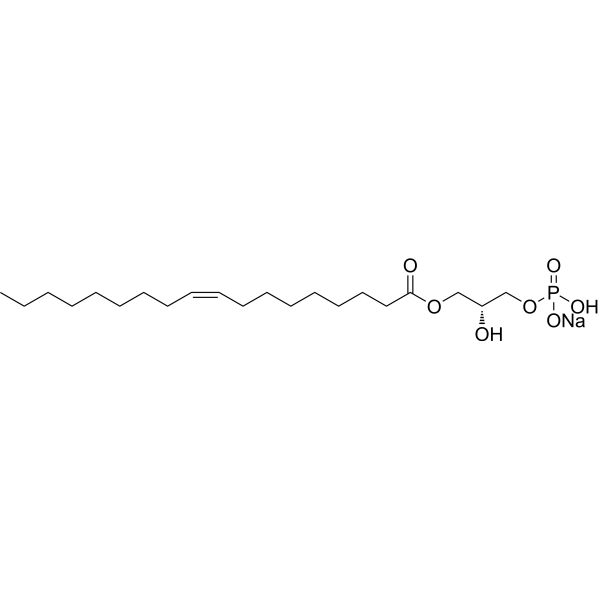
HY-107614
1-Oleoyl lysophosphatidic acid sodiumLPA Receptor Activator -
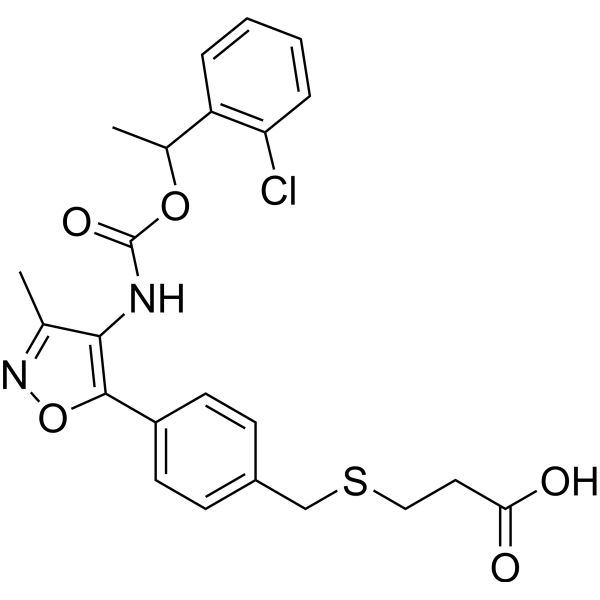
HY-13285
Ki16425LPA1/3 Antagonist -
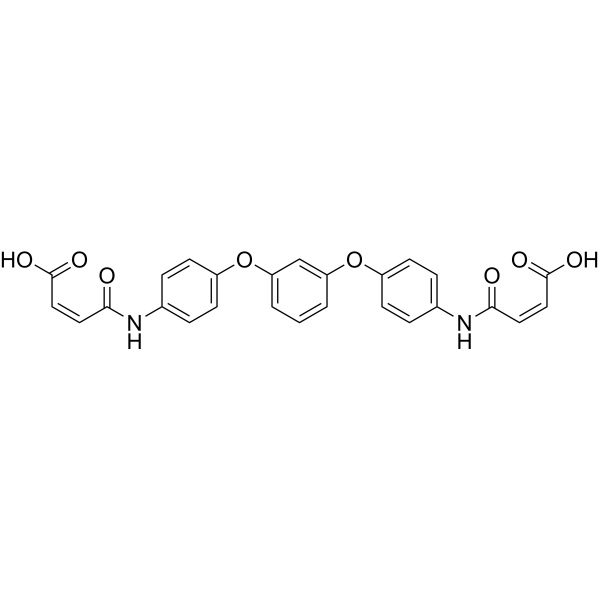
HY-107616
H2L5186303LPA2 Receptor Antagonist -
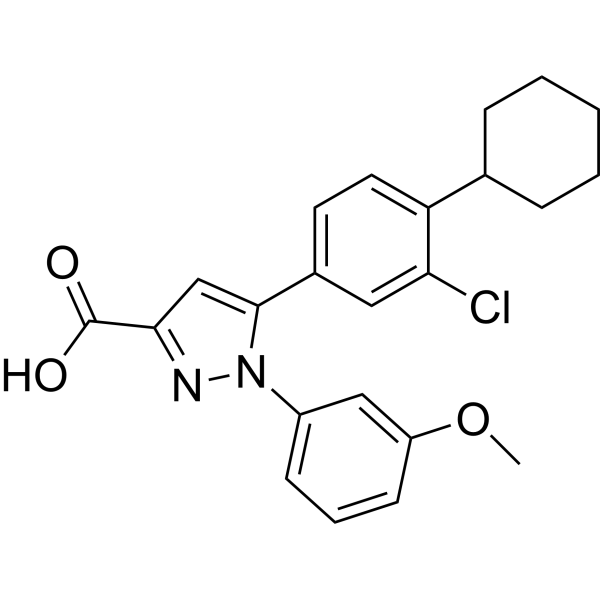
HY-107615
TC LPA5 4LPA5/GPR92 Antagonist -
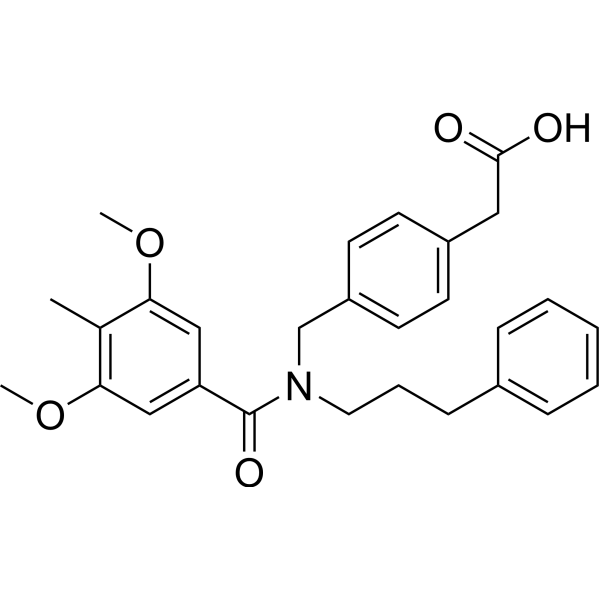
HY-100882
ONO-7300243LPA1 Antagonist -
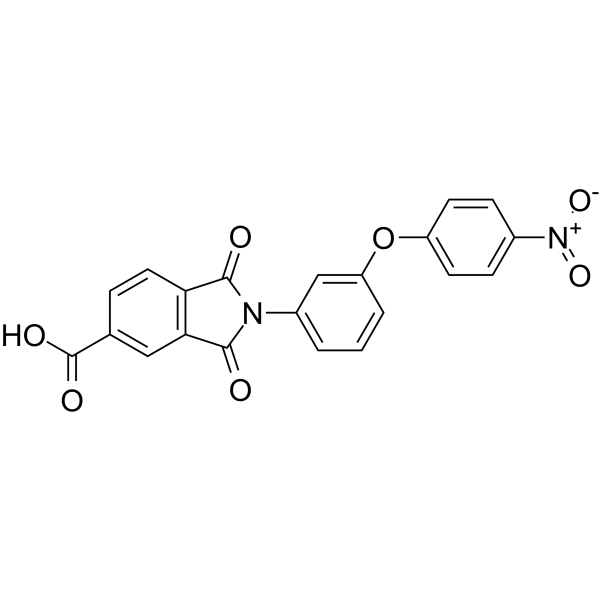
HY-15706
H2L 5765834LPA1 Antagonist -
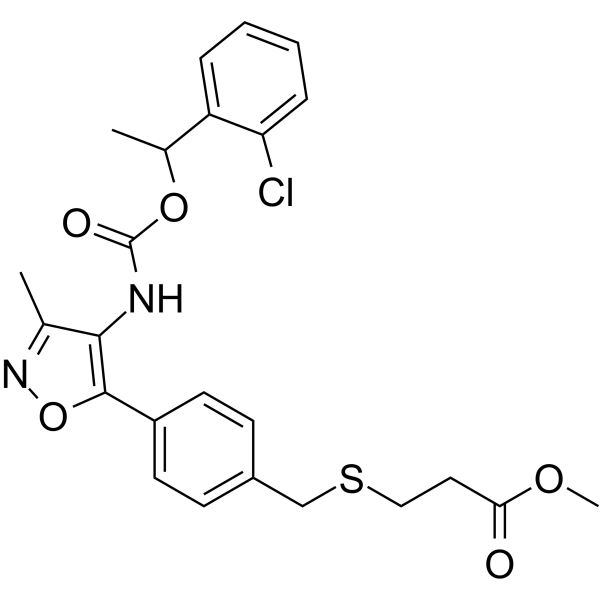
HY-18641
Ki16198LPA Receptor Antagonist -
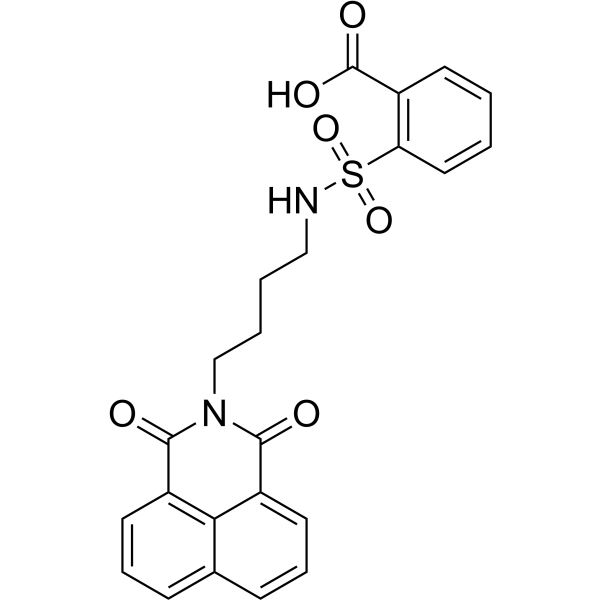
HY-117779
DBIBBGPCR Agonist -
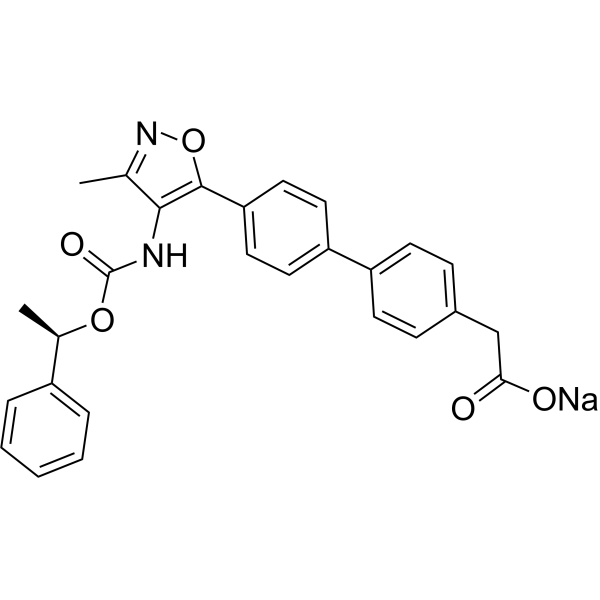
HY-16039
AM095LPA1 Antagonist -
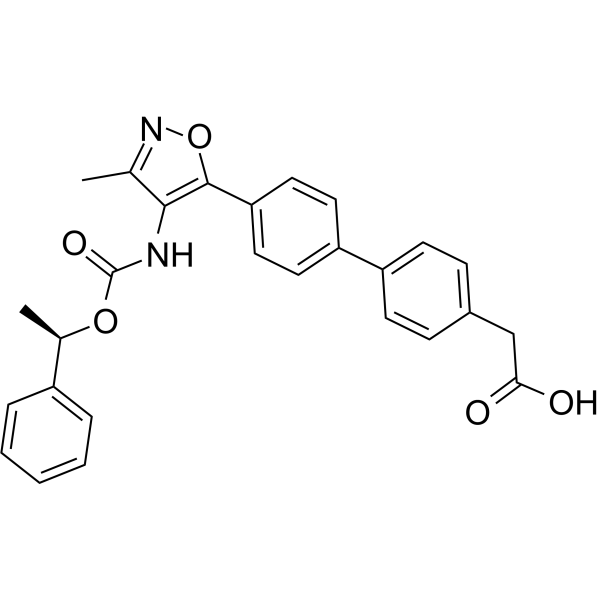
HY-16040
AM095 free acid -
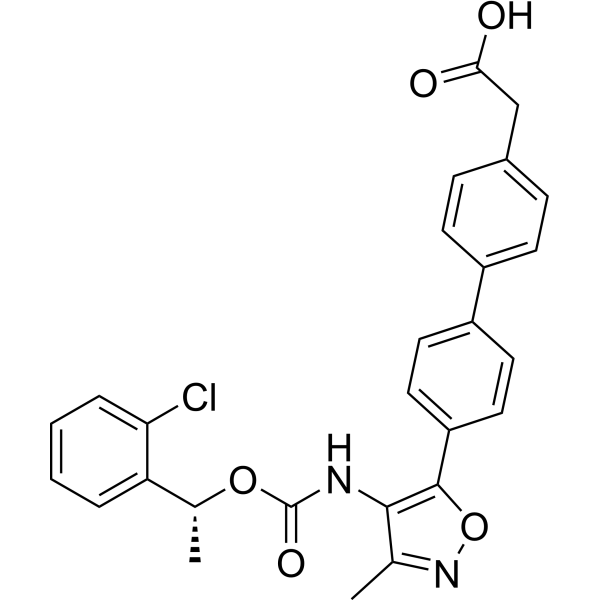
HY-15277
AM966LPA1 Receptor Antagonist -
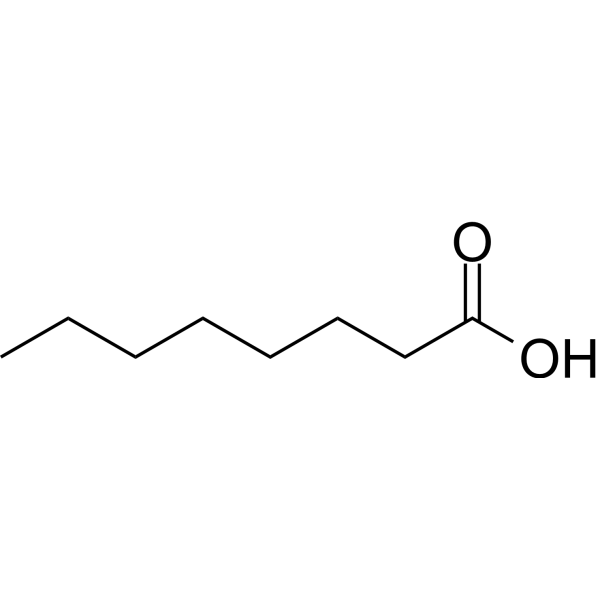
HY-41417
Octanoic acidAntibacterial Agent


Biological Activity
Description
Cellular Effect
|
Cell Line

|
Type | Value | Description | References |
|---|---|---|---|---|
| PC-3 | IC50 |
9674 nM
Compound: 16c
|
Inhibition of LPA-induced calcium transients in PC-3 cells
Inhibition of LPA-induced calcium transients in PC-3 cells
|
[PMID: 16033271] |
| RH7777 | IC50 |
3100 nM
Compound: 16c
|
Inhibition of LPA-induced calcium transients in RH7777 rat hepatoma cells expressing LPA3 receptor
Inhibition of LPA-induced calcium transients in RH7777 rat hepatoma cells expressing LPA3 receptor
|
[PMID: 16033271] |
| RH7777 | IC50 |
5500 nM
Compound: 16c
|
Inhibition of LPA-induced calcium transients in RH7777 rat hepatoma cells expressing LPA2 receptor
Inhibition of LPA-induced calcium transients in RH7777 rat hepatoma cells expressing LPA2 receptor
|
[PMID: 16033271] |
In Vitro
Tetradecyl phosphonate is a pan-antagonist of lysophosphatidic acid 1 (LPA1), LPA2, and LPA3 receptors. The IC50 value for inhibition of LPA-induced calcium mobilization was 10 μM, 5.5 μM, and 3.1 μM, respectively. At a concentration of 10 μM, tetradecyl phosphonate activates a peroxisome proliferator-activated receptor γ reporter construct 4-fold when compared with the controls and partially inhibits autotaxin with an IC50 value of approximately 3 μM. Lysophosphatidic acid (LPA) , also known as autotaxin (ATX ), is a lipid signaling molecule formed by the hydrolysis of lysophosphatidyl choline by lysophospholipase D. LPA signals through four different G protein-coupled receptors, named as LPA1/EDG-2, LPA2/EDG-4, LPA3/EDG-7, and LPA4/GPR23 . It has been reported that LPA was involved in activating peroxisome proliferator-activated receptor γ (PPARγ) .
MedChemExpress (MCE) has not independently confirmed the accuracy of these methods. They are for reference only. .


Chemical Information
-
CAS No. 4671-75-4
-
Appearance Solid
-
Molecular Weight 278.37
-
Formula C14H31O3P
-
Color White to off-white
-
SMILES
OP(O)(CCCCCCCCCCCCCC)=O
-
Synonyms
TDPA; Tetradecyl phosphonate
-
Shipping
Room temperature in continental US; may vary elsewhere.
-
Storage
Store at room temperature, keep dry and cool
In solvent -80°C 1 year -20°C 6 months


Solvent & Solubility
In Vitro:
DMSO : 20 mg/mL (71.85 mM; Need ultrasonic; Hygroscopic DMSO has a significant impact on the solubility of product, please use newly opened DMSO)
Please refer to the solubility information to select the appropriate solvent. Once prepared, please aliquot and store the solution to prevent product inactivation from repeated freeze-thaw cycles.
Storage method and period of stock solution: -80°C, 1 year; -20°C, 6 months. When stored at -80°C, please use it within 1 year. When stored at -20°C, please use it within 6 months.
Please refer to the solubility information to select the appropriate solvent. Once prepared, please aliquot and store the solution to prevent product inactivation from repeated freeze-thaw cycles.
Storage method and period of stock solution: -80°C, 1 year; -20°C, 6 months. When stored at -80°C, please use it within 1 year. When stored at -20°C, please use it within 6 months.
Concentration (start) × Volume (start) = Concentration (final) × Volume (final)


Purity & Documentation
-
Data Sheet (240 KB)
-
SDS (393 KB)
- English - EN (393 KB)
- Français - FR (393 KB)
- Deutsch - DE (393 KB)
- Norwegian - NO (393 KB)
- Español - ES (393 KB)
- Swedish - SV (393 KB)
- Italian - IT (393 KB)
- Korean - KR (393 KB)
- Portuguese - PT (393 KB)
-
Handling Instructions (2659 KB)


Complete Stock Solution Preparation Table
Please refer to the solubility information to select the appropriate solvent. Once prepared, please aliquot and store the solution to prevent product inactivation from repeated freeze-thaw cycles.
Storage method and period of stock solution: -80°C, 1 year; -20°C, 6 months. When stored at -80°C, please use it within 1 year. When stored at -20°C, please use it within 6 months.
| Optional Solvent | Concentration Solvent Mass | 1 mg | 5 mg | 10 mg | 25 mg |
|---|---|---|---|---|---|
| DMSO | 1 mM | 3.5923 mL | 17.9617 mL | 35.9234 mL | 89.8085 mL |
| 5 mM | 0.7185 mL | 3.5923 mL | 7.1847 mL | 17.9617 mL | |
| 10 mM | 0.3592 mL | 1.7962 mL | 3.5923 mL | 8.9809 mL | |
| 15 mM | 0.2395 mL | 1.1974 mL | 2.3949 mL | 5.9872 mL | |
| 20 mM | 0.1796 mL | 0.8981 mL | 1.7962 mL | 4.4904 mL | |
| 25 mM | 0.1437 mL | 0.7185 mL | 1.4369 mL | 3.5923 mL | |
| 30 mM | 0.1197 mL | 0.5987 mL | 1.1974 mL | 2.9936 mL | |
| 40 mM | 0.0898 mL | 0.4490 mL | 0.8981 mL | 2.2452 mL | |
| 50 mM | 0.0718 mL | 0.3592 mL | 0.7185 mL | 1.7962 mL | |
| 60 mM | 0.0599 mL | 0.2994 mL | 0.5987 mL | 1.4968 mL |


Tetradecylphosphonic acid Related Classifications
HY-132238 Related Classifications
 Powered by Bioz