



Thielavin A

Based on 1 Customer Validation
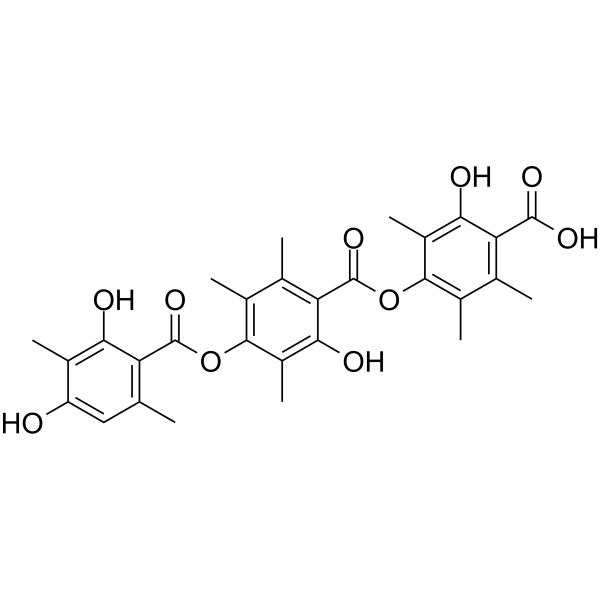
Thielavin A is an inhibitor of prostaglandin biosynthesis produced by Thielavia terricola. Thielavin A specifically inhibits the conversion of arachidonic acid into prostaglandin H2. Thielavin A has no anti-inflammatory activity on intravenous injection or on oral administration.
For research use only. We do not sell to patients.
- Purity : 96.47%
- CAS No.: 71950-66-8
- Formula: C29H30O10
- Molecular Weight:538.54
-
Storage:Powder -20°C, 3 years , 4°C, 2 years ; In solvent -80°C, 6 months , -20°C, 1 month

To place orders, for customer services and technical support, please contact: MedChemExpress USA
Tel: 609-228-6898 E-mail: [email protected] [email protected]


-
 Biological Activity
-
Chemical Information
- Protocols
- Purity & Documentation
- References
-
 Help & FAQs


-

HY-P4146
SurvodutideGCGR/GLP-1R Agonist -
HY-N0229S12
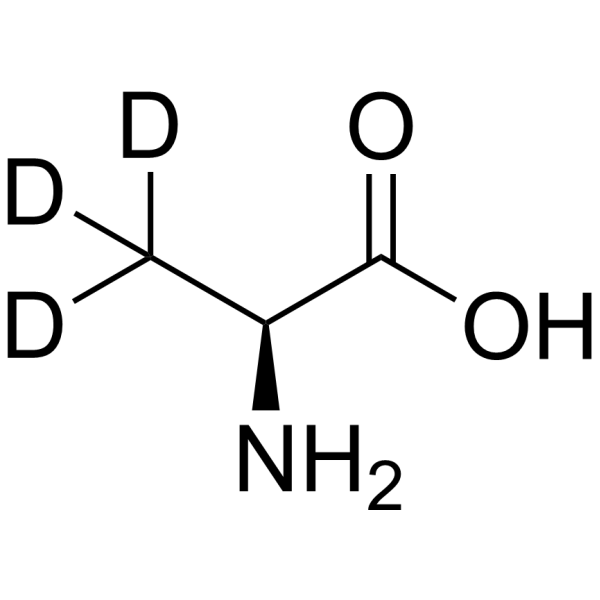
L-Alanine-d3Stable Isotope -
HY-P10018
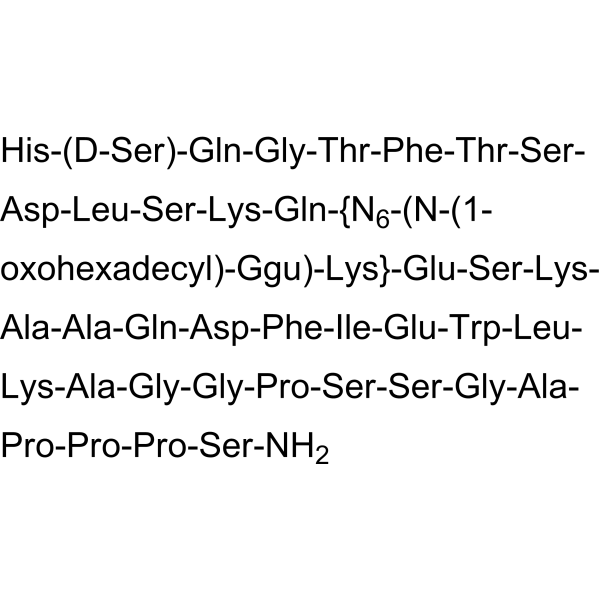
BamadutideGLP-1R/GCGR Agonist -
HY-W013032A
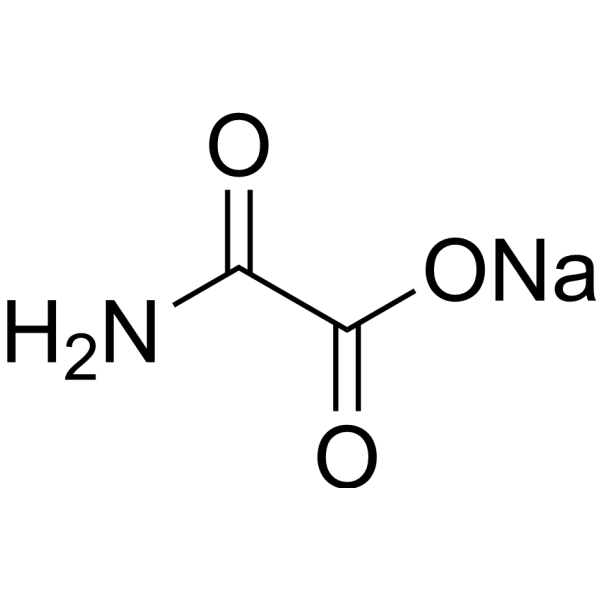
Oxamic acid sodiumLDH-A Inhibitor -

HY-B1804S
Tricaprilin-13C3Stable Isotope -
HY-N7092S
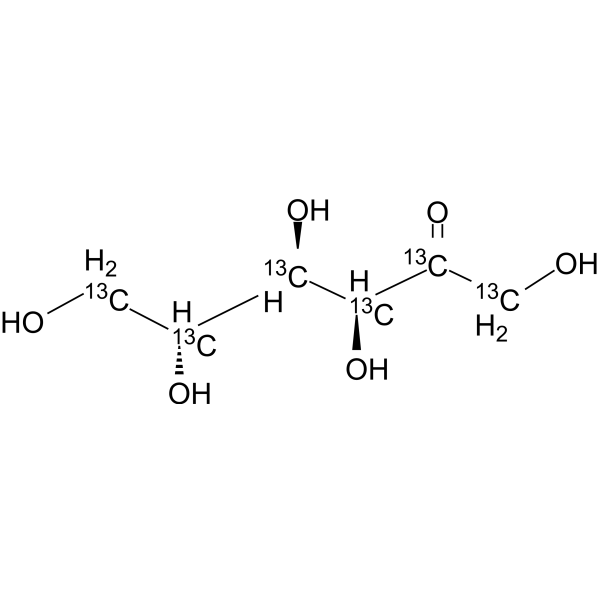
D-Fructose-13C6Stable Isotope -
HY-114365
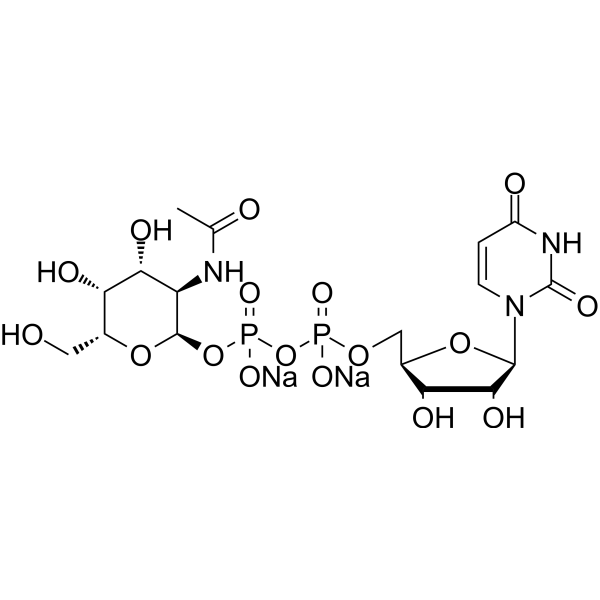
UDP-GalNAc disodiumEpsC115 Substrate -

HY-113585
1,4-Dideoxy-1,4-imino-D-arabinitol hydrochloride -
HY-113378S
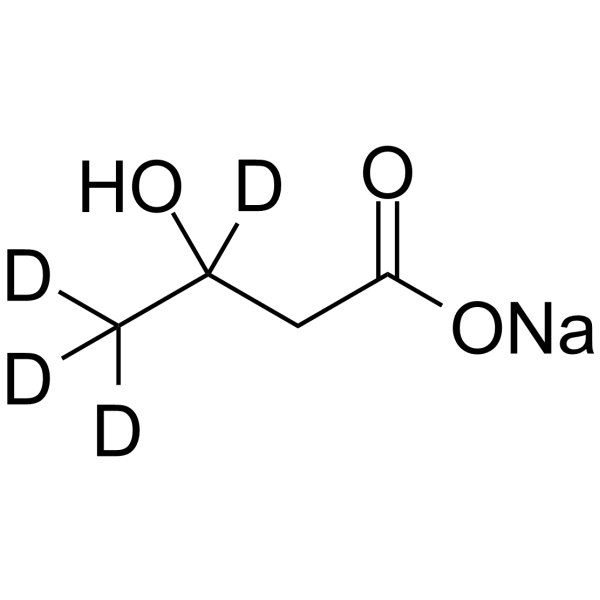
3-Hydroxybutyric acid-d4 sodiumStable Isotope -
HY-18968
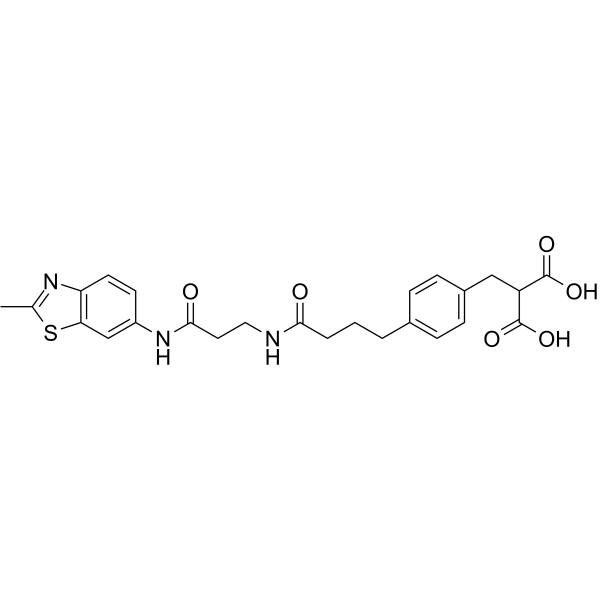
AZ-33LDHA Inhibitor -
HY-118840
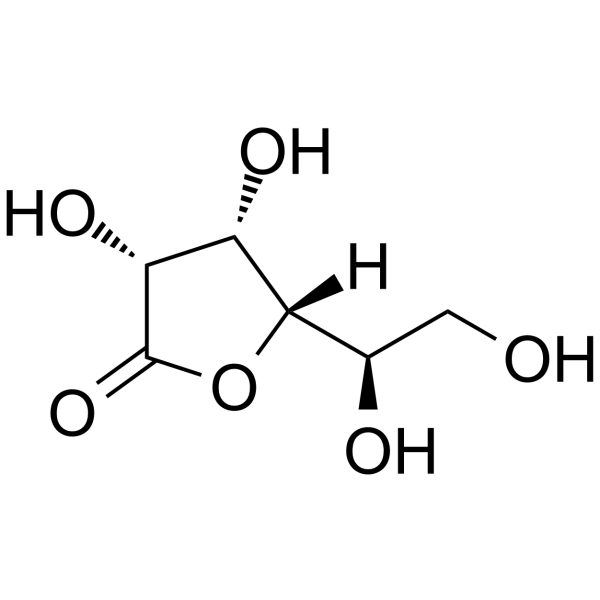
1,4-D-GulonolactoneEndogenous Metabolite -

HY-171036
GAPDH-IN-1GAPDH Inhibitor


Biological Activity
Description


Chemical Information
-
CAS No. 71950-66-8
-
Appearance Solid
-
Molecular Weight 538.54
-
Formula C29H30O10
-
Color White to off-white
-
SMILES
O=C(OC1=C(C)C(C)=C(C(O)=O)C(O)=C1C)C2=C(C)C(C)=C(OC(C3=C(C)C=C(O)C(C)=C3O)=O)C(C)=C2O
-
Structure Classification
-
Initial Source
Thielavia Terricola
-
Shipping
Room temperature in continental US; may vary elsewhere.
-
Storage
Powder -20°C 3 years 4°C 2 years In solvent -80°C 6 months -20°C 1 month

Protocols
-
How to Select the Route of Administration for Mammals
Route-of-administration selection in mammals is a pharmacokinetic, pharmacodynamic, formulation, animal-welfare, and translational decision, not a default technical choice. The selected route should match the study goal: intravenous dosing is most useful when complete systemic exposure and rapid onset are required, oral dosing is most translational for orally intended medicines but is affected by absorption and first-pass metabolism, subcutaneous or intramuscular dosing can provide slower systemic exposure, and intraperitoneal dosing can be useful in rodent proof-of-concept studies but may have limited clinical translation. Published route-comparison studies show that the same compound can produce different exposure, onset, bioavailability, tissue distribution, and tolerability depending on route; therefore, route choice should be supported by pilot pharmacokinetic or pharmacodynamic evidence when the literature is insufficient. Unresolved questions include how to standardize route sel
-
Cotton Pellet Granuloma
Cotton pellet granuloma is a classical in vivo chronic inflammation model used to evaluate the anti-inflammatory potential of test substances by measuring their ability to inhibit granuloma tissue formation around an implanted foreign body (cotton pellet) in rodents. The method is based on the biological response to a sterile implanted material, which induces proliferative phase inflammation characterized by fibroblast proliferation and collagen-rich granuloma formation, and the final readout reflects the extent of chronic inflammatory tissue growth surrounding the pellet. In multiple preclinical pharmacological evaluations, inhibition of cotton pellet-induced granuloma formation has been used as an indicator of anti-inflammatory activity in both synthetic and natural product screening contexts.
-
Carrageenan-Induced Paw Edema
Carrageenan-induced paw edema is an acute inflammation model in which intraplantar injection of carrageenan induces localized inflammatory swelling characterized by vascular permeability, leukocyte infiltration, and production of inflammatory mediators such as prostaglandins and cytokines, making it widely used to evaluate anti-inflammatory agents in vivo. The resulting paw volume or thickness increase is quantified over time as a direct readout of inflammatory intensity and drug efficacy, typically reflecting cyclooxygenase-mediated prostaglandin-driven edema formation and immune cell recruitment in peripheral tissue[20].
-
Research Protocol for Inflammation-related Diseases
The NLRP3 inflammasome is a cytosolic innate immune signaling platform that integrates priming signals and danger-signal activation to promote caspase-1 activation, maturation of IL-1β and IL-18, and gasdermin D-mediated pyroptotic cell death. The core experimental logic is to determine whether inflammatory disease phenotypes are driven by increased NLRP3 expression, ASC-containing inflammasome assembly, caspase-1 cleavage, GSDMD cleavage, and extracellular release of IL-1β/IL-18 rather than by nonspecific cell injury alone. The pathway is strongly linked to inflammation-related disease phenotypes because monosodium urate crystals activate NALP3/NLRP3 inflammasome signaling in gout-like crystal inflammation, cholesterol crystals activate NLRP3 inflammasomes in atherogenesis models, and DSS-induced intestinal inflammation has been reported to involve NLRP3 inflammasome activity. However, experimental colitis studies also show context-dependent protective effects of NLRP3 inflammasome co


Purity & Documentation
-
Data Sheet (266 KB)
-
SDS (251 KB)
- English - EN (251 KB)
- Français - FR (251 KB)
- Deutsch - DE (251 KB)
- Norwegian - NO (251 KB)
- Español - ES (251 KB)
- Swedish - SV (251 KB)
- Italian - IT (251 KB)
- Korean - KR (251 KB)
- Portuguese - PT (251 KB)
-
Handling Instructions (2659 KB)
References

Calculators
Concentration (start) × Volume (start) = Concentration (final) × Volume (final)


Thielavin A Related Classifications
HY-N10225 Related Classifications
 Powered by Bioz