



TUG-424

Based on 1 Customer Validation
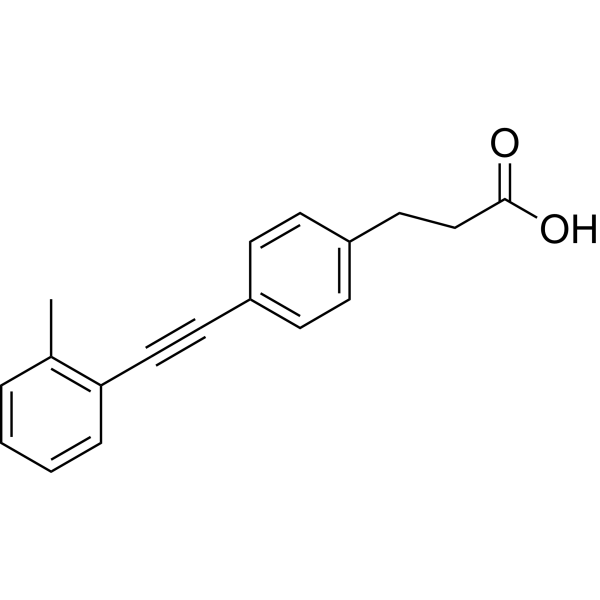
TUG-424 is a potent and selective free fatty acid receptor 1 (FFA1/GPR40) agonist with an EC50 of 32 nM. TUG-424 significantly increases glucose-stimulated insulin secretion at 100 nM. TUG-424 may serve to explore the role of FFA1 in metabolic diseases such as diabetes or obesity. TUG-424 is a click chemistry reagent, it contains an Alkyne group and can undergo copper-catalyzed azide-alkyne cycloaddition (CuAAc) with molecules containing Azide groups.
For research use only. We do not sell to patients.
- Purity : 99.68%
- CAS No.: 1082058-99-8
- Formula: C18H16O2
- Molecular Weight:264.32
-
Storage:Powder -20°C, 3 years ; In solvent -80°C, 6 months , -20°C, 1 month

To place orders, for customer services and technical support, please contact: MedChemExpress USA
Tel: 609-228-6898 E-mail: [email protected] [email protected]


-
 Biological Activity
-
Chemical Information
-
Solvent & Solubility
- Protocols
- Purity & Documentation
- References
-
 Help & FAQs


-
HY-50691
GW-1100Free Fatty Acid Receptor Antagonist -
HY-101906
DC260126GPR40 antagonist -
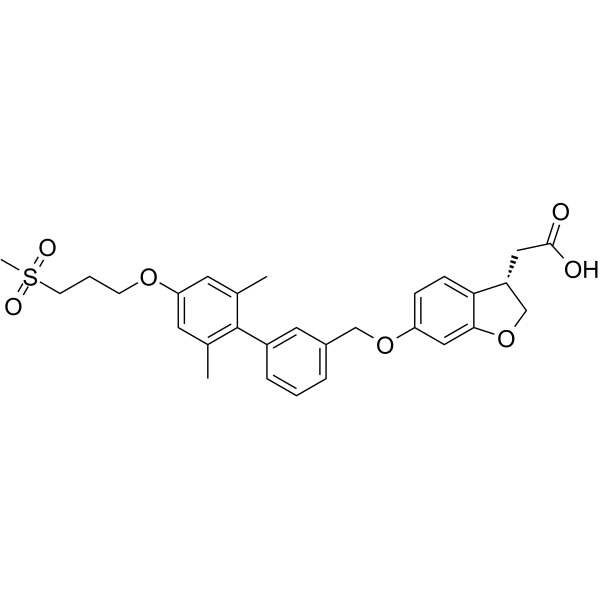
HY-10480
FasiglifamGPR40 Agonist -
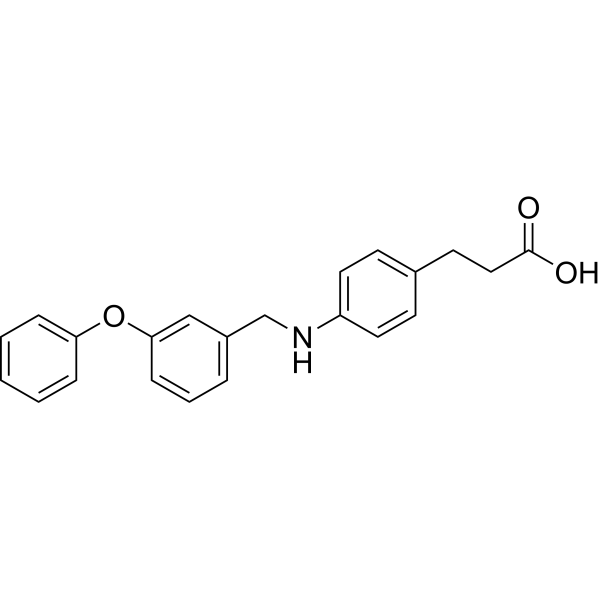
HY-15589
GW9508GPR40 Agonist -
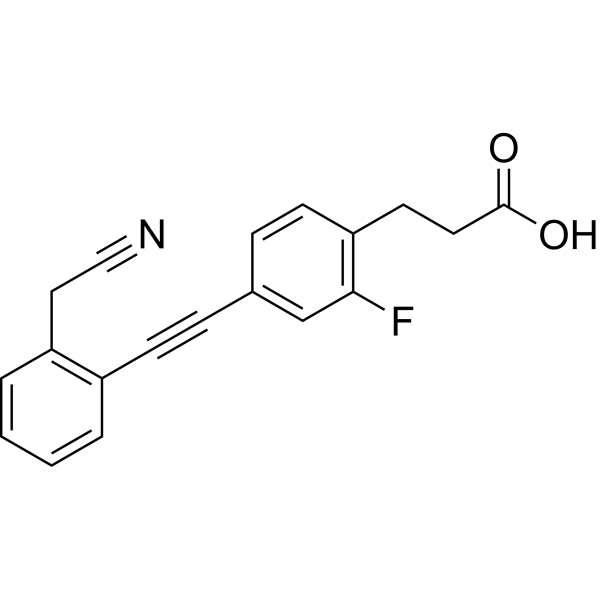
HY-15697
TUG-770GPR40/FFA1 Agonist -
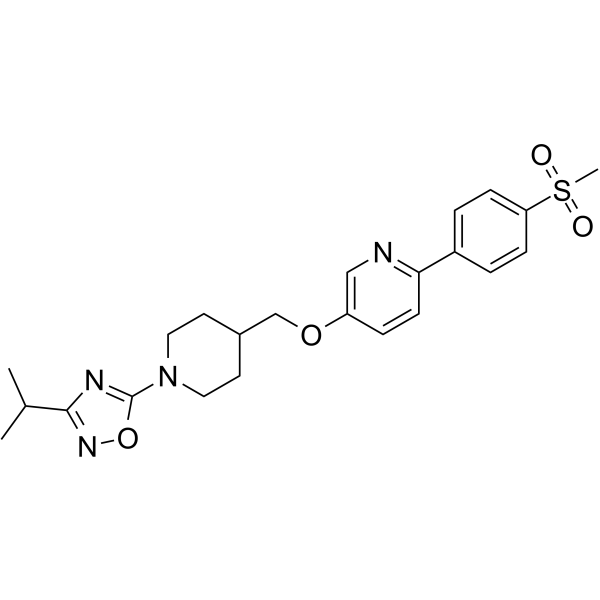
HY-12066
GSK1292263 -
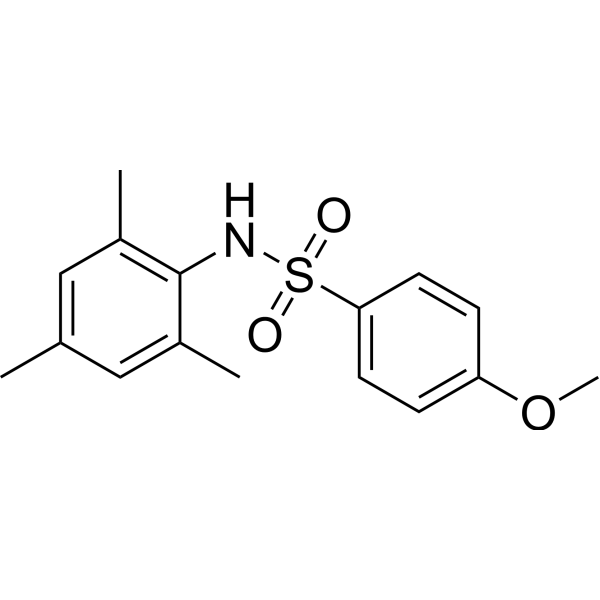
HY-19995
GSK137647AFFA4 Agonist -

HY-15589R
GW9508 (Standard)GPR40 Agonist -

HY-10480R
Fasiglifam (Standard)Reference Standard -
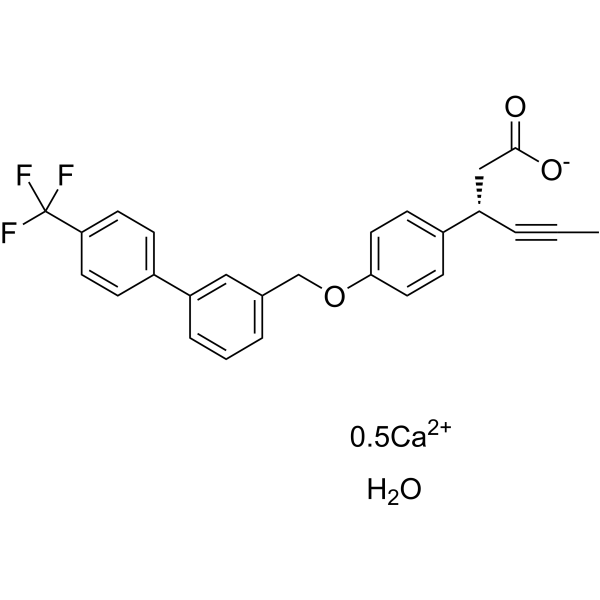
HY-13967B
AMG 837 calcium hydrateGPR40/FFA1 Agonist -
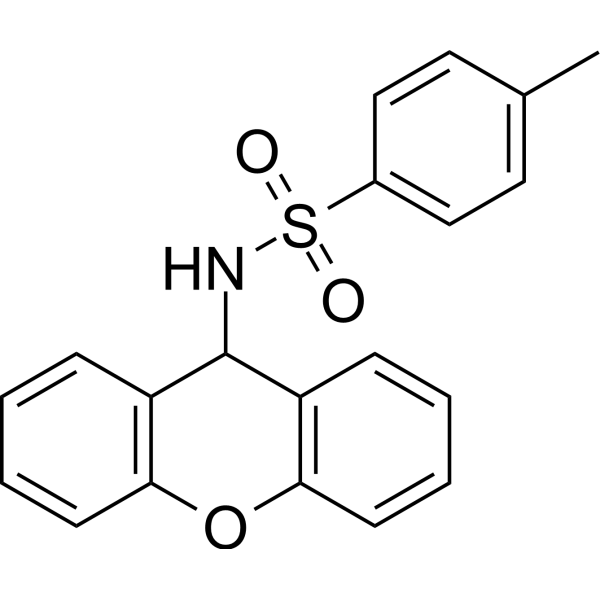
HY-19996
AH-7614FFA4 Antagonist -
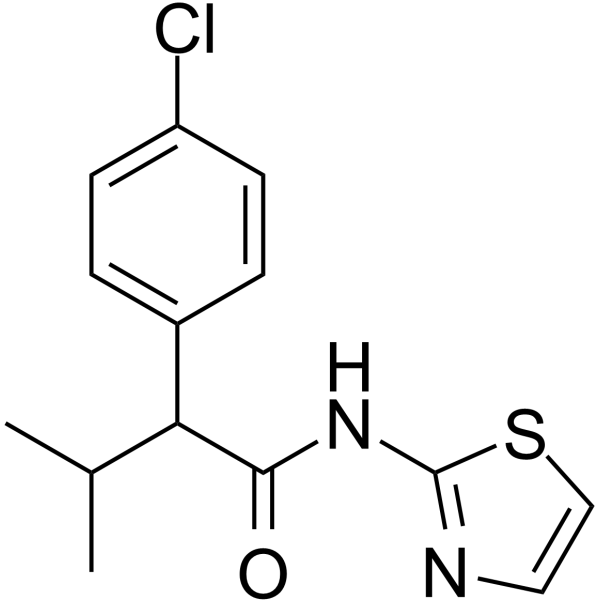
HY-P1125
4-CMTBFFA2 Agonist


Biological Activity
Description
IC50 & Target
EC50: 32 nM (FFA1/GPR40)[1]
In Vitro
Increasing concentrations (100 nM to 10 μM) of TUG-424 enhances glucose-stimulated insulin secretion significantly already at 100 nM and with a maximal effect at 3 μM. The approximately 2-fold stimulation of secretion by TUG-424 in the presence of 12 mM glucose is comparable to that induced by palmitate in the presence of the same glucose concentration. Basal insulin secretion at 2.8 mM glucose is slightly but significantly reduces by TUG-424[1].
MedChemExpress (MCE) has not independently confirmed the accuracy of these methods. They are for reference only. Further protocols information, click here.


Chemical Information
-
CAS No. 1082058-99-8
-
Appearance Solid
-
Molecular Weight 264.32
-
Formula C18H16O2
-
Color White to off-white
-
SMILES
OC(CCC(C=C1)=CC=C1C#CC2=C(C)C=CC=C2)=O
-
Shipping
Room temperature in continental US; may vary elsewhere.
-
Storage
Powder -20°C 3 years In solvent -80°C 6 months -20°C 1 month


Solvent & Solubility
In Vitro:
DMSO : ≥ 10 mg/mL (37.83 mM; Hygroscopic DMSO has a significant impact on the solubility of product, please use newly opened DMSO)
* "≥" means soluble, but saturation unknown.
Please refer to the solubility information to select the appropriate solvent. Once prepared, please aliquot and store the solution to prevent product inactivation from repeated freeze-thaw cycles.
Storage method and period of stock solution: -80°C, 6 months; -20°C, 1 month. When stored at -80°C, please use it within 6 months. When stored at -20°C, please use it within 1 month.
Please refer to the solubility information to select the appropriate solvent. Once prepared, please aliquot and store the solution to prevent product inactivation from repeated freeze-thaw cycles.
Storage method and period of stock solution: -80°C, 6 months; -20°C, 1 month. When stored at -80°C, please use it within 6 months. When stored at -20°C, please use it within 1 month.
Concentration (start) × Volume (start) = Concentration (final) × Volume (final)

Protocols
-
EdU Incorporation Assay (Click Chemistry-Based DNA Synthesis Measurement)
The EdU incorporation assay measures DNA synthesis by adding the thymidine analog 5-ethynyl-2′-deoxyuridine to cells or tissues, where it is incorporated into newly synthesized DNA during S phase. Incorporated EdU is detected by copper-catalyzed azide-alkyne cycloaddition, in which a fluorescent azide covalently reacts with the ethynyl group on EdU, allowing S-phase cells to be detected by fluorescence microscopy, flow cytometry, or high-content imaging. EdU detection does not require DNA denaturation or anti-BrdU antibody access, which preserves sample structure and improves compatibility with immunostaining and multiparameter cytometry compared with BrdU-based detection. EdU can be cytotoxic in a cell-type- and exposure-dependent manner, so pulse duration, concentration, and continuous-labeling designs should be validated for each cell type.
-
Research Protocol for Endocrine Diseases
Endocrine diseases often arise from disrupted hormone production, hormone signaling, or target-tissue responsiveness; for diabetes-focused endocrine disease models, insulin signaling regulates glucose uptake, hepatic glucose output, lipid metabolism, and β-cell compensation. Type 2 diabetes develops through interacting defects in insulin resistance, β-cell dysfunction, adipose inflammation, hepatic glucose overproduction, altered incretin signaling, and ectopic lipid metabolism. A major unresolved question is whether endocrine dysfunction is driven primarily by target-tissue insulin resistance, intrinsic β-cell failure, immune/inflammatory stress, or combined multi-organ failure that differs by disease stage.
-
Human Islet Cell Culture
The method of preserving islets in vitro, with purified reduced immunogenicity. The steps are islet isolation, islet cell purification, in vitro determination of islet function and islet cell culture.
-
Research Protocol for Metabolic Diseases
AMP-activated protein kinase, AMPK, is a conserved cellular energy sensor that responds to reduced cellular energy status and coordinates metabolism by increasing ATP-generating catabolic pathways while suppressing ATP-consuming anabolic processes. In metabolic disease research, the AMPK pathway is experimentally relevant because it regulates hepatic lipid synthesis, fatty acid oxidation, glucose production, skeletal-muscle glucose disposal, mTORC1-linked biosynthesis, autophagy, mitochondrial homeostasis, and whole-body energy balance. The central pathway logic is that energy stress, metformin, exercise-like stimulation, or direct AMPK activators increase AMPKα Thr172 phosphorylation and downstream substrate phosphorylation, including ACC and RAPTOR. Phosphorylation of ACC suppresses lipogenesis and supports fatty acid oxidation, whereas phosphorylation of RAPTOR suppresses mTORC1 signaling and links cellular energy status to growth and protein synthesis control. The pathway is linked


Purity & Documentation
-
Data Sheet (270 KB)
-
SDS (596 KB)
- English - EN (596 KB)
- Français - FR (596 KB)
- Deutsch - DE (596 KB)
- Norwegian - NO (596 KB)
- Español - ES (596 KB)
- Swedish - SV (596 KB)
- Italian - IT (596 KB)
- Korean - KR (596 KB)
- Portuguese - PT (596 KB)
-
Handling Instructions (2659 KB)
References


Complete Stock Solution Preparation Table
Please refer to the solubility information to select the appropriate solvent. Once prepared, please aliquot and store the solution to prevent product inactivation from repeated freeze-thaw cycles.
Storage method and period of stock solution: -80°C, 6 months; -20°C, 1 month. When stored at -80°C, please use it within 6 months. When stored at -20°C, please use it within 1 month.
| Optional Solvent | Concentration Solvent Mass | 1 mg | 5 mg | 10 mg | 25 mg |
|---|---|---|---|---|---|
| DMSO | 1 mM | 3.7833 mL | 18.9165 mL | 37.8329 mL | 94.5823 mL |
| 5 mM | 0.7567 mL | 3.7833 mL | 7.5666 mL | 18.9165 mL | |
| 10 mM | 0.3783 mL | 1.8916 mL | 3.7833 mL | 9.4582 mL | |
| 15 mM | 0.2522 mL | 1.2611 mL | 2.5222 mL | 6.3055 mL | |
| 20 mM | 0.1892 mL | 0.9458 mL | 1.8916 mL | 4.7291 mL | |
| 25 mM | 0.1513 mL | 0.7567 mL | 1.5133 mL | 3.7833 mL | |
| 30 mM | 0.1261 mL | 0.6305 mL | 1.2611 mL | 3.1527 mL |


TUG-424 Related Classifications
HY-14363 Related Classifications
 Powered by Bioz