



Elastatinal (Standard)
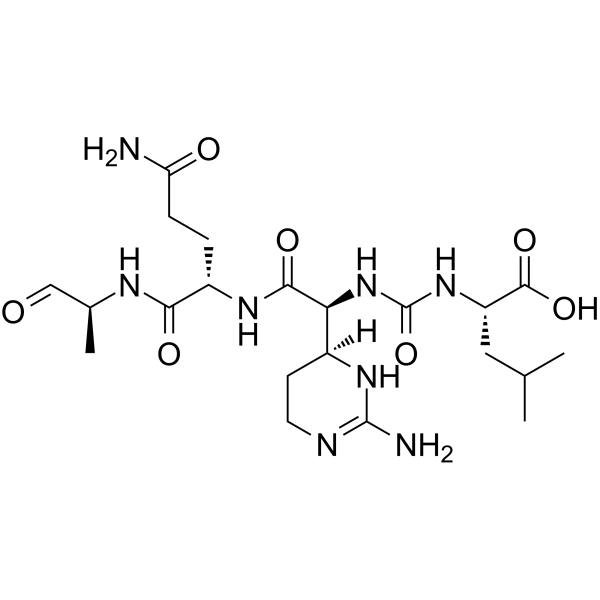
Elastatinal (Standard) is the analytical standard of Elastatinal (HY-100397). This product is intended for research and analytical applications. Elastatinal is a potent and competitive inhibitor of elastase, with a Ki of 0.21 μM. Elastatinal more potently inhibits pancreatic elastase versus leucocyte elastase. Elastatinal shows no activity on human leucocyte chymotrypsin-like protease.
For research use only. We do not sell to patients.
- CAS No.: 51798-45-9
- Formula: C21H36N8O7
- Molecular Weight:512.56
-
Storage:
Please store the product under the recommended conditions in the Certificate of Analysis.


To place orders, for customer services and technical support, please contact: MedChemExpress USA
Tel: 609-228-6898 E-mail: [email protected] [email protected]


-
 Product Information
-
Chemical Information
- Purity & Documentation
-
 Help & FAQs


-
HY-100397
ElastatinalElastase Inhibitor -
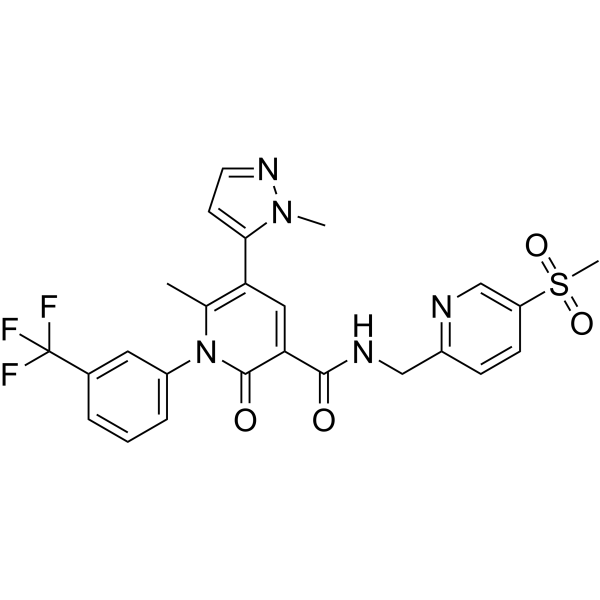
HY-15651
AlvelestatNeutrophil Elastase Inhibitor -
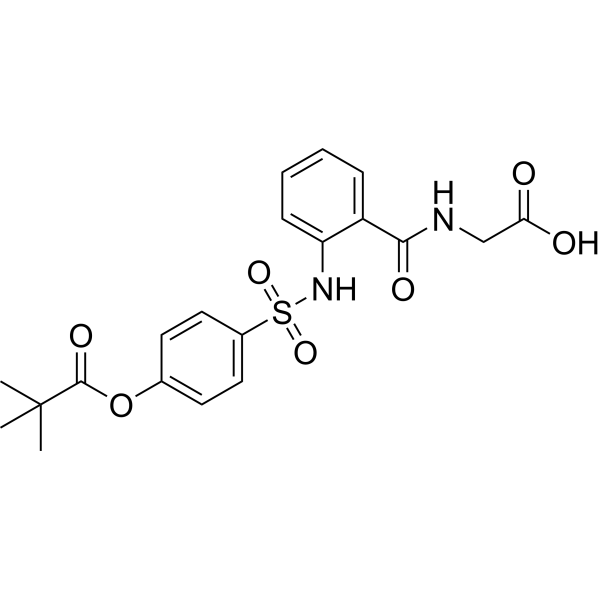
HY-17443
SivelestatElastase Inhibitor -
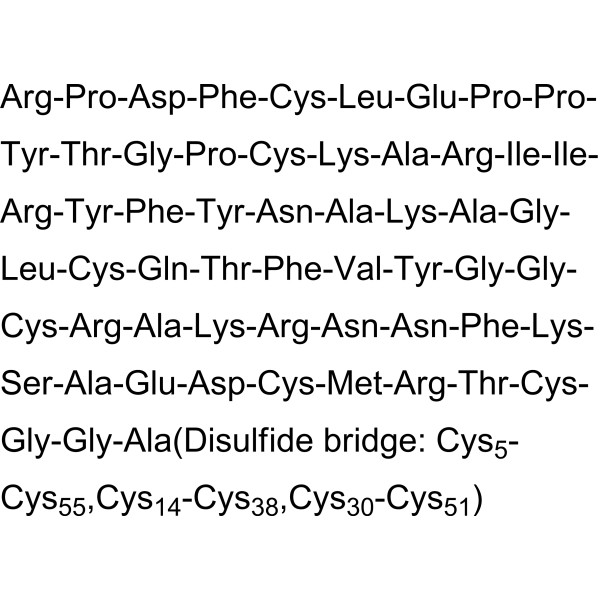
HY-P0017
AprotininBPTI Inhibitor -
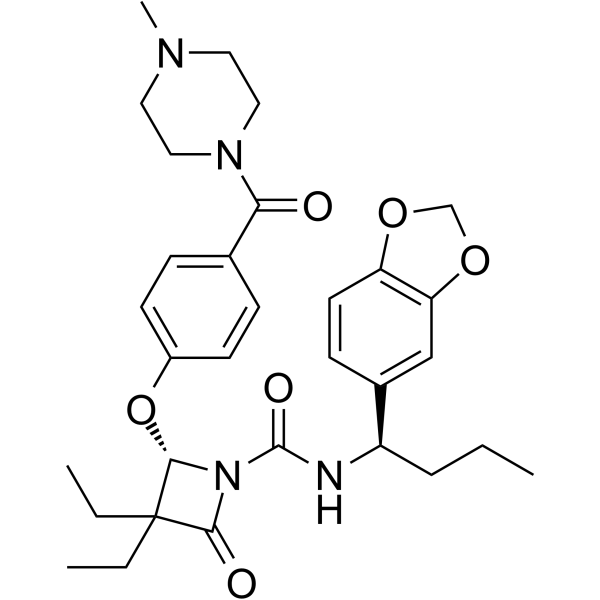
HY-75957
DMP 777Elastase Inhibitor -
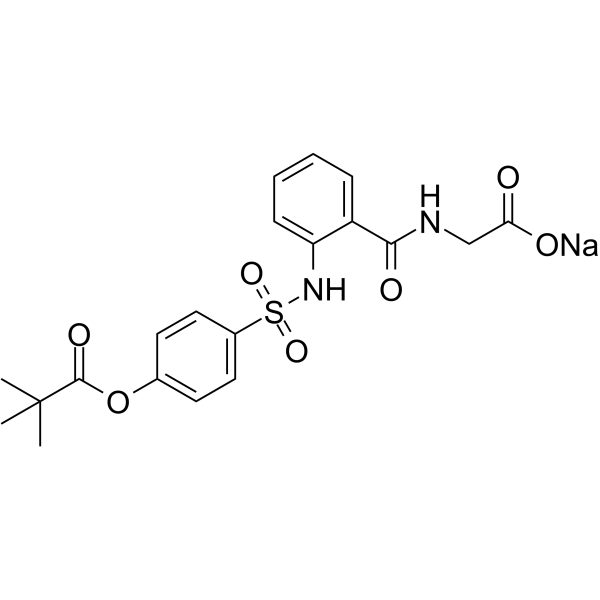
HY-17443A
Sivelestat sodium -
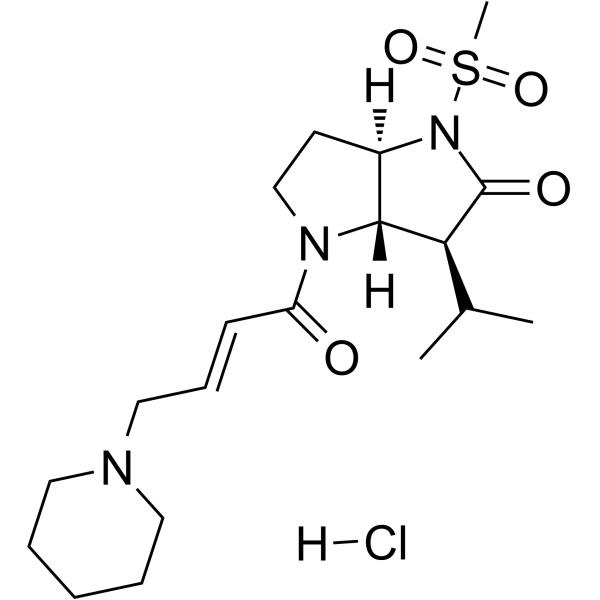
HY-15891A
GW311616 hydrochlorideHNE Inhibitor -
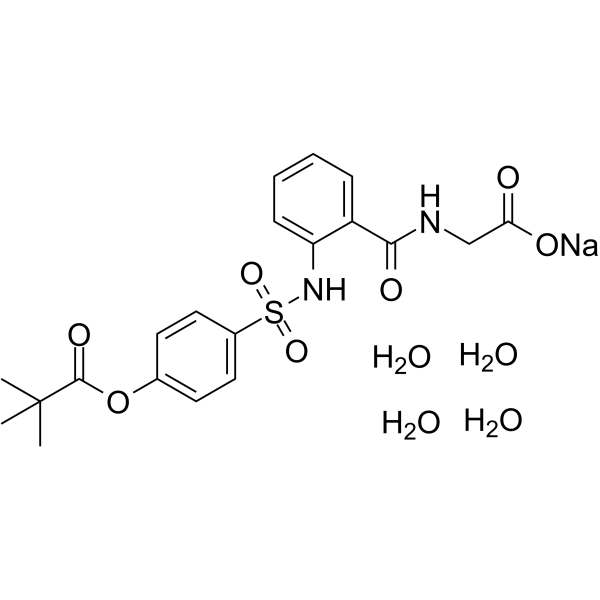
HY-17443B
Sivelestat sodium tetrahydrateNeutrophil Elastase Inhibitor -
HY-E70203
Recombinant aprotininSerine Protease Inhibitor -
HY-15891
GW311616HNE Inhibitor -

HY-15651R
Alvelestat (Standard)Reference Standard -
HY-15652
FreselestatNeutrophil Elastase Inhibitor


Product Information
Information
Application
The compound is the grade of analytical standard, which is the reference standard supplied assay. It is commonly used in qualitative, quantitative and methodological research experiments in HPLC, GC and MS.


Chemical Information
-
CAS No. 51798-45-9
-
Molecular Weight 512.56
-
Formula C21H36N8O7
-
SMILES
O=C[C@H](C)NC([C@H](CCC(N)=O)NC([C@H]([C@@]1([H])NC(N)=NCC1)NC(N[C@H](C(O)=O)CC(C)C)=O)=O)=O
-
Structure Classification
-
Initial Source
MD469-CG8
-
Shipping
Room temperature in continental US; may vary elsewhere.
-
Storage
Please store the product under the recommended conditions in the Certificate of Analysis.


Purity & Documentation
References
[1]. Umezawa H. Structures and activities of protease inhibitors of microbial origin. Methods Enzymol. 1976;45:678-95. [Content Brief]
[2]. Feinstein G, et, al. The inhibition of human leucocyte elastase and chymotrypsin-like protease by elastatinal and chymostatin. Biochim Biophys Acta. 1976 May 13;429(3):925-32. [Content Brief]
[3]. Sugisaki R, et, al. Possible involvement of elastase in enhanced osteoclast differentiation by neutrophils through degradation of osteoprotegerin. Bone. 2020 Mar;132:115216. [Content Brief]
[4]. Vidhya R, et, al. Anti-inflammatory effects of troxerutin are mediated through elastase inhibition. Immunopharmacol Immunotoxicol. 2020 Oct;42(5):423-435. [Content Brief]

Calculators
Concentration (start) × Volume (start) = Concentration (final) × Volume (final)


Elastatinal (Standard) Related Classifications
HY-100397R Related Classifications
 Powered by Bioz