



Umbralisib (Standard)
Umbralisib (Standard) is the analytical standard of Umbralisib. This product is intended for research and analytical applications. Umbralisib (TGR-1202) is an orally active, potent and selective dual PI3Kδ and casein kinase-1-ε (CK1ε) inhibitor, with EC50 of 22.2 nM and 6.0 μM, respectively. Umbralisib exhibits unique immunomodulatory effects on chronic lymphocytic leukemia (CLL) T cells. Umbralisib can be used for haematological malignancies reseach.
Nur für Forschungszwecke. Wir verkaufen nicht an Patienten.
- Reinheit : 98%
- CAS. Nr.: 1532533-67-7
- Formel: C31H24F3N5O3
- Molecular Weight:571.55
-
Speicherung:
Please store the product under the recommended conditions in the Certificate of Analysis.


To place orders, for customer services and technical support, please contact: MedChemExpress USA
Tel: 609-228-6898 E-mail: [email protected] [email protected]


-
 Product Information
-
Chemical Information
- Reinheit & Dokumentation
-
 Help & FAQs


-
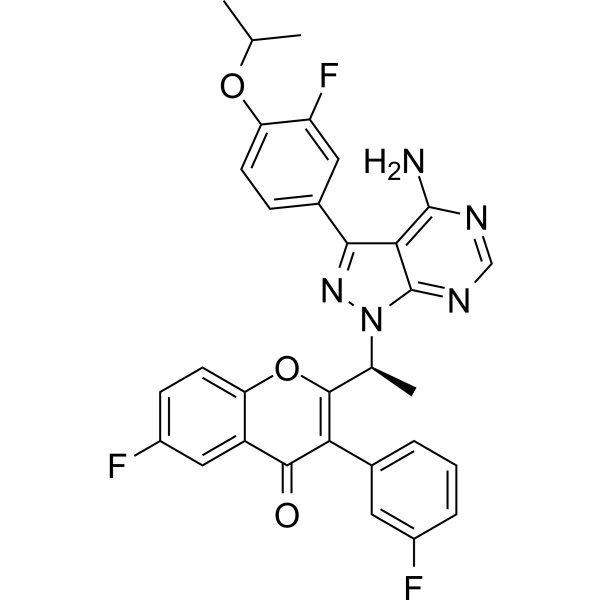
HY-12279
UmbralisibPI3Kδ/CK1ε Inhibitor -
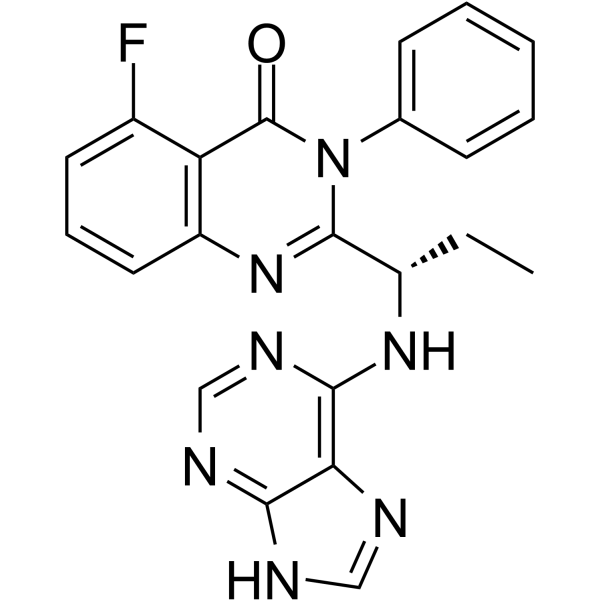
HY-13026
IdelalisibPI3Kδ Inhibitor -
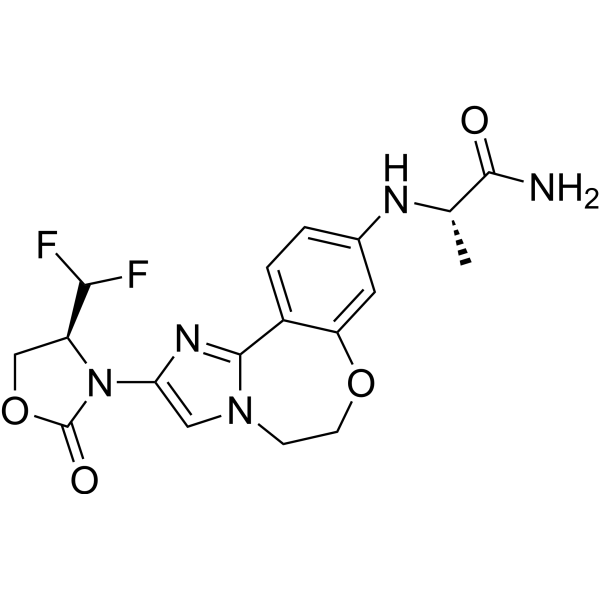
HY-101562
InavolisibPI3Kα Inhibitor -
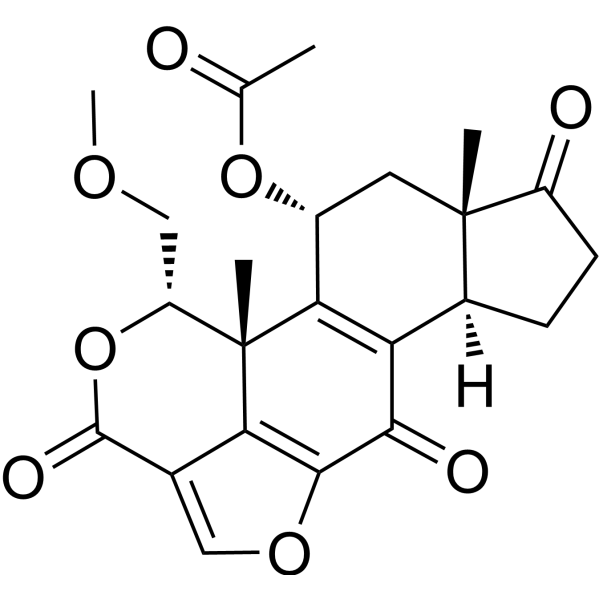
HY-10197
WortmanninPI3K Inhibitor -
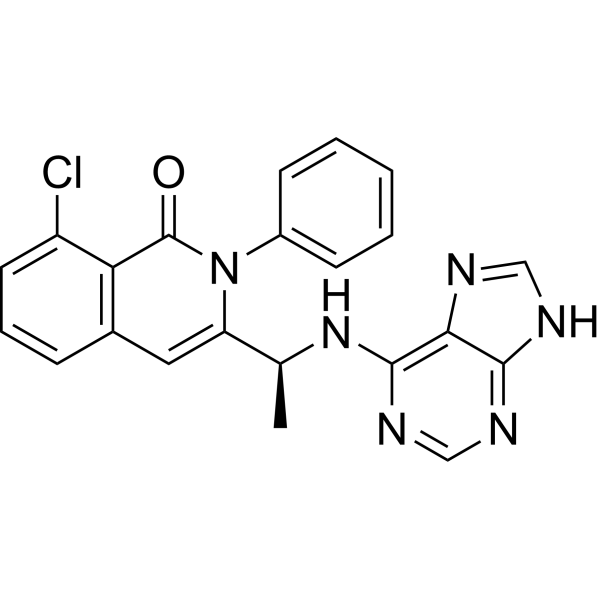
HY-17044
DuvelisibPI3Kδ Inhibitor -
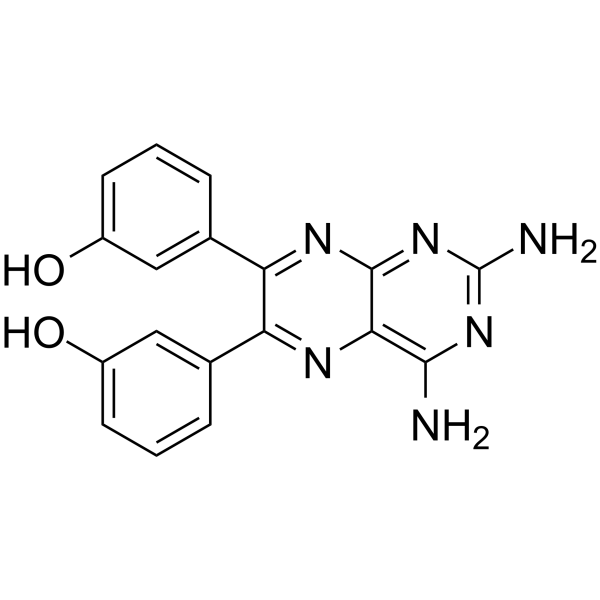
HY-10111
TG100-115PI3Kγ/PI3Kδ Inhibitor -
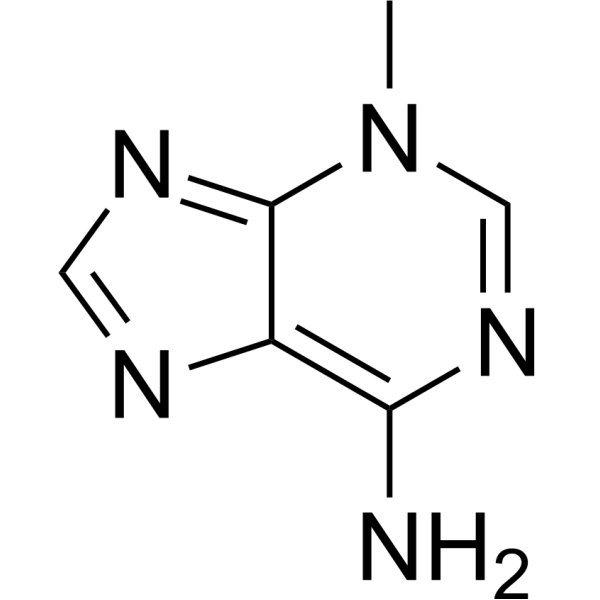
HY-19312
3-MethyladenineAutophagy/PI3K Inhibitor -
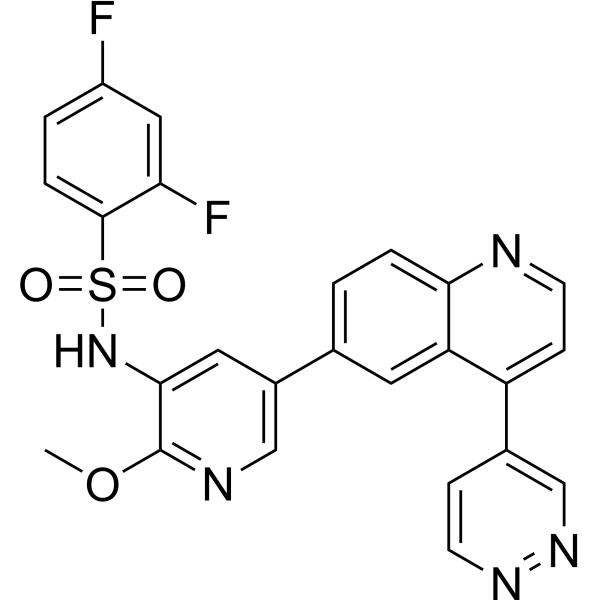
HY-10297
OmipalisibPI3K/mTOR Inhibitor -
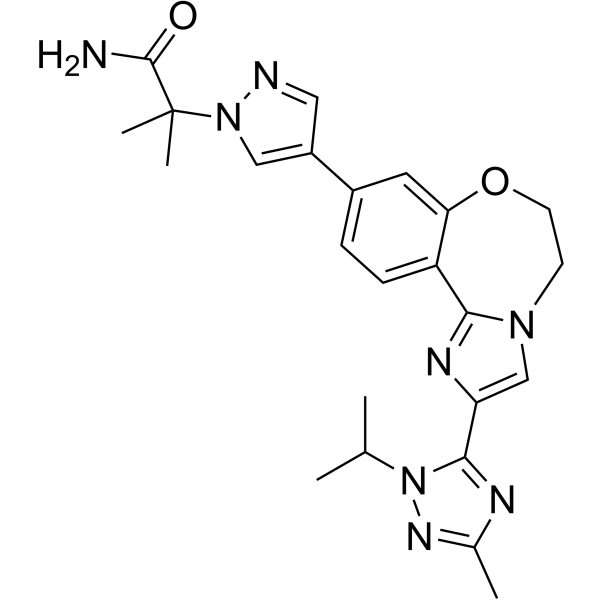
HY-13898
TaselisibPIK3CA Inhibitor -
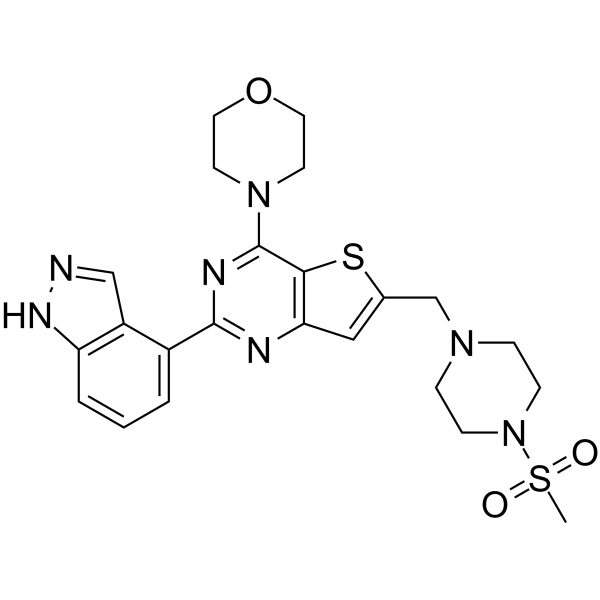
HY-50094
PictilisibPI3Kα/δ Inhibitor -
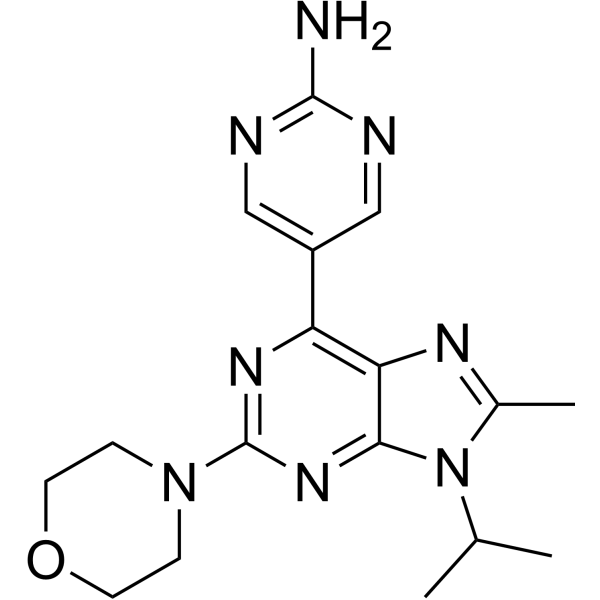
HY-16585
VS-5584PI3K/mTOR Inhibitor -
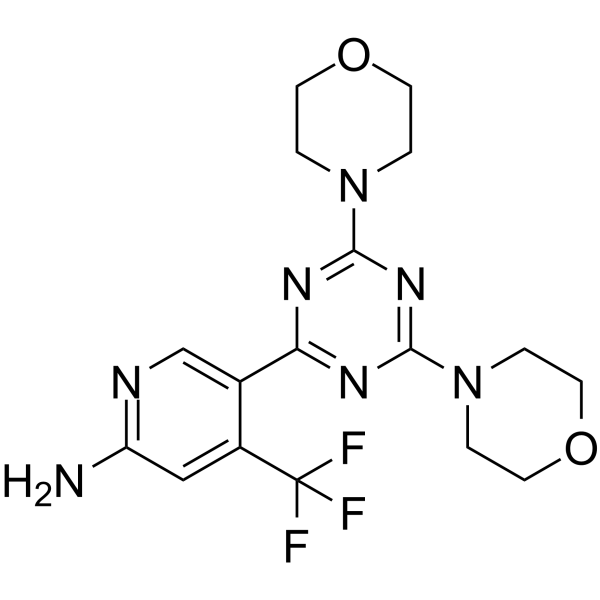
HY-12868
BimiralisibPI3K/mTOR Inhibitor


Product Information
Information
Anwendung
The compound is the grade of analytical standard, which is the reference standard supplied assay. It is commonly used in qualitative, quantitative and methodological research experiments in HPLC, GC and MS.


Chemical Information
-
CAS. Nr. 1532533-67-7
-
Molecular Weight 571.55
-
Formel C31H24F3N5O3
-
SMILES
O=C1C(C2=CC=CC(F)=C2)=C([C@@H](N3N=C(C4=CC=C(OC(C)C)C(F)=C4)C5=C(N)N=CN=C53)C)OC6=CC=C(F)C=C16
-
Synonyms
TGR-1202 (Standard); RP5264 (Standard)
-
Versand
Room temperature in continental US; may vary elsewhere.
-
Speicherung
Please store the product under the recommended conditions in the Certificate of Analysis.


Reinheit & Dokumentation
Verweise
[1]. Maharaj K, et al. The dual PI3Kδ/CK1ε inhibitor umbralisib exhibits unique immunomodulatory effects on CLL T cells. Blood Adv. 2020 Jul 14;4(13):3072-3084. [Content Brief]
[2]. Burris HA 3rd, et al. Umbralisib, a novel PI3Kδ and casein kinase-1ε inhibitor, in relapsed or refractory chronic lymphocytic leukaemia and lymphoma: an open-label, phase 1, dose-escalation, first-in-human study. Lancet Oncol. 2018 Apr;19(4):486-496. [Content Brief]
[4]. Deng C, et al. Silencing c-Myc translation as a therapeutic strategy through targeting PI3Kδ and CK1ε in hematological malignancies. Blood. 2017 Jan 5;129(1):88-99 [Content Brief]

Calculators
Konzentration (Stammlösung) × Volumen (Stammlösung) = Konzentration (Ziellösung) × Volumen (Ziellösung)


Umbralisib (Standard) Related Classifications
HY-12279R Related Classifications
 Powered by Bioz