



Xanthine oxidase, Microorganism
Based on 6 publication(s) in Google Scholar
Xanthine oxidase, Microorganism (XO) is a xanthine oxidoreductase enzyme that generates reactive oxygen species (ROS), catalyzes the oxidation of hypoxanthine to xanthine, and further catalyzes the oxidation of xanthine to uric acid.
For research use only. We do not sell to patients.
- CAS No.: 9002-17-9
-
Storage:
Please store the product under the recommended conditions in the Certificate of Analysis.

To place orders, for customer services and technical support, please contact: MedChemExpress USA
Tel: 609-228-6898 E-mail: [email protected] [email protected]


-
 Biological Activity
-
Chemical Information
-
Solvent & Solubility
- Protocols
- Purity & Documentation
- References
-
 Help & FAQs


-
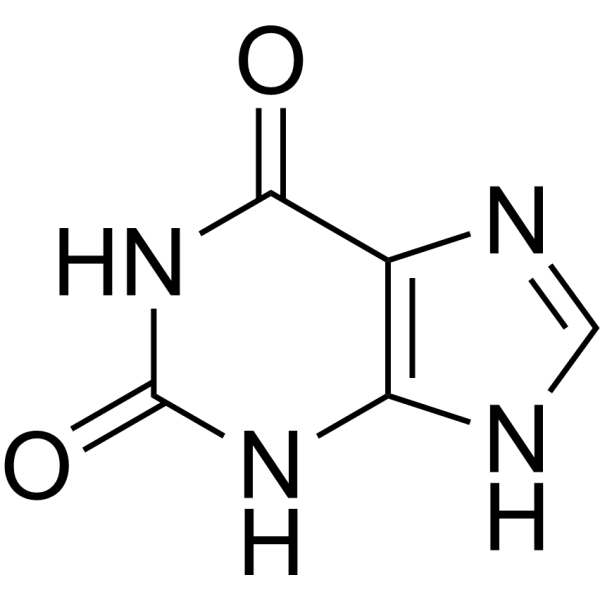
HY-W017389
Xanthine -
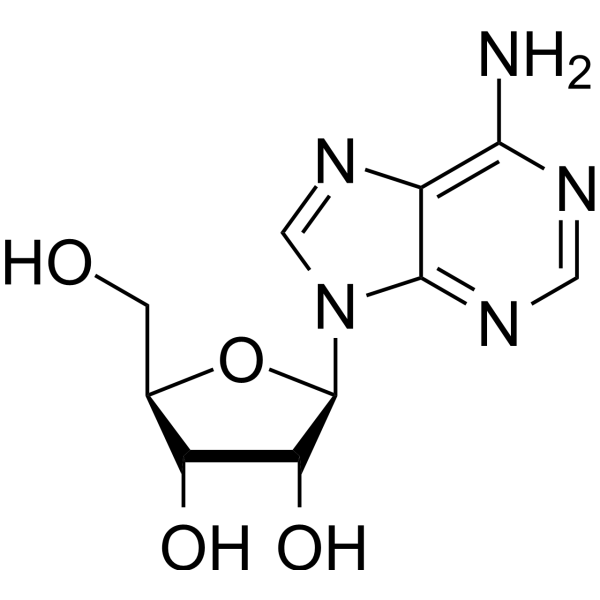
HY-B0228
AdenosineEndogenous Autacoid -

HY-P2755A
Xanthine oxidase, bovine milkROS Inducer -

HY-135849
Catalase, Aspergillus nigerAntioxidant Enzyme -
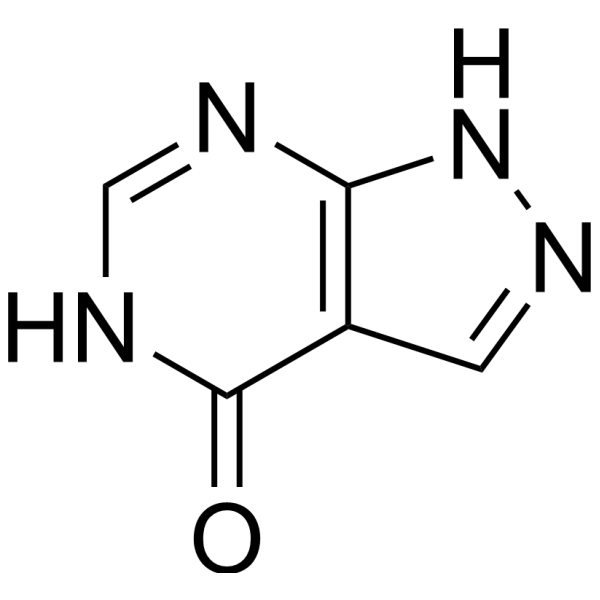
HY-B0219
AllopurinolXanthine Oxidase Inhibitor -
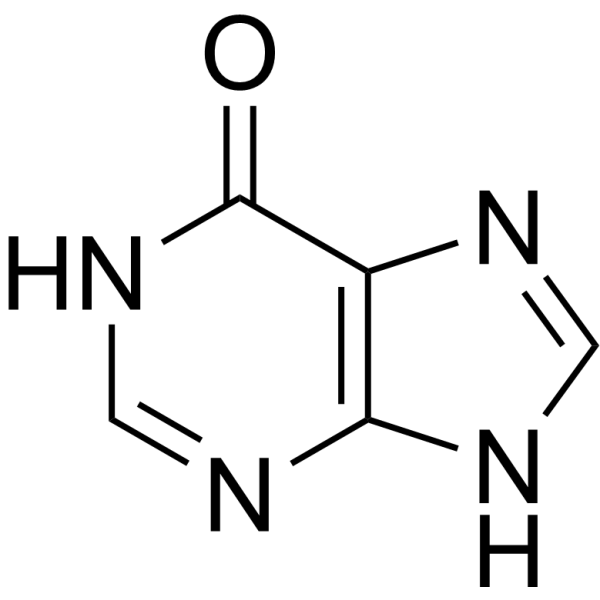
HY-N0091
HypoxanthineEndogenous Metabolite -

HY-125859
Peroxidase, HorseradishPeroxidase -
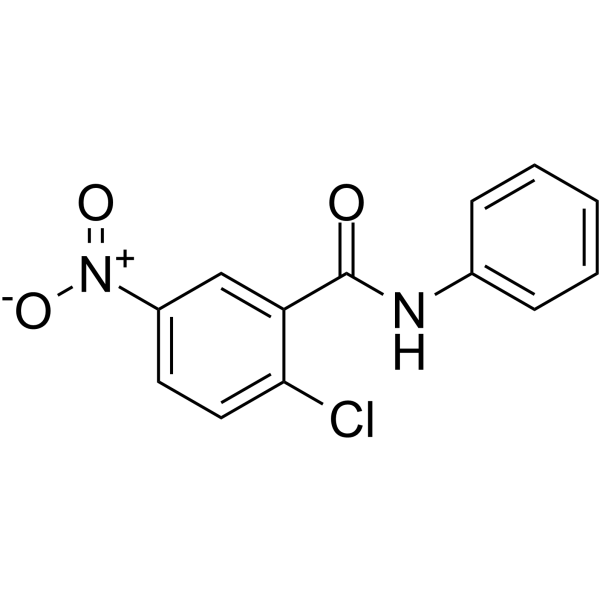
HY-16578
GW9662PPARγ Antagonist -

HY-P0035
Insulin (human)Recombinant Human Insulin -
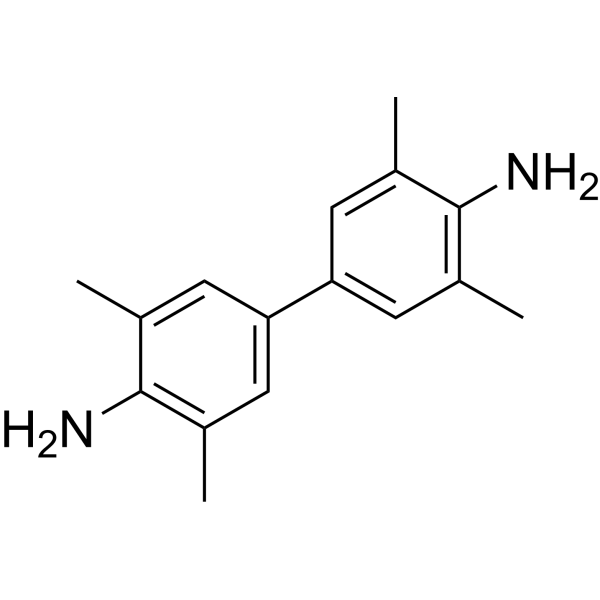
HY-15930
TMBChromogenic Agent -

HY-P2902
Glucose oxidaseOxidoreductase Enzyme -
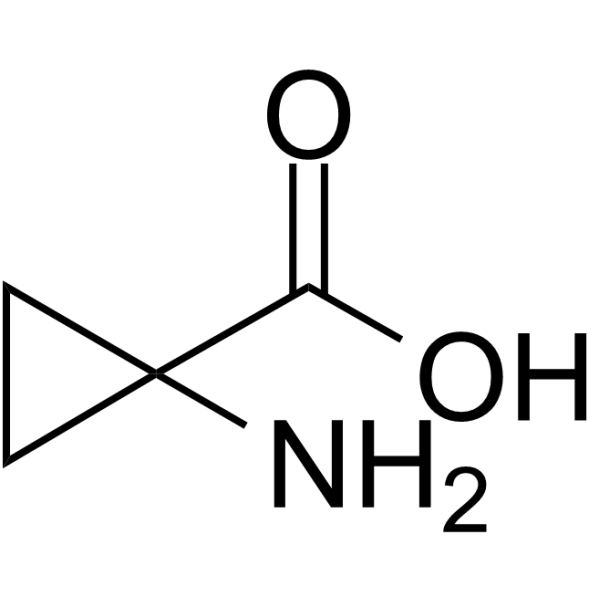
HY-30004
1-Aminocyclopropane-1-carboxylic acidEndogenous Metabolite
Publications Citing Use of MedChemExpress (MCE) Xanthine oxidase, Microorganism
More

Biological Activity
Description
In Vitro
Xanthine oxidase rapidly and completely depletes hypoxanthine in human erythrocytes[2].
Xanthine oxidase (20 mU/mL, 72 h) inhibits growth of Plasmodium falciparum in human erythrocytes[2].
Xanthine oxidase (0.02 U/mL, 6 h) reduces the viability of postnatal cerebellar granule neurons obtained from 8-day old Sprague-Dawley rat pups[3].
Product Information
Optimal pH: 7.5-8.0
Theoretical molecular weight: 283 kDa (mostly exists in dimer form)
Instructions
Soluble in water (10 mg/mL), Or dissolve in buffer according to specific experimental references (such as 50 mM potassium phosphate).
MedChemExpress (MCE) has not independently confirmed the accuracy of these methods. They are for reference only. Further protocols information, click here.
Clinical Trial
| NCT Number | Sponsor | Condition | Start Date |
Phase

|
|---|---|---|---|---|
| NCT01329991 | Plexxikon| | 2011-05 | PHASE1 |
EC Number
1.17.3.2
Enzyme Activity
≥10 U/mg soild
Specific Activity
≥50 U/mg protein
Unit Definition
One unit is defined as the amount of enzyme that convert 1 μmol of xanthine to uric acid per minute at 37°C and pH 7.5


Chemical Information
-
CAS No. 9002-17-9
-
Appearance Solid
-
Color Off-white to yellow
-
SMILES
[Xanthine oxidase, Microorganism]
-
Synonyms
XO; XOD
-
Shipping
Room temperature in continental US; may vary elsewhere.
-
Storage
Please store the product under the recommended conditions in the Certificate of Analysis.


Publications (6)
-
Journal Impact Factor
-
Most Recent
-
Adv Mater
Nanozyme-Reinforced Hydrogel Spray as a Reactive Oxygen Species-Driven Oxygenator to Accelerate Diabetic Wound Healing. [Abstract]2025 Aug;37(34):e2504829. PMID: 40492891 -
Asian J Pharm Sci
A programmable nanoreactor for photothermal immunotherapy via NIR-II triggered enzyme-catalyzed immunogenic tumor microenvironment remodeling. [Abstract]2026 Apr;21(2):101150. PMID: 42023164 -
Chin Med
A novel Chinese medicine formula against hyperuricemia-induced kidney inflammation involving pyroptosis inhibition via modulating AMPK-TLR4-NLRP3 pathway. [Abstract]2026 Mar 1;21(1):74. PMID: 41764514 -
Colloids Surf B Biointerfaces
In-situ growth of CeO2 on biofilms: Innovative nanoparticles for photothermal therapy & multi-pronged attack on Alzheimer's disease. [Abstract]2024 Jun:238:113887. PMID: 38581835 -
-


Solvent & Solubility
In Vitro:
H2O : ≥ 10 mg/mL
* "≥" means soluble, but saturation unknown.

Protocols
-
ROS/oxidative-stress fluorescent staining
ROS/oxidative-stress fluorescent staining uses cell-permeant fluorogenic probes that become fluorescent after oxidation inside cells or tissues; commonly used examples include DCFH-DA/DCFDA for broad cellular oxidant detection, DHE for superoxide-related signal detection, MitoSOX for mitochondrial superoxide-related signal detection, and CellROX probes for oxidative-stress-associated fluorescence readouts. The assay detects probe oxidation rather than a single ROS species unless the probe and analysis method have been chemically validated for that species. DCFH-DA enters cells, is deacetylated by intracellular esterases to DCFH, and produces fluorescent DCF after oxidation, so the readout is used as an operational measure of total cellular oxidative stress rather than a species-specific ROS measurement. DHE and MitoSOX can report superoxide-related oxidation, but red fluorescence alone can include non-specific ethidium-like oxidation products; HPLC or optimized spectral approaches are


Purity & Documentation
-
Data Sheet (269 KB)
-
SDS (419 KB)
- English - EN (419 KB)
- Français - FR (419 KB)
- Deutsch - DE (419 KB)
- Norwegian - NO (419 KB)
- Español - ES (419 KB)
- Swedish - SV (419 KB)
- Italian - IT (419 KB)
- Korean - KR (419 KB)
- Portuguese - PT (419 KB)
-
Handling Instructions (2659 KB)
References
[2]. Berman PA, et al. Xanthine oxidase inhibits growth of Plasmodium falciparum in human erythrocytes in vitro. J Clin Invest. 1991 Dec;88(6):1848-55. [Content Brief]
[3]. Fatokun AA, et al. Hydrogen peroxide mediates damage by xanthine and xanthine oxidase in cerebellar granule neuronal cultures. Neurosci Lett. 2007 Apr 6;416(1):34-8. [Content Brief]

Calculators
Concentration (start) × Volume (start) = Concentration (final) × Volume (final)


Xanthine oxidase, Microorganism Related Classifications
HY-P2755 Related Classifications
 Powered by Bioz