



14,15-Leukotriene C4

Based on 1 Customer Validation
14,15-Leukotriene C4 (Eoxin C4) is a Leukotriene compound produced by the enzymatic reaction of arachidonic acid. 14,15-Leukotriene C4 has the activity of promoting inflammatory response. 14,15-Leukotriene C4 can increase the permeability of blood vessels, causing fluid and white blood cells to leak out of the blood vessels, which increases the number of inflammatory cells in the tissue. 14,15-Leukotriene C4 can be used in studies of asthma and other inflammatory diseases.
For research use only. We do not sell to patients.
- Purity : 98.9%
- CAS No.: 75290-60-7
- Formula: C30H47N3O9S
- Molecular Weight:625.77
-
Storage:
Solution, -20°C, 2 years


To place orders, for customer services and technical support, please contact: MedChemExpress USA
Tel: 609-228-6898 E-mail: [email protected] [email protected]


-
 Biological Activity
-
Chemical Information
- Protocols
- Purity & Documentation
- References
-
 Help & FAQs


-
HY-B0802A
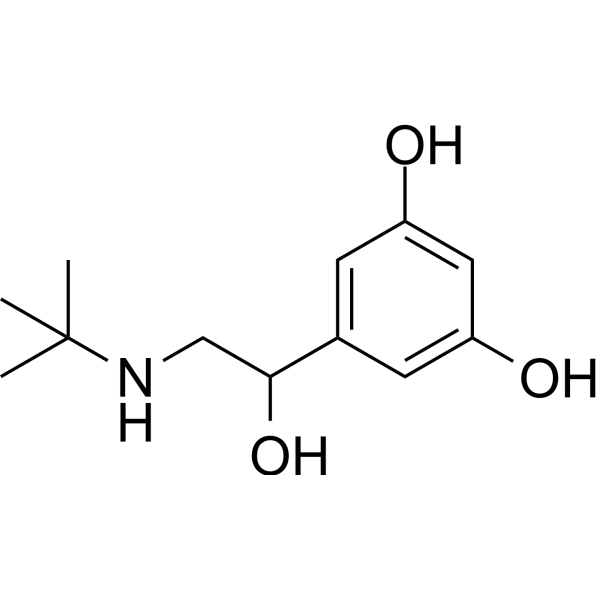
Terbutalineβ2-Drenergic Receptor Agonist -

HY-115356
Eoxin E4Metabolite of 14,15-LTC4 and 14,15-LTD4 -
HY-120954
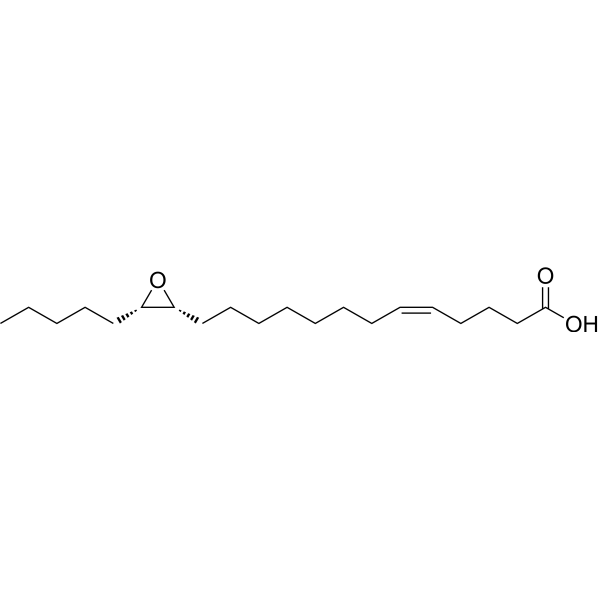
14,15-EE-5(Z)-E14,15-EET structural analogue -
HY-113483
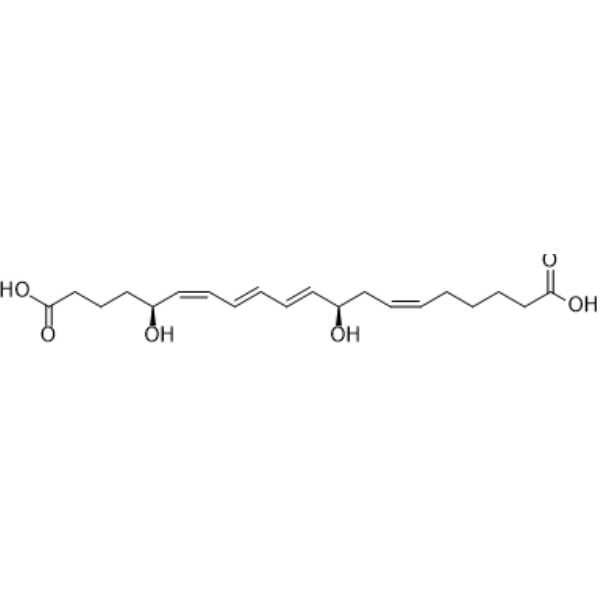
20-Carboxy-Leukotriene B4LTB4 Metabolite -
HY-113884B
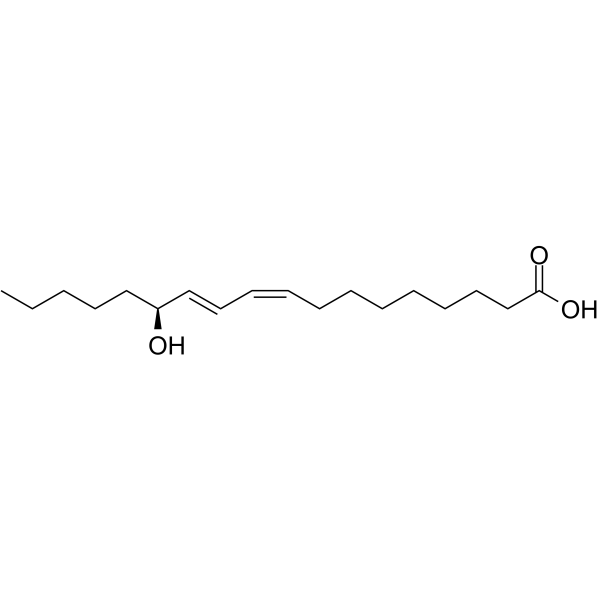
(S)-Coriolic acidPPARγ Activator/Mitochondrial Dysfunction Inducer -

HY-113509B
15(R)-Lipoxin A4Specialized Pro-resolving Mediator -

HY-112621
Leukotriene A4 methyl ester -
HY-113479
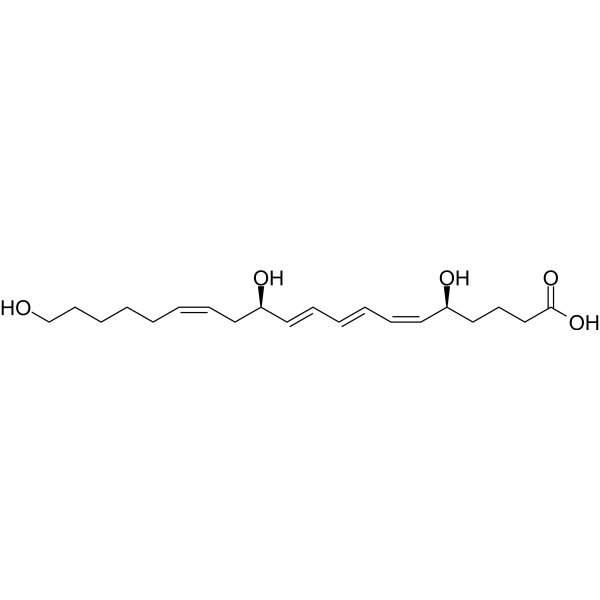
20-Hydroxy-leukotriene B4Endogenous Metabolite -

HY-113490
15-KETE -
HY-113492
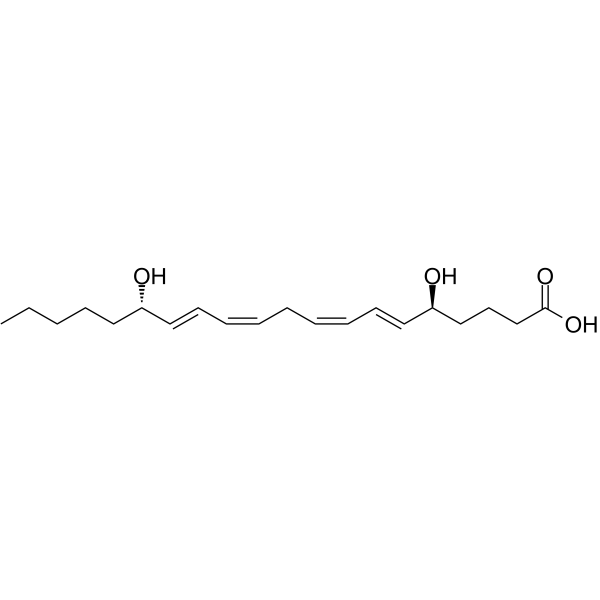
5(S)15(S)-DiHETEPlatelet Aggregation Inhibitor -

HY-118149
9(S)-HpODE -

HY-W923355
1,2,3-Trieicosapentaenoyl glycerolGlyceride
All Endogenous Metabolite Isoforms
More

Biological Activity
Description


Chemical Information
-
CAS No. 75290-60-7
-
Appearance Liquid
-
Molecular Weight 625.77
-
Formula C30H47N3O9S
-
Color Colorless to light yellow
-
SMILES
O=C(O)CNC([C@H](CS[C@@H]([C@@H](O)CCCCC)/C=C/C=C/C=C\C/C=C\CCCC(O)=O)NC(CC[C@@H](C(O)=O)N)=O)=O
-
Synonyms
Eoxin C4
-
Structure Classification
-
Initial Source
-
Shipping
Room temperature in continental US; may vary elsewhere.
-
Storage
Solution, -20°C, 2 years

Protocols
-
Transepithelial/transendothelial electrical resistance assay
TEER measures electrical resistance across epithelial or endothelial monolayers cultured on permeable supports, and the readout reflects ionic conductance through the cell barrier, especially the paracellular pathway regulated by junctional integrity. TEER can be measured without destroying the monolayer and is commonly used before or during transport, permeability, barrier-disruption, and barrier-maturation experiments. TEER values are influenced by biological maturation and technical conditions; reported factors include temperature, medium formulation, passage number, electrode geometry, membrane properties, and junctional length during early monolayer maturation. Therefore, TEER should be interpreted with blank-insert subtraction, area normalization, repeated readings, and, when possible, orthogonal barrier readouts such as FITC-dextran flux or tight-junction staining.
-
Research Protocol for Inflammation-related Diseases
The NLRP3 inflammasome is a cytosolic innate immune signaling platform that integrates priming signals and danger-signal activation to promote caspase-1 activation, maturation of IL-1β and IL-18, and gasdermin D-mediated pyroptotic cell death. The core experimental logic is to determine whether inflammatory disease phenotypes are driven by increased NLRP3 expression, ASC-containing inflammasome assembly, caspase-1 cleavage, GSDMD cleavage, and extracellular release of IL-1β/IL-18 rather than by nonspecific cell injury alone. The pathway is strongly linked to inflammation-related disease phenotypes because monosodium urate crystals activate NALP3/NLRP3 inflammasome signaling in gout-like crystal inflammation, cholesterol crystals activate NLRP3 inflammasomes in atherogenesis models, and DSS-induced intestinal inflammation has been reported to involve NLRP3 inflammasome activity. However, experimental colitis studies also show context-dependent protective effects of NLRP3 inflammasome co


Purity & Documentation
-
Data Sheet (263 KB)
-
SDS (738 KB)
- English - EN (738 KB)
- Français - FR (738 KB)
- Deutsch - DE (738 KB)
- Norwegian - NO (738 KB)
- Español - ES (738 KB)
- Swedish - SV (738 KB)
- Italian - IT (738 KB)
- Korean - KR (738 KB)
- Portuguese - PT (738 KB)
-
Handling Instructions (2659 KB)
References

Calculators
Concentration (start) × Volume (start) = Concentration (final) × Volume (final)


14,15-Leukotriene C4 Related Classifications
HY-130429 Related Classifications
 Powered by Bioz