



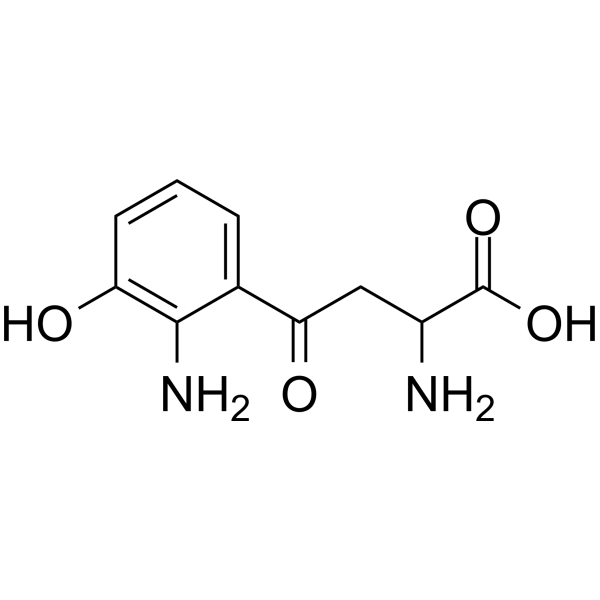
3-Hydroxykynurenine
Based on 2 publication(s) in Google Scholar
3-Hydroxykynurenine, a metabolite of tryptophan, is a potential endogenous neurotoxin whose increased levels have been described in several neurodegenerative disorders. 3-Hydroxykynurenine induces neuronal apoptosis.
Para uso exclusivo en investigación. No vendemos a pacientes.
- Pureza : 99.93%
- No. CAS: 484-78-6
- Fòrmula: C10H12N2O4
- Peso molecular:224.21
-
Almacenamiento:
4°C, sealed storage, away from moisture and light
* In solvent : -80°C, 6 months; -20°C, 1 month (sealed storage, away from moisture and light)

To place orders, for customer services and technical support, please contact: MedChemExpress USA
Tel: 609-228-6898 E-mail: [email protected] [email protected]


-
 Actividad biológica
-
Chemical Information
-
Solvente y solubilidad
- Protocolo
- Pureza y Documentación
- Referencias
-
 Help & FAQs


-
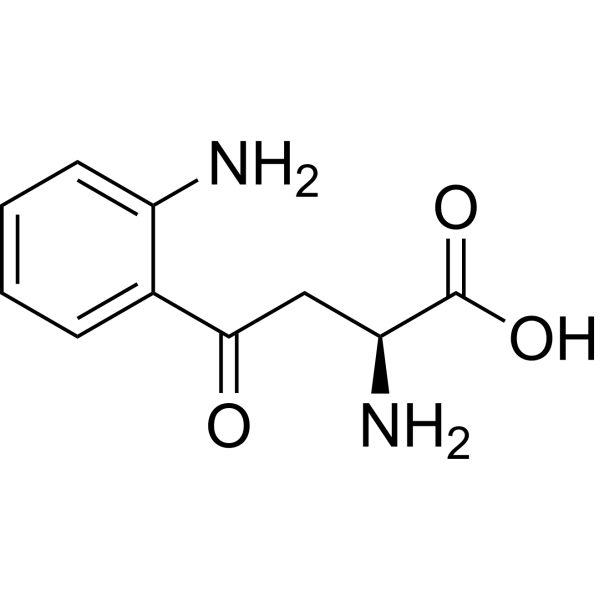
HY-104026
L-KynurenineAryl Hydrocarbon Receptor Agonist -
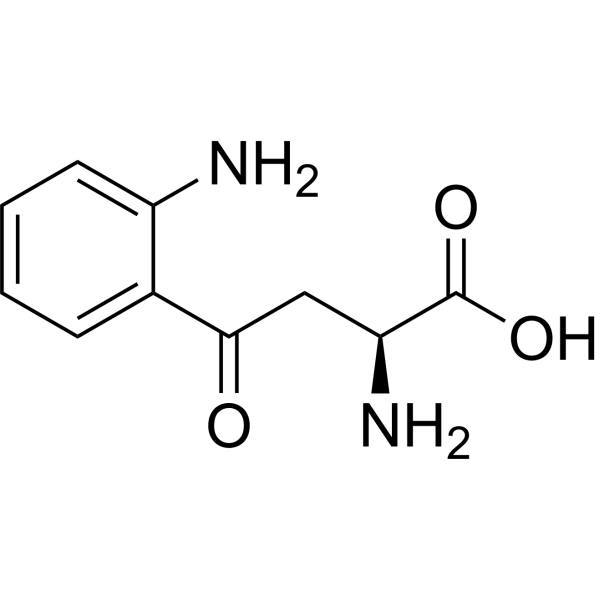
HY-104026R
L-Kynurenine (Standard)Aryl Hydrocarbon Receptor Agonist -
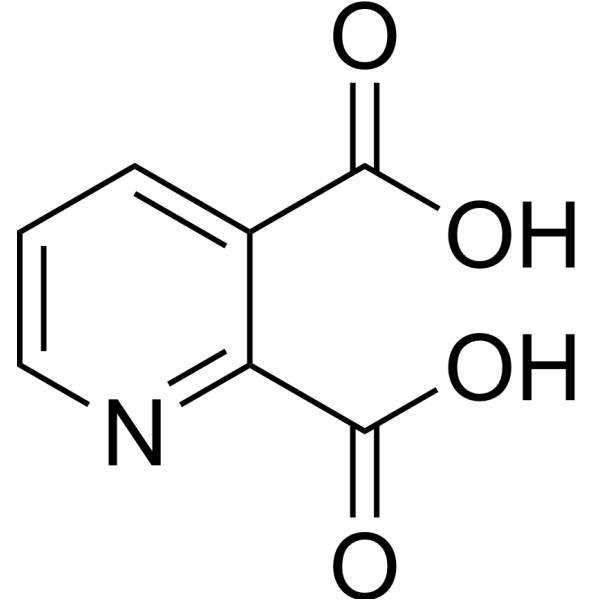
HY-100807
Quinolinic acidNMDA Receptor Agonist -
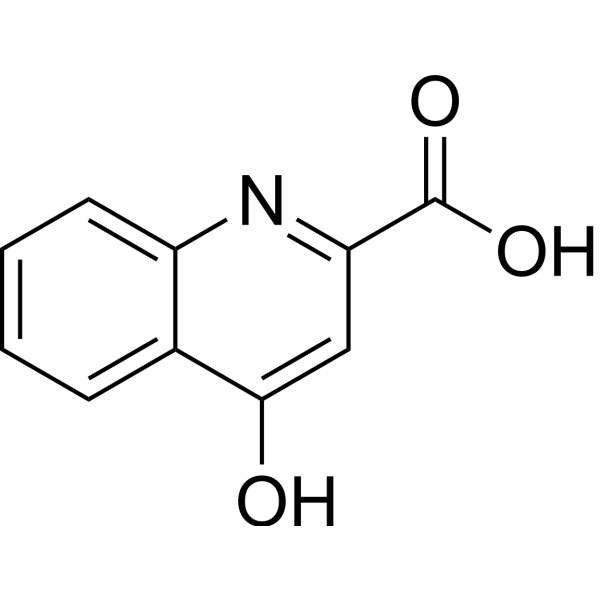
HY-100806
Kynurenic acidiGluR/α7 nAChR Antagonist -
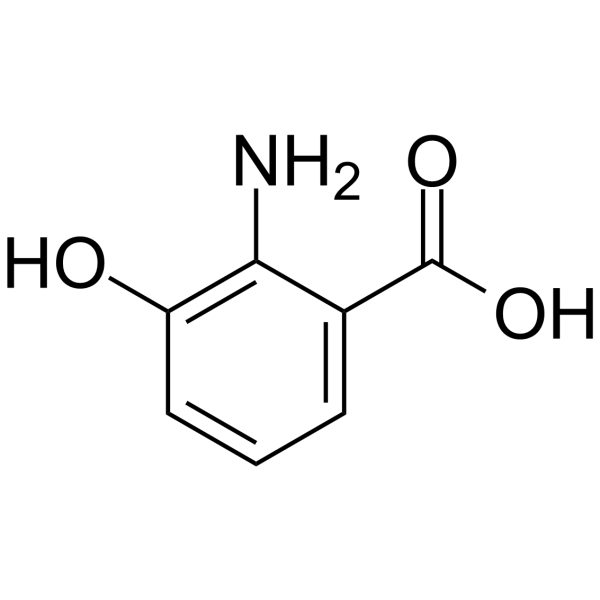
HY-W001171
3-Hydroxyanthranilic acidTryptophan Metabolite -
HY-W014666
Xanthurenic acid -
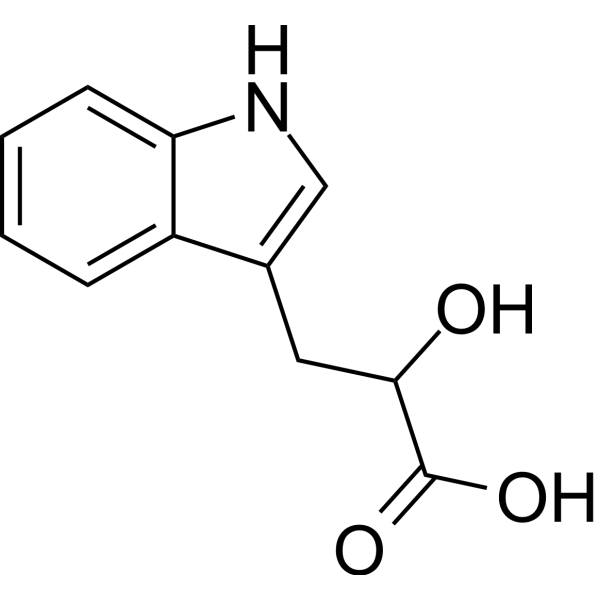
HY-113099
Indolelactic acidTryptophan Catabolite -
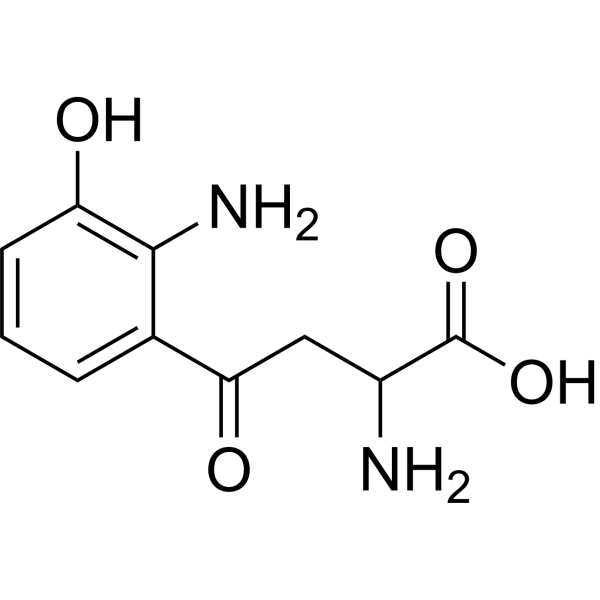
HY-113294R
3-Hydroxykynurenine (Standard)Endogenous Neurotoxin -
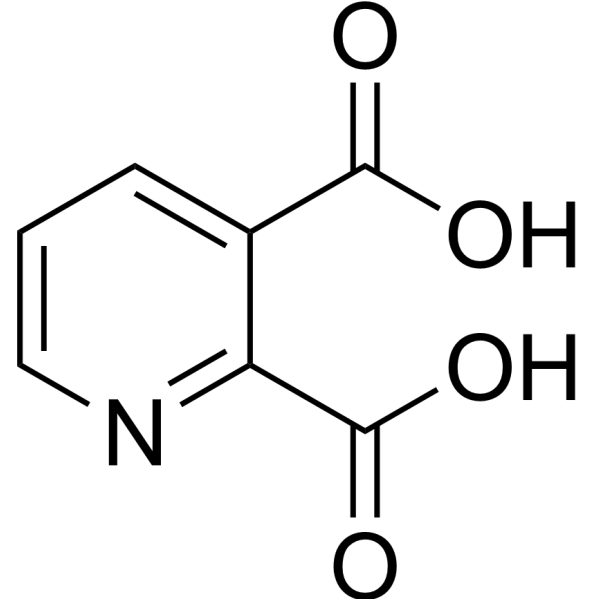
HY-100807R
Quinolinic acid (Standard)Standard of Quinolinic acid -
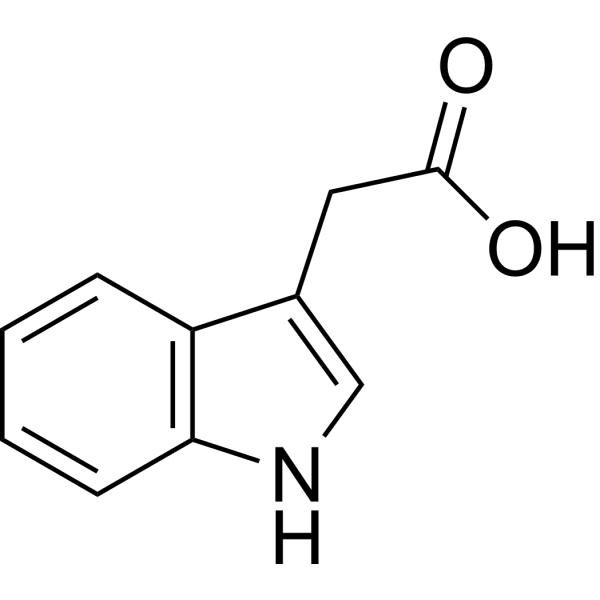
HY-18569
3-Indoleacetic acidPlant Growth Regulator -
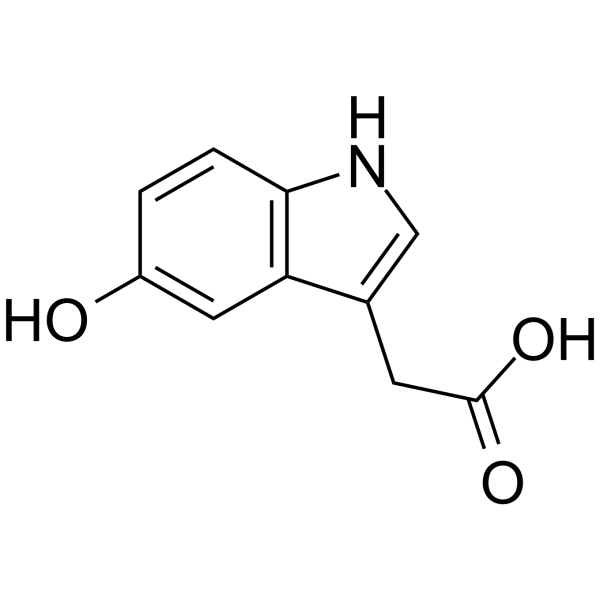
HY-W008253
5-Hydroxyindole-3-acetic acid -
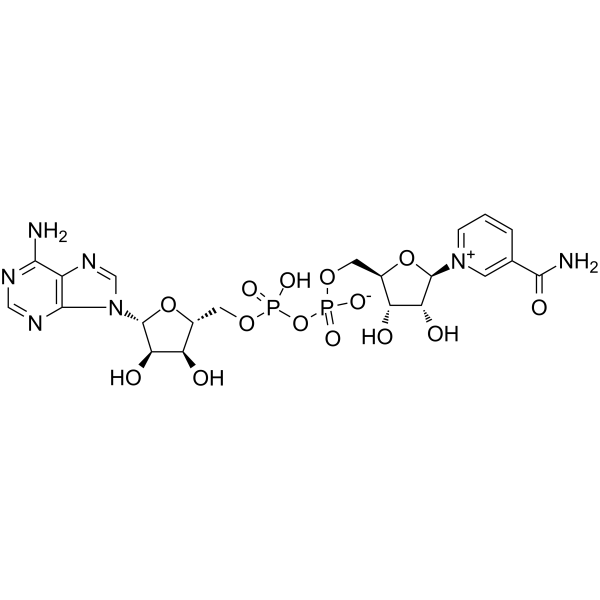
HY-B0445
NAD+Endogenous Metabolite
Publications Citing Use of MedChemExpress (MCE) 3-Hydroxykynurenine
More Customer Validation & Images

-
Cell Imaging/Staining
-
Flow Cytometry
-
Cell Proliferation/Viability Assay
-
Flow Cytometry
-
WB
Ver todos los productos específicos de isoformas Endogenous Metabolite
More

Actividad biológica
Descripciòn
IC50 & Target
|
Human Endogenous Metabolite |
In Vitro
3-Hydroxykynurenine-induced neuronal cell death shows several features of apoptosis[1].
3-Hydroxykynurenine is a metabolic intermediate of the kynurenine pathway, the major metabolic pathway of tryptophan (Trp)[1].
3-Hydroxykynurenine acts as an endogenous neurotoxin in the brain under pathological conditions[1].
3-Hydroxykynurenine (20-100 μM) significantly inhibits CD4+ T-cell proliferation in a dose-dependent manner with IC50 of approximately 70 μM[2].
3-Hydroxykynurenine (20-100 μM) induces significant CD4+ T-cell-mediated cell death in a dose-dependent manner[2].
MedChemExpress (MCE) has not independently confirmed the accuracy of these methods. They are for reference only. Further protocols information, click here.
-
Cell Line:CD3/CD28 bead-stimulated CD4+ T cells
-
Concentration:0, 20, 40, 60, 80, and 100 μM
-
Incubation Time:72 hours
-
Result:Significantly inhibited CD4+ T-cell proliferation in a dose-dependent manner with an IC50 of approximately 70 μM.
In Vivo
MedChemExpress (MCE) has not independently confirmed the accuracy of these methods. They are for reference only.
-
Animal Model:BALB/c (H2d) mice[2]
-
Dosage:560 mg/kg
-
Administration:IP injection
-
Result:There was significant prolongation of graft survival in all treatment groups in comparison to the controls.


Chemical Information
-
No. CAS 484-78-6
-
Appearance Solid
-
Peso molecular 224.21
-
Fòrmula C10H12N2O4
-
Color Light yellow to yellow
-
SMILES
O=C(O)C(N)CC(C1=CC=CC(O)=C1N)=O
-
Synonyms
3-Hydroxy-DL-kynurenine
-
Structure Classification
-
Initial Source
-
Envío
Room temperature in continental US; may vary elsewhere.
-
Almacenamiento
4°C, sealed storage, away from moisture and light
* In solvent : -80°C, 6 months; -20°C, 1 month (sealed storage, away from moisture and light)


Publications (2)
-
Journal Impact Factor
-
Most Recent
-
Int Immunopharmacol
Mechanism of Trichinella spiralis-mediated CD4+ T cell functional imbalance via IDO-dependent tryptophan metabolism. [Abstract]2026 May 15:177:116517. PMID: 41864014 -
Psychoneuroendocrinology
Peripheral cytokine dysregulation, microglial dysfunction in adolescent major depressive disorder: Neuroimmune crosstalk implications. [Abstract]2025 Oct 17:183:107656. PMID: 41138684
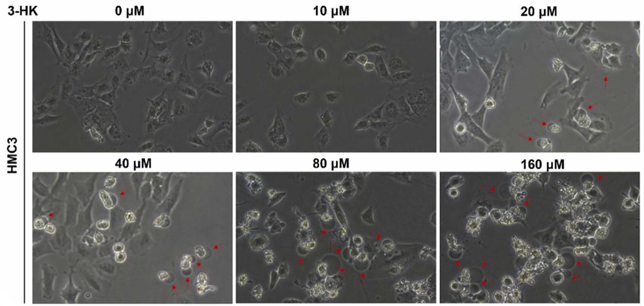
3-Hydroxykynurenine purchased from MedChemExpress. Usage Cited in: Psychoneuroendocrinology. 2025 Oct 17:183:107656. [Abstract]
After HMC3 cells were treated with indicated concentrations of 3-Hydroxykynurenine (3-HK, 10-160 μM), morphological changes were observed using an optical microscope.
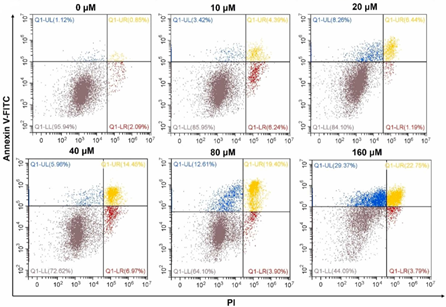
3-Hydroxykynurenine purchased from MedChemExpress. Usage Cited in: Psychoneuroendocrinology. 2025 Oct 17:183:107656. [Abstract]
After HMC3 cells were treated with indicated concentrations of 3-Hydroxykynurenine (3-HK, 10-160 μM), Annexin V/PI staining was performed followed by flow cytometric analysis.
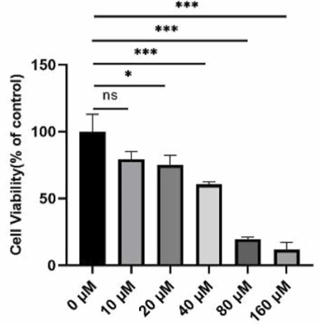
3-Hydroxykynurenine purchased from MedChemExpress. Usage Cited in: Psychoneuroendocrinology. 2025 Oct 17:183:107656. [Abstract]
After HMC3 cells were treated with indicated concentrations of 3-Hydroxykynurenine (3-HK, 10-160 μM), cell viability was analyzed by CCK-8 staining.
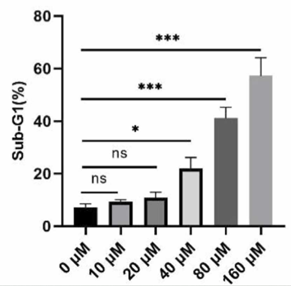
3-Hydroxykynurenine purchased from MedChemExpress. Usage Cited in: Psychoneuroendocrinology. 2025 Oct 17:183:107656. [Abstract]
After HMC3 cells were treated with indicated concentrations of 3-Hydroxykynurenine (3-HK, 10-160 μM), Sub-G1 analysis was performed by flow cytometry.
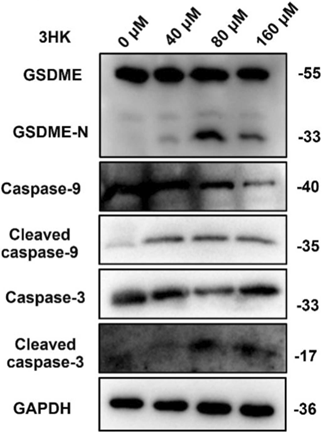
3-Hydroxykynurenine purchased from MedChemExpress. Usage Cited in: Psychoneuroendocrinology. 2025 Oct 17:183:107656. [Abstract]
After HMC3 cells were treated with indicated concentrations of 3-Hydroxykynurenine (3-HK, 40-160 μM), immunoblotting was performed for the indicated antigens.
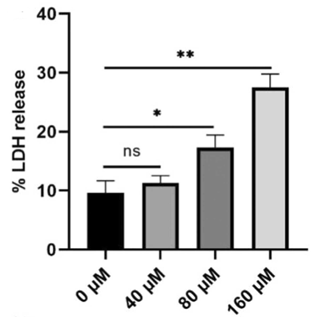
3-Hydroxykynurenine purchased from MedChemExpress. Usage Cited in: Psychoneuroendocrinology. 2025 Oct 17:183:107656. [Abstract]
After HMC3 cells were treated with indicated concentrations of 3-Hydroxykynurenine (3-HK, 40-160 μM), culture supernatants were collected and the release of LDH and IL-1β was assessed.


Solvente y solubilidad
In Vitro:
1M HCl : 33.33 mg/mL (148.66 mM; ultrasonic and adjust pH to 1 with HCl)
DMSO : 1 mg/mL (4.46 mM; ultrasonic and warming and heat to 60°C; Hygroscopic DMSO has a significant impact on the solubility of product, please use newly opened DMSO)
Please refer to the solubility information to select the appropriate solvent. Once prepared, please aliquot and store the solution to prevent product inactivation from repeated freeze-thaw cycles.
Storage method and period of stock solution: -80°C, 6 months; -20°C, 1 month (sealed storage, away from moisture and light). When stored at -80°C, please use it within 6 months. When stored at -20°C, please use it within 1 month.
Please refer to the solubility information to select the appropriate solvent. Once prepared, please aliquot and store the solution to prevent product inactivation from repeated freeze-thaw cycles.
Storage method and period of stock solution: -80°C, 6 months; -20°C, 1 month (sealed storage, away from moisture and light). When stored at -80°C, please use it within 6 months. When stored at -20°C, please use it within 1 month.
Concentration (start) × Volume (start) = Concentration (final) × Volume (final)

Protocolo
-
Detection of Apoptosis
Apoptosis, also called programmed cell death, is generally characterized by distinct morphological characteristics.
-
TUNEL staining for apoptotic DNA fragmentation
TUNEL staining detects DNA strand breaks by using terminal deoxynucleotidyl transferase to add labeled nucleotides to exposed 3′-OH DNA termini, generating either microscopic staining in fixed cells or tissue sections, or fluorescence/cytometric signal in cell suspensions. TUNEL positivity reflects DNA fragmentation but should not be interpreted alone as definitive apoptosis, because TUNEL can also label necrotic, autolytic, mechanically damaged, or DNA-repair-associated DNA breaks.
-
Annexin V plus membrane-impermeant dye apoptosis staining
Annexin V-based apoptosis assays rely on the detection of phosphatidylserine (PS) externalization from the inner leaflet of the plasma membrane to the outer leaflet, an early biochemical hallmark of apoptosis. Fluorescently labeled Annexin V binds PS in a calcium-dependent manner, enabling identification of early apoptotic cells by flow cytometry or fluorescence microscopy. When combined with a membrane-impermeant DNA-binding dye (e. g. , propidium iodide), this approach allows discrimination between viable (Annexin V−/dye−), early apoptotic (Annexin V+/dye−), and late apoptotic or necrotic (Annexin V+/dye+) cell populations by assessing membrane integrity and PS exposure.
-
Apoptosis Solutions
Apoptosis is a regulated, generally non-lytic cell-death pathway that removes unwanted, damaged, infected, or abnormal cells through coordinated morphological changes, caspase activation, DNA fragmentation, and membrane remodeling. The intrinsic apoptosis pathway is controlled mainly by mitochondrial outer membrane permeabilization, BCL-2 family proteins, cytochrome c release, apoptosome formation, caspase-9 activation, and downstream executioner caspase-3/7 activation. The extrinsic apoptosis pathway is initiated by death receptors such as Fas, TNFR, and TRAIL receptors, which recruit adaptor proteins and activate caspase-8 before engaging executioner caspases or mitochondrial amplification through BID cleavage. Apoptosis is linked to many phenotypes, including cancer cell killing, tissue homeostasis, immune regulation, neurodegeneration, infection response, and treatment-induced cytotoxicity; unresolved questions include how apoptosis interacts with necroptosis, pyroptosis, ferroptos


Pureza y Documentación
-
Ficha de datos (274 KB)
-
SDS (393 KB)
- English - EN (393 KB)
- Français - FR (393 KB)
- Deutsch - DE (393 KB)
- Norwegian - NO (393 KB)
- Español - ES (393 KB)
- Swedish - SV (393 KB)
- Italian - IT (393 KB)
- Korean - KR (393 KB)
- Portuguese - PT (393 KB)
-
Instrucciones de manejo (2659 KB)
Referencias
[1]. S Okuda, et al. 3-Hydroxykynurenine, an endogenous oxidative stress generator, causes neuronal cell death with apoptotic features and region selectivity. J Neurochem. 1998 Jan;70(1):299-307. [Content Brief]
[2]. Sarah S Zaher,et al. 3-hydroxykynurenine suppresses CD4+ T-cell proliferation, induces T-regulatory-cell development, and prolongs corneal allograft survival. Invest Ophthalmol Vis Sci. 2011 Apr 22;52(5):2640-8. [Content Brief]


Complete Stock Solution Preparation Table
Please refer to the solubility information to select the appropriate solvent. Once prepared, please aliquot and store the solution to prevent product inactivation from repeated freeze-thaw cycles.
Storage method and period of stock solution: -80°C, 6 months; -20°C, 1 month (sealed storage, away from moisture and light). When stored at -80°C, please use it within 6 months. When stored at -20°C, please use it within 1 month.
| Optional Solvent | Concentration Solvent Mass | 1 mg | 5 mg | 10 mg | 25 mg |
|---|---|---|---|---|---|
| DMSO / 1M HCl | 1 mM | 4.4601 mL | 22.3005 mL | 44.6010 mL | 111.5026 mL |
| 1M HCl | 5 mM | 0.8920 mL | 4.4601 mL | 8.9202 mL | 22.3005 mL |
| 10 mM | 0.4460 mL | 2.2301 mL | 4.4601 mL | 11.1503 mL | |
| 15 mM | 0.2973 mL | 1.4867 mL | 2.9734 mL | 7.4335 mL | |
| 20 mM | 0.2230 mL | 1.1150 mL | 2.2301 mL | 5.5751 mL | |
| 25 mM | 0.1784 mL | 0.8920 mL | 1.7840 mL | 4.4601 mL | |
| 30 mM | 0.1487 mL | 0.7434 mL | 1.4867 mL | 3.7168 mL | |
| 40 mM | 0.1115 mL | 0.5575 mL | 1.1150 mL | 2.7876 mL | |
| 50 mM | 0.0892 mL | 0.4460 mL | 0.8920 mL | 2.2301 mL | |
| 60 mM | 0.0743 mL | 0.3717 mL | 0.7434 mL | 1.8584 mL | |
| 80 mM | 0.0558 mL | 0.2788 mL | 0.5575 mL | 1.3938 mL | |
| 100 mM | 0.0446 mL | 0.2230 mL | 0.4460 mL | 1.1150 mL |


3-Hydroxykynurenine Related Classifications
HY-113294 Related Classifications
 Powered by Bioz