



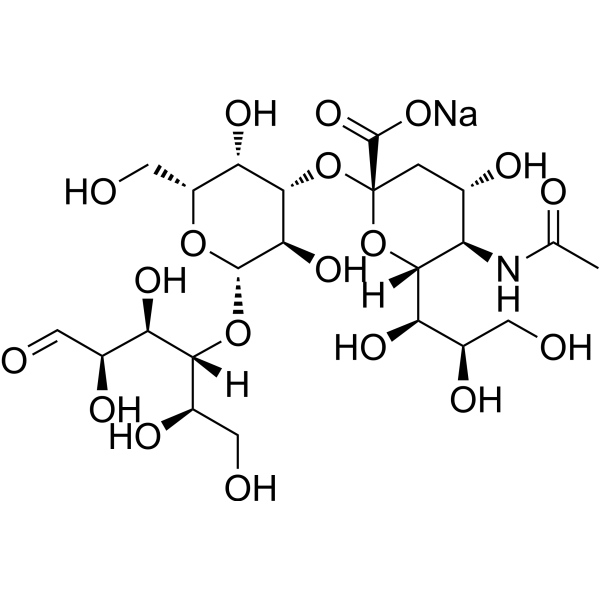
3'-Sialyllactose sodium (Standard)
3'-Sialyllactose (sodium) (Standard) is the analytical standard of 3'-Sialyllactose (sodium). This product is intended for research and analytical applications. 3'-Sialyllactose (3'-SL) sodium is a prebiotic, maintains immune homeostasis and exerts anti-inflammatory and anti-arthritic effects. 3'-Sialyllactose sodium is an ordinary carbohydrate with the lowest toxicity rating, it can be used for the research of inflammation.
For research use only. We do not sell to patients.
- CAS No.: 128596-80-5
- Formula: C23H38NNaO19
- Molecular Weight:655.53
-
Storage:
Please store the product under the recommended conditions in the Certificate of Analysis.


To place orders, for customer services and technical support, please contact: MedChemExpress USA
Tel: 609-228-6898 E-mail: [email protected] [email protected]


-
 Product Information
-
Chemical Information
- Purity & Documentation
-
 Help & FAQs


-
HY-108065A
3'-Sialyllactose sodiumPrebiotic -
HY-N0379
D-MannoseEndogenous Metabolite -

HY-N0379R
D-Mannose (Standard)Endogenous Metabolite -
HY-137335
6'-Sialyllactose sodiumMilk Oligosaccharide -
HY-P2149
Concanavalin APlant Lectin -
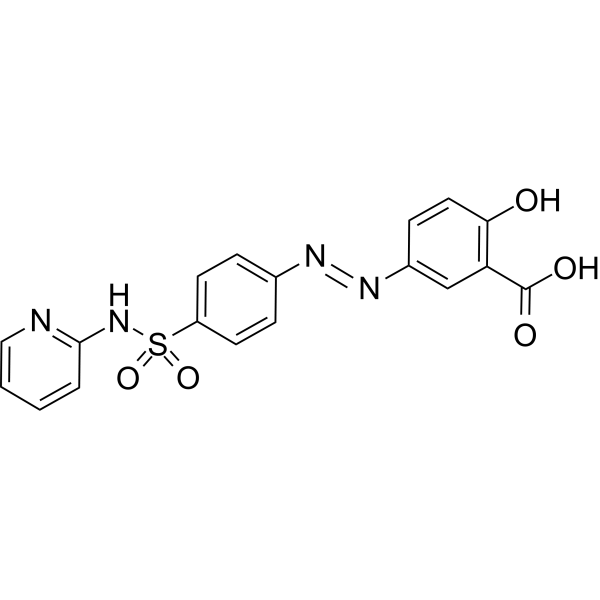
HY-14655
SulfasalazineAnti-rheumatic Agent -
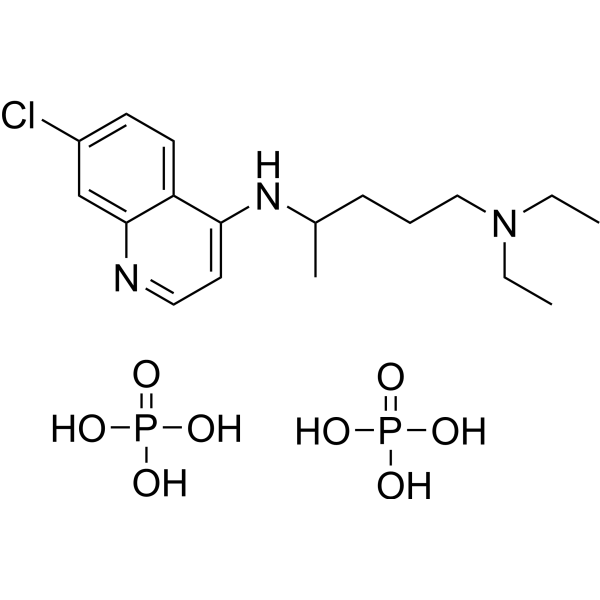
HY-17589
Chloroquine phosphateAntimalarial Agent -
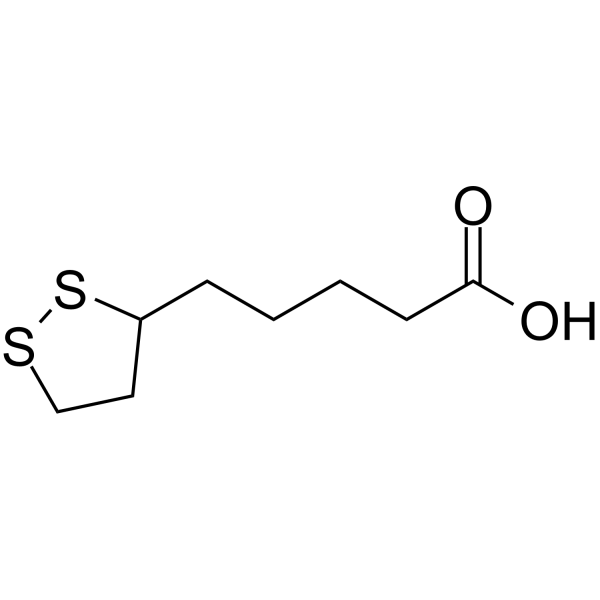
HY-N0492
α-Lipoic AcidAntioxidant -
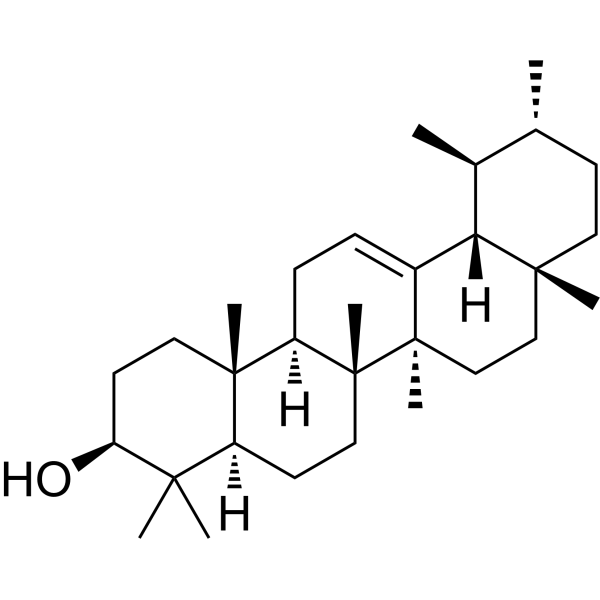
HY-N8423
α-AmyrinPentacyclic Triterpenoid -
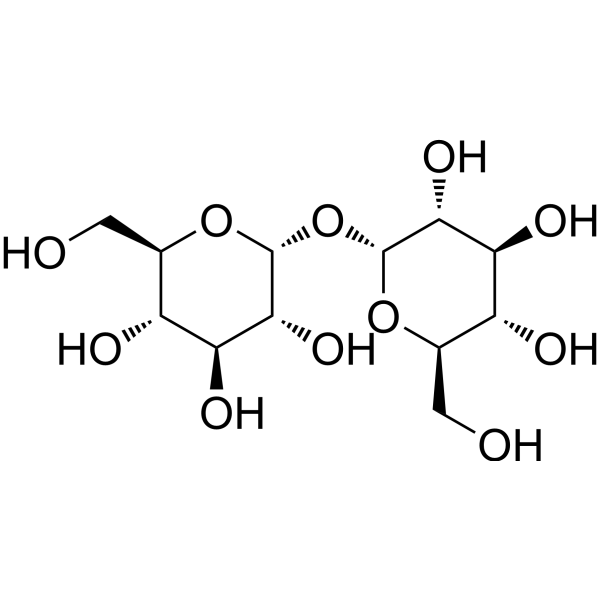
HY-N1132
D-(+)-TrehaloseDisaccharide -
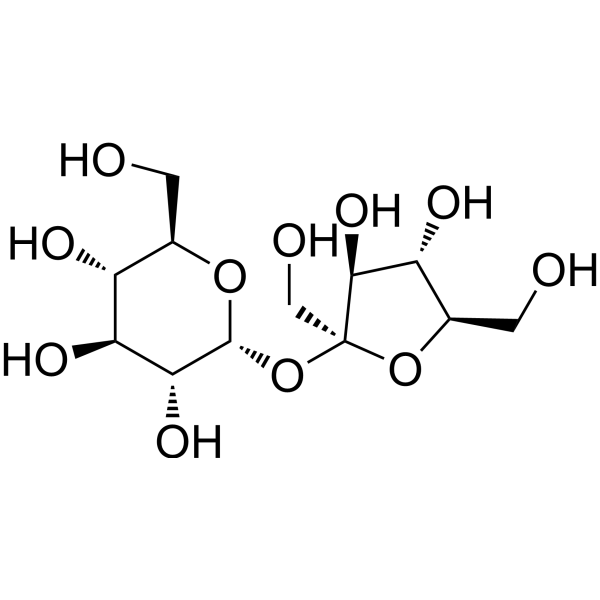
HY-B1779
SucroseDisaccharide -
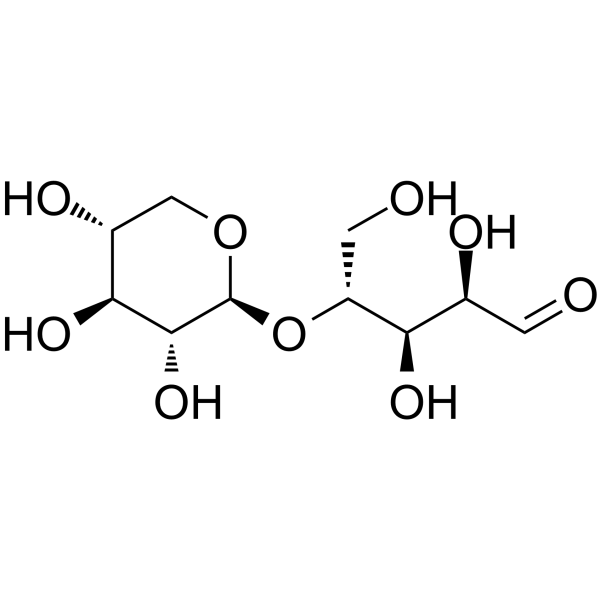
HY-N2468
XylobioseCLDN2 Inhibitor


Product Information
Information
Application
The compound is the grade of analytical standard, which is the reference standard supplied assay. It is commonly used in qualitative, quantitative and methodological research experiments in HPLC, GC and MS.


Chemical Information
-
CAS No. 128596-80-5
-
Molecular Weight 655.53
-
Formula C23H38NNaO19
-
SMILES
O=C(O[Na])[C@@]1(O[C@@]([C@H](NC(C)=O)[C@@H](O)C1)([H])[C@H](O)[C@H](O)CO)O[C@@H]2[C@H]([C@@H](O[C@H](CO)[C@@H]2O)O[C@@]([C@H](O)CO)([H])[C@H](O)[C@@H](O)C=O)O
-
Synonyms
3'-SL sodium (Standard)
-
Structure Classification
-
Initial Source
-
Shipping
Room temperature in continental US; may vary elsewhere.
-
Storage
Please store the product under the recommended conditions in the Certificate of Analysis.


Purity & Documentation
References
[1]. Jeon J, et al. 3'-Sialyllactose protects against osteoarthritic development by facilitating cartilage homeostasis. J Cell Mol Med. 2018 Jan;22(1):57-66. [Content Brief]
[2]. Kang LJ, et al. 3'-Sialyllactose prebiotics prevents skin inflammation via regulatory T cell differentiation in atopic dermatitis mouse models. Sci Rep. 2020 Mar 27;10(1):5603. [Content Brief]
[3]. Kim D, et al. Toxicological evaluation of 3'-sialyllactose sodium salt. Regul Toxicol Pharmacol. 2018 Apr;94:83-90. [Content Brief]

Calculators
Concentration (start) × Volume (start) = Concentration (final) × Volume (final)


3'-Sialyllactose sodium (Standard) Related Classifications
HY-108065AR Related Classifications
 Powered by Bioz