



5(S)-HETrE
5(S)-HETrE is a metabolite of the ω-6 fatty acid γ-linolenic acid. 5(S)-HETrE can be elevated in serum levels in an obesity mouse model.
For research use only. We do not sell to patients.
- CAS No.: 195061-94-0
- Formula: C20H34O3
- Molecular Weight:322.48
-
Storage:
Please store the product under the recommended conditions in the Certificate of Analysis.


To place orders, for customer services and technical support, please contact: MedChemExpress USA
Tel: 609-228-6898 E-mail: [email protected] [email protected]


-
 Biological Activity
-
Chemical Information
- Protocols
- Purity & Documentation
- References
-
 Help & FAQs


-
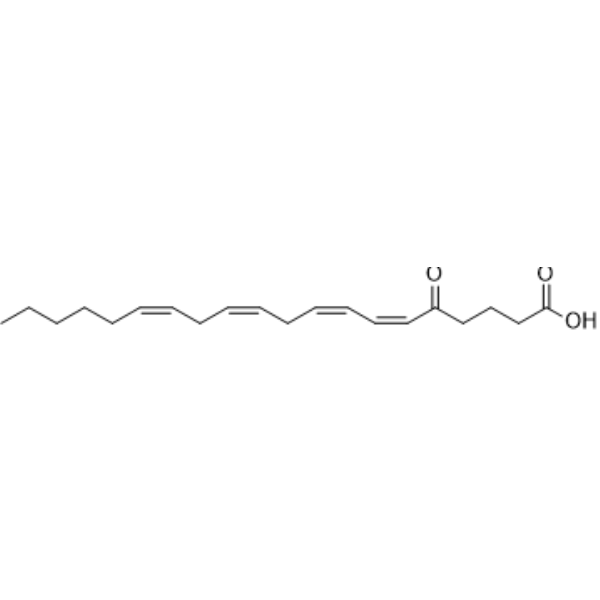
HY-112549
5-oxo-ETEApoptosis Inhibitor -

HY-W992384
(S,9E,11Z,14Z)-8-Hydroxyicosa-9,11,14-trienoic acidEster Product -
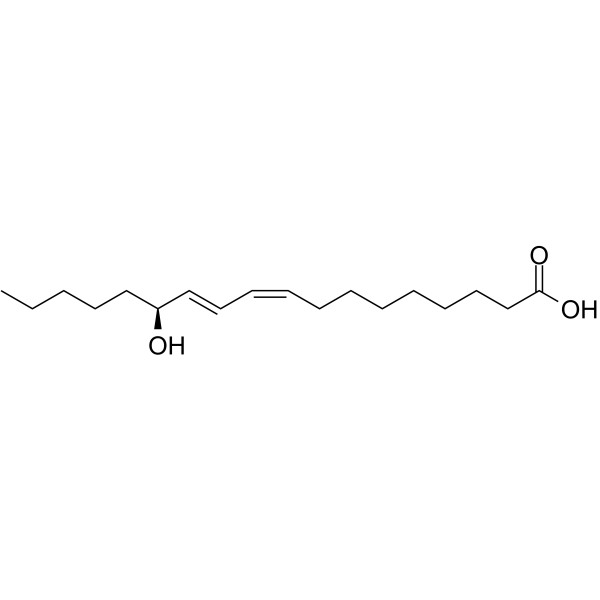
HY-113884B
(S)-Coriolic acidPPARγ Activator/Mitochondrial Dysfunction Inducer -

HY-130229
(±)5,6-DHET lactoneLactone -

HY-113490
15-KETE -

HY-130675A
15(S)-HEPEAsthma Marker -
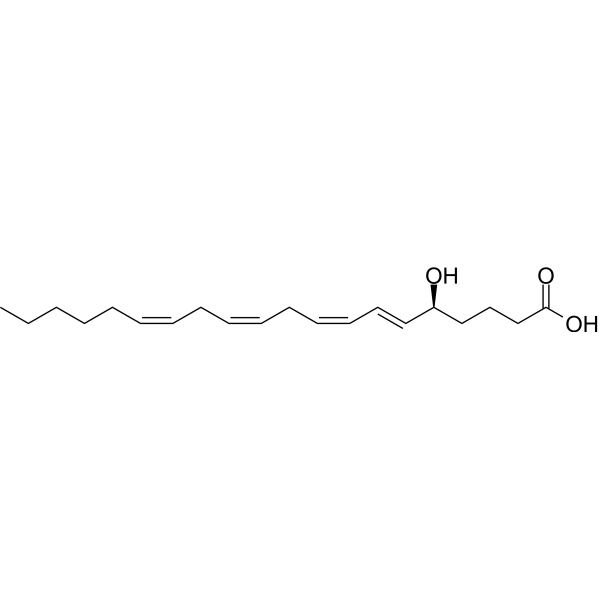
HY-113434
5(S)-HETEEndogenous Metabolite -
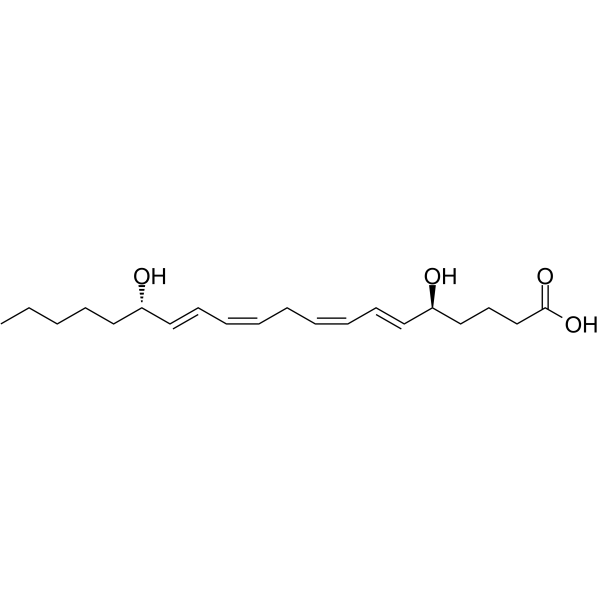
HY-113492
5(S)15(S)-DiHETEPlatelet Aggregation Inhibitor -

HY-118149
9(S)-HpODE -
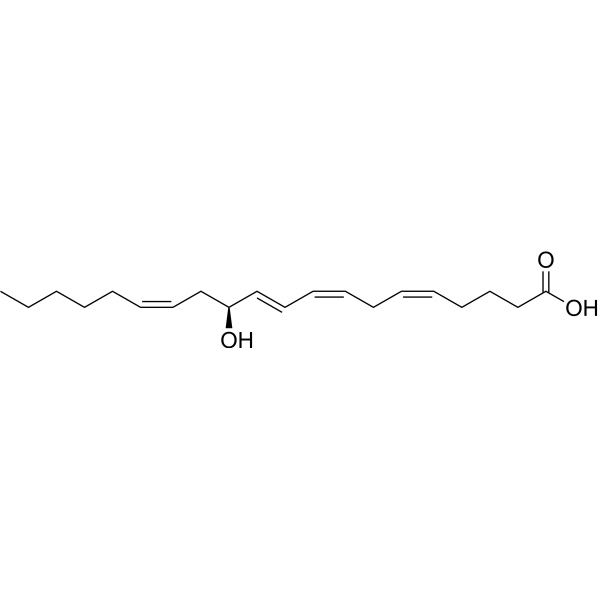
HY-124404A
12(S)-HETEP38 MAPK/ERK Activator -
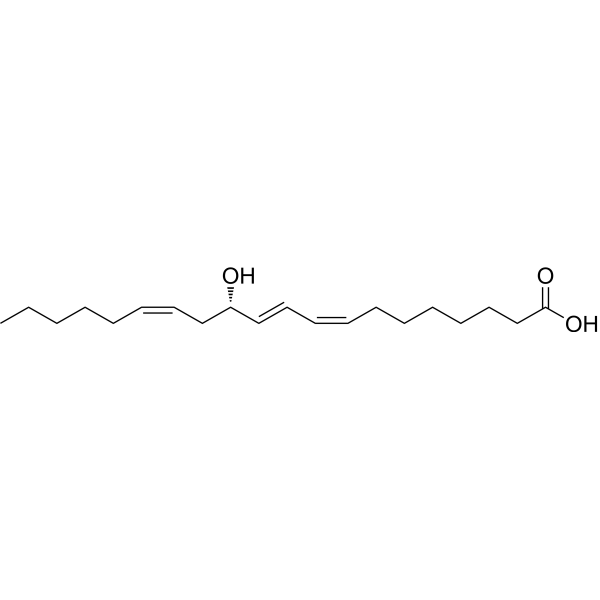
HY-130060
12(S)-HETrEPlatelet Aggregation Inhibitor -
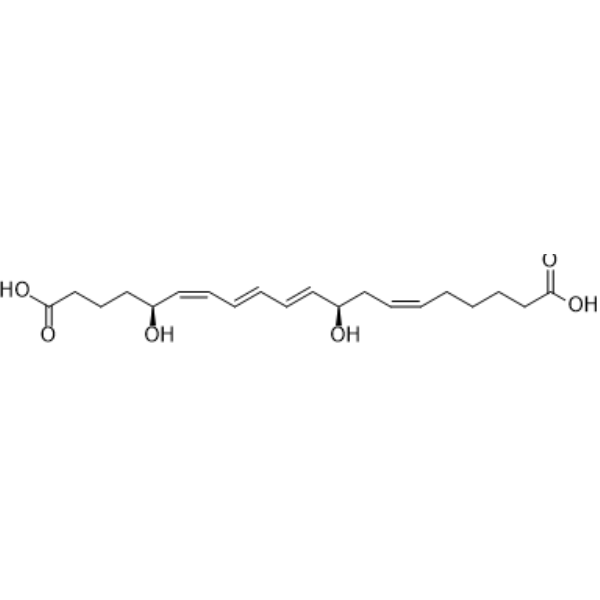
HY-113483
20-Carboxy-Leukotriene B4LTB4 Metabolite
All Endogenous Metabolite Isoforms
More

Biological Activity
Description


Chemical Information
-
CAS No. 195061-94-0
-
Molecular Weight 322.48
-
Formula C20H34O3
-
SMILES
CCCCCCCC/C=C\C/C=C\C=C\[C@@H](O)CCCC(O)=O
-
Synonyms
5(S)-Hydroxy-6E,8Z,11Z-eicosatrienoic acid
-
Shipping
Room temperature in continental US; may vary elsewhere.
-
Storage
Please store the product under the recommended conditions in the Certificate of Analysis.

Protocols
-
Research Protocol for Metabolic Diseases
AMP-activated protein kinase, AMPK, is a conserved cellular energy sensor that responds to reduced cellular energy status and coordinates metabolism by increasing ATP-generating catabolic pathways while suppressing ATP-consuming anabolic processes. In metabolic disease research, the AMPK pathway is experimentally relevant because it regulates hepatic lipid synthesis, fatty acid oxidation, glucose production, skeletal-muscle glucose disposal, mTORC1-linked biosynthesis, autophagy, mitochondrial homeostasis, and whole-body energy balance. The central pathway logic is that energy stress, metformin, exercise-like stimulation, or direct AMPK activators increase AMPKα Thr172 phosphorylation and downstream substrate phosphorylation, including ACC and RAPTOR. Phosphorylation of ACC suppresses lipogenesis and supports fatty acid oxidation, whereas phosphorylation of RAPTOR suppresses mTORC1 signaling and links cellular energy status to growth and protein synthesis control. The pathway is linked
-
How to Choose the Right Model Animal
Choosing the right model animal is a validity-driven decision in which the species, strain, sex, age, genetic background, disease-induction method, outcome measures, and welfare burden must match the scientific question rather than laboratory tradition or convenience. A model should be selected by judging face validity, construct validity, and predictive validity: whether it resembles the human phenotype, whether it reproduces relevant mechanisms, and whether results are likely to predict human biology or treatment response. Animal studies often fail to translate because of species differences, weak disease resemblance, poor experimental design, inadequate reporting, publication bias, and underuse of randomization, blinding, and sample-size justification. Unresolved questions include how to rank competing models objectively, how much human-disease complexity must be reproduced for a given objective, and when non-animal systems such as organoids, ex vivo tissue, or computational models


Purity & Documentation
References

Calculators
Concentration (start) × Volume (start) = Concentration (final) × Volume (final)


5(S)-HETrE Related Classifications
HY-145521 Related Classifications
 Powered by Bioz