



8-Methoxyquinoline

Based on 1 Customer Validation
8-Methoxyquinoline is a structural analogue of 8-hydroxyquinoline (HY-B1005). 8-Methoxyquinoline does not bind copper. 8-Methoxyquinoline could neither inhibit the chymotrypsin-like activity of the proteasome in breast cancer cell cultures nor induce cancer cell death. 8-Methoxyquinoline can be used in the research of breast cancer.
For research use only. We do not sell to patients.
- CAS No.: 938-33-0
- Formula: C10H9NO
- Molecular Weight:159.18
-
Storage:
Store at room temperature 3 years.
In solvent -80°C, 2 years , -20°C, 1 year


To place orders, for customer services and technical support, please contact: MedChemExpress USA
Tel: 609-228-6898 E-mail: [email protected] [email protected]


-
 Biological Activity
-
Chemical Information
- Protocols
- Purity & Documentation
- References
-
 Help & FAQs


-
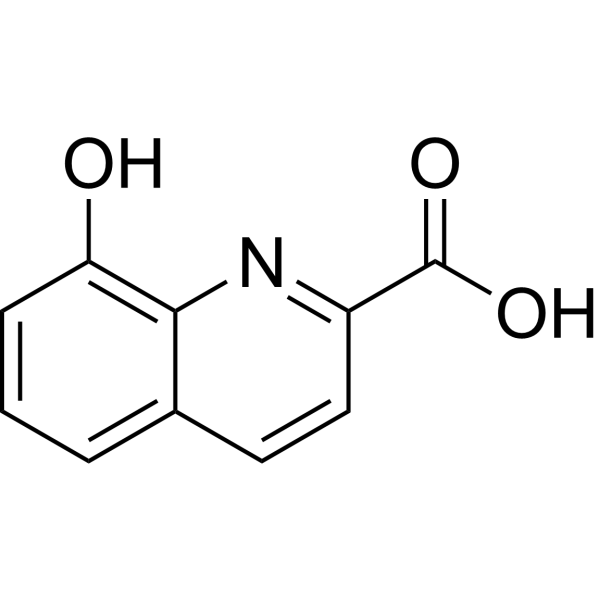
HY-W067427
BAY32-5915IKKα Inhibitor -
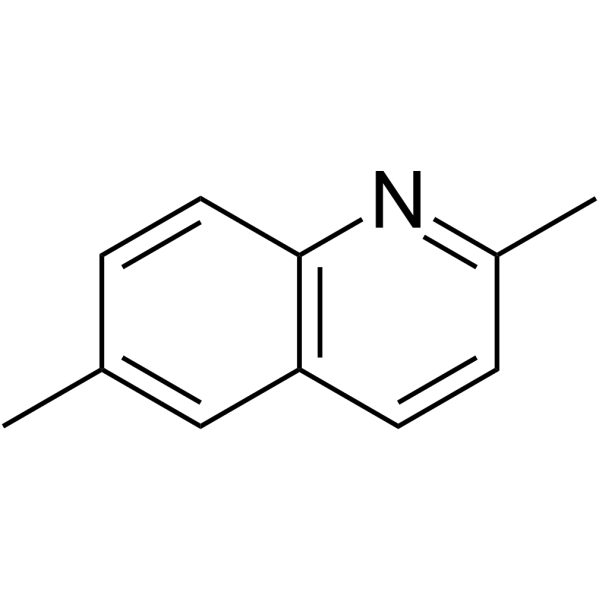
HY-W010195
2,6-DimethylquinolineCYP1A2 Inhibitor -
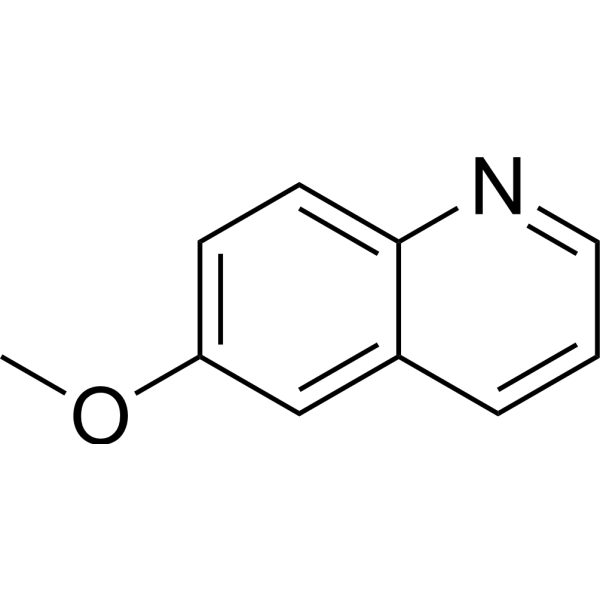
HY-W017232
6-MethoxyquinolineBiochemical Assay Reagent -
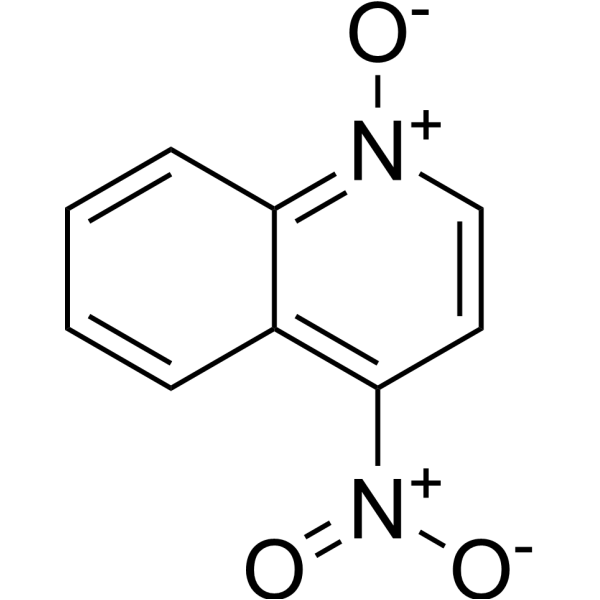
HY-33354
NitrochinChemical Carcinogen -

HY-W005598
2-Hydroxyquinolineα-Glucosidase/α-Amylase Inhibitor -
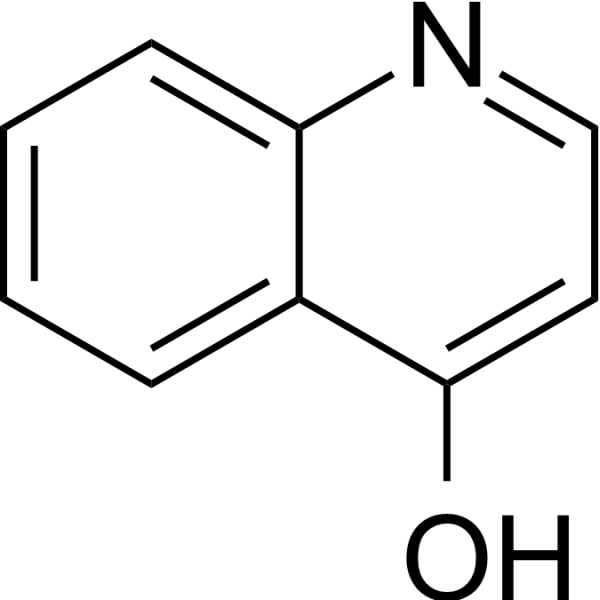
HY-59208
4-QuinolinolQuinoline Derivative -
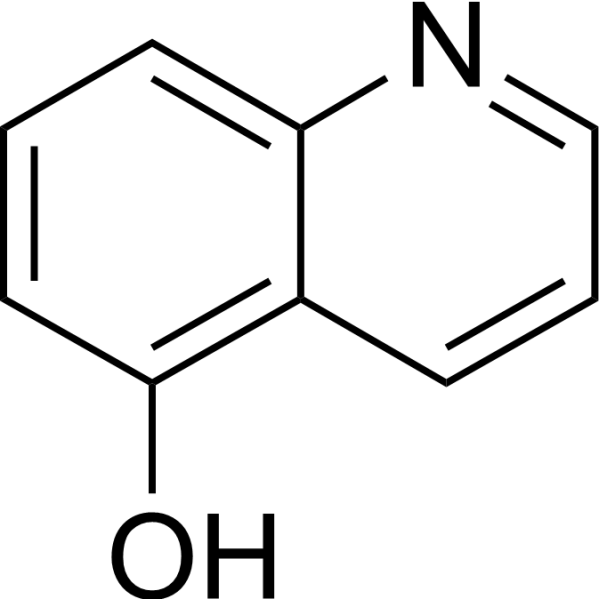
HY-32100
5-HydroxyquinolineBiochemical Assay Reagent -
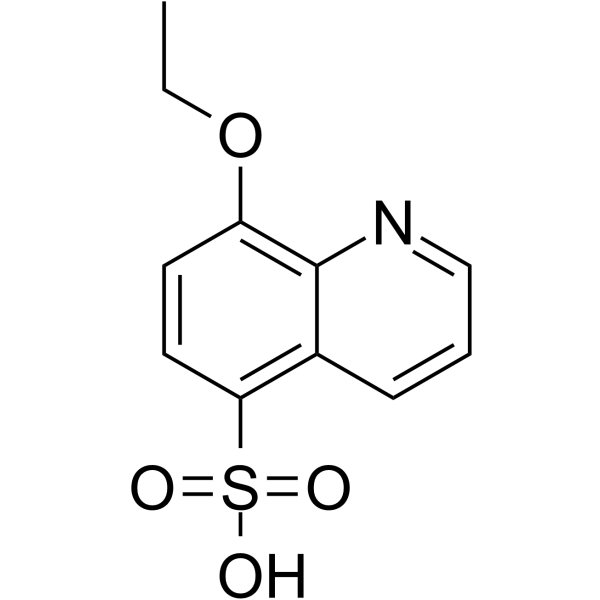
HY-W011889
ActinoquinolUVB Absorber -
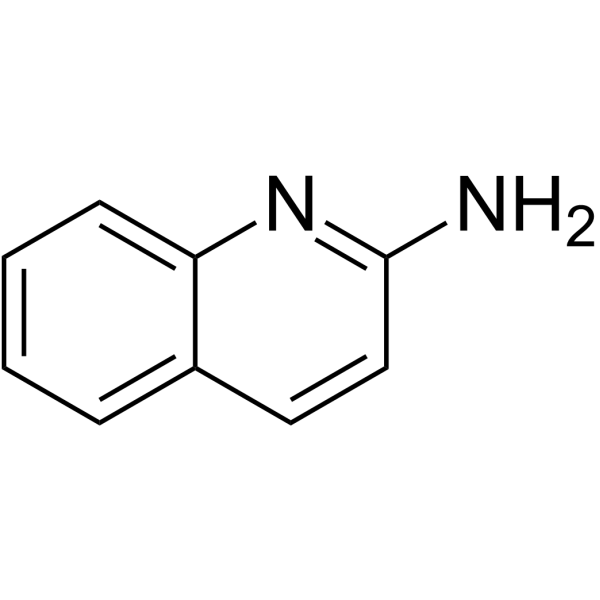
HY-W007524
2-Aminoquinoline -
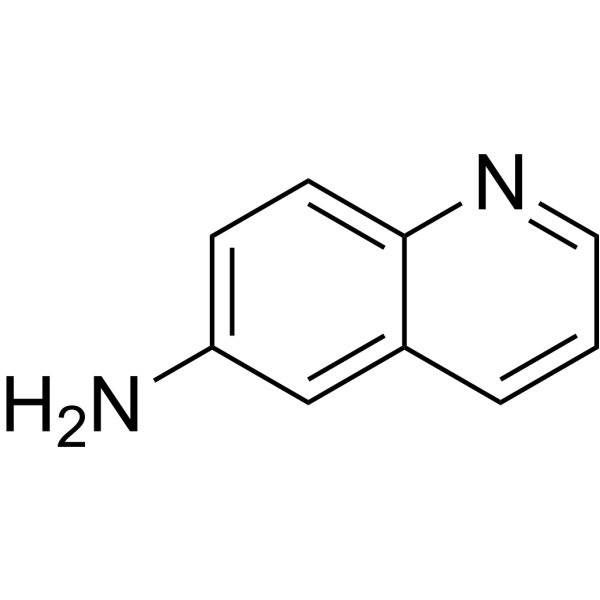
HY-W007404
6-AminoquinolineBiochemical Reagent -
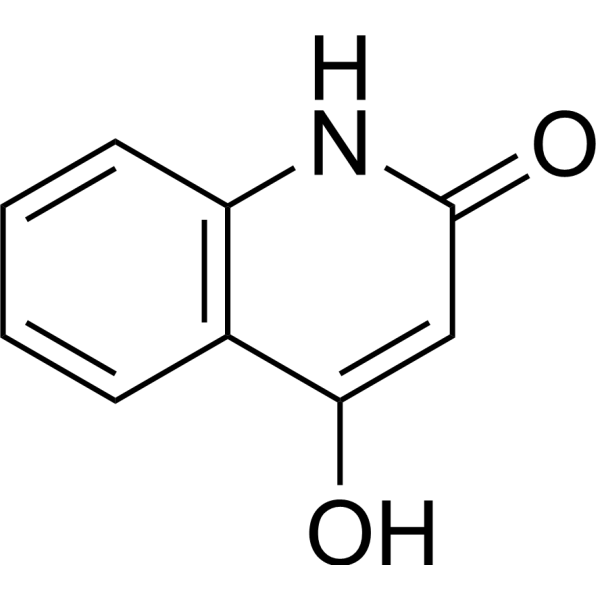
HY-Y1685
2,4-DihydroxyquinolineBiochemical Reagent -
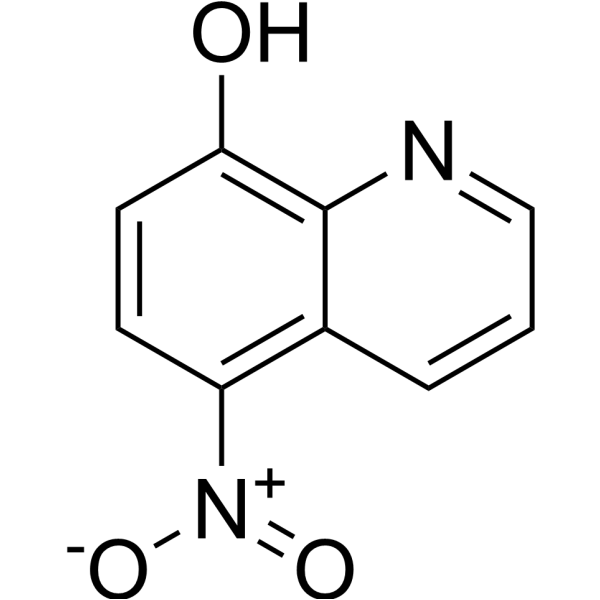
HY-B1159
NitroxolineAntibiofilm Agent


Biological Activity
Description
8-Methoxyquinoline is a structural analogue of 8-hydroxyquinoline (HY-B1005). 8-Methoxyquinoline does not bind copper. 8-Methoxyquinoline could neither inhibit the chymotrypsin-like activity of the proteasome in breast cancer cell cultures nor induce cancer cell death. 8-Methoxyquinoline can be used in the research of breast cancer[1].
In Vitro
8-Methoxyquinoline (10 μM; 1-2 h) does not facilitate copper transport into DCIS cells when mixed with CuCl2[1].
8-Methoxyquinoline-CuCl2 mixtures (1.0-20.0 μM; 24 h) has much less growth-
inhibitory effect in contrast to that of 8-hydroxyquinoline-CuCl2 in DCIS cells[1].
8-Methoxyquinoline-CuCl2 mixtures (1.0-5.0 μM; 8-12 h) do not inhibit proteasomal CT-like activity in DCIS cells[1].
MedChemExpress (MCE) has not independently confirmed the accuracy of these methods. They are for reference only. Further protocols information, click here.


Chemical Information
-
CAS No. 938-33-0
-
Appearance Solid
-
Molecular Weight 159.18
-
Formula C10H9NO
-
SMILES
COC1=CC=CC2=C1N=CC=C2
-
Shipping
Room temperature in continental US; may vary elsewhere.
-
Storage
Store at room temperature 3 years
In solvent -80°C 2 years -20°C 1 year

Protocols
-
Cell Cytotoxicity Assay
Cytotoxicity assays are usually based on the assessment of cell membrane damage, which can also be indirectly detected by measuring cell viability. Detection methods include MTT assay, CKK-8 assay, LDH assay and ATP assay, etc.
-
Mammalian live/dead viability and cytotoxicity staining
Live/dead viability and cytotoxicity staining assays are based on the simultaneous detection of intracellular esterase activity in metabolically active (viable) cells and membrane integrity loss in non-viable cells. In commonly used dual-staining approaches, membrane-permeant fluorogenic substrates are converted by intracellular esterases into fluorescent products in live cells, while impermeant DNA-binding dyes selectively enter cells with compromised plasma membranes and label nucleic acids in dead or dying cells, enabling discrimination between viable and non-viable populations by fluorescence microscopy or flow cytometry.
-
Apoptosis Solutions
Apoptosis is a regulated, generally non-lytic cell-death pathway that removes unwanted, damaged, infected, or abnormal cells through coordinated morphological changes, caspase activation, DNA fragmentation, and membrane remodeling. The intrinsic apoptosis pathway is controlled mainly by mitochondrial outer membrane permeabilization, BCL-2 family proteins, cytochrome c release, apoptosome formation, caspase-9 activation, and downstream executioner caspase-3/7 activation. The extrinsic apoptosis pathway is initiated by death receptors such as Fas, TNFR, and TRAIL receptors, which recruit adaptor proteins and activate caspase-8 before engaging executioner caspases or mitochondrial amplification through BID cleavage. Apoptosis is linked to many phenotypes, including cancer cell killing, tissue homeostasis, immune regulation, neurodegeneration, infection response, and treatment-induced cytotoxicity; unresolved questions include how apoptosis interacts with necroptosis, pyroptosis, ferroptos
-
Breast Cancer Modeling
Breast cancer is a heterogeneous cancer, and it has been distinguished into four subtypes: luminal A, luminal B, HER2-positive and basal-like. Molecular mutations, epigenetic alterations, hormone exposure and immune microenvironment are related to the progression of breast cancer.


Purity & Documentation
-
Data Sheet (274 KB)
-
SDS (252 KB)
- Français - FR (252 KB)
- Deutsch - DE (252 KB)
- Norwegian - NO (252 KB)
- Español - ES (252 KB)
- Swedish - SV (252 KB)
- Italian - IT (252 KB)
- Korean - KR (252 KB)
- Portuguese - PT (252 KB)
-
Handling Instructions (2659 KB)
References

Calculators
Concentration (start) × Volume (start) = Concentration (final) × Volume (final)


8-Methoxyquinoline Related Classifications
HY-W051530 Related Classifications
 Powered by Bioz