



BMS-986020
Based on 9 publication(s) in Google Scholar
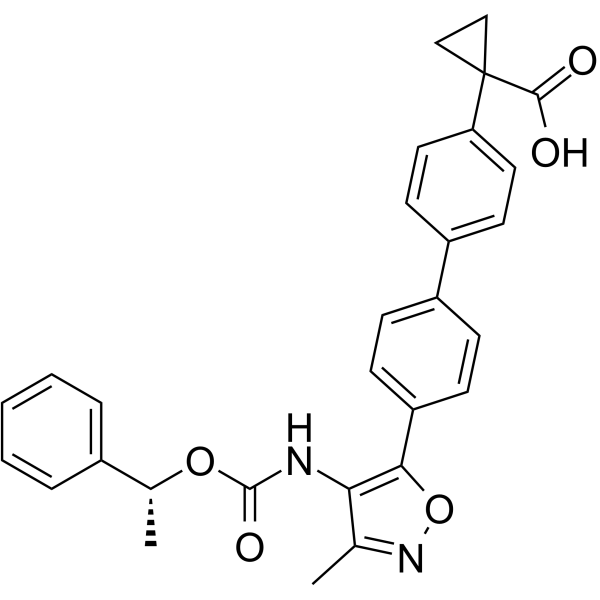
BMS-986020 (AM152) is a high-affinity and selective lysophosphatidic acid receptor 1 (LPA1) antagonist. BMS-986020 inhibits bile acid and phospholipid transporters with IC50s of 4.8 μM, 6.2 μM, and 7.5 μM for BSEP, MRP4, and MDR3, respectively. BMS-986020 has the potential for the treatment of idiopathic pulmonary fibrosis (IPF).
For research use only. We do not sell to patients.
- Purity : 99.83%
- CAS No.: 1257213-50-5
- Formula: C29H26N2O5
- Molecular Weight:482.53
-
Storage:Powder -20°C, 3 years , 4°C, 2 years ; In solvent -80°C, 2 years , -20°C, 1 year

To place orders, for customer services and technical support, please contact: MedChemExpress USA
Tel: 609-228-6898 E-mail: [email protected] [email protected]


-
 Biological Activity
-
Chemical Information
-
Solvent & Solubility
- Protocols
- Purity & Documentation
- References
-
 Help & FAQs


-
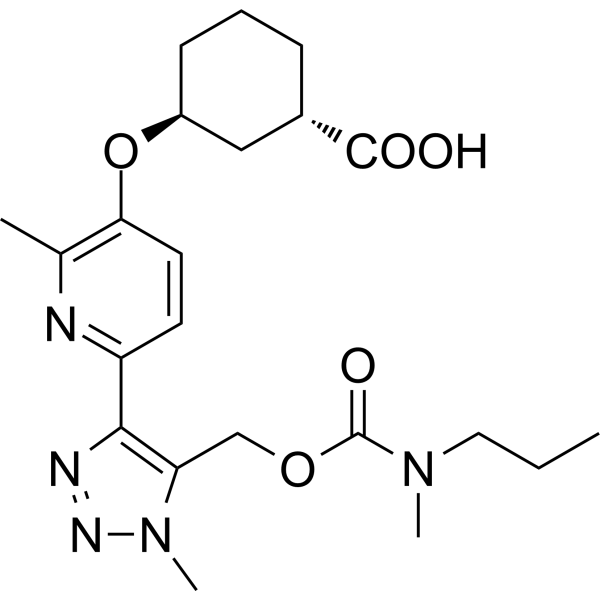
HY-139853
BMS-986278LPA1 Antagonist -
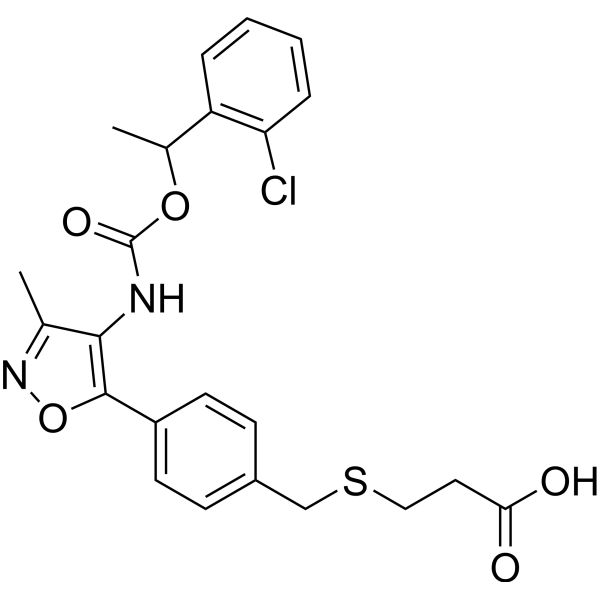
HY-13285
Ki16425LPA1/3 Antagonist -
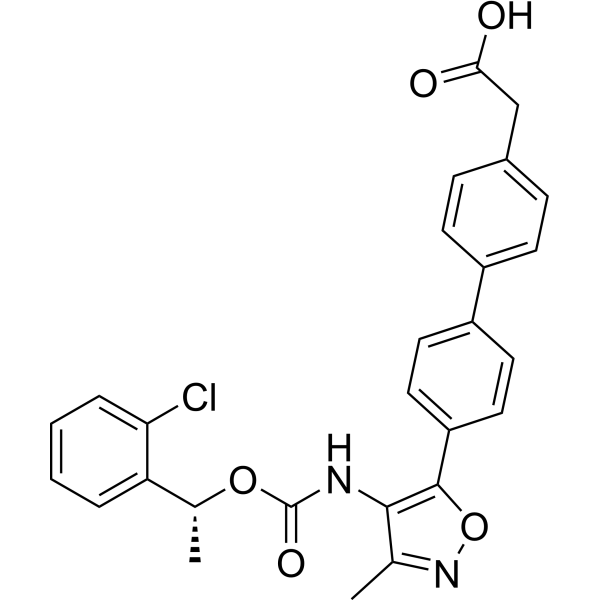
HY-15277
AM966LPA1 Receptor Antagonist -
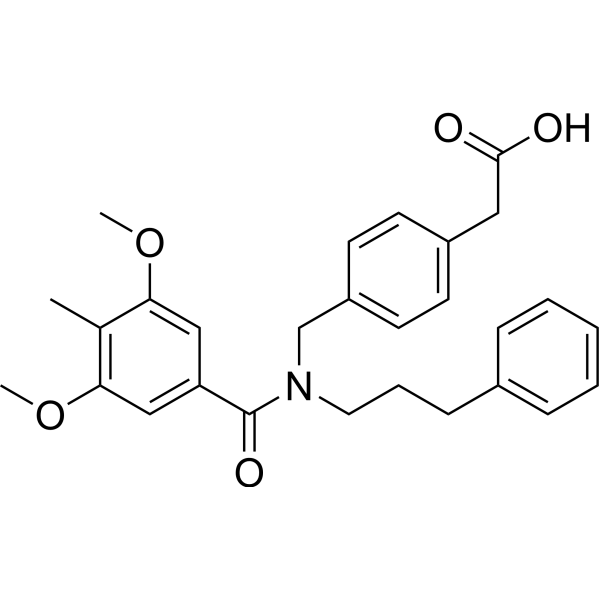
HY-100882
ONO-7300243LPA1 Antagonist -
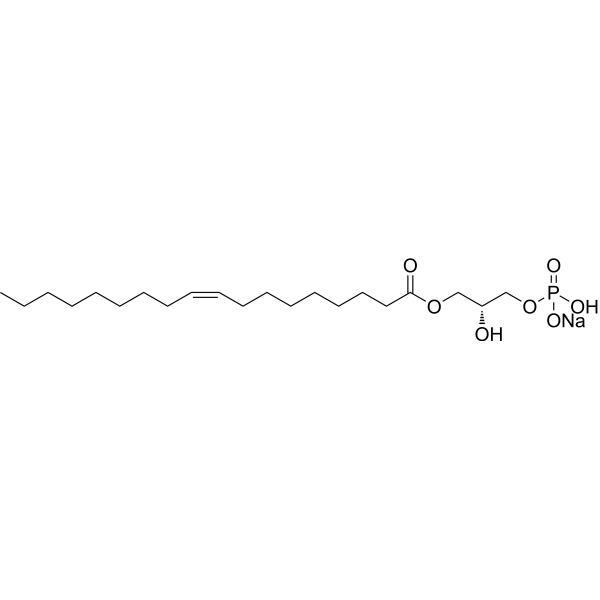
HY-107614
1-Oleoyl lysophosphatidic acid sodiumLPA Receptor Activator -
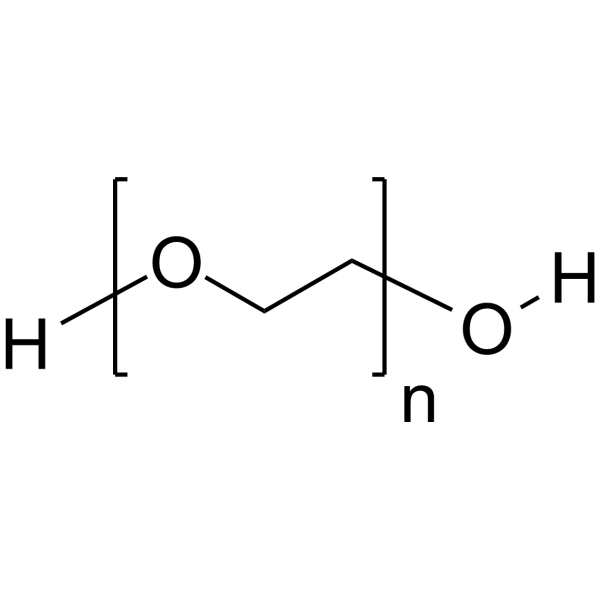
HY-Y0873
PEG300Neutral Polymer -
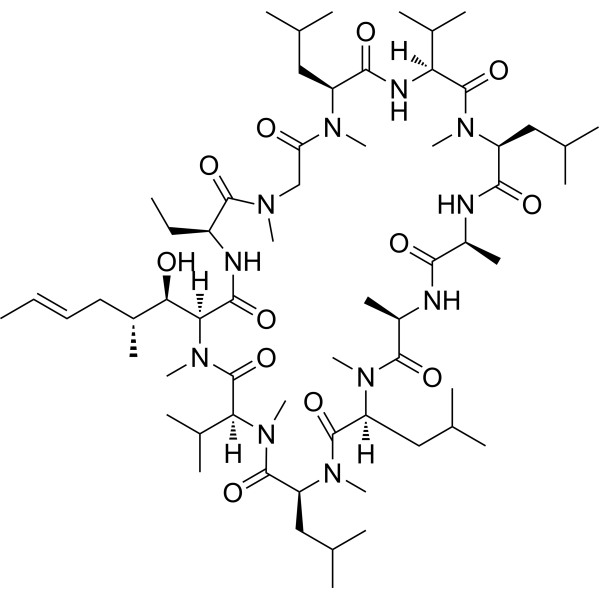
HY-B0579
Cyclosporin ACalcineurin Inhibitor -
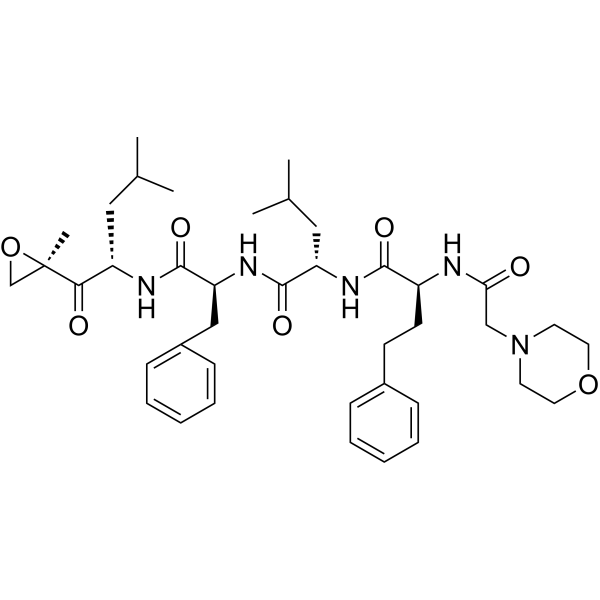
HY-10455
CarfilzomibProteasome Inhibitor -
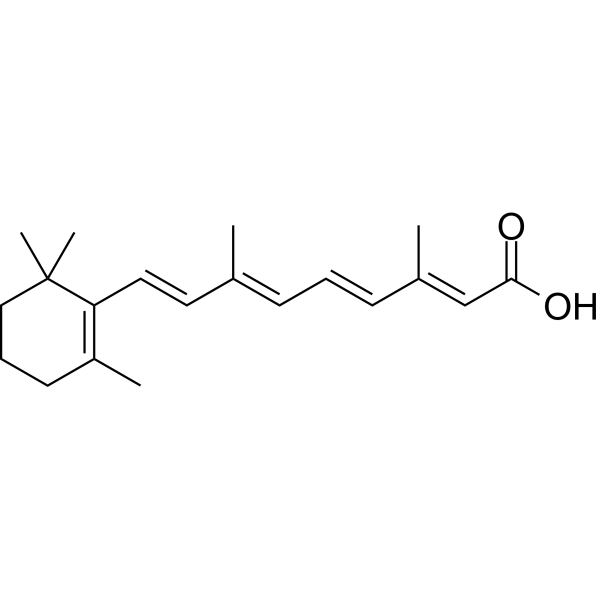
HY-14649
Retinoic acidRAR Agonist -
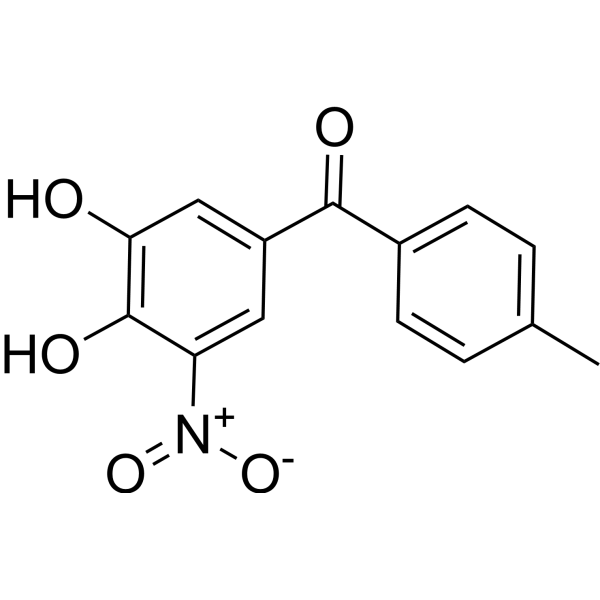
HY-17406
TolcaponeCOMT Inhibitor -
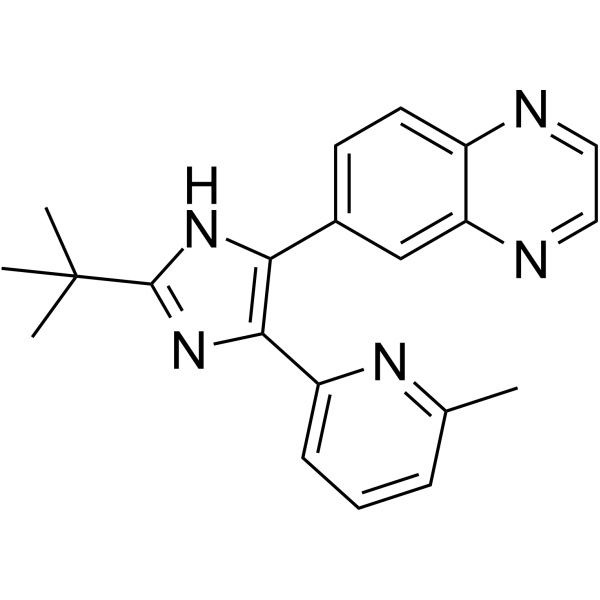
HY-12043
SB 525334ALK5 Inhibitor -
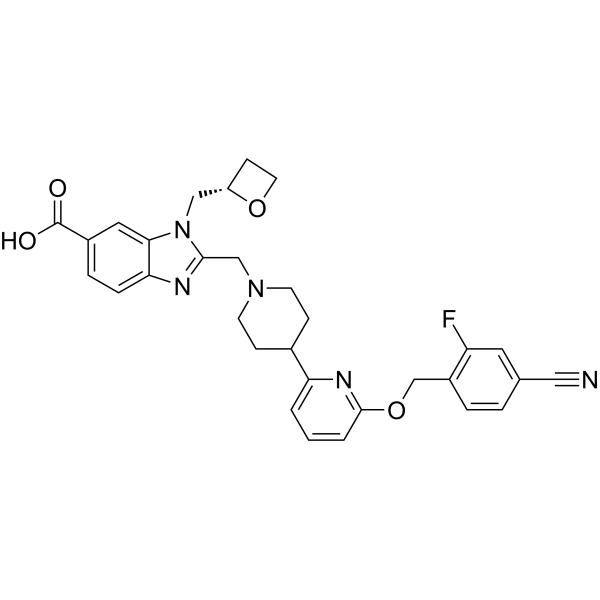
HY-125824
DanuglipronGLP-1R Agonist
Publications Citing Use of MedChemExpress (MCE) BMS-986020
More- Sci Adv. 2021 Sep 17;7(38):eabb5933. [Abstract]
- Cell Commun Signal. 2023 Sep 25;21(1):257. [Abstract]
- Cell Rep. 2019 Nov 12;29(7):1832-1847.e8. [Abstract]
- Cells. 2024 Jul 6;13(13):1152. [Abstract]
- Commun Biol. 2024 May 23;7(1):621. [Abstract]
- Carcinogenesis. 2021 Apr 30;42(4):611-620. [Abstract]
- J Appl Toxicol. 2024 Nov;44(11):1725-1741. [Abstract]
- J Pharmacol Sci. 2025 Jun;158(2):139-142. [Abstract]
- Seoul National University. 2024 Feb.


Biological Activity
Description
IC50 & Target
IC50: 4.8 µM (BSEP); 6.2 µM (MRP4); 7.5 µM (MDR3)[2]
In Vitro
BMS-986020 (0.1-10 nM; pre-incubated) concentration-dependent displacement of [18F]BMT-083133 binding is observed in LPA1+ cells and lung sections.?At 0.1 nM, the percent displacement in healthy mice, bleomycin mice, and IPF lungs is 18%, 24%, and 31%, respectively. At 10 nM, the percent displacement is 73%, 76%, and 64%, respectively.[18F]BMT-083133, a radioligand targeting LPA1 is developed as a translational research tool for assessment of lung LPA1 engagement of BMS-986020 using in vitro autoradiography (ARG)[4].
MedChemExpress (MCE) has not independently confirmed the accuracy of these methods. They are for reference only. Further protocols information, click here.
Clinical Trial
| NCT Number | Sponsor | Condition | Start Date |
Phase

|
|---|---|---|---|---|
| NCT01329991 | Plexxikon| | 2011-05 | PHASE1 |


Chemical Information
-
CAS No. 1257213-50-5
-
Appearance Solid
-
Molecular Weight 482.53
-
Formula C29H26N2O5
-
Color White to yellow
-
SMILES
O=C(C1(C2=CC=C(C3=CC=C(C4=C(NC(O[C@@H](C5=CC=CC=C5)C)=O)C(C)=NO4)C=C3)C=C2)CC1)O
-
Synonyms
AM152
-
Shipping
Room temperature in continental US; may vary elsewhere.
-
Storage
Powder -20°C 3 years 4°C 2 years In solvent -80°C 2 years -20°C 1 year


Publications (9)
-
Journal Impact Factor
-
Most Recent
-
Sci Adv
Targeting lysophospholipid acid receptor 1 and ROCK kinases promotes antiviral innate immunity. [Abstract]2021 Sep 17;7(38):eabb5933. PMID: 34533996 -
Cell Commun Signal
LPA1-mediated inhibition of CXCR4 attenuates CXCL12-induced signaling and cell migration. [Abstract]2023 Sep 25;21(1):257. PMID: 37749552 -
Cell Rep
Single-Cell Transcriptomics Uncovers Zonation of Function in the Mesenchyme during Liver Fibrosis. [Abstract]2019 Nov 12;29(7):1832-1847.e8. PMID: 31722201 -
Cells
2024 Jul 6;13(13):1152. PMID: 38995003 -
Commun Biol
2024 May 23;7(1):621. PMID: 38783088 -
Carcinogenesis
Lysophosphatidic acid mediated PI3K/Akt activation contributed to esophageal squamous cell cancer progression. [Abstract]2021 Apr 30;42(4):611-620. PMID: 33367557 -
J Appl Toxicol
Oleanolic acid induces hepatic injury by disrupting hepatocyte tight junction and dysregulation of farnesoid X receptor-mediated bile acid efflux transporters. [Abstract]2024 Nov;44(11):1725-1741. PMID: 39030772 -
J Pharmacol Sci
A novel lysophosphatidic acid receptor 1 antagonist with high brain penetrability has a curative effect in the empathic pain-related fibromyalgia model. [Abstract]2025 Jun;158(2):139-142. PMID: 40288824 -


Solvent & Solubility
In Vitro:
DMSO : 125 mg/mL (259.05 mM; Need ultrasonic; Hygroscopic DMSO has a significant impact on the solubility of product, please use newly opened DMSO)
Please refer to the solubility information to select the appropriate solvent. Once prepared, please aliquot and store the solution to prevent product inactivation from repeated freeze-thaw cycles.
Storage method and period of stock solution: -80°C, 2 years; -20°C, 1 year. When stored at -80°C, please use it within 2 years. When stored at -20°C, please use it within 1 year.
Please refer to the solubility information to select the appropriate solvent. Once prepared, please aliquot and store the solution to prevent product inactivation from repeated freeze-thaw cycles.
Storage method and period of stock solution: -80°C, 2 years; -20°C, 1 year. When stored at -80°C, please use it within 2 years. When stored at -20°C, please use it within 1 year.
Concentration (start) × Volume (start) = Concentration (final) × Volume (final)
In Vivo:
Select the appropriate dissolution method based on your experimental animal and administration route.
- For the following dissolution methods, please ensure to first prepare a clear stock solution using an In Vitro approach and then sequentially add co-solvents:
- To ensure reliable experimental results, the clarified stock solution can be appropriately stored based on storage conditions. As for the working solution for In Vivo experiments, it is recommended to prepare freshly and use it on the same day.
- The percentages shown for the solvents indicate their volumetric ratio in the final prepared solution. If precipitation or phase separation occurs during preparation, heat and/or sonication can be used to aid dissolution.
Add each solvent one by one: 10% DMSO 40% PEG300 5% Tween-80 45% Saline
Solubility: ≥ 2.08 mg/mL (4.31 mM); Clear solution
This protocol yields a clear solution of ≥ 2.08 mg/mL (saturation unknown).
Taking 1 mL working solution as an example, add 100 μL DMSO stock solution (20.8 mg/mL) to 400 μL PEG300, and mix evenly; then add 50 μL Tween-80 and mix evenly; then add 450 μL Saline to adjust the volume to 1 mL.
Preparation of Saline: Dissolve 0.9 g sodium chloride in ddH₂O and dilute to 100 mL to obtain a clear Saline solution.
In Vivo Dissolution Calculator
Please enter the basic information of animal experiments:
-
-
-
-
Recommended: Prepare an additional quantity of animals to account for potential losses during experiments.
Please enter your animal formula composition:
-
%DMSO +
Recommended: Keep the proportion of DMSO in working solution below 2% if your animal is weak.
-
%+
-
+%Tween-80 + +
-
%Saline +
The co-solvents required include: DMSO, . All of co-solvents are available by MedChemExpress (MCE). , Tween 80. All of co-solvents are available by MedChemExpress (MCE).
Working solution concentration: 0.22 mg/mL
Method for preparing stock solution: mg drug dissolved in μL DMSO. Stock solution concentration: mg/mL.
1. Take μL DMSO stock solution;
2. Add μL .
μL , mix evenly;
3. Then add μL Tween 80, mix evenly;
4. Then add μL
Please ensure that the stock solution in the first step is dissolved to a clear state, and add co-solvents in sequence. You can use ultrasonic heating (ultrasonic cleaner, recommended frequency 20-40 kHz), vortexing, etc. to assist dissolution.

Protocols
-
Fibrosis/Collagen Morphometry
Fibrosis and collagen morphometry is based on the quantitative visualization of fibrillar collagen deposition in tissue sections using histochemical stains such as Sirius Red (Picrosirius Red) or Masson's trichrome, followed by image-based or polarization-enhanced analysis to estimate collagen proportional area as a surrogate of extracellular matrix accumulation during fibrotic remodeling. Sirius Red combined with polarized light microscopy enhances detection of collagen fibers due to birefringence properties, enabling more specific visualization of collagen type I and III fibrils compared to conventional bright-field histology, while whole-section or region-restricted digital morphometry reduces field-selection bias in fibrosis assessment. Alternative quantitative approaches include second harmonic generation (SHG) and two-photon excited fluorescence microscopy, which enable label-free detection of fibrillar collagen and have been validated against histological staining and biochemica
-
Collagen: Sirius Red Staining
Sirius Red or picrosirius red staining is a histochemical method for visualizing collagen-rich extracellular matrix in tissue sections, and collagen fibers are detected as red-stained structures under bright-field microscopy with enhanced birefringence under polarized light. Picrosirius red is useful for assessing total collagen organization, distribution, and fibrosis burden, but polarized color should not be interpreted as a definitive collagen type I versus type III readout because color is affected by fiber orientation, thickness, and packing.
-
Connective Tissue: Masson's Trichrome/Collagen Trichrome Staining
Masson’s Trichrome (collagen/trichrome staining) is a histological technique that differentially stains tissue compartments using sequential acidic dyes to distinguish collagen from muscle and cytoplasmic components based on dye affinity and tissue permeability differences, enabling visualization of fibrosis and connective tissue architecture in histological sections. The classical formulation typically uses Weigert's iron hematoxylin for nuclear staining, Biebrich scarlet-acid fuchsin for cytoplasm and muscle, and aniline blue (or light green variants) for collagen, producing a characteristic blue/green collagen signal contrasted against red cytoplasm and dark nuclei. The staining principle relies on selective displacement of smaller dye molecules by larger anionic dyes in collagen-rich regions under controlled acidified conditions, which enhances collagen-specific dye retention. This property makes the method widely used for fibrosis assessment in organs such as heart, liver, lung, a


Purity & Documentation
-
Data Sheet (281 KB)
-
SDS (393 KB)
- English - EN (393 KB)
- Français - FR (393 KB)
- Deutsch - DE (393 KB)
- Norwegian - NO (393 KB)
- Español - ES (393 KB)
- Swedish - SV (393 KB)
- Italian - IT (393 KB)
- Korean - KR (393 KB)
- Portuguese - PT (393 KB)
-
Handling Instructions (2659 KB)
References
[1]. Kihara Y, et al. Lysophospholipid receptors in drug discovery. Exp Cell Res. 2015 May 1;333(2):171-7. [Content Brief]
[3]. Palmer SM, et al. Randomized, Double-Blind, Placebo-Controlled, Phase 2 Trial of BMS-986020, a Lysophosphatidic Acid Receptor Antagonist for the Treatment of Idiopathic Pulmonary Fibrosis. Chest. 2018 Nov;154(5):1061-1069. [Content Brief]


Complete Stock Solution Preparation Table
Please refer to the solubility information to select the appropriate solvent. Once prepared, please aliquot and store the solution to prevent product inactivation from repeated freeze-thaw cycles.
Storage method and period of stock solution: -80°C, 2 years; -20°C, 1 year. When stored at -80°C, please use it within 2 years. When stored at -20°C, please use it within 1 year.
| Optional Solvent | Concentration Solvent Mass | 1 mg | 5 mg | 10 mg | 25 mg |
|---|---|---|---|---|---|
| DMSO | 1 mM | 2.0724 mL | 10.3621 mL | 20.7241 mL | 51.8103 mL |
| 5 mM | 0.4145 mL | 2.0724 mL | 4.1448 mL | 10.3621 mL | |
| 10 mM | 0.2072 mL | 1.0362 mL | 2.0724 mL | 5.1810 mL | |
| 15 mM | 0.1382 mL | 0.6908 mL | 1.3816 mL | 3.4540 mL | |
| 20 mM | 0.1036 mL | 0.5181 mL | 1.0362 mL | 2.5905 mL | |
| 25 mM | 0.0829 mL | 0.4145 mL | 0.8290 mL | 2.0724 mL | |
| 30 mM | 0.0691 mL | 0.3454 mL | 0.6908 mL | 1.7270 mL | |
| 40 mM | 0.0518 mL | 0.2591 mL | 0.5181 mL | 1.2953 mL | |
| 50 mM | 0.0414 mL | 0.2072 mL | 0.4145 mL | 1.0362 mL | |
| 60 mM | 0.0345 mL | 0.1727 mL | 0.3454 mL | 0.8635 mL | |
| 80 mM | 0.0259 mL | 0.1295 mL | 0.2591 mL | 0.6476 mL | |
| 100 mM | 0.0207 mL | 0.1036 mL | 0.2072 mL | 0.5181 mL |


BMS-986020 Related Classifications
HY-100619 Related Classifications
 Powered by Bioz