



Bitopertin
Based on 2 publication(s) in Google Scholar
Bitopertin is a potent, noncompetitive glycine reuptake inhibitor, inhibits glycine uptake at human GlyT1 with a concentration exhibiting IC50 of 25 nM.
For research use only. We do not sell to patients.
- Purity : 99.90%
- CAS No.: 845614-11-1
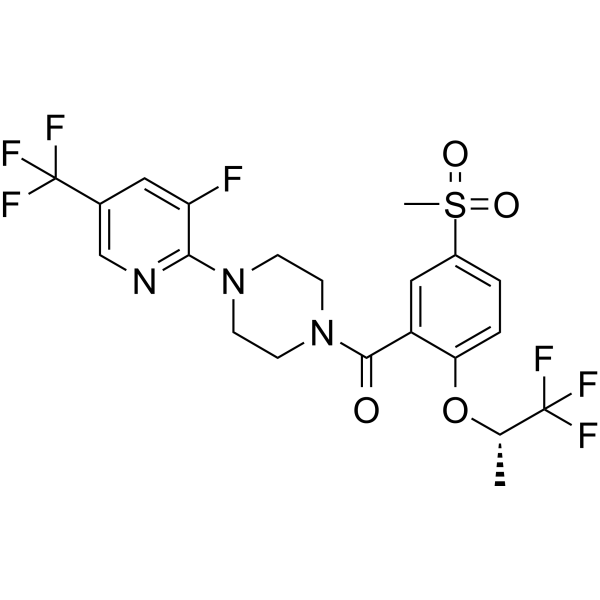
- Formula: C21H20F7N3O4S
- Molecular Weight:543.46
-
Storage:Powder -20°C, 3 years , 4°C, 2 years ; In solvent -80°C, 2 years , -20°C, 1 year

To place orders, for customer services and technical support, please contact: MedChemExpress USA
Tel: 609-228-6898 E-mail: [email protected] [email protected]


-
 Biological Activity
-
Chemical Information
-
Solvent & Solubility
- Protocols
- Purity & Documentation
- References
-
 Help & FAQs


-
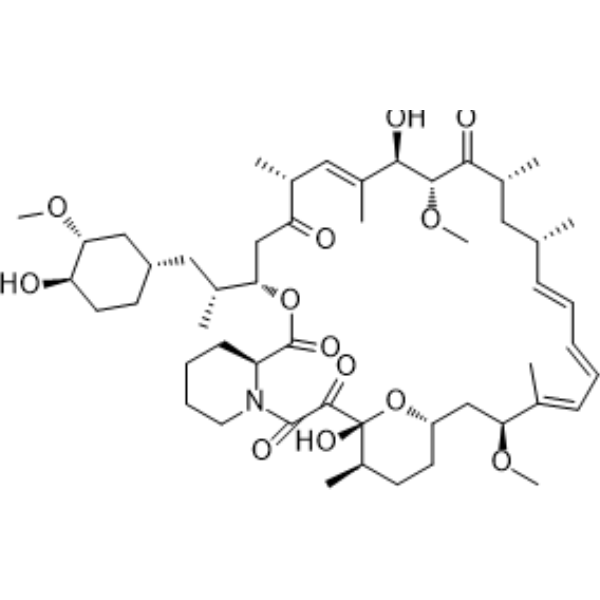
HY-10219
RapamycinmTOR Inhibitor -
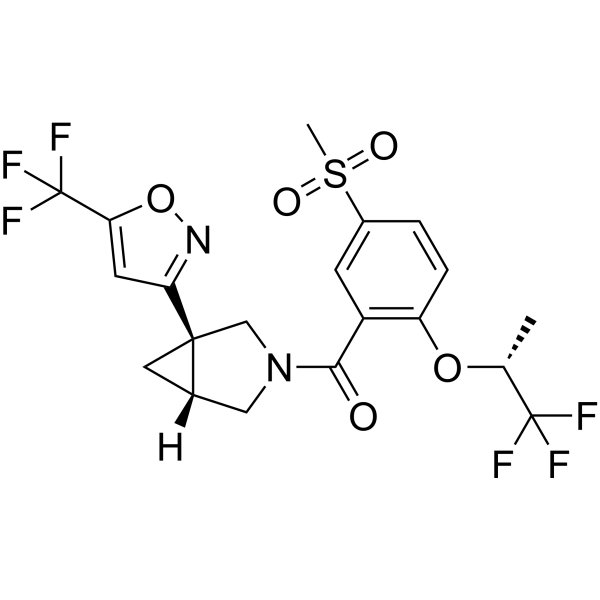
HY-138935
IclepertinGlyT1 Inhibitor -
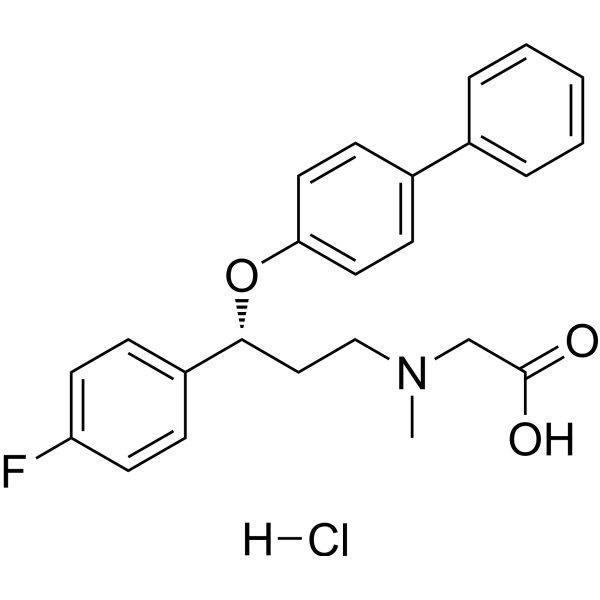
HY-10711A
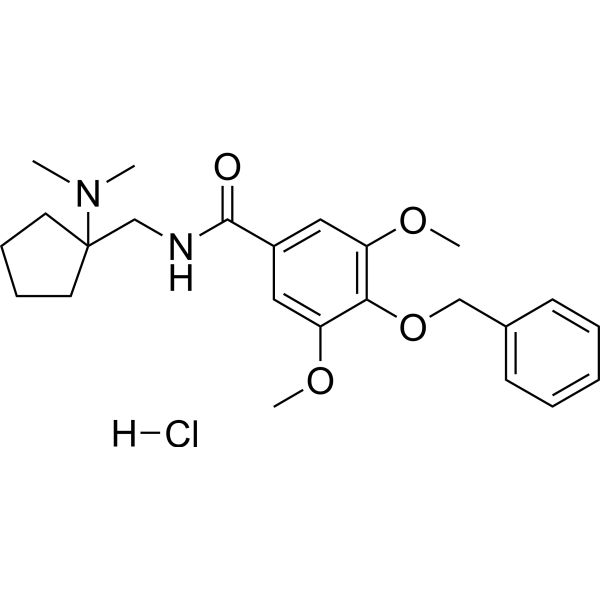
ALX-5407 hydrochlorideGlyT1 Inhibitor -
HY-107527
Org 25543 hydrochlorideGlyT2 Inhibitor -
HY-101037
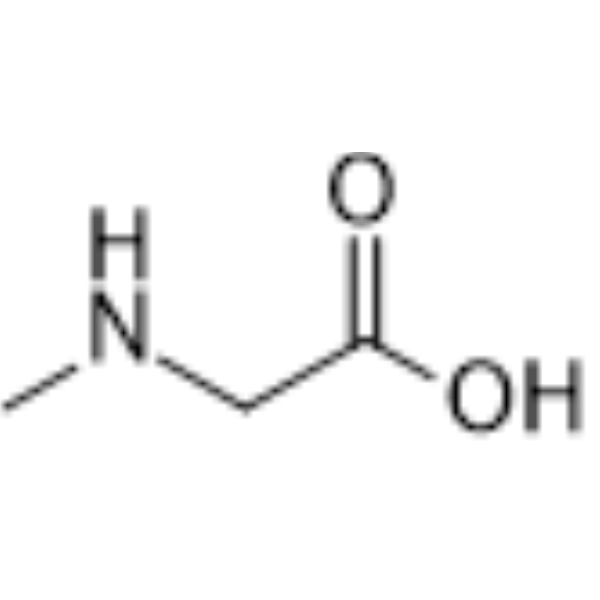
SarcosineGlyT1 Inhibitor -

HY-10809R
Bitopertin (Standard) -
HY-B0991
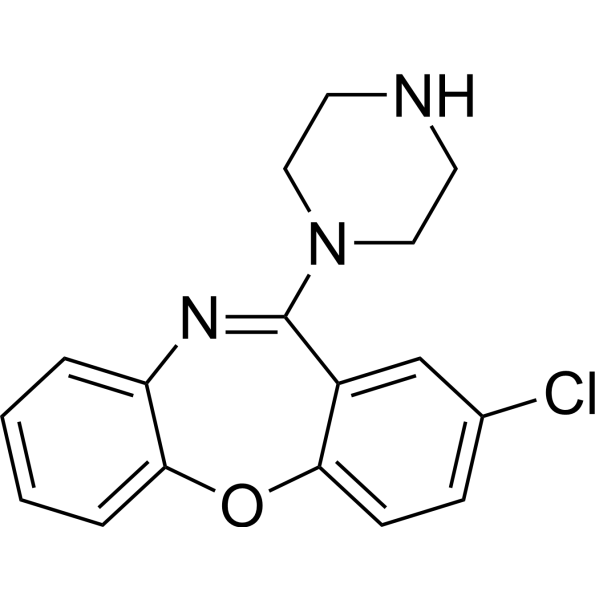
AmoxapineTetracyclic Antidepressant -
HY-100416A
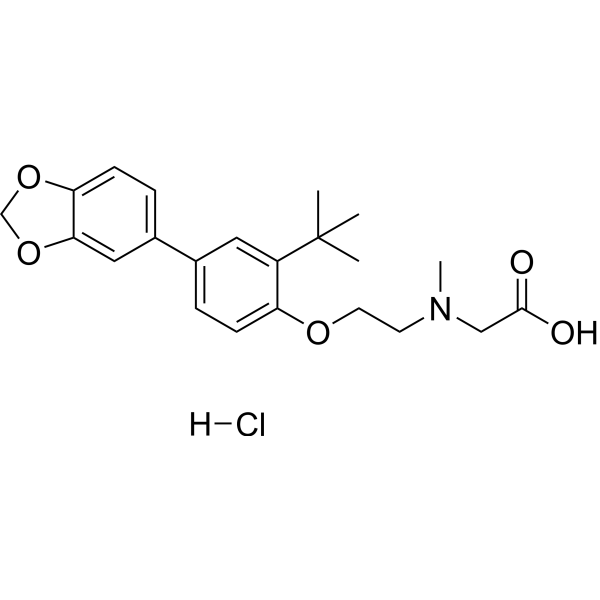
LY2365109 hydrochlorideGlyT1 Inhibitor -
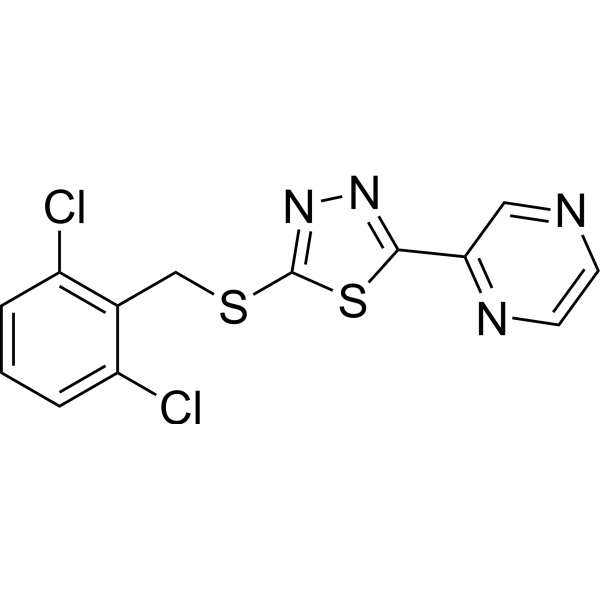
HY-18723
Yoda 1Piezo1 Agonist -
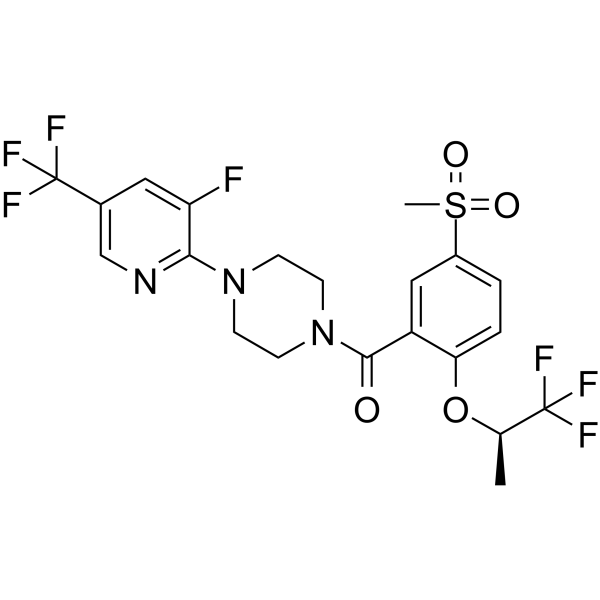
HY-10809A
Bitopertin (R enantiomer)GlyT Inhibitor -

HY-101037R
Sarcosine (Standard)GlyT1 Inhibitor -
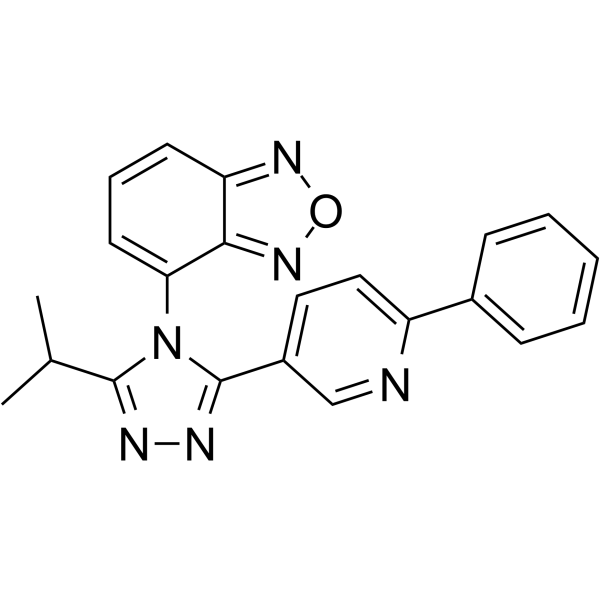
HY-110176
ASP2535GlyT1 Inhibitor
Publications Citing Use of MedChemExpress (MCE) Bitopertin
More Customer Validation & Images

-
Cell Proliferation/Viability Assay


Biological Activity
Description
IC50 & Target
|
GlyT1 |
In Vitro
Bitopertin (RG1678) competitively blocks [3H]ORG24598 binding sites at human GlyT1b in membranes from Chinese hamster ovary cells. Bitopertin potently inhibits [3H]glycine uptake in cells stably expressing hGlyT1b and mGlyT1b, with IC50 values of 25±2 nM and 22±5 nM, respectively (n=6). Conversely, Bitopertin has no effect on hGlyT2-mediated glycine uptake up to 30 μM concentration. Bitopertin has high affinity for the recombinant hGlyT1b transporter. Under equilibrium conditions (1 h at room temperature), Bitopertin displaces [3H]ORG24598 binding with a Ki of 8.1 nM. In hippocampal CA1 pyramidal cells, Bitopertin enhances NMDA-dependent long-term potentiation at 100 nM but not at 300 nM[1]. Additional profiling revealed that Bitopertin (RG1678) has an excellent selectivity profile against the GlyT2 isoform (IC50>30 μM) and toward a panel of 86 targets including transmembrane and soluble receptors, enzymes, ion channels, and monoamine transporters (<41% inhibition at 10 μM is measured for all targets)[2].
MedChemExpress (MCE) has not independently confirmed the accuracy of these methods. They are for reference only. Further protocols information, click here.
In Vivo
MedChemExpress (MCE) has not independently confirmed the accuracy of these methods. They are for reference only.
Clinical Trial
| NCT Number | Sponsor | Condition | Start Date |
Phase

|
|---|---|---|---|---|
| NCT01329991 | Plexxikon| | 2011-05 | PHASE1 |


Chemical Information
-
CAS No. 845614-11-1
-
Appearance Solid
-
Molecular Weight 543.46
-
Formula C21H20F7N3O4S
-
Color White to off-white
-
SMILES
FC1=CC(C(F)(F)F)=CN=C1N2CCN(C(C3=CC(S(=O)(C)=O)=CC=C3O[C@H](C(F)(F)F)C)=O)CC2
-
Synonyms
RG1678; RO4917838
-
Shipping
Room temperature in continental US; may vary elsewhere.
-
Storage
Powder -20°C 3 years 4°C 2 years In solvent -80°C 2 years -20°C 1 year


Publications (2)
-
Journal Impact Factor
-
Most Recent
-
Nat Genet
2025 Mar;57(3):680-693. PMID: 40069506 -
Proc Natl Acad Sci U S A
Human SHMT inhibitors reveal defective glycine import as a targetable metabolic vulnerability of diffuse large B-cell lymphoma. [Abstract]2017 Oct 24;114(43):11404-11409. PMID: 29073064
Bitopertin purchased from MedChemExpress. Usage Cited in: Proc Natl Acad Sci U S A. 2017 Oct 24;114(43):11404-11409. [Abstract]
Cell growth (or death) was measured by log2-fold change in cell number over 48 h in Su-DHL-4 cells cultured in RPMI with and without RG1678 (Bitopertin; 300 nM; 48 h), and/or (+)-SHIN1 (5 μM). Combining RG1678 with SHIN1 further increased cell death, even in the presence of media glycine.


Solvent & Solubility
In Vitro:
DMSO : ≥ 50 mg/mL (92.00 mM; Hygroscopic DMSO has a significant impact on the solubility of product, please use newly opened DMSO)
* "≥" means soluble, but saturation unknown.
Please refer to the solubility information to select the appropriate solvent. Once prepared, please aliquot and store the solution to prevent product inactivation from repeated freeze-thaw cycles.
Storage method and period of stock solution: -80°C, 2 years; -20°C, 1 year. When stored at -80°C, please use it within 2 years. When stored at -20°C, please use it within 1 year.
Please refer to the solubility information to select the appropriate solvent. Once prepared, please aliquot and store the solution to prevent product inactivation from repeated freeze-thaw cycles.
Storage method and period of stock solution: -80°C, 2 years; -20°C, 1 year. When stored at -80°C, please use it within 2 years. When stored at -20°C, please use it within 1 year.
Concentration (start) × Volume (start) = Concentration (final) × Volume (final)
In Vivo:
Select the appropriate dissolution method based on your experimental animal and administration route.
- For the following dissolution methods, please ensure to first prepare a clear stock solution using an In Vitro approach and then sequentially add co-solvents:
- To ensure reliable experimental results, the clarified stock solution can be appropriately stored based on storage conditions. As for the working solution for In Vivo experiments, it is recommended to prepare freshly and use it on the same day.
- The percentages shown for the solvents indicate their volumetric ratio in the final prepared solution. If precipitation or phase separation occurs during preparation, heat and/or sonication can be used to aid dissolution.
Add each solvent one by one: 10% DMSO 90% (20% SBE-β-CD in Saline)
Solubility: ≥ 2.5 mg/mL (4.60 mM); Clear solution
This protocol yields a clear solution of ≥ 2.5 mg/mL (saturation unknown).
Taking 1 mL working solution as an example, add 100 μL DMSO stock solution (25.0 mg/mL) to 900 μL 20% SBE-β-CD in Saline, and mix evenly.
Preparation of 20% SBE-β-CD in Saline (4°C, storage for one week): 2 g SBE-β-CD powder is dissolved in 10 mL Saline, completely dissolve until clear.
In Vivo Dissolution Calculator
Please enter the basic information of animal experiments:
-
-
-
-
Recommended: Prepare an additional quantity of animals to account for potential losses during experiments.
Please enter your animal formula composition:
-
%DMSO +
Recommended: Keep the proportion of DMSO in working solution below 2% if your animal is weak.
-
%+
-
+%Tween-80 + +
-
%Saline +
The co-solvents required include: DMSO, . All of co-solvents are available by MedChemExpress (MCE). , Tween 80. All of co-solvents are available by MedChemExpress (MCE).
Working solution concentration: 0.22 mg/mL
Method for preparing stock solution: mg drug dissolved in μL DMSO. Stock solution concentration: mg/mL.
1. Take μL DMSO stock solution;
2. Add μL .
μL , mix evenly;
3. Then add μL Tween 80, mix evenly;
4. Then add μL
Please ensure that the stock solution in the first step is dissolved to a clear state, and add co-solvents in sequence. You can use ultrasonic heating (ultrasonic cleaner, recommended frequency 20-40 kHz), vortexing, etc. to assist dissolution.

Protocols
-
Cell Cytotoxicity Assay
Cytotoxicity assays are usually based on the assessment of cell membrane damage, which can also be indirectly detected by measuring cell viability. Detection methods include MTT assay, CKK-8 assay, LDH assay and ATP assay, etc.


Purity & Documentation
-
Data Sheet (281 KB)
-
SDS (393 KB)
- English - EN (393 KB)
- Français - FR (393 KB)
- Deutsch - DE (393 KB)
- Norwegian - NO (393 KB)
- Español - ES (393 KB)
- Swedish - SV (393 KB)
- Italian - IT (393 KB)
- Korean - KR (393 KB)
- Portuguese - PT (393 KB)
-
Handling Instructions (2659 KB)
References
[1]. Alberati D, et al. Glycine reuptake inhibitor RG1678: A pharmacologic characterization of an investigational agent for the treatment of schizophrenia. Neuropharmacology. 2012 Feb;62(2):1152-61. [Content Brief]
[2]. Pinard E, et al. Selective GlyT1 Inhibitors: Discovery of [4-(3-Fluoro-5-trifluoromethylpyridin-2-yl)piperazin-1-yl][5-methanesulfonyl-2-((S)-2,2,2-trifluoro-1-methylethoxy)phenyl]methanone (RG1678), a Promising Novel Medicine To Treat Schizophrenia. J Me [Content Brief]


Complete Stock Solution Preparation Table
Please refer to the solubility information to select the appropriate solvent. Once prepared, please aliquot and store the solution to prevent product inactivation from repeated freeze-thaw cycles.
Storage method and period of stock solution: -80°C, 2 years; -20°C, 1 year. When stored at -80°C, please use it within 2 years. When stored at -20°C, please use it within 1 year.
| Optional Solvent | Concentration Solvent Mass | 1 mg | 5 mg | 10 mg | 25 mg |
|---|---|---|---|---|---|
| DMSO | 1 mM | 1.8401 mL | 9.2003 mL | 18.4006 mL | 46.0015 mL |
| 5 mM | 0.3680 mL | 1.8401 mL | 3.6801 mL | 9.2003 mL | |
| 10 mM | 0.1840 mL | 0.9200 mL | 1.8401 mL | 4.6002 mL | |
| 15 mM | 0.1227 mL | 0.6134 mL | 1.2267 mL | 3.0668 mL | |
| 20 mM | 0.0920 mL | 0.4600 mL | 0.9200 mL | 2.3001 mL | |
| 25 mM | 0.0736 mL | 0.3680 mL | 0.7360 mL | 1.8401 mL | |
| 30 mM | 0.0613 mL | 0.3067 mL | 0.6134 mL | 1.5334 mL | |
| 40 mM | 0.0460 mL | 0.2300 mL | 0.4600 mL | 1.1500 mL | |
| 50 mM | 0.0368 mL | 0.1840 mL | 0.3680 mL | 0.9200 mL | |
| 60 mM | 0.0307 mL | 0.1533 mL | 0.3067 mL | 0.7667 mL | |
| 80 mM | 0.0230 mL | 0.1150 mL | 0.2300 mL | 0.5750 mL |


Bitopertin Related Classifications
HY-10809 Related Classifications
 Powered by Bioz