



CZC-25146

Based on 1 Customer Validation
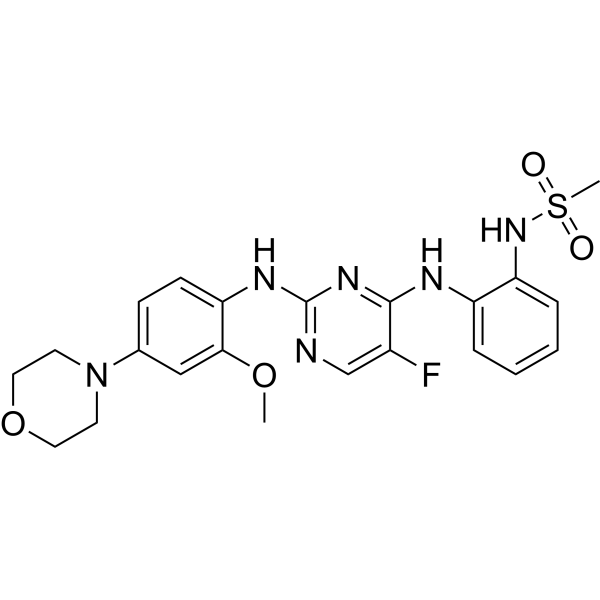
CZC-25146 is a potent and orally active LRRK2 inhibitor with IC50 values of 4.76 nM and 6.87 nM for wild-type LRRK2 and G2019S LRRK2, respectively. CZC-25146 inhibits PLK4, GAK, TNK1, CAMKK2 and PIP4K2C as well. CZC-25146 prevents mutant LRRK2-induced injury of neurons in vitro. CZC-25146 exhibits relatively favorable pharmacokinetic properties in mice. CZC-25146 can increase normal α-1-antitrypsin (AAT) secretion and reduce inflammatory cytokines. CZC-25146 can be used to research Parkinson's disease and liver diseases.
For research use only. We do not sell to patients.
- Purity : 98.05%
- CAS No.: 1191911-26-8
- Formula: C22H25FN6O4S
- Molecular Weight:488.54
-
Storage:Powder -20°C, 3 years , 4°C, 2 years ; In solvent -80°C, 2 years , -20°C, 1 year

To place orders, for customer services and technical support, please contact: MedChemExpress USA
Tel: 609-228-6898 E-mail: [email protected] [email protected]


-
 Biological Activity
-
Chemical Information
-
Solvent & Solubility
- Protocols
- Purity & Documentation
- References
-
 Help & FAQs


-
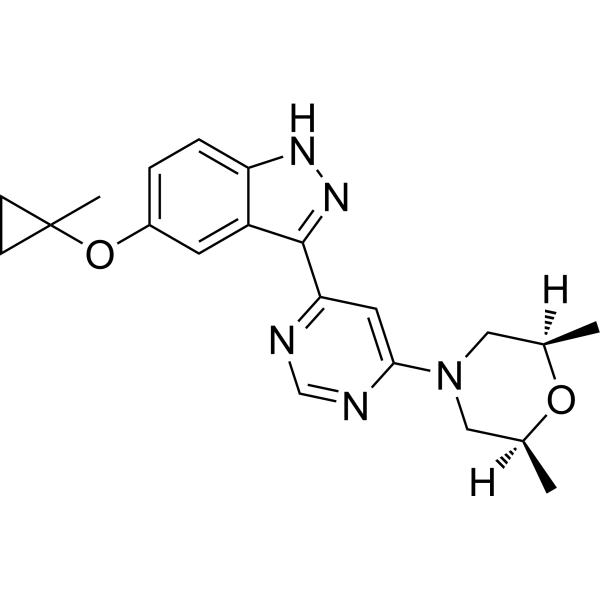
HY-100411
MLi-2LRRK2 Inhibitor -
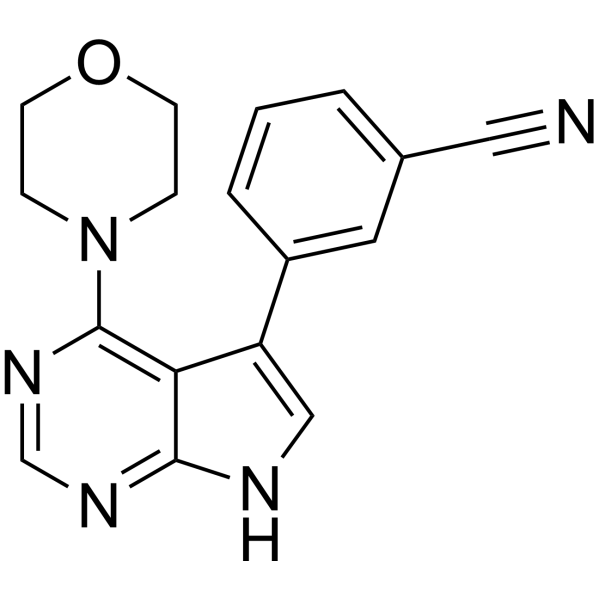
HY-12477
PF-06447475LRRK2 Inhibitor -
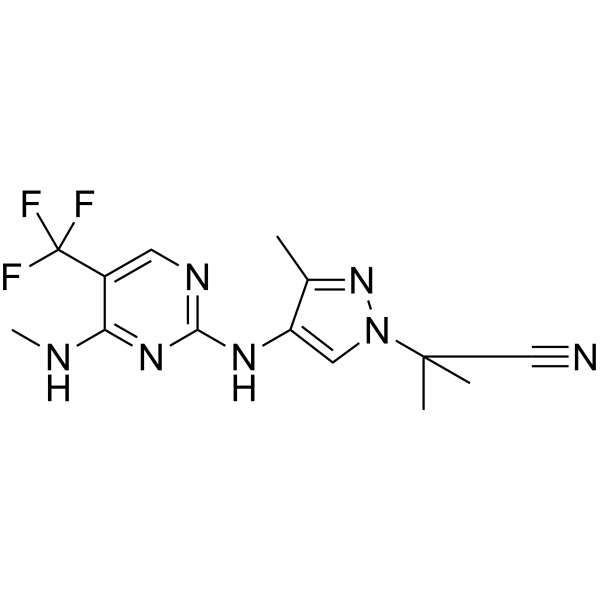
HY-15796
GNE0877LRRK2 Inhibitor -
HY-B0792
CZC-54252LRRK2 Inhibitor -
HY-10875
LRRK2-IN-1LRRK2 Inhibitor -

HY-10201
SorafenibMultikinase Inhibitor -
HY-16936
JH-II-127LRRK2 Inhibitor -
HY-10542
GW 5074Raf-1 Inhibitor -
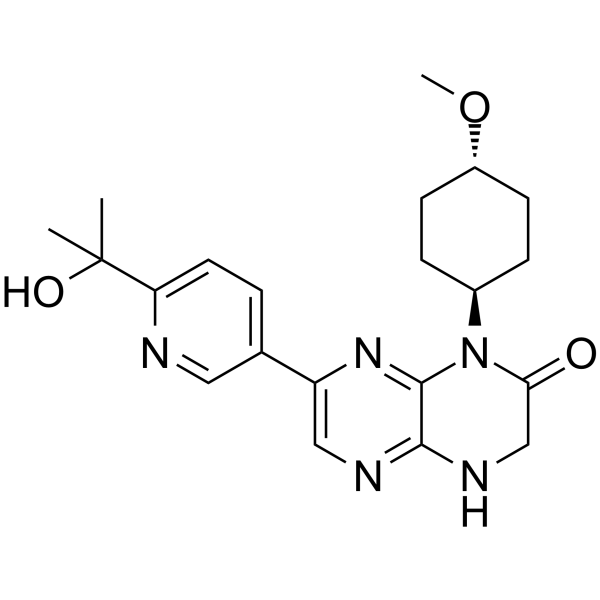
HY-16956
OnatasertibmTOR Inhibitor -
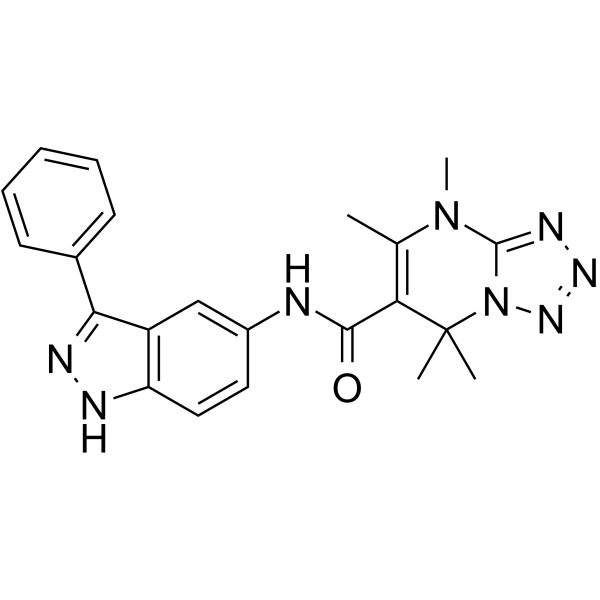
HY-142647
EB-42486LRRK2 Inhibitor -
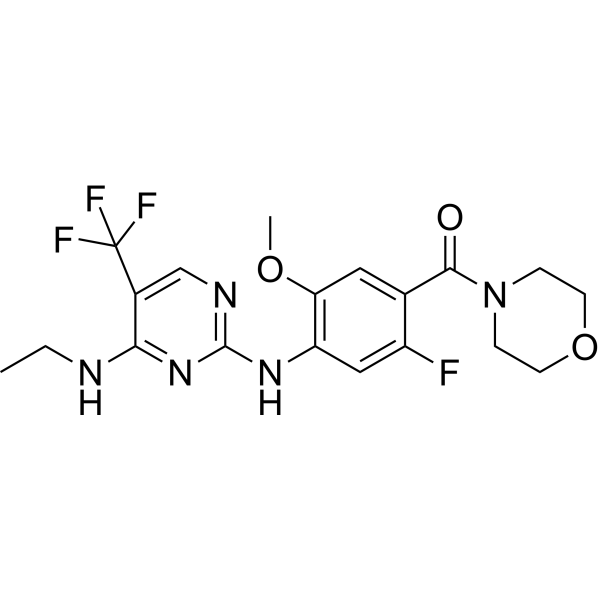
HY-18163
GNE-7915LRRK2 Inhibitor -
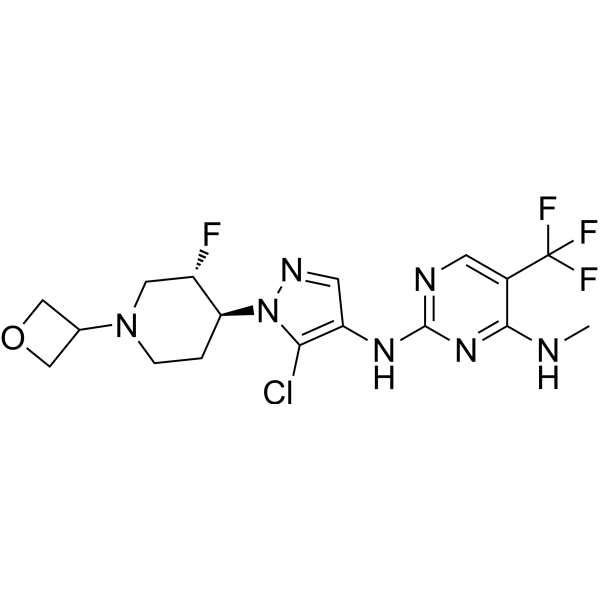
HY-12282
GNE-9605LRRK2 Inhibitor


Biological Activity
Description
IC50 & Target
IC50: 4.76 nM (wild-type LRRK2), 6.87 nM (G2019S LRRK2)[1]
In Vitro
CZC-25146 (0.01-5 μM; 7 days) does not cause cytotoxicity in human cortical neurons, nor blocking neuronal development[1].
CZC-25146 (0.01-5 μM; 2 days) potently attenuates G2019S LRRK2-mediated toxicity in primary rodent neurons in a concentration-dependent manner with an EC50 of ~100 nM[1].
CZC-25146 (0.06-1000 nM) rescues LRRK2 G2019S-induced neurite defects in primary human neurons in a dose-dependent manner[1].
CZC-25146 (14.3 and 28.6 μM; 48 h) markedly reduces The mutant AAT encoded by the Z allele (ATZ) polymer load and restores AAT secretion in iPSC-Hepatocyte, without compromising cell viability[3].
MedChemExpress (MCE) has not independently confirmed the accuracy of these methods. They are for reference only.
-
Cell Line:Human cortical neurons
-
Concentration:0.01, 0.1, 1 and 5 μM
-
Incubation Time:7 days
-
Result:Did not cause cytotoxicity in human cortical neurons at concentrations below 5 μM over a seven-day treatment in culture, nor did it block neuronal development.
In Vivo
CZC-25146 (1 mg/kg for i.v.; 5 mg/kg for p.o.; single dosage) exhibits relatively good pharmacokinetic properties and an extensive distribution throughout animal body following intravenous injection into mice[1].
MedChemExpress (MCE) has not independently confirmed the accuracy of these methods. They are for reference only.
-
Animal Model:Genetically modified male mice (6 weeks; over expressing human polymeric ATZ)[3]
-
Dosage:250 mg/kg
-
Administration:p.o.; 14 days
-
Result:Dramatically and reproducibly reduced the ATZ polymer levels with an overall reduction from 60% in the control group to 37%.
-
Animal Model:Male CD-1 mice[1]
-
Dosage:1 mg/kg for i.v.; 5 mg/kg for p.o.
-
Administration:i.v. and p.o.; single dosage
-
Result:Pharmacokinetic Parameters of CZC-25146 in male CD-1 mice[1].
i.v. (1 mg/kg) p.o. (5 mg/kg) CL (L/h/kg) 2.3 Vss (L/kg) 5.4 t1/2 (h) 1.6 1 tmax (h) 0 0.25 Cmax (ng/mL) 154 1357 AUClast (ng/mL·h) 419 2878 AUCinf (ng/mL·h) 434 2894 F (%) 133


Chemical Information
-
CAS No. 1191911-26-8
-
Appearance Solid
-
Molecular Weight 488.54
-
Formula C22H25FN6O4S
-
Color Pale purple to purple
-
SMILES
CS(=O)(NC1=CC=CC=C1NC2=NC(NC3=CC=C(N4CCOCC4)C=C3OC)=NC=C2F)=O
-
Shipping
Room temperature in continental US; may vary elsewhere.
-
Storage
Powder -20°C 3 years 4°C 2 years In solvent -80°C 2 years -20°C 1 year


Solvent & Solubility
In Vitro:
DMSO : ≥ 46 mg/mL (94.16 mM; Hygroscopic DMSO has a significant impact on the solubility of product, please use newly opened DMSO)
* "≥" means soluble, but saturation unknown.
Please refer to the solubility information to select the appropriate solvent. Once prepared, please aliquot and store the solution to prevent product inactivation from repeated freeze-thaw cycles.
Storage method and period of stock solution: -80°C, 2 years; -20°C, 1 year. When stored at -80°C, please use it within 2 years. When stored at -20°C, please use it within 1 year.
Please refer to the solubility information to select the appropriate solvent. Once prepared, please aliquot and store the solution to prevent product inactivation from repeated freeze-thaw cycles.
Storage method and period of stock solution: -80°C, 2 years; -20°C, 1 year. When stored at -80°C, please use it within 2 years. When stored at -20°C, please use it within 1 year.
Concentration (start) × Volume (start) = Concentration (final) × Volume (final)
In Vivo:
Select the appropriate dissolution method based on your experimental animal and administration route.
- For the following dissolution methods, please ensure to first prepare a clear stock solution using an In Vitro approach and then sequentially add co-solvents:
- To ensure reliable experimental results, the clarified stock solution can be appropriately stored based on storage conditions. As for the working solution for In Vivo experiments, it is recommended to prepare freshly and use it on the same day.
- The percentages shown for the solvents indicate their volumetric ratio in the final prepared solution. If precipitation or phase separation occurs during preparation, heat and/or sonication can be used to aid dissolution.
Add each solvent one by one: 10% DMSO 40% PEG300 5% Tween-80 45% Saline
Solubility: ≥ 2.5 mg/mL (5.12 mM); Clear solution
This protocol yields a clear solution of ≥ 2.5 mg/mL (saturation unknown).
Taking 1 mL working solution as an example, add 100 μL DMSO stock solution (25.0 mg/mL) to 400 μL PEG300, and mix evenly; then add 50 μL Tween-80 and mix evenly; then add 450 μL Saline to adjust the volume to 1 mL.
Preparation of Saline: Dissolve 0.9 g sodium chloride in ddH₂O and dilute to 100 mL to obtain a clear Saline solution.
In Vivo Dissolution Calculator
Please enter the basic information of animal experiments:
-
-
-
-
Recommended: Prepare an additional quantity of animals to account for potential losses during experiments.
Please enter your animal formula composition:
-
%DMSO +
Recommended: Keep the proportion of DMSO in working solution below 2% if your animal is weak.
-
%+
-
+%Tween-80 + +
-
%Saline +
The co-solvents required include: DMSO, . All of co-solvents are available by MedChemExpress (MCE). , Tween 80. All of co-solvents are available by MedChemExpress (MCE).
Working solution concentration: 0.22 mg/mL
Method for preparing stock solution: mg drug dissolved in μL DMSO. Stock solution concentration: mg/mL.
1. Take μL DMSO stock solution;
2. Add μL .
μL , mix evenly;
3. Then add μL Tween 80, mix evenly;
4. Then add μL
Please ensure that the stock solution in the first step is dissolved to a clear state, and add co-solvents in sequence. You can use ultrasonic heating (ultrasonic cleaner, recommended frequency 20-40 kHz), vortexing, etc. to assist dissolution.


Purity & Documentation
-
Data Sheet (279 KB)
-
SDS (254 KB)
- English - EN (254 KB)
- Français - FR (254 KB)
- Deutsch - DE (254 KB)
- Norwegian - NO (254 KB)
- Español - ES (254 KB)
- Swedish - SV (254 KB)
- Italian - IT (254 KB)
- Korean - KR (254 KB)
- Portuguese - PT (254 KB)
-
Handling Instructions (2659 KB)
References
[1]. Ramsden N, et al. Chemoproteomics-based design of potent LRRK2-selective lead compounds that attenuate Parkinson's disease-related toxicity in human neurons. ACS Chem Biol. 2011 Oct 21;6(10):1021-8. [Content Brief]
[2]. Atashrazm F, et al. LRRK2 inhibitors and their potential in the treatment of Parkinson's disease: current perspectives. Clin Pharmacol. 2016 Oct 20;8:177-189. [Content Brief]


Complete Stock Solution Preparation Table
Please refer to the solubility information to select the appropriate solvent. Once prepared, please aliquot and store the solution to prevent product inactivation from repeated freeze-thaw cycles.
Storage method and period of stock solution: -80°C, 2 years; -20°C, 1 year. When stored at -80°C, please use it within 2 years. When stored at -20°C, please use it within 1 year.
| Optional Solvent | Concentration Solvent Mass | 1 mg | 5 mg | 10 mg | 25 mg |
|---|---|---|---|---|---|
| DMSO | 1 mM | 2.0469 mL | 10.2346 mL | 20.4692 mL | 51.1729 mL |
| 5 mM | 0.4094 mL | 2.0469 mL | 4.0938 mL | 10.2346 mL | |
| 10 mM | 0.2047 mL | 1.0235 mL | 2.0469 mL | 5.1173 mL | |
| 15 mM | 0.1365 mL | 0.6823 mL | 1.3646 mL | 3.4115 mL | |
| 20 mM | 0.1023 mL | 0.5117 mL | 1.0235 mL | 2.5586 mL | |
| 25 mM | 0.0819 mL | 0.4094 mL | 0.8188 mL | 2.0469 mL | |
| 30 mM | 0.0682 mL | 0.3412 mL | 0.6823 mL | 1.7058 mL | |
| 40 mM | 0.0512 mL | 0.2559 mL | 0.5117 mL | 1.2793 mL | |
| 50 mM | 0.0409 mL | 0.2047 mL | 0.4094 mL | 1.0235 mL | |
| 60 mM | 0.0341 mL | 0.1706 mL | 0.3412 mL | 0.8529 mL | |
| 80 mM | 0.0256 mL | 0.1279 mL | 0.2559 mL | 0.6397 mL |


CZC-25146 Related Classifications
HY-15800A Related Classifications
 Powered by Bioz