



Carcinoembryonic antigen peptide 1

Based on 1 Customer Validation
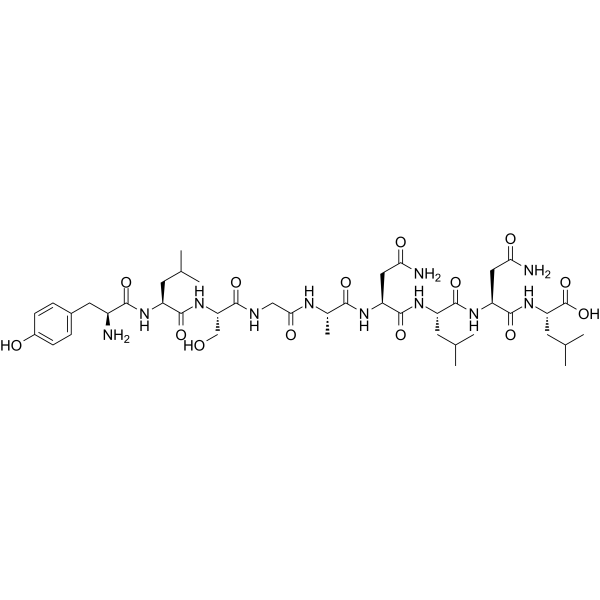
Carcinoembryonic antigen peptide 1 (CEA peptide) is a 9-amino acid HLA-A0201-binding cytotoxic T lymphocyte (CTL) epitope peptide derived from carcinoembryonic antigen (CEA). The IC50 of Carcinoembryonic antigen peptide 1 binding to HLA-A0201 is 2 μM. Carcinoembryonic antigen peptide 1 binds to HLA-A0201 to form a peptide-MHC I complex, which is recognized by the T cell receptor (TCR) of CAP1-specific CD8+ CTLs, thereby inducing antigen-specific T cell activation, IFN-γ production, and CTL-mediated lysis of target cells. Carcinoembryonic antigen peptide 1 is used in research on CEA-specific CTL responses and colorectal cancer.
For research use only. We do not sell to patients.
- Purity : 99.69%
- CAS No.: 168635-85-6
- Formula: C43H69N11O14
- Molecular Weight:964.07
-
Storage:
Sealed storage, away from moisture and light.
Powder -80°C, 2 years , -20°C, 1 year* In solvent : -80°C, 6 months; -20°C, 1 month (sealed storage, away from moisture and light)

To place orders, for customer services and technical support, please contact: MedChemExpress USA
Tel: 609-228-6898 E-mail: [email protected] [email protected]


-
 Biological Activity
-
Chemical Information
-
Solvent & Solubility
- Protocols
- Purity & Documentation
- References
-
 Help & FAQs




Biological Activity
Description
IC50 & Target
[3]|
HLA-A*0201 2 μM (IC50) |
In Vitro
Carcinoembryonic antigen peptide 1 (CEA peptide) (0.1 nM-10 μM; 1 h), when loaded onto T2 cells and co-cultured with CAP1-specific CD8+ T cell clones for 6 h, induces concentration-dependent IFN-γ production; these T cell clones recognize the corresponding target cells even at nM and lower CAP1 concentrations[1].
Carcinoembryonic antigen peptide 1 (0.1 nM-10 μM; 1 h), when loaded onto T2 cells and co-incubated with CAP1-specific CD8+ T cell clones for 4 h, mediates concentration-dependent lysis of T2 target cells[1].
Carcinoembryonic antigen peptide 1 (50 μM; 18 h) stabilizes HLA-A0201 molecules on the T2 cell surface after incubation, with a fluorescence index (FI) of 1.9, demonstrating strong HLA-A0201 binding affinity[2].
Carcinoembryonic antigen peptide 1 competitively binds to HLA-A0201 with an IC50 of 2 μM[3].
Carcinoembryonic antigen peptide 1 (1 h) loaded onto T2 target cells and then co-incubated with CAP1-specific T-Vac8 CTL for 4 h mediates lysis of T2 cells, with the CAP1 concentration corresponding to half-maximal lysis being approximately 10-2 μg/mL[4].
Carcinoembryonic antigen peptide 1 forms a stable peptide-MHC I complex with HLA-A0201, with a DT50 of 4 h[3].
MedChemExpress (MCE) has not independently confirmed the accuracy of these methods. They are for reference only. Further protocols information, click here.
-
Cell Line:T2 cells / CAP1-specific CD8+ T-cell clone
-
Concentration:0.1 nM-10 μM
-
Incubation Time:1 h peptide loading; 4 h co-incubation
-
Result:Mediated concentration-dependent lysis of CAP1-loaded T2 target cells.
In Vivo
Splenocytes obtained from HLA-A0201Kb transgenic mice immunized with carcinoembryonic antigen peptide 1 (100 μg/mouse; day 0 and day 14) and restimulated in vitro produce peptide-dependent cytotoxicity against CAP1-loaded Jurkat HLA-A0201Kb target cells[3].
MedChemExpress (MCE) has not independently confirmed the accuracy of these methods. They are for reference only.
Clinical Trial
| NCT Number | Sponsor | Condition | Start Date |
Phase

|
|---|---|---|---|---|
| NCT01329991 | Plexxikon| | 2011-05 | PHASE1 |


Chemical Information
-
CAS No. 168635-85-6
-
Appearance Solid
-
Molecular Weight 964.07
-
Formula C43H69N11O14
-
Color White to off-white
-
Synonyms
CEA peptide
-
Sequence
Tyr-Leu-Ser-Gly-Ala-Asn-Leu-Asn-Leu
-
Sequence Shortening
YLSGANLNL
-
Structure Classification
-
Initial Source
-
Shipping
Room temperature in continental US; may vary elsewhere.
-
Storage
Sealed storage, away from moisture and light
Powder -80°C 2 years -20°C 1 year * In solvent : -80°C, 6 months; -20°C, 1 month (sealed storage, away from moisture and light)


Solvent & Solubility
In Vitro:
H2O : 12.5 mg/mL (12.97 mM; Need ultrasonic)
Please refer to the solubility information to select the appropriate solvent. Once prepared, please aliquot and store the solution to prevent product inactivation from repeated freeze-thaw cycles.
Storage method and period of stock solution: -80°C, 6 months; -20°C, 1 month (sealed storage, away from moisture and light). When stored at -80°C, please use it within 6 months. When stored at -20°C, please use it within 1 month.
* Note: If you choose water as the stock solution, please dilute it to the working solution, then filter and sterilize it with a 0.22 μm filter before use.
Please refer to the solubility information to select the appropriate solvent. Once prepared, please aliquot and store the solution to prevent product inactivation from repeated freeze-thaw cycles.
Storage method and period of stock solution: -80°C, 6 months; -20°C, 1 month (sealed storage, away from moisture and light). When stored at -80°C, please use it within 6 months. When stored at -20°C, please use it within 1 month.
* Note: If you choose water as the stock solution, please dilute it to the working solution, then filter and sterilize it with a 0.22 μm filter before use.
Concentration (start) × Volume (start) = Concentration (final) × Volume (final)

Protocols
-
Cell Cytotoxicity Assay
Cytotoxicity assays are usually based on the assessment of cell membrane damage, which can also be indirectly detected by measuring cell viability. Detection methods include MTT assay, CKK-8 assay, LDH assay and ATP assay, etc.
-
Research Protocol for Cancer Immunology
Cancer immunology studies how the immune system recognizes, suppresses, edits, or fails to eliminate malignant cells through tumor antigen release, antigen presentation, T-cell priming, immune trafficking, tumor-cell killing, and feedback inhibition in the tumor microenvironment. The cancer-immunity cycle links tumor antigenicity, dendritic-cell priming, CD8+ T-cell infiltration, cytotoxic function, and immune-checkpoint regulation to tumor rejection or immune escape. Immune-checkpoint pathways such as PD-1/PD-L1 and CTLA-4 suppress antitumor T-cell activity and can be therapeutically blocked, but many tumors remain resistant because of poor antigen presentation, weak T-cell infiltration, suppressive myeloid cells, regulatory T cells, and tumor-intrinsic immune-exclusion programs. Unresolved questions include which immune-cell states predict response, how tumor-intrinsic pathways exclude immune cells, how myeloid suppression limits checkpoint blockade, and which combination strategies
-
Cell Viability Determination by MTT Colorimetric Assay
The following protocol uses the MTT colorimetric assay as a classic literature-established method for assessing cell viability/metabolic activity in cultured mammalian cells. MTT[3-(4,5-dimethylthiazol-2-yl)-2,5-diphenyltetrazolium bromide] is reduced by metabolically active cells to a colored formazan product; the amount of formazan is quantified spectrophotometrically and provides an indirect measure of metabolically active viable cells. Importantly, MTT reduction reflects cellular oxidoreductase/metabolic activity rather than an absolute direct count of living cells, so changes in cellular metabolism can alter the signal independently of cell number.


Purity & Documentation
-
Data Sheet (281 KB)
-
SDS (252 KB)
- English - EN (252 KB)
- Français - FR (252 KB)
- Deutsch - DE (252 KB)
- Norwegian - NO (252 KB)
- Español - ES (252 KB)
- Swedish - SV (252 KB)
- Italian - IT (252 KB)
- Korean - KR (252 KB)
- Portuguese - PT (252 KB)
-
Handling Instructions (2659 KB)
References
[3]. Ras E, et al. Identification of potential HLA-A *0201 restricted CTL epitopes derived from the epithelial cell adhesion molecule (Ep-CAM) and the carcinoembryonic antigen (CEA). Human immunology. 1997 Mar;53(1):81-9. [Content Brief]
[4]. Zaremba S, et al. Identification of an enhancer agonist cytotoxic T lymphocyte peptide from human carcinoembryonic antigen. Cancer research. 1997 Oct 15;57(20):4570-7. [Content Brief]


Complete Stock Solution Preparation Table
Please refer to the solubility information to select the appropriate solvent. Once prepared, please aliquot and store the solution to prevent product inactivation from repeated freeze-thaw cycles.
Storage method and period of stock solution: -80°C, 6 months; -20°C, 1 month (sealed storage, away from moisture and light). When stored at -80°C, please use it within 6 months. When stored at -20°C, please use it within 1 month.
| Optional Solvent | Concentration Solvent Mass | 1 mg | 5 mg | 10 mg | 25 mg |
|---|---|---|---|---|---|
| H2O | 1 mM | 1.0373 mL | 5.1863 mL | 10.3727 mL | 25.9317 mL |
| 5 mM | 0.2075 mL | 1.0373 mL | 2.0745 mL | 5.1863 mL | |
| 10 mM | 0.1037 mL | 0.5186 mL | 1.0373 mL | 2.5932 mL |
* Note: If you choose water as the stock solution, please dilute it to the working solution, then filter and sterilize it with a 0.22 μm filter before use.


Carcinoembryonic antigen peptide 1 Related Classifications
HY-P0277 Related Classifications
 Powered by Bioz