



Fibrinopeptide B, human
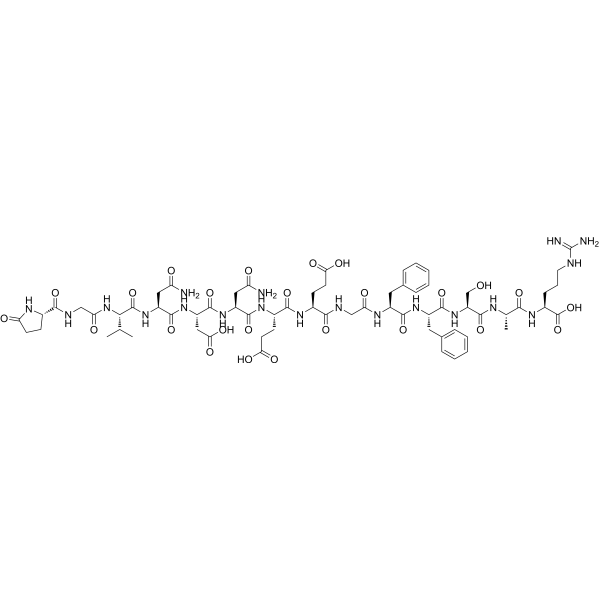
Fibrinopeptide B, human is a 14-aa peptide, released from the amino-terminus of β-chains of fibrinogen by thrombin.
For research use only. We do not sell to patients.
- CAS No.: 36204-23-6
- Formula: C66H93N19O25
- Molecular Weight:1552.56
-
Storage:
Please store the product under the recommended conditions in the Certificate of Analysis.

To place orders, for customer services and technical support, please contact: MedChemExpress USA
Tel: 609-228-6898 E-mail: [email protected] [email protected]


-
 Biological Activity
-
Chemical Information
-
Solvent & Solubility
- Purity & Documentation
- References
-
 Help & FAQs


-

HY-P1211
Adrenocorticotropic Hormone (ACTH) (1-39), humanMelanocortin Receptor Agonist -
HY-P1514
Peptide YY (PYY), humanGut Hormone -
HY-P0278
RGDTripeptide -
HY-P1501
δ-Sleep Inducing PeptideAnxiolytic Agent -
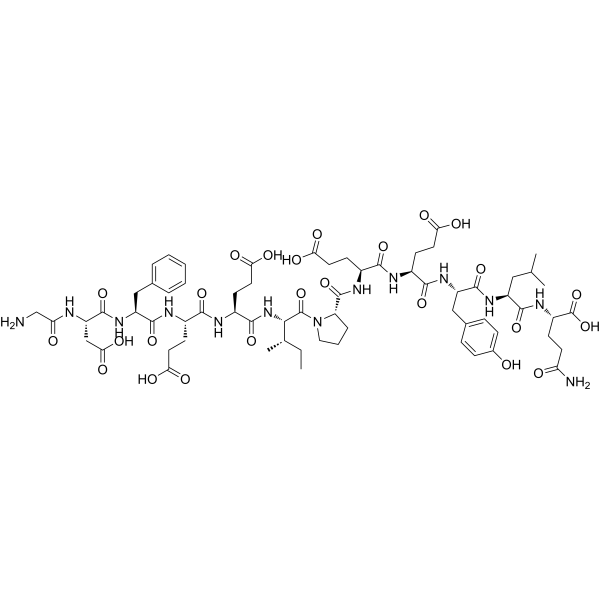
HY-P1636
Hirudin (54-65)YAP Inhibitor -
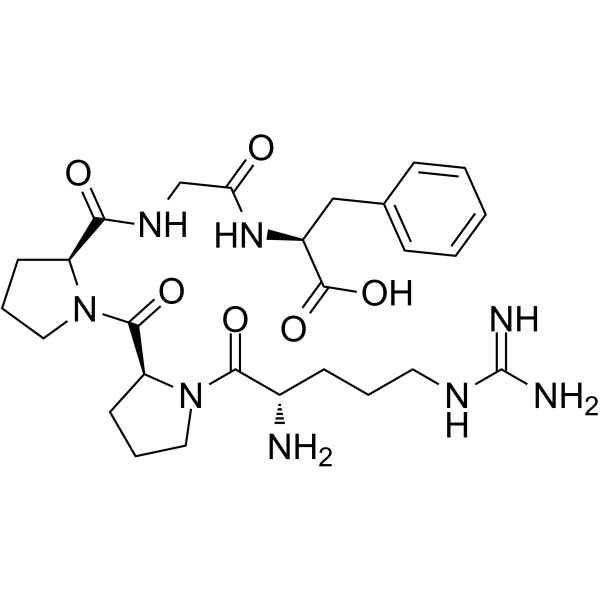
HY-P1488
Bradykinin (1-5)PAR-1/PAR-4 Inhibitor -
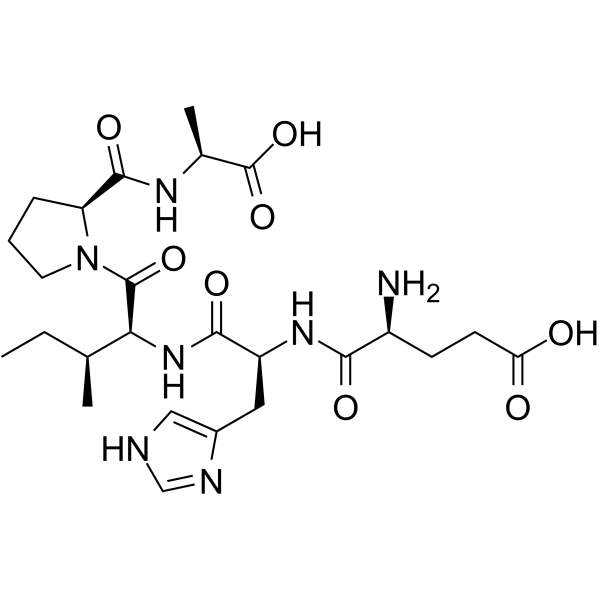
HY-P1741
Fibrinogen-Binding PeptideFibrinogen-Binding Peptide -
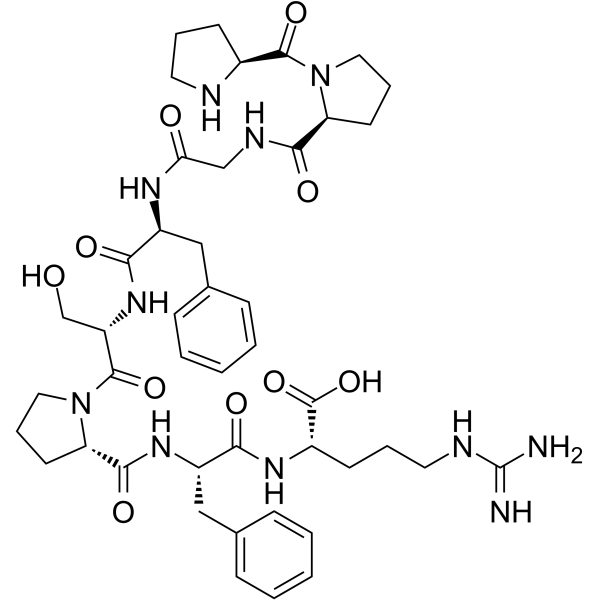
HY-P1490
Bradykinin (2-9)Peptide -
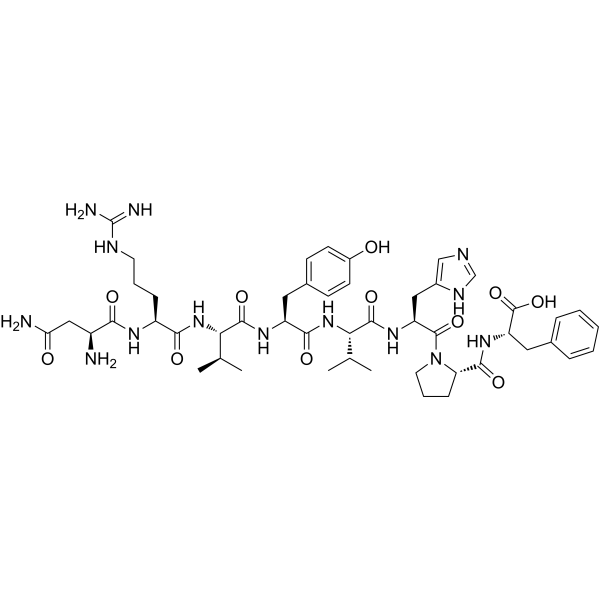
HY-P2212
(Asn1,Val5)-Angiotensin IIVasoconstrictor -
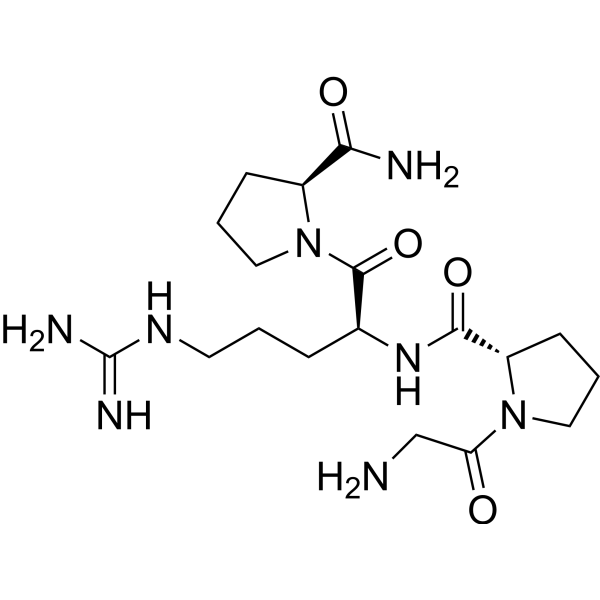
HY-P2708
H-Gly-Pro-Arg-Pro-NH2Fibrin Polymerization Inhibitor -
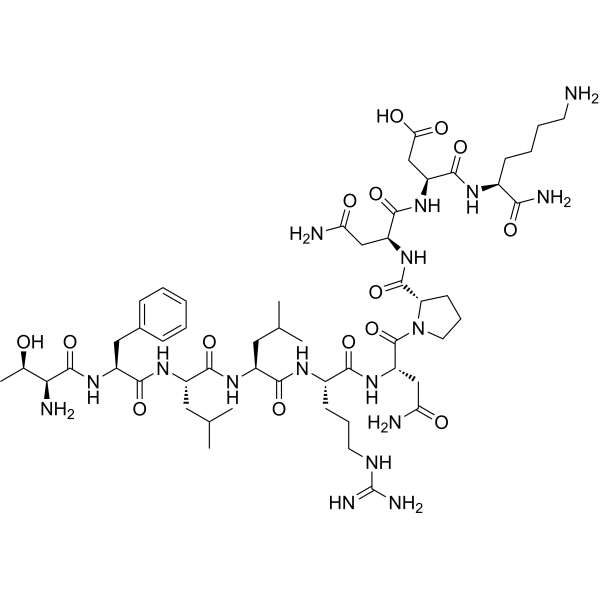
HY-P5371
TFLLRNPNDK-NH2Bioactive Peptide


Biological Activity
Description
In Vitro
Fibrinopeptide B, human is released from the amino-terminus of the B 3-chains of fibrinogen by thrombin. Fibrinopeptide B, human (hFpB, 10 nM) causes directed cell migration of neutrophils (PMN), and fibroblasts. Fibrinopeptide B, human also possesses potent chemotactic activity relative to human complement (C5a), leukotriene B4 (LTB4), and formyl-methionylleucyl-phenylalanine (fMLP), and for fibroblasts its chemotactic activity is comparable to that of platelet-derived growth factor. However, Fibrinopeptide B, human is not chemotactic for monocytes, and shows no interaction with PMN receptor for C5a, LTB4, or fMLP[1].
MedChemExpress (MCE) has not independently confirmed the accuracy of these methods. They are for reference only. .


Chemical Information
-
CAS No. 36204-23-6
-
Molecular Weight 1552.56
-
Formula C66H93N19O25
-
Synonyms
FPB,human
-
Sequence
{Glp}-Gly-Val-Asn-Asp-Asn-Glu-Glu-Gly-Phe-Phe-Ser-Ala-Arg
-
Sequence Shortening
{Glp}-GVNDNEEGFFSAR
-
Shipping
Room temperature in continental US; may vary elsewhere.
-
Storage
Please store the product under the recommended conditions in the Certificate of Analysis.


Solvent & Solubility
In Vitro
H2O
Peptide Solubility and Storage Guidelines:
1. Calculate the length of the peptide.
2. Calculate the overall charge of the entire peptide according to the following table:
| Contents | Assign value | |
|---|---|---|
| Acidic amino acid | Asp (D), Glu (E), and the C-terminal -COOH. | -1 |
| Basic amino acid | Arg (R), Lys (K), His (H), and the N-terminal -NH2 | +1 |
| Neutral amino acid | Gly (G), Ala (A), Leu (L), Ile (I), Val (V), Cys (C), Met (M), Thr (T), Ser (S), Phe (F), Tyr (Y), Trp (W), Pro (P), Asn (N), Gln (Q) | 0 |
3. Recommended solution:
| Overall charge of peptide | Details |
|---|---|
| Negative (<0) |
1. Try to dissolve the peptide in water first. 2. If water fails, add NH4OH (<50 μL). 3. If the peptide still does not dissolve, add DMSO (50-100 μL) to solubilize the peptide. |
| Positive (>0) |
1. Try to dissolve the peptide in water first. 2. If water fails, try dissolving the peptide in a 10%-30% acetic acid solution. 3. If the peptide still does not dissolve, try dissolving the peptide in a small amount of DMSO. |
| Zero (=0) |
1. Try to dissolve the peptide in organic solvent (acetonitrile, methanol, etc.) first. 2. For very hydrophobic peptides, try dissolving the peptide in a small amount of DMSO, and then dilute the solution with water to the desired concentration. |


Purity & Documentation
References

Calculators
Concentration (start) × Volume (start) = Concentration (final) × Volume (final)


Fibrinopeptide B, human Related Classifications
HY-P1493 Related Classifications
 Powered by Bioz