



Gastrin I, human
Based on 20 publication(s) in Google Scholar
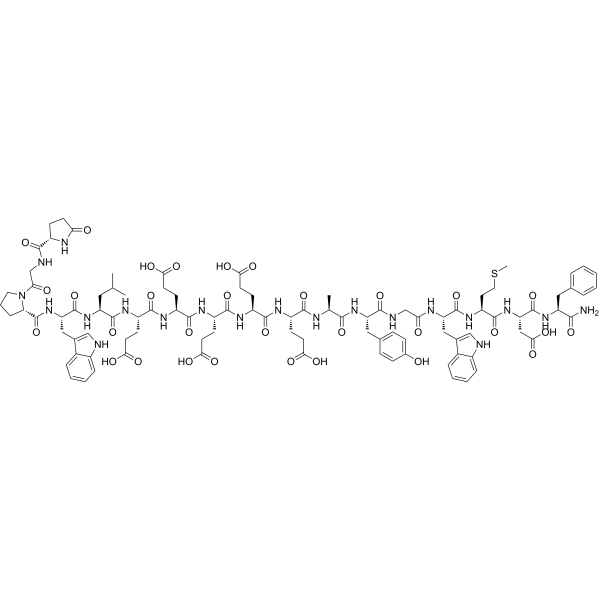
Gastrin I, human is the endogenous peptide produced in the stomach, and increases gastric acid secretion via cholecystokinin 2 (CCK2) receptor.
For research use only. We do not sell to patients.
- Purity : 99.39%
- CAS No.: 10047-33-3
- Formula: C97H124N20O31S
- Molecular Weight:2098.20
-
Storage:
Sealed storage, away from moisture and light.
Powder -80°C, 2 years , -20°C, 1 year* In solvent : -80°C, 6 months; -20°C, 1 month (sealed storage, away from moisture and light)

To place orders, for customer services and technical support, please contact: MedChemExpress USA
Tel: 609-228-6898 E-mail: [email protected] [email protected]


-
 Biological Activity
-
Chemical Information
-
Solvent & Solubility
- Purity & Documentation
- References
-
 Help & FAQs


-
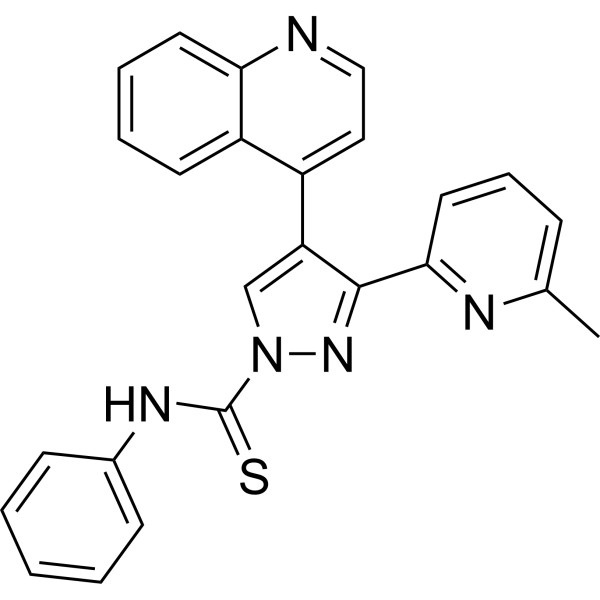
HY-10432
A 83-01ALK4/5/7 Inhibitor -
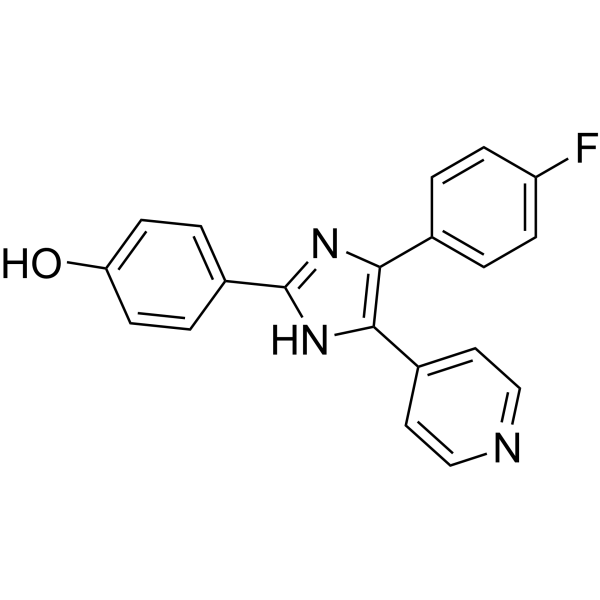
HY-10295
SB 202190p38 MAPK Inhibitor -
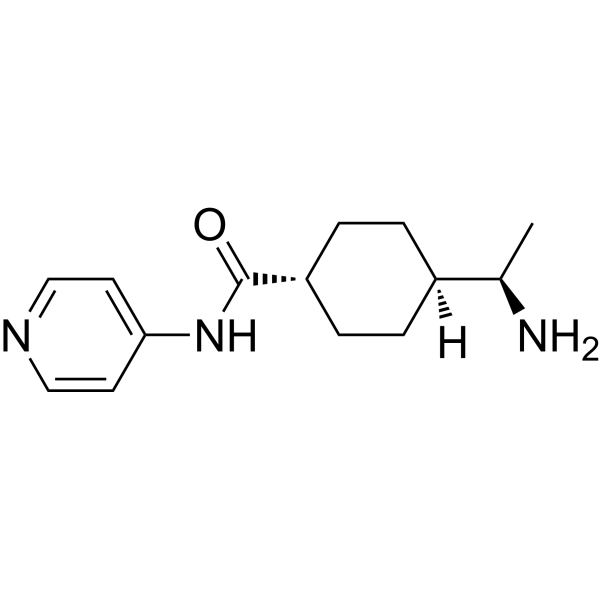
HY-10071
Y-27632ROCK Inhibitor -
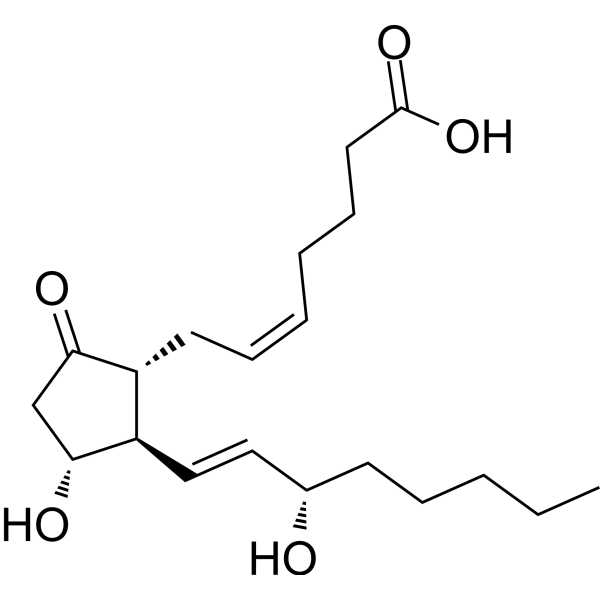
HY-101952
Prostaglandin E2Prostaglandin Receptor Agonist -
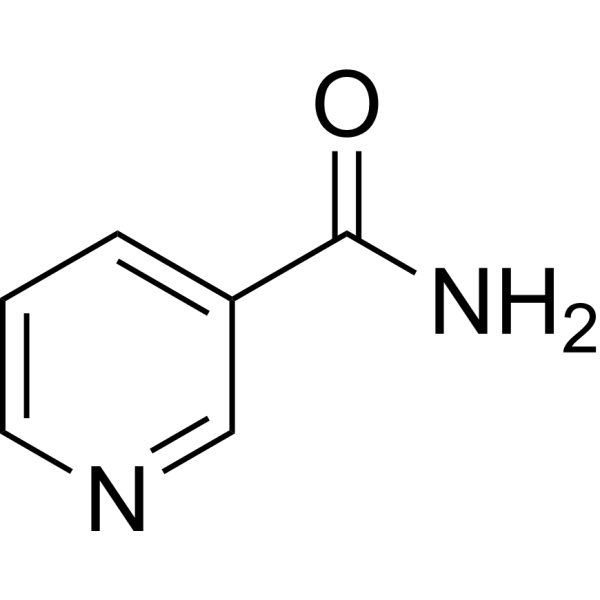
HY-B0150
NicotinamideSIRT Inhibitor -
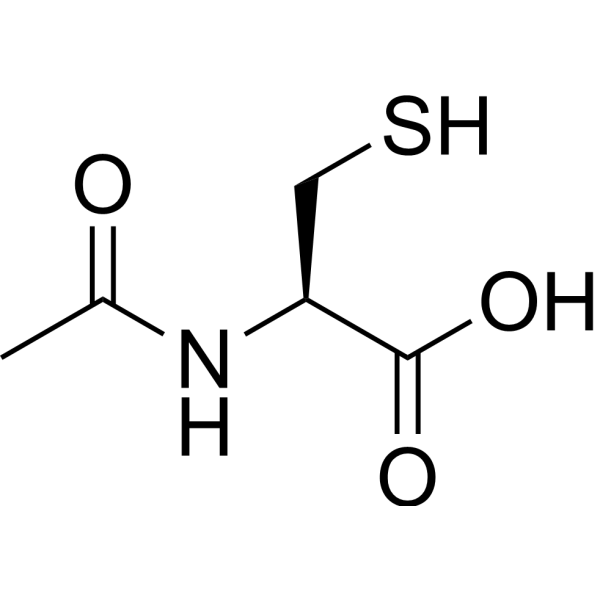
HY-B0215
AcetylcysteineMucolytic Agent -
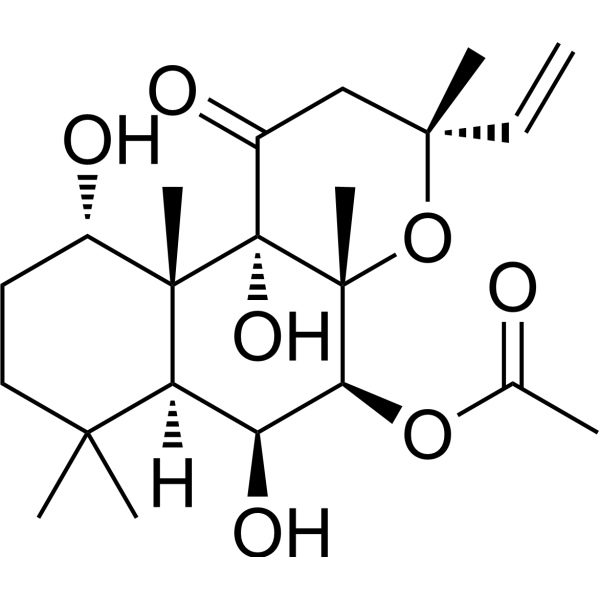
HY-15371
ForskolinAdenylate Cyclase Activator -
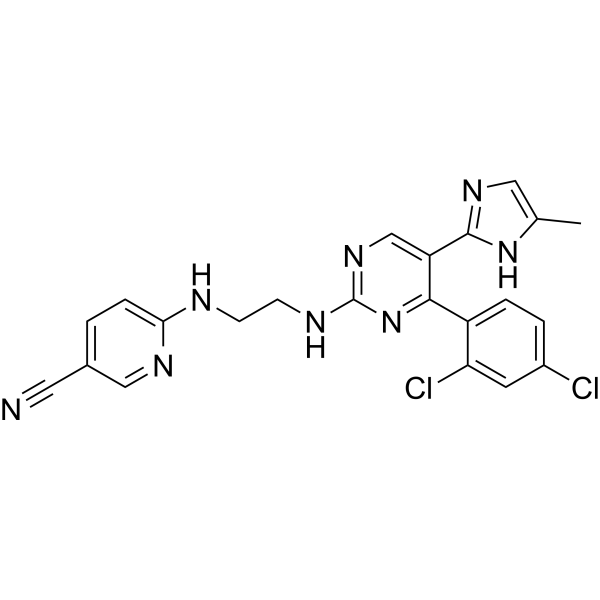
HY-10182
LaduviglusibGSK-3 Inhibitor -
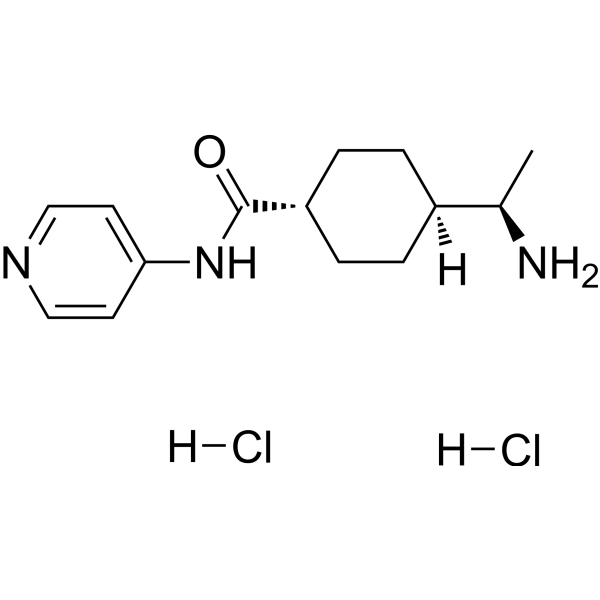
HY-10583
Y-27632 dihydrochlorideROCK Inhibitor -
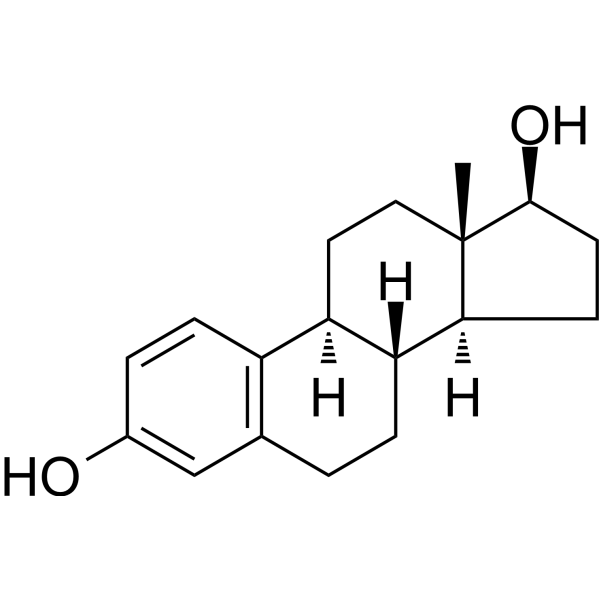
HY-B0141
EstradiolHuman Endogenous Metabolite -
![[Leu15]-Gastrin I (human)](https://file.medchemexpress.com/product_pic/hy-p2671.gif)
HY-P2671
[Leu15]-Gastrin I (human)Peptide Hormone -
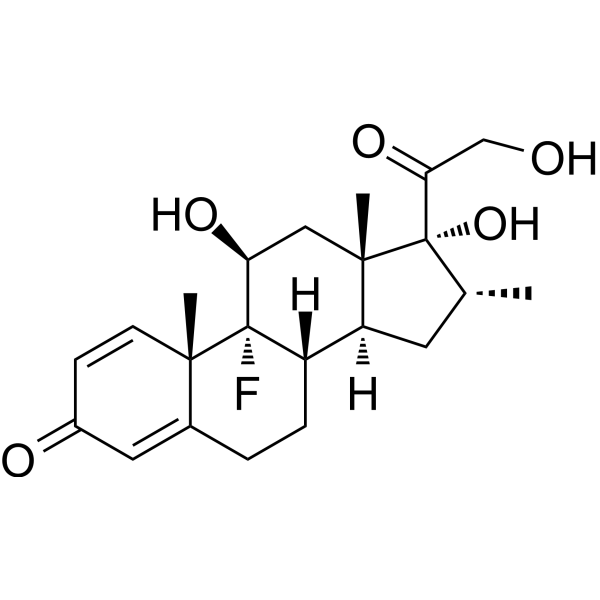
HY-14648
DexamethasoneGR Agonist
Publications Citing Use of MedChemExpress (MCE) Gastrin I, human
More- Signal Transduct Target Ther. 2026 Sep 14;11(1):380.
- Cancer Cell. 2026 Mar 9;44(3):658-675.e12. [Abstract]
- Mol Cancer. 2024 Jan 10;23(1):12. [Abstract]
- Cell Stem Cell. 2026 Mar 5;33(3):502-516.e7. [Abstract]
- Cell Discov. 2020 Apr 7:6:20. [Abstract]
- Acta Pharm Sin B. 2025 Dec;15(12):6382-6398. [Abstract]
- Adv Sci (Weinh). 2025 Nov 19:e18346. [Abstract]
- Sci Adv. 2025 Sep 5;11(36):eadz0808. [Abstract]
- Cell Commun Signal. 2025 Aug 5;23(1):365. [Abstract]
- Br J Cancer. 2025 Jan;132(1):126-136. [Abstract]
- Toxicology. 2026 Nov:526:154543.
- J Dairy Sci. 2025 Sep;108(9):10248-10262. [Abstract]
- iScience. 2025 Apr 3;28(5):112344. [Abstract]
- FASEB J. 2023 Dec;37(12):e23279. [Abstract]
- J Vis Exp. 2025 Jan 31:(215). [Abstract]
- bioRxiv. 2026 Aug 20:2026.08.18.745460.
- bioRxiv. 2025 Sep 29.
- bioRxiv. 2025 Jun 20.
- SSRN. 2025 Jun 3.
- SSRN. 2024 May 30.


Biological Activity
Description
IC50 & Target
|
CCKBR |
In Vitro
In Vivo


Chemical Information
-
CAS No. 10047-33-3
-
Appearance Solid
-
Molecular Weight 2098.20
-
Formula C97H124N20O31S
-
Color White to off-white
-
Sequence
{pGlu}-Gly-Pro-Trp-Leu-Glu-Glu-Glu-Glu-Glu-Ala-Tyr-Gly-Trp-Met-Asp-Phe-NH2
-
Sequence Shortening
{pGlu}-GPWLEEEEEAYGWMDF-NH2
-
Shipping
Room temperature in continental US; may vary elsewhere.
-
Storage
Sealed storage, away from moisture and light
Powder -80°C 2 years -20°C 1 year * In solvent : -80°C, 6 months; -20°C, 1 month (sealed storage, away from moisture and light)


Publications (20)
-
Journal Impact Factor
-
Most Recent
-
-
Cancer Cell
Chemotherapy triggers immune evasion by fostering LEPR+ Kupffer cell differentiation in liver metastases. [Abstract]2026 Mar 9;44(3):658-675.e12. PMID: 41687606 -
Mol Cancer
Organoids derived from patients provide a new opportunity for research and individualized treatment of malignant peritoneal mesothelioma. [Abstract]2024 Jan 10;23(1):12. PMID: 38200517 -
Cell Stem Cell
VIPR1 acts as an enteric neural checkpoint that suppresses intestinal stem cell-driven epithelial regeneration and exacerbates colitis. [Abstract]2026 Mar 5;33(3):502-516.e7. PMID: 41734764 -
Cell Discov
2020 Apr 7:6:20. PMID: 32284878 -
Acta Pharm Sin B
2025 Dec;15(12):6382-6398. PMID: 41477334 -
Adv Sci (Weinh)
NUDT21-mediated Alternative Polyadenylation of CDK19 Reprograms Cholesterol Biosynthesis to Drive Colorectal Cancer Progression. [Abstract]2025 Nov 19:e18346. PMID: 41255211 -
Sci Adv
2025 Sep 5;11(36):eadz0808. PMID: 40911681 -
Cell Commun Signal
Wnt5a suppresses colorectal cancer progression via TGF-β/NOTUM/OLFM4 axis in patient-derived organoids. [Abstract]2025 Aug 5;23(1):365. PMID: 40765051 -
Br J Cancer
2025 Jan;132(1):126-136. PMID: 39592739 -
-
J Dairy Sci
Advancing fatty liver research in dairy cows: Development of a bovine liver organoid model. [Abstract]2025 Sep;108(9):10248-10262. PMID: 40675485 -
iScience
2025 Apr 3;28(5):112344. PMID: 40276762 -
FASEB J
Alteration of cholesterol content and oxygen level in intestinal organoids after infection with Staphylococcus aureus. [Abstract]2023 Dec;37(12):e23279. PMID: 37902583 -
J Vis Exp
Two-dimensional Porcine Intestinal Organoids Reflecting the Physiological Properties of Native Gut. [Abstract]2025 Jan 31:(215). PMID: 39960208 -
-
-
-
-


Solvent & Solubility
In Vitro:
DMSO : 50 mg/mL (23.83 mM; Need ultrasonic; Hygroscopic DMSO has a significant impact on the solubility of product, please use newly opened DMSO)
Please refer to the solubility information to select the appropriate solvent. Once prepared, please aliquot and store the solution to prevent product inactivation from repeated freeze-thaw cycles.
Storage method and period of stock solution: -80°C, 6 months; -20°C, 1 month (sealed storage, away from moisture and light). When stored at -80°C, please use it within 6 months. When stored at -20°C, please use it within 1 month.
Please refer to the solubility information to select the appropriate solvent. Once prepared, please aliquot and store the solution to prevent product inactivation from repeated freeze-thaw cycles.
Storage method and period of stock solution: -80°C, 6 months; -20°C, 1 month (sealed storage, away from moisture and light). When stored at -80°C, please use it within 6 months. When stored at -20°C, please use it within 1 month.
Concentration (start) × Volume (start) = Concentration (final) × Volume (final)
In Vivo:
Select the appropriate dissolution method based on your experimental animal and administration route.
- For the following dissolution methods, please ensure to first prepare a clear stock solution using an In Vitro approach and then sequentially add co-solvents:
- To ensure reliable experimental results, the clarified stock solution can be appropriately stored based on storage conditions. As for the working solution for In Vivo experiments, it is recommended to prepare freshly and use it on the same day.
- The percentages shown for the solvents indicate their volumetric ratio in the final prepared solution. If precipitation or phase separation occurs during preparation, heat and/or sonication can be used to aid dissolution.
Add each solvent one by one: 10% DMSO 40% PEG300 5% Tween-80 45% Saline
Solubility: ≥ 1.25 mg/mL (0.60 mM); Clear solution
This protocol yields a clear solution of ≥ 1.25 mg/mL (saturation unknown).
Taking 1 mL working solution as an example, add 100 μL DMSO stock solution (12.5 mg/mL) to 400 μL PEG300, and mix evenly; then add 50 μL Tween-80 and mix evenly; then add 450 μL Saline to adjust the volume to 1 mL.
Preparation of Saline: Dissolve 0.9 g sodium chloride in ddH₂O and dilute to 100 mL to obtain a clear Saline solution.
Add each solvent one by one: 10% DMSO 90% (20% SBE-β-CD in Saline)
Solubility: ≥ 1.25 mg/mL (0.60 mM); Clear solution
This protocol yields a clear solution of ≥ 1.25 mg/mL (saturation unknown).
Taking 1 mL working solution as an example, add 100 μL DMSO stock solution (12.5 mg/mL) to 900 μL 20% SBE-β-CD in Saline, and mix evenly.
Preparation of 20% SBE-β-CD in Saline (4°C, storage for one week): 2 g SBE-β-CD powder is dissolved in 10 mL Saline, completely dissolve until clear.
In Vivo Dissolution Calculator
Please enter the basic information of animal experiments:
-
-
-
-
Recommended: Prepare an additional quantity of animals to account for potential losses during experiments.
Please enter your animal formula composition:
-
%DMSO +
Recommended: Keep the proportion of DMSO in working solution below 2% if your animal is weak.
-
%+
-
+%Tween-80 + +
-
%Saline +
The co-solvents required include: DMSO, . All of co-solvents are available by MedChemExpress (MCE). , Tween 80. All of co-solvents are available by MedChemExpress (MCE).
Working solution concentration: 0.22 mg/mL
Method for preparing stock solution: mg drug dissolved in μL DMSO. Stock solution concentration: mg/mL. * In solvent : -80°C, 6 months; -20°C, 1 month (sealed storage, away from moisture and light)
1. Take μL DMSO stock solution;
2. Add μL .
μL , mix evenly;
3. Then add μL Tween 80, mix evenly;
4. Then add μL
Please ensure that the stock solution in the first step is dissolved to a clear state, and add co-solvents in sequence. You can use ultrasonic heating (ultrasonic cleaner, recommended frequency 20-40 kHz), vortexing, etc. to assist dissolution.


Purity & Documentation
-
Data Sheet (278 KB)
-
SDS (394 KB)
- English - EN (394 KB)
- Français - FR (394 KB)
- Deutsch - DE (394 KB)
- Norwegian - NO (394 KB)
- Español - ES (394 KB)
- Swedish - SV (394 KB)
- Italian - IT (394 KB)
- Korean - KR (394 KB)
- Portuguese - PT (394 KB)
-
Handling Instructions (2659 KB)
References
[1]. Noble F, et al. International Union of Pharmacology. XXI. Structure, distribution, and functions of cholecystokinin receptors. Pharmacol Rev. 1999 Dec;51(4):745-81. [Content Brief]
[2]. Blandizzi C, et al. CCK1 and CCK2 receptors regulate gastric pepsinogen secretion. Eur J Pharmacol. 1999 May 28;373(1):71-84. [Content Brief]


Complete Stock Solution Preparation Table
Please refer to the solubility information to select the appropriate solvent. Once prepared, please aliquot and store the solution to prevent product inactivation from repeated freeze-thaw cycles.
Storage method and period of stock solution: -80°C, 6 months; -20°C, 1 month (sealed storage, away from moisture and light). When stored at -80°C, please use it within 6 months. When stored at -20°C, please use it within 1 month.
| Optional Solvent | Concentration Solvent Mass | 1 mg | 5 mg | 10 mg | 25 mg |
|---|---|---|---|---|---|
| DMSO | 1 mM | 0.4766 mL | 2.3830 mL | 4.7660 mL | 11.9150 mL |
| 5 mM | 0.0953 mL | 0.4766 mL | 0.9532 mL | 2.3830 mL | |
| 10 mM | 0.0477 mL | 0.2383 mL | 0.4766 mL | 1.1915 mL | |
| 15 mM | 0.0318 mL | 0.1589 mL | 0.3177 mL | 0.7943 mL | |
| 20 mM | 0.0238 mL | 0.1191 mL | 0.2383 mL | 0.5957 mL |


Gastrin I, human Related Classifications
HY-P1097 Related Classifications
 Powered by Bioz