



Glycodeoxycholate Sodium
Based on 5 publication(s) in Google Scholar
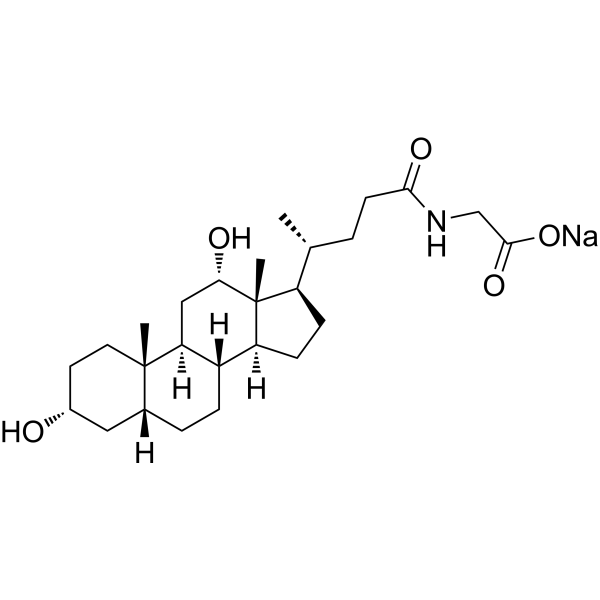
Glycodeoxycholate Sodium (Sodium glycyldeoxycholate) is a bile salt. Glycodeoxycholate Sodium has cytotoxicity to cancer cell, changes the permeability of the pancreatic duct and decreases glucose levels.
For research use only. We do not sell to patients.
- Purity : 99.92%
- CAS No.: 16409-34-0
- Formula: C26H42NNaO5
- Molecular Weight:471.61
-
Storage:
4°C, sealed storage, away from moisture
* In solvent : -80°C, 6 months; -20°C, 1 month (sealed storage, away from moisture)

To place orders, for customer services and technical support, please contact: MedChemExpress USA
Tel: 609-228-6898 E-mail: [email protected] [email protected]


-
 Biological Activity
-
Chemical Information
-
Solvent & Solubility
- Protocols
- Purity & Documentation
- References
-
 Help & FAQs


-
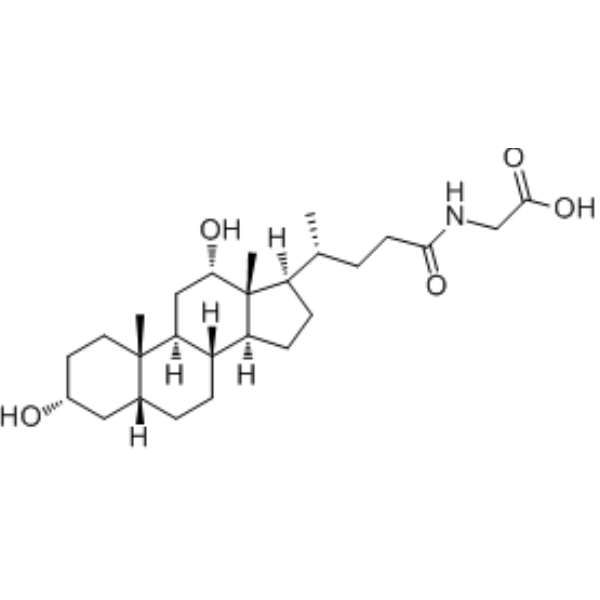
HY-125731
Glycodeoxycholic acidEndogenous Metabolite -
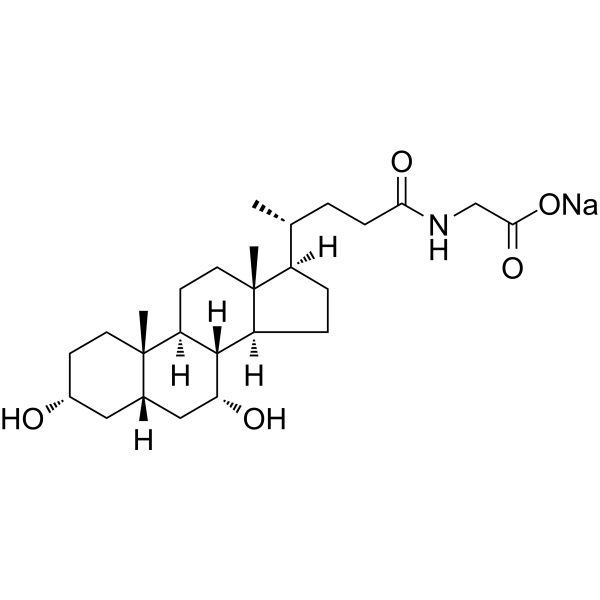
HY-N2334A
Glycochenodeoxycholic acid sodium saltEndogenous Metabolite -
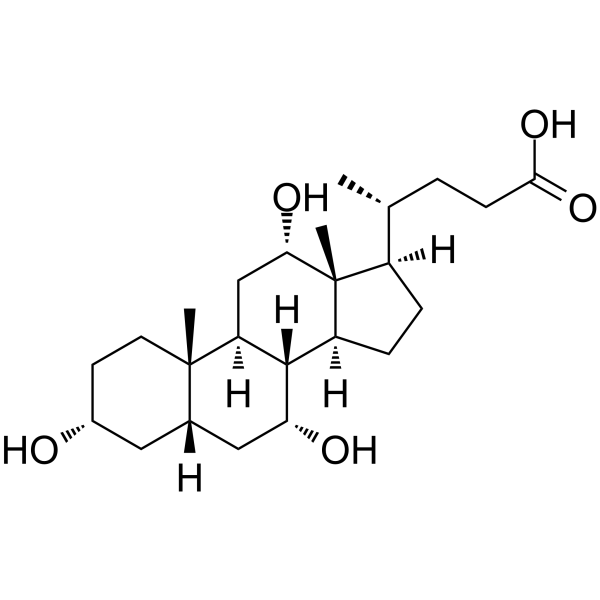
HY-N0324
Cholic acidEndogenous Metabolite -
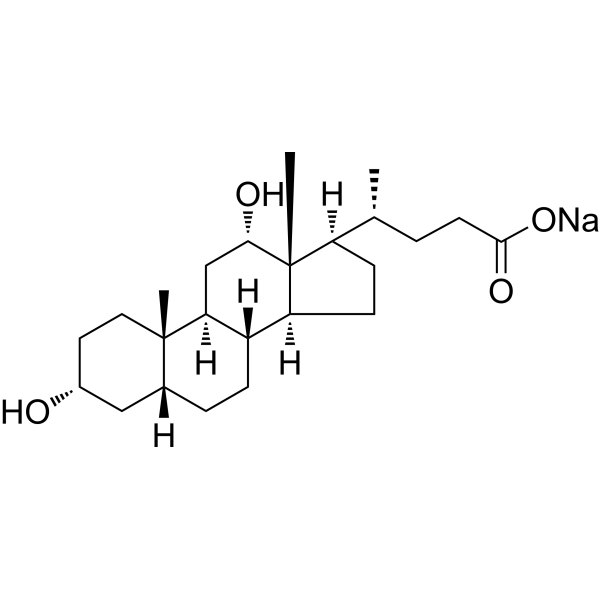
HY-N0593A
Deoxycholic acid sodium saltBile Acid Receptor Activator -
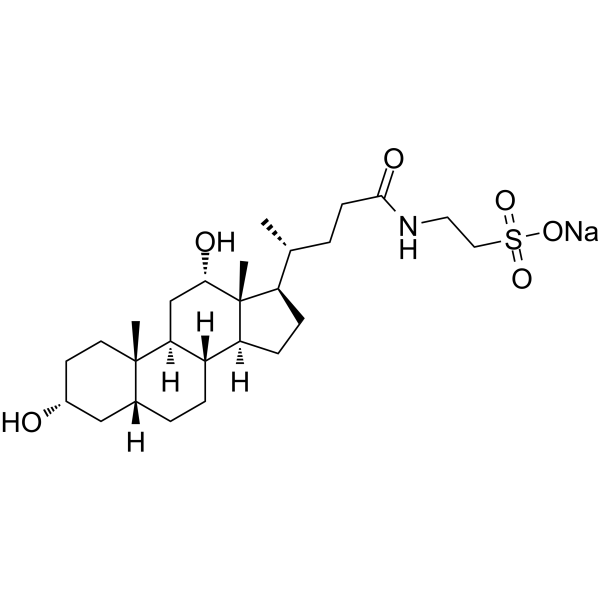
HY-128853
Taurodeoxycholate sodiumAnti-inflammatory Agent -
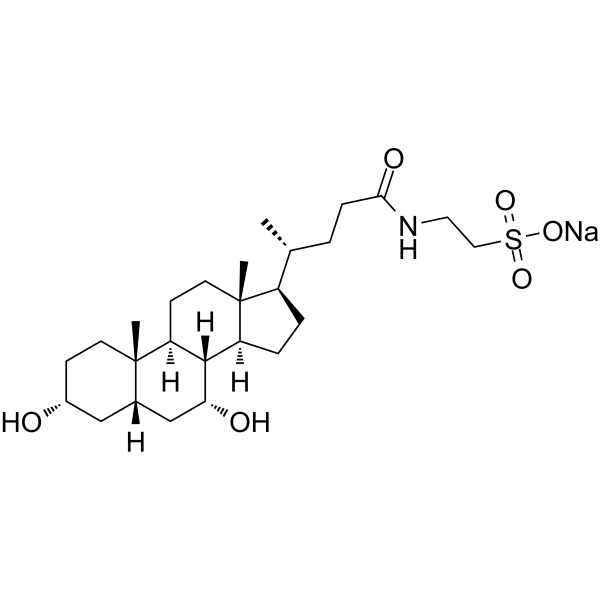
HY-N1429
Taurochenodeoxycholic acid sodiumAnti-inflammatory Drug -
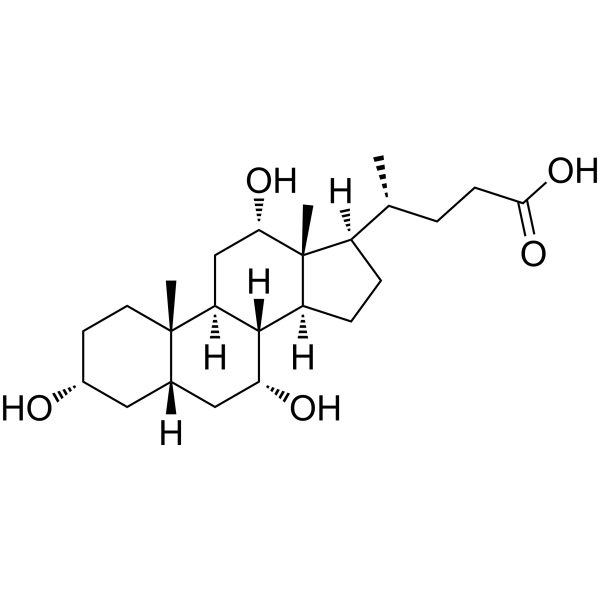
HY-N0324R
Cholic acid (Standard)Endogenous Metabolite -
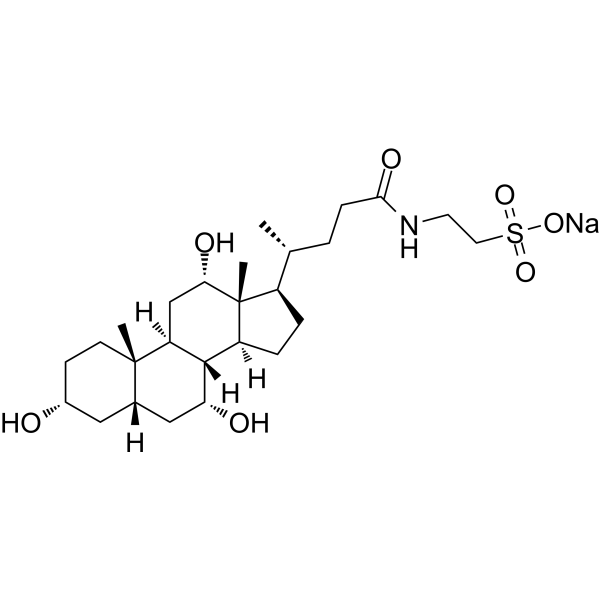
HY-N0545
Taurocholic acid sodiumImmunoregulation Agent -
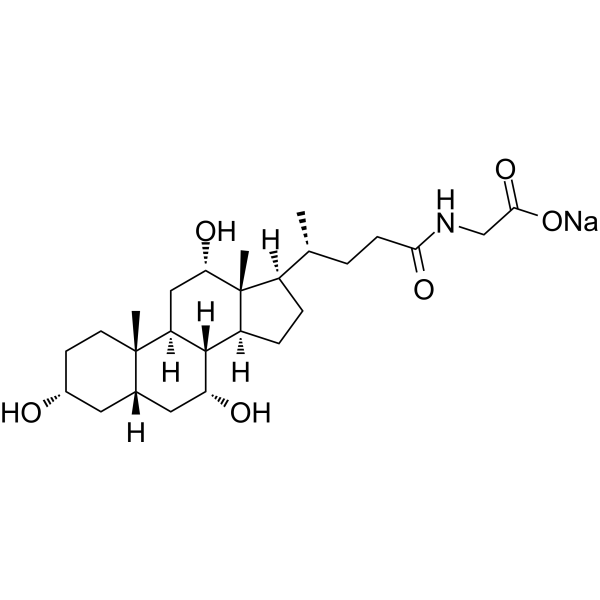
HY-N1423A
Glycocholic acid sodiumBile Acid Derivative -

HY-125731R
Glycodeoxycholic Acid (Standard)Endogenous Metabolite -
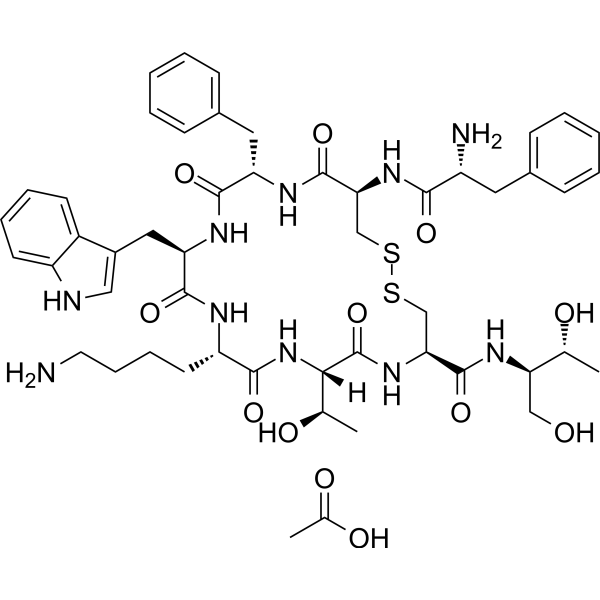
HY-17365
Octreotide acetateSomatostatin Receptor Agonist -
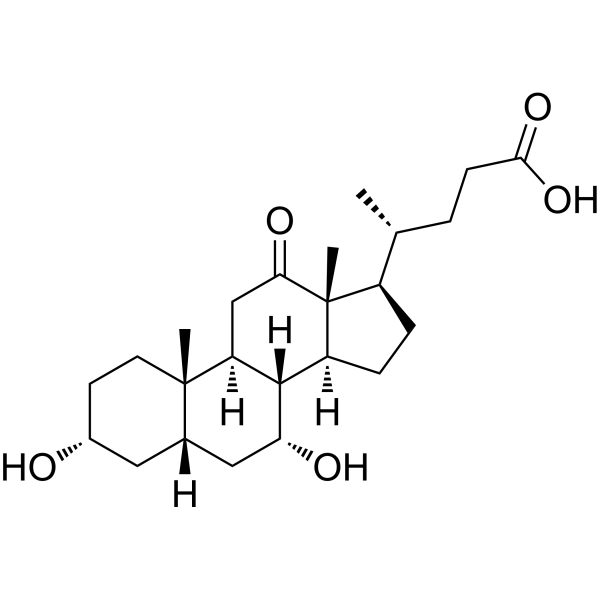
HY-W403933
12-Ketochenodeoxycholic acidBile Acid
Publications Citing Use of MedChemExpress (MCE) Glycodeoxycholate Sodium
More Customer Validation & Images

-
RT-PCR
All Endogenous Metabolite Isoforms
More

Biological Activity
Description
IC50 & Target
|
Microbial Metabolite |
Human Endogenous Metabolite |
Cellular Effect
|
Cell Line

|
Type | Value | Description | References |
|---|---|---|---|---|
| CHO | EC50 |
1.18 μM
Compound: 7b, glyco
|
Agonist activity at human TGR5 expressed in CHO cells by luciferase assay
Agonist activity at human TGR5 expressed in CHO cells by luciferase assay
|
[PMID: 18307294] |
| HET-1A | CC50 |
1237 μM
Compound: 12, TDCA
|
Cytotoxicity against human HET-1A cells assessed as cell viability after 24 hrs by MTT assay
Cytotoxicity against human HET-1A cells assessed as cell viability after 24 hrs by MTT assay
|
[PMID: 20713311] |
In Vitro
Glycodeoxycholate Sodium (1-5 mM, 2h) has cytotoxicity to Caco-2 cells[1].
Glycodeoxycholate Sodium (1-15 mM, 1h) increases main pancreatic duct permeability and causes disruption of the tight junctions and the swelling of intercellular spaces between the duct cells[2].
MedChemExpress (MCE) has not independently confirmed the accuracy of these methods. They are for reference only.
-
Cell Line:Caco-2 cells
-
Concentration:1 mM, 1.5 mM, 2 mM, 2.5mM, 3mM, 5mM
-
Incubation Time:2h
-
Result:Showed cytotoxic with IC50 of 2 mM.
In Vivo


Chemical Information
-
CAS No. 16409-34-0
-
Appearance Solid
-
Molecular Weight 471.61
-
Formula C26H42NNaO5
-
Color White to off-white
-
SMILES
O=C(O[Na])CNC(CC[C@@H](C)[C@H]1CC[C@@]2([H])[C@]3([H])CC[C@]4([H])C[C@H](O)CC[C@]4(C)[C@@]3([H])C[C@H](O)[C@]12C)=O
-
Synonyms
Sodium glycyldeoxycholate
-
Structure Classification
-
Initial Source
-
Shipping
Room temperature in continental US; may vary elsewhere.
-
Storage
4°C, sealed storage, away from moisture
* In solvent : -80°C, 6 months; -20°C, 1 month (sealed storage, away from moisture)


Publications (5)
-
Journal Impact Factor
-
Most Recent
-
Nature
2025 Jul;643(8070):192-200. PMID: 39695227 -
Adv Sci (Weinh)
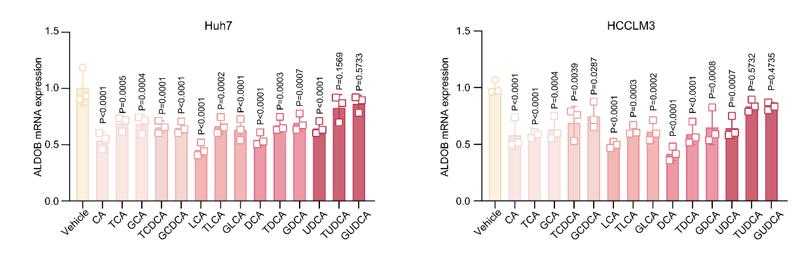
Targeting FDFT1 Reduces Cholesterol and Bile Acid Production and Delays Hepatocellular Carcinoma Progression Through the HNF4A/ALDOB/AKT1 Axis. [Abstract]2025 Mar;12(12):e2411719. PMID: 39899681
Glycodeoxycholate Sodium purchased from MedChemExpress. Usage Cited in: Adv Sci (Weinh). 2025 Mar;12(12):e2411719. [Abstract]
The mRNA levels of ALDOB in Huh7 or HCCLM3 cells treated with various bile acids (100 μM, 24 h). All data are presented as mean ± SD. Data were analyzed by one-way ANOVA with Bonferroni multiple-comparison correction. CA, cholic acid; TCA, taurocholic acid; GCA, glycocholic acid; TCDCA, taurochenodeoxycholic acid; GCDCA, glycochenodeoxycholic acid; LCA, lithocholic acid; TLCA, taurolithocholic acid; GLCA, glycolithocholic acid; DCA, deoxycholic acid; TDCA, taurodeoxycholic acid; GDCA, glycodeoxycholic acid; UDCA, ursodeoxycholic acid; TUDCA, tauroursodeoxycholic acid; GUDCA, glycoursodeoxycholic acid.
-
J Enzyme Inhib Med Chem
Natural product sennoside B disrupts liquid-liquid phase separation of SARS-CoV-2 nucleocapsid protein by inhibiting its RNA-binding activity. [Abstract]2025 Dec;40(1):2501743. PMID: 40371698 -
-
bioRxiv
2026 May 5:2026.04.30.721772. PMID: 42146479


Solvent & Solubility
In Vitro:
DMSO : 125 mg/mL (265.05 mM; ultrasonic and warming and heat to 60°C; Hygroscopic DMSO has a significant impact on the solubility of product, please use newly opened DMSO)
H2O : 100 mg/mL (212.04 mM; Need ultrasonic)
Please refer to the solubility information to select the appropriate solvent. Once prepared, please aliquot and store the solution to prevent product inactivation from repeated freeze-thaw cycles.
Storage method and period of stock solution: -80°C, 6 months; -20°C, 1 month (sealed storage, away from moisture). When stored at -80°C, please use it within 6 months. When stored at -20°C, please use it within 1 month.
* Note: If you choose water as the stock solution, please dilute it to the working solution, then filter and sterilize it with a 0.22 μm filter before use.
Please refer to the solubility information to select the appropriate solvent. Once prepared, please aliquot and store the solution to prevent product inactivation from repeated freeze-thaw cycles.
Storage method and period of stock solution: -80°C, 6 months; -20°C, 1 month (sealed storage, away from moisture). When stored at -80°C, please use it within 6 months. When stored at -20°C, please use it within 1 month.
* Note: If you choose water as the stock solution, please dilute it to the working solution, then filter and sterilize it with a 0.22 μm filter before use.
Concentration (start) × Volume (start) = Concentration (final) × Volume (final)
In Vivo:
Select the appropriate dissolution method based on your experimental animal and administration route.
- For the following dissolution methods, please ensure to first prepare a clear stock solution using an In Vitro approach and then sequentially add co-solvents:
- To ensure reliable experimental results, the clarified stock solution can be appropriately stored based on storage conditions. As for the working solution for In Vivo experiments, it is recommended to prepare freshly and use it on the same day.
- The percentages shown for the solvents indicate their volumetric ratio in the final prepared solution. If precipitation or phase separation occurs during preparation, heat and/or sonication can be used to aid dissolution.
Add each solvent one by one: 10% DMSO 40% PEG300 5% Tween-80 45% Saline
Solubility: ≥ 2.5 mg/mL (5.30 mM); Clear solution
This protocol yields a clear solution of ≥ 2.5 mg/mL (saturation unknown).
Taking 1 mL working solution as an example, add 100 μL DMSO stock solution (25.0 mg/mL) to 400 μL PEG300, and mix evenly; then add 50 μL Tween-80 and mix evenly; then add 450 μL Saline to adjust the volume to 1 mL.
Preparation of Saline: Dissolve 0.9 g sodium chloride in ddH₂O and dilute to 100 mL to obtain a clear Saline solution.
Add each solvent one by one: 10% DMSO 90% (20% SBE-β-CD in Saline)
Solubility: ≥ 2.5 mg/mL (5.30 mM); Clear solution
This protocol yields a clear solution of ≥ 2.5 mg/mL (saturation unknown).
Taking 1 mL working solution as an example, add 100 μL DMSO stock solution (25.0 mg/mL) to 900 μL 20% SBE-β-CD in Saline, and mix evenly.
Preparation of 20% SBE-β-CD in Saline (4°C, storage for one week): 2 g SBE-β-CD powder is dissolved in 10 mL Saline, completely dissolve until clear.
In Vivo Dissolution Calculator
Please enter the basic information of animal experiments:
-
-
-
-
Recommended: Prepare an additional quantity of animals to account for potential losses during experiments.
Working solution concentration: 0.22 mg/mL
This product has good water solubility, please refer to the measured solubility data in water/PBS/Saline for details.


Purity & Documentation
-
Data Sheet (275 KB)
-
SDS (393 KB)
- English - EN (393 KB)
- Français - FR (393 KB)
- Deutsch - DE (393 KB)
- Norwegian - NO (393 KB)
- Español - ES (393 KB)
- Swedish - SV (393 KB)
- Italian - IT (393 KB)
- Korean - KR (393 KB)
- Portuguese - PT (393 KB)
-
Handling Instructions (2659 KB)
References
[1]. Brayden DJ, et al. Sodium glycodeoxycholate and sodium deoxycholate as epithelial permeation enhancers: in vitro and ex vivo intestinal and buccal bioassays. Eur J Pharm Sci. 2021 Apr 1;159:105737. [Content Brief]
[2]. Farmer RC, et al. Effects of bile salts on permeability and morphology of main pancreatic duct in cats. Dig Dis Sci. 1984 Aug;29(8):740-51. [Content Brief]
[3]. Illum L, et al. Bioadhesive starch microspheres and absorption enhancing agents act synergistically to enhance the nasal absorption of polypeptides. Int J Pharm. 2001 Jul 3;222(1):109-19. [Content Brief]


Complete Stock Solution Preparation Table
Please refer to the solubility information to select the appropriate solvent. Once prepared, please aliquot and store the solution to prevent product inactivation from repeated freeze-thaw cycles.
Storage method and period of stock solution: -80°C, 6 months; -20°C, 1 month (sealed storage, away from moisture). When stored at -80°C, please use it within 6 months. When stored at -20°C, please use it within 1 month.
| Optional Solvent | Concentration Solvent Mass | 1 mg | 5 mg | 10 mg | 25 mg |
|---|---|---|---|---|---|
| H2O / DMSO | 1 mM | 2.1204 mL | 10.6020 mL | 21.2040 mL | 53.0099 mL |
| 5 mM | 0.4241 mL | 2.1204 mL | 4.2408 mL | 10.6020 mL | |
| 10 mM | 0.2120 mL | 1.0602 mL | 2.1204 mL | 5.3010 mL | |
| 15 mM | 0.1414 mL | 0.7068 mL | 1.4136 mL | 3.5340 mL | |
| 20 mM | 0.1060 mL | 0.5301 mL | 1.0602 mL | 2.6505 mL | |
| 25 mM | 0.0848 mL | 0.4241 mL | 0.8482 mL | 2.1204 mL | |
| 30 mM | 0.0707 mL | 0.3534 mL | 0.7068 mL | 1.7670 mL | |
| 40 mM | 0.0530 mL | 0.2650 mL | 0.5301 mL | 1.3252 mL | |
| 50 mM | 0.0424 mL | 0.2120 mL | 0.4241 mL | 1.0602 mL | |
| 60 mM | 0.0353 mL | 0.1767 mL | 0.3534 mL | 0.8835 mL | |
| 80 mM | 0.0265 mL | 0.1325 mL | 0.2650 mL | 0.6626 mL | |
| 100 mM | 0.0212 mL | 0.1060 mL | 0.2120 mL | 0.5301 mL |
* Note: If you choose water as the stock solution, please dilute it to the working solution, then filter and sterilize it with a 0.22 μm filter before use.


Glycodeoxycholate Sodium Related Classifications
HY-N1427 Related Classifications
 Powered by Bioz