



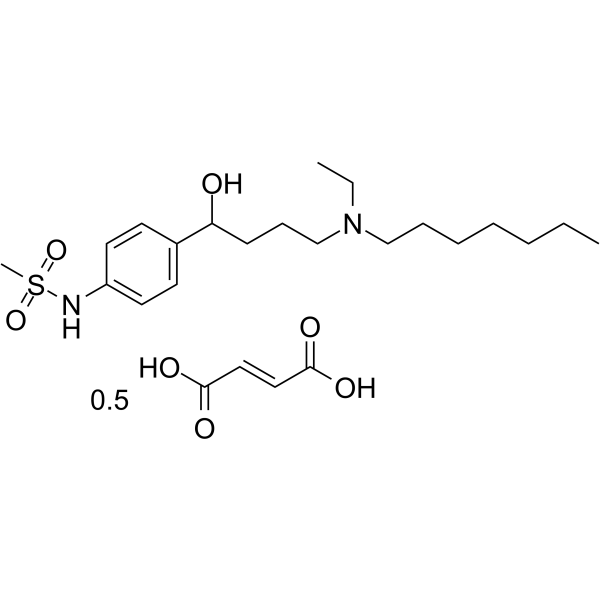
Ibutilide fumarate
Based on 1 publication(s) in Google Scholar
Ibutilide (U70226E) fumarate, an action potential-prolonging antiarrhythmic, is a potent blocker of the rapidly activating delayed rectifier K+ current (IKr) in AT-1 cells.
For research use only. We do not sell to patients.
- Purity : 99.69%
- CAS No.: 122647-32-9
- Formula: C24H40N2O7S
- Molecular Weight:442.61
-
Storage:
4°C, sealed storage, away from moisture
* In solvent : -80°C, 6 months; -20°C, 1 month (sealed storage, away from moisture)

To place orders, for customer services and technical support, please contact: MedChemExpress USA
Tel: 609-228-6898 E-mail: [email protected] [email protected]


-
 Biological Activity
-
Chemical Information
-
Solvent & Solubility
- Protocols
- Purity & Documentation
- References
-
 Help & FAQs


-
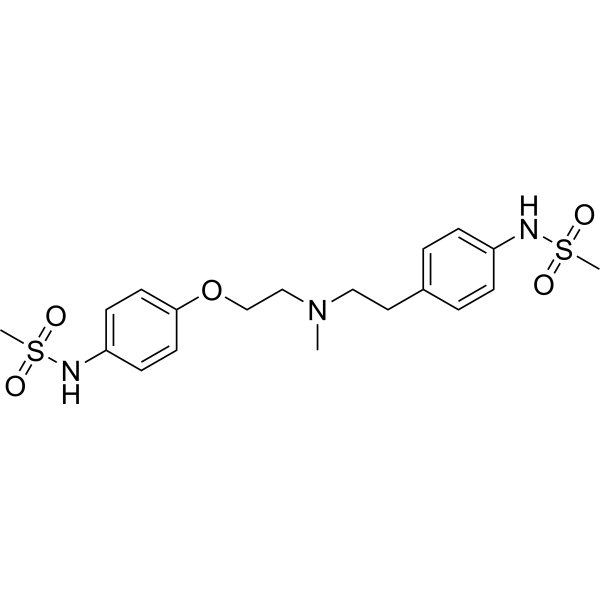
HY-B0232
DofetilideIKr Blocker -
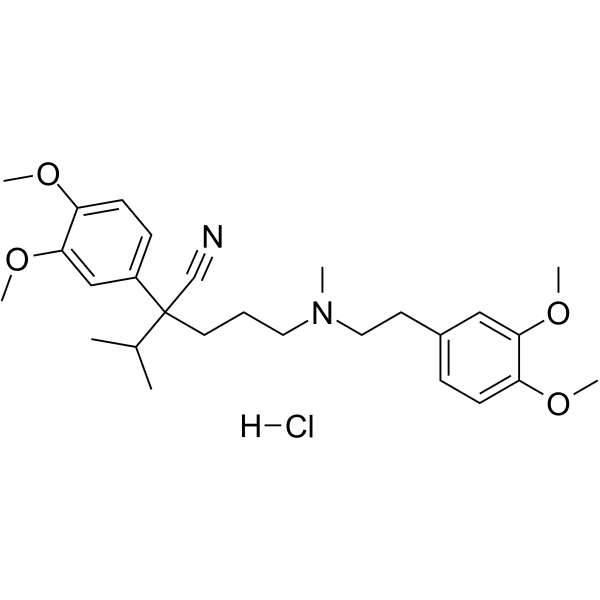
HY-A0064
Verapamil hydrochlorideCalcium Channel Blocker -
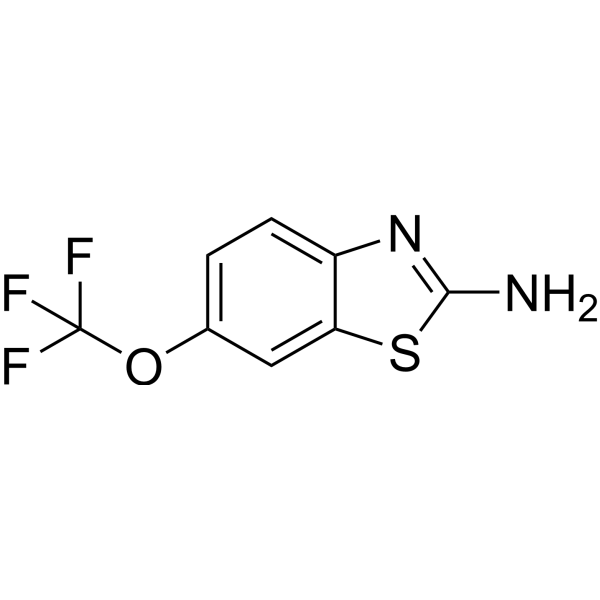
HY-B0211
RiluzoleAnticonvulsant Agent -
HY-B0002A
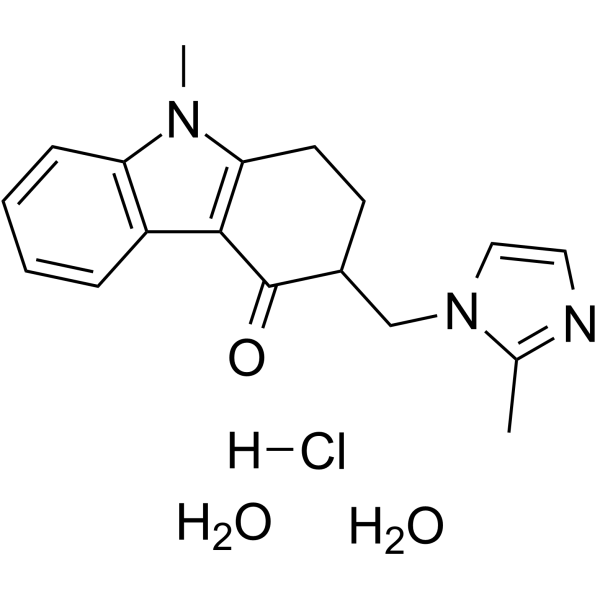
Ondansetron hydrochloride dihydrate5-HT3 Receptor Antagonist -
HY-B1302
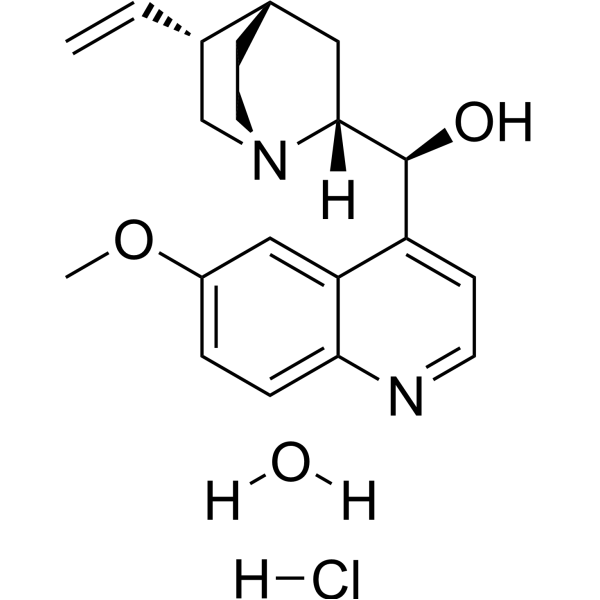
Quinidine hydrochloride monohydrateAnti-arrythmic Agent -
HY-B0246
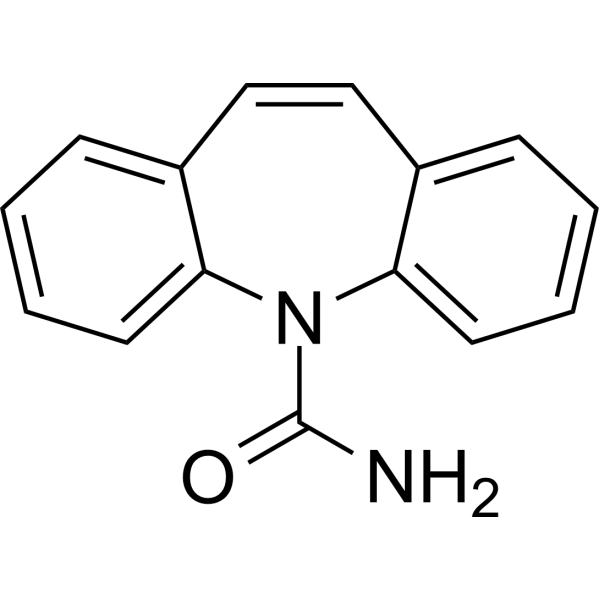
CarbamazepineAnticonvulsant -
HY-B0448
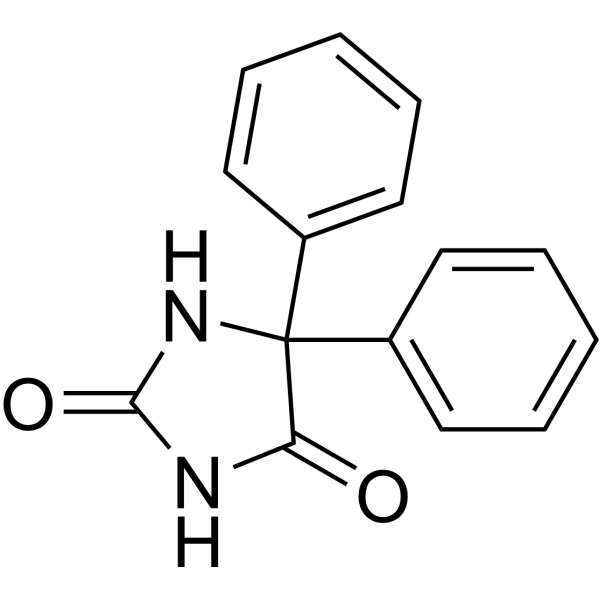
PhenytoinVirus Protease Inhibitor -
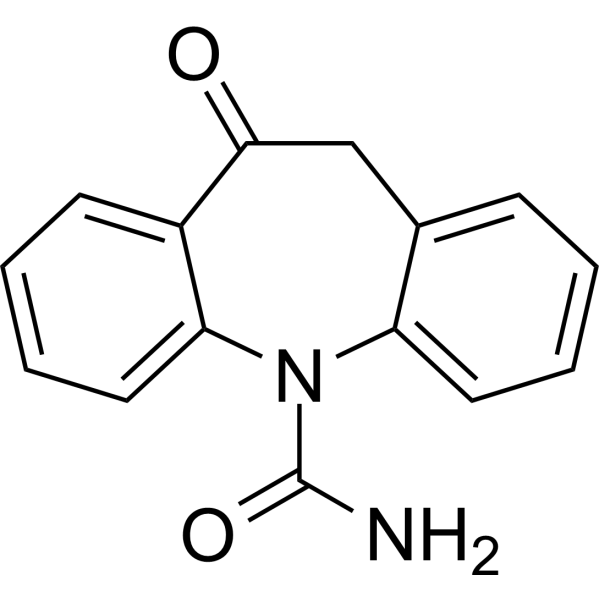
HY-B0114
OxcarbazepineAnti-Epileptic Agent -

HY-B0448R
Phenytoin (Standard)Virus Protease Inhibitor -
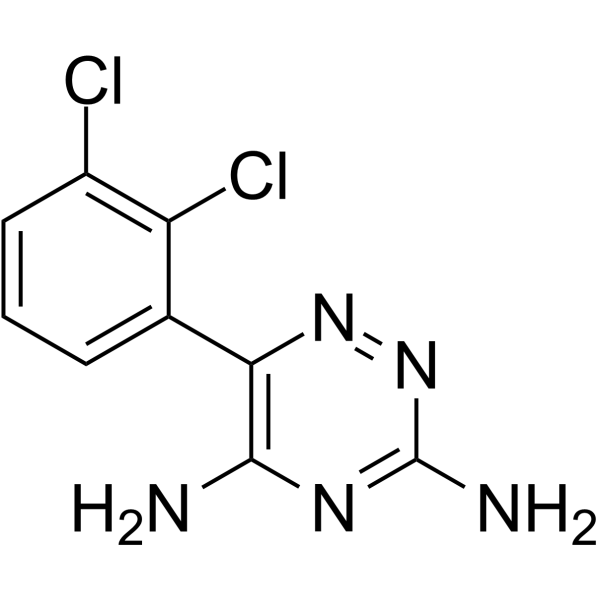
HY-B0495
LamotrigineAnticonvulsant Agent -

HY-B0246R
Carbamazepine (Standard)Anticonvulsant -
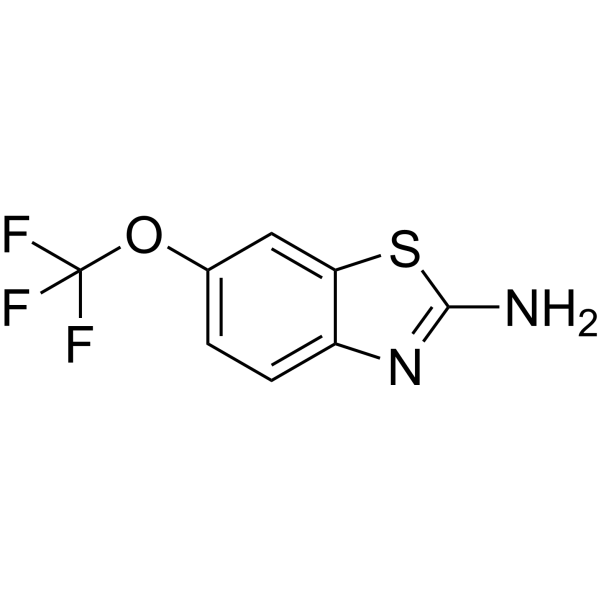
HY-B0211R
Riluzole (Standard)Anticonvulsant Agent
Publications Citing Use of MedChemExpress (MCE) Ibutilide fumarate
More

Biological Activity
Description
In Vitro
Ibutilide fumarate is a potent IKr blocker with an EC50 value of 20 nM at +20 mV in atrial tumor myocytes (AT-1) cells[1].
Ibutilide fumarate blocks IKr in cells expressing HERG+MDR1*1 to the same extent as cells expressing HERG alone (IC50: 22.5 nM vs 27.4 nM). However, cells expressing MDR1*7 show a marked resistance to Ibutilide (IC50: 105.3 nM vs 27.4 nM)[2].
MedChemExpress (MCE) has not independently confirmed the accuracy of these methods. They are for reference only. Further protocols information, click here.
In Vivo
Ibutilide (administered cumulatively in three doses, 0.01, 0.02 and 0.05 mg/kg i.v., each as a 10-min infusion) fumarate results in both polymorphic and monomorphic non-sustained ventricular tachycardia[3].
MedChemExpress (MCE) has not independently confirmed the accuracy of these methods. They are for reference only.
-
Animal Model:Fifteen adult mongrel dogs of either sex[1]
-
Dosage:0.01, 0.02 and 0.05 mg/kg
-
Administration:Intravenous injection; each as a 10-min infusion
-
Result:The action potential duration at 90% (APD90) prolongation with Ibutilide (0.01 mg/kg) was significantly greater in congestive heart failure (CHF) vs. controls.
An increased dispersion of left-right ventricular APD90 was observed in CHF at 0.01 mg/kg, but not in controls.
Clinical Trial
| NCT Number | Sponsor | Condition | Start Date |
Phase

|
|---|---|---|---|---|
| NCT01329991 | Plexxikon| | 2011-05 | PHASE1 |


Chemical Information
-
CAS No. 122647-32-9
-
Appearance Solid
-
Molecular Weight 442.61
-
Formula C24H40N2O7S
-
Color White to off-white
-
SMILES
CS(=O)(NC1=CC=C(C(O)CCCN(CC)CCCCCCC)C=C1)=O.O=C(O)/C=C/C(O)=O
-
Synonyms
U70226E
-
Shipping
Room temperature in continental US; may vary elsewhere.
-
Storage
4°C, sealed storage, away from moisture
* In solvent : -80°C, 6 months; -20°C, 1 month (sealed storage, away from moisture)


Publications (1)
-
Journal Impact Factor
-
Most Recent
-
Biochem Biophys Res Commun
Dual-cardiotoxicity evaluation of torsadogenic risk drugs using human iPSC-derived cardiomyocytes. [Abstract]2025 Oct 30:786:152756. PMID: 41043280


Solvent & Solubility
In Vitro:
DMSO : ≥ 50 mg/mL (112.97 mM; Hygroscopic DMSO has a significant impact on the solubility of product, please use newly opened DMSO)
H2O : 50 mg/mL (112.97 mM; Need ultrasonic)
* "≥" means soluble, but saturation unknown.
Please refer to the solubility information to select the appropriate solvent. Once prepared, please aliquot and store the solution to prevent product inactivation from repeated freeze-thaw cycles.
Storage method and period of stock solution: -80°C, 6 months; -20°C, 1 month (sealed storage, away from moisture). When stored at -80°C, please use it within 6 months. When stored at -20°C, please use it within 1 month.
* Note: If you choose water as the stock solution, please dilute it to the working solution, then filter and sterilize it with a 0.22 μm filter before use.
Please refer to the solubility information to select the appropriate solvent. Once prepared, please aliquot and store the solution to prevent product inactivation from repeated freeze-thaw cycles.
Storage method and period of stock solution: -80°C, 6 months; -20°C, 1 month (sealed storage, away from moisture). When stored at -80°C, please use it within 6 months. When stored at -20°C, please use it within 1 month.
* Note: If you choose water as the stock solution, please dilute it to the working solution, then filter and sterilize it with a 0.22 μm filter before use.
Concentration (start) × Volume (start) = Concentration (final) × Volume (final)
In Vivo:
Select the appropriate dissolution method based on your experimental animal and administration route.
- For the following dissolution methods, please ensure to first prepare a clear stock solution using an In Vitro approach and then sequentially add co-solvents:
- To ensure reliable experimental results, the clarified stock solution can be appropriately stored based on storage conditions. As for the working solution for In Vivo experiments, it is recommended to prepare freshly and use it on the same day.
- The percentages shown for the solvents indicate their volumetric ratio in the final prepared solution. If precipitation or phase separation occurs during preparation, heat and/or sonication can be used to aid dissolution.
Add each solvent one by one: 10% DMSO 40% PEG300 5% Tween-80 45% Saline
Solubility: ≥ 2.5 mg/mL (5.65 mM); Clear solution
This protocol yields a clear solution of ≥ 2.5 mg/mL (saturation unknown).
Taking 1 mL working solution as an example, add 100 μL DMSO stock solution (25.0 mg/mL) to 400 μL PEG300, and mix evenly; then add 50 μL Tween-80 and mix evenly; then add 450 μL Saline to adjust the volume to 1 mL.
Preparation of Saline: Dissolve 0.9 g sodium chloride in ddH₂O and dilute to 100 mL to obtain a clear Saline solution.
Add each solvent one by one: 10% DMSO 90% (20% SBE-β-CD in Saline)
Solubility: ≥ 2.5 mg/mL (5.65 mM); Clear solution
This protocol yields a clear solution of ≥ 2.5 mg/mL (saturation unknown).
Taking 1 mL working solution as an example, add 100 μL DMSO stock solution (25.0 mg/mL) to 900 μL 20% SBE-β-CD in Saline, and mix evenly.
Preparation of 20% SBE-β-CD in Saline (4°C, storage for one week): 2 g SBE-β-CD powder is dissolved in 10 mL Saline, completely dissolve until clear.
For the following dissolution methods, please prepare the working solution directly:
It is recommended to prepare fresh solutions and use them promptly within a short period of time.
The percentages shown for the solvents indicate their volumetric ratio in the final prepared solution. If precipitation or phase separation occurs during preparation, heat and/or sonication can be used to aid dissolution.
Add each solvent one by one: PBS
Solubility: 37.5 mg/mL (84.72 mM); Clear solution; Need ultrasonic
In Vivo Dissolution Calculator
Please enter the basic information of animal experiments:
-
-
-
-
Recommended: Prepare an additional quantity of animals to account for potential losses during experiments.
Working solution concentration: 0.22 mg/mL
This product has good water solubility, please refer to the measured solubility data in water/PBS/Saline for details.

Protocols
-
Cardiac voltage-sensitive optical mapping
Cardiac voltage-sensitive optical mapping records changes in transmembrane potential from cardiac tissue by staining the preparation with a voltage-sensitive dye and imaging fluorescence changes during electrical activation; the resulting optical action potentials can be used to map activation time, action potential duration, conduction velocity, wavefront propagation, and arrhythmia dynamics. The optical signal represents a relative fluorescence change from a tissue volume rather than a single-cell intracellular recording, so spatial resolution, sampling rate, voltage resolution, optical magnification, light penetration, and motion control must be considered together when interpreting optical action potentials.
-
Neuronal voltage-sensitive dye imaging
Neuronal voltage-sensitive dye imaging detects membrane-potential-dependent optical changes from dyes associated with neuronal membranes, enabling optical recording of electrical activity from single neurons, dendrites, axons, spines, or neuronal populations in brain slices and cultured neurons. VSD signals are typically reported as fractional fluorescence or absorbance changes over baseline, such as ΔF/F or ΔI/I, and published protocols use high-speed cameras or photodiode arrays because neuronal voltage signals occur on millisecond time scales. Fast VSD imaging can be applied at two common scales: bulk staining of brain slices to measure circuit-level spatiotemporal activity, and single-cell loading or biolistic delivery to record membrane-potential transients from individual neuronal compartments. Optical signals should be interpreted as membrane-potential-related readouts, and validation by simultaneous electrophysiology or pharmacological controls is recommended when the experimen
-
Acute brain-slice whole-cell patch-clamp recording
Acute brain-slice whole-cell patch-clamp recording measures membrane voltage or ionic current from visually targeted cells in living brain slices; after giga-seal formation, the membrane under the pipette is ruptured to provide low-resistance electrical access to the cell interior, enabling current-clamp analysis of excitability and voltage-clamp analysis of synaptic or membrane currents. Acute slices preserve local tissue architecture better than dissociated preparations and allow visually guided recording from defined brain regions or fluorescently labeled cells; however, whole-cell access also permits exchange between pipette solution and cytoplasm, so intracellular dialysis must be considered when interpreting signaling-dependent phenomena.


Purity & Documentation
-
Data Sheet (273 KB)
-
SDS (398 KB)
- English - EN (398 KB)
- Français - FR (398 KB)
- Deutsch - DE (398 KB)
- Norwegian - NO (398 KB)
- Español - ES (398 KB)
- Swedish - SV (398 KB)
- Italian - IT (398 KB)
- Korean - KR (398 KB)
- Portuguese - PT (398 KB)
-
Handling Instructions (2659 KB)
References
[1]. Ibutilide, a methanesulfonanilide antiarrhythmic, is a potent blocker of the rapidly activating delayed rectifier K+ current (IKr) in AT-1 cells. Concentration-, time-, voltage-, and use-dependent effects. Circulation. 1995 Mar 15;91(6):1799-806. [Content Brief]
[2]. B F McBride, et al. Influence of the G2677T/C3435T haplotype of MDR1 on P-glycoprotein trafficking and Ibutilide-induced block of HERG. Pharmacogenomics J. 2009 Jun;9(3):194-201. [Content Brief]
[3]. S S Chugh, et al. Altered response to Ibutilide in a heart failure model. Cardiovasc Res. 2001 Jan;49(1):94-102. [Content Brief]


Complete Stock Solution Preparation Table
Please refer to the solubility information to select the appropriate solvent. Once prepared, please aliquot and store the solution to prevent product inactivation from repeated freeze-thaw cycles.
Storage method and period of stock solution: -80°C, 6 months; -20°C, 1 month (sealed storage, away from moisture). When stored at -80°C, please use it within 6 months. When stored at -20°C, please use it within 1 month.
| Optional Solvent | Concentration Solvent Mass | 1 mg | 5 mg | 10 mg | 25 mg |
|---|---|---|---|---|---|
| DMSO / H2O | 1 mM | 2.2593 mL | 11.2966 mL | 22.5933 mL | 56.4831 mL |
| 5 mM | 0.4519 mL | 2.2593 mL | 4.5187 mL | 11.2966 mL | |
| 10 mM | 0.2259 mL | 1.1297 mL | 2.2593 mL | 5.6483 mL | |
| 15 mM | 0.1506 mL | 0.7531 mL | 1.5062 mL | 3.7655 mL | |
| 20 mM | 0.1130 mL | 0.5648 mL | 1.1297 mL | 2.8242 mL | |
| 25 mM | 0.0904 mL | 0.4519 mL | 0.9037 mL | 2.2593 mL | |
| 30 mM | 0.0753 mL | 0.3766 mL | 0.7531 mL | 1.8828 mL | |
| 40 mM | 0.0565 mL | 0.2824 mL | 0.5648 mL | 1.4121 mL | |
| 50 mM | 0.0452 mL | 0.2259 mL | 0.4519 mL | 1.1297 mL | |
| 60 mM | 0.0377 mL | 0.1883 mL | 0.3766 mL | 0.9414 mL | |
| 80 mM | 0.0282 mL | 0.1412 mL | 0.2824 mL | 0.7060 mL | |
| 100 mM | 0.0226 mL | 0.1130 mL | 0.2259 mL | 0.5648 mL |
* Note: If you choose water as the stock solution, please dilute it to the working solution, then filter and sterilize it with a 0.22 μm filter before use.


Ibutilide fumarate Related Classifications
HY-B0387 Related Classifications
 Powered by Bioz