



Molindone (hydrochloride)

Based on 1 Customer Validation
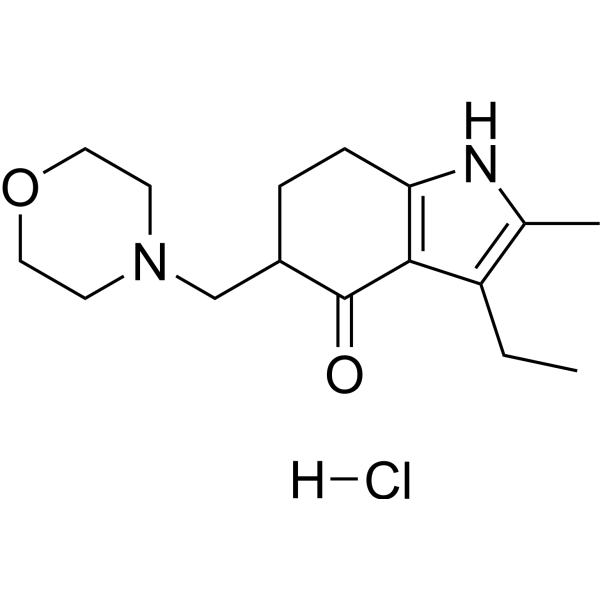
Molindone hydrochloride (EN-1733A) is an orally active and brain-penetrant dopamine D2/D5 receptor antagonist. Molindone hydrochloride shows antipsychotic and antidepressant-like activities. Molindone hydrochloride suppresses spontaneous locomotion, and antagonizes apomorphine-induced emesis. Molindone hydrochloride can be used for the research of neurological disease.
For research use only. We do not sell to patients.
- Purity : 99.81%
- CAS No.: 15622-65-8
- Formula: C16H25ClN2O2
- Molecular Weight:312.83
-
Storage:
4°C, sealed storage, away from moisture
* In solvent : -80°C, 6 months; -20°C, 1 month (sealed storage, away from moisture)

To place orders, for customer services and technical support, please contact: MedChemExpress USA
Tel: 609-228-6898 E-mail: [email protected] [email protected]


-
 Biological Activity
-
Chemical Information
-
Solvent & Solubility
- Protocols
- Purity & Documentation
- References
-
 Help & FAQs


-
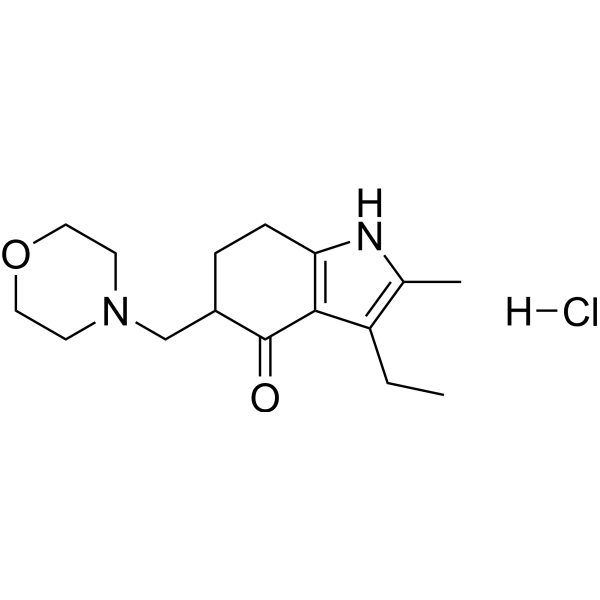
HY-B1017R
Molindone hydrochloride (Standard)Dopamine Receptor Blocker -
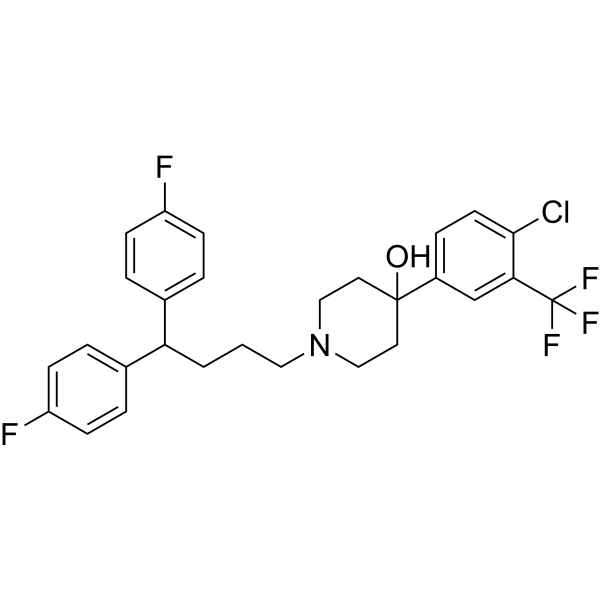
HY-B1077
PenfluridolAntipsychotic Agent -
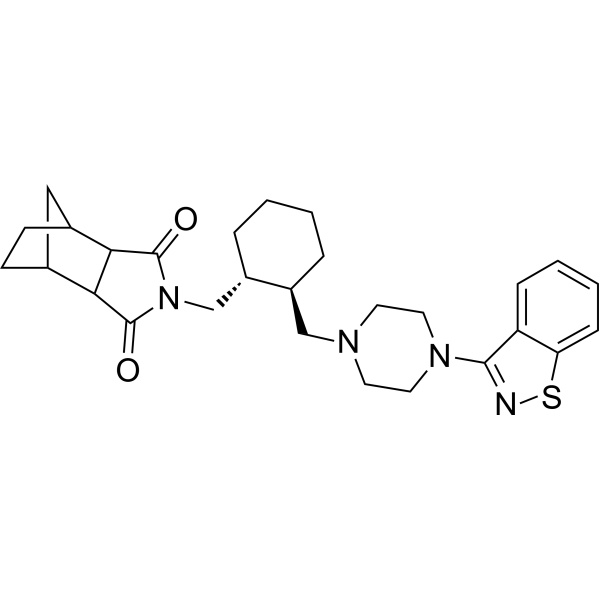
HY-B0032A
Lurasidone -
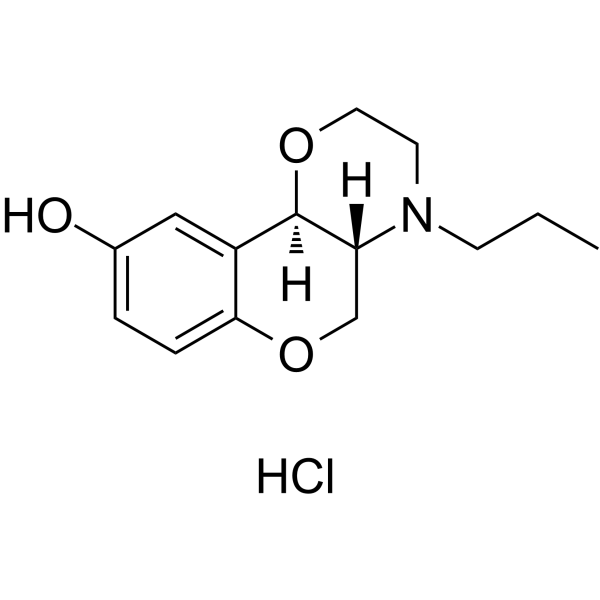
HY-110000
(+)-PD 128907 hydrochlorideDopamine Receptor Agonist -
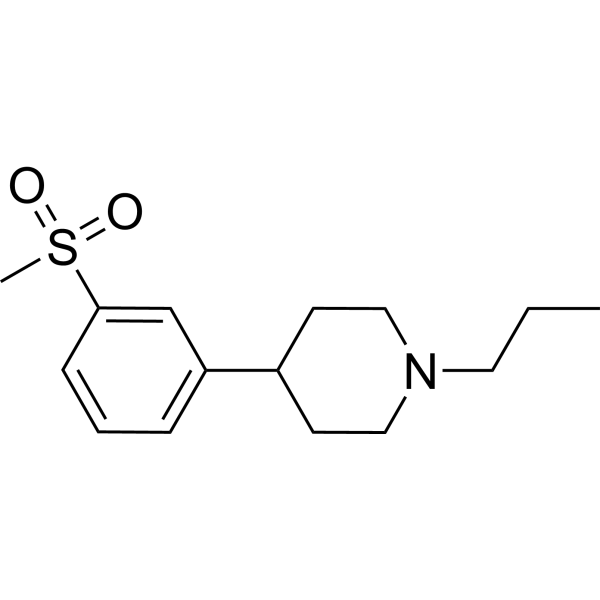
HY-10684
Pridopidine -
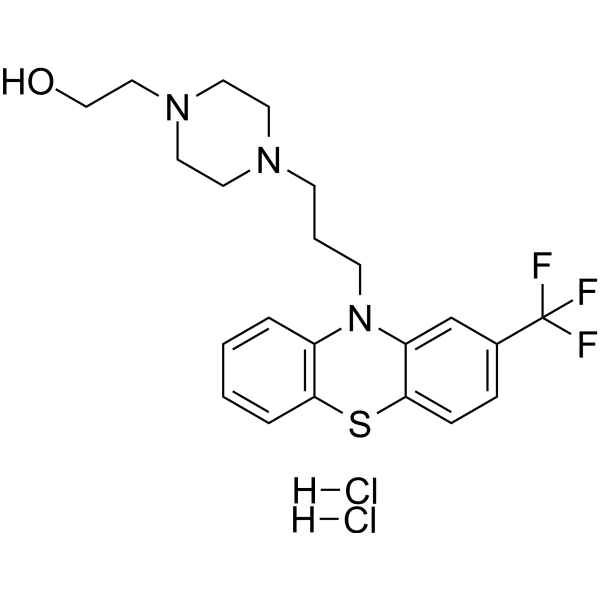
HY-A0081
Fluphenazine dihydrochlorideDopamine Receptor Inhibitor -

HY-B1225
Promazine hydrochlorideDopamine Receptor D2 Antagonist -
HY-B0274A
Chlorprothixene hydrochlorideBacterial Inhibitor -
HY-14538S
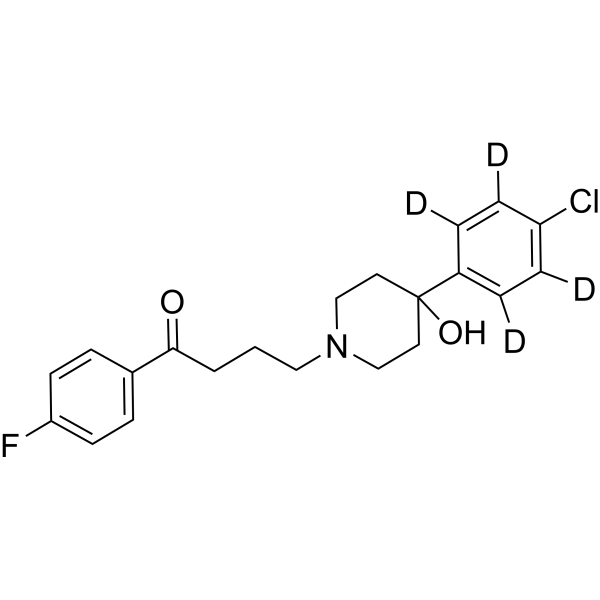
Haloperidol-d4Deuterated Haloperidol -

HY-B1077R
Penfluridol (Standard)Antipsychotic Agent -

HY-B0032AR
Lurasidone (Standard) -

HY-10684R
Pridopidine (Standard)
All Dopamine Receptor Isoforms
More

Biological Activity
Description
IC50 & Target
[1]|
D2 Receptor |
D5 Receptor |
In Vitro
Molindone hydrochloride scarcely affects rat brain MAO activity in vitro, with a IC50 of 9.8 × 10⁻³ M[2].
MedChemExpress (MCE) has not independently confirmed the accuracy of these methods. They are for reference only. Further protocols information, click here.
In Vivo
Molindone hydrochloride (5-75 mg/kg-bw/day; i.g.; daily; 8 weeks) induces dose-dependent CNS effects, body weight and food consumption reductions in males, serum chemistry alterations, organ weight changes, and delays in sexual maturation (attributed to reduced body weights), with most effects resolving during a 6-week non-dosing recovery period; no significant adverse effects on reproductive function are observed when administered orally to juvenile CD Sprague-Dawley rats[1].
Molindone hydrochloride (p.o.) exhibits neuroleptic and antidepressant activityin rats[2].
Molindone hydrochloride (1-2 mg/kg; p.o.) blocks Apomorphine (HY-12723)-induced emesis in dogs[2].
Molindone hydrochloride (0.5-1 mg/kg; p.o.) reduces aggressiveness for 2-3 hours, with higher doses producing gradual, sustained docility in Macaca mulatta[2].
MedChemExpress (MCE) has not independently confirmed the accuracy of these methods. They are for reference only.
-
Animal Model:GF1 mice (male)[2]
-
Dosage:2.5 mg/kg (tetrabenazine-induced ptosis ED50); 10.0 mg/kg (5-HTP potentiation ED50); 12.0 mg/kg (DOPA potentiation ED50); 5-15 mg/kg (catalepsy, hypothermia)
-
Administration:p.o.; 1 hour before test assessment
-
Result:Suppressed spontaneous locomotion, blocked conditioned avoidance responses, and antagonized amphetamine-induced stereotyped behaviour; relative potency vs.
chlorpromazine was 0.23 (locomotor suppression), 0.17 (avoidance blockade), and 0.31 (amphetamine antagonism).
Achieved an ED50 of 2.5 mg/kg for antagonizing tetrabenazine-induced ptosis.
Achieved an ED50 of 10.0 mg/kg for potentiating 5-hydroxytryptophan (5-HTP) effects.
Achieved an ED50 of 12.0 mg/kg for potentiating 3,4-dihydroxyphenylalanine (DOPA) effects.
Induced catalepsy and hypothermia at oral doses of 5-15 mg/kg.
-
Animal Model:Rhesus monkey[2]
-
Dosage:0.5, 1 mg/kg
-
Administration:p.o.
-
Result:Curtailed aggressiveness for 2-3 hours at oral doses of 0.5-1 mg/kg.
Increasing doses gradually increased the degree and duration of docility, with a more gradual response than chlorpromazine.


Chemical Information
-
CAS No. 15622-65-8
-
Appearance Solid
-
Molecular Weight 312.83
-
Formula C16H25ClN2O2
-
Color White to off-white
-
SMILES
O=C1C2=C(NC(C)=C2CC)CCC1CN3CCOCC3.[H]Cl
-
Synonyms
EN-1733A
-
Shipping
Room temperature in continental US; may vary elsewhere.
-
Storage
4°C, sealed storage, away from moisture
* In solvent : -80°C, 6 months; -20°C, 1 month (sealed storage, away from moisture)


Solvent & Solubility
In Vitro:
H2O : 100 mg/mL (319.66 mM; Need ultrasonic)
DMSO : 17.5 mg/mL (55.94 mM; Need ultrasonic and warming; Hygroscopic DMSO has a significant impact on the solubility of product, please use newly opened DMSO)
Please refer to the solubility information to select the appropriate solvent. Once prepared, please aliquot and store the solution to prevent product inactivation from repeated freeze-thaw cycles.
Storage method and period of stock solution: -80°C, 6 months; -20°C, 1 month (sealed storage, away from moisture). When stored at -80°C, please use it within 6 months. When stored at -20°C, please use it within 1 month.
* Note: If you choose water as the stock solution, please dilute it to the working solution, then filter and sterilize it with a 0.22 μm filter before use.
Please refer to the solubility information to select the appropriate solvent. Once prepared, please aliquot and store the solution to prevent product inactivation from repeated freeze-thaw cycles.
Storage method and period of stock solution: -80°C, 6 months; -20°C, 1 month (sealed storage, away from moisture). When stored at -80°C, please use it within 6 months. When stored at -20°C, please use it within 1 month.
* Note: If you choose water as the stock solution, please dilute it to the working solution, then filter and sterilize it with a 0.22 μm filter before use.
Concentration (start) × Volume (start) = Concentration (final) × Volume (final)

Protocols
-
Protocol for Open Field Test (OF)
The Open Field Test is a rodent behavioral assay that measures spontaneous locomotion, exploratory behavior, and anxiety-like behavior when an animal is placed in a novel open arena. The main readouts are total distance traveled, movement time, velocity, center-zone entries, center-zone time, peripheral-zone time, and thigmotaxis. The assay is based on the conflict between exploration of a novel environment and avoidance of exposed open areas; higher center exploration is commonly interpreted as lower anxiety-like behavior, whereas increased wall-following or peripheral occupancy is interpreted as higher anxiety-like behavior.
-
Research Protocol for Neurological Diseases
PINK1/Parkin-mediated mitophagy pathway is a mitochondrial quality-control signaling axis in which mitochondrial depolarization stabilizes PINK1 on damaged mitochondria, activates Parkin recruitment and E3 ubiquitin ligase activity, promotes ubiquitination of outer mitochondrial membrane proteins, recruits selective autophagy adaptors, and drives lysosomal degradation of damaged mitochondria. In neurological disease research, this pathway is experimentally important because neurons, especially dopaminergic neurons, are highly dependent on mitochondrial integrity, and defective mitochondrial turnover can lead to mitochondrial dysfunction, oxidative stress, impaired neuronal survival, α-synuclein accumulation, and neuroinflammatory damage-associated signals. The genetic disease link is strongest in Parkinson’s disease because mutations in PRKN/parkin cause autosomal recessive juvenile parkinsonism, mutations in PINK1 cause hereditary early-onset Parkinson’s disease, and Drosophila studie


Purity & Documentation
-
Data Sheet (275 KB)
-
SDS (480 KB)
- English - EN (480 KB)
- Français - FR (480 KB)
- Deutsch - DE (480 KB)
- Norwegian - NO (480 KB)
- Español - ES (480 KB)
- Swedish - SV (480 KB)
- Italian - IT (480 KB)
- Korean - KR (480 KB)
- Portuguese - PT (480 KB)
-
Handling Instructions (2659 KB)
References
[1]. Krishna G, et al. Toxicity assessment of molindone hydrochloride, a dopamine D2/D5 receptor antagonist in juvenile and adult rats. Toxicol Mech Methods. 2017;27(5):352-362. [Content Brief]
[2]. Rubin A A, et al. Psychopharmacological profile of molindone[J]. Nature, 1967, 216(5115): 578-579. [Content Brief]


Complete Stock Solution Preparation Table
Please refer to the solubility information to select the appropriate solvent. Once prepared, please aliquot and store the solution to prevent product inactivation from repeated freeze-thaw cycles.
Storage method and period of stock solution: -80°C, 6 months; -20°C, 1 month (sealed storage, away from moisture). When stored at -80°C, please use it within 6 months. When stored at -20°C, please use it within 1 month.
| Optional Solvent | Concentration Solvent Mass | 1 mg | 5 mg | 10 mg | 25 mg |
|---|---|---|---|---|---|
| DMSO / H2O | 1 mM | 3.1966 mL | 15.9831 mL | 31.9662 mL | 79.9156 mL |
| 5 mM | 0.6393 mL | 3.1966 mL | 6.3932 mL | 15.9831 mL | |
| 10 mM | 0.3197 mL | 1.5983 mL | 3.1966 mL | 7.9916 mL | |
| 15 mM | 0.2131 mL | 1.0655 mL | 2.1311 mL | 5.3277 mL | |
| 20 mM | 0.1598 mL | 0.7992 mL | 1.5983 mL | 3.9958 mL | |
| 25 mM | 0.1279 mL | 0.6393 mL | 1.2786 mL | 3.1966 mL | |
| 30 mM | 0.1066 mL | 0.5328 mL | 1.0655 mL | 2.6639 mL | |
| 40 mM | 0.0799 mL | 0.3996 mL | 0.7992 mL | 1.9979 mL | |
| 50 mM | 0.0639 mL | 0.3197 mL | 0.6393 mL | 1.5983 mL | |
| H2O | 60 mM | 0.0533 mL | 0.2664 mL | 0.5328 mL | 1.3319 mL |
| 80 mM | 0.0400 mL | 0.1998 mL | 0.3996 mL | 0.9989 mL | |
| 100 mM | 0.0320 mL | 0.1598 mL | 0.3197 mL | 0.7992 mL |
* Note: If you choose water as the stock solution, please dilute it to the working solution, then filter and sterilize it with a 0.22 μm filter before use.


Molindone (hydrochloride) Related Classifications
HY-B1017 Related Classifications
 Powered by Bioz