



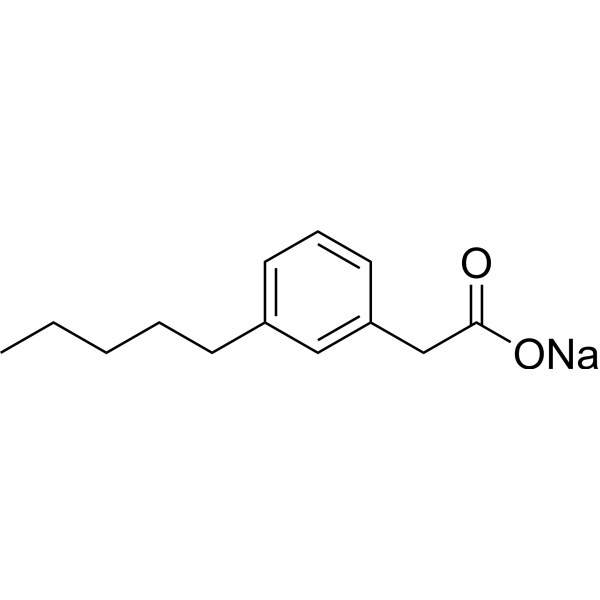
Fezagepras sodium
Based on 1 publication(s) in Google Scholar
Fezagepras (Setogepram) sodium acts as an orally active agonist for GPR40 and as an antagonist or inverse agonist for GPR84. Fezagepras sodium decreases renal, liver and pancreatic fibrosis. Fezagepras sodium exerts anti-fibrotic, anti-inflammatory and anti-proliferative actions.
For research use only. We do not sell to patients.
- Purity : 99.81%
- CAS No.: 1254472-97-3
- Formula: C13H17NaO2
- Molecular Weight:228.26
-
Storage:
4°C, sealed storage, away from moisture
* In solvent : -80°C, 6 months; -20°C, 1 month (sealed storage, away from moisture)

To place orders, for customer services and technical support, please contact: MedChemExpress USA
Tel: 609-228-6898 E-mail: [email protected] [email protected]


-
 Biological Activity
-
Chemical Information
-
Solvent & Solubility
- Protocols
- Purity & Documentation
- References
-
 Help & FAQs


-
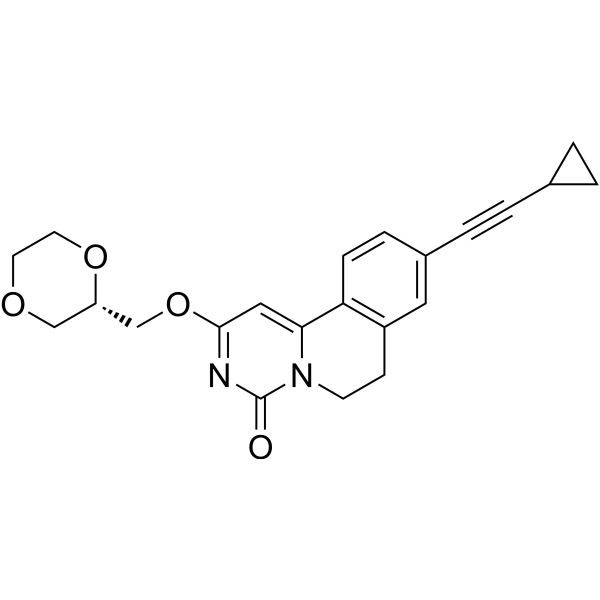
HY-135303
GLPG1205GPR84 Antagonist -
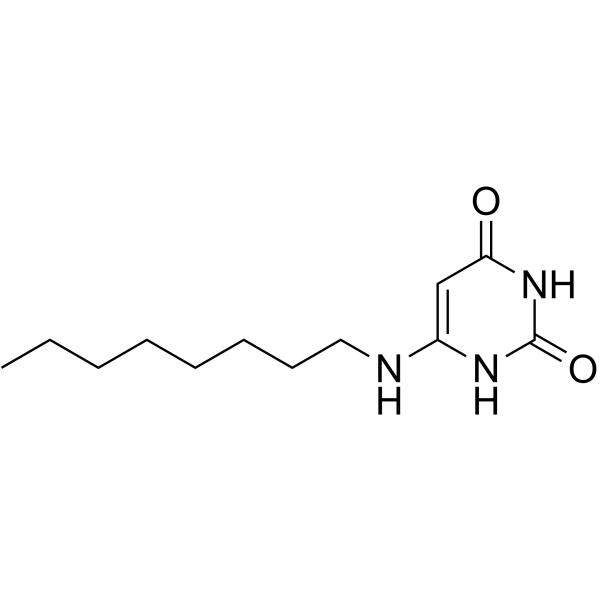
HY-12764
6-OAUGPR84 Agonist -
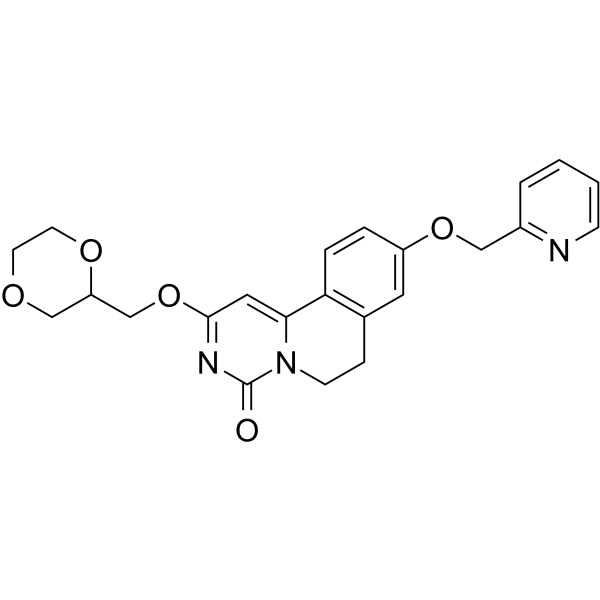
HY-112562
GPR84 antagonist 8GPR84 Antagonist -
HY-101772
ZiritaxestatAutotaxin Inhibitor -
HY-50691
GW-1100Free Fatty Acid Receptor Antagonist -
HY-153192
NerandomilastPDE4B Inhibitor -
HY-17473
EmbelinXIAP Inhibitor -
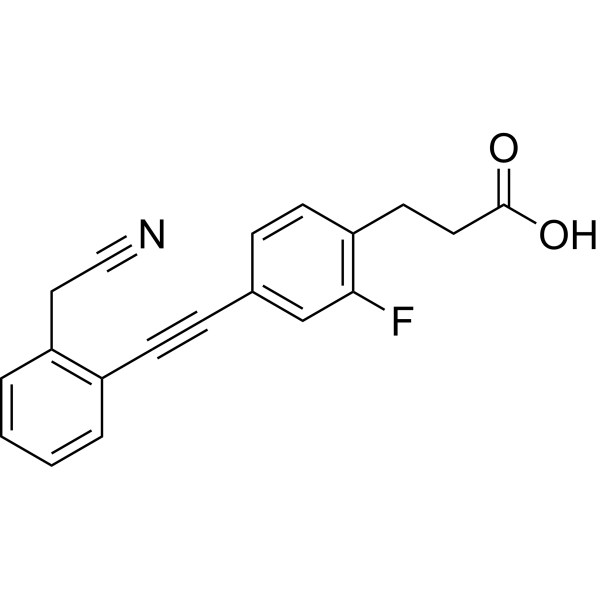
HY-15697
TUG-770GPR40/FFA1 Agonist -
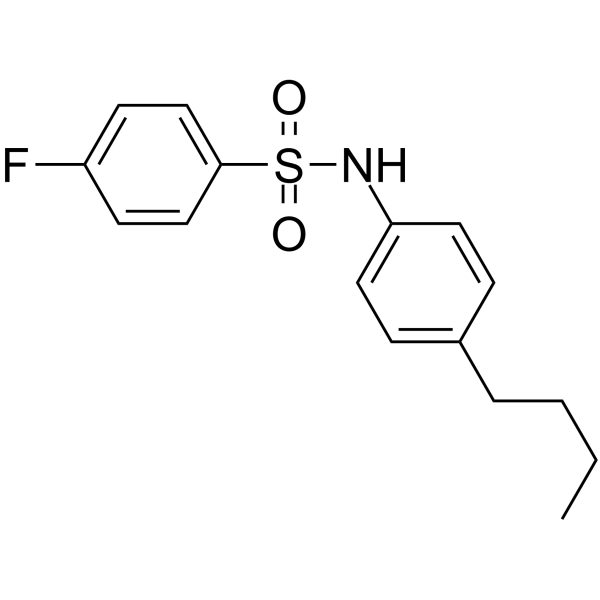
HY-101906
DC260126GPR40 antagonist -

HY-100775R
Fezagepras sodium (Standard)GPR40/GPR84 Modulator -
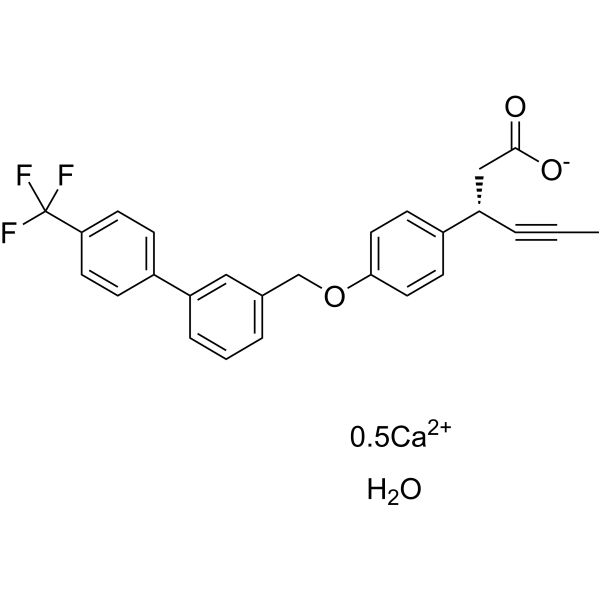
HY-13967B
AMG 837 calcium hydrateGPR40/FFA1 Agonist -
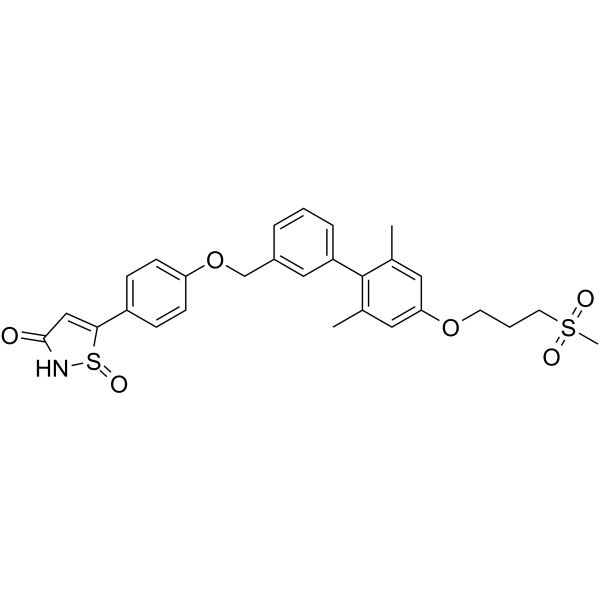
HY-12647
GPR40 Activator 2
Publications Citing Use of MedChemExpress (MCE) Fezagepras sodium
More

Biological Activity
Description
IC50 & Target
GPR40, GPR84[1]
In Vitro
Fezagepras sodium (500 μM; 24 hours) inhibits TGF-β (10 ng/mL)-activated human hepatic stellate cells (HSCs) proliferation[2].
Fezagepras sodium (250 or 500 μM; 24 hours) dose-dependently arrests HSCs at the G0/G1 phase without inducing apoptosis[2].
MedChemExpress (MCE) has not independently confirmed the accuracy of these methods. They are for reference only. Further protocols information, click here.
-
Cell Line:HSCs
-
Concentration:250 or 500 µM
-
Incubation Time:24 hours
-
Result:Inhibited TGF-β-activated HSC proliferation. TGF-β (10 ng/mL) increased HSC proliferation by 10%.
-
Cell Line:HSCs
-
Concentration:250 µM, 500 µM
-
Incubation Time:24 hours
-
Result:Inhibited cell cycle progression.
In Vivo
MedChemExpress (MCE) has not independently confirmed the accuracy of these methods. They are for reference only.
-
Animal Model:Type 2 diabetes eNOS-/-db/db mice[1]
-
Dosage:100 mg/kg/day
-
Administration:Given via daily gavage from 8-20 weeks
-
Result:Compared with vehicle-treated mice, hyperglycemia was markedly decreased, and glucose tolerance was markedly improved.
Clinical Trial
| NCT Number | Sponsor | Condition | Start Date |
Phase

|
|---|---|---|---|---|
| NCT01329991 | Plexxikon| | 2011-05 | PHASE1 |


Chemical Information
-
CAS No. 1254472-97-3
-
Appearance Solid
-
Molecular Weight 228.26
-
Formula C13H17NaO2
-
Color White to off-white
-
SMILES
O=C(O[Na])CC1=CC(CCCCC)=CC=C1
-
Synonyms
Setogepram sodium; PBI-4050 sodium
-
Shipping
Room temperature in continental US; may vary elsewhere.
-
Storage
4°C, sealed storage, away from moisture
* In solvent : -80°C, 6 months; -20°C, 1 month (sealed storage, away from moisture)


Publications (1)
-
Journal Impact Factor
-
Most Recent
-
Cancer Immunol Res
Medium-Chain Fatty Acid Receptor GPR84 Modulates Cytotoxic CD8 T cells Antitumor Immunity Through Metabolic Reprogramming. [Abstract]2026 Jan 20. PMID: 41557755


Solvent & Solubility
In Vitro:
H2O : ≥ 100 mg/mL (438.10 mM)
DMSO : ≥ 64 mg/mL (280.38 mM; Hygroscopic DMSO has a significant impact on the solubility of product, please use newly opened DMSO)
* "≥" means soluble, but saturation unknown.
Please refer to the solubility information to select the appropriate solvent. Once prepared, please aliquot and store the solution to prevent product inactivation from repeated freeze-thaw cycles.
Storage method and period of stock solution: -80°C, 6 months; -20°C, 1 month (sealed storage, away from moisture). When stored at -80°C, please use it within 6 months. When stored at -20°C, please use it within 1 month.
* Note: If you choose water as the stock solution, please dilute it to the working solution, then filter and sterilize it with a 0.22 μm filter before use.
Please refer to the solubility information to select the appropriate solvent. Once prepared, please aliquot and store the solution to prevent product inactivation from repeated freeze-thaw cycles.
Storage method and period of stock solution: -80°C, 6 months; -20°C, 1 month (sealed storage, away from moisture). When stored at -80°C, please use it within 6 months. When stored at -20°C, please use it within 1 month.
* Note: If you choose water as the stock solution, please dilute it to the working solution, then filter and sterilize it with a 0.22 μm filter before use.
Concentration (start) × Volume (start) = Concentration (final) × Volume (final)
In Vivo:
Select the appropriate dissolution method based on your experimental animal and administration route.
- For the following dissolution methods, please ensure to first prepare a clear stock solution using an In Vitro approach and then sequentially add co-solvents:
- To ensure reliable experimental results, the clarified stock solution can be appropriately stored based on storage conditions. As for the working solution for In Vivo experiments, it is recommended to prepare freshly and use it on the same day.
- The percentages shown for the solvents indicate their volumetric ratio in the final prepared solution. If precipitation or phase separation occurs during preparation, heat and/or sonication can be used to aid dissolution.
Add each solvent one by one: 10% DMSO 40% PEG300 5% Tween-80 45% Saline
Solubility: ≥ 2.08 mg/mL (9.11 mM); Clear solution
This protocol yields a clear solution of ≥ 2.08 mg/mL (saturation unknown).
Taking 1 mL working solution as an example, add 100 μL DMSO stock solution (20.8 mg/mL) to 400 μL PEG300, and mix evenly; then add 50 μL Tween-80 and mix evenly; then add 450 μL Saline to adjust the volume to 1 mL.
Preparation of Saline: Dissolve 0.9 g sodium chloride in ddH₂O and dilute to 100 mL to obtain a clear Saline solution.
Add each solvent one by one: 10% DMSO 90% (20% SBE-β-CD in Saline)
Solubility: ≥ 2.08 mg/mL (9.11 mM); Clear solution
This protocol yields a clear solution of ≥ 2.08 mg/mL (saturation unknown).
Taking 1 mL working solution as an example, add 100 μL DMSO stock solution (20.8 mg/mL) to 900 μL 20% SBE-β-CD in Saline, and mix evenly.
Preparation of 20% SBE-β-CD in Saline (4°C, storage for one week): 2 g SBE-β-CD powder is dissolved in 10 mL Saline, completely dissolve until clear.
For the following dissolution methods, please prepare the working solution directly:
It is recommended to prepare fresh solutions and use them promptly within a short period of time.
The percentages shown for the solvents indicate their volumetric ratio in the final prepared solution. If precipitation or phase separation occurs during preparation, heat and/or sonication can be used to aid dissolution.
Add each solvent one by one: PBS
Solubility: 120 mg/mL (525.72 mM); Clear solution; Need ultrasonic
In Vivo Dissolution Calculator
Please enter the basic information of animal experiments:
-
-
-
-
Recommended: Prepare an additional quantity of animals to account for potential losses during experiments.
Working solution concentration: 0.22 mg/mL
This product has good water solubility, please refer to the measured solubility data in water/PBS/Saline for details.

Protocols
-
Fibrosis/Collagen Morphometry
Fibrosis and collagen morphometry is based on the quantitative visualization of fibrillar collagen deposition in tissue sections using histochemical stains such as Sirius Red (Picrosirius Red) or Masson's trichrome, followed by image-based or polarization-enhanced analysis to estimate collagen proportional area as a surrogate of extracellular matrix accumulation during fibrotic remodeling. Sirius Red combined with polarized light microscopy enhances detection of collagen fibers due to birefringence properties, enabling more specific visualization of collagen type I and III fibrils compared to conventional bright-field histology, while whole-section or region-restricted digital morphometry reduces field-selection bias in fibrosis assessment. Alternative quantitative approaches include second harmonic generation (SHG) and two-photon excited fluorescence microscopy, which enable label-free detection of fibrillar collagen and have been validated against histological staining and biochemica
-
Collagen: Sirius Red Staining
Sirius Red or picrosirius red staining is a histochemical method for visualizing collagen-rich extracellular matrix in tissue sections, and collagen fibers are detected as red-stained structures under bright-field microscopy with enhanced birefringence under polarized light. Picrosirius red is useful for assessing total collagen organization, distribution, and fibrosis burden, but polarized color should not be interpreted as a definitive collagen type I versus type III readout because color is affected by fiber orientation, thickness, and packing.
-
Connective Tissue: Masson's Trichrome/Collagen Trichrome Staining
Masson’s Trichrome (collagen/trichrome staining) is a histological technique that differentially stains tissue compartments using sequential acidic dyes to distinguish collagen from muscle and cytoplasmic components based on dye affinity and tissue permeability differences, enabling visualization of fibrosis and connective tissue architecture in histological sections. The classical formulation typically uses Weigert's iron hematoxylin for nuclear staining, Biebrich scarlet-acid fuchsin for cytoplasm and muscle, and aniline blue (or light green variants) for collagen, producing a characteristic blue/green collagen signal contrasted against red cytoplasm and dark nuclei. The staining principle relies on selective displacement of smaller dye molecules by larger anionic dyes in collagen-rich regions under controlled acidified conditions, which enhances collagen-specific dye retention. This property makes the method widely used for fibrosis assessment in organs such as heart, liver, lung, a
-
Research Protocol for Inflammation-related Diseases
The NLRP3 inflammasome is a cytosolic innate immune signaling platform that integrates priming signals and danger-signal activation to promote caspase-1 activation, maturation of IL-1β and IL-18, and gasdermin D-mediated pyroptotic cell death. The core experimental logic is to determine whether inflammatory disease phenotypes are driven by increased NLRP3 expression, ASC-containing inflammasome assembly, caspase-1 cleavage, GSDMD cleavage, and extracellular release of IL-1β/IL-18 rather than by nonspecific cell injury alone. The pathway is strongly linked to inflammation-related disease phenotypes because monosodium urate crystals activate NALP3/NLRP3 inflammasome signaling in gout-like crystal inflammation, cholesterol crystals activate NLRP3 inflammasomes in atherogenesis models, and DSS-induced intestinal inflammation has been reported to involve NLRP3 inflammasome activity. However, experimental colitis studies also show context-dependent protective effects of NLRP3 inflammasome co
-
Cell Viability Determination by MTT Colorimetric Assay
The following protocol uses the MTT colorimetric assay as a classic literature-established method for assessing cell viability/metabolic activity in cultured mammalian cells. MTT[3-(4,5-dimethylthiazol-2-yl)-2,5-diphenyltetrazolium bromide] is reduced by metabolically active cells to a colored formazan product; the amount of formazan is quantified spectrophotometrically and provides an indirect measure of metabolically active viable cells. Importantly, MTT reduction reflects cellular oxidoreductase/metabolic activity rather than an absolute direct count of living cells, so changes in cellular metabolism can alter the signal independently of cell number.


Purity & Documentation
-
Data Sheet (274 KB)
-
SDS (557 KB)
- English - EN (557 KB)
- Français - FR (557 KB)
- Deutsch - DE (557 KB)
- Norwegian - NO (557 KB)
- Español - ES (557 KB)
- Swedish - SV (557 KB)
- Italian - IT (557 KB)
- Korean - KR (557 KB)
- Portuguese - PT (557 KB)
-
Handling Instructions (2659 KB)
References
[1]. Li Y, et al. Fatty acid receptor modulator PBI-4050 inhibits kidney fibrosis and improves glycemic control. JCI Insight. 2018 May 17;3(10). pii: 120365. [Content Brief]
[2]. Grouix B, et al. PBI-4050 Reduces Stellate Cell Activation and Liver Fibrosis through Modulation of Intracellular ATP Levels and the Liver Kinase B1/AMP-Activated Protein Kinase/Mammalian Target of Rapamycin Pathway. J Pharmacol Exp Ther. 2018 Oct;367(1):71-81. [Content Brief]


Complete Stock Solution Preparation Table
Please refer to the solubility information to select the appropriate solvent. Once prepared, please aliquot and store the solution to prevent product inactivation from repeated freeze-thaw cycles.
Storage method and period of stock solution: -80°C, 6 months; -20°C, 1 month (sealed storage, away from moisture). When stored at -80°C, please use it within 6 months. When stored at -20°C, please use it within 1 month.
| Optional Solvent | Concentration Solvent Mass | 1 mg | 5 mg | 10 mg | 25 mg |
|---|---|---|---|---|---|
| DMSO / H2O | 1 mM | 4.3810 mL | 21.9048 mL | 43.8097 mL | 109.5242 mL |
| 5 mM | 0.8762 mL | 4.3810 mL | 8.7619 mL | 21.9048 mL | |
| 10 mM | 0.4381 mL | 2.1905 mL | 4.3810 mL | 10.9524 mL | |
| 15 mM | 0.2921 mL | 1.4603 mL | 2.9206 mL | 7.3016 mL | |
| 20 mM | 0.2190 mL | 1.0952 mL | 2.1905 mL | 5.4762 mL | |
| 25 mM | 0.1752 mL | 0.8762 mL | 1.7524 mL | 4.3810 mL | |
| 30 mM | 0.1460 mL | 0.7302 mL | 1.4603 mL | 3.6508 mL | |
| 40 mM | 0.1095 mL | 0.5476 mL | 1.0952 mL | 2.7381 mL | |
| 50 mM | 0.0876 mL | 0.4381 mL | 0.8762 mL | 2.1905 mL | |
| 60 mM | 0.0730 mL | 0.3651 mL | 0.7302 mL | 1.8254 mL | |
| 80 mM | 0.0548 mL | 0.2738 mL | 0.5476 mL | 1.3691 mL | |
| 100 mM | 0.0438 mL | 0.2190 mL | 0.4381 mL | 1.0952 mL |
* Note: If you choose water as the stock solution, please dilute it to the working solution, then filter and sterilize it with a 0.22 μm filter before use.


Fezagepras sodium Related Classifications
HY-100775 Related Classifications
 Powered by Bioz