



TNP-470
Based on 2 publication(s) in Google Scholar
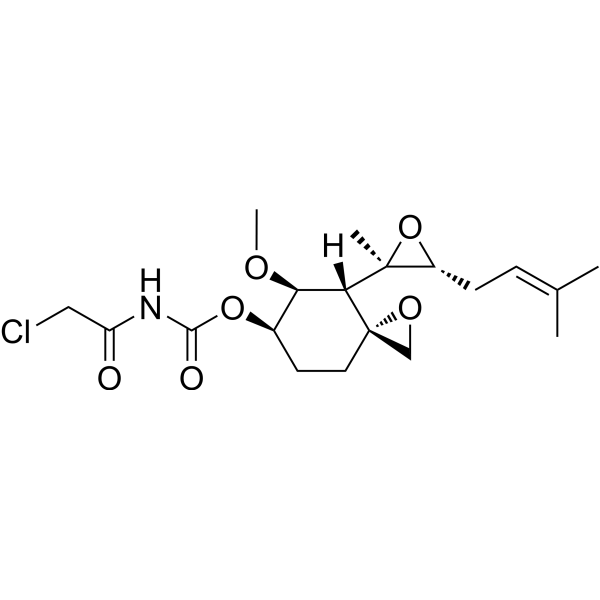
TNP-470 is a methionine aminopeptidase-2 inhibitor and also an angiogenesis inhibitor.
For research use only. We do not sell to patients.
- Purity : 99.87%
- CAS No.: 129298-91-5
- Formula: C19H28ClNO6
- Molecular Weight:401.88
-
Storage:
-20°C, stored under nitrogen
* In solvent : -80°C, 6 months; -20°C, 1 month (stored under nitrogen)

To place orders, for customer services and technical support, please contact: MedChemExpress USA
Tel: 609-228-6898 E-mail: [email protected] [email protected]


-
 Biological Activity
-
Chemical Information
-
Solvent & Solubility
- Protocols
- Purity & Documentation
- References
-
 Help & FAQs


-
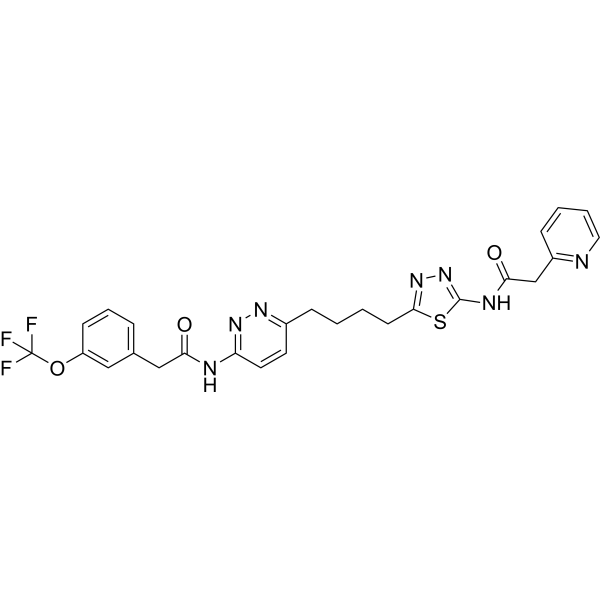
HY-12248
TelaglenastatGLS1 Inhibitor -
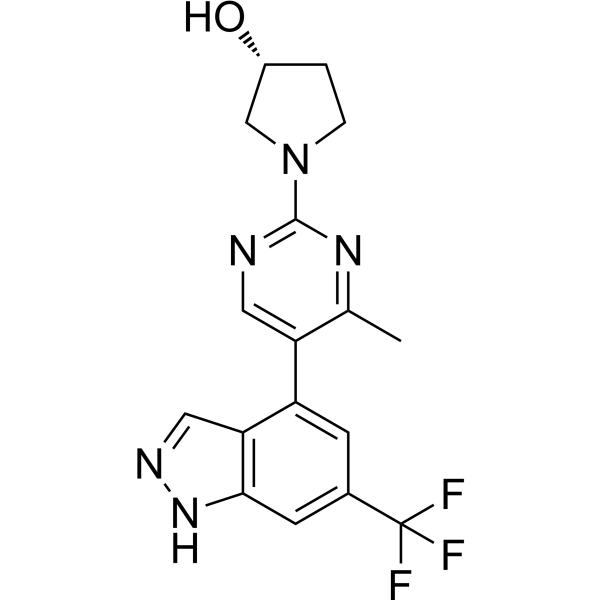
HY-120868
TP-004MetAP2 Inhibitor -
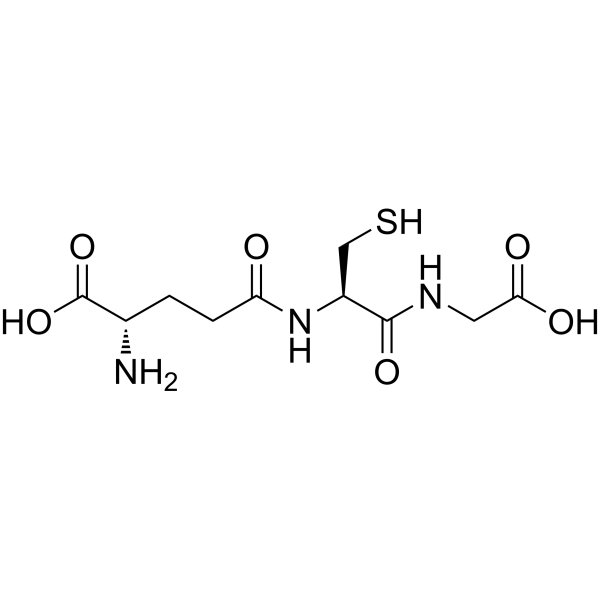
HY-D0187
L-Glutathione reducedAntioxidant -
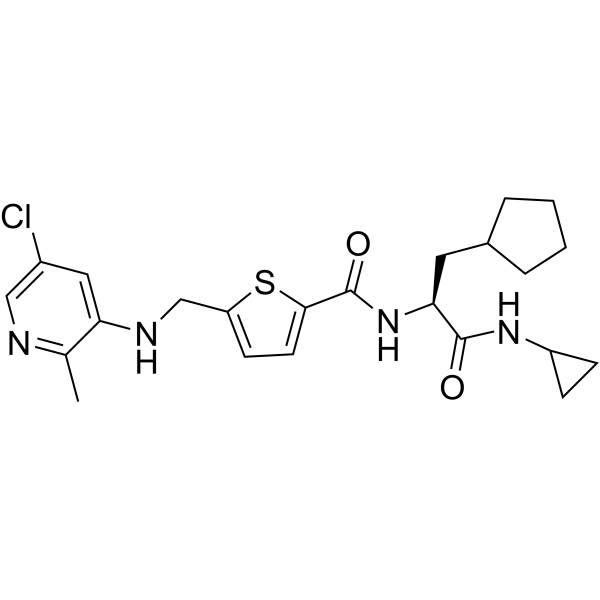
HY-15832
GSK 2830371Wip1 Phosphatase Inhibitor -
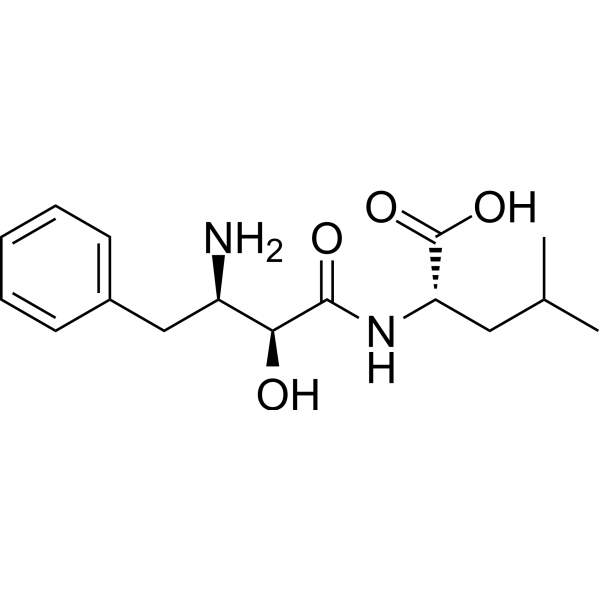
HY-B0134
BestatinAminopeptidase N/Leukotriene A4 Hydrolase Inhibitor -
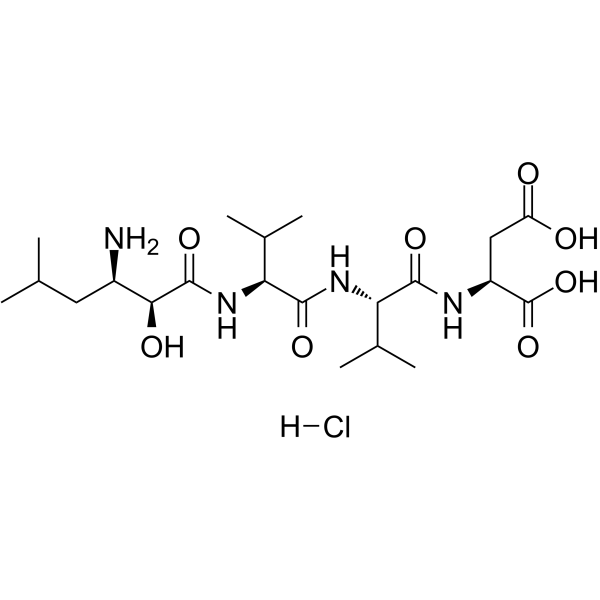
HY-115194
Amastatin hydrochlorideAminopeptidase Inhibitor -
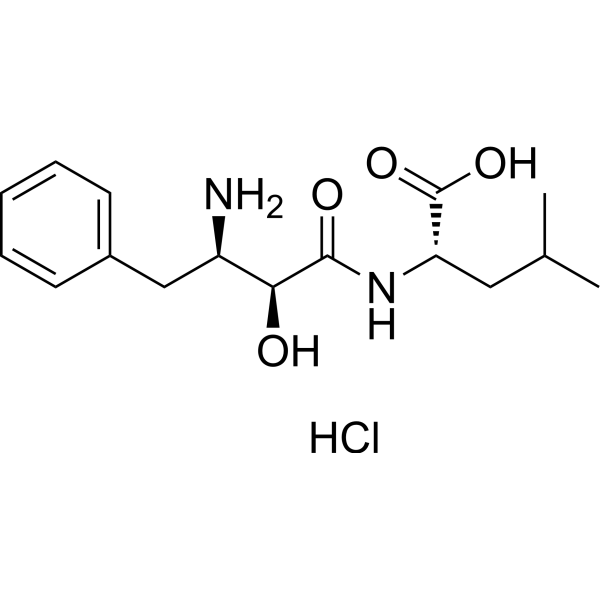
HY-B0134A
Bestatin hydrochlorideAminopeptidase N/Leukotriene A4 Hydrolase Inhibitor -
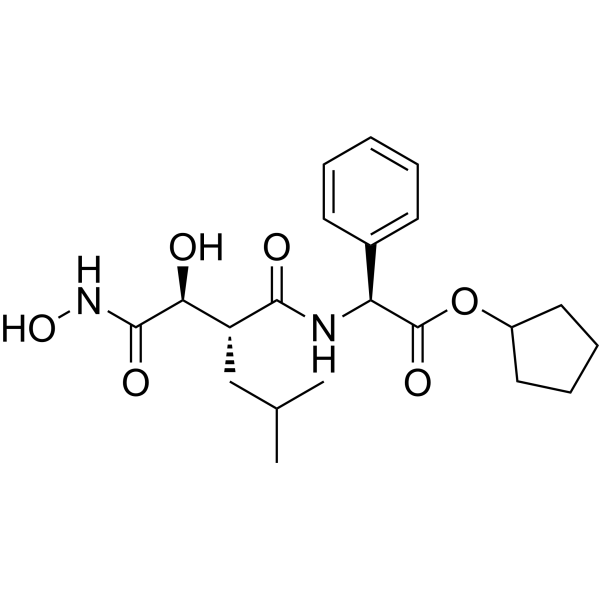
HY-14807
TosedostatAminopeptidase Inhibitor -

HY-101932R
TNP-470 (Standard)Reference Standard -

HY-B0134R
Bestatin (Standard)Aminopeptidase N/Leukotriene A4 Hydrolase Inhibitor -
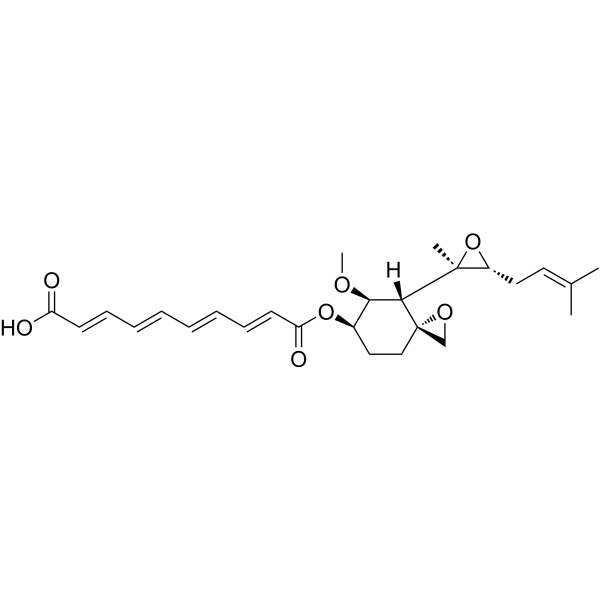
HY-B0751
FumagillinAntibiotic -
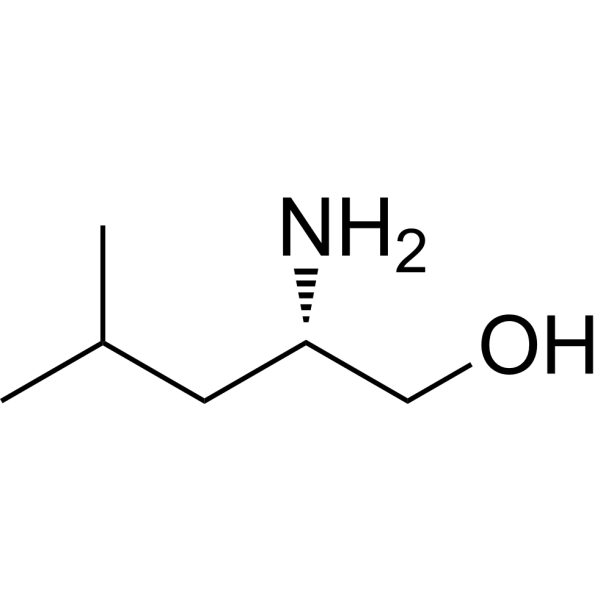
HY-W015876
L-LeucinolAminopeptidase Inhibitor
Publications Citing Use of MedChemExpress (MCE) TNP-470
More

Biological Activity
Description
IC50 & Target
Cellular Effect
|
Cell Line

|
Type | Value | Description | References |
|---|---|---|---|---|
| A-431 | IC50 |
5.3 μM
Compound: 3 (TNP-470)
|
In vitro antiproliferative effect against A431 human epidermoid carcinoma cells
In vitro antiproliferative effect against A431 human epidermoid carcinoma cells
|
10.1016/S0960-894X(96)00564-1 |
| A549 | IC50 |
50 μM
Compound: TNP470
|
Antiproliferative activity human A549 cells after 20 hrs by MTT assay
Antiproliferative activity human A549 cells after 20 hrs by MTT assay
|
[PMID: 20149494] |
| Bel-7402 | IC50 |
≥50 μM
Compound: TNP470
|
Antiproliferative activity human Bel7402 cells after 20 hrs by MTT assay
Antiproliferative activity human Bel7402 cells after 20 hrs by MTT assay
|
[PMID: 20149494] |
| BGC-823 | IC50 |
1.48 μM
Compound: TNP-470
|
Antiproliferative activity against human BGC823 cells after 24 hrs by MTT assay
Antiproliferative activity against human BGC823 cells after 24 hrs by MTT assay
|
[PMID: 21925884] |
| CPAE | IC50 |
0.04 ng/mL
Compound: 7
|
Tested in vitro for its ability to inhibit cell proliferation of calf pulmonary artery endothelial cells measured calorimetrically by SRB method
Tested in vitro for its ability to inhibit cell proliferation of calf pulmonary artery endothelial cells measured calorimetrically by SRB method
|
[PMID: 10636239] |
| EL4 | IC50 |
0.03 ng/mL
Compound: 7
|
Tested in vitro for its ability to inhibit cell proliferation of lymphoma EL-4 cells measured calorimetrically by MTT method
Tested in vitro for its ability to inhibit cell proliferation of lymphoma EL-4 cells measured calorimetrically by MTT method
|
[PMID: 10636239] |
| HeLa | IC50 |
2.02 μM
Compound: TNP-470
|
Antiproliferative activity against human HeLa cells after 24 hrs by MTT assay
Antiproliferative activity against human HeLa cells after 24 hrs by MTT assay
|
[PMID: 21925884] |
| HepG2 | IC50 |
0.86 μM
Compound: TNP-470
|
Antiproliferative activity against human HepG2 cells after 24 hrs by MTT assay
Antiproliferative activity against human HepG2 cells after 24 hrs by MTT assay
|
[PMID: 21925884] |
| HUVEC | IC50 |
0.2 nM
Compound: 2a
|
Growth inhibition of HUVEC cells by XTT assay
Growth inhibition of HUVEC cells by XTT assay
|
[PMID: 17636946] |
| HUVEC | IC50 |
0.5 μM
Compound: TNP-470
|
Antiangiogenic activity against HUVEC assessed as inhibition of VEGF-induced cell migration by NCI antiangiogenesis assay
Antiangiogenic activity against HUVEC assessed as inhibition of VEGF-induced cell migration by NCI antiangiogenesis assay
|
[PMID: 19084416] |
| HUVEC | IC50 |
1 μM
Compound: TNP-470
|
Antiangiogenic activity against HUVEC assessed as inhibition of capillary-like structure formation by NCI antiangiogenesis assay
Antiangiogenic activity against HUVEC assessed as inhibition of capillary-like structure formation by NCI antiangiogenesis assay
|
[PMID: 19084416] |
| HUVEC | IC50 |
3.16 μM
Compound: TNP-470
|
Antiangiogenic activity against HUVEC assessed as growth inhibition by NCI antiangiogenesis assay
Antiangiogenic activity against HUVEC assessed as growth inhibition by NCI antiangiogenesis assay
|
[PMID: 19084416] |
| HUVEC | IC50 |
0.0089 μM
Compound: TNP470
|
Antiproliferative activity HUVEC after 20 hrs by MTT assay
Antiproliferative activity HUVEC after 20 hrs by MTT assay
|
[PMID: 20149494] |
| HUVEC | IC50 |
0.76 nM
Compound: TNP470
|
Antiproliferative activity against human HUVEC cells after 96 hrs by MTT assay
Antiproliferative activity against human HUVEC cells after 96 hrs by MTT assay
|
[PMID: 21296467] |
| HUVEC | IC50 |
1.96 μM
Compound: TNP-470
|
Antiproliferative against HUVEC after 48 hrs by MTT assay
Antiproliferative against HUVEC after 48 hrs by MTT assay
|
[PMID: 23582273] |
| MCF7 | IC50 |
≥50 μM
Compound: TNP470
|
Antiproliferative activity human MCF7 cells after 20 hrs by MTT assay
Antiproliferative activity human MCF7 cells after 20 hrs by MTT assay
|
[PMID: 20149494] |
| P388 | IC50 |
>10 ng/mL
Compound: 7
|
Tested in vitro for its ability to inhibit cell proliferation of murine leukemia P388D1 cells measured calorimetrically by MTT method
Tested in vitro for its ability to inhibit cell proliferation of murine leukemia P388D1 cells measured calorimetrically by MTT method
|
[PMID: 10636239] |
| P388 | IC50 |
>=10 μg/mL
Compound: TNP-470 (3)
|
Inhibitory concentration against Murine leukemia P388 measured for endothelial cell proliferation activity
Inhibitory concentration against Murine leukemia P388 measured for endothelial cell proliferation activity
|
[PMID: 15978809] |
| SW 1116 | IC50 |
5.54 μM
Compound: TNP-470
|
Antiproliferative activity against human SW1116 cells after 24 hrs by MTT assay
Antiproliferative activity against human SW1116 cells after 24 hrs by MTT assay
|
[PMID: 21925884] |
In Vitro
No significant difference of apoptotic cell numbers is observed between cells treated with TNP-470 and the controls. The IC50s of TNP-470 are 16.86±0.9 μg/mL, 3.16±0.6 μg/mL and 1.78±0.8 μg/mL for KKU-M213 cells at 24, 48 and 72 h, respectively. The results show that TNP-470 significantly reduces the number of migrated cells and invaded cells as compared with the vehicle treated group. TNP-470 decreases the migrated cells of KKU-M213 to 26% and of KKU-M214 to 11% (P<0.01). Similarly, TNP-470 also significantly affects cell invasion, the number of invaded cells is reduced to 25% in KKU-M213 (P<0.01) and to 15% in KKU-M214 (P<0.01). The relative expressions of MMP2, MMP9 and c-MYC in TNP-470 treated cells are significantly suppressed compared to the vehicle treated cells[1].
MedChemExpress (MCE) has not independently confirmed the accuracy of these methods. They are for reference only. Further protocols information, click here.
In Vivo
MedChemExpress (MCE) has not independently confirmed the accuracy of these methods. They are for reference only.
Clinical Trial
| NCT Number | Sponsor | Condition | Start Date |
Phase
|
|---|---|---|---|---|
| NCT01329991 | Plexxikon| | 2011-05 | PHASE1 |


Chemical Information
-
CAS No. 129298-91-5
-
Appearance Solid-Liquid Mixture
-
Molecular Weight 401.88
-
Formula C19H28ClNO6
-
Color Colorless to off-white
-
SMILES
C[C@]1([C@@H](C/C=C(C)/C)O1)[C@]([C@@H]2OC)([H])[C@]3(CC[C@H]2OC(NC(CCl)=O)=O)CO3
-
Synonyms
AGM-1470
-
Shipping
Room temperature in continental US; may vary elsewhere.
-
Storage
-20°C, stored under nitrogen
* In solvent : -80°C, 6 months; -20°C, 1 month (stored under nitrogen)


Publications (2)
-
Journal Impact Factor
-
Most Recent
-
Exp Mol Med
Neutrophil extracellular traps mediate the crosstalk between plaque microenvironment and unstable carotid plaque formation. [Abstract]2024 Aug;56(8):1717-1735. PMID: 39085350 -


Solvent & Solubility
In Vitro:
DMSO : 100 mg/mL (248.83 mM; Need ultrasonic; Hygroscopic DMSO has a significant impact on the solubility of product, please use newly opened DMSO)
Please refer to the solubility information to select the appropriate solvent. Once prepared, please aliquot and store the solution to prevent product inactivation from repeated freeze-thaw cycles.
Storage method and period of stock solution: -80°C, 6 months; -20°C, 1 month (stored under nitrogen). When stored at -80°C, please use it within 6 months. When stored at -20°C, please use it within 1 month.
Please refer to the solubility information to select the appropriate solvent. Once prepared, please aliquot and store the solution to prevent product inactivation from repeated freeze-thaw cycles.
Storage method and period of stock solution: -80°C, 6 months; -20°C, 1 month (stored under nitrogen). When stored at -80°C, please use it within 6 months. When stored at -20°C, please use it within 1 month.
Concentration (start) × Volume (start) = Concentration (final) × Volume (final)
In Vivo:
Select the appropriate dissolution method based on your experimental animal and administration route.
- For the following dissolution methods, please ensure to first prepare a clear stock solution using an In Vitro approach and then sequentially add co-solvents:
- To ensure reliable experimental results, the clarified stock solution can be appropriately stored based on storage conditions. As for the working solution for In Vivo experiments, it is recommended to prepare freshly and use it on the same day.
- The percentages shown for the solvents indicate their volumetric ratio in the final prepared solution. If precipitation or phase separation occurs during preparation, heat and/or sonication can be used to aid dissolution.
Add each solvent one by one: 10% DMSO 40% PEG300 5% Tween-80 45% Saline
Solubility: ≥ 5 mg/mL (12.44 mM); Clear solution
This protocol yields a clear solution of ≥ 5 mg/mL (saturation unknown).
Taking 1 mL working solution as an example, add 100 μL DMSO stock solution (50.0 mg/mL) to 400 μL PEG300, and mix evenly; then add 50 μL Tween-80 and mix evenly; then add 450 μL Saline to adjust the volume to 1 mL.
Preparation of Saline: Dissolve 0.9 g sodium chloride in ddH₂O and dilute to 100 mL to obtain a clear Saline solution.
Add each solvent one by one: 10% DMSO 90% (20% SBE-β-CD in Saline)
Solubility: ≥ 5 mg/mL (12.44 mM); Clear solution
This protocol yields a clear solution of ≥ 5 mg/mL (saturation unknown).
Taking 1 mL working solution as an example, add 100 μL DMSO stock solution (50.0 mg/mL) to 900 μL 20% SBE-β-CD in Saline, and mix evenly.
Preparation of 20% SBE-β-CD in Saline (4°C, storage for one week): 2 g SBE-β-CD powder is dissolved in 10 mL Saline, completely dissolve until clear.
In Vivo Dissolution Calculator
Please enter the basic information of animal experiments:
-
-
-
-
Recommended: Prepare an additional quantity of animals to account for potential losses during experiments.
Please enter your animal formula composition:
-
%DMSO +
Recommended: Keep the proportion of DMSO in working solution below 2% if your animal is weak.
-
%+
-
+%Tween-80 + +
-
%Saline +
The co-solvents required include: DMSO, . All of co-solvents are available by MedChemExpress (MCE). , Tween 80. All of co-solvents are available by MedChemExpress (MCE).
Working solution concentration: 0.22 mg/mL
Method for preparing stock solution: mg drug dissolved in μL DMSO. Stock solution concentration: mg/mL. * In solvent : -80°C, 6 months; -20°C, 1 month (stored under nitrogen)
1. Take μL DMSO stock solution;
2. Add μL .
μL , mix evenly;
3. Then add μL Tween 80, mix evenly;
4. Then add μL
Please ensure that the stock solution in the first step is dissolved to a clear state, and add co-solvents in sequence. You can use ultrasonic heating (ultrasonic cleaner, recommended frequency 20-40 kHz), vortexing, etc. to assist dissolution.

Protocols
-
Human pluripotent stem cell endothelial-cell differentiation
Human pluripotent stem cell endothelial differentiation is based on stepwise developmental patterning: early activation of WNT/GSK3β inhibition promotes mesodermal or vascular progenitor entry, followed by endothelial specification using VEGF-related signaling, BMP4, FGF2, Notch modulation, or cAMP depending on the published protocol. Endothelial differentiation is read out by acquisition of CD31, CD34, VE-cadherin/CD144, KDR/VEGFR2, vWF, Tie2, NOS3, acetylated LDL uptake, tube/network formation, barrier function, and in vivo vessel-forming capacity where tested.
-
Vascular/Branching Fractal Analysis
Vascular/branching fractal analysis quantifies the geometric complexity of vessel trees or vascular networks from segmented 2D images, commonly by converting vessels into binary and/or skeletonized maps and estimating fractal dimension using box-counting or related approaches. Fractal dimension is interpreted as an image-derived readout of vascular branching complexity, space filling, or density, and has been applied to retinal photographs, fluorescein angiography, OCT angiography, capillary perfusion maps, and in vitro Matrigel angiogenesis networks. The assay readout is generated from vessel-positive pixels after image preprocessing, vessel segmentation, binarization, and optional skeletonization; reported outputs include fractal dimension, vessel density, branchpoint density, endpoint density, vessel length density, tortuosity, and generation-based branching metrics when VESGEN-style analysis is used. The biological interpretation is limited to quantitative vascular patterning and s
-
Endothelial Tube Formation Assay
Endothelial tube formation assay evaluates the ability of endothelial cells to attach, migrate, align, and organize into capillary-like networks when cultured on gelled basement membrane extract or Matrigel; the readout is the morphology and quantity of tube-like networks, which reflects an in vitro endothelial morphogenesis step related to angiogenesis. Basement membrane extract/Matrigel provides laminin-rich extracellular matrix cues that support endothelial differentiation into capillary-like structures, but it can contain biologically active growth factors, so growth-factor-reduced matrix is preferred when testing defined angiogenic stimulators or inhibitors.
-
Endothelial Cell Migration/Angiogenic Sprouting Assay
Endothelial cell migration and angiogenic sprouting assays are in vitro (and partially ex vivo-adapted) functional models that quantify the ability of endothelial cells to undergo coordinated migration, extracellular matrix invasion, and multicellular organization into capillary-like sprouts in response to pro-angiogenic stimuli such as VEGF, bFGF, or conditioned microenvironments. These assays are used to model early angiogenic events including tip-cell formation, directional migration, and lumen-like sprout extension, which collectively reflect angiogenic activation and vascular morphogenesis processes observed in vivo.


Purity & Documentation
-
Data Sheet (277 KB)
-
SDS (394 KB)
- English - EN (394 KB)
- Français - FR (394 KB)
- Deutsch - DE (394 KB)
- Norwegian - NO (394 KB)
- Español - ES (394 KB)
- Swedish - SV (394 KB)
- Italian - IT (394 KB)
- Korean - KR (394 KB)
- Portuguese - PT (394 KB)
-
Handling Instructions (2659 KB)
References
[1]. Kidoikhammouan S, et al. TNP-470, a methionine aminopeptidase-2 inhibitor, inhibits cell proliferation, migration and invasion of human cholangiocarcinoma cells in vitro. Asian Pac J Cancer Prev. 2012;13 Suppl:155-60. [Content Brief]
[2]. White HM, et al. The angiogenic inhibitor TNP-470 decreases caloric intake and weight gain in high-fat fed mice. Obesity (Silver Spring). 2012 Oct;20(10):2003-9. [Content Brief]


Complete Stock Solution Preparation Table
Please refer to the solubility information to select the appropriate solvent. Once prepared, please aliquot and store the solution to prevent product inactivation from repeated freeze-thaw cycles.
Storage method and period of stock solution: -80°C, 6 months; -20°C, 1 month (stored under nitrogen). When stored at -80°C, please use it within 6 months. When stored at -20°C, please use it within 1 month.
| Optional Solvent | Concentration Solvent Mass | 1 mg | 5 mg | 10 mg | 25 mg |
|---|---|---|---|---|---|
| DMSO | 1 mM | 2.4883 mL | 12.4415 mL | 24.8830 mL | 62.2076 mL |
| 5 mM | 0.4977 mL | 2.4883 mL | 4.9766 mL | 12.4415 mL | |
| 10 mM | 0.2488 mL | 1.2442 mL | 2.4883 mL | 6.2208 mL | |
| 15 mM | 0.1659 mL | 0.8294 mL | 1.6589 mL | 4.1472 mL | |
| 20 mM | 0.1244 mL | 0.6221 mL | 1.2442 mL | 3.1104 mL | |
| 25 mM | 0.0995 mL | 0.4977 mL | 0.9953 mL | 2.4883 mL | |
| 30 mM | 0.0829 mL | 0.4147 mL | 0.8294 mL | 2.0736 mL | |
| 40 mM | 0.0622 mL | 0.3110 mL | 0.6221 mL | 1.5552 mL | |
| 50 mM | 0.0498 mL | 0.2488 mL | 0.4977 mL | 1.2442 mL | |
| 60 mM | 0.0415 mL | 0.2074 mL | 0.4147 mL | 1.0368 mL | |
| 80 mM | 0.0311 mL | 0.1555 mL | 0.3110 mL | 0.7776 mL | |
| 100 mM | 0.0249 mL | 0.1244 mL | 0.2488 mL | 0.6221 mL |


TNP-470 Related Classifications
HY-101932 Related Classifications
 Powered by Bioz