



Bacterial
Anything that destroys bacteria or suppresses their growth or their ability to reproduce. Heat, chemicals such as chlorine, and antibiotic drugs all have antibacterial properties. Many antibacterial products for cleaning and handwashing are sold today. Such products do not reduce the risk for symptoms of viral infectious diseases in otherwise healthy persons. This does not preclude the potential contribution of antibacterial products to reducing symptoms of bacterial diseases in the home.
All Product Categories
-
Bacterial Inhibitors
(7483)
View all products
-
Bacterial Agonists
(3)
View all products
-
Bacterial Antagonists
(9)
View all products
-
Bacterial Activators
(23)
View all products
-
Bacterial Modulators
(23)
View all products
-
Bacterial Chemicals
(2)
View all products
-
Bacterial Inducers
(7)
View all products
-
Bacterial Controls
(14)
View all products
-
Bacterial Substrates
(2)
View all products
-
Bacterial Ligand
(1)
View all products
-
Bacterial Related Products (8800)
Related Products (8800)

-
Antibodies (14)
-
Related Compound Screening Libraries (1)
-
Metalnikowin I
 0 ImagesCat. No.: HY-P11396CAS No.: 172430-37-4Synonyms: MetIMetalnikowin I (MetI) is a proline-rich antimicrobial peptide and DnaK inhibitor. Metalnikowin I can be derived from insects.
-
MmpL3-IN-3
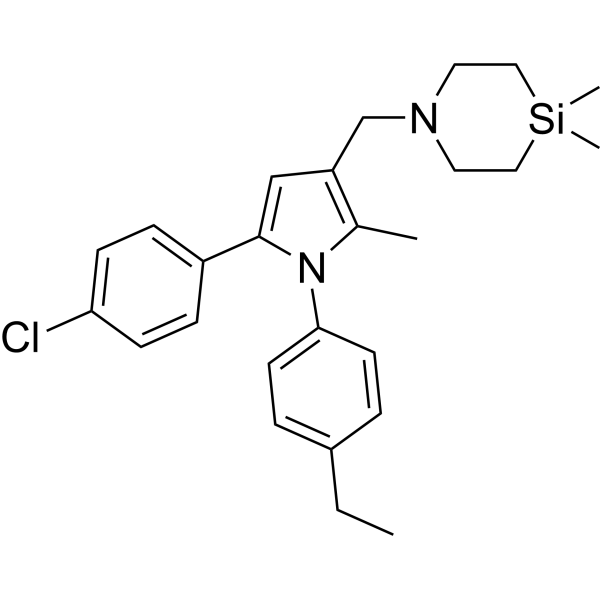 0 ImagesCat. No.: HY-149395CAS No.: 1639438-67-7MmpL3-IN-3 (Compound 12) is a MmpL3 inhibitor. MmpL3-IN-3 shows a MIC of 0.1 μM against H37Rv. MmpL3-IN-3 shows good stability in mouse liver microsomes. MmpL3-IN-3 can be used for anti-tubercular research.
-
UGM-IN-3
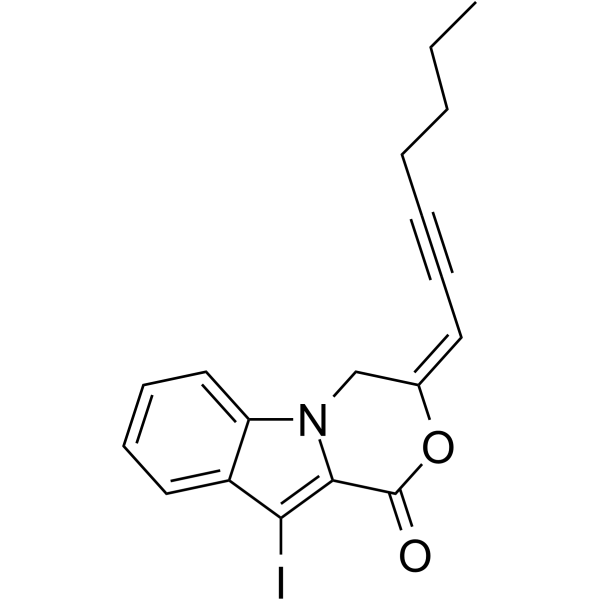 0 ImagesCat. No.: HY-146652CAS No.: 2254751-04-5UGM-IN-3 (compound 10a) is a UDP-galactopyranose mutase (UGM) inhibitor with a Kd of 66 μM. UGM-IN-3 inhibits the growth of Mycobacterium tuberculosis with a MIC value of 6.2 μg/mL.
-
MC 304
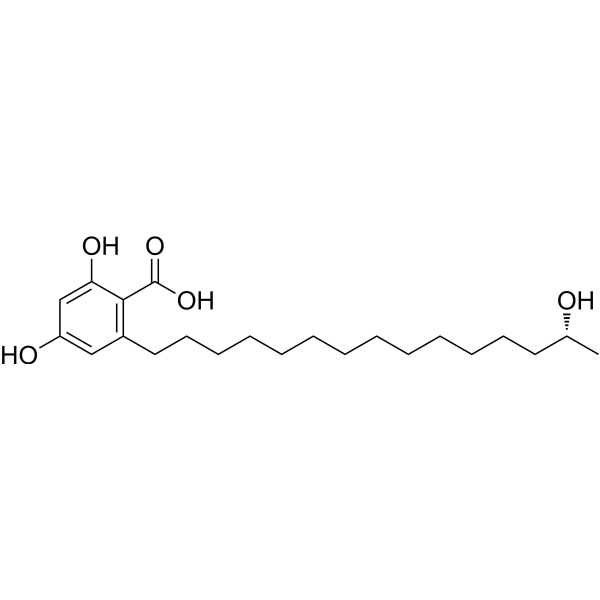 0 ImagesCat. No.: HY-N10230CAS No.: 124709-28-0Synonyms: Phanerosporic AcidMC 304 is a β-resorcylate isolated from cultures of Phanerochaete chrysosporium. MC 304 has antibacterial activity. MC 304 shows a stimulatory effect on root elongation of Lepidium satiuum.
-
Kumbicin C
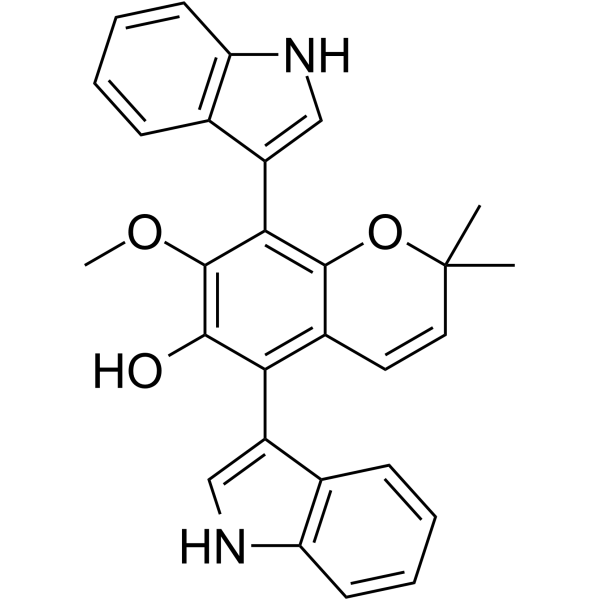 0 ImagesCat. No.: HY-122467CAS No.: 1878151-58-6Kumbicin C is a bis-indolyl benzenoid compound from an Australian soil fungus, Aspergillus kumbius. Kumbicin C inhibits the growth of mouse myeloma cells and the Gram-positive bacterium Bacillus subtilis.
-
Maximin H5
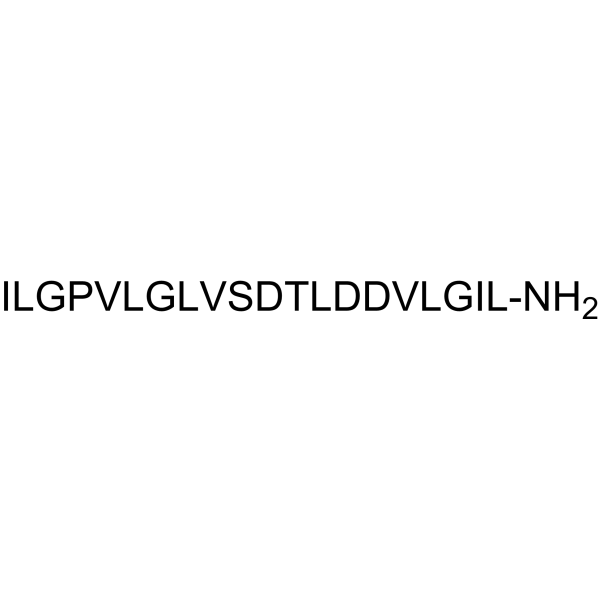 0 ImagesCat. No.: HY-P5657CAS No.: 495395-61-4Maximin H5 is an antimicrobial peptide derived from toad Bombina maxima.
-
8-Acetonyldihydronitidine
 0 ImagesCat. No.: HY-N21597CAS No.: 80330-39-88‑Acetonyldihydronitidine is a naturally occurring benzophenanthridine alkaloid with antibacterial, antifungal, and anti-proliferative activities against colorectal cancer cells. 8‑Acetonyldihydronitidine inhibits Staphylococcus aureus and exerts a potent antifungal effect against Cladosporium cladosporioides. 8‑Acetonyldihydronitidine activates the p53 signaling pathway, upregulates the expression of target genes including p21, BAX, and FAS, downregulates cyclin A and cyclin B, and induces cell cycle arrest and apoptosis, thereby suppressing the proliferation of colorectal cancer cells. 8‑Acetonyldihydronitidine is used in research related to colorectal cancer, fungal infections, and bacterial infections.
-
E 5065
 0 ImagesCat. No.: HY-106946CAS No.: 147293-55-8E 5065 is an orally active antibacterial agent. E 5065 exhibits potent in vitro activity against Gram-negative microorganisms, Gram-positive cocci, and anaerobes. E 5065 exhibits an MIC90 of 0.5 μg/mL against Clostridium spp. E 5065 provides protection against experimental infections caused by P. aeruginosa.
-
CaLL
 0 ImagesCat. No.: HY-P5548CAS No.: 1228093-67-1CaLL is an antimicrobial peptide. CaLL has antibacterial activity against B. anthracis, B. anthracis (vegetative), and B. cepacia (MIC: 7.8, 31.3, 31.3 μg/mL).
-
1-Hydroxy-2-butanone (Standard)
 0 ImagesCat. No.: HY-W005327RCAS No.: 5077-67-81-Hydroxy-2-butanone (Standard) is the analytical standard of 1-Hydroxy-2-butanone. This product is intended for research and analytical applications. 1-Hydroxy-2-butanone is a natural compound isolated from Bomboo Juice. 1-Hydroxy-2-butanone acts as a key intermediate for ethambutol. Ethambutol has anti-tuberculosis effects[1][2].
-
(7S,8S)-Dihydrodehydrodiconiferyl alcohol 9’-β-D-glucopyranoside
 0 ImagesCat. No.: HY-N17582CAS No.: 1526987-82-5(7S,8S)-Dihydrodehydrodiconiferyl alcohol 9’-β-D-glucopyranoside is a Streptococcus mutans Sortase A inhibitor with an IC50 of 37.3 μM. (7S,8S)-Dihydrodehydrodiconiferyl alcohol 9’-β-D-glucopyranoside inhibits transpeptidase activity linked to Gram-positive bacterial surface protein anchoring. (7S,8S)-Dihydrodehydrodiconiferyl alcohol 9’-β-D-glucopyranoside can be used for the research of dental caries.
-
Argyrin B
 0 ImagesCat. No.: HY-N13917CAS No.: 174423-36-0Argyrin B, a natural product cyclic peptide, is a reversible, non-competitive immunoproteasome inhibitor. Argyrin B shows selective inhibition of the β5i and β1i sites of the immunoproteasome over the β5c and β1c sites of the constitutive proteasome with nearly 20-fold selective inhibition of β1i over the homologous β1c. Argyrin B has antibacterial effects.

-
DHFR-IN-1
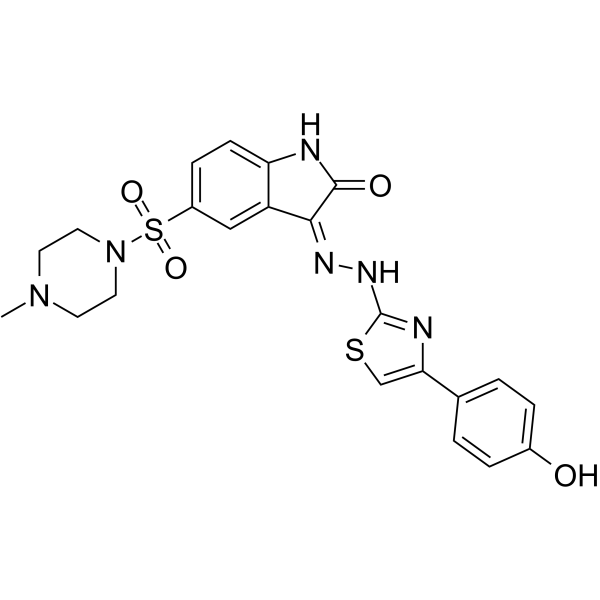 0 ImagesCat. No.: HY-143236CAS No.: 2757991-65-2DHFR-IN-1 (compound 12) is a potent and selective DHFR (dihydrofolate reductase)inhibitor, with an IC50 of 40.71 nM. DHFR-IN-1 exhibits promising antibacterial activity against gram-positive and gram-negative bacteria. DHFR-IN-1 exhibits moderate antifungal activities. DHFR-IN-1 exhibits a high synergistic effect with Levofloxacin (HY-B0330), where the FIC (fractional inhibitory concentration index) value is 0.249.
-
α-Rhamnosidase, Penicillium sp.
 0 ImagesCat. No.: HY-E70104Aα-Rhamnosidase, Penicillium sp. is a kind of glycoside hydrolase. α-Rhamnosidase, Penicillium sp. exhibits activity against Naringin (HY-N0153), 4-NRP, flavonoid glycosides and flavanone rhamnosides, and can hydrolyze the corresponding glycosidic bonds to release L-Rhamnose (Rhamnose) (HY-N1420) and other products. α-Rhamnosidase, Penicillium sp. promotes the release of total flavonoids, ginkgolides and aroma components from ginkgo tea, while also enhancing the free radical scavenging capacity of the leachate, inhibiting inflammatory cell activation and increasing its cytotoxicity against tumor cells. α-Rhamnosidase, Penicillium sp. can be used in research related to bacillary dysentery and cancer.
-
ATM potentiator-1
 0 ImagesCat. No.: HY-182058ATM potentiators-1 is a quercetin derivative that synergistically enhances the antibacterial activity of Aztreonam (ATM, HY-B0129) against metallo-β-lactamase-producing Pseudomonas aeruginosa. ATM potentiators-1 inhibits NDM-1, OXA-10, VIM-2, KPC-2, and OXA-48, suppressing the efflux pump activity of Pseudomonas aeruginosa. When used in combination with CCCP (HY-100941), it exhibits a synergistic inhibitory effect. ATM potentiators-1 is applicable to research related to Pseudomonas aeruginosa infections.
-
Solanum xanthocarpum extract
 0 ImagesCat. No.: HY-N18755CAS No.: 93165-80-1Solanum xanthocarpum extract possesses anti-inflammatory, analgesic, antibacterial, and antiviral properties, and is rich in various bioactive compounds, such as alkaloids, triterpenoids, saponins, steroidal glycoalkaloids, and flavonoids.
-
MRSA antibiotic 3
 0 ImagesCat. No.: HY-178949MRSA antibiotic 3 (Compound C8) is a small-molecule antibiotic active against Methicillin (HY-121544)-resistant Staphylococcus aureus (MRSA), showing a MIC of 0.5 μg/mL against the standard S. aureus strain (ATCC 29213). MRSA antibiotic 3 potently inhibits the ATPase activity of S. aureus DNA gyrase with an IC50 of 0.32 μM. MRSA antibiotic 3 exhibits strong inhibitory activity against five clinical MRSA isolates, with MIC values ranging from 0.5 to 1 μg/mL. MRSA antibiotic 3 demonstrates negligible cytotoxicity at effective antibacterial concentrations and causes no hemolysis in erythrocytes even at extremely high concentrations. MRSA antibiotic 3 shows significant protective effects in both Galleria mellonella infection and murine sepsis models.
-
Pyrithione sodium
 0 ImagesCat. No.: HY-B1747ACAS No.: 15922-78-8Pyrithione sodium has poor skin penetration.
-
Hexadecane-1,2-13C2
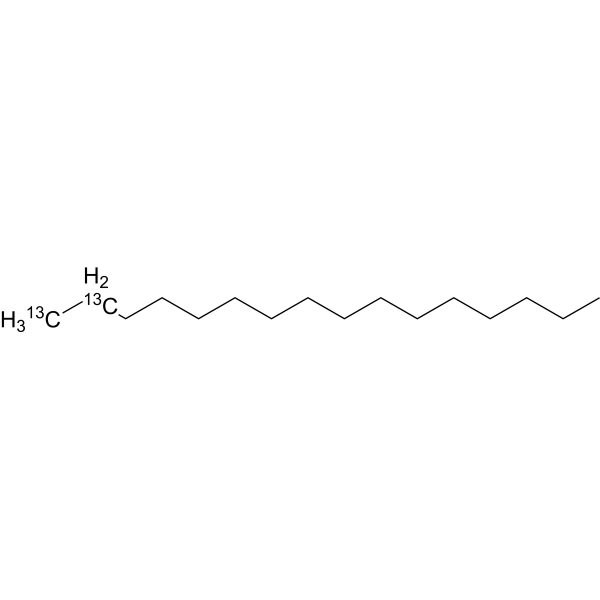 0 ImagesCat. No.: HY-W099580SCAS No.: 158563-27-0Synonyms: n-Hexadecane-1,2-13C2; Cetane-1,2-13C2Hexadecane-1,2-13C2 (n-Hexadecane-1,2-13C2) is the 13C labeled Hexadecane (HY-W099580). Hexadecane (n-Hexadecane) is a saturated hydrocarbon of alkanes or paraffins and can be used as an organic solvent. Hexadecane is a component of petroleum, belongs to hydrophobic substrates, and is a model substance for studying bacterial degradation of hydrophobic compounds.




