



Bacterial
Anything that destroys bacteria or suppresses their growth or their ability to reproduce. Heat, chemicals such as chlorine, and antibiotic drugs all have antibacterial properties. Many antibacterial products for cleaning and handwashing are sold today. Such products do not reduce the risk for symptoms of viral infectious diseases in otherwise healthy persons. This does not preclude the potential contribution of antibacterial products to reducing symptoms of bacterial diseases in the home.
All Product Categories
-
Bacterial Inhibitors
(7527)
View all products
-
Bacterial Agonists
(3)
View all products
-
Bacterial Antagonists
(9)
View all products
-
Bacterial Activators
(24)
View all products
-
Bacterial Modulators
(27)
View all products
-
Bacterial Chemicals
(2)
View all products
-
Bacterial Inducers
(6)
View all products
-
Bacterial Controls
(14)
View all products
-
Bacterial Substrates
(2)
View all products
-
Bacterial Ligand
(1)
View all products
-
Bacterial Related Products (8858)
Related Products (8858)

-
Antibodies (14)
-
Related Compound Screening Libraries (1)
-
Linatine
 0 ImagesCat. No.: HY-113601CAS No.: 10139-06-7Linatine is an antagonist for Vitamin B6 (HY-150525). Linatine inhibits the growth of chicken and Azotobacter vinelandii, induces vitamin B6 deficiency symptoms in chickens.
-
Anti-infective agent 3
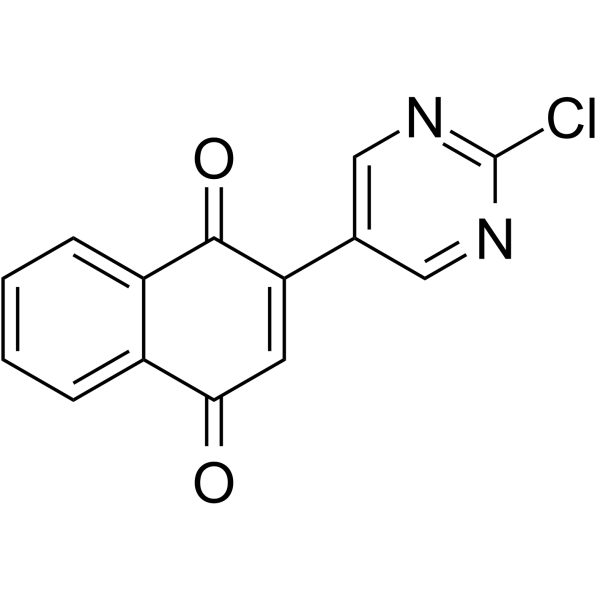 0 ImagesCat. No.: HY-146489CAS No.: 2521629-86-5Anti-infective agent 3 (compound 3l) shows antiparasitic activity against P. falciparum and T. brucei rhodesiense, with IC50 values of 0.47 and 0.13 μM, respectively. Anti-infective agent 3 shows antimycobacterial activity against Mycobacterium smegmatis with a MIC of 4 μg/mL.
-
Austdiol
 0 ImagesCat. No.: HY-N16407CAS No.: 53043-28-0Synonyms: NSC 159632Austdiol (NSC 159632) is an azaphilone derivative with antimicrobial activity. Austdiol is promising for research of infectious diseases.
-
Cerastecin D
 0 ImagesCat. No.: HY-162839CAS No.: 3018085-89-4Cerastecin D (compound 1) is an antibacterial agent. Cerastecin D shows inhibition on Acinetobacter baumannii ATCC19606 with MITC95 values of 165 nM.
-
Unguinol
 0 ImagesCat. No.: HY-124456CAS No.: 36587-59-4Unguinol is a depsidone originally isolated from A. unguis. It is an inhibitor of pyruvate phosphate dikinase (PPDK; IC50=42.3 μM). It inhibits the growth of plants utilizing C4, but not C3, carbon fixation. Unguinol also inhibits the growth of the bacteria S. aureus and V. harveyi (GI50s=8.7 and 69.5 μM, respectively) and H460, MCF-7, and SF-268 cancer cells (GI50s=28.2, 50.8, and 44.3 μM, respectively).
-
1-Prenyl-2-methoxy-6-formyl-8-hydroxy-9H-carbazole
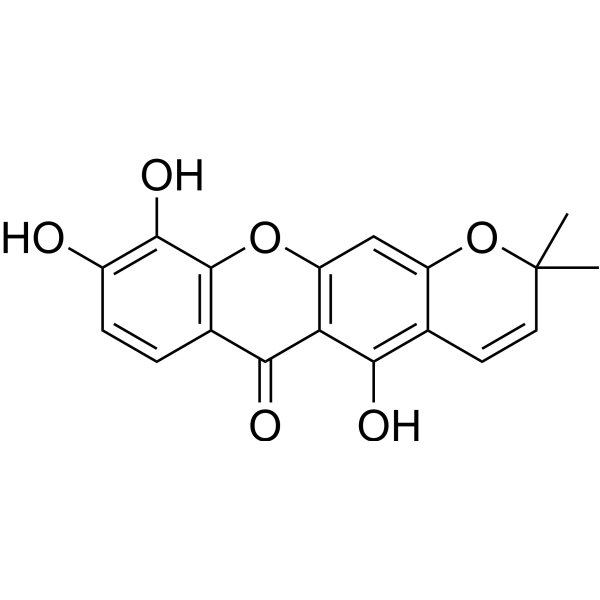
 0 ImagesCat. No.: HY-N13828CAS No.: 484678-79-71-Prenyl-2-methoxy-6-formyl-8-hydroxy-9H-carbazole (Compound 19) is a carbazole alkaloid that can be isolated from Murraya koenigii. 1-Prenyl-2-methoxy-6-formyl-8-hydroxy-9H-carbazole exhibits anti-inflammatory and antimicrobial activities. 1-Prenyl-2-methoxy-6-formyl-8-hydroxy-9H-carbazole can inhibit the production of pro-inflammatory cytokines TNF-α and IL-6 . 1-Prenyl-2-methoxy-6-formyl-8-hydroxy-9H-carbazole has IC50 values of 10.9 μM and 95 μM for Bacillus cereus and Staphylococcus aureus, respectively. 1-Prenyl-2-methoxy-6-formyl-8-hydroxy-9H-carbazole can be used in the research of inflammatory and infectious diseases.
-
Respinomycin A1
 0 ImagesCat. No.: HY-N14601CAS No.: 138843-19-3Respinomycin A1 is an antibiotic. Respinomycin A1 can be found in Streptomyces sp. RK-483. Respinomycin A1 causes the differentiation of leukemic K-562 cells.
-
Antibiofilm agent-2
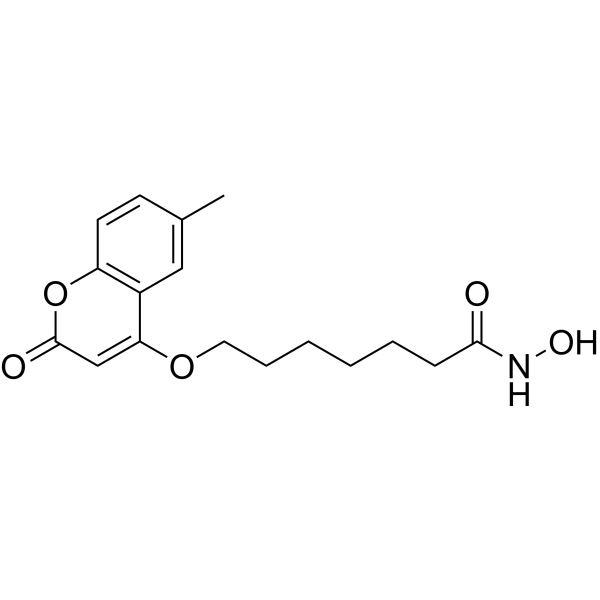 0 ImagesCat. No.: HY-156439CAS No.: 2977230-63-8Antibiofilm agent-2 (compound 4T) is a potent biofilm inhibitor with an IC50 of 3.6 μM. Antibiofilm agent-2 inhibits the quorum sensing system and iron homeostasis as antibacterial synergists against Pseudomonas aeruginosa.
-
Antimicrobial agent-10
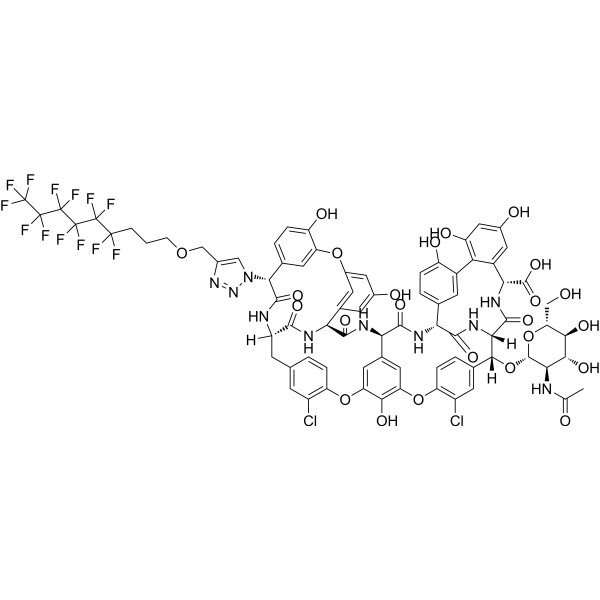 0 ImagesCat. No.: HY-151497Antimicrobial agent-10 is a SARS-CoV-2 inhibitor with outstanding antibacterial activity.
-
L-Lysine6-13C dihydrochloride
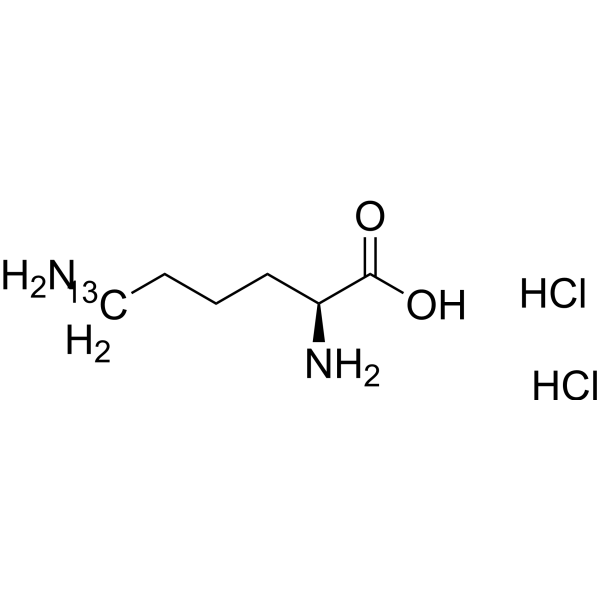 0 ImagesCat. No.: HY-W009762S1CAS No.: 1217466-44-8L-Lysine6-13C (dihydrochloride) is a 13C-labeled L-Lysine dihydrochloride.
-
L-Ala-D-Glu-m-DAP-D-Ala-D-Ala
 0 ImagesCat. No.: HY-P11330L-Ala-D-Glu-m-DAP-D-Ala-D-Ala is a key structured peptide of peptidoglycan of gram-negative bacteria. Peptidoglycan is a network of L-Ala-D-Glu-m-DAP-D-Ala-D-Ala cross-linking the repeated units of N-acetylglucosamine (GlcNAc) and N-acetylmuramic acid (MurNAc). L-Ala-D-Glu-m-DAP-D-Ala-D-Ala can be used for bacterial metabolic labeling research.
-
Penipurdin A
 0 ImagesCat. No.: HY-N12229CAS No.: 1821668-16-9Penipurdin A (Compound 1), an anthraquinone, is a microbial secondary metabolite. Penipurdin A can be isolated from the soil fungus Penicillium purpurogenum SC0070. Penipurdin A has no significant cytotoxicity against cancer cells, such as A549, HepG2 and Hela cells. Penipurdin A has antibacterial activity against Enterococcus faecalis and Staphylococcus aureus.
-
Trimethoprim sulfate
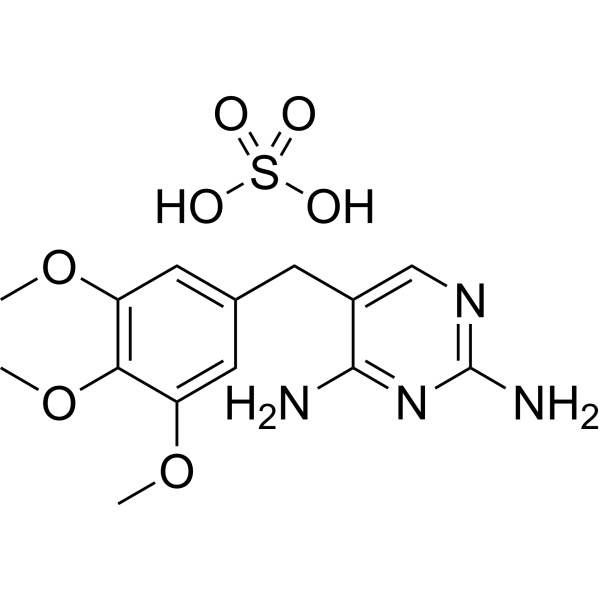 0 ImagesCat. No.: HY-B0510ACAS No.: 56585-33-2Trimethoprim sulfate is a bacteriostatic antibiotic and an orally active dihydrofolate reductase inhibitor. Trimethoprim sulfate is active against a wide range of Gram-positive and Gram-negative aerobic bacteria. Trimethoprim sulfate has the potential for the research of urinary tract infections, Shigellosis and Pneumocystis pneumonia. Trimethoprim sulfate can inhibit infection of Influenza A virus in chick embryo when combinated with zinc.
-
Sildenafil-d3 citrate
 0 ImagesCat. No.: HY-W751650Synonyms: UK-92480-d3 citrateSildenafil-d3 citrate (UK-92480-d3 citrate) is the deuterium labeled Sildenafil citrate (HY-15025A). Sildenafil citrate is a potent phosphodiesterase type 5 (PDE5) inhibitor with IC50 of 5.22 nM.
-
(-)-(E)-Guggulsterone (Standard)
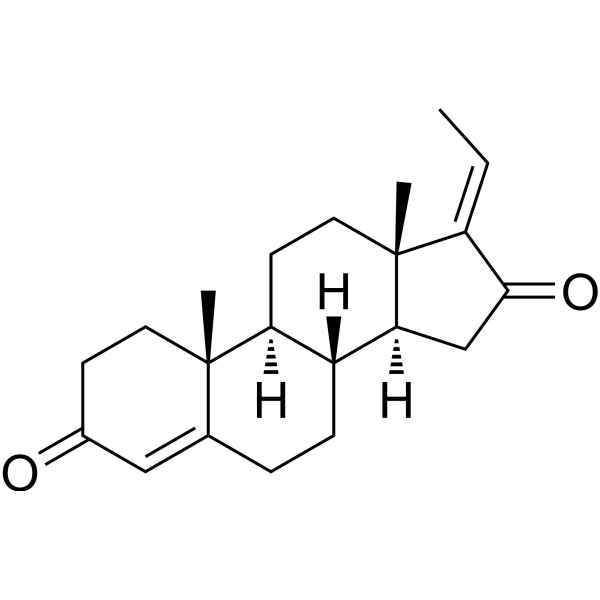 0 ImagesSynonyms: (E)-Guggulsterone (Standard)(-)-(E) -guggulsterone (Standard) is the analytical standard for (-)-(E) -guggulsterone ((E)-Guggulsterone) (HY-N7781). (-)-(E)-Guggulsterone is an orally active natural stereoisomer of Guggulsterone (HY-107738). (-)-(E)-Guggulsterone is an antagonist for the Farnesoid X Receptor (FXR) with an IC50 of 24.06 μM and possesses potent hypolipidemic properties. (-)-(E)-Guggulsterone suppresses dengue virus (DENV) replication by upregulating antiviral interferon responses by inducing HO-1 expression via Nrf2 activation. (-)-(E)-Guggulsterone exhibits antibacterial activities against Bacillus subtilis, Staphylococcus aureus and Pseudomonas aeruginosa. (-)-(E)-Guggulsterone has cardiac protective and antioxidant activities in rats.
-
Aurein 2.2
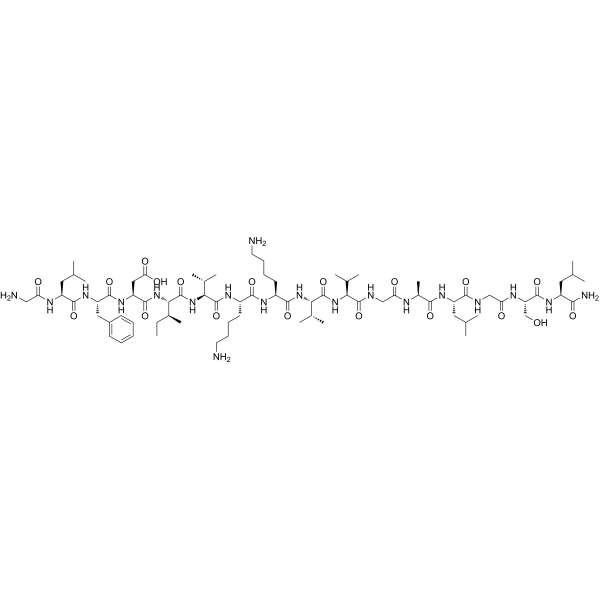 0 ImagesCat. No.: HY-P5561CAS No.: 302343-04-0Aurein 2.2 is a major component of the skin secretion of L.aurea. Aurein 2.2 is an antibiotic with broad-spectrum antibacterial activity against Gram positive bacteria such as Staphylococcus aureus and S. epidermidis.
-
Brilliant green
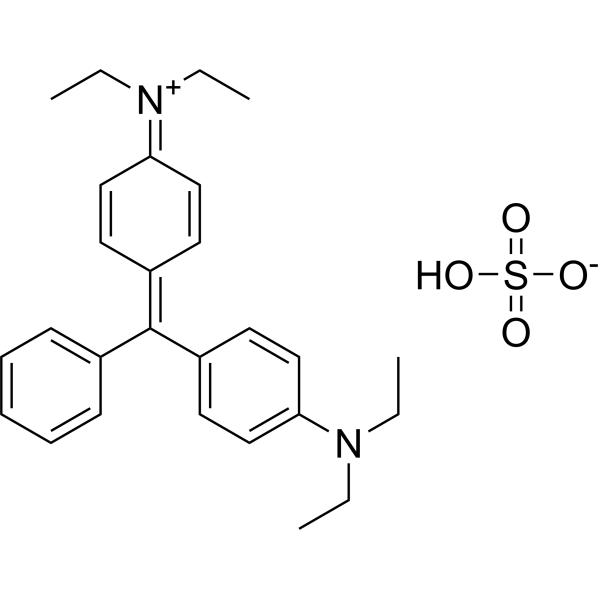 0 ImagesBrilliant green is a diaminotriphenylmethane compound and cationic dye that serves as a biological stain. Brilliant green exhibits strong antibacterial activity, with significant inhibitory effects on Gram-positive bacteria. The detection wavelength of Brilliant green is λmax = 625 nm.
-
Antibacterial agent 288
 0 ImagesCat. No.: HY-N16053CAS No.: 1000888-45-8Antibacterial agent 288 (Compound 1) has antibacterial and antifungal activities. Antibacterial agent 288 can be isolated from Mangrove fungus (No. B60) from the South China Sea.




