



Bacterial
Anything that destroys bacteria or suppresses their growth or their ability to reproduce. Heat, chemicals such as chlorine, and antibiotic drugs all have antibacterial properties. Many antibacterial products for cleaning and handwashing are sold today. Such products do not reduce the risk for symptoms of viral infectious diseases in otherwise healthy persons. This does not preclude the potential contribution of antibacterial products to reducing symptoms of bacterial diseases in the home.
All Product Categories
-
Bacterial Inhibitors
(7477)
View all products
-
Bacterial Agonists
(3)
View all products
-
Bacterial Antagonists
(9)
View all products
-
Bacterial Activators
(23)
View all products
-
Bacterial Modulators
(23)
View all products
-
Bacterial Chemicals
(2)
View all products
-
Bacterial Inducers
(7)
View all products
-
Bacterial Controls
(14)
View all products
-
Bacterial Substrates
(2)
View all products
-
Bacterial Ligand
(1)
View all products
-
Bacterial Related Products (8794)
Related Products (8794)

-
Antibodies (14)
-
Related Compound Screening Libraries (1)
-
Scutellarein tetramethyl ether
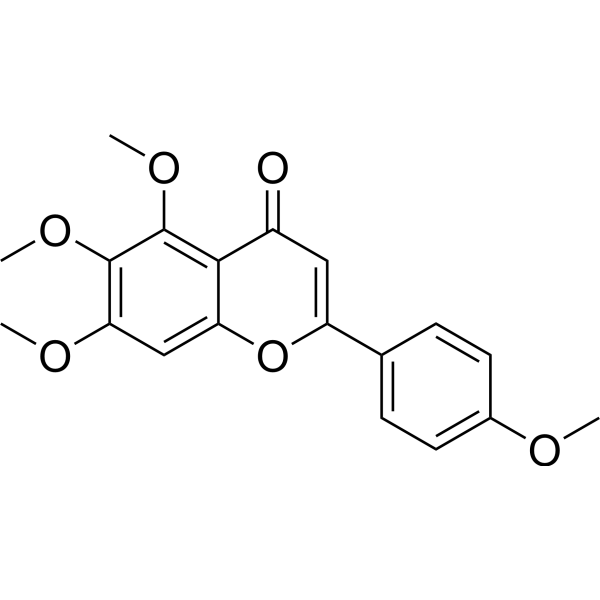 0 ImagesScutellarein tetramethyl ether (4',5,6,7-Tetramethoxyflavone) is a bioactive compound extracted from Eupatorium odoratum. Scutellarein tetramethyl ether exhibits anti-inflammatory, antibacterial, pro-coagulant, and anti-tumor activities. Scutellarein tetramethyl ether exerts its anti-inflammatory effects by modulating the NF-κB pathway and regulates bacterial resistance through the inhibition of efflux pumps. Additionally, Scutellarein tetramethyl ether accelerates coagulation time via the endogenous coagulation pathway. Studies have shown that Scutellarein tetramethyl ether can effectively inhibit the growth of the liver cancer cell line HepG2 (IC50= 20.08 μg/mL).
-
3-O-Methylgalangin
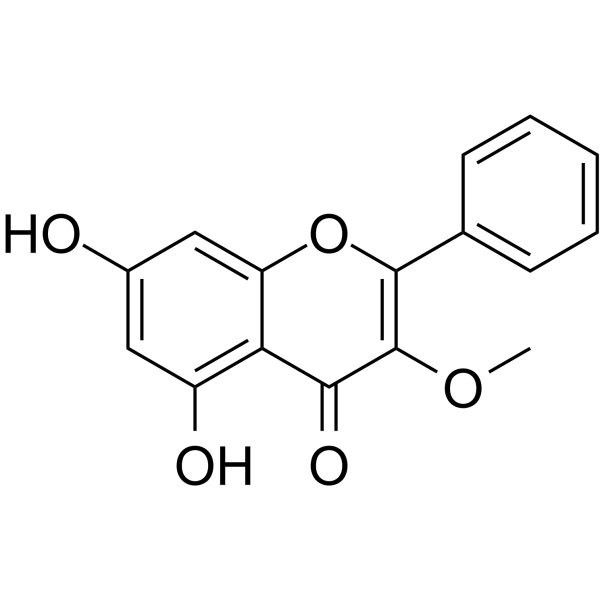 0 ImagesSynonyms: Galangin 3-methyl ether; 3-Methylgalangin3-O-Methylgalangin (Galangin 3-methyl ether) is a natural flavonoid compound from the rhizome of Alpinia officinarum (AO) with antibacterial activities, which also inhibits pancreatic lipase.
-
Carindacillin sodium
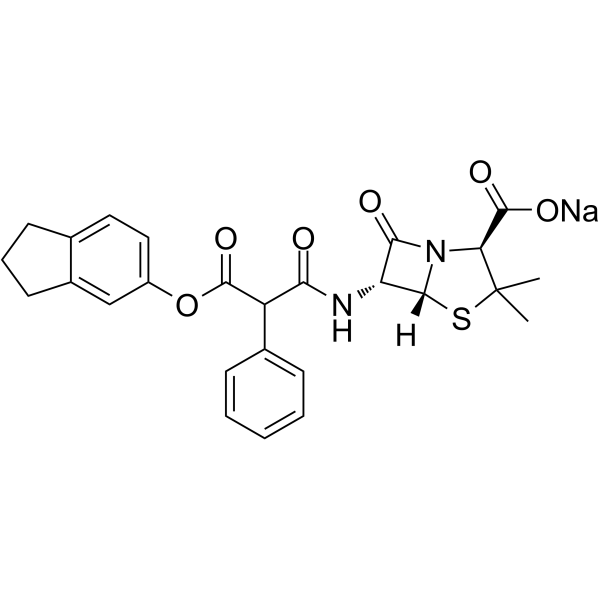 0 ImagesSynonyms: Indanyl carbenicillin sodium; CP-15464-2Carindacillin (Carbenicillin indanyl) sodium is an orally active and broad-spectrum antimicrobial agent. Carindacillin sodium can be hydrolyzed to Carbenicillin in vivo. Carindacillin sodium can be used for the research of urinary-tract infection.
-
Urethane-d5
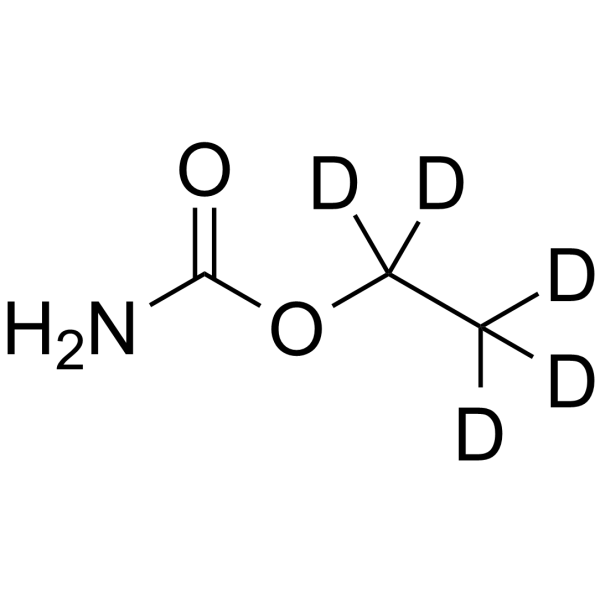 0 ImagesSynonyms: Ethyl carbamate-d5; Carbamic acid ethyl ester-d5; Ethylurethane-d5Urethane-d5 is the deuterium labeled Urethane. Urethane (Ethyl carbamate), the ethyl ester of carbamic acid, is a byproduct of fermentation found in various food products. Urethane has the ability to suppress bacterial, protozoal, sea urchin egg, and plant tissue growth in vitro.
-
Trigonelline (Standard)
 0 ImagesTrigonelline (Standard) is the analytical standard of Trigonelline. This product is intended for research and analytical applications. Trigonelline is an alkaloid with potential antidiabetic activity that can be isolated from Trigonella foenum-graecum L or Leonurus artemisia. Trigonelline is a potent Nrf2 inhibitor that blocks Nrf2-dependent proteasome activity, thereby enhancing apoptosis in pancreatic cancer cells. Trigonelline also has anti-HSV-1, antibacterial, and antifungal activity and induces ferroptosis.
-
Incadronic acid
 0 ImagesIncadronic acid inhibits growth of Dictyostelium discoideum with an IC50 of 1.6 μM. Incadronic acid binds the farnesyl diphosphate synthase (FPPS) in Leishmania major with the Ki of 23 nM. Incadronic acid inhibits the bone resorption and reduces bone loss, that can be used in osteoporosis research. Incadronic acid inhibits the proliferation of cells RAW264.7, PC-3 and MCF-7 with IC50 of 48 to 228.6 µM.
-
PRRSV/CD163-IN-1
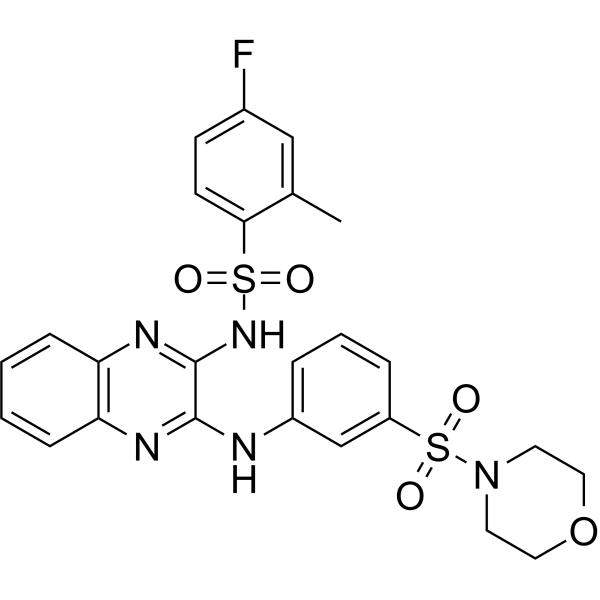 0 ImagesPRRSV/CD163-IN-1 is a PRRSV/CD163 inhibitor. PRRSV/CD163-IN-1 can inhibit the interaction between the PRRSV glycoprotein (GP2a or GP4) and the CD163-SRCR5 domain. PRRSV/CD163-IN-1 can be used for the research of porcine reproductive and respiratory syndrome (PRRS) .
-
Cordycepin (Standard)
 0 ImagesCordycepin (Standard) is the analytical standard of Cordycepin. This product is intended for research and analytical applications. Cordycepin (3'-Deoxyadenosine) is a nucleoside derivative and inhibits IL-1β-induced MMP-1 and MMP-3 expression in rheumatoid arthritis synovial fibroblasts (RASFs) in a dose-dependent manner. Cordycepin kills Mycobacterium tuberculosis through hijacking the bacterial adenosine kinase.
-
DL-m-Tyrosine
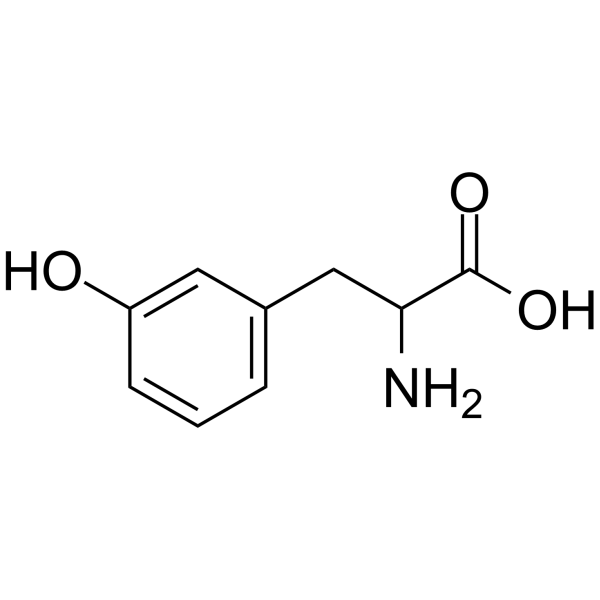 0 ImagesDL-m-Tyrosine is a non-protein amino acid. DL-m-Tyrosine inhibits microbial growth and spore formation. DL-m-Tyrosine also inhibits root growth in various plants, such as lettuce and Arabidopsis. DL-m-Tyrosine, when used in combination with Carbidopa (HY-B0311), has a potent antihypertensive effect. DL-m-Tyrosine can be used in research on biopesticide design.
-
(S)-Tedizolid
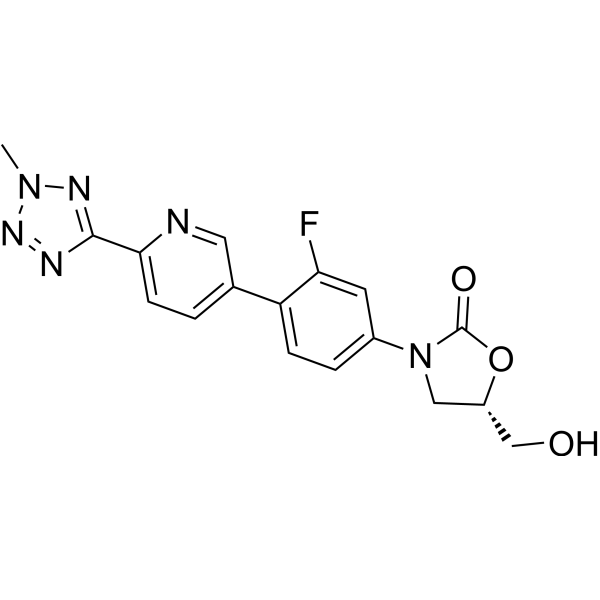 0 ImagesSynonyms: (S)-TR 700; (S)-DA 7157(S)-Tedizolid is the S-enantiomer of Tedizolid. Tedizolid is a novel oxazolidinone with activity against Gram-positive pathogens. (S)-Tedizolid is the less active isomer.
-
Ethylenediaminetetraacetic acid trisodium salt
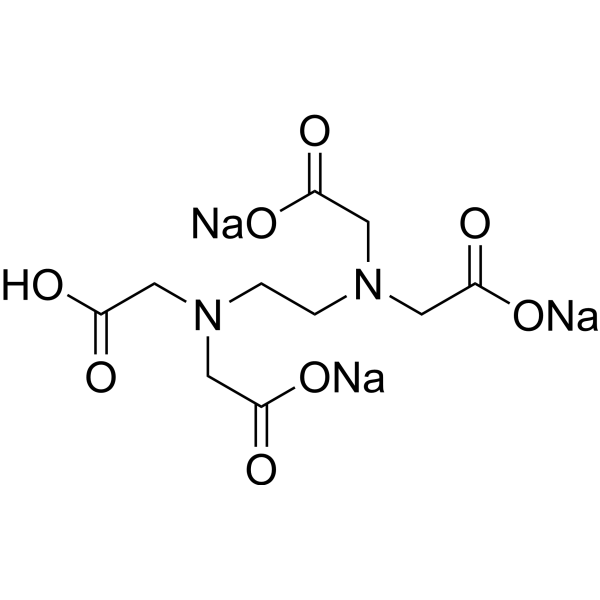 0 ImagesEthylenediaminetetraacetic acid trisodium salt (EDTA trisodium salt; Trisodium EDTA) is a kind of metal chelating agent (binds to bivalent and trivalent metal cations, including calcium). Ethylenediaminetetraacetic acid trisodium salt has antibacterial, anti-inflammatory, antioxidant, anti-hypercalcemia and anticoagulant activities. Ethylenediaminetetraacetic acid trisodium salt decreases the metal ion-catalyzed oxidative damage to proteins, and allows maintenance of reducing environment during protein purification. Ethylenediaminetetraacetic acid trisodium salt can alleviate the liver fibrosis. Ethylenediaminetetraacetic acid can be used for coronary artery disease and neural system disease research.
-
BPH-652
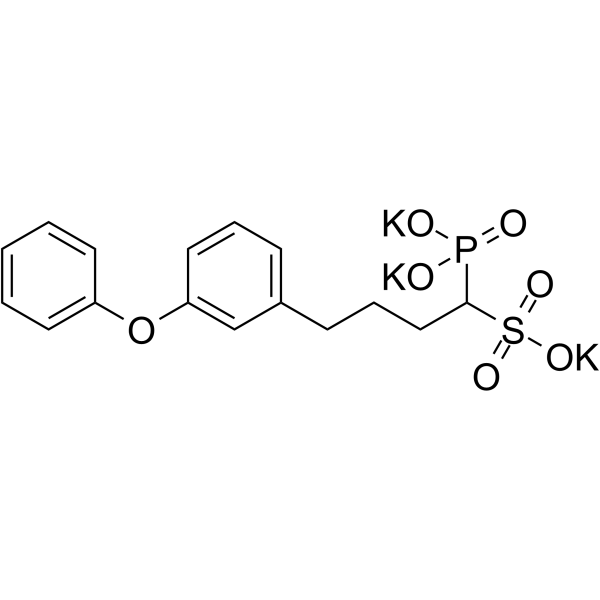 0 ImagesBPH-652 is a S. aureus dehydrosqualene synthase (CrtM) inhibitor, with a Ki of 1.5 nM and an IC50 of 100-300 nM (S. aureus pigment formation).
-
Puromycin (Standard)
 0 ImagesPuromycin (Standard) is the analytical standard of Puromycin. This product is intended for research and analytical applications. Puromycin dihydrochloride is the dihydrochloride salt of puromycin. Puromycin is an aminoglycoside antibiotic that inhibits protein synthesis.
-
Potassium tetraborate tetrahydrate, 99.5%
 0 ImagesSynonyms: Potassium biborate tetrahydrate, 99.5%Potassium tetraborate tetrahydrate, 99.5% has antibacterial activity against Pectobacterium carotovorum. Potassium tetraborate tetrahydrate, 99.5% can be used as a biological material or organic compound for life science related research.
-
Thiamphenicol-d3
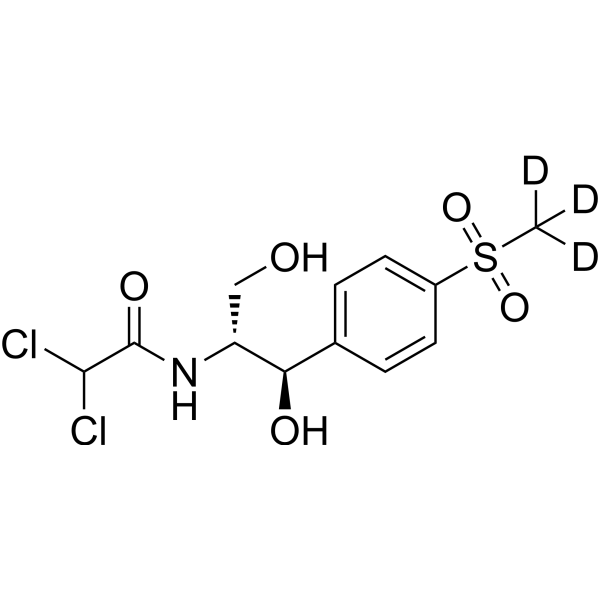 0 ImagesSynonyms: Thiophenicol-d3; Dextrosulphenidol-d3Thiamphenicol-d3 is a deuterium labeled Thiamphenicol. Thiamphenicol, a methyl-sulfonyl derivative of Chloramphenicol, is a broad-spectrum antimicrobial antibiotic. Thiamphenicol acts by binding to the 50S ribosomal subunit, leading to inhibition of protein synthesis and bacteriostatic effect (against Gram-negative, Gram-positive aerobic and anaerobic bacteria).
-
Carnosic acid (Standard)
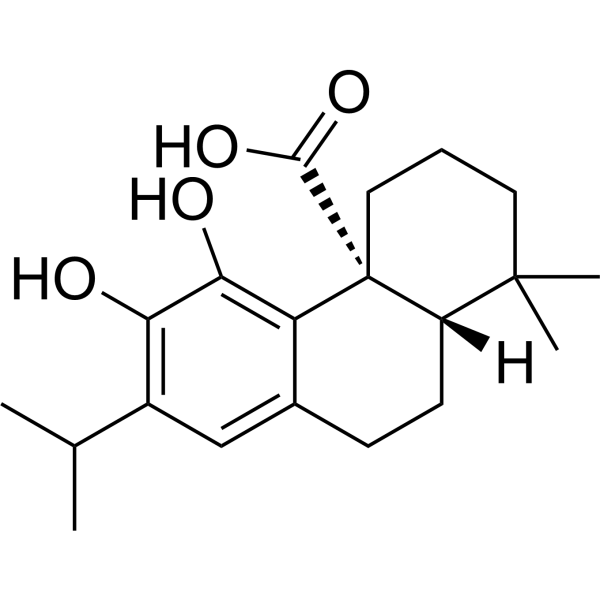 0 ImagesCarnosic acid (Standard) is the analytical standard of Carnosic acid. This product is intended for research and analytical applications. Carnosic acid has demonstrated inhibition of oxidative stress and inflammation, suppression of cell proliferation, and antibacterial activity.
-
IpOHA
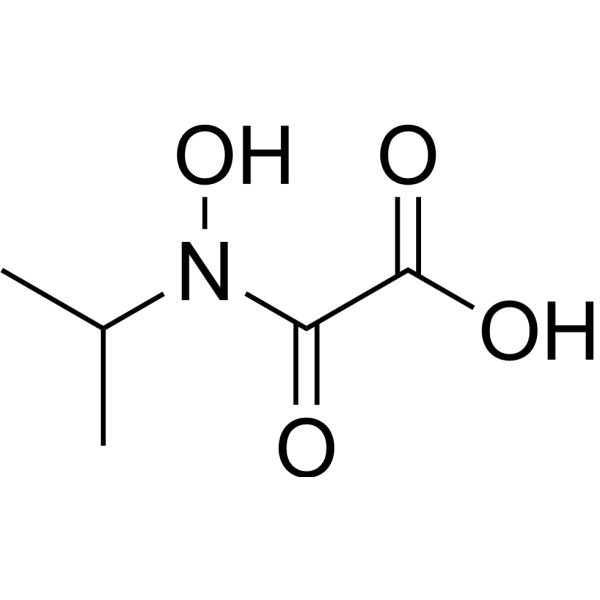 0 ImagesIpOHA is a potent plant KARI inhibitor. IpOHA also is an antimycobacterial agent with a Ki value of 97.7 nM for Mycobacterium tuberculosis (Mt).
-
Olanexidine hydrochloride
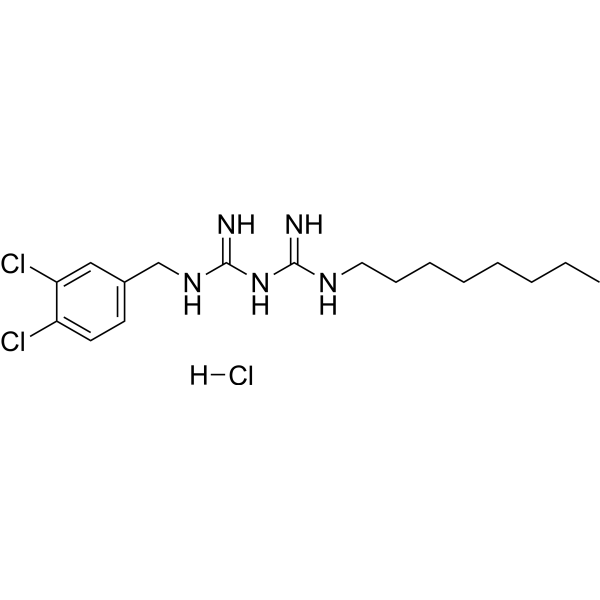 0 ImagesCat. No.: HY-125654ACAS No.: 146509-94-6Olanexidine hydrochloride is a monobiguanide compound with bactericidal activity. Olanexidine probably binds to the cell membrane, destroys membrane integrity. Olanexidine hydrochloride is active against a wide range of bacteria, including Gram-positive and Gram-negative bacteria. Olanexidine exhibits the bactericidal concentration of 109 μg/mL for Gram-positive bacilli.
-
N-Octanoyl-DL-homoserine lactone
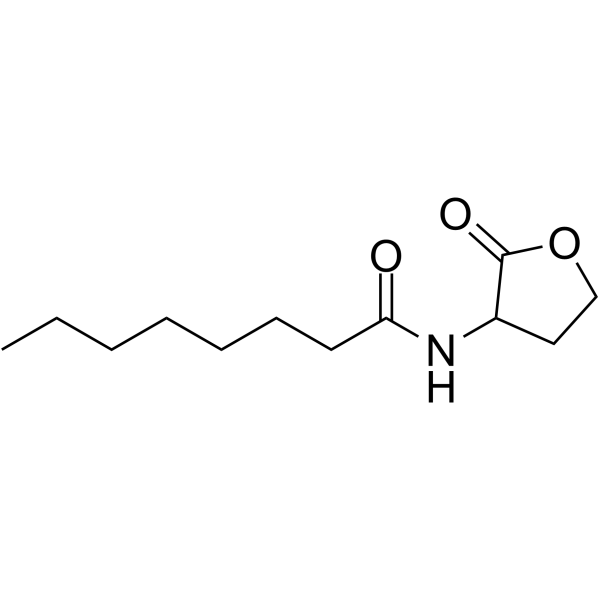 0 ImagesN-Octanoyl-DL-homoserine lactone is a member of N-acyl homoserine lactones (AHLs) family, also one of the signal molecule of quorum-sensing (QS) signals. N-Octanoyl-DL-homoserine lactone can regulate the production of siderophores and present positive correlation in Aeromonas sobria strain AS7. N-Octanoyl-DL-homoserine lactone can also regulate the secretion of proteases and stimulate the production of total volatile basic nitrogen (TVB-N).
-
Erythromycin Ethylsuccinate
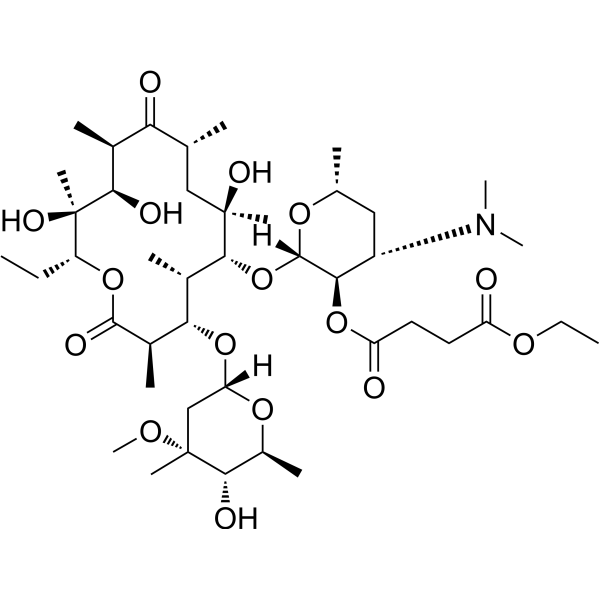 0 ImagesErythromycin Ethylsuccinate is an antibiotic useful for the treatment of a number of bacterial infections, has an antimicrobial spectrum similar to or slightly wider than that of penicillin. Erythromycin Ethylsuccinate has antiviral activity against HIV-1.




