



Bcl-xL Modulator
-
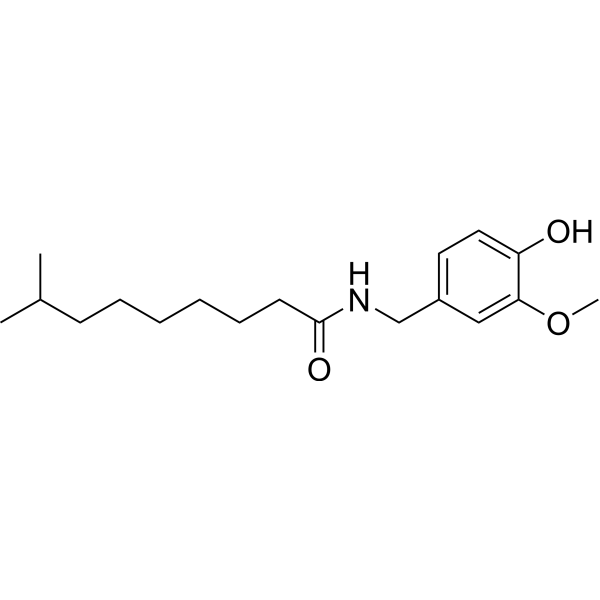
Dihydrocapsaicin
 0 Images
Dihydrocapsaicin, a capsaicin, is a potent and selective TRPV1 (transient receptor potential vanilloid channel 1) agonist. Dihydrocapsaicin reduces AIF, Bax, and Caspase-3 expressions, and increased Bcl-2, Bcl-xL and p-Akt levels. Dihydrocapsaicin enhances the hypothermia-induced neuroprotection following ischemic stroke via PI3K/Akt regulation in rat.
-
Sargachromanol E
 0 ImagesCat. No.: HY-123364CAS No.: 856414-54-5
Sargachromanol E is an apoptosis inducer, anti-inflammatory agent, and anti-aging agent. Sargachromanol E activates caspase-3, mediates PARP cleavage, downregulates Bcl-xL and upregulates Bax levels, and drives sub-G1 phase cell cycle arrest, inhibits LPS-induced COX-2 and iNOS transcription and expression (NO: IC50 = 6.99 μg/mL), reduces p38 MAPK and ERK1/2 phosphorylation levels, and suppresses the release of pro-inflammatory mediators such as TNF-α, IL-1β, and prostaglandin E2 (PGE2). Sargachromanol E can be used for research on skin aging, leukemia, oral squamous cell carcinoma, and inflammation-related studies.
-
YVPGP
 0 ImagesCat. No.: HY-P10992CAS No.: 2095286-57-8
YVPGP is an oligopeptide exacted from Anthopleura anjunae. YVPGP has a significant antitumor activity by mediating PI3K/AKT/mTOR signaling pathway. YVPGP arrests DU-145 cells in the S phase and induces apoptosis via mitochondrial and death receptor pathways (caspase3, 7, 8, 9). YVPGP effectively inhibits tumor growth in DU-145 xenografts mice model, promising for prostate cancer research.
-
IKKβ-IN-7
 0 ImagesCat. No.: HY-181837CAS No.: 3117527-92-8
IKKβ-IN-7 is an IKKβ inhibitor with an IC50 value of 9.44 μM. IKKβ-IN-7 induces DNA damage, S-phase cell cycle arrest, ROS accumulation, mitochondrial membrane potential loss, and apoptosis. IKKβ-IN-7 inhibits phosphorylation of p65 and IκBα, suppresses p65 nuclear translocation, and regulates NF-κB-controlled genes. IKKβ-IN-7 suppresses tumor growth in xenograft models and shows activity against colorectal cancer with low normal cell cytotoxicity. IKKβ-IN-7 can be used for the research of colorectal cancer.
-
PI3K-IN-58
 0 ImagesCat. No.: HY-172886CAS No.: 3067572-78-2
PI3K-IN-58 (Compound 17f) is a PI3Kα inhibitor (IC50: 0.039 μM). PI3K-IN-58 exhibits significant antiproliferative effects on PC-3, 22RV1, MDA-MB-231 and MDA-MB-453 cell lines with IC50s of 3.48 μM, 1.06 μM, 2.21 μM and 0.93 μM, respectively. PI3K-IN-58 induces apoptosis by downregulating the expression levels of anti-apoptotic proteins Bcl-XL and Bcl-2 and upregulating the expression of anti-apoptosis protein BAX. PI3K-IN-58 can be used in PI3K-targeted cancer research.
-
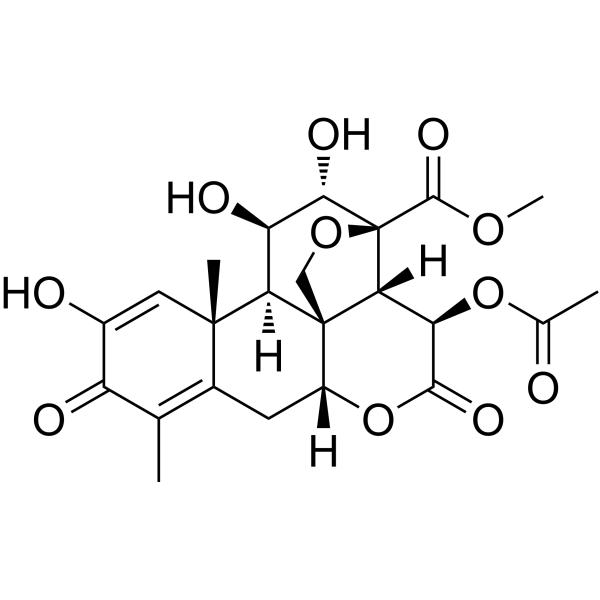
Dehydrobruceine B
 0 ImagesCat. No.: HY-N10313CAS No.: 53730-90-8
Dehydrobruceine B, a quassinoid, can be isolated from Brucea javanica. Dehydrobruceine B shows a synergistic effect with Cisplatin (HY-17394) to induce apoptosis via mitochondrial method. Dehydrobruceine B increases apoptosis-inducing factor (AIF) and Bax expression and suppresses Keap1-Nrf2.
-
MAHS-4
 0 ImagesCat. No.: HY-187514
MAHS-4 is an inhibitor of thymidylate synthase (TS) and dihydrofolate reductase (DHFR), with IC50 values of 1.918 μM and 83.53 μM, respectively. MAHS-4 inhibits thymidylate biosynthesis, reduces tetrahydrofolate pool maintenance, and interferes with extracellular matrix remodeling. MAHS-4 induces G2/M phase cell cycle arrest, activates endogenous caspase-dependent apoptosis, decreases MMP protein levels, inhibits cell migration, increases intracellular NO levels, and promotes autophagy activity. MAHS-4 is applicable for cancer-related research.



