



Biochemical Assay Reagents
Biochemical agents refers to the life science research related to biological material or organic compounds. Due to a wide range of life sciences, rapid development, and therefore a wide variety of such agents, complex in nature. There are electrophoresis reagents, chromatography reagents, centrifuged reagents, immunological reagent, labeled reagent, staining agents, penetration agents and carcinogens variable, insecticides, culture, buffering agents, electron microscopy reagents, protein and nucleic acid precipitating agent, condensing agent ultrafiltration membrane, clinical diagnostic reagents, dyes, antioxidants, preservatives, detergents and surfactants, standard biochemical reagents, biochemical reagents quality control materials, separation material, etc..
All Product Categories
-
Biochemical Assay Reagents Inhibitors
(10)
View all products
-
Biochemical Assay Reagents Modulator
(1)
View all products
-
Biochemical Assay Reagents Chemicals
(7)
View all products
-
Biochemical Assay Reagents Inducer
(1)
View all products
-
Biochemical Assay Reagents Controls
(59)
View all products
-
Biochemical Assay Reagents Substrates
(4)
View all products
-
Biochemical Assay Reagents Ligands
(2)
View all products
-
Biochemical Assay Reagents Related Products (16056)
Related Products (16056)

-
Antibodies (44)
-
Methyl sorbate
 0 ImagesMethyl sorbate, which is an ester formed by the condensation of methanol and hexa-2,4-dienoic acid, is commonly used as a flavoring agent and fragrance in the food and cosmetic industries due to its fruity, floral, and taste, and in addition , it has also been investigated for its potential use as a starting material in the synthesis of various organic compounds, including pharmaceuticals, agrochemicals, and polymers.
-
Acetyl tributyl citrate (Standard)
 0 ImagesSynonyms: Tributyl O-acetylcitrate (Standard); ATBC (Standard)Acetyl tributyl citrate (Tributyl O-acetylcitrate) Standard is the analytical standard of Acetyl tributyl citrate (HY-W010981). This product is intended for research and analytical applications. Acetyl tributyl citrate (Tributyl O-acetylcitrate) is a pharmaceutical excipient and biodegradable hydrophobic plasticizer. Acetyl tributyl citrate can be used in cosmetics, food packaging, and as a flavoring substance for food.
-
Tetraethylammonium nitrate
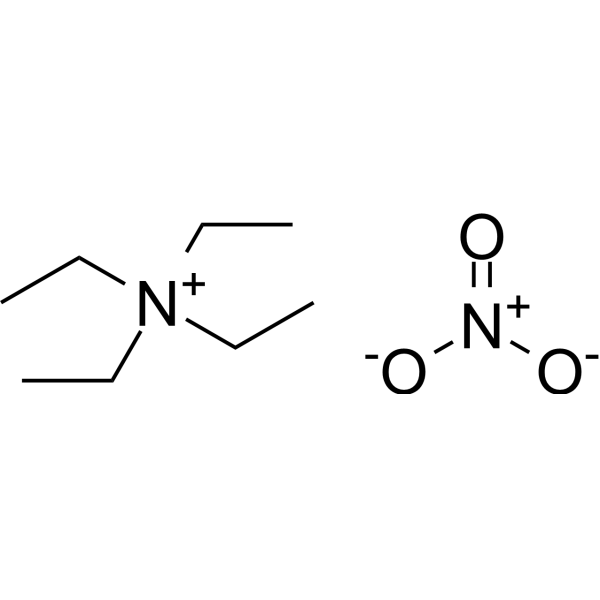 0 ImagesSynonyms: N,N,N-Triethylethanaminium nitrateTetraethylammonium nitrate is a quaternary ammonium salt commonly used as an electrolyte in various chemical reactions, especially in electrochemistry and battery technology. Tetraethylammonium nitrate has unique chemical properties that make it an important ingredient in a variety of industrial processes, including the production of advanced materials and electronic components.
-
1,2-Hexadecanediol
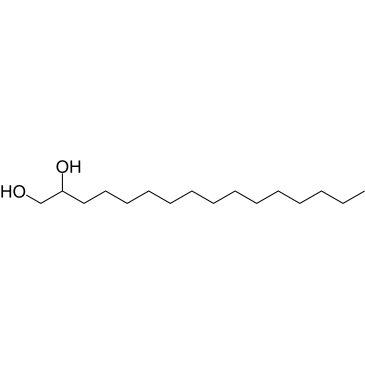 0 Images1,2-Hexadecanediol is a reducing agent. 1,2-Hexadecanediol facilitates the decomposition of the metal-organic precursor, forms an intermediate Co2+Fe3+-oleate complex.
-
Fmoc-D-Trp-OH
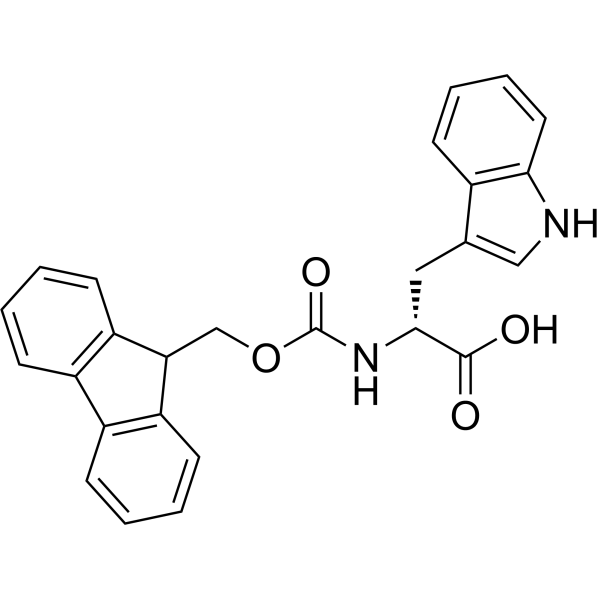 0 ImagesSynonyms: Nα-Fmoc-D-tryptophan; Fmoc-D-Trp-OHFmoc-D-Trp-OH (Nα-Fmoc-D-tryptophan) is a biochemical reagent that can be used as a biological material or organic compound for life science related research.
-
Bromocholine bromide
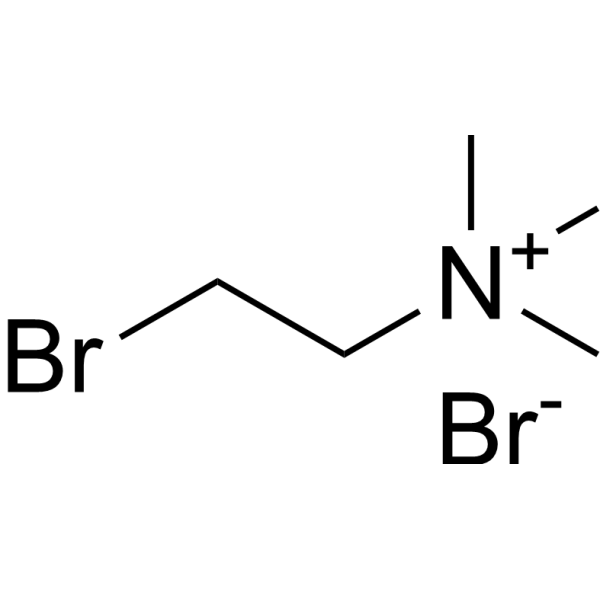 0 Images2-Bromo-N,N,N-trimethylethanaminium bromide is a quaternary ammonium salt consisting of a positively charged 2-bromo-N,N,N-trimethylethylamine cation and a negatively charged bromide anion. This compound is commonly used as a phase transfer catalyst in organic chemical reactions, facilitating the transfer of reactants between immiscible phases. It can also be used as a halogenating agent, for example in the bromination of olefins.
-
POPSO,99% with 2H2O
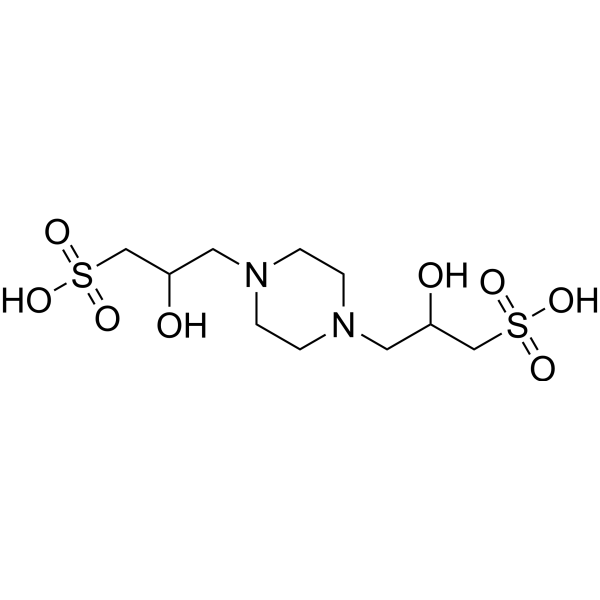 0 ImagesCat. No.: HY-D0876CAS No.: 68189-43-5POPSO is a zwitterionic buffer, increases osmolality and shows marked inhibition of anion uniport. POPSO inhibits chloride uniport with an IC50 value of 24 mM. POPSO enhances copper uptake and toxicity in alga, impairs mitochondrial inner membrane. The working pH range of POPSO sesquisodium salt is 7.2-8.5.
-
DOPE-PEG1000-Azide
 0 ImagesCat. No.: HY-W591448Purity: 99.62%DOPE-PEG1000-Azide is a phospholipid. Phospholipids have good biocompatibility and significant amphiphilic characteristics, making them the main and suitable dosage form or excipient in drug formulations, thereby achieving better therapeutic effects. DOPE-PEG1000-Azidecan be used in drug delivery research.
-
Chitosan (≥80% deacetylated, High viscosity,>400mPa.s)
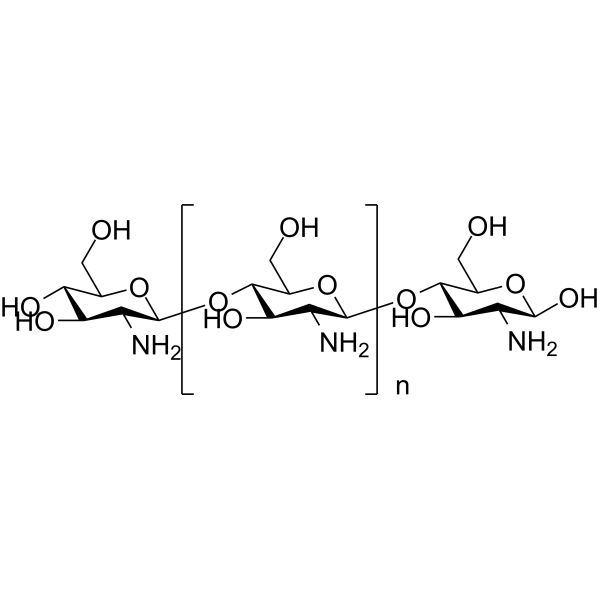 0 ImagesSynonyms: Deacetylated chitin (≥80% deacetylated, High viscosity,>400mPa.s); Poly(D-glucosamine) (≥80% deacetylated, High viscosity,>400mPa.s)Chitosan (Deacetylated chitin; Poly(D-glucosamine)) (≥80% deacetylated, High viscosity,>400mPa.s) is a polysaccharide obtained by deacetylating chitin, and exhibits antimicrobial activity against various bacteria and fungi.
-
1-Butyl-1-methylpyrrolidinium chloride
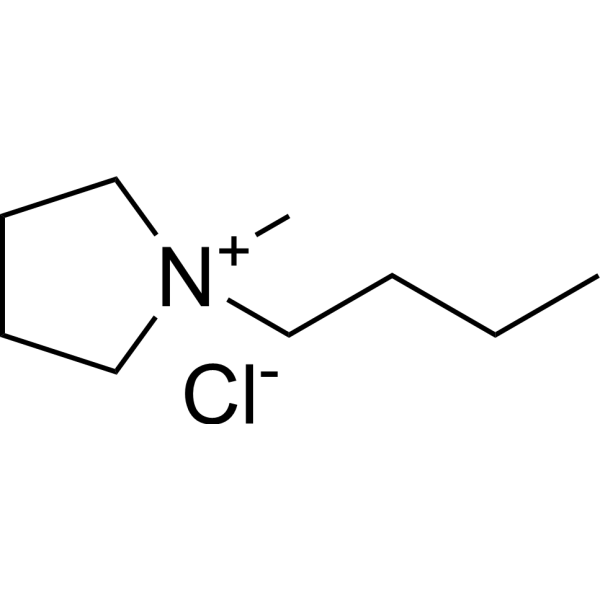 0 ImagesSynonyms: 1-Butyl-1-methylpyrrolidin-1-ium chloride1-Butyl-1-methylpyrrolidin-1-ium chloride, also known as BMIM chloride, belongs to the class of ionic liquids and consists of a positively charged pyrrolidine cation and a negatively charged chloride anion. This compound is commonly used as a solvent for various chemical reactions, especially those involving organic compounds and metals. Its unique physical and chemical properties, such as low volatility, high thermal stability, and tunable solubility, make it useful in a range of applications in catalysis, electrochemistry, and separation science. Furthermore, 1-butyl-1-methylpyrrolidin-1-ium chloride may have potential applications as a green solvent in energy storage devices and various industrial processes.
-
Eriochrome cyanine R indicator (C.I. 43820)
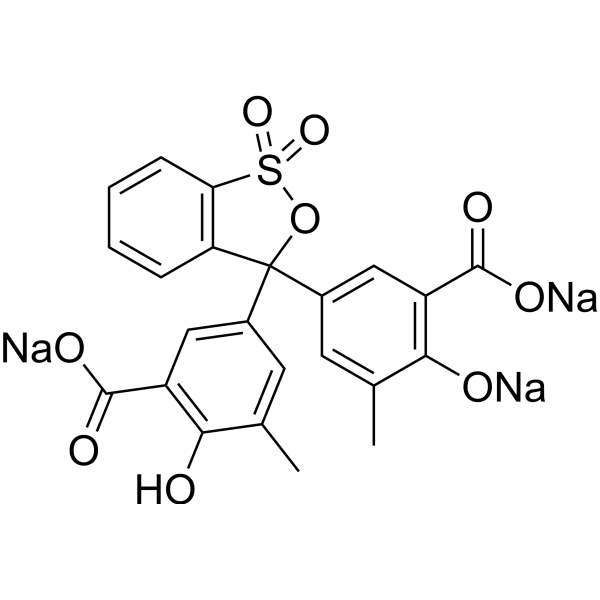 0 ImagesCat. No.: HY-W110884CAS No.: 3564-18-9Eriochrome cyanine R indicator (C.I. 43820) is a hydroxy triphenylmethane metal complexing dye that forms colored complexes with ferric ions. Eriochrome cyanine R indicator (C.I. 43820) can serve as a nuclear/myelin stain, selectively staining nuclei through an anionic iron-dye complex that binds arginine-rich proteins via weak non-ionic forces, with iron ions rendering nuclei, myelin, and erythrocytes blue. Eriochrome cyanine R indicator (C.I. 43820) can be used as a histological staining reagent alternative to Hematoxylin (HY-N0116) for nuclear and myelin staining; it can also serve as a metal colorimetric indicator for analytical chemistry.
-
5-Bromo-2-chloroanisole
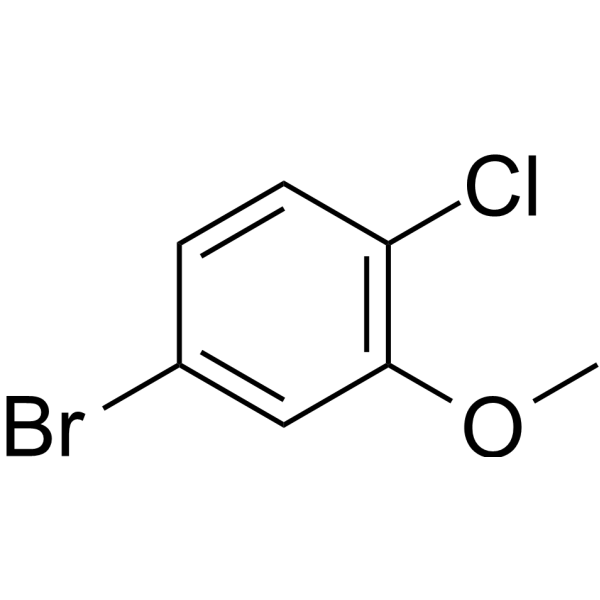 0 Images5-Bromo-2-chloroanisole is a biochemical reagent that can be used as a biological material or organic compound for life science related research.
-
GelMA, 30% methacrylation, Red Fluorescent
 0 ImagesCat. No.: HY-158218Synonyms: Gelatin Methacryloyl, 30% methacrylation, Red FluorescentRed Fluorescent Gelatin Methacryloyl (Red Fluorescent GelMA) is methacryloyl gelatin (GelMA) with red fluorescence, which is obtained by "grafting" fluorescent molecules on GelMA. Red Fluorescent Gelatin Methacryloyl acts as a scaffold and can be used to engineer tissue analogs from the vasculature to cartilage and bone, allowing cells to proliferate and spread. GelMA, 30% methacrylation, Red Fluorescent needs to self-assemble into fibrous hydrogel under the action of photoinitiator LAP (HY-44076), and target bioactive adhesion sites, play an inherent supporting role for tissue cells and biodegradable activity.
Application: cell culture, biological 3D printing, tissue engineering, etc.
-
Ethylene-vinyl acetate copolymer
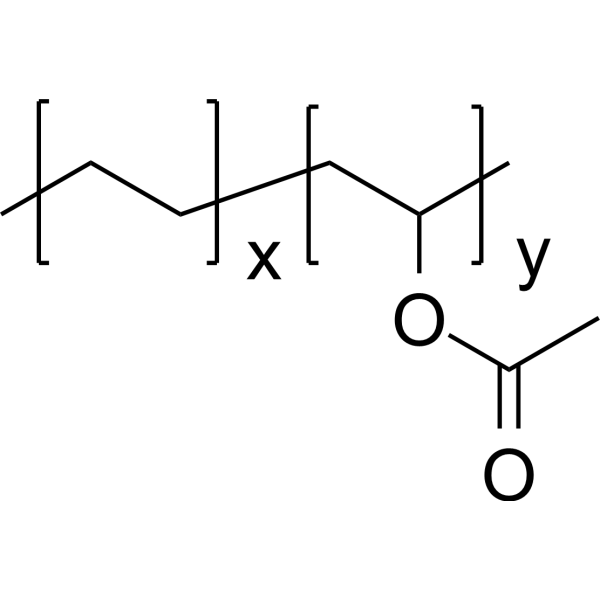 0 ImagesCat. No.: HY-W250126CAS No.: 24937-78-8Synonyms: Poly(ethylene-co-vinyl acetate)Ethylene-vinyl acetate copolymer (Poly(ethylene-co-vinyl acetate)) is an encapsulant. Ethylene-vinyl acetate copolymer is cross-linked by a thermally activated reaction with peroxides. Ethylene-vinyl acetate copolymer can be used for encapsulation of photovoltaic modules.
-
Chondroitinase AC
 0 ImagesChondroitinase AC is a hydrolytic enzyme. Chondroitinase AC degrades chondroitin sulfate A and chondroitin sulfate C. Chondroitinase AC inhibits the invasion and proliferation of melanoma cells and endothelial cells, and increases apoptosis. Chondroitinase AC can be used in research on melanoma and other cancers.
-
Pinolenic acid ethyl ester
 0 ImagesCat. No.: HY-124187CAS No.: 493015-74-0Synonyms: Ethyl pinolenatePinolenic acid is a polyunsaturated fatty acid found in the seed oils of red pine (Pinus orientalis) and maritime pine (Pinus pinaster). Both oils were found to have lipid-lowering properties. A diet containing marine pine nut oil (MPSO) reduces HDL and ApoA1 levels in transgenic mice expressing human ApoA1. MPSO was found to reduce cholesterol efflux in vitro. Korean pine nut oil supplements may help obesity by reducing appetite. People who take this oil experience an increase in the satiety hormones CCK and GLP-1 and a decrease in appetite. The activity of the oil is attributed to pinolenic acid. Pinolenic acid is not metabolized to arachidonic acid and can reduce the level of arachidonic acid in the phosphatidylinositol fraction of HepG2 cells from 15.9% to 7.0%. Pinolenic acid ethyl ester is a neutral, more lipophilic form of the free acid.
-
2,3-Dichlorophenylboronic acid
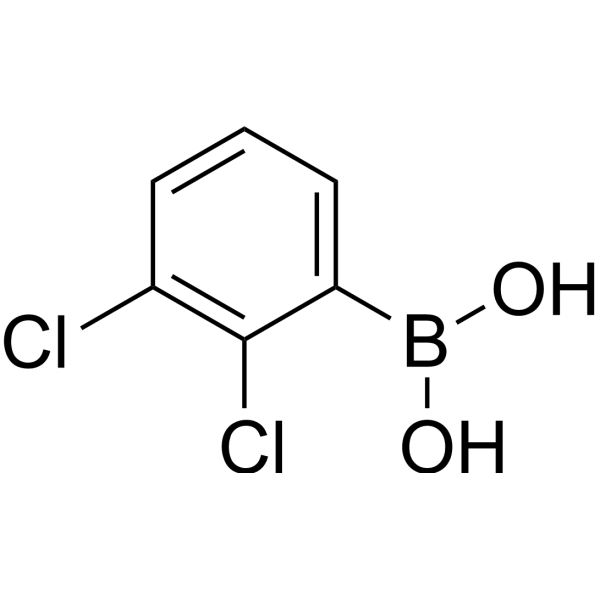 0 ImagesCat. No.: HY-32894CAS No.: 151169-74-32,3-Dichlorophenylboronic acid is a biochemical reagent that can be used as a biological material or organic compound for life science related research.
-
8-Bromoisoquinoline
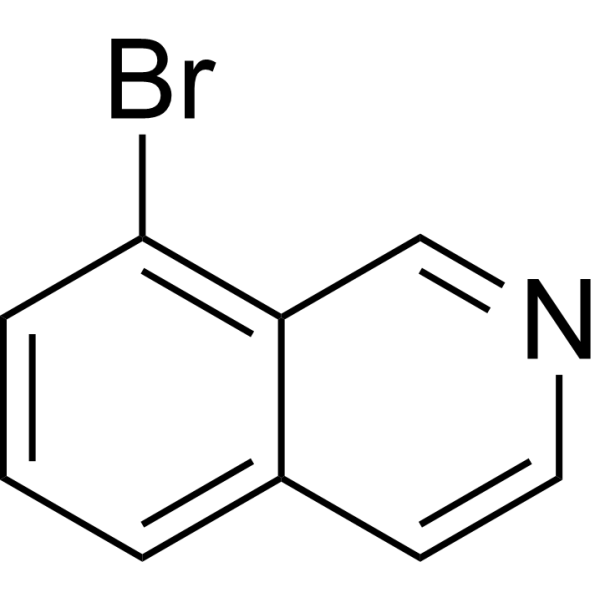 0 Images8-Bromoisoquinoline is a biochemical reagent that can be used as a biological material or organic compound for life science related research.
-
Biotinylated CCDC61 peptide TFA
 0 ImagesCat. No.: HY-P11118ASynonyms: CAPture peptide, biotin-CCDC61 (334-366) TFABiotinylated CCDC61 peptide (CAPture peptide, biotin-CCDC61 (334-366)) TFA is a biotinylated peptide derived from the centrosomal protein CCDC61. Biotinylated CCDC61 peptide TFA specifically isolates intact centrosomes.




