



Ferroptosis Inducer
-
R4VPL3-1
 0 ImagesCat. No.: HY-184506
R4VPL3-1 is a PROTAC-like degrader that simultaneously targets RNF4 and VHL, and also acts as a ferroptosis inducer. R4VPL3-1 induces iron-dependent lipid peroxidation and ferroptosis-mediated rapid cell death in cancer cells. R4VPL3-1 is applicable to research on human melanoma, human cutaneous squamous cell carcinoma, metastatic human sarcoma, malignant peripheral nerve sheath tumor, pigmented villonodular synovitis, undifferentiated pleomorphic sarcoma, myxofibrosarcoma, and lung adenocarcinoma.
-
Nrf-2/HMOX-1-IN-1
 0 ImagesCat. No.: HY-184288
Nrf-2/HMOX-1-IN-1 is a Nrf-2 and HMOX-1 inhibitor, as well as a Ferroptosis inducer. Nrf-2/HMOX-1-IN-1 inhibits GPX activity and upregulates p53 gene expression. Nrf-2/HMOX-1-IN-1 increases intracellular ROS and MDA levels, reduces GSH content, and elevates intracellular iron levels simultaneously. Nrf-2/HMOX-1-IN-1 exerts selective anticancer effects against breast cancer. Nrf-2/HMOX-1-IN-1 can be used in breast cancer-related research.
-
Nur77 agonist-1
 0 ImagesCat. No.: HY-173408CAS No.: 2899254-71-6
Nur77 agonist-1 (Compound 8f) is an orally active Nur77 agonist. Nur77 agonist-1 induces ferroptosis by upregulating Nur77 protein expression, increasing reactive oxygen species (ROS) and lipid peroxidation levels, and decreasing GPX4 protein expression. Nur77 agonist-1 has binding affinity to the ligand binding domain (LBD) of Nur77 (KD: 13.80 μM). Nur77 agonist-1 exhibits significant antiproliferative activity against a variety of breast cancer cells (IC50: 2.15-3.26 μM) and has low toxicity to normal cells. Nur77 agonist-1 can be used in breast cancer research.
-
GIC-20
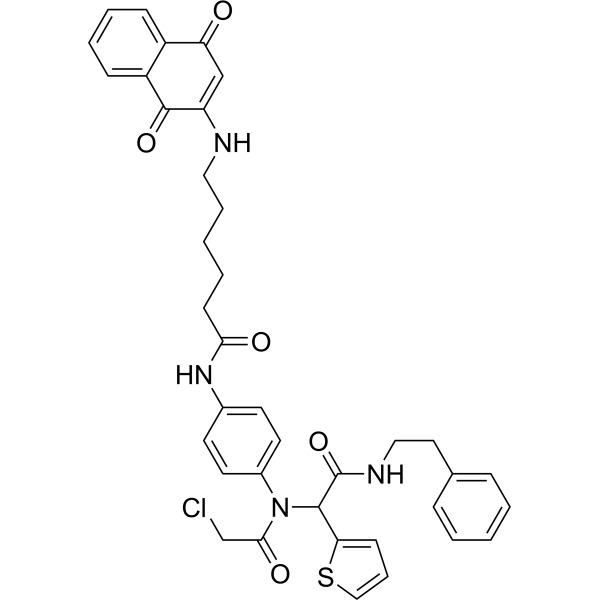 0 ImagesCat. No.: HY-162449CAS No.: 2942242-60-4
GIC-20 is a dual inducer for apoptosis and ferroptosis. GIC-20 exhibits antitumor efficacy against fibrosarcoma.
-
DMAPT-DTCs-1,3-diaminopropane-DTCs-DMAPT dimethanesulfonate
 0 ImagesCat. No.: HY-182918
DMAPT-DTCs-1,3-diaminopropane-DTCs-DMAPT dimethanesulfonate is an orally active prodrug of MMB-DTCs-1,3-diaminopropane-DTCs-MMB (HY-182917). DMAPT-DTCs-1,3-diaminopropane-DTCs-DMAPT dimethanesulfonate induces apoptosis, ferroptosis, and cuproptosis in lung cancer cells. DMAPT-DTCs-1,3-diaminopropane-DTCs-DMAPT dimethanesulfonate can be used in the research of lung cancer.
-
TrxR/EGFR-IN-1
 0 ImagesCat. No.: HY-168492CAS No.: 3038386-42-1
TrxR/EGFR-IN-1 (Compound L1Au2) is a TrxR/EGFR inhibitor. TrxR/EGFR-IN-1 is active against both Gefitinib (HY-50895)-sensitive and resistant lung cancers, effectively inhibiting tumor proliferation and promoting apoptosis. TrxR/EGFR-IN-1 promotes the degradation of GPX4 protein through autophagolysosomal and proteasomal pathways, leading to ferroptosis. In addition, TrxR/EGFR-IN-1 can induce endoplasmic reticulum stress and trigger immunogenic cell death. TrxR/EGFR-IN-1 can be used for the research of Gefitinib (HY-50895)-resistant lung cancer.
-
Nafuredin A
 0 ImagesCat. No.: HY-184460CAS No.: 224427-79-6
Nafuredin A is a trinorsesquiterpene and polyketide derivative found in the mangrove sediment-derived fungi Talaromyces sp. SCSIO 41412 and Trichoderma harzianum D13. Nafuredin A regulates the ferroptosis pathway and upregulates ferroptosis-related genes. Nafuredin A alleviates hypoxia-reoxygenation-induced injury in oxygen-glucose deprivation/reperfusion cell models. Nafuredin A reduces pro-inflammatory cytokines and exerts hepatoprotective effects in animal models of hepatic ischemia-reperfusion injury. Nafuredin A inhibits the growth of phytopathogenic fungi Magnaporthe oryzae and Valsa mali. Nafuredin A can be used in studies related to hepatic ischemia-reperfusion injury and phytopathogenic fungal infections.
-
Keap1-p-p62-IN-1
 0 ImagesCat. No.: HY-184204
Keap1-p-p62-IN-1 is a potent and selective Keap1-p-p62 inhibitor with an IC50 of 0.11 μM. Keap1-p-p62-IN-1 shows 18.73-fold selectivity over Keap1-Nrf2 interaction. Keap1-p-p62-IN-1 normalizes Nrf2 ubiquitination, sensitizes cells to Sorafenib (HY-10201)-induced ferroptosis. Keap1-p-p62-IN-1 can be used for the research of p62 aberrant hepatocellular carcinoma.
-
GPX4-IN-11
 0 ImagesCat. No.: HY-162717CAS No.: 951570-56-2
GPX4-IN-11 (compound I14) is a potent inhibitor of GPX4, with the KD of 45.7 μM. GPX4-IN-11 plays an important role in ferroptosis research.
-
Chlorido[N,N'-disalicylidene-1,2-phenylenediamine]iron(III)
![Chlorido[N,N'-disalicylidene-1,2-phenylenediamine]iron(III)](https://file.medchemexpress.com/product_pic/hy-w698255.gif "Click to View Chlorido[N,N'-disalicylidene-1,2-phenylenediamine]iron(III) Product Detail") 0 ImagesCat. No.: HY-W698255CAS No.: 39916-28-4
0 ImagesCat. No.: HY-W698255CAS No.: 39916-28-4Chlorido[N,N'-disalicylidene-1,2-phenylenediamine]iron(III) generates lipid-based ROS and induce ferroptosis
-
6-Methoxydihydrosanguinarine hydrochloride
 0 ImagesCat. No.: HY-N3000A
6-Methoxydihydrosanguinarine hydrochloride is an alkaloid with activity across multiple cancer cell types. 6-Methoxydihydrosanguinarine hydrochloride activates IRE1/JNK signaling, blocks Akt/mTOR and PI3K/AKT/mTOR pathways, reduces expression of Cdc25C, CyclinB1, Cdc2, YAP/TAZ, Survivin, GPX4, and EGFR, upregulates IRE1 and DR5, and activates JNK and caspases. 6-Methoxydihydrosanguinarine hydrochloride induces apoptosis, G2/M phase arrest, DNA damage, ROS generation, lipid peroxidation, ferroptosis, autophagy, and suppresses cancer cell growth. 6-Methoxydihydrosanguinarine hydrochloride disruptes the biofilm formation of Candida albicans (C. albicans). 6-Methoxydihydrosanguinarine hydrochloride can be used for the research of non-small cell lung cancer, hepatocellular carcinoma, melanoma, colon carcinoma, ovarian cancer and breast cancer.
-
GPX4-IN-24
 0 ImagesCat. No.: HY-183294CAS No.: 2834106-56-6
GPX4-IN-24 is an orally active glutathione peroxidase 4 (GPX4) inhibitor with a human IC50 of 10.90 μM, human Kd of 10.04 μM. GPX4-IN-24 suppresses GPX4 enzymatic activity, disrupts redox homeostasis, drives lipid peroxidation, promotes lipid peroxidation, and induces ferroptosis. GPX4-IN-24 can be used for the research of triple-negative breast cancer.
-
Ferroptosis inducer-10
 0 ImagesCat. No.: HY-175811
Ferroptosis inducer-10 is a ferroptosis inducer. Ferroptosis inducer-10 can inhibit A549 cells growth with an IC50 of 0.76 μM. Ferroptosis inducer-10 can deplete GSH, elevate ROS and MDA, and downregulate GPX4 expression. Ferroptosis inducer-10 can induce cell G2/M phase and inhibit migration. Ferroptosis inducer-10 can be used for the research of cancer, such as non-small lung cancer.
-
GPX4-IN-18
 0 ImagesCat. No.: HY-175041CAS No.: 3016433-00-1
GPX4-IN-18 (Compound 17) is a ferrocene-containing inhibitor of glutathione peroxidase 4 (GPX4). GPX4-IN-18 is also an inducer of ferroptosis. GPX4-IN-18 can increase the production of ROS and malondialdehyde (MDA) levels in OS-RC-2 clear cell renal cell carcinoma cells. GPX4-IN-18 induces ferroptosis in HT-1080 cells with IC50s of 0.007 μM (absence of ferrostatin-1) and 1.486 μM (presence of ferrostatin-1). GPX4-IN-18 reduces in vivo tumor volume and intratumoral GPX4 levels in OS-RC-2 xenograft murine model.
-
Ferroptosis inducer-15
 0 ImagesCat. No.: HY-182802CAS No.: 3097756-33-4
Ferroptosis inducer-15 is a ferroptosis inducer. Ferroptosis inducer-15 downregulates GPX4 expression, triggers lipid peroxidation via ROS accumulation, and disrupts mitochondrial membrane potential to drive ferroptosis. Ferroptosis inducer-15 increases splenic CD4+ T cell proportion, promotes CD8+ cytotoxic T cell tumor infiltration, and activates antitumor immune responses. Ferroptosis inducer-15 exerts antiproliferative activity against colorectal cancer cells and inhibits tumor growth in xenograft mice models without significant body weight loss. Ferroptosis inducer-15 can be used for the research of cancer, such as colorectal cancer.
-
afi-FSP1-1
 0 ImagesCat. No.: HY-175738CAS No.: 3072951-35-7
afi-FSP1-1 is a Ferroptosis suppressor protein 1 (FSP1) inhibitor with an Ki of 0.283 μM. afi-FSP1-1 has a superior binding capacity to FSP1-FAD-NAD+. afi-FSP1-1 can induces ferroptosis in cancer cells. afi-FSP1-1 can be used for cancers research.
-
mTOR/GLS1-IN-1
 0 ImagesCat. No.: HY-179003
mTOR/GLS1-IN-1 (Compoud 9d) is a potent dual targeted mTOR/GLS1 inhibitor. Has anti proliferative activity against various tumor cells. mTOR/GLS1-IN-1 dose dependently induces ROS accumulation, induces autophagosome formation, and induces apoptosis. mTOR/GLS1-IN-1 can increase Fe2+, decrease GPX4, and induce ferroptosis. mTOR/GLS1-IN-1 can inhibit cell migration, invasion, and angiogenesis. mTOR/GLS1-IN-1 can be used in the research of cancer, such as breast cancer.
-
Ferroptosis inducer-17
 0 ImagesCat. No.: HY-184662
Ferroptosis inducer-17 is a ferroptosis inducer that downregulates GPX4 and activates the CTSB and cGAS-STING pathways. Ferroptosis inducer-17 exhibits cytotoxicity against cancer cells but low toxicity toward normal cells. Ferroptosis inducer-17 accumulates in mitochondria and lysosomes, thereby inducing ROS production, lipid peroxidation, mitochondrial membrane depolarization, lysosomal iron accumulation, increased membrane permeability, and enhanced oxidative stress. Ferroptosis inducer-17 inhibits tumor growth in cisplatin-resistant xenograft models. Ferroptosis inducer-17 can be used for cancer-related research.
-
Ferroptocide
 0 ImagesCat. No.: HY-158775CAS No.: 2505218-38-0
Ferroptocide is a cell death inducer that triggers ferroptosis and has anti-tumor activity. Ferroptocide can induce oxidative stress, leading to G2/M cell cycle arrest and apoptosis activation in LNCaP cells, while also effectively inhibiting the cell viability of both LNCaP and TRAMP-C1 cells. Ferroptocide can be used to study its capability to induce mitochondrial autophagy and to trigger immunogenic cell death (ICD) in prostate cancer cells.
-
Anticancer agent 359
 0 ImagesCat. No.: HY-187687CAS No.: 2740603-37-4
Anticancer agent 359 is a ferroptosis inducer. Anticancer agent 359 inhibits the proliferation, colony formation and migration of bladder cancer cells in a concentration-dependent manner. Anticancer agent 359 induces ferroptosis by downregulating SREBP1 to inhibit FASN transcription, reducing the expression of NRF2/SLC7A11/GPX4, decreasing GSH, promoting ROS accumulation and lipid peroxidation; this effect is reversible by Ferrostatin-1 (HY-100579). Anticancer agent 359 acts synergistically with Talazoparib (HY-16106). Anticancer agent 359 inhibits tumor growth in vivo without obvious hepatotoxicity or nephrotoxicity. Anticancer agent 359 can be used in the research of bladder cancer.



