



Ferroptosis Inducer
-
PROTAC GPX4 degrader-2
 0 ImagesCat. No.: HY-162106CAS No.: 3035509-76-0
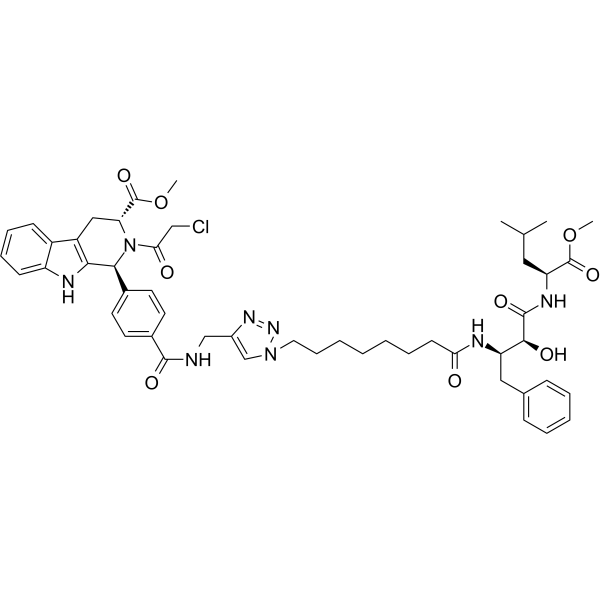
PROTAC GPX4 degrader-2 is a cIAP-recruiting GPX4 PROTAC degrader with a DC50 of 1.68 μM. PROTAC GPX4 degrader-2 forms a ternary complex with GPX4 and cIAP, and induces GPX4 degradation via the ubiquitin-proteasome system pathway. PROTAC GPX4 degrader-2 induces Mitochondrial depolarization and Ferroptosis. PROTAC GPX4 degrader-2 exhibits antiproliferative effects in cancer cells. PROTAC GPX4 degrader-2 can be used for the research of fibrosarcoma.
-
STAT3/CAIX-IN-1
 0 ImagesCat. No.: HY-174457CAS No.: 3053583-60-8
STAT3/CAIX-IN-1 is a dual-target inhibitor of STAT3 (Kd: 60.03 μM) and CAIX (IC50: 80.45 nM). STAT3/CAIX-IN-1 induces ferroptosis by increases the levels of reactive oxygen species (ROS) and lipid peroxides. STAT3/CAIX-IN-1 inhibits cell migration, induces apoptosis, and causes cell cycle arrest in MDA-MB-231 cells. STAT3/CAIX-IN-1 can be used for the study of triple-negative breast cancer (TNBC).
-
Photosensitizer-5
 0 ImagesCat. No.: HY-162867
Photosensitizer-5 is a photosensitizer. Photosensitizer-5 has cytotoxicity against HeLa and HepG2 cells, with IC50 values of 10.4 nM and 6.9 nM, respectively. Photosensitizer-5 can lead to lipid peroxidation and induces cell death through an iron-independent ferroptosis-like pathway. Photosensitizer-5 shows anti-tumor activity in HeLa tumor-bearing mice.
-
Osimertinib (GMP)
 0 ImagesCat. No.: HY-15772GCAS No.: 1421373-65-0Synonyms: AZD-9291 (GMP); Mereletinib (GMP)
Osimertinib (AZD-9291; Mereletinib) GMP is the GMP level of Osimertinib (HY-15772). GMP small molecules works appropriately as an auxiliary reagent for cell research manufacture. Osimertinib GMP is an inhibitor that selectively targets EGFRT790M and activated EGFR mutants. Osimertinib GMP exerts multiple anti-tumor mechanisms, including radiosensitization, induction of apoptosis and ferroptosis, as well as inhibition of cancer stemness. Osimertinib GMP suppresses EGFR nuclear translocation and downstream survival signaling pathways, significantly reduces cell viability and lipid droplet content, and also exerts synergistic effects with radiotherapy or specific targeted agents to effectively overcome drug resistance and radioresistance. Formulations of Osimertinib GMP modified with liposomes or iRGD enable sustained release, tumor-specific accumulation, and breakthrough of the blood-brain barrier limitation. Osimertinib GMP can be used in research related to radioresistant glioblastoma and non-small cell lung cancer.
-
USP30-IN-20
 0 ImagesCat. No.: HY-175826
USP30-IN-20 is an orally active USP30 inhibitor (Kd = 1.61 μM, IC50 = 12.8 μM). USP30-IN-20 induces ferroptosis by promoting ubiquitination-mediated degradation of GPX4. USP30-IN-20 inhibits the proliferation, migration, invasion, and stemness of prostate cancer cells. USP30-IN-20 induces G0/G1 cell cycle arrest and ROS levels in prostate cancer cells. USP30-IN-20 exhibits significant anti-tumor efficacy in PC3 cell subcutaneous xenografts in mice. USP30-IN-20 can be used for the study of advanced prostate cancer.
-
Anticancer agent 154
 0 ImagesCat. No.: HY-155203
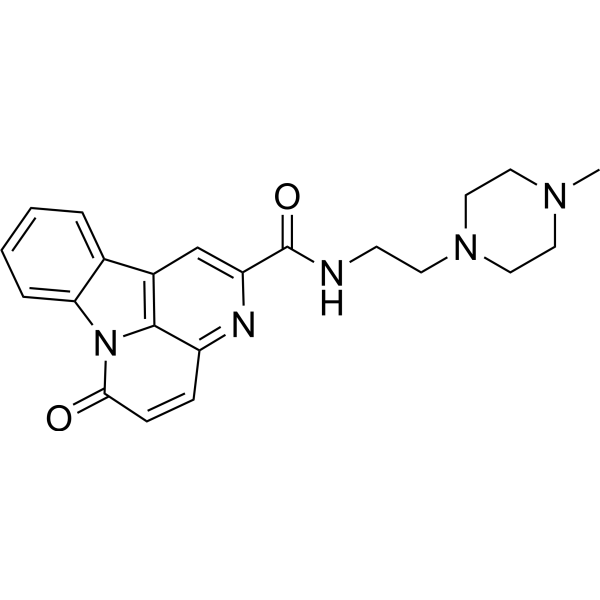
Anticancer agent 154 (Compound 8h) increases the levels of reactive oxygen species and leads to mitochondrial damage. Anticancer agent 154 induces cell apoptosis and DNA damage. Anticancer agent 154 also induces ferroptosis by reducing the GSH level and GPX4 expression and increasing the lipid peroxidation level. Anticancer agent 154 inhibits cancer cell (HT29, H1975, A549, and MCF-7) proliferation with IC50s of 1.0-1.9 μM.
-
STAT3-IN-51
 0 ImagesCat. No.: HY-180245
STAT3-IN-51 is a STAT3 inhibitor that directly binds to the STAT3 SH2 domain. STAT3-IN-51 induces apoptosis, ferroptosis, and immunogenic cell death (ICD) to potentiate anti-tumor immunity. STAT3-IN-51 inhibits STAT3 activation (phosphorylation, p-STAT3) and its downstream signaling. STAT3-IN-51 induces ROS generation, decreases Bcl-2 expression, disruptes mitochondrial function, suppresses GPX4 activity, and promotes lipid peroxidation. STAT3-IN-51 can be used for the study of colorectal carcinoma, breast adenocarcinoma, non-small cell lung cancer (NSCLC) and Cisplatin (HY-17394)-resistant pulmonary adenocarcinoma.
-
CDC25A/NF-κB-IN-1
 0 ImagesCat. No.: HY-184446
CDC25A/NF-κB-IN-1 is an effective dual-target inhibitor of CDC25A and NF-κB, and is a prodrug of Pt(IV). CDC25A/NF-κB-IN-1 has anticancer activity and low cytotoxicity to normal cells. CDC25A/NF-κB-IN-1 can trigger a variety of anticancer mechanisms, including S phase cell cycle arrest, mitochondrial endogenous apoptosis, endoplasmic reticulum stress, autophagy-dependent ferroptosis. CDC25A/NF-κB-IN-1 has good safety and can be used for ovarian cancer research.
-
OART
 0 ImagesCat. No.: HY-177483Synonyms: Oxaliplatin-artesunate
OART (Oxaliplatin-artesunate) is a ferroptosis inducer. OART significantly inhibits tumor cell proliferation. OART induces cytoplasmic and mitochondrial LPO to promote tumor ferroptosis, via destroying glutathione-mediated ferroptosis defense system and enhancing iron-dependent Fenton reaction. OART enhances tumor immunogenicity, transforming tumor environment from immunosuppressive to immunosensitive. OART has strong tumor regression in tumor-bearing mouse models. OART can be used for cancer immunotherapy research.

-
Ferroptosis inducer-12
 0 ImagesCat. No.: HY-178370
Ferroptosis inducer-12 is a potent and selective ferroptosis inducer. Ferroptosis inducer-12 exhibits potent antiproliferative activity against HT1080 and OS-RC-2, with IC50 values of 3 nM and 5 nM, respectively. Ferroptosis inducer-12 strongly inhibits GPX4 enzymatic activity, induces intracellular ROS and elevates intracellular Fe2+ levels in OS-RC-2 cells. Ferroptosis inducer-12 significantly inhibits tumor growth in BALB/c nude mice bearing OS-RC-2 xenografts. Ferroptosis inducer-12 can be used for the study of cancer.

-
DZ-1-DHA
 0 ImagesCat. No.: HY-184557CAS No.: 2223036-84-6
DZ-1-DHA is a conjugate of DHA (HY-B2167) and DZ-1 dye. DZ-1-DHA mediates selective cellular uptake via binding to overexpressed OATP1A2. DZ-1-DHA induces the cleavage of Caspase-3, Caspase-8, Caspase-9 and PARP-1. DZ-1-DHA induces Apoptosis and Ferroptosis. DZ-1-DHA induces ROS production through a Fenton-like mechanism, causes mitochondrial membrane depolarization, and triggers lipid peroxidation. DZ-1-DHA can be used in studies related to colorectal cancer liver metastasis.
-
CA IX/GPX4-IN-1
 0 ImagesCat. No.: HY-178475
CA IX/GPX4-IN-1 (Compound 22abcb) is a dual targeted inhibitor of CA IX and GPX4 activity. CA IX/GPX4-IN-1 can effectively kill SUM159PT cells (IC50 = 416 nM) by inducing iron death under hypoxic conditions. CA IX/GPX4-IN-1 has an IC50 of 663 nM to CA IX in SUM159PT-CAIX-FL cells. CA IX/GPX4-IN-1 can significantly inhibit tumor growth and can be reversed by ferroptosis inhibitors. CA IX/GPX4-IN-1 can be used for research on breast cancer and other cancers.
-
GPX4-AUTAC
 0 ImagesCat. No.: HY-176220CAS No.: 3060458-90-1
GPX4-AUTAC is a GPX4-targeting autophagy-mediated degrader (AUTAC). GPX4-AUTAC consists of an inhibitor ML162-yne (HY-153748), a degradation tag FBnG (HY-W073762) and a glycol linker (HY-W021401). GPX4-AUTAC promotes the ubiquitination of GPX4 by E3 ligase TRAF6, and enhances the binding with GPX4 and p62, leading to the selective autophagy-dependent degradation of GPX4. GPX4-AUTAC significantly induces ferroptosis and shows a potent anti-cancer activity in breast cancer cells, breast cancer-derived organoids (PDOs) and MDA-MB-231 tumor xenograft mice model, with potent synergistic effects when combined with Sulfasalazine (SAS) (HY-14655) or chemotherapy drugs (Paclitaxel (HY-B0015) or Cisplatin (HY-17394)).
-
Anticancer agent 147
 0 ImagesCat. No.: HY-155158CAS No.: 2241283-11-2
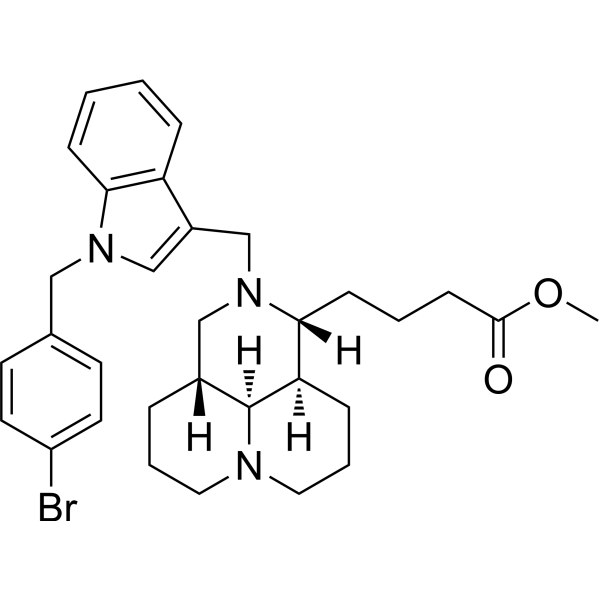
Anticancer agent 147 (compound 6j) is a derivative of sophoridine (HY-N1373) and is a ferroptosis inducer. Anticancer agent 147 can promote the accumulation of intracellular Fe2+, reactive oxygen species (ROS) and MDA, increase ER stress, and upregulate the expression of the activating transcription factor ATF3. Anticancer agent 147 has good anti-liver cancer effects in vitro and in vivo.

-
Antitumor agent-143
 0 ImagesCat. No.: HY-161332
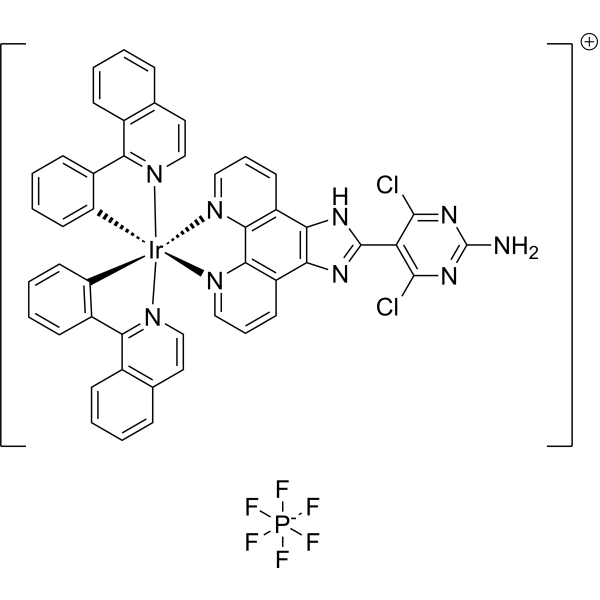
Antitumor agent-143 (compound 2c) is an antitumor agent that blocks cell proliferation of A549 cells during the S phase and induces an early apoptosis. Antitumor agent-143 induces cell death via ferroptosis, apoptosis by a ROS-mediated mitochondrial dysfunction pathway and GSDMD-mediated pyroptosis.
-
BODIQPy-TPA
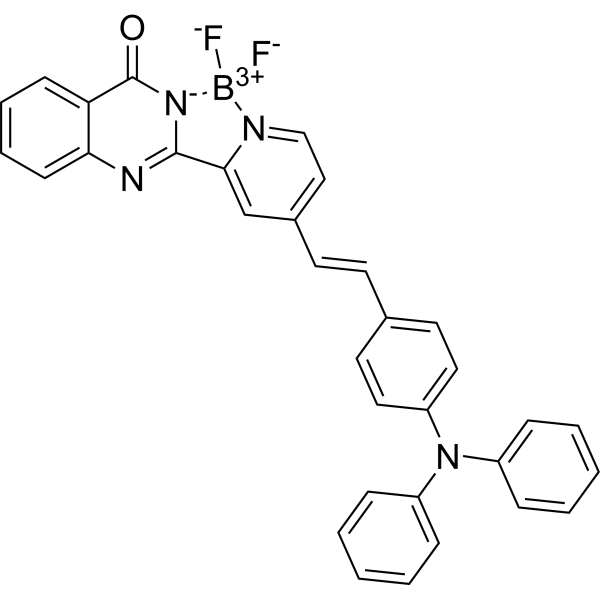 0 ImagesCat. No.: HY-163286CAS No.: 2738333-02-1
BODIQPy-TPA is a lipophilic probes, which induces ferroptosis in B16 and HepG2 cells upon light irradiation through lipid peroxidation. BODIQPy-TPA reveals a maximum absorption wavelength of 488 nm and a maximum emission wavelength above 640 nm.
-
[Ru(phen)2(HMPIP)](PF6)2
2](https://file.medchemexpress.com/product_pic/hy-172225.gif "Click to View [Ru(phen)2(HMPIP)](PF6)2 Product Detail") 0 ImagesCat. No.: HY-172225
0 ImagesCat. No.: HY-172225[Ru(phen)2(HMPIP)](PF6)2 (Compound 6A) is an anti-tumor agent. [Ru(phen)2(HMPIP)](PF6)2 can inhibit the proliferation and migration of HepG2 liver cancer cells, and induce apoptosis, autophagy, cell cycle arrest and ferroptosis of HepG2 liver cancer cells. [Ru(phen)2(HMPIP)](PF6)2 exerts its anti-tumor activity by stimulating immune response to increase CD8+ T cells.



