



HSP Activator
-
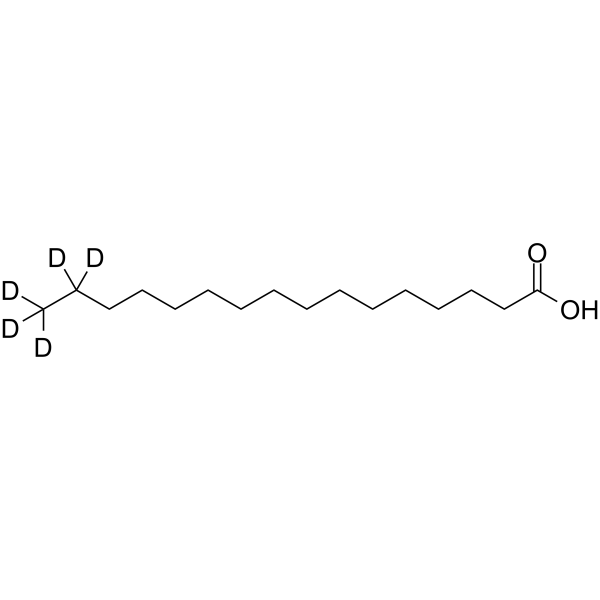
Palmitic acid-15,15,16,16,16-d5
 0 ImagesCat. No.: HY-N0830S1CAS No.: 285979-77-3
Palmitic acid-15,15,16,16,16-d5 is the deuterium labeled Palmitic acid. Palmitic acid is a long-chain saturated fatty acid commonly found in both animals and plants. PA can induce the expression of glucose-regulated protein 78 (GRP78) and CCAAT/enhancer binding protein homologous protein (CHOP) in in mouse granulosa cells.
-
Estrogen receptor-IN-2
 0 ImagesCat. No.: HY-184982
Estrogen receptor-IN-2 is a potent estrogen receptor inhibitor formed by the conjugation of Tam (HY-13757)-NHC and gold (I). Estrogen receptor-IN-2 significantly downregulates estrogen receptor (ER) levels, inhibits ER-mediated downstream signaling pathways, and induces immunogenic cell death (ICD) mediated by damage-associated molecular patterns (DAMPs). Estrogen receptor-IN-2 can overcome drug resistance in MCF-7Y537S mutant cells via the RAMP3/CALCR signaling pathway. It is suitable for research on endocrine-resistant breast cancer.
-
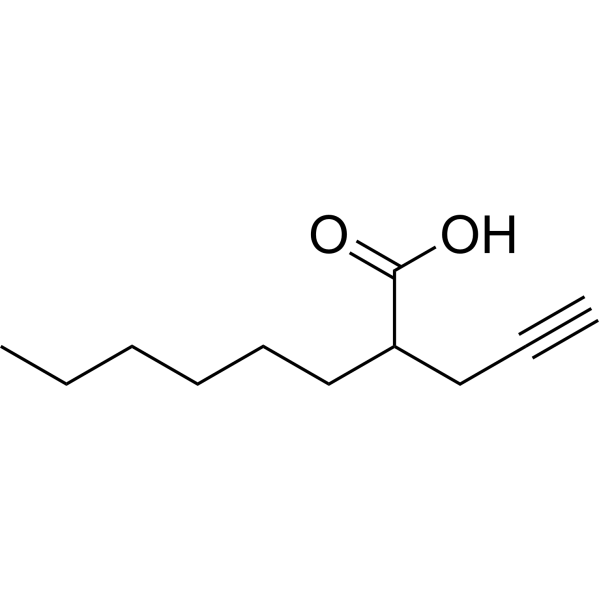
2-Hexyl-4-pentynoic acid
 0 ImagesSynonyms: (±)-2-Hexyl-4-pentynoic acid
2-Hexyl-4-pentynoic acid ((±)-2-Hexyl-4-pentynoic acid), a Valproic acid (HY-10585) derivative, exhibits potential roles of HDAC inhibition (IC50 = 13 μM) and HSP70 induction. 2-Hexyl-4-pentynoic acid causes histone hyperacetylation and protect against glutamate-induced excitotoxicity in cultured neurons. 2-Hexyl-4-pentynoic acid can be used for the study of breast carcinoma. 2-Hexyl-4-pentynoic acid is a click chemistry reagent, it contains an Alkyne group and can undergo copper-catalyzed azide-alkyne cycloaddition (CuAAc) with molecules containing Azide groups.
-
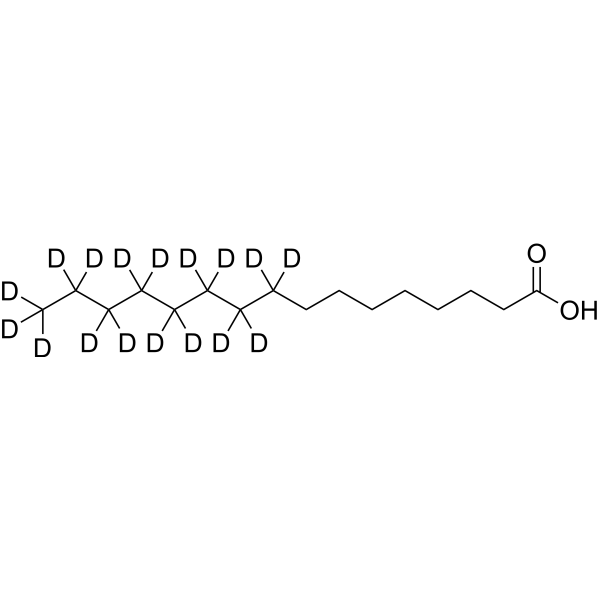
Palmitic acid-d17
 0 ImagesCat. No.: HY-N0830S14CAS No.: 81462-28-4
Palmitic acid-d17 is the deuterium labeled Palmitic acid. Palmitic acid is a long-chain saturated fatty acid commonly found in both animals and plants. PA can induce the expression of glucose-regulated protein 78 (GRP78) and CCAAT/enhancer binding protein homologous protein (CHOP) in in mouse granulosa cells.
-
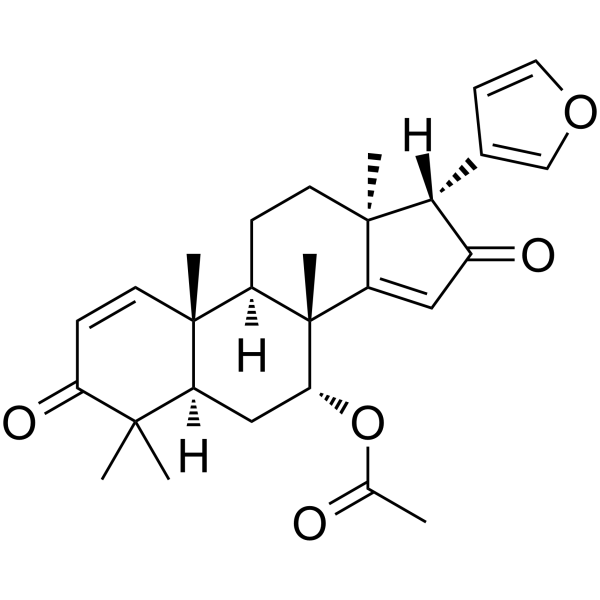
Azadiradione
 0 ImagesCat. No.: HY-N9615CAS No.: 26241-51-0
Azadiradione is a bioactive limonoid found in Azadirachta indica. Azadiradione is a HSF1 activator. Azadiradione has antimycobacterial, anti-nociceptive and anti-inflammatory activities.
-
Palmitic acid-d4-2
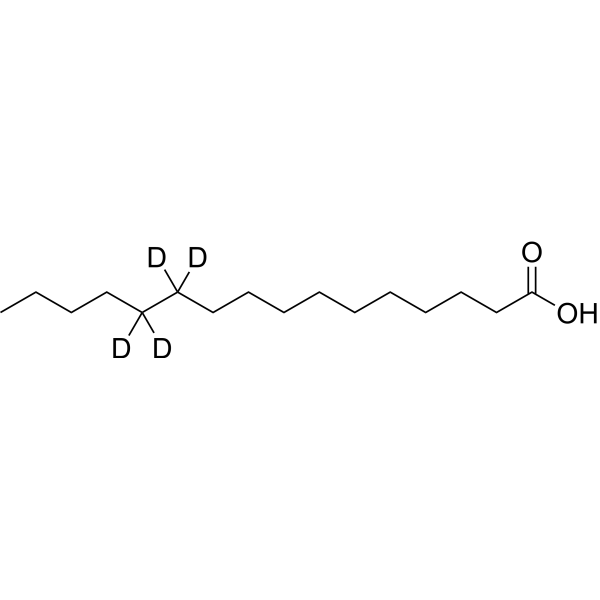 0 ImagesCat. No.: HY-N0830S13CAS No.: 75736-57-1
Palmitic acid-d4-2 is the deuterium labeled Palmitic acid. Palmitic acid is a long-chain saturated fatty acid commonly found in both animals and plants. PA can induce the expression of glucose-regulated protein 78 (GRP78) and CCAAT/enhancer binding protein homologous protein (CHOP) in in mouse granulosa cells.
-
Palmitic acid-9,10-d2
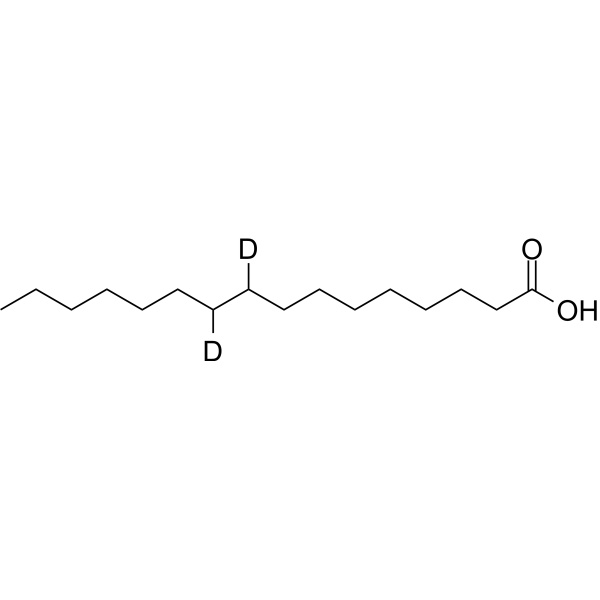 0 ImagesCat. No.: HY-N0830S8CAS No.: 78387-70-9
Palmitic acid-9,10-d2 is the deuterium labeled Palmitic acid. Palmitic acid is a long-chain saturated fatty acid commonly found in both animals and plants. Palmitic acid can induce the expression of glucose-regulated protein 78 (GRP78) and CCAAT/enhancer binding protein homologous protein (CHOP) in in mouse granulosa cells.
-
FK 409
 0 ImagesCat. No.: HY-19090CAS No.: 92454-60-9
FK 409 is a NO donor that can penetrate cell membranes. FK 409 has a vasodilatory effect on bovine retinal arteries. FK 409 alleviates acute-phase inflammation, induces HSP, and mitigates liver transplantation injury in a rat model of orthotopic liver transplantation. FK 409 can be used in research on cardiovascular diseases and liver transplant rejection and inflammatory immune system disorders.
-
Palmitic acid-d2-5
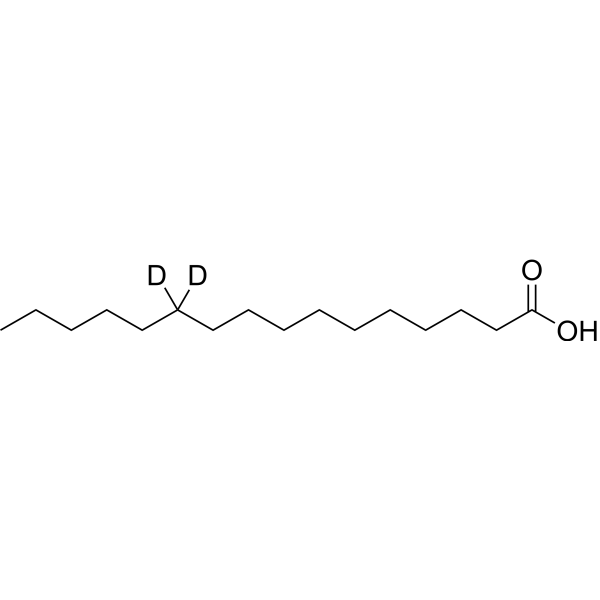 0 ImagesCat. No.: HY-N0830S19CAS No.: 1219805-64-7
Palmitic acid-d2-5 is the deuterium labeled Palmitic acid. Palmitic acid is a long-chain saturated fatty acid commonly found in both animals and plants. PA can induce the expression of glucose-regulated protein 78 (GRP78) and CCAAT/enhancer binding protein homologous protein (CHOP) in in mouse granulosa cells.
-
Tin(II) palmitate
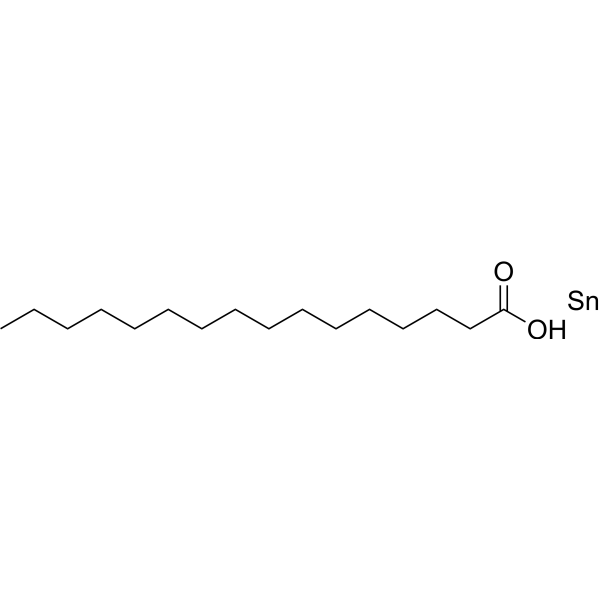 0 ImagesCat. No.: HY-W127458CAS No.: 35104-88-2Synonyms: Hexadecanoic acid, tin(2+) salt
Tin(II) palmitate (Hexadecanoic acid, tin(2+) salt) is a long-chain saturated fatty acid commonly found in animals and plants. Tin(II) palmitate can induce the expression of glucose-regulated protein 78 (GRP78) and CCAAT/enhancer-binding protein homologous protein (CHOP) in mouse granular cells. Tin(II) palmitate can be used to establish a model of cellular steatosis.
-
Palmitic acid-d2-3
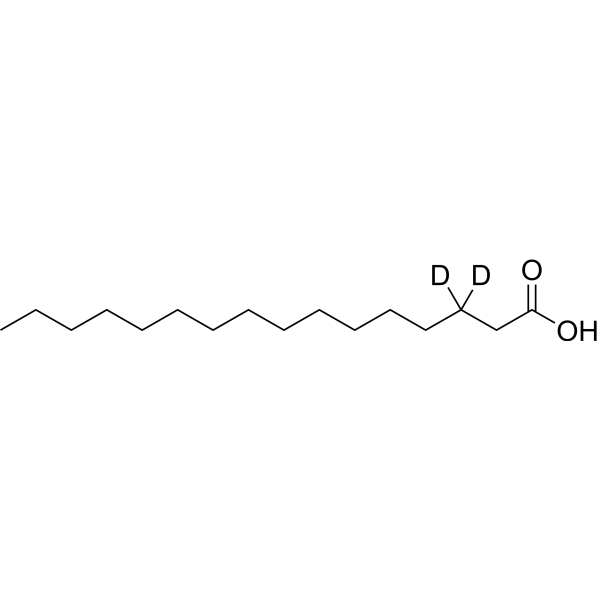 0 ImagesCat. No.: HY-N0830S16CAS No.: 83293-32-7
Palmitic acid-d2-3 is the deuterium labeled Palmitic acid. Palmitic acid is a long-chain saturated fatty acid commonly found in both animals and plants. PA can induce the expression of glucose-regulated protein 78 (GRP78) and CCAAT/enhancer binding protein homologous protein (CHOP) in in mouse granulosa cells.
-
DGAT-1 inhibitor 2 (Standard)
 0 ImagesCat. No.: HY-50670RCAS No.: 942999-61-3
DGAT-1 inhibitor 2 (Standard) is the analytical standard of DGAT-1 inhibitor 2 (HY-50670). This product is intended for research and analytical applications. DGAT-1 inhibitor 2 is an orally active DGAT-1 inhibitor with IC50 values of 15 nM and 9 nM for human DGAT-1 and rat DGAT-1, respectively. DGAT-1 inhibitor 2 increases ROS concentration, GRP78, and PERK protein abundance. DGAT-1 inhibitor 2 increases SREBF1, CPT1A, and MTTP mRNA in fatty acid-treated cells. DGAT-1 inhibitor 2 improves obesity.
-
(±)-Iroxanadine
 0 ImagesCat. No.: HY-19399ACAS No.: 203805-20-3Synonyms: BRX 005; BRX 235
(±)-Iroxanadine (BRX 005; BRX 235), a vasculoprotector, is a p38 kinase and HSP protein activator. (±)-Iroxanadine has the potential for atherosclerosis and vascular diseases research.
-
Arimoclomol maleate (Standard)
 0 ImagesSynonyms: BRX-220 (Standard)
Arimoclomol maleate (Standard) is the analytical standard of Arimoclomol maleate (HY-106443A). This product is intended for research and analytical applications. Arimoclomol maleate (BRX-220) is an orally active co-inducer of heat shock proteins (HSP). Arimoclomol protects motor neurons by enhancing Hsp expression, thus directly affecting protein aggregation and clearance of misfolded assemblies via the proteasome-ubiquitin system.Arimoclomol maleate can be used for the study of Niemann–Pick disease type C.
-
Iroxanadine hydrochloride
 0 ImagesCat. No.: HY-19399DCAS No.: 276690-59-6Synonyms: (-)-BRX 005 hydrochloride; (-)-BRX 235 hydrochloride
Iroxanadine (BRX 005) hydrochloride is a vasculoprotector. Iroxanadine is a p38 kinase and HSP protein dual activator. Iroxanadine hydrochloride has the potential for atherosclerosis and vascular diseases research.
-
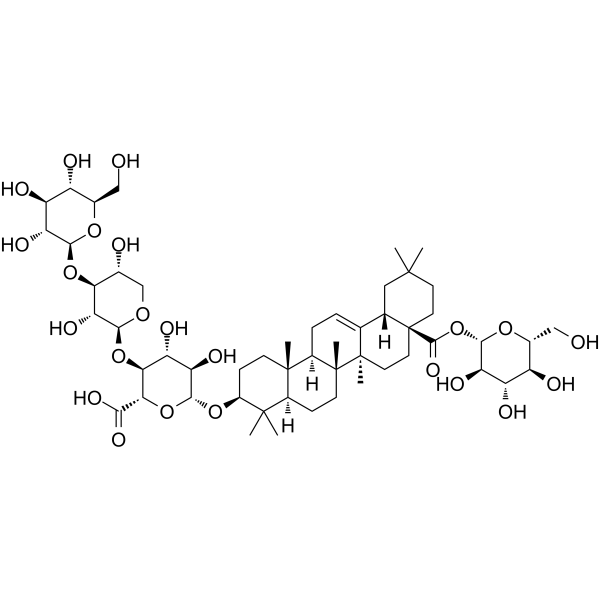
Araloside C
 0 Images
Araloside C is a natural saponin that is mainly isolated from Aralia elata. Araloside C exerts extensive anti-inflammatory properties. Araloside C exhibits protective effects against myocardial ischaemia/reperfusion injury.
-
Tamoxifen Citrate (Standard)
 0 ImagesSynonyms: ICI 46474 (Standard); (Z)-Tamoxifen Citrate (Standard); trans-Tamoxifen Citrate (Standard)
Tamoxifen (Citrate) (Standard) is the analytical standard of Tamoxifen (Citrate). This product is intended for research and analytical applications. Tamoxifen Citrate (ICI 46474) is an orally active, selective estrogen receptor modulator (SERM) which blocks estrogen action in breast cells and can activate estrogen activity in other cells, such as bone, liver, and uterine cells.Tamoxifen Citrate is a potent Hsp90 activator and enhances the Hsp90 molecular chaperone ATPase activity. Tamoxifen Citrate also potent inhibits infectious EBOV Zaire and Marburg (MARV) with IC50 of 0.1 μM and 1.8 μM, respectively. Tamoxifen Citrate activates autophagy and induces apoptosis.Tamoxifen Citrate also can induce gene knockout of CreER(T2) transgenic mouse.
-
Iroxanadine hydrobromide
 0 ImagesCat. No.: HY-19399CCAS No.: 276690-62-1Synonyms: (-)-BRX 005 hydrobromide; (-)-BRX 235 hydrobromide
Iroxanadine hydrobromide (BRX 005) is a vasculoprotector. Iroxanadine is a p38 kinase and HSP protein dual activator. Iroxanadine hydrobromide has the potential for atherosclerosis and vascular diseases research.
-
Xylobiose (Standard)
 0 ImagesSynonyms: 1,4-β-D-Xylobiose (Standard); 1,4-D-Xylobiose (Standard)
Xylobiose (1,4-β-D-Xylobiose; 1,4-D-Xylobiose) is an orally active Claudin 2/CLDN2 inhibitor and HSP27 inducer. Xylobiose works by regulating intestinal barrier function and glucose and lipid metabolism-related signaling pathways. Xylobiose inhibits CLDN2 expression to reduce intestinal permeability, induces HSP27 to enhance cell protection, and regulates the miR-122a/miR-33a axis to inhibit liver lipid synthesis and improve insulin resistance. Xylobiose can strengthen intestinal barrier integrity, reduce blood sugar and blood lipid levels, and reduce oxidative stress and inflammatory response. Xylobiose can be used in the study of type 2 diabetes and metabolic syndrome.



