



P2X7 Receptor Agonist
-
BzATP triethylammonium salt
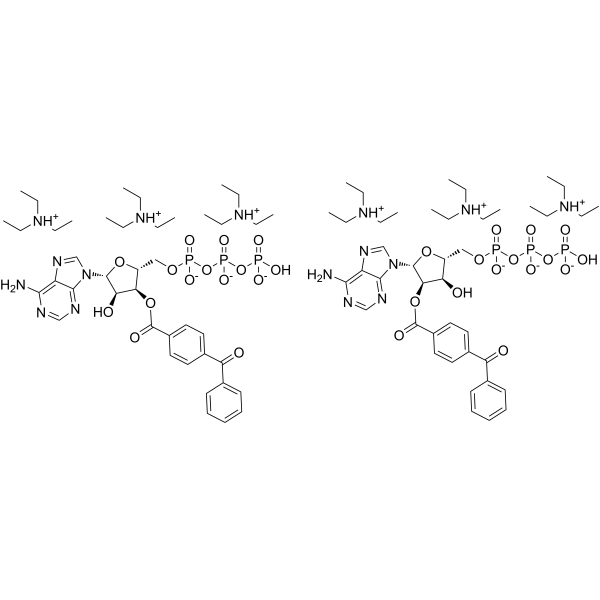 0 ImagesCat. No.: HY-136254Purity: 99.19%
BzATP triethylammonium salt acts as a P2X receptor agonist with pEC50s of 8.74, 5.26, 7.10, 7.50, 6.19, 6.31, 5.33 for P2X1, P2X2, P2X3, P2X2/3, P2X4 and P2X7, respectively. BzATP triethylammonium salt is potent at P2X7 receptors with EC50s of 3.6 μM and 285 μM for rat P2X7 and mouse P2X7, respectively.
-
α,β-Methylene-ATP trisodium
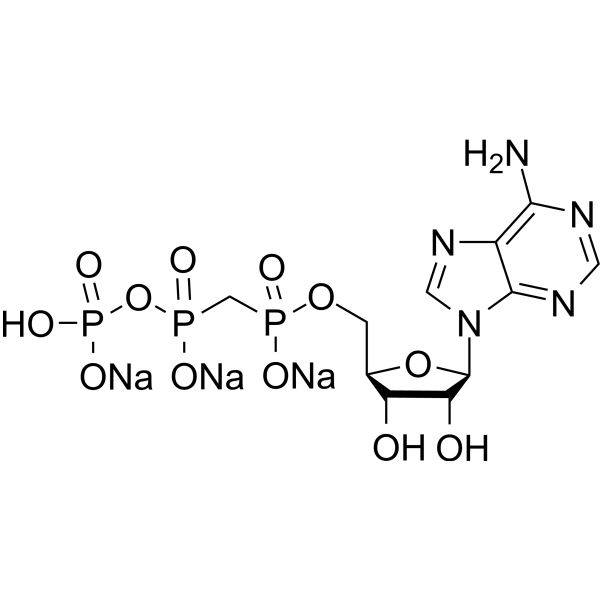 0 Images
α,β-Methylene-ATP trisodium is an agonist of P2X1 and P2X3 receptors and can cross the blood-brain barrier. α,β-Methylene-ATP trisodium can trigger a reflex pressor response by activating P2X receptors in peripheral muscles and the central locus coeruleus (LC); this effect can be blocked by the P2X antagonist PPADS (HY-108960). α,β-Methylene-ATP trisodium also activates noradrenergic neurons in the central locus coeruleus, mediating antinociceptive effects; this effect can be attenuated by the locus coeruleus damaging agent DSP-4 (HY-103210/HY-121602). α,β-Methylene-ATP trisodium can be used to study the pathological mechanisms of neuropathic pain, cardiovascular reflex regulation, and antinociceptive effects of the central nervous system.
-
EVT-401
 0 ImagesCat. No.: HY-178230CAS No.: 951015-69-3
EVT-401 is an orally active, potent and highly selective human P2X7R antagonist, with an IC50 of 10 nM and a Ki of 7.6 nM for human P2X7R, and an IC50 of 220 nM for mouse P2X7R. EVT-401 promotes apoptosis and induces cell cycle arrest in human rheumatoid arthritis synovial fibroblasts (RA SF), reduces the production of proinflammatory and joint-destructive mediators, and mitigates aggressive phenotypes. EVT-401 exhibits favorable oral bioavailability and a good safety profile, making it suitable for research into rheumatoid arthritis.
-
α,β-Methylene-ATP dilithium
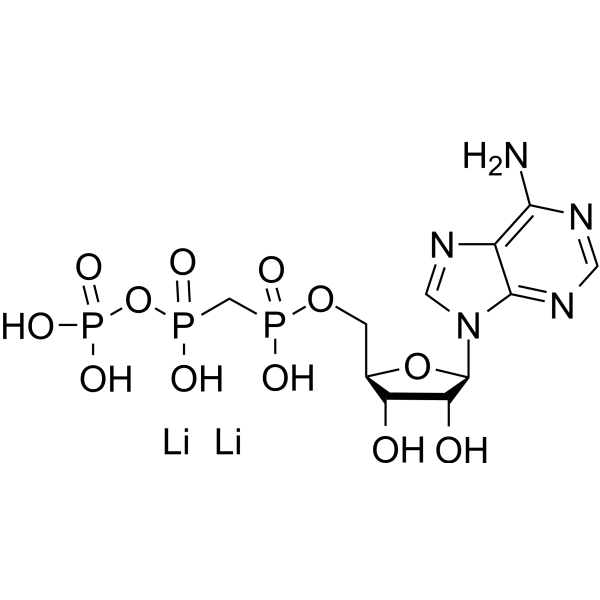 0 ImagesCat. No.: HY-134440CAS No.: 104809-20-3
α,β-Methylene-ATP dilithium is an agonist of P2X1 and P2X3 receptors and can cross the blood-brain barrier. α,β-Methylene-ATP dilithium can trigger a reflex pressor response by activating P2X receptors in peripheral muscles and the central locus coeruleus (LC); this effect can be blocked by the P2X antagonist PPADS (HY-108960). α,β-Methylene-ATP dilithium also activates noradrenergic neurons in the central locus coeruleus, mediating antinociceptive effects; this effect can be attenuated by the locus coeruleus damaging agent DSP-4 (HY-103210/HY-121602). α,β-Methylene-ATP dilithium can be used to study the pathological mechanisms of neuropathic pain, cardiovascular reflex regulation, and antinociceptive effects of the central nervous system.



