



PKA Inhibitor
-
PKItide
 0 ImagesCat. No.: HY-P10047CAS No.: 126370-52-3
PKItide exhibits an IC50 of 0.2 μM for cAMP-PK.
-
Sitagliptin-d4
 0 ImagesCat. No.: HY-13749S2Synonyms: MK-0431-d4
Sitagliptin-d4 (MK-0431-d4) is deuterium labeled Sitagliptin (HY-13749). Sitagliptin is an orally active and highly selective DPP4 inhibitor with an IC50 value of 19 nM. Sitagliptin blocks the degradation of glucagon-like peptide-1 (GLP-1) and glucose-dependent insulinotropic peptide (GIP) by competing inhibition mechanism (Kᵢ = 1 nM), thereby increasing the level of active incretin. Sitagliptin can also directly stimulate the secretion of GLP-1 by intestinal L cells by activating the cAMP/PKA and ERK1/2 pathways, and this effect is independent of DPP-4. Sitagliptin shows protective effects on pancreatic islet grafts in 1-type diabetes models. Sitagliptin can be used for the study of 1-type and 2-type diabetes.
-
Phoenixin-14 TFA
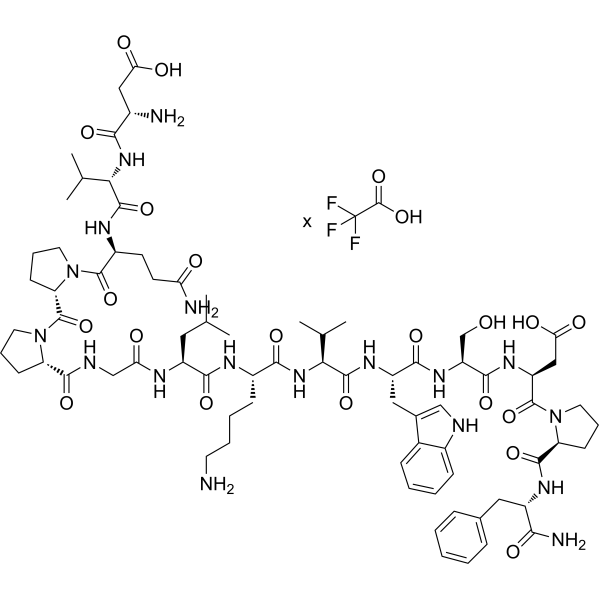 0 ImagesCat. No.: HY-P5762ASynonyms: PNX-14 TFA
Phoenixin-14 (PNX-14) TFA is an endogenous neuropeptide with multiple biological activities, and serves as the endogenous ligand of GPR173. Phoenixin-14 TFA reduces ROS production by inhibiting the HMGB1/TLR4/MyD88/NF-κB signaling axis, thereby exerting antioxidant and mitochondrial protective effects. Phoenixin-14 TFA inhibits FOXO3 phosphorylation by upregulating SIRT3 expression, suppresses apoptosis, and improves myocardial systolic/diastolic function. Phoenixin-14 TFA resists ferroptosis by activating the ATF4/SLC7A11/GPX4 axis; it activates ERK1/2 phosphorylation via GPR173. Phoenixin-14 TFA can be used in researches on neuroprotection, diabetes, cardiomyopathy, reproductive protection and so on.
-
TX-1918
 0 ImagesCat. No.: HY-112393CAS No.: 503473-32-3
TX-1918 is an inhibitor for eukaryotic elongation factor 2 kinase (eEF2-K) and Src kinase with IC50 of 0.44 and 4.4 μM, respectively. TX-1918 exhibits cytotoxicity in cell HepG2 and HCT116, with IC50 of 2.07 and 230 μM, respectively. TX-1918 inhibits the C-terminal domain of HIV-1 CA (CA CTD)(IC50 =3.81 μM), and inhibits the viral replication (IC50 =15.16 μM).
-
HA-100 hydrochloride
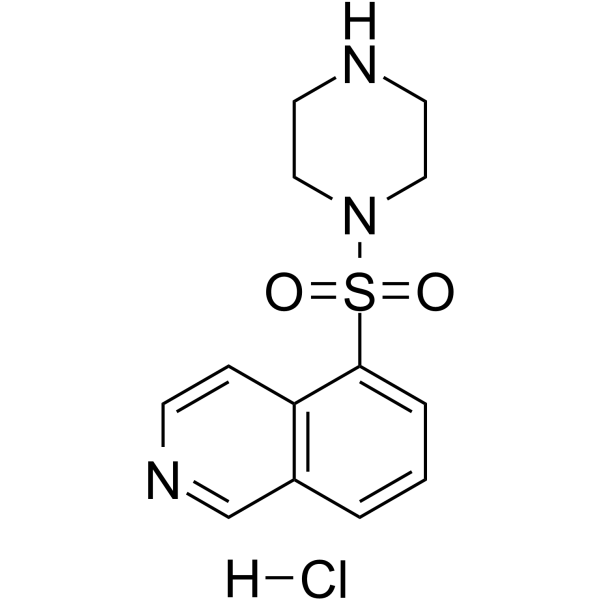 0 ImagesCat. No.: HY-100984ACAS No.: 141543-63-7
-
PKA-IN-2
 0 ImagesCat. No.: HY-176532
PKA-IN-2 (Compound j1) is a serine/threonine kinase J-PKAcα-targeting inhibitor with an IC50 of 6.3 nM. PKA-IN-2 can be used for liver cancer like fibrolamellar hepatocellular carcinoma research.
-
GSK-3α/β-IN-1
 0 ImagesCat. No.: HY-172586CAS No.: 1574354-24-7
GSK-3α/β-IN-1 is GSK-3α/β inhibitor with IC50 s of 0.265 μM and 0.255 μM for GSK-3α and GSK-3β, respectively. GSK-3α/β-IN-1 also inhibits PKA with an IC50 of 0.188 μM. GSK-3α/β-IN-1 potently inhibits cell viability of three Glioblastoma (GBM) cell lines (IC50 : 3-6 μM, 72 h) with no toxicity to human astrocytes and good metabolic stability. GSK-3α/β-IN-1 has potential CNS activity in all-human blood-brain barrier (BBB) model of GBM.
-
Rp-8-Br-cAMPS
 0 ImagesCat. No.: HY-137640BCAS No.: 129735-00-8
Rp-8-Br-cAMPS is an analog of cAMP and an inhibitor of PKA. Rp-8-Br-cAMPS occupies cAMP binding sites on PKA type I regulatory subunits, thereby preventing PKA dissociation and activation. Rp-8-Br-cAMPS can be used in the study of tumors and retrovirus-induced immune deficiency. Rp-8-Br-cAMPS also inhibits insulin secretion.
-
HA-100 dihydrochloride
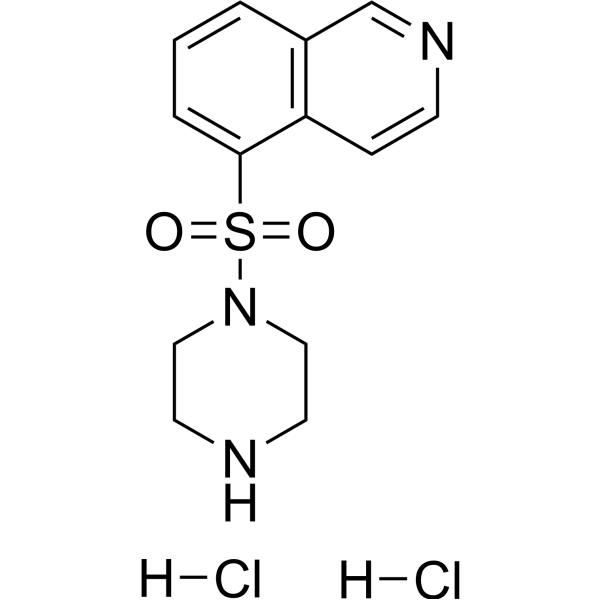 0 ImagesCat. No.: HY-12880CAS No.: 210297-47-5
-
Antifungal agent-169
 0 ImagesCat. No.: HY-184728
Antifungal agent-169 (compound 5p) is an antifungal agent that inhibits fluconazole (HY-B0101)-susceptible Candida albicans SC5314 with an MIC50 of 0.28 μM. Antifungal agent-169 reduces the expression levels of cAMP-PKA pathway-related genes including RAS1, EFG1, BCR1, ECE1 and HWP1 in Candida albicans. Antifungal agent-169 inhibits biofilm formation and hyphal growth of Candida albicans. Antifungal agent-169 can be used in studies related to Candida albicans infection.
-
GEM-231 sodium scrambled negative control
 0 ImagesCat. No.: HY-148827C
GEM-231 sodium scrambled negative control is the sequence scrambled negative control of GEM-231 sodium.
-
PKI (5-22)
 0 ImagesCat. No.: HY-P2629CAS No.: 128022-93-5
PKI (5-22) is a specific inhibitory peptide targeting the catalytic subunit of protein kinase A (PKA) and contains the active region of PKI. PKI (5-22) inhibits the enzymatic activity of the PKA catalytic subunit-like protein in Trypanosoma equiperdum. PKI (5-22) can be used in the research of trypanosomiasis.
-
GSK466317A
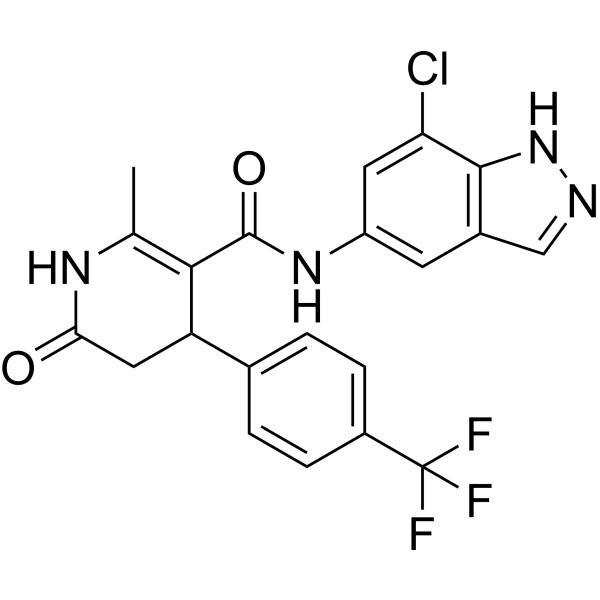 0 ImagesCat. No.: HY-119232CAS No.: 864082-48-4
GSK466317A is a PKA inhibitor, with an IC50 of 12.59 μM. GSK466317A also inhibits GRK1, GRK2, and GRK5, with IC50s of 1000, 31.62, and 39.81 μM, respectively.
-
Protein kinase inhibitor 7
 0 ImagesCat. No.: HY-155619CAS No.: 84478-11-5
Protein kinase inhibitor 7 is an inhibitor for protein kinase A and protein kinase C. Protein kinase inhibitor 7 affects autocrine motility factor (AMF) signaling pathway, without affecting the cell motility.
-
Tetramisole
 0 Images
Tetramisole is an orally active, selective inward rectifier potassium channel agonist with an EC50 of approximately 30 μM for the Kir2.1 subunit. Tetramisole is also an anti-nematode agent that blocks neuromuscular transmission by non-competitive depolarization. Tetramisole promotes the forward transport of Kir2.1 channels, hyperpolarizes the resting potential (RP), shortens the action potential duration (APD), inhibits intracellular calcium overload and the PKA signaling pathway, and exerts anti-arrhythmic and anti-myocardial remodeling activities. Tetramisole can be used in cardiac electrophysiology research and research related to myocardial ischemia and heart failure.
-
Kemptide, 5-FAM labeled
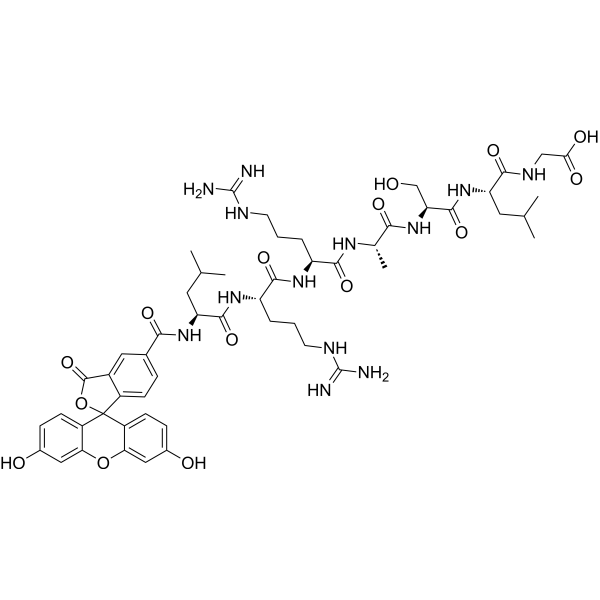 0 ImagesCat. No.: HY-P0248FCAS No.: 1161072-61-2
-
ME 3407
 0 ImagesCat. No.: HY-19133CAS No.: 133903-90-9Synonyms: EF-4040
ME-3407 (EF-4040) is a H+-K+-ATPase redistribution disruptor and myosin light chain kinase (MLCK) and protein kinase A inhibitor. ME-3407 blocks gastric acid secretion and aminopyrine accumulation by inhibiting microsomal-to-apical membrane redistribution of H+-K+-ATPase and suppressing MLCK-mediated myosin light chain phosphorylation. ME-3407 is promising for research of peptic ulcer.
-
Daphnetin (Standard)
 0 Images
Daphnetin (Standard) is the analytical standard of Daphnetin. This product is intended for research and analytical applications. Daphnetin (7,8-dihydroxycoumarin), one coumarin derivative can be found in plants of the Genus Daphne, is a potent, oral active protein kinase inhibitor, with IC50s of 7.67 μM, 9.33 μM and 25.01 μM for EGFR, PKA and PKC in vitro, respectively. Daphnetin triggers ROS-induced cell apoptosis and induces cytoprotective autophagy by modulating the AMPK/Akt/mTOR pathway. Daphnetin has anti-inflammation activitity and inhibits TNF-α, IL-1 , ROS, and MDA production. Daphnetin has schizontocidal activity against malaria parasites. Daphnetin can be used for rheumatoid arthritis , cancer and anti-malarian research.
-
Sitagliptin hydrochloride
 0 ImagesCat. No.: HY-13749ECAS No.: 486459-71-6Synonyms: MK-0431 hydrochloride
Sitagliptin (MK-0431) hydrochloride is an orally active and highly selective DPP4 inhibitor with an IC50 value of 19 nM. Sitagliptin hydrochloride blocks the degradation of glucagon-like peptide-1 (GLP-1) and glucose-dependent insulinotropic peptide (GIP) by competing inhibition mechanism (Kᵢ = 1 nM), thereby increasing the level of active incretin. Sitagliptin hydrochloride can also directly stimulate the secretion of GLP-1 by intestinal L cells by activating the cAMP/PKA and ERK1/2 pathways, and this effect is independent of DPP-4. Sitagliptin hydrochloride shows protective effects on pancreatic islet grafts in 1-type diabetes models. Sitagliptin hydrochloride can be used for the study of 1-type and 2-type diabetes.
-
RI-STAD-2
 0 ImagesCat. No.: HY-P10319
RI-STAD-2 is a high-affinity interfering peptide that regulates the subunit RI of protein kinase A (PKA). RI-STAD-2 interferes with the binding of AKAPs and PKA-RI by simulating the interaction between AKAPs' α-helix domain and PKA-RI's dimerization/anchoration (D/D) domain, thereby affecting PKA activity and intracellular localization. RI-STAD-2 can be used to study the role of AKAPs interaction with PKA-RI in pathological processes such as cardiovascular disease and cancer.



