



Wee1 Inhibitor
- 1
- 2
-
Zedoresertib
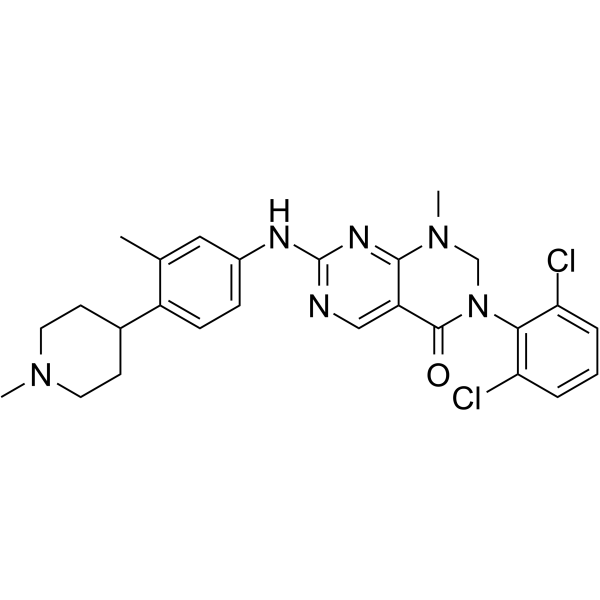 0 ImagesSynonyms: Debio 0123; WEE1-IN-5
Zedoresertib (Debio 0123) is a potent WEE1 inhibitor with an IC50 value of 0.8 nM. Zedoresertib inhibits phospho-CDC2. Zedoresertib abrogates the G2 check point, increasing sensitivity to DNA damaging agents in cancer cells. Zedoresertib can be used for researching anticancer.

-
APO-50815
 0 ImagesCat. No.: HY-183278
APO-50815 is a WEE1 kinase inhibitor with a human IC50 of 9 nM. APO-50815 induces DNA damage, replication stress, S-phase cell accumulation, and apoptosis. APO-50815 can be used for the research of metastatic colorectal cancer.
-
Raddeanin A
 0 Images
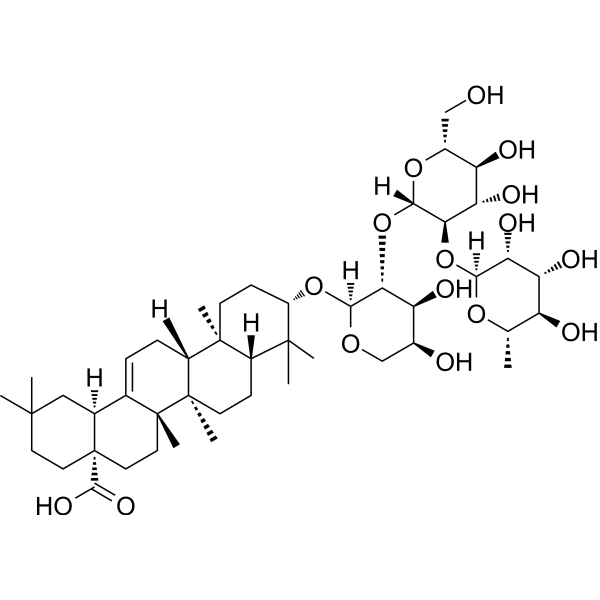
Raddeanin A is an oleanane-type triterpenoid saponin with oral activity. Raddeanin A inhibits SRC, mTOR, JNK, VEGFR2, NLRP3 inflammasome, Wnt/β-catenin, Wee1, PI3K/AKT signaling pathway, MAPK/ERK signaling pathway, AR-FL, AR-Vs, and downregulates the expression of p-PI3K and p-AKT. Raddeanin A inhibits osteoclast formation, bone resorption, osteolysis, cancer cell invasion, migration, proliferation, angiogenesis and epithelial-mesenchymal transition, while induces apoptosis, cell cycle arrest, ROS production, immunogenic cell death and dendritic cell maturation. Raddeanin A improves blood-retinal barrier function, alleviates inflammation, regulates the tumor microenvironment, and enhances the activity of anti-PD-1 antibody. Raddeanin A is applicable to the research of breast cancer-associated osteolysis, human osteosarcoma, colorectal cancer, glioblastoma, Alzheimer's disease, cholangiocarcinoma, melanoma, non-small cell lung cancer, castration-resistant prostate cancer and multiple myeloma.
-
WEE1-IN-3
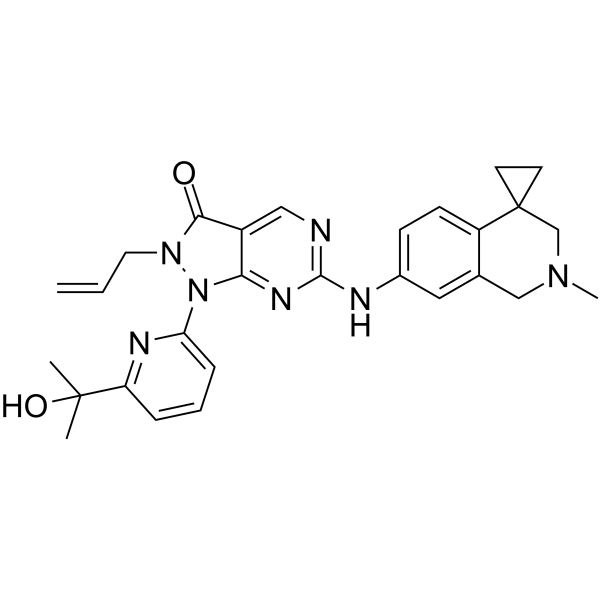 0 Images
WEE1-IN-3 is a potent Wee1 kinase inhibitor with an IC50 of <10 nM. WEE1-IN-3 has anticancer activities.
-
WEE1-IN-10
 0 ImagesCat. No.: HY-161880CAS No.: 2226938-19-6


-
WEE1-IN-13
 0 ImagesCat. No.: HY-178190
WEE1-IN-13 (Compound 10) is a highly selective WEE1 kinase inhibitor (IC50=0.7 nM). WEE1-IN-13 abrogates the G2/M checkpoint and induces tumor cell apoptosis. WEE1-IN-13 is promising for research of solid tumors (e.g., non-small cell lung cancer, ovarian cancer).
-
WEE1-IN-14
 0 ImagesCat. No.: HY-178150CAS No.: 2803921-87-9
WEE1-IN-14 (Compound 14) is a selective WEE1 inhibitor (IC50: 0.5 nM in L-RB-FEP calculations, 1.0 nM in ADP-Glo kinase assay). Inhibition of Wee1 in cancer cells disrupts the G2-M checkpoint, removes the regulatory controls on the cell cycle, and leads to early onset of mitotic failure followed by apoptosis of tumor cells. Therefore, WEE1-IN-14 is a useful tool for studying cancer biology.
-
WEE1-IN-12
 0 ImagesCat. No.: HY-174448CAS No.: 3069940-37-7
WEE1-IN-12 (Compound 87) is a Wee1 kinase inhibitor with an IC50 of 2.0 nM. WEE1-IN-12 can inhibit the proliferation of HT29 cells (IC50: 1.07 μM), and when used in combination with Gemcitabine (HY-17026), the effect is better (IC50: 0.34 μM). WEE1-IN-12 can be used in the research of tumors such as colon cancer.
-
i-AZD1775 TFA
 0 ImagesCat. No.: HY-133703ACAS No.: 2858813-30-4
i-AZD1775 TFA is a Target Protein Ligand-Linker Conjugate that contains a target protein ligand and a PROTAC linker, and can recruit E3 ligases. i-AZD1775 TFA can be used for the synthesis of Pomalidomide-C3-adavosertib (HY-133618). i-AZD1775 TFA is an immobilizable analogue of AZD1775. i-AZD1775 TFA retains the ability to inhibit WEE1 in vitro. i-AZD1775 TFA can be studied in anticancer research.
-
WEE1-IN-9
 0 ImagesCat. No.: HY-161879CAS No.: 2510782-14-4
-
WEE1-IN-6
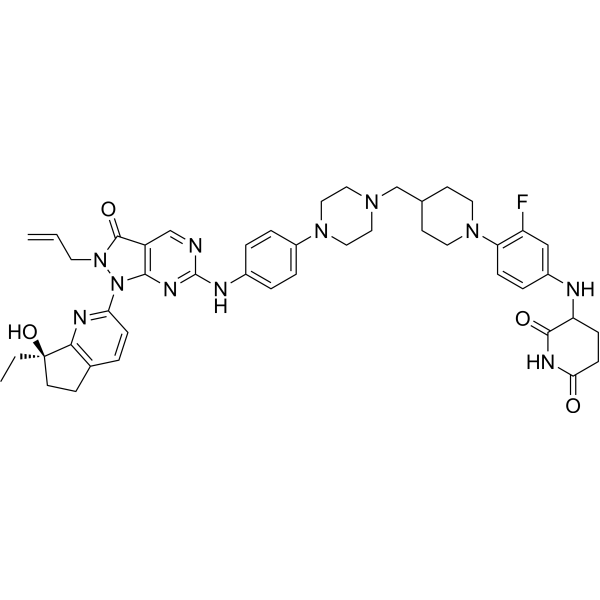 0 ImagesCat. No.: HY-160530CAS No.: 2928524-08-5
WEE1-IN-6 (compound 110) is a orally active WEE1 inhibitor with an DC50 value of ≦ 100 nM. WEE1-IN-6 inhibits cell proliferation.
- 1
- 2



